Turntable Accessories
Turntable Accessories Roundup: A Light, a Weight, Isolation Feet, and a Remote
Four accessories for vinyl and streaming setups, with clear notes on what each one does well and where the trade-offs sit.
Introduction
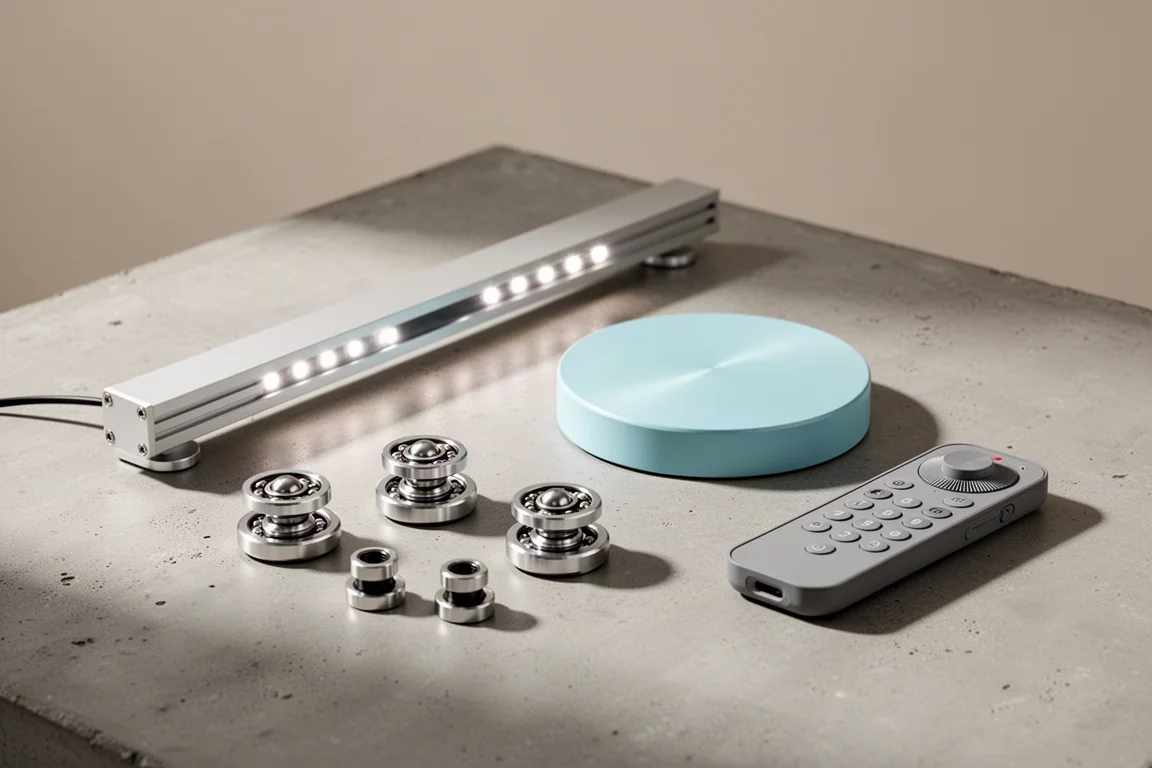
The turntable accessory market rewards patience. Four products sit in front of us here: a cast aluminium light bar for inspecting records, a boutique record weight from Berlin, a set of ball-bearing isolation feet, and a small remote control aimed squarely at people who stream rather than spin.
They do not share a single purpose. One will work with almost any turntable, another needs a compatibility check before it goes anywhere near a platter, and a third is irrelevant if you never play vinyl. Two of the four deliver more than expected, and one falls short of its promise.
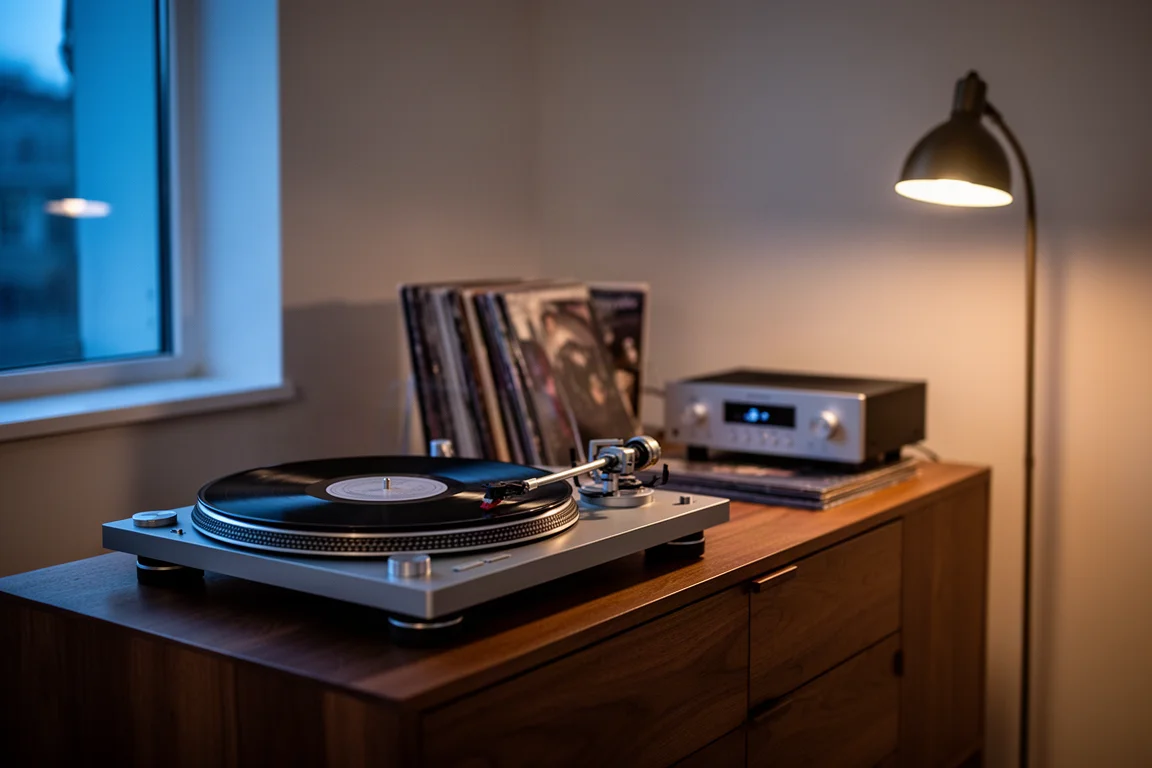
That uneven spread is the useful part. Each of these accessories solves a specific problem, and knowing which problem you actually have is what separates a worthwhile purchase from a decorative one.
What to Look For in a Turntable Accessory
Three questions cover most of the ground: how the accessory mounts, how it is powered, and whether your turntable is designed to carry it.
Mounting matters most on decks with a hinged lid. Anything that sits over the platter needs to rotate or lift clear when the lid comes down, which is why a clamp-and-spindle arrangement tends to work better than a fixed bracket.
Power is usually the easy part. Most modern accessories run from a 5V USB-C feed, which keeps cable clutter to a minimum and avoids adding another power supply to the shelf.
The third question is the one people skip. Adding mass to a platter or spindle is not automatically an improvement. Extra weight can stress the motor, strain the bearing, and introduce rotational speed inaccuracies, so it is worth checking with the turntable manufacturer before fitting anything heavy.
A Premium Turntable Light: Uberite Frame
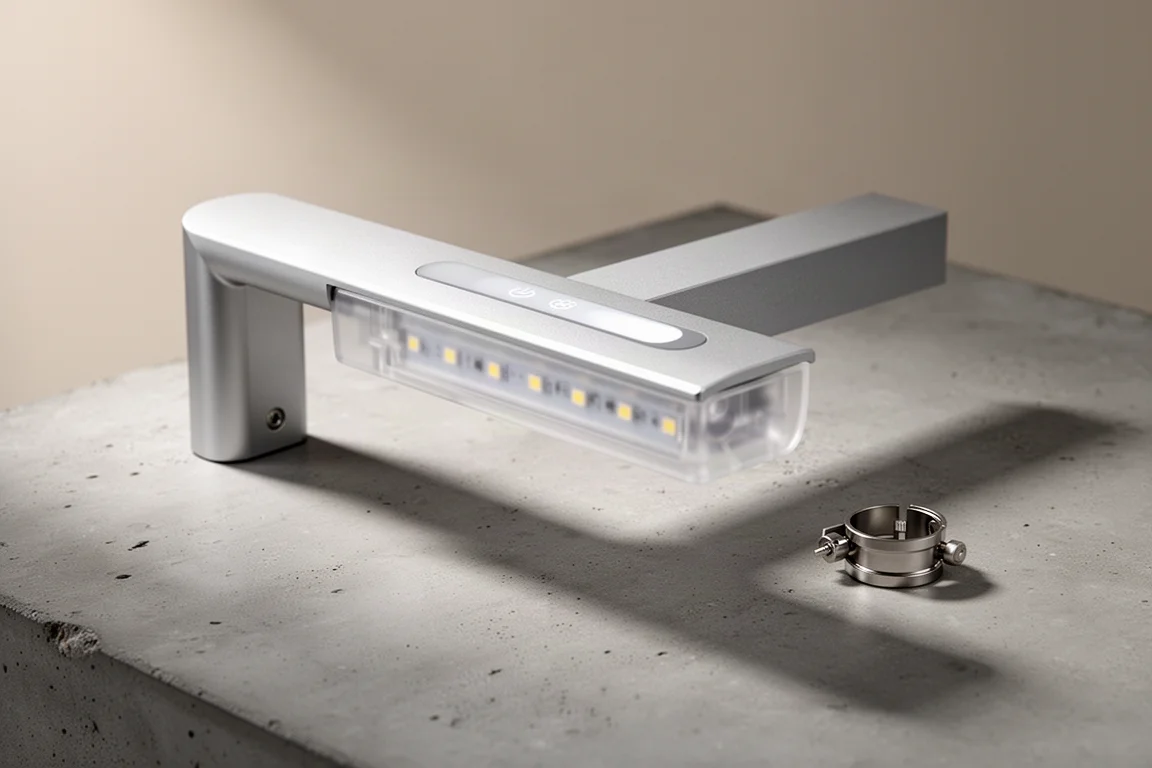
The Uberite Frame is a turntable light built around a right-angled cast aluminium bar. The frame is the housing; inside it sits a plastic module carrying 18 LEDs, and that module tilts 30 degrees forwards or backwards to aim the beam where you need it.
Installation is flexible. Three mounting plates are supplied: a freestanding weight, a desk mount that screws down, and a screw-on clamp. The clamp is the most practical of the three, because the frame then drops onto an open spindle and rotates a full 360 degrees, which makes it easy to lift a hinged lid on a Technics SL-1210, SL-1200, or SL-1300 without dismantling anything.
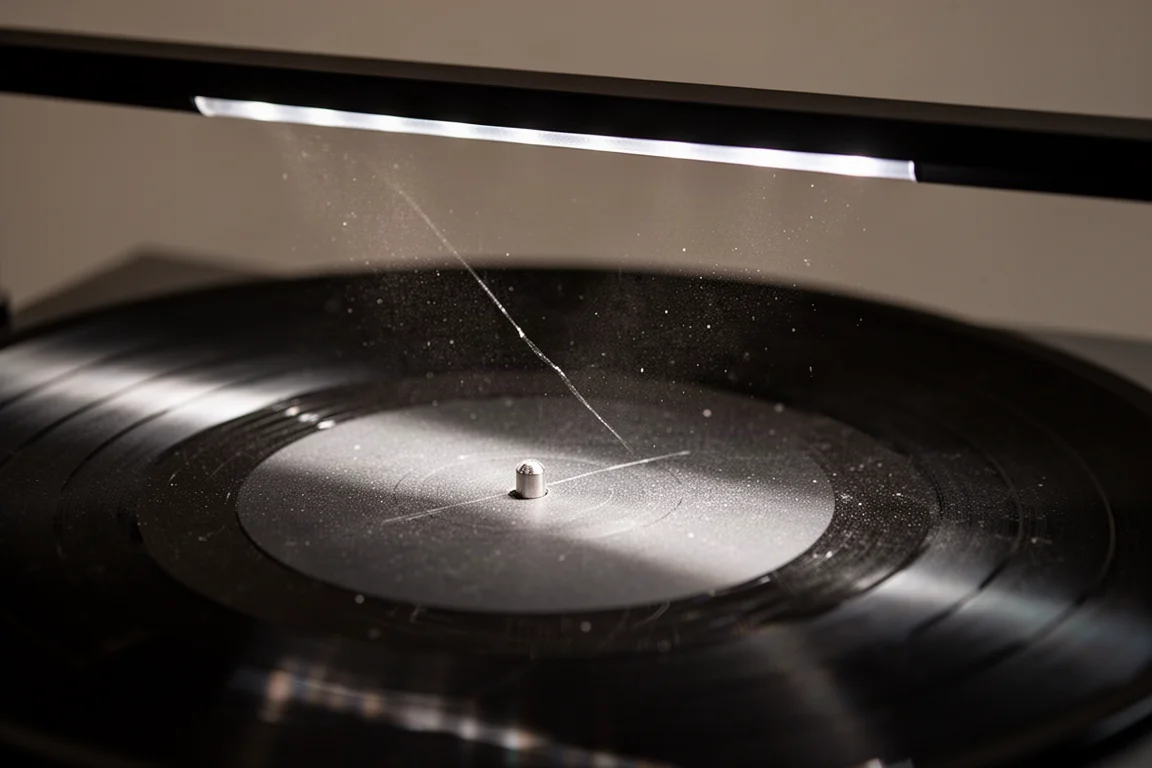
The light itself is more capable than the job strictly requires. The 18 LEDs are divided into six zones that can be switched on and off in groups of three using the touch-sensitive plate on top, and the same plate cycles through three colour temperatures and six intensity levels, up to roughly 500 lumens. In practice the lowest setting is enough: dust and surface damage show up clearly without any need to push the output higher.
Power comes from a 5V USB-C adapter. An infrared remote handles intensity and colour temperature from the listening seat, though it can be fussy about the angle you point it from. The remote also carries a small torch and clips magnetically to the underside of the frame when it is not in use.
At €499 this is a considered purchase rather than an impulse one, and the price is the main thing to weigh. A cheap desk lamp will illuminate a record, but it will not rotate with the platter, will not tilt, and will not sit on the deck as though it belongs there.
A Record Weight With a Caveat: Hand Hi-Fi Record Weight
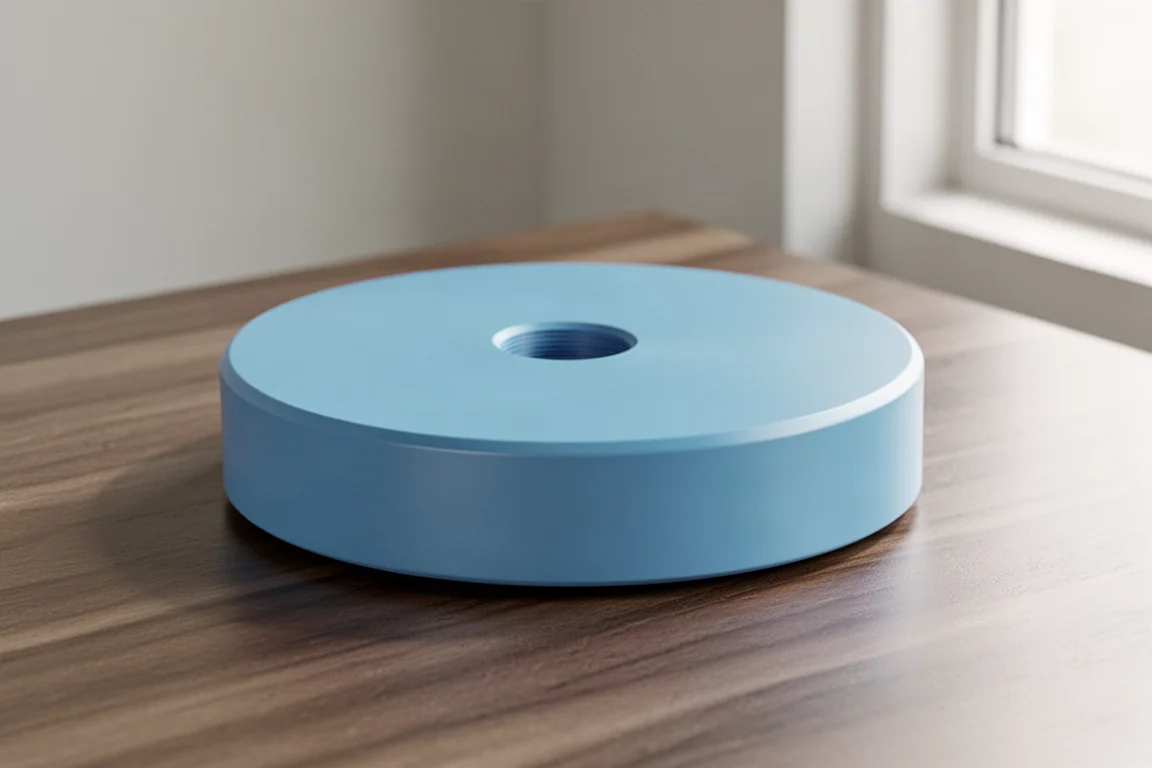
Hand Hi-Fi operates out of Berlin, an offshoot of a record store, and builds bespoke loudspeaker systems for clubs and smaller listening spaces. Its record weight, a 523 g puck, first went on sale at the end of 2024 and sold out within hours on each of its two runs. There is no sign of a third run, and the company appears to have moved on to a different design, so this is a hard object to find.
The theory behind a record weight is sound enough. Added mass can help flatten a warped record, hold it steady on the platter for more consistent stylus tracking, and reduce the effect of airborne vibration. Not every turntable is built for it, though: the extra load can stress a motor, strain a bearing, and push rotational speed out of spec, so a check with the manufacturer comes first.
In extended listening across two systems and two direct-drive decks, the puck did the opposite of what was expected. With the weight in place, microdynamics flattened and the stereo image blurred slightly; removing it restored both. A turntable designer offered a straightforward explanation. The material on the underside is not impedance matched to vinyl, and the play in the spindle cutout lets unwanted vibration reach the record. On the SL-1210 and SL-1300 the puck sits noticeably loose.
That leaves it as a visual curiosity with a strong streak of nostalgia, and a design that has proven divisive. It is not a performance upgrade.
Isolation Feet That Quietly Improve Focus: Iso Isolation Feet
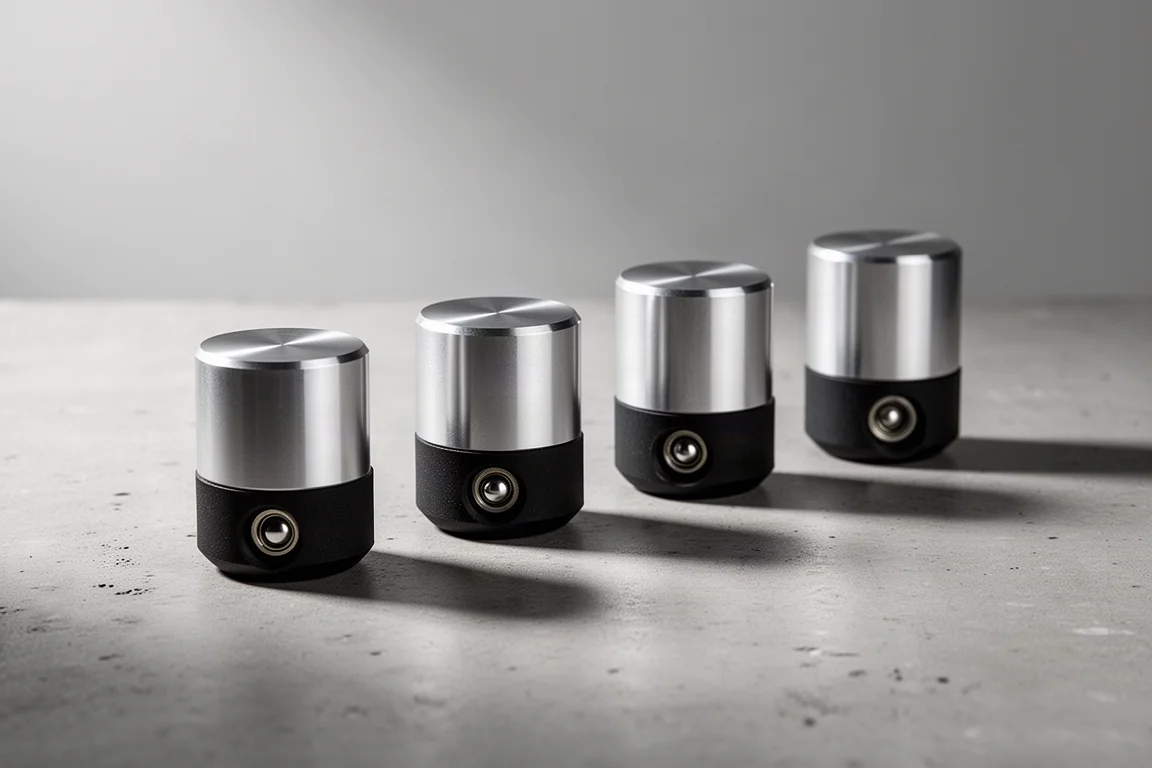
The Iso isolation feet were originally developed for club use, where sound pressure levels run far higher than they do at home. They appeared on the underside of SL-1210 turntables in a Berlin record store long before they were offered as a retail product.
Two design details explain how they work. Ball bearings in the base reduce the contact surface area against the surface below compared with the standard feet, and the feet themselves are more elastic, which insulates the deck from vibration that would otherwise travel into its structure.
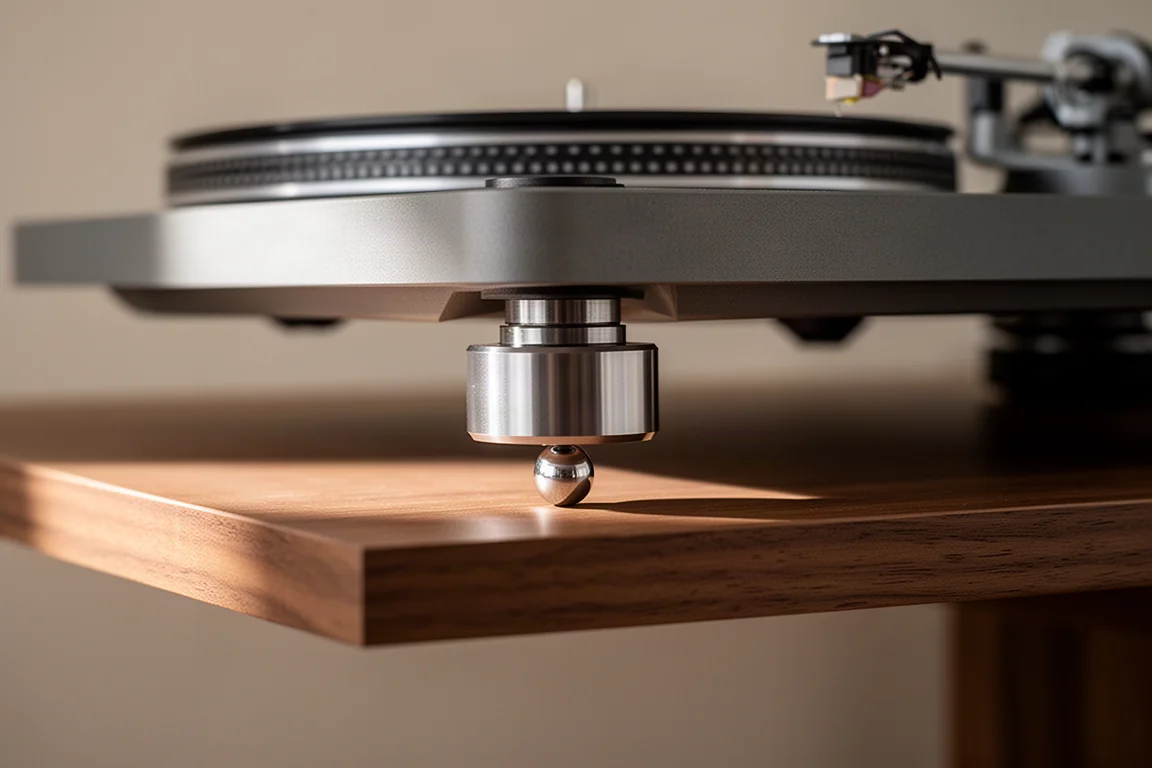
On an SL-1210GR the effect is a shift in focus rather than a change in character. The stereo image tightens up, in the way a camera lens snaps into focus, and quiet details in a recording become easier to pick out. The improvement is subtle and not night and day, but it holds up over long listening, and at €200 a set it is a reasonable ask.
Compatibility reaches further than the turntable market. The feet fit any component with an M6 thread, including tube amplifiers and CD players, and they are made in the UK. A silver finish is available for decks that call for it.
A Remote for Roon Streamers: Sense Labs Quick Keys
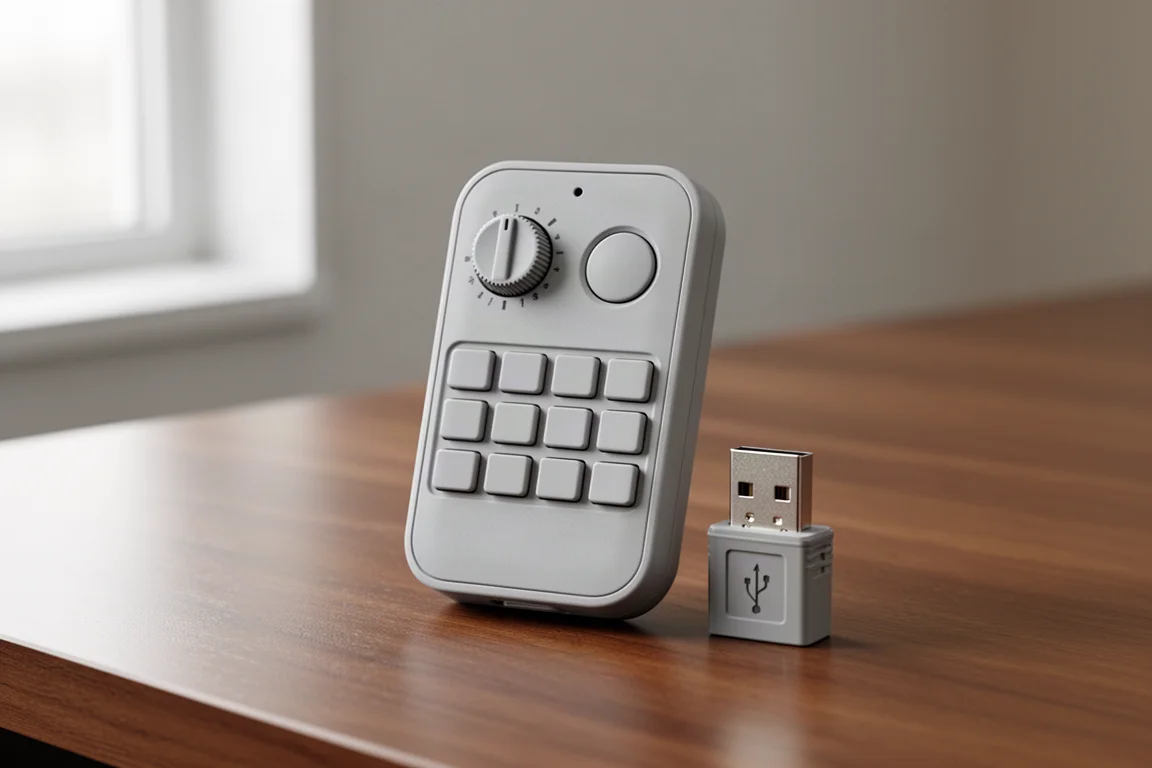
Not every accessory here is for vinyl. The Sense Labs Quick Keys is a physical remote for Roon, and it addresses a familiar annoyance: reaching for a phone or tablet every time you want to change the volume.
The remote talks to a wireless dongle connected to a small single-board computer, which passes commands through to the Roon server’s extensions panel. A rotary dial handles volume, the centre button covers play and pause, and dedicated buttons change tracks and switch between room zones. Eight buttons in the middle of the device can be assigned different behaviour in the extensions panel, so the layout can be adapted to how you actually listen.
Build quality is the compromise. The plastic body feels light and a little plasticky, though it is pleasant enough to hold and the controls are laid out sensibly. At around €100, it is a small outlay for anyone who has already built a Roon system and wants it to feel less like a software project.
Buying Advice
The right accessory depends entirely on which part of the chain is bothering you. If records are hard to inspect and cue, the light is the fix. If the deck feels vague and the soundstage never quite locks in, isolation feet are the more affordable of the two upgrades and the one with the clearest benefit. If you stream rather than spin, the remote is the only one of the four that applies.
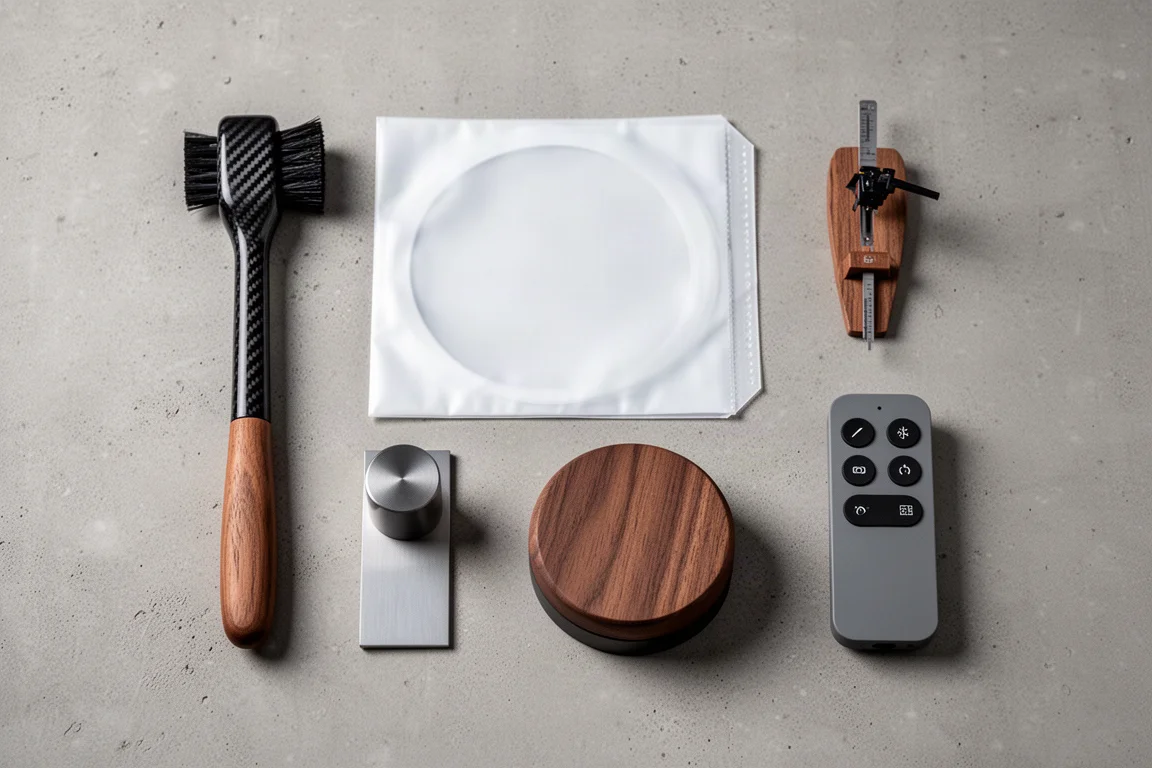
Where a record weight is concerned, mass is not a shortcut to better sound. Weight can help with a warped record on a deck built to take it, but it can just as easily slow a motor or blur the image, so the sensible approach is to confirm compatibility first and to listen carefully with and without it before committing.
Two of these four accessories earned a permanent spot, and the others each have a narrower case to make. None of them are essential, which is exactly why the decision should come down to the problem you want solved.
Conclusion
Good accessories disappear into a routine. The Uberite Frame makes record inspection quicker and the deck look more considered. The Iso isolation feet quietly tighten up what you hear. The Sense Labs Quick Keys turns a streaming setup into something you can operate without a screen. The Hand Hi-Fi weight is the exception, and it is worth knowing why: on the decks it was tried with, the record sounded better without it.
Further reading
Related Reviews
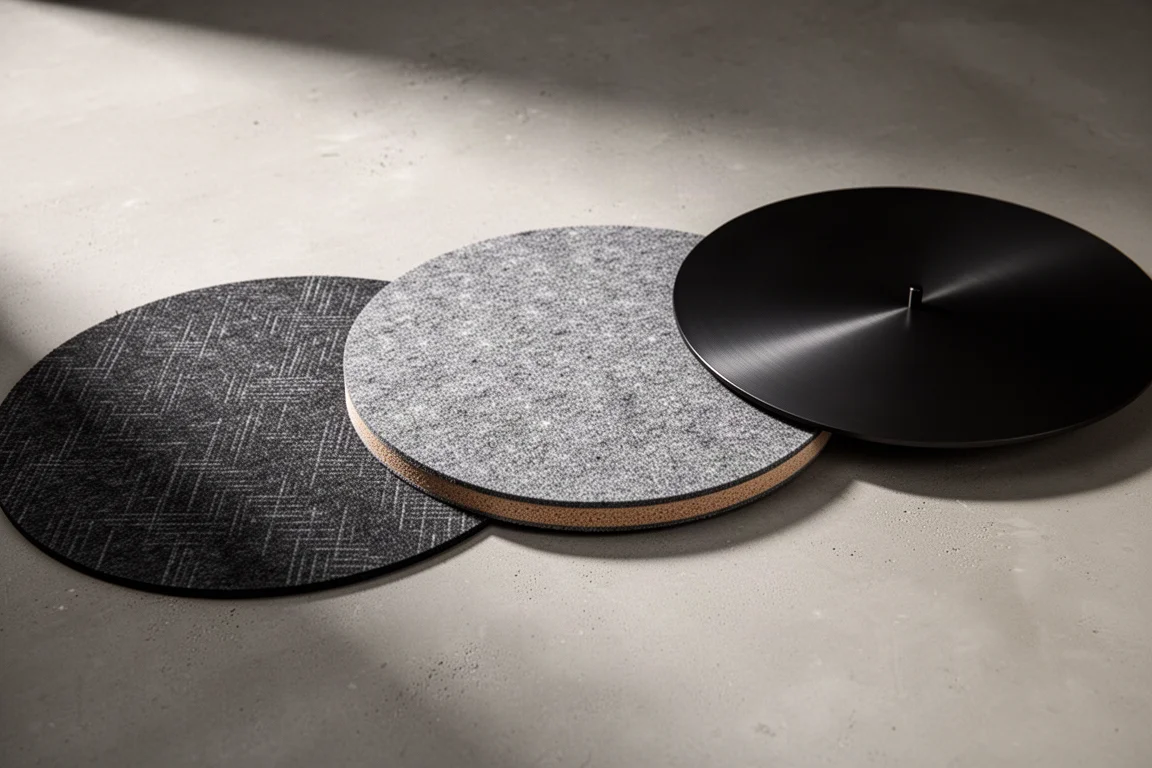
Turntable Accessories
Best Turntable Mats for Static Control and Better Sound: Three Options to Consider
Three turntable mats from Auditorium 23 and Spec that cut static cling, reduce dust transfer, and change what you hear, plus the trade-offs worth weighing first.

Backpacking Gear
Building a 10 lb Base Weight: An Ultralight Backpacking Gear List
A practical walkthrough of the ultralight pieces behind a 10 lb base weight, from a 765 g pack and a roomy one-person tent to a full camp chair and a dependable water filter.

Road Bikes
10 New Road Bikes Worth Watching: Aero, Titanium, Steel and Endurance Standouts
A practical roundup of 10 new road bikes, from aero flagships chasing single-watt gains to titanium, steel and endurance platforms built for real roads.