Turntable Accessories
Best Turntable Mats for Static Control and Better Sound: Three Options to Consider
Three turntable mats from Auditorium 23 and Spec that cut static cling, reduce dust transfer, and change what you hear, plus the trade-offs worth weighing first.
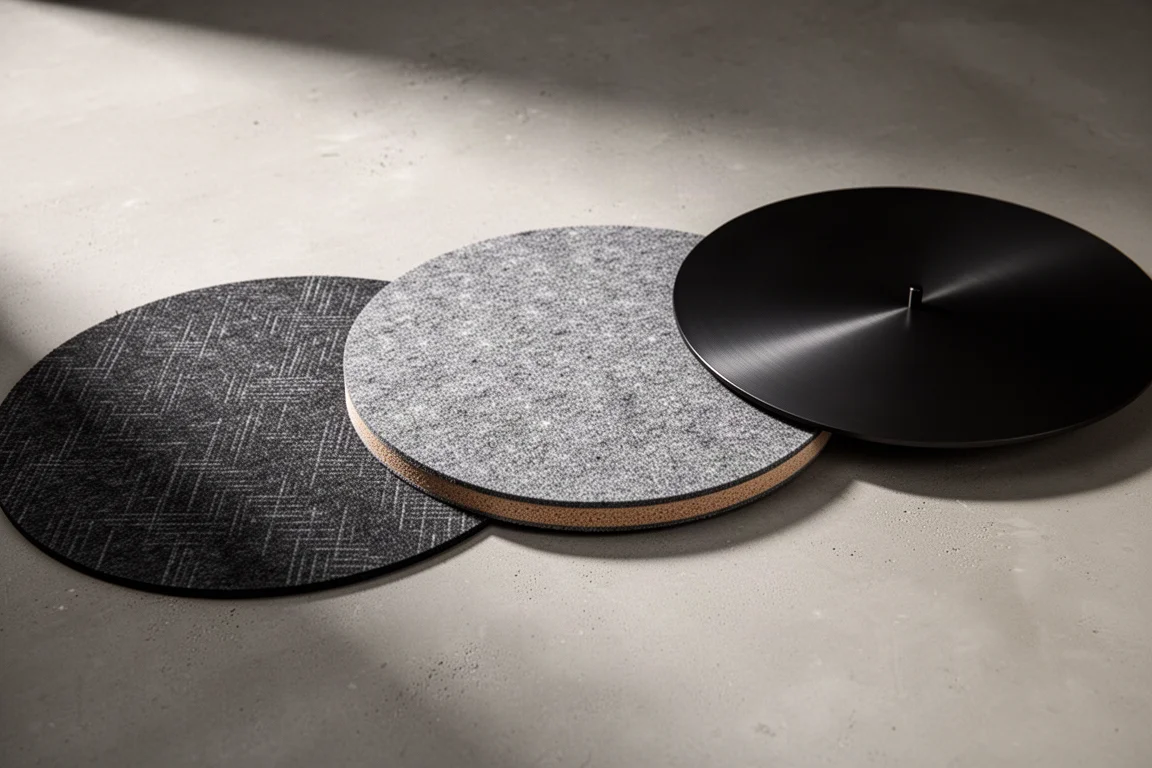
Introduction
Aftermarket turntable mats have been part of vinyl playback since the 1970s, and they remain one of the simplest accessories a listener can add to a turntable. The goals are usually the same: improved sound, an updated appearance, and less static. Most turntables today ship with a stock felt mat, or with a platter made from a material designed to be used without a mat at all. Felt remains the dominant choice, and it carries one persistent problem.
Felt holds a static charge, and that charge attracts dust and debris. Some of it can transfer to the record when the record is set down on the mat. During colder and drier times of the year the buildup can get strong enough that the mat sticks to the record when it is lifted off the platter, which makes the record awkward to remove without touching its surface.

The market offers a wide range of materials, including rubber, cork, leather, recycled vinyl, and various fabrics. Some mats are decorative more than functional. The three mats below come from Auditorium 23 of Germany and Spec of Japan, and each takes a different approach to the same set of problems.
What to Consider Before Buying a Turntable Mat
A turntable mat can have a noticeable effect on sound, but it can also change the sound for the worse rather than improving it. Three practical points are worth checking first.
If a turntable has an integrated tonearm, the engineers who designed it likely used the stock felt mat during their listening tests. That is an argument for not making a drastic change in the material used for the new mat.
Height matters more. As a general rule, the tonearm should sit parallel to the record surface. Many turntables do not allow the tonearm height to be raised or lowered, so a mat that is much thicker than the stock one will leave the back of the tonearm too low. If tonearm height is adjustable, a thicker mat is far less of an issue.
Weight matters mainly for turntables with a spring suspension system. Most platters do not sit on any special suspension, so weight is not a big consideration for most decks. On a suspended turntable, a much heavier mat, or a clamp, can change the resonance point. Records themselves vary from around 100 grams to 230 grams, so fairly light mats are fine, but some aftermarket mats weigh several hundred grams or more than a thousand.
For reference, the thin felt mats that are most prone to static buildup average about 1.5 millimeters thick and roughly 30 grams in weight.
Auditorium 23 Mat: A Drop-In Felt Replacement
Auditorium 23 is a long-established German company whose main business is very expensive horn-based speakers; it also builds step-up transformers and cables. Very little information is published about the composition of its two mats, beyond the fact that the company experiments with different materials and uses listening tests to arrive at a final sound.
The entry mat looks like a normal felt mat at first glance, and its measurements are the reason it is so easy to live with. It weighs 56 grams and measures 1.1 millimeters thick, close to the average stock felt mat. Tonearm height usually does not need adjusting, and the low weight keeps it clear of suspension concerns.
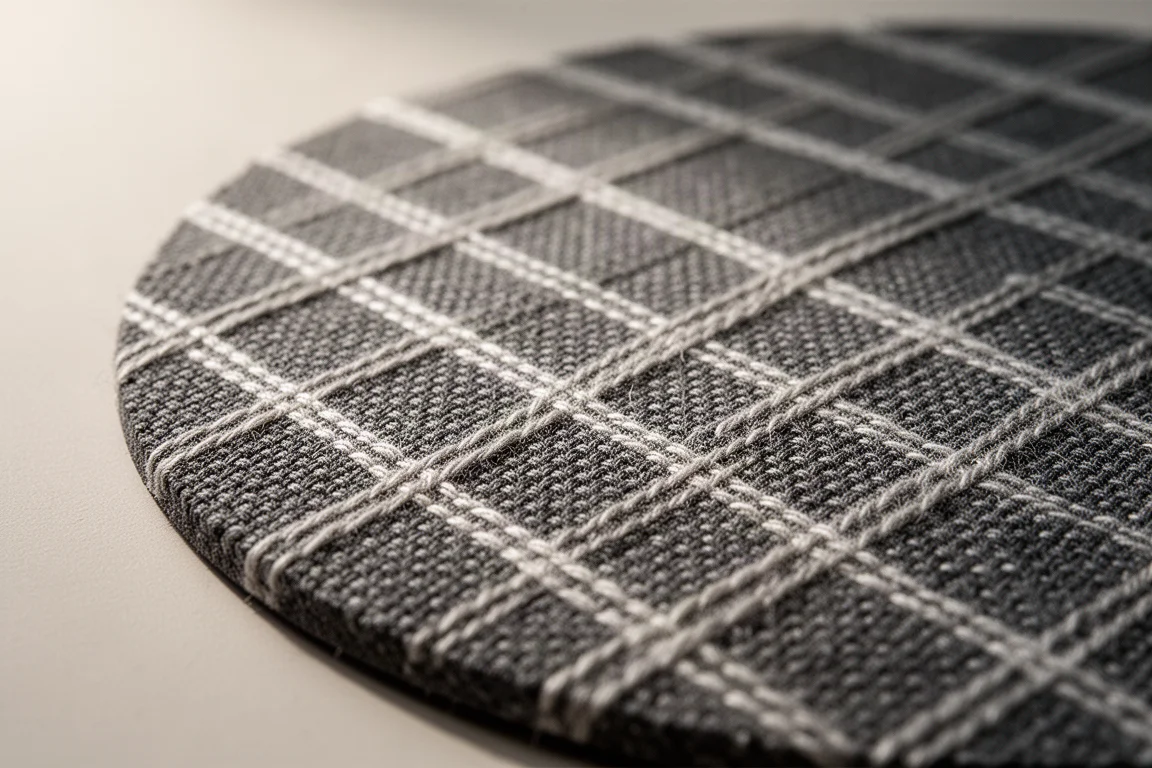
The mat is two-sided. The top has an ever so slightly raised cross-hatch pattern, with a woven pattern inside each cross hatch and a different weave in the surrounding area. The back is flat, using the same weave found between the cross hatches on top. It flops around a little less than a typical felt mat and does not feel quite as soft, as though a small amount of stiffness is woven into it.
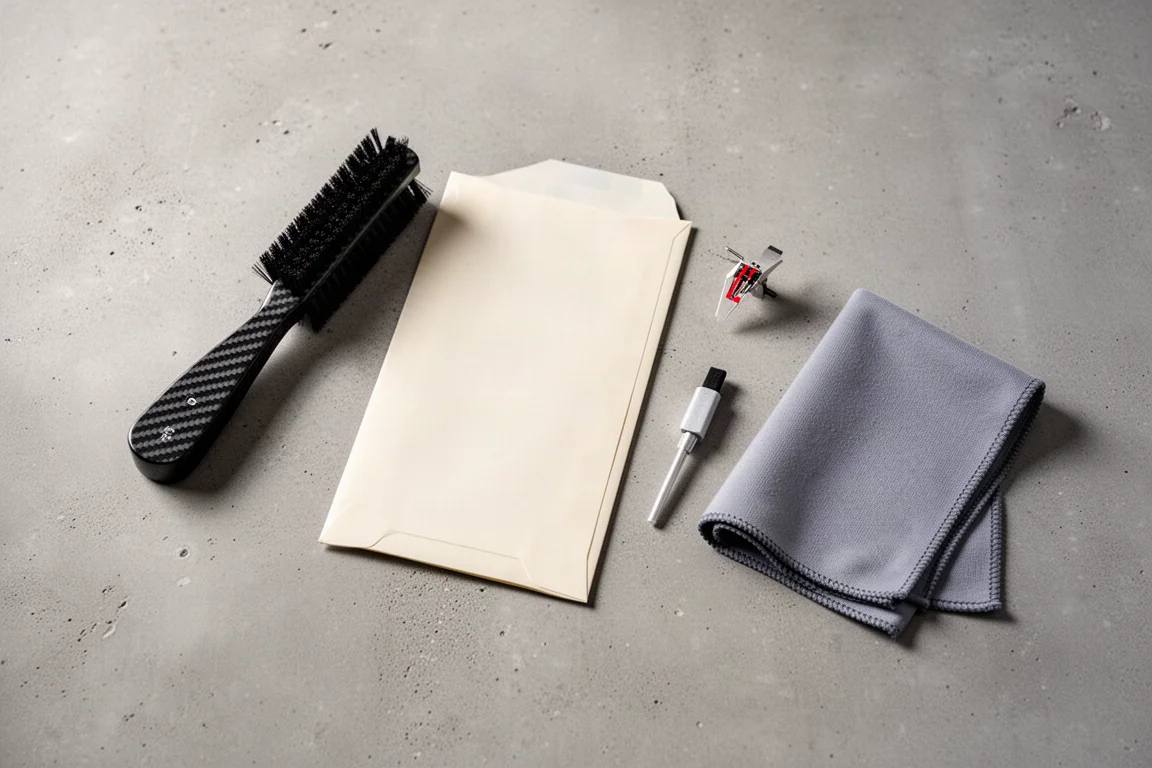
Static behavior is the headline result: the mat did not stick to records. It may pick up dust from a record, but the specks tend to stay on the mat rather than transferring to the next record, and they brush off easily with an inexpensive carbon fiber brush or a pool-table style brush.
Sonically, the mat produced an improvement in dynamics and a little more separation between instruments on some turntables, with the difference more obvious on others. Even where the sound change is subtle, it is an outstanding choice for anyone dealing with static who does not want to alter the character of the turntable’s design.
Auditorium 23 Homagemat: The Step-Up Option
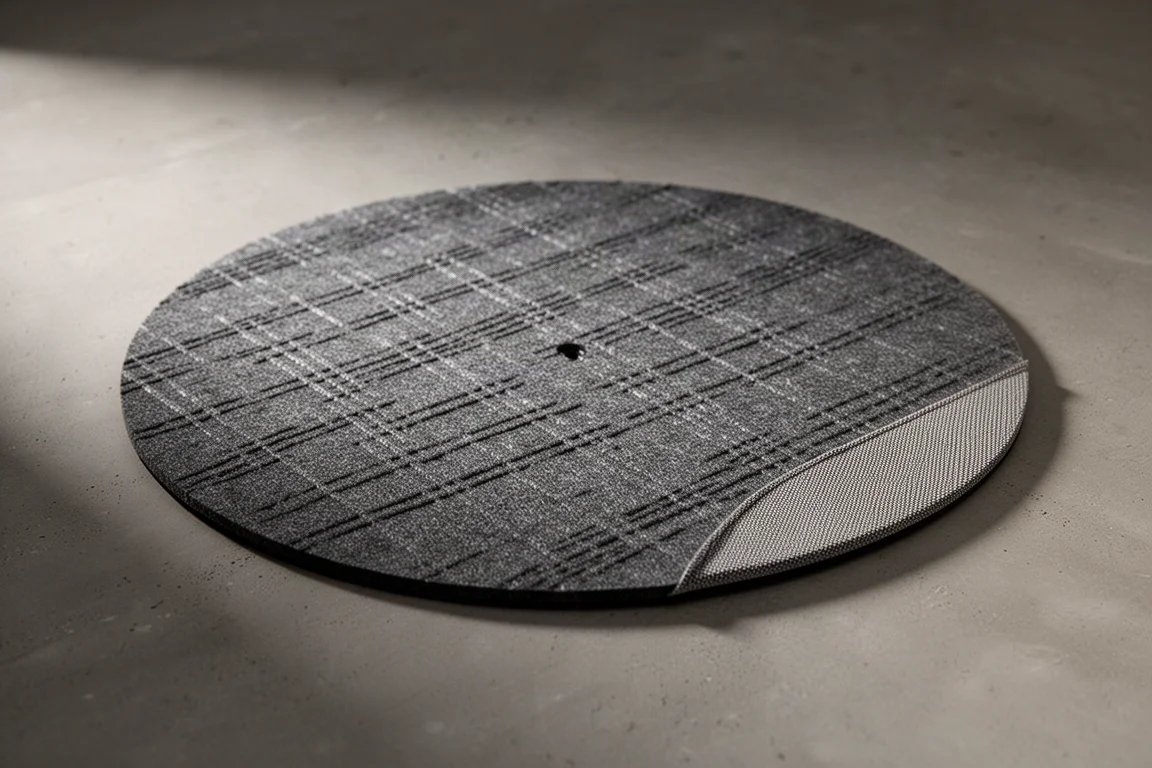
The Homagemat is Auditorium 23’s better mat, and it is built quite differently. To the eye it appears to be made of three layers: a textured wool layer on the top and bottom with something stiff in the center. Construction details are not published. It does not flop around like a felt mat and is a little stiff, although it still bends easily.
At 100 grams it is not heavy, and at 2.5 millimeters it is about one millimeter thicker than the average felt mat. That small difference should suit most turntables without a vertical tracking angle adjustment, unless the cartridge is unusually sensitive to VTA changes, such as one fitted with a Shibata stylus.
Static and dust are a non-issue here: no sticking to records, and the mat does not seem to hold dust or smaller particles. The sonic gains were more pronounced than with the entry mat. Dynamics came alive, the texture of voices improved noticeably, and surface noise seemed lower.
This is a mat for a higher-end turntable fitted with a felt-type mat. It is not a sensible match for a 400 to 600 turntable.
Spec Analog Dish Sheet Mat: The Performance Choice
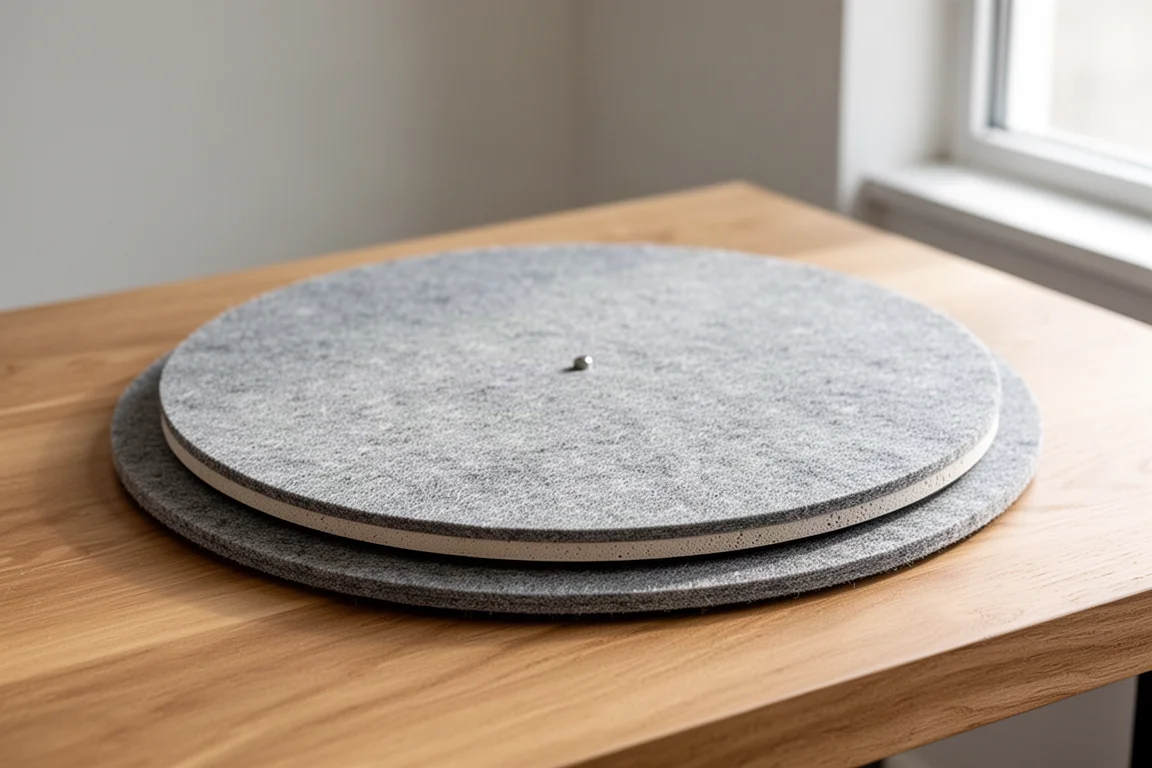
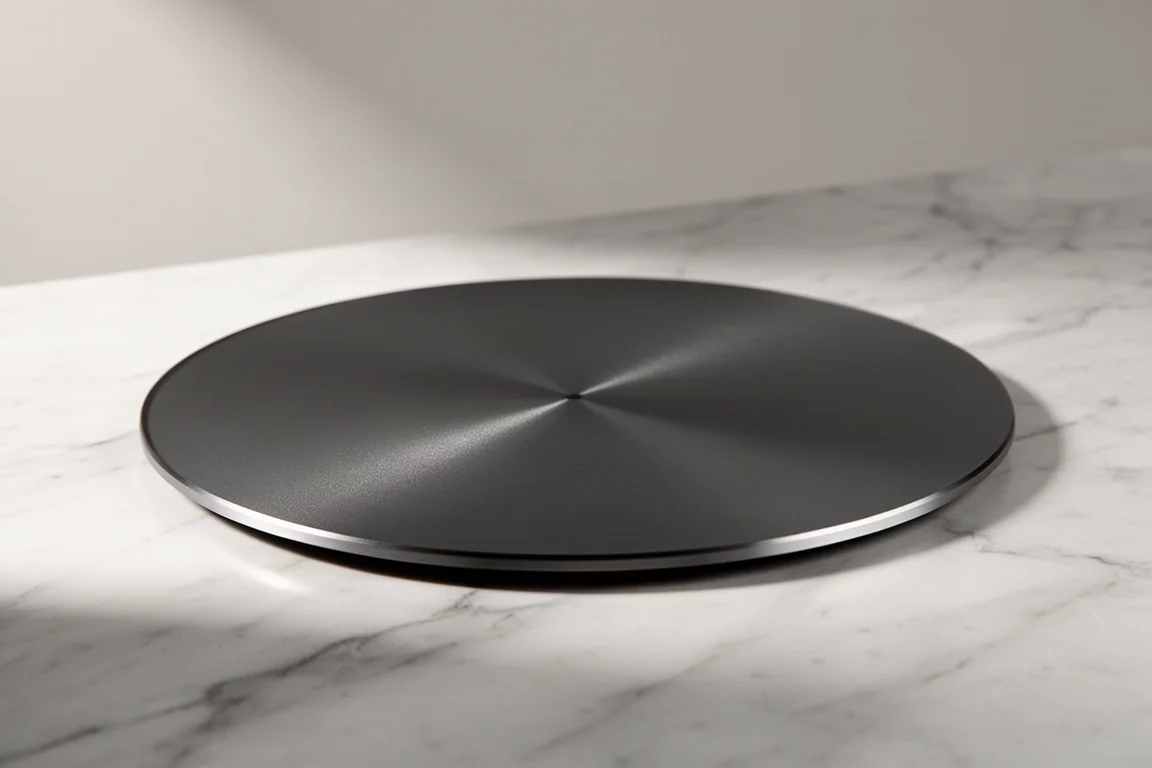
The Spec Analog Dish Sheet mat is the most expensive of the three, and it delivers the largest sonic change. It is very stiff yet quite thin, close to a stock felt mat in profile. The core is aluminum, coated with a special material that the company says is very similar to the material used on a record’s master stamper. It feels ever so slightly soft to the touch and has a matte finish.
Care is simple but specific: brush it off rather than cleaning it, because alcohol-based cleaners will damage the resin in the outer finish. At 230 grams it is heavier than the other two mats but far from the heaviest on the market. Fitted to a suspended turntable, it caused no noticeable change in suspension deflection, which suggests it is light enough for most sprung designs. At 1.7 millimeters thick, it can go on essentially any turntable without VTA worries.

Static and dust capture were nonexistent. One quirk takes getting used to: the mat is slightly larger in diameter than a record, so lifting a disc off the platter requires a new habit. Surface noise did not drop, but dynamics improved substantially, making subtle volume changes in instruments and voices easier to hear and bringing playback closer to a live performance.
This mat suits more expensive turntables that came with a felt mat, or turntables designed to run without a mat at all, where it should still offer an improvement over the bare platter.
Buying Advice
For most people, the standard Auditorium 23 mat is the best choice. Its weight and thickness are close enough to a stock felt mat that it drops in without tonearm height changes or suspension worries, and it ends static cling in use. Listeners with a better turntable rig should consider the step-up options, where the sonic gains are more audible.
Matching the mat to the turntable matters more than the price tag. Check whether the tonearm height can be adjusted, whether the platter sits on a spring suspension, and how thick and heavy the stock mat is. Then choose the mat that stays closest to those numbers while solving the static problem.
Conclusion
All three mats share one important quality: no more static cling. Beyond that, they scale with the turntable they sit on, from a near drop-in felt replacement to a coated aluminum mat that lifts dynamics noticeably. Choose the one that matches the deck, and the upgrade stays simple.
Further reading
Related Reviews

Turntable Accessories
Turntable Accessories Roundup: A Light, a Weight, Isolation Feet, and a Remote
Four accessories for vinyl and streaming setups, with clear notes on what each one does well and where the trade-offs sit.

Backpacking Gear
Building a 10 lb Base Weight: An Ultralight Backpacking Gear List
A practical walkthrough of the ultralight pieces behind a 10 lb base weight, from a 765 g pack and a roomy one-person tent to a full camp chair and a dependable water filter.

Road Bikes
10 New Road Bikes Worth Watching: Aero, Titanium, Steel and Endurance Standouts
A practical roundup of 10 new road bikes, from aero flagships chasing single-watt gains to titanium, steel and endurance platforms built for real roads.