Astrophotography
TTArtisan 500mm f/6.3 vs William Optics SpaceCat 61 vs Canon RF 100-300mm f/2.8: Deep Sky Astrophotography Compared
A budget telephoto lens, a dedicated astrograph, and an ultra-premium zoom all point at the same nebula. Here is how they compare for deep sky work.
Introduction
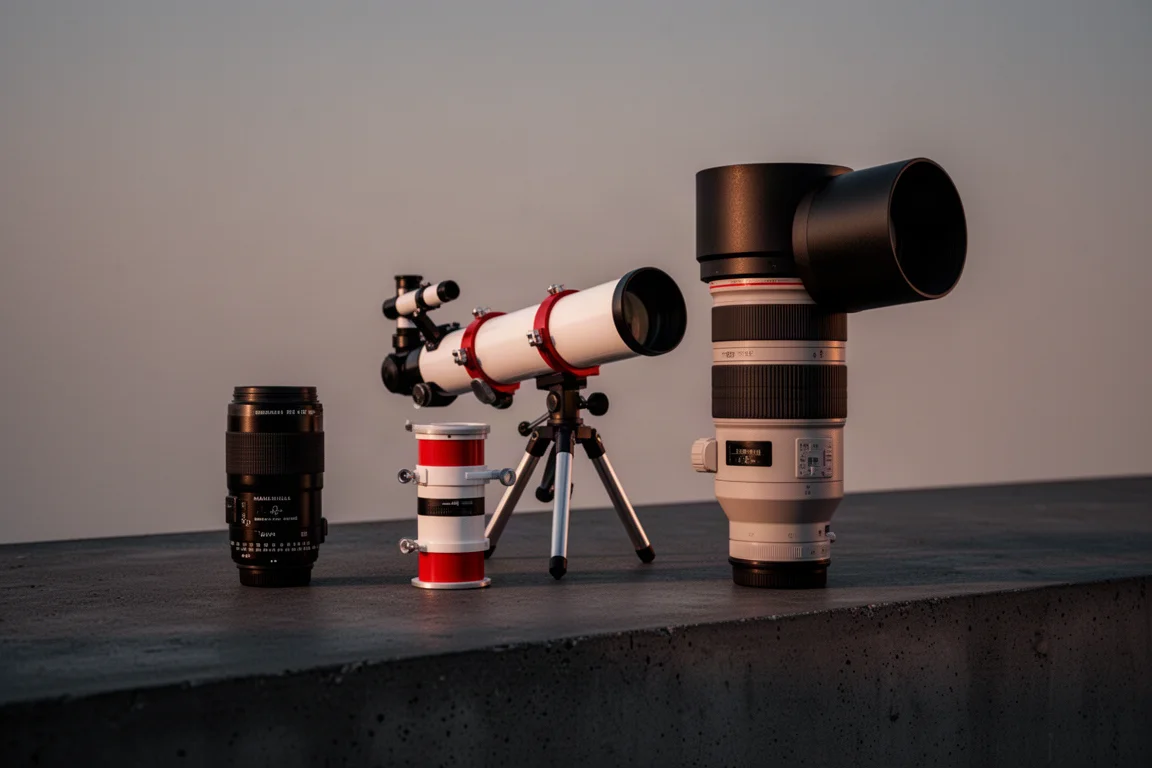
Why buy a small refractor telescope for deep sky astrophotography when telephoto lenses exist in the same focal length range? It is a fair question, and one worth answering with real images rather than spec sheets.
To find out, all three optics were pointed at the Flaming Star Nebula in the constellation Auriga on a single night, using the same mount and the same camera. The lineup covers three very different price philosophies: an inexpensive manual telephoto lens from TTArtisan, a mid-priced dedicated imaging refractor from William Optics, and an ultra-premium Canon zoom. The short answer: the differences are not only about final image quality. Practical details like focusing, mounting, and filter compatibility matter just as much once you get serious about deep sky work.
Why the Support System Matters
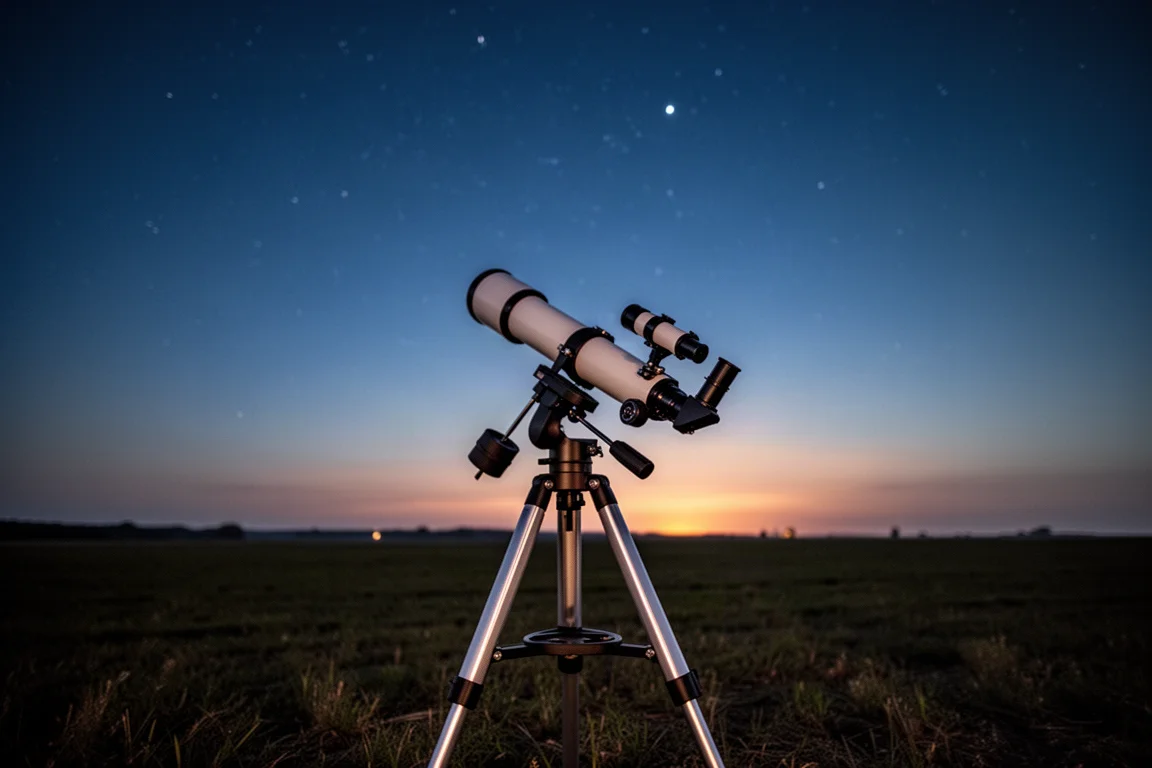
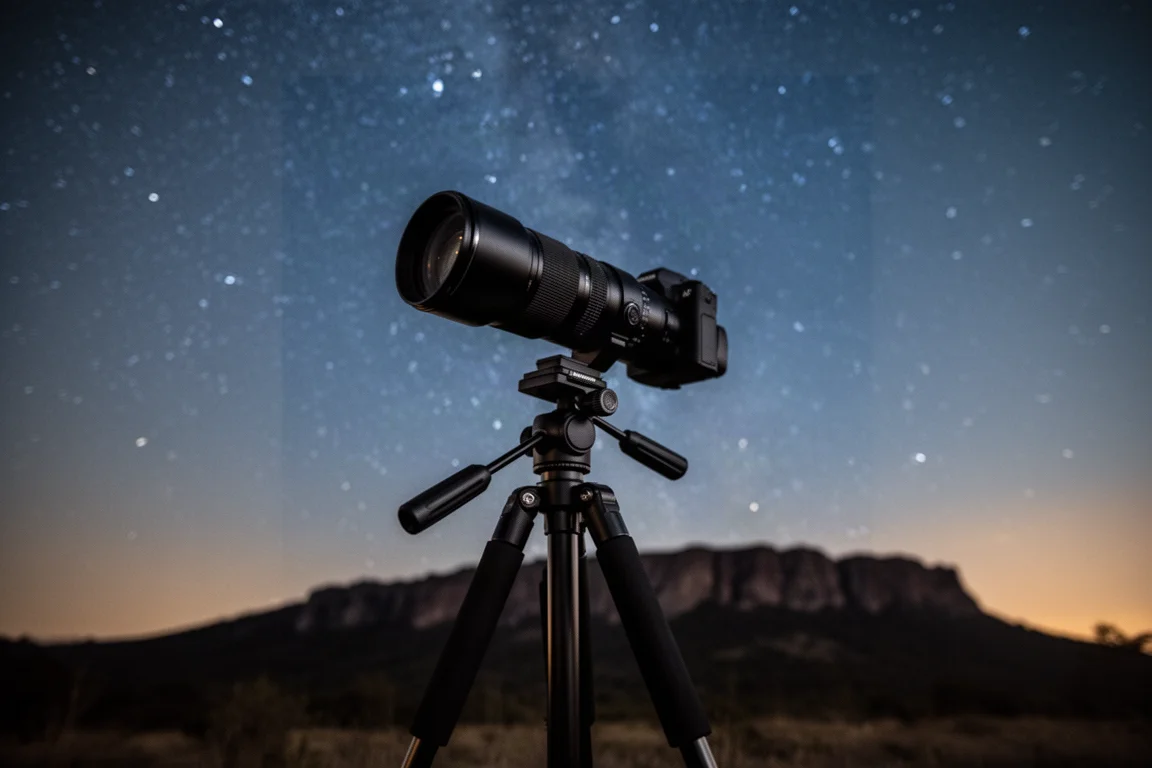
At focal lengths of 300mm and up, deep sky targets like nebulae and galaxies demand a tracking mount, and realistically an autoguiding system too. An autoguider is a tiny secondary telescope and camera that watches the stars, refreshes roughly every second, and sends small corrections to the mount. That combination is what allows exposures several minutes long with pinpoint stars instead of trails.
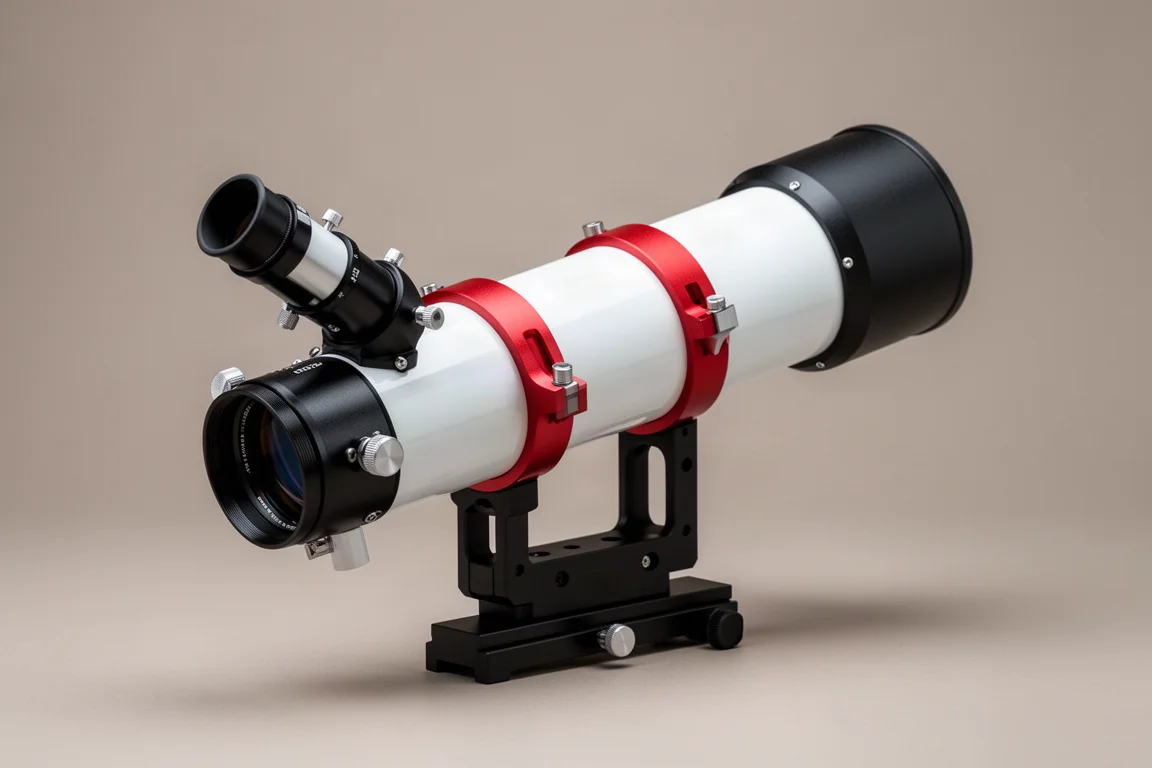
This is where the first practical difference appears. Telescope mounts use dovetail plates, such as Vixen or Losmandy plates, that differ from standard photography mounting. To put a camera lens on a tracking mount, you need a universal Vixen dovetail plate, quarter-inch cap head hex screws in the right length, and an extra-long dovetail if you also want to under-sling a guide scope. With a dedicated imaging refractor like the SpaceCat 61, all of that is already solved: it mounts cleanly, and a guide scope fits without improvisation.
Filter use is a similar story. Duo narrowband filters, popular for blocking light pollution while letting emission nebulae through, simply screw into a dedicated slot on the back of the refractor. With a camera lens, you depend on clip-in filters made for your specific camera body, and options can be limited depending on your system. With the refractor, any threaded astronomical filter is available to you.
Focusing and Framing
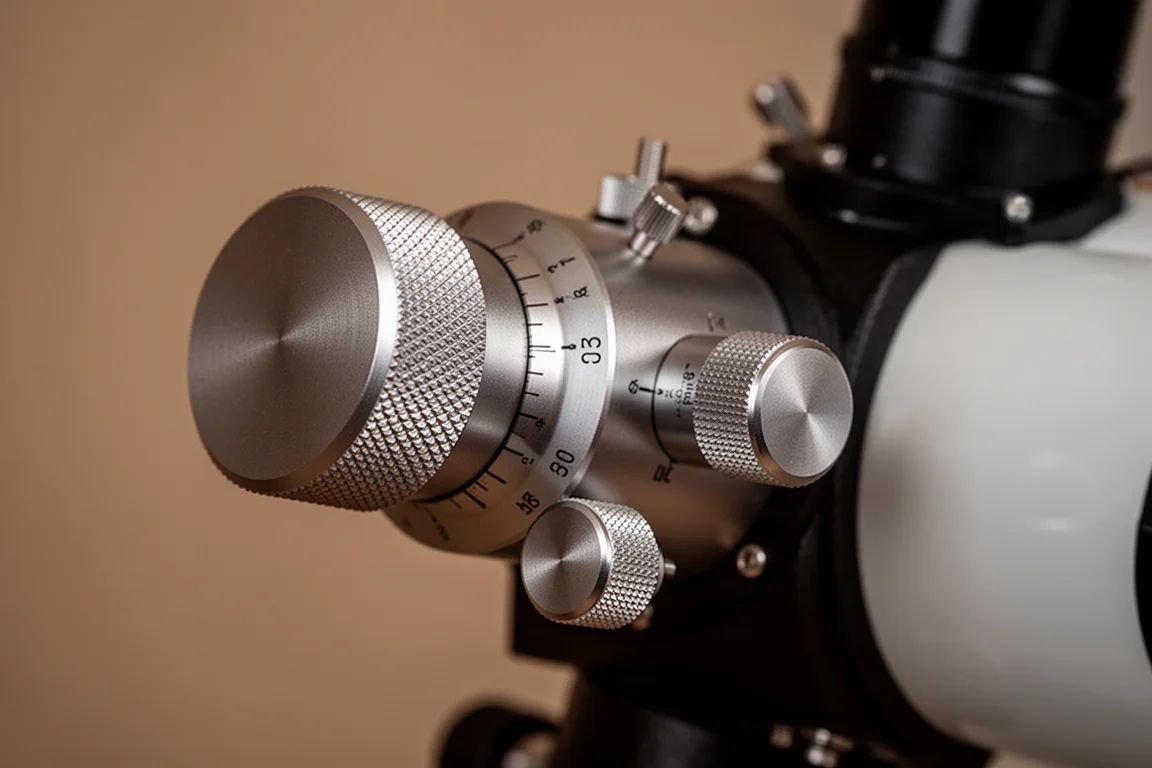
The SpaceCat 61 uses a patented internal focus system with a traditional focusing knob plus a 10:1 reduction knob for fine control. It also ships with a clear Bahtinov mask built into the lens cap, an excellent tool for nailing manual focus using the diffraction pattern it creates on bright stars. If you want to automate focus, a third-party electronic focuser attaches easily, and camera rotation for framing happens at the rotator behind the focuser, with markings so you know exactly how far you have turned.
A camera lens makes this harder. Automating focus on a lens means hunting for a belt and likely a 3D printed part, and once the belt is on, rotating the lens for framing becomes awkward. Rotation has to happen through the tripod ring, which is fiddly during a session.
Focal Length, Aperture, and Versatility
The SpaceCat 61 is a fixed 300mm at f/4.9, with no other options. It does that one job very well, because every design choice was made for astrophotography. It is an astrograph, not even intended for visual astronomy, and it is the least useful of the three for daytime shooting.
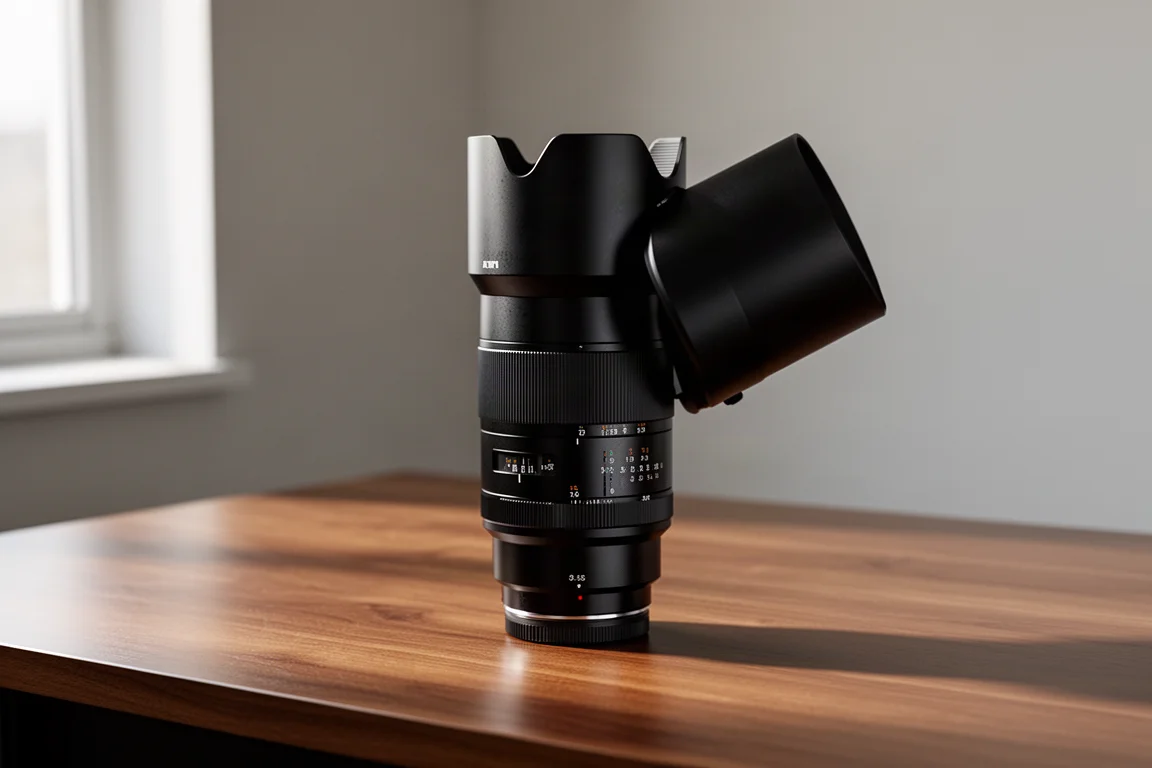
The TTArtisan is fixed at 500mm with a maximum aperture of f/6.3, but an internal iris stops down to f/32. That tiny aperture is unnecessary for astrophotography, though it adds daytime flexibility. There is no image stabilization and focus is manual only, so it is mostly a tripod lens.
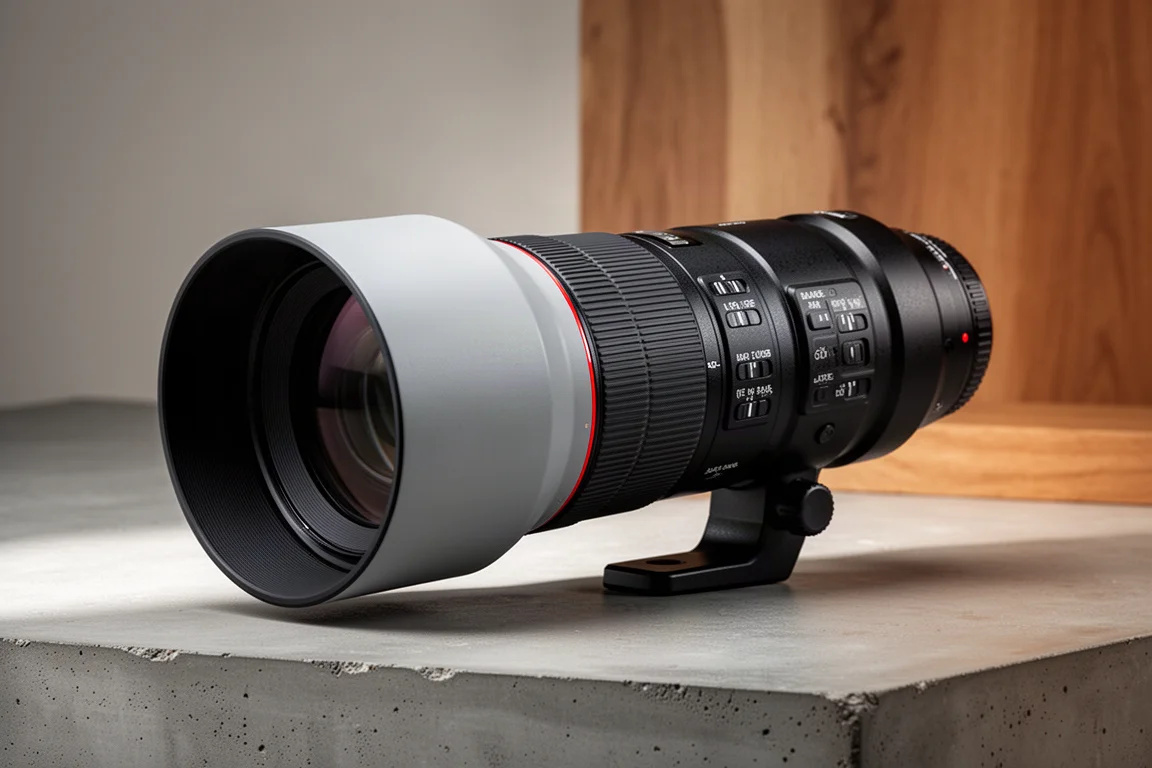
The Canon RF 100-300mm f/2.8 is the all-rounder: a zoom range of 100 to 300mm at a constant f/2.8, stopping down to f/22, with fast, reliable autofocus and image stabilization. It is ready for bright sun, dusk, sports, wildlife, or night skies. That versatility is a large part of what you are paying for.
The Glass Inside
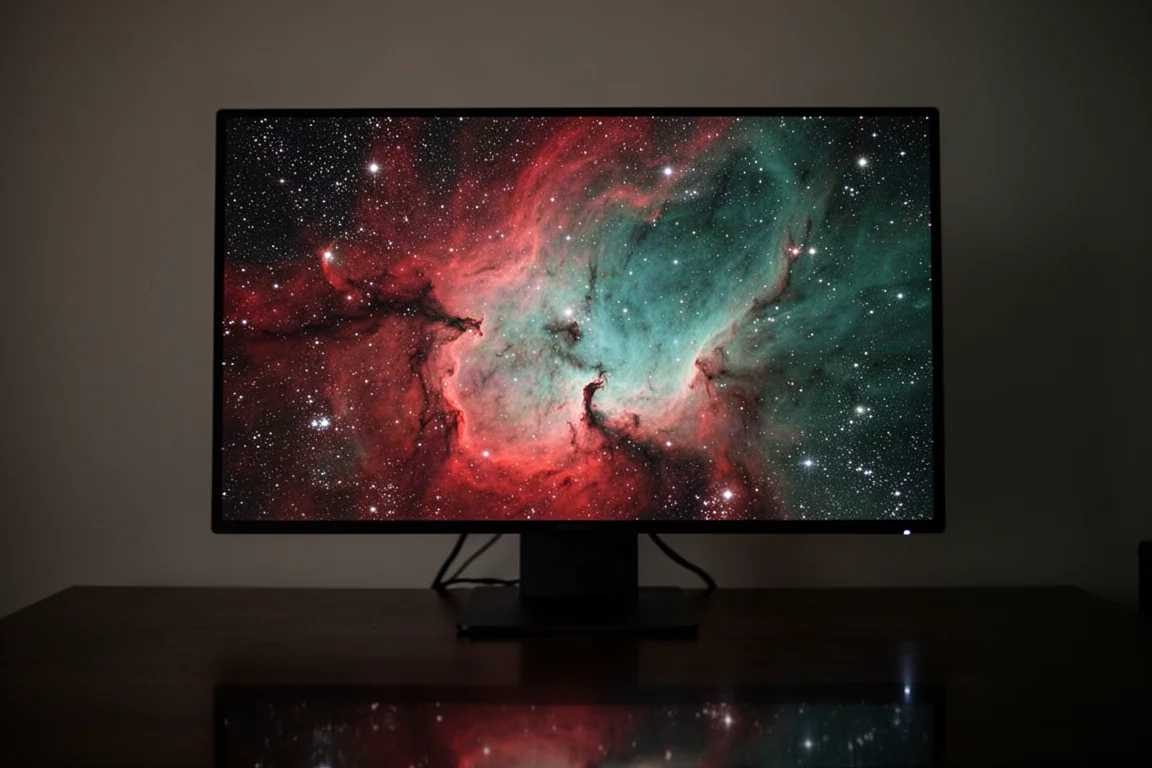
Glass configuration matters because it controls chromatic aberration. When chromatic aberration is well controlled, stars show their true color with no fringing. When it is not, bright stars gain magenta, violet, or multicolored halos that become more distracting the longer your total integration time.
The TTArtisan uses eight glass elements, two of them extra-low dispersion, though the specific types are not stated. The William Optics uses four elements in a petal configuration with at least one FPL-53 synthetic fluorite element, widely considered among the best and most expensive ED glass types. The Canon uses 23 elements, four claimed as ultra-low dispersion, plus one actual fluorite crystal element, the rarest and most expensive way to control chromatic aberration. Canon is notably one of the few companies that manufactures its own fluorite elements, even supplying high-end telescope makers.
How the Images Actually Looked
All three were shot in one night with the target high in the sky, on the same mount and camera, with total exposure time adjusted for focal ratio to equalize signal to noise. Field coverage was excellent across the board: the two lenses showed minimal corner vignetting, and the SpaceCat 61, unusually for a telescope, showed essentially none.
In single exposures, the Canon was sharp in the center with some corner distortion on one side, likely from a small sensor tilt in the test camera. The SpaceCat corrected its corners noticeably better. The TTArtisan surprised: the expected violet halos from a budget lens are there, but distortion was impressively restrained.
In the processed stacks, color rendering differed slightly. The Canon leaned a little blue, the SpaceCat read as very neutral, and the TTArtisan a touch yellow-green. All of that is correctable with photometric color calibration in software like Siril or PixInsight.
On detail, the three were remarkably close on the Flaming Star Nebula. The SpaceCat and Canon essentially matched each other, and the TTArtisan held up well considering its longer focal length means it is rendering a more zoomed-in field, so it is not quite as sharp per unit of sky. Optically, there is not a huge gap between the budget lens and the rest. The practical advantages of the telescope, not raw optics, are what separate them.
Which One Should You Buy?
Each of these occupies a clear role, and the right choice depends on where you are in the hobby.
The Canon RF 100-300mm f/2.8 is the all-rounder. If you already shoot sports or wildlife and own one, the answer to whether it can do astrophotography is a resounding yes. It performed very well under the stars, as it should at this level, and it handles everything else in daylight too.
The SpaceCat 61 is the pick for a dedicated deep sky astrophotographer. It wins on practicality: mounting, guiding, filters, focusing, and rotation are all solved out of the box. It also delivered the cleanest star profiles in the corners of a full-frame sensor, which matters for mosaics and demanding processing. Its charming design touches, including the playful lens cap and included space cat toy, do not hurt either.
The TTArtisan 500mm f/6.3 is the value champion. For around $300, the optical results are genuinely impressive. The violet halos on bright stars grow more noticeable as your integration time increases, and experienced astrophotographers may find them irritating, but as a beginner-friendly entry point it is hard to argue with. Many people could reasonably start here and upgrade to a refractor later, knowing the image quality jump will be subtle and the workflow improvements substantial.
Conclusion
All three can produce beautiful deep sky images, and on the same target in the same night they were closer in detail than their prices suggest. Choose the TTArtisan if budget comes first and you want to start shooting tonight. Choose the SpaceCat 61 if deep sky astrophotography is your focus and you want a rig that just works. Choose the Canon if you want one premium optic that excels under the stars and everywhere else. Clear skies!
Further reading
Related Reviews
Astrophotography
ASKAR FRA400C Review: A Versatile 400mm Refractor for Astrophotography and More
The ASKAR FRA400C is a compact 72mm refractor that balances reach, versatility, and portability for astrophotographers and visual observers.
Astrophotography
Askar SQA106 Review: A Premium 106mm Astrograph With Exceptional Optics
The Askar SQA106 is a premium 106mm quintuplet astrograph with impressive sharpness across full-frame sensors, though its price and weight demand careful consideration.
Astrophotography
Astro Imaging Gear 2026: Eight New Products Worth Watching
A look at the most interesting new astrophotography and astronomy products announced this year, from fast telescopes to smart cameras and wireless accessories.