Reef Tank Supplements
Tropic Marin NP-Bacto Balance, Elimi-NP and Plus-NP: Which Carbon Dosing Product Fits Your Reef?
A practical guide to Tropic Marin's three carbon dosing products, covering when to maintain, when to lower phosphate, and when to raise nutrients.

Introduction
Tropic Marin takes a different route into carbon dosing, and the result is a method that is easier to succeed with, particularly for reef keepers trying it for the first time. The company builds its approach around a carbon source aimed at specific beneficial bacteria rather than a general one, which lowers the risk of feeding the nuisance algae and bacterial films that many carbon dosing routines accidentally encourage.
There are three products in this family, and they are not interchangeable. Tropic Marin NP-Bacto Balance maintains ideal nitrate and phosphate levels while supplying the carbon source. Tropic Marin Elimi-NP uses the same carbon source without added nutrients, and it is the one to reach for when phosphate is running high. Tropic Marin Plus-NP adds the same carbon source while lifting nutrients, which is what an ultra low nutrient system needs. The sections below explain where each one belongs.
How Carbon Dosing Works in a Reef Tank
Carbon dosing works by giving the phosphate-loving beneficial bacteria in a reef tank a food source. With that carbon available, those bacteria proliferate, and as they multiply they pull more phosphate out of the water, so the overall phosphate level in the aquarium falls. Nitrate tends to come down as well, though for a slightly different reason that becomes clearer below.
The common stumbling block is that most carbon dosing methods do not use a carbon source targeted at those particular bacteria. Many other organisms in the tank, including the nuisance algae and bacteria a keeper is trying to get rid of, can use a general carbon source as fuel to grow. Carbon dosing also only works when the targeted bacteria have enough phosphate in the water to actually use the carbon being supplied. A tank with no phosphate but plenty of nitrate is a poor candidate, because there is nothing for the process to work with.
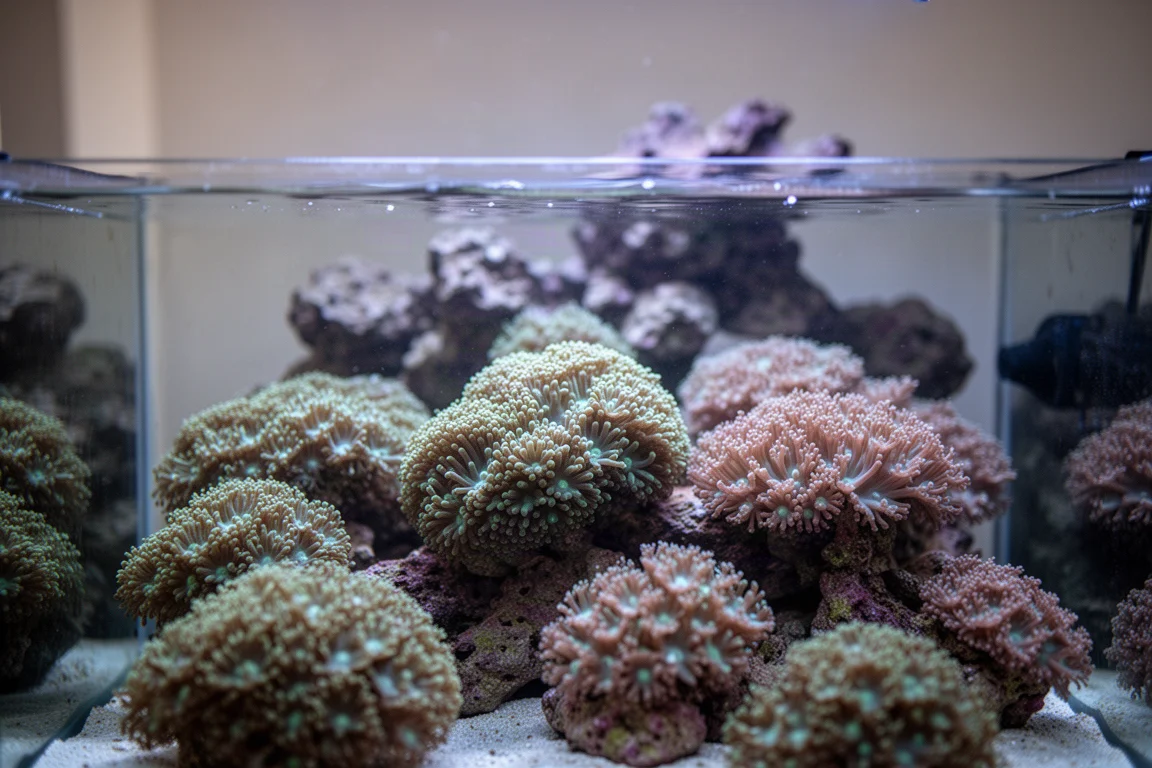
Tropic Marin’s answer is to add not only a carbon source aimed at the beneficial bacteria that consume phosphate, but also enough phosphate and nitrate to hold those minimum levels steady. That combination is what keeps the method low risk: the tank is fed rather than stripped, and the bacteria stay productive.
Tropic Marin NP-Bacto Balance: Maintaining Ideal Nutrient Levels
NP-Bacto Balance is designed for aquariums already sitting in a moderate range, with phosphate between 0.03 and 0.1 and nitrate somewhere between 1.0 and 2.0. The nitrate figure is more flexible than the phosphate one, so a slightly higher nitrate reading is not a problem, but the levels should not sit below that window.
The product is supplied in 200 ml, 500 ml and 1,000 ml bottles. At the strongest recommended dose, the 1,000 ml bottle is stated to treat 25,000 gallons, and a $35 bottle is enough to carry a mature 70 gallon reef tank through an entire year. That keeps the ongoing cost modest for a tank of that size.
Dosing follows the maturity of the reef. Tanks under a year old can take up to 0.25 ml per 25 gallons daily. Maturing reefs between one and two years old can take up to 0.5 ml per 25 gallons daily. Fully established tanks of two years or more can take 0.5 to 1 ml per 25 gallons daily. The dose goes into a high flow area of the tank, such as over a flow pump, shortly after the lights come on. Adding it later in the light cycle does no harm if the timing is missed.
The benefit beyond stable nutrients is that corals get the phosphate they need, neatly packaged inside the beneficial bacteria they readily consume. Filter feeders eat bacteria constantly, and with the extra phosphate those organisms take in, they also consume more nitrate, which helps explain the drop in nitrate that accompanies carbon dosing. The practical result is healthier, more colorful corals and less nuisance algae.

Tropic Marin Elimi-NP: Bringing High Phosphate Back Down
NP-Bacto Balance has a clear limitation: it is a maintenance method for a tank that is already close to the optimal range. A reef with phosphate well over 0.1 needs something with more room to move. That is where Tropic Marin Elimi-NP comes in. It uses the same carbon source as NP-Bacto Balance, but without any added nitrate or phosphate, so the process can pull elevated levels down toward the sweet spot without nutrients being added back at the same time.
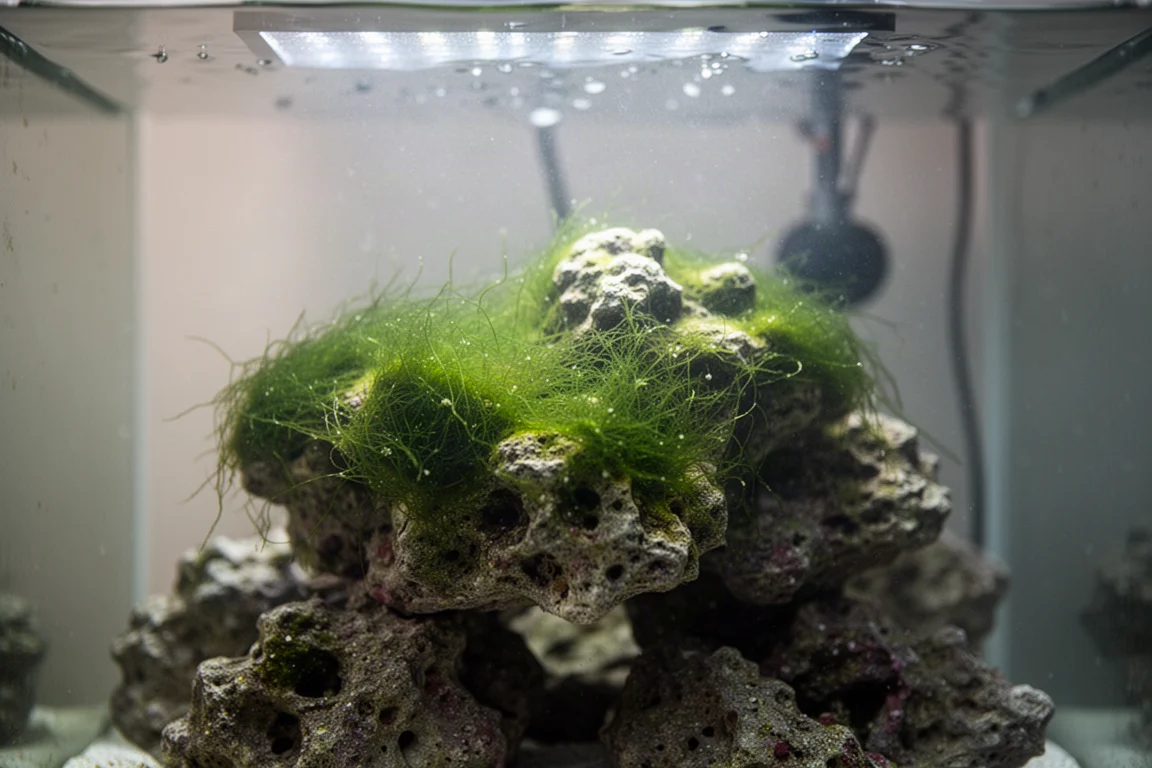
The intended pattern is a two-stage one rather than a permanent switch. Elimi-NP does the work of reducing high phosphate, and once readings land inside the target range, the tank moves over to NP-Bacto Balance to hold them there.
For a keeper whose phosphate has drifted well above where it should be, this staged approach keeps the transition simple: correct first, then maintain.

Tropic Marin Plus-NP: Recovering Ultra Low Nutrient Systems
At the other end of the scale are ultra low nutrient systems, where phosphate is so low that it does not register on a test kit and corals look pale. Stripping nutrients further is the wrong move here, and a standard carbon dosing routine can make matters worse. Tropic Marin Plus-NP adds the same carbon source while bringing nutrient levels up, which lets a tank come out of the nutrient-depleted stage without abandoning carbon dosing altogether.
As with Elimi-NP, the role is transitional. Once the very low phosphate has been raised, the tank can move to NP-Bacto Balance to maintain the optimum level. The appeal of the approach is that corals get the nutrition they are missing during the recovery period, rather than simply waiting for it to appear.

Dosing Basics and Practical Considerations
The first step with any of the three products is testing. Phosphate and nitrate readings determine which bottle is appropriate, because the family is arranged around nutrient levels rather than tank size or coral stock. Running a maintenance product in a tank that is genuinely low on nutrients, or a nutrient-lifting product in a tank with phosphate well above range, works against the intended purpose.
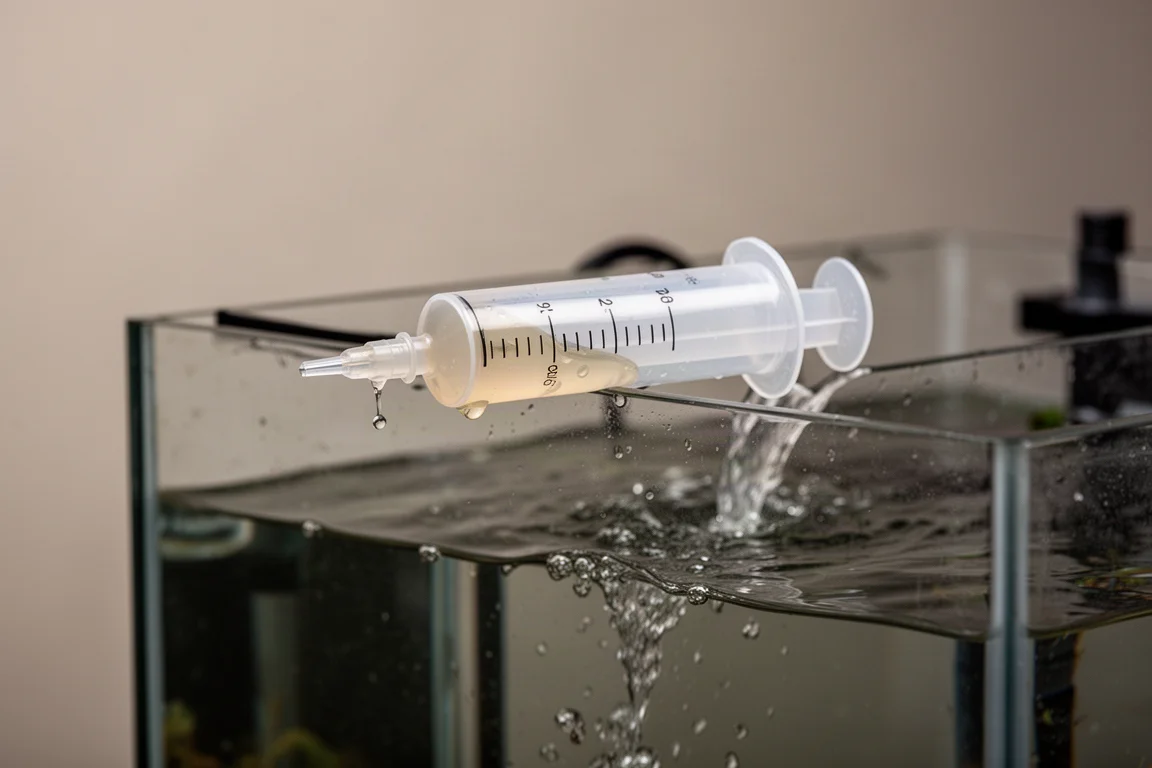
Once the right product is chosen, the daily routine is simple: measure, add to a high flow area of the tank, and keep testing so the levels stay inside the target window. Because the dose scales with the maturity of the reef, it is worth revisiting as a tank ages, moving from the new-tank rate to the maturing-reef rate and eventually to the established-tank range.
Alternatives to Carbon Dosing
Carbon dosing is not the only route to lower nitrate and phosphate. A refugium filled with chaeto is a long-standing, hands-off alternative that lets algae do the heavy lifting of nutrient export. It suits keepers who prefer a more natural, low-intervention approach and who do not want to manage a daily dose.
The two methods are not mutually exclusive. A refugium and a carbon dosing product can run alongside each other, and some reef keepers use both to cover different aspects of nutrient control. The choice comes down to how much hands-on management a keeper wants, and whether the idea of feeding corals through bacteria is worth the daily routine.
Buying Advice: Which Tropic Marin Product Fits Your Reef
Start with test results rather than with the product line. A tank holding phosphate between 0.03 and 0.1 and nitrate between 1.0 and 2.0 is in the maintenance window, and NP-Bacto Balance is the match. It is also the sensible entry point for anyone new to carbon dosing, because the added phosphate and nitrate reduce the risk of pushing nutrients to zero.
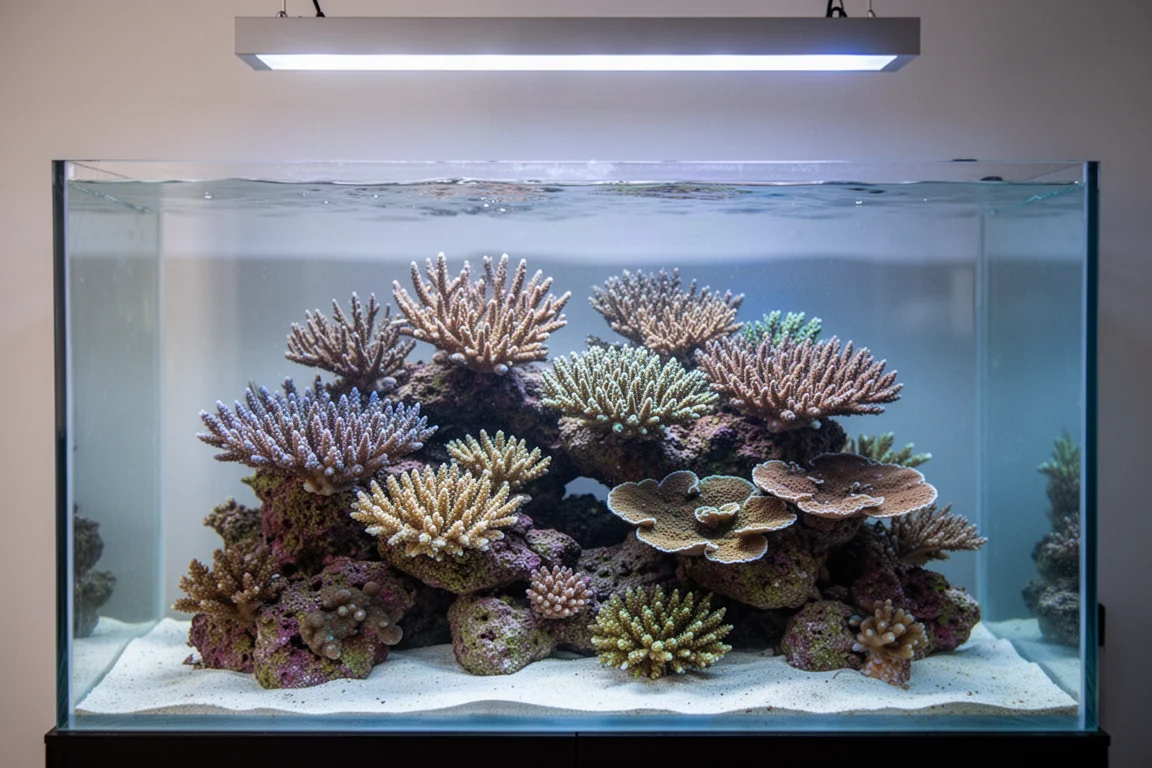
Phosphate well above 0.1 points to Elimi-NP, which brings levels down before a switch to NP-Bacto Balance for the long term. Phosphate that will not register on a test kit, alongside pale corals, points to Plus-NP to raise levels first. Across all three, the same habits matter: test consistently, dose into high flow shortly after the lights come on, and adjust the daily amount as the reef matures.
Conclusion
Tropic Marin’s three-product approach removes much of the guesswork that makes carbon dosing intimidating. NP-Bacto Balance maintains nutrient levels while feeding a carbon source aimed at beneficial bacteria, Elimi-NP handles the correction when phosphate runs high, and Plus-NP lifts ultra low nutrient systems that would otherwise struggle with carbon dosing at all.
Read the test kit first, choose the bottle that matches the reading, and the routine becomes straightforward: dose daily, keep nutrients inside the target range, and let the corals take their share of the phosphate through the bacteria they already feed on.
Further reading
Related Reviews
Reef Tank Supplements
Dosing Phosphate in a Reef Tank: Tropic Marin Phos-Start and Phos-Feed Explained
A practical look at two particulate phosphate supplements for reef tanks, one for the cycling stage and one for established systems running low on phosphate.

Backpacking Gear
Building a 10 lb Base Weight: An Ultralight Backpacking Gear List
A practical walkthrough of the ultralight pieces behind a 10 lb base weight, from a 765 g pack and a roomy one-person tent to a full camp chair and a dependable water filter.

Road Bikes
10 New Road Bikes Worth Watching: Aero, Titanium, Steel and Endurance Standouts
A practical roundup of 10 new road bikes, from aero flagships chasing single-watt gains to titanium, steel and endurance platforms built for real roads.