Reef Tank Supplements
Dosing Phosphate in a Reef Tank: Tropic Marin Phos-Start and Phos-Feed Explained
A practical look at two particulate phosphate supplements for reef tanks, one for the cycling stage and one for established systems running low on phosphate.
Introduction
Phosphate is usually the nutrient reef keepers are trying to remove, so deliberately adding it can feel like a contradiction. It is not, once you look at what corals actually need. Phosphate supports core metabolic function in coral tissue, and a system that tests at or near zero is not automatically a healthy one.
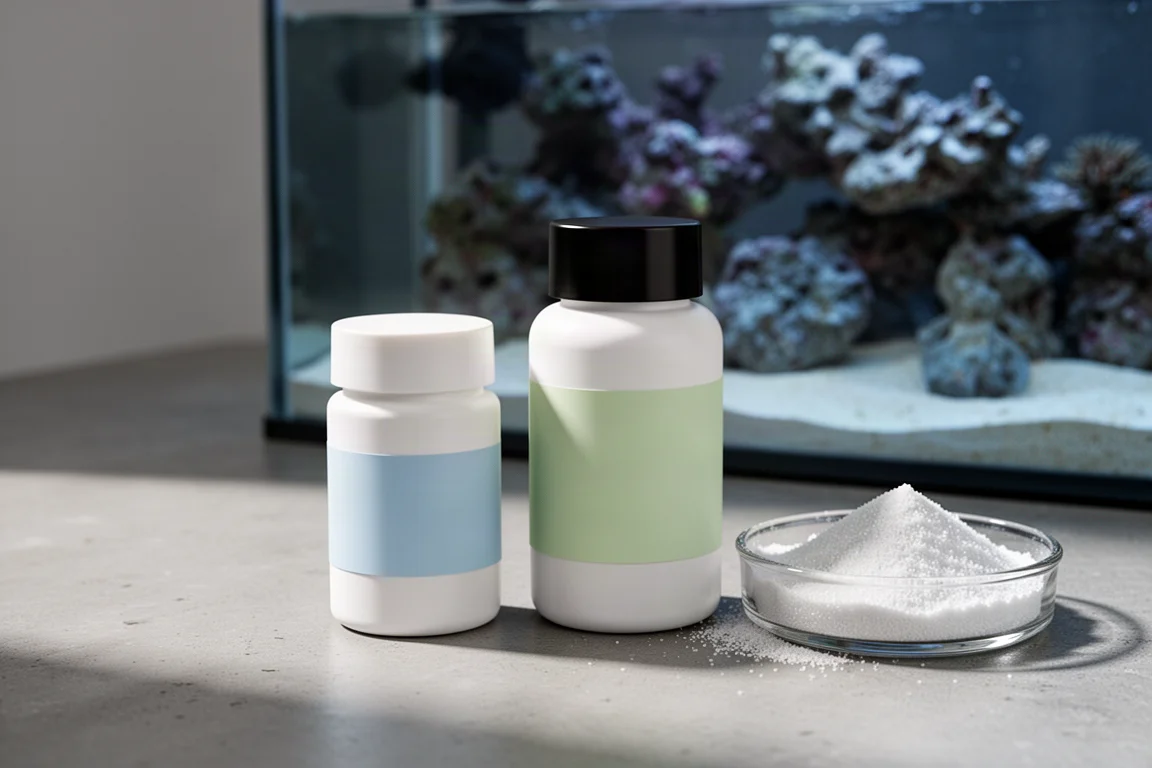
Two products address that gap directly. Tropic Marin Phos-Start is intended for a brand new system that is still cycling, while Tropic Marin Phos-Feed is intended for an established tank stocked with fish and corals that is still short on phosphate. Both supply phosphate in an undissolved, undissolvable particulate form, which is a different approach from simply raising a dissolved phosphate reading.
This guide covers what each product does, how they differ, and how to decide which one belongs in your tank.
What Makes These Phosphate Products Different
Most phosphate additions raise the dissolved phosphate level that a test kit measures. These products work differently. They add phosphate as a particulate solid that stays in the system rather than dissolving into the water.
That distinction matters because coral polyps take up phosphate more effectively from particulate material than from the dissolved form in the water column. In a natural reef setting, the equivalent supply arrives as fish waste drifting over the reef, which gives corals a concentrated, accessible source of phosphate before it disperses.
Because the phosphate is particulate, a standard test kit will not register it directly. You may still see the water column reading drift upward over time, but that happens indirectly: as organisms use the easier particulate source, bacteria remove less phosphate from the water, so dissolved phosphate can rise gradually.
Tropic Marin Phos-Start: Phosphate Support During the Cycle
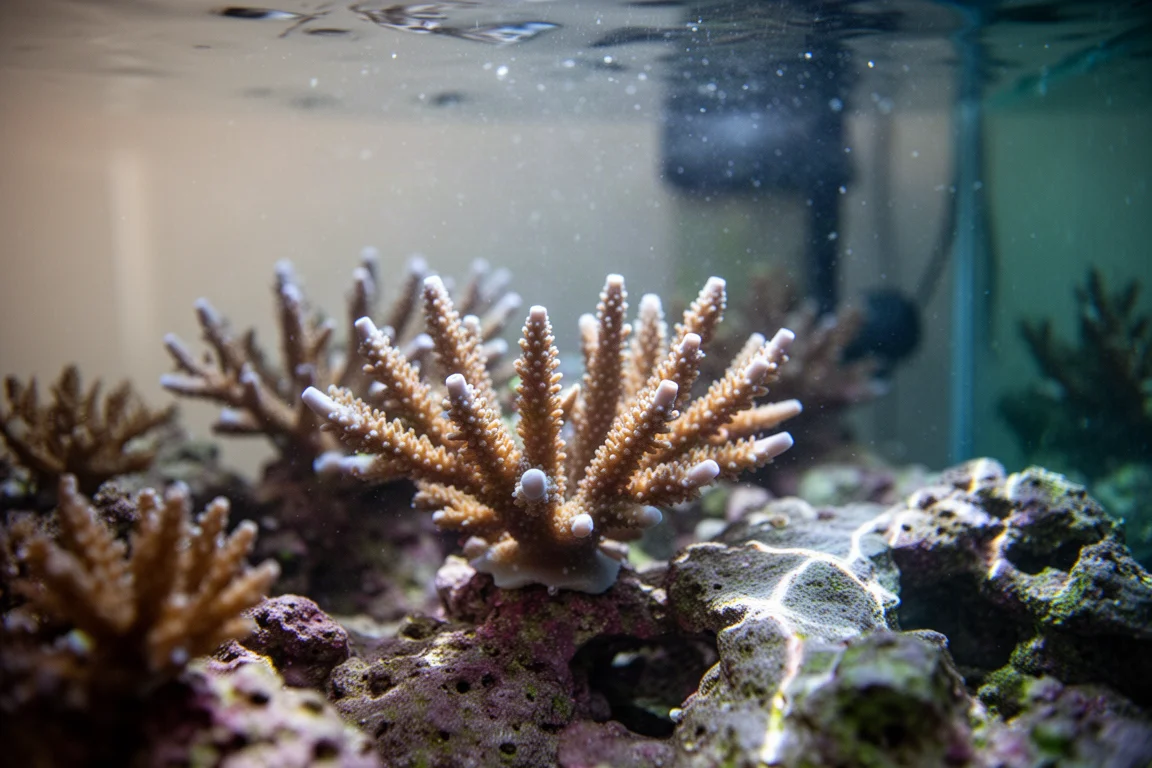
Phos-Start is designed for the earliest stage of a new system, while the tank is cycling and before any livestock goes in. Its purpose is to make sure phosphate is present from day one for the bacteria and the broader microbiome you are trying to establish.
The reason this matters is that a cycle is not only a nitrogen story. A traditional approach of adding a piece of shrimp or an ammonia source feeds the nitrogen side of the process, but it does not supply phosphate. The bacteria and other organisms that build a healthy biome need phosphate to grow, so a system that cycles with essentially no phosphate is working with a handicap.
Phos-Start is also described as Phos-Feed with an added carbon source. That means it supplies the phosphate the microbiome needs at the same time as it feeds the specific carbon-consuming bacteria you want to encourage during startup. Follow the dosing instructions supplied with the product for exact amounts.
Tropic Marin Phos-Feed: Ongoing Phosphate for a Stocked Tank
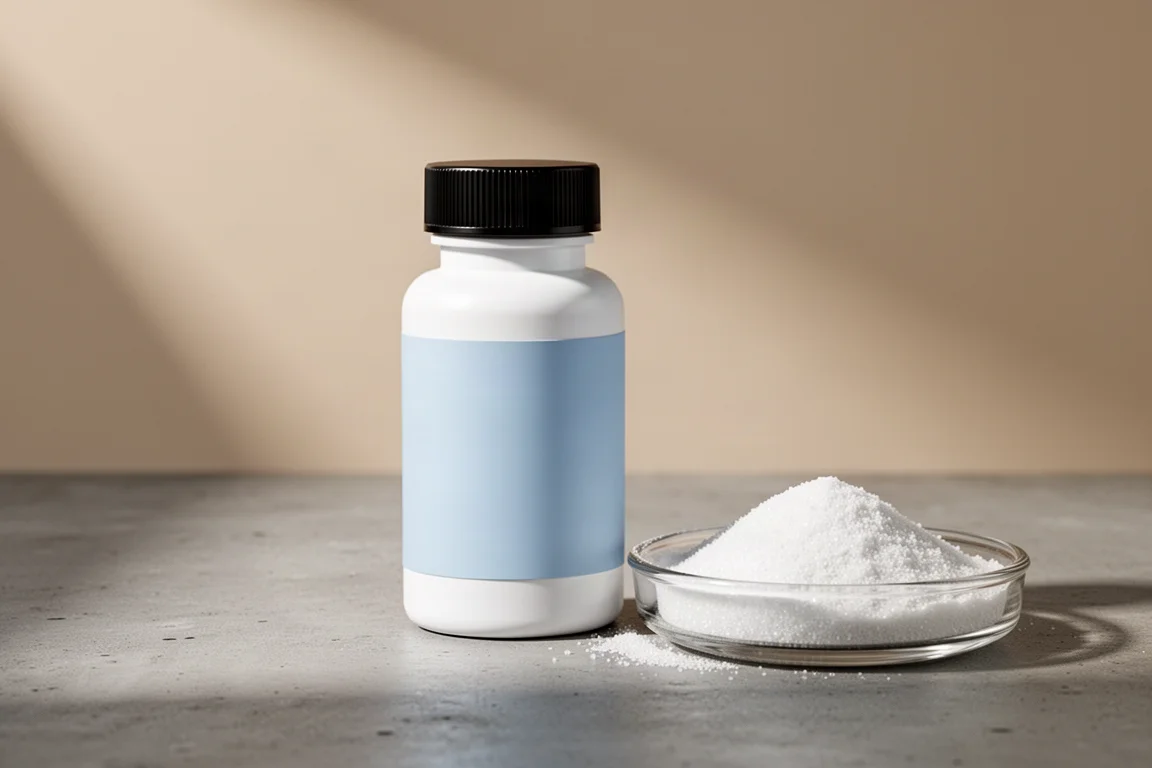
Once the tank has finished cycling and fish and corals are in place, Phos-Feed becomes the relevant product if phosphate is still testing low. It delivers the same particulate phosphate, this time aimed at the coral polyps themselves.
The advantage is that corals get a usable phosphate source even when the water column reads close to zero. In practice, that means you can keep dissolved phosphate at a level you are comfortable with while still making sure the corals are supplied.
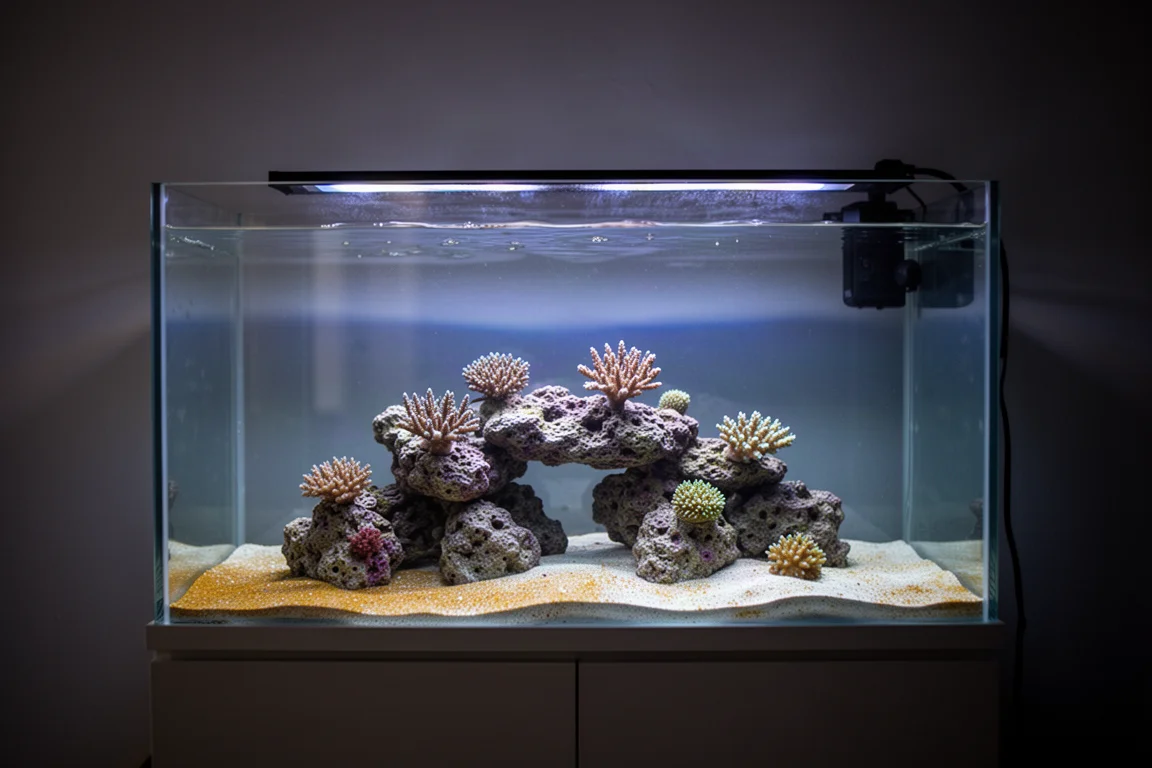
Because Phos-Start contains an added carbon source and Phos-Feed does not, the two are not interchangeable. Phos-Start is proportioned for cycling, while Phos-Feed is proportioned for a mature system where carbon dosing, if you use it, is handled separately.
The transition point is straightforward. Use Phos-Start while the system is cycling, then move to Phos-Feed once the tank is cycled and animals have been added. If you also run a separate carbon source, it is dosed alongside Phos-Feed on its own schedule.
How These Products Fit With Carbon Dosing
Carbon dosing and particulate phosphate solve different problems, and they can be used together without conflict. A dissolved phosphate additive, such as one used to feed bacteria that corals then consume, delivers phosphate in a different form. The particulate phosphate in Phos-Feed goes to the coral polyp directly, so the two do not compete or double up.
There is one situation where order matters. If phosphate is already critically high, adding more phosphate in any form is the wrong move. The sensible sequence is to bring the level down first with carbon dosing, then switch to Phos-Feed once the reading is back in a range you are happy with. At mildly elevated levels the risk is lower, but reducing first is still the cleaner approach.
Reading Your Tank: Signs That Phosphate Support Could Help
A coral that is short on phosphate usually does not fail overnight. It stops thriving. Growth stalls, tissue may look less full, and polyps may stay retracted or stop extending at night. Different corals react differently, and the response depends on other factors in the system as well.
The difficult part is timing. Once a coral visibly looks unhappy, the cause likely began weeks earlier rather than days earlier. Only large, sudden swings, such as a sharp temperature or alkalinity change, produce a fast decline. Nutrient shortfalls build slowly, which is why regular testing, at least monthly and more often when something looks off, is the practical way to catch a problem early.
Phosphate and amino acid dosing are often confused with each other, but they serve different roles. Phosphate is required for basic metabolic and enzymatic function, while amino acids supply the building blocks for tissue growth. One does not replace the other.

Getting the Order Right: Reduce First, Then Supply
The decision rule is simple. If phosphate is very low and barely registers, start supplying it right away. If phosphate is very high, do not add any more, particulate or dissolved, until it comes down.
For anyone running an intentionally ultra low nutrient system, the case for Phos-Feed is strongest. Keeping the water column near zero while still delivering phosphate to the corals is otherwise very hard to balance, and the particulate form allows both at once. It also sidesteps one of the main concerns about raising dissolved phosphate, which is that dissolved phosphate is available to algae as well.
For reef keepers who are simply struggling to keep nutrients up, this approach offers a way to support coral health without pushing dissolved phosphate and nitrate higher and risking an algae or cyanobacteria outbreak.
Buying Advice: Choosing Between Phos-Start and Phos-Feed
The choice comes down to where your tank is in its life. A new system that is still cycling calls for Phos-Start. A cycled system with livestock that is short on phosphate calls for Phos-Feed.
Both are low-risk additions rather than dramatic changes. They do not require a major shift in how the tank is run, and if you do not see a difference in coral condition within a week or two, stopping is just as easy as starting. For an established tank that is doing well but not quite as well as you would like, that makes them a reasonable thing to test, provided you follow the manufacturer’s dosing guidance and keep testing.
If you are unsure which product applies, check where the tank sits in the cycle first. That single question answers it in almost every case.
Conclusion
Adding phosphate to a reef tank is not counterintuitive once you separate dissolved phosphate in the water column from the phosphate corals can actually use. Phos-Start covers the cycling stage, when the microbiome needs phosphate to establish properly, and Phos-Feed covers everything after, supplying a particulate phosphate source that coral polyps can take up directly.
Both are tools rather than fixes. Used at the right stage, with regular testing and the manufacturer’s dosing instructions, they address a gap that many low-nutrient systems have without the keeper realizing it.
Further reading
Related Reviews
Reef Tank Supplements
Tropic Marin NP-Bacto Balance, Elimi-NP and Plus-NP: Which Carbon Dosing Product Fits Your Reef?
A practical guide to Tropic Marin's three carbon dosing products, covering when to maintain, when to lower phosphate, and when to raise nutrients.

Backpacking Gear
Building a 10 lb Base Weight: An Ultralight Backpacking Gear List
A practical walkthrough of the ultralight pieces behind a 10 lb base weight, from a 765 g pack and a roomy one-person tent to a full camp chair and a dependable water filter.

Road Bikes
10 New Road Bikes Worth Watching: Aero, Titanium, Steel and Endurance Standouts
A practical roundup of 10 new road bikes, from aero flagships chasing single-watt gains to titanium, steel and endurance platforms built for real roads.