Reef Aquarium Dosing
Tropic Marin All for Reef Review: Single-Solution Dosing for Stony Coral Tanks
A close look at Tropic Marin All for Reef, a calcium formate based reef dosing solution that supplies calcium, carbonate, magnesium, and trace elements without the sodium chloride buildup of traditional two-part dosing.
Introduction
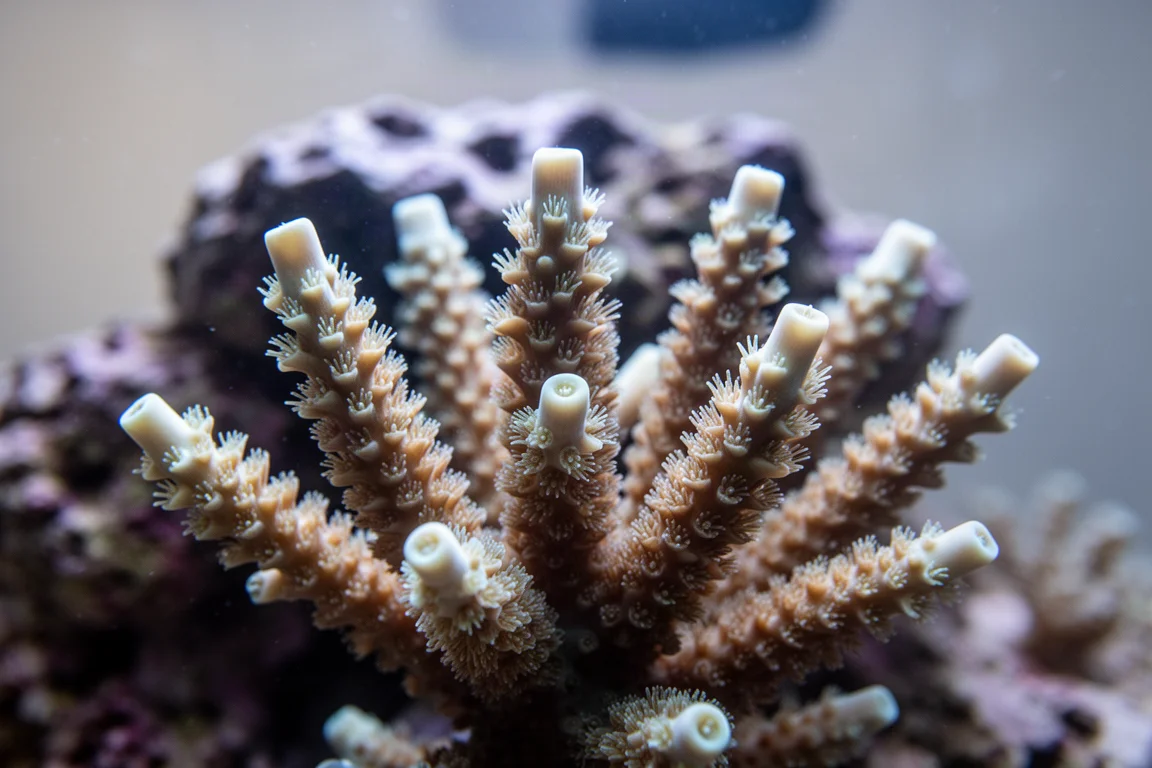
Reef keepers who run stony corals run into the same maintenance problem again and again. Corals consume calcium and carbonate as they build their skeletons, and those elements have to be replaced on a steady schedule or growth stalls and parameters drift.
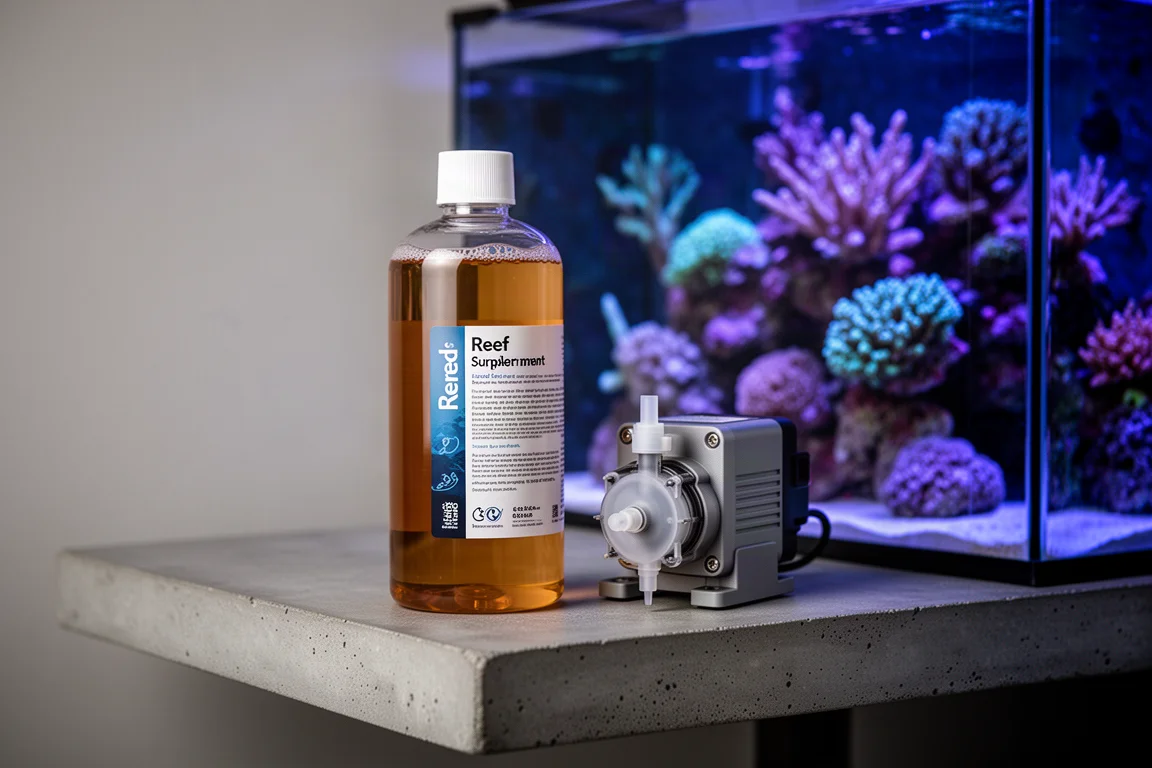
Tropic Marin All for Reef approaches that job differently from the classic two-part routine. Instead of dosing calcium chloride in one container and sodium carbonate or bicarbonate in another, it is built on calcium formate. Once the solution enters the aquarium water, bacteria break the calcium formate down into calcium and carbonate. Magnesium and trace elements are already in the same bottle, so one solution covers the major, minor, and trace elements a growing reef consumes.
Who This Product Is For
This is a dosing solution aimed at anyone keeping stony corals, from a first reef tank through to a mature mixed reef. The recommended starting dose is five milliliters of the liquid per 26 gallons of tank water. In a 26 gallon system, a 1,000 milliliter bottle can last upwards of 200 days, which makes the liquid format genuinely practical for smaller tanks.
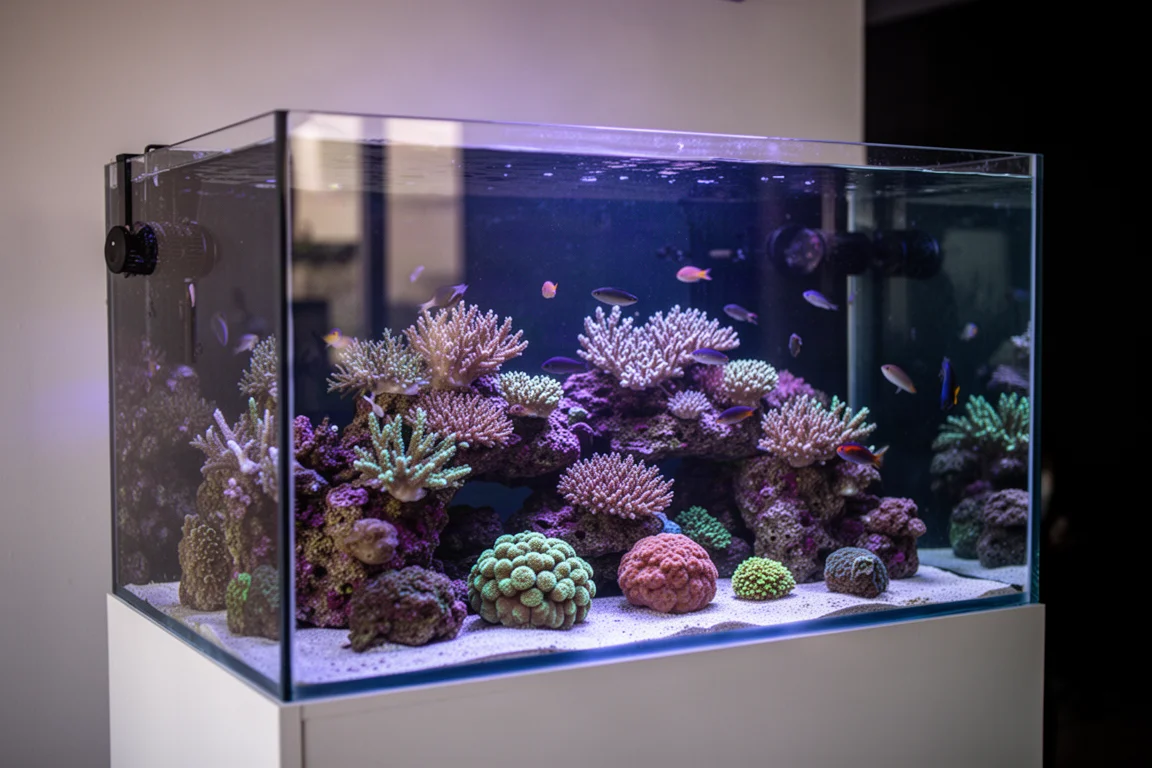
For larger systems, the appeal shifts. Once a tank’s daily consumption climbs, the cost per liter matters far more than the convenience of a pre-mixed bottle, and that is exactly where the powder and kit formats come in. Because the product is designed to be dosed continuously, it also pairs naturally with a dosing pump rather than manual addition.
Main Strengths
The defining strength is the chemistry. Traditional two-part dosing uses calcium chloride alongside sodium carbonate or bicarbonate, with magnesium as an optional third part that is dosed far less frequently. Over time, two-part dosing can lead to a buildup of sodium chloride, in effect table salt, which can have a detrimental effect on corals. The Balling method addresses that by adding a third component that offsets the sodium chloride buildup.
A Single Solution for Major, Minor, and Trace Elements
The Balling method is not a complete trace element program. Contrary to popular belief, it does not replenish everything the corals consume. It adds a minuscule amount of trace elements, mainly to offset the sodium chloride buildup rather than to feed coral growth.
All for Reef is different in two ways. It avoids the chloride based route entirely by using calcium formate, and it includes magnesium and trace elements in the same solution instead of treating them as separate purchases. The result is a single product that supplies calcium, carbonate, magnesium, and trace elements without the sodium chloride accumulation that comes with two-part dosing. Like kalkwasser, it delivers calcium and carbonate together, but it goes further by covering the wider element profile.
Three Formats and a Much Lower Running Cost
Cost was the long standing weak point of the original liquid product. At roughly $37 per liter, or $140 per gallon, it was convenient but expensive for anything beyond a modest tank.
The four-part DIY kit changed that calculation. It requires mixing four components together, and in return the price falls to about $12 per liter, or $45.50 per gallon on the 10 liter kit. The all-in-one powder goes further still. A 1,600 gram container makes 10 liters of solution at roughly $7.50 per liter, or $28.50 per gallon, which is close to half the price of the DIY kit.
Just as importantly, the powder removes the amateur chemistry step. There is nothing to combine in the right proportions beyond the powder itself and RO/DI water, so the cheapest format is also the simplest to prepare.
Things to Consider Before Buying
All for Reef is a dosing product, not a monitoring product. Consumption varies with coral load, lighting, and growth rate, so the dose still has to be matched to what the tank actually uses, and the starting recommendation is only a starting point.
Mixing formats also require a supply of RO/DI water. That is standard practice in reef keeping, but it is worth factoring in if you are choosing between the liquid bottle and the powder for the first time.
Cost and Tank Size
The liquid format is the right answer for smaller systems, where a single bottle lasts for months and the per liter premium is spread over a long period. Move up to a heavily stocked or larger tank and the math turns quickly in favor of the powder.
The practical way to think about it is total annual consumption. Low demand tanks rarely justify the mixing routine, while systems dosing meaningful volumes every day recover the difference within a few containers.
Mixing and Equipment
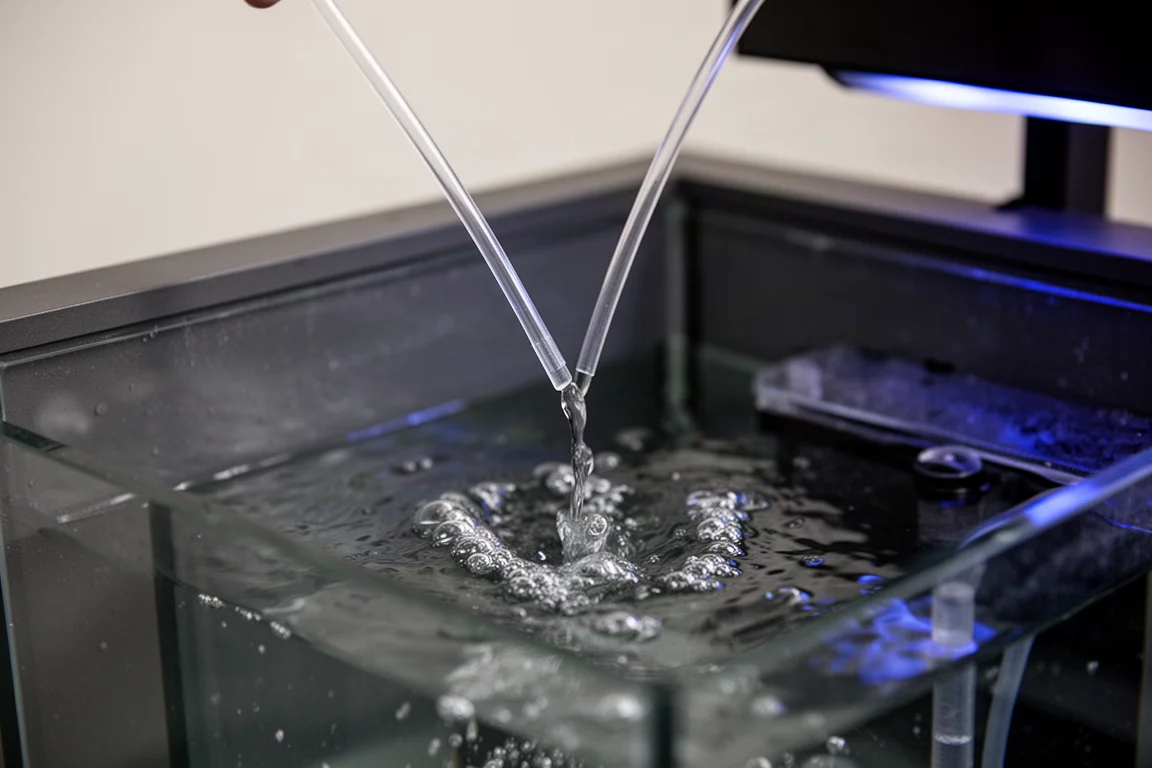
Preparing the powder is straightforward. The ratio is six level scoops per liter of water, or 23 scoops per gallon. A common approach is to fill a mixing jug about four fifths of the way with RO/DI water, pour that into a bucket, stir with an acrylic rod while adding the scoops, and keep stirring until the solution clears. A funnel gets it back into the jug, and a little more RO/DI water tops it off.
For automated dosing, the cap can be modified with a quarter inch push-connect bulkhead, a short piece of acrylic tubing, and a connection to a dosing pump. That turns a mixed batch into a hands-off daily routine, which is where this product makes the most sense over the long run.
Buying Advice
Choose the format based on tank size and appetite for mixing rather than on product quality, because the chemistry is the same across all three.
The pre-mixed liquid is the simplest entry point and the best match for smaller tanks, with larger bottle sizes available if you prefer to mix your own batch and dispense from a bottle you already own. The all-in-one powder is the value pick and the easiest of the cost-saving options to prepare. The four-part DIY kit delivers the lowest cost among the mix-it-yourself routes but asks for the most patience, since four components have to be combined correctly.
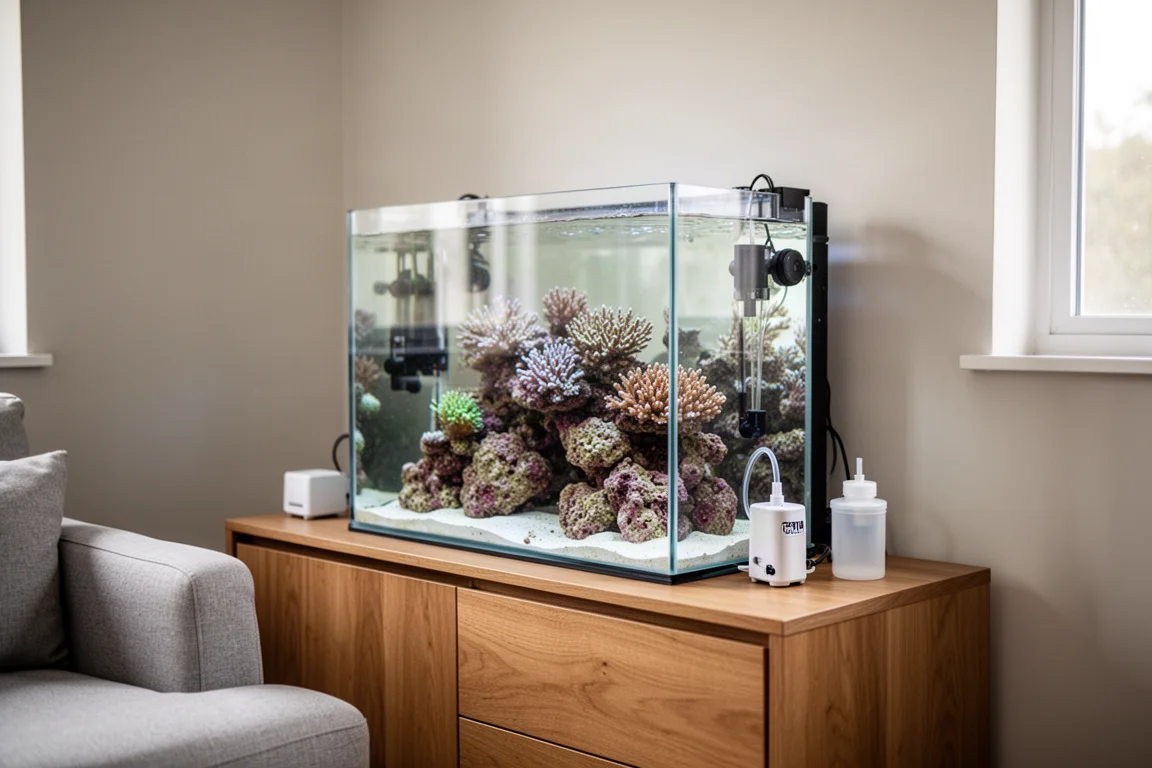
Whichever format you pick, start at the recommended five milliliters per 26 gallons of tank water, then adjust based on your own measurements. The product behaves consistently across small all-in-one systems, dedicated frag tanks, and larger displays, which is why it suits hobbyists at very different experience levels.
Conclusion
Tropic Marin All for Reef earns its place by solving two problems at once. It delivers calcium, carbonate, magnesium, and trace elements in a single solution, and it sidesteps the sodium chloride buildup that makes long term two-part dosing a concern. With a liquid bottle, an all-in-one powder, and a four-part kit, there is a format for nearly every tank size and budget. For reef keepers who want a simpler dosing routine without giving up on trace elements, it is a sensible and well proven choice.
Product link
View more details for Tropic Marin All-For-Reef
This product is mentioned in the review. Check the specifications, options, and compatibility before buying.
View more details for Tropic Marin All-For-ReefFurther reading
Related Reviews
Reef Aquarium Dosing
Best Reef Tank Dosing Solutions: All-in-One, Two-Part, and Complete Systems Compared
A practical guide to reef dosing categories, from single-bottle all-in-one solutions to two-part systems and complete multi-bottle regimens.

Backpacking Gear
Building a 10 lb Base Weight: An Ultralight Backpacking Gear List
A practical walkthrough of the ultralight pieces behind a 10 lb base weight, from a 765 g pack and a roomy one-person tent to a full camp chair and a dependable water filter.

Road Bikes
10 New Road Bikes Worth Watching: Aero, Titanium, Steel and Endurance Standouts
A practical roundup of 10 new road bikes, from aero flagships chasing single-watt gains to titanium, steel and endurance platforms built for real roads.