Reef Tank Additives
Tropic Marin All For Reef DIY Kit Review: Mix Your Own Single-Liquid Dosing Solution
A bulk kit that lets reef keepers mix their own single-liquid additive for calcium, alkalinity, magnesium and trace elements, cutting dosing costs by more than 60 percent.
Introduction
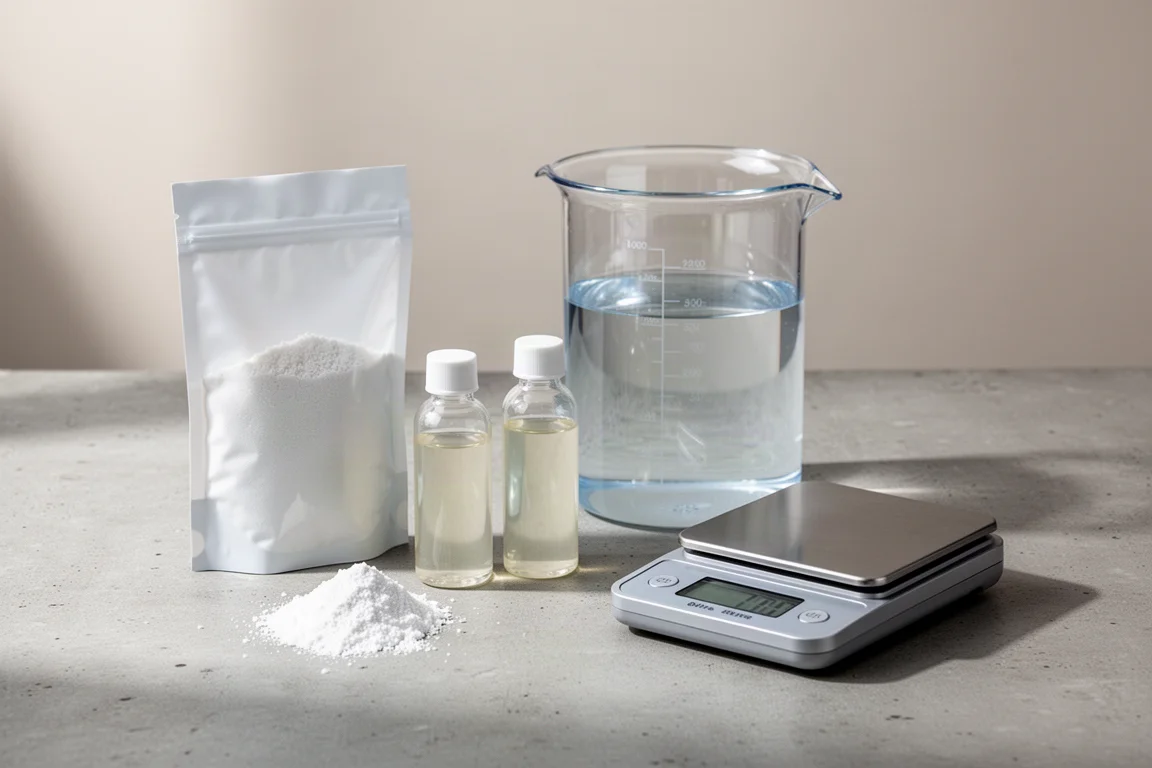
Keeping a reef tank stable usually means juggling several additives for calcium, alkalinity, magnesium and trace elements. Tropic Marin All For Reef simplifies that into a single liquid that covers both the major and minor elements, so it can be dosed by hand or with one dosing pump and tracked with a single test kit.
The catch has always been cost. The ready-made liquid is noticeably more expensive than traditional two-part or three-part additives, and for larger or high-demand systems such as a wall-to-wall SPS reef, running it was prohibitively costly. Tropic Marin has now shared the recipe, and the All For Reef DIY Kit lets you buy the concentrated components in bulk and mix your own batches, cutting the cost by more than 60 percent.
Who This DIY Kit Is For
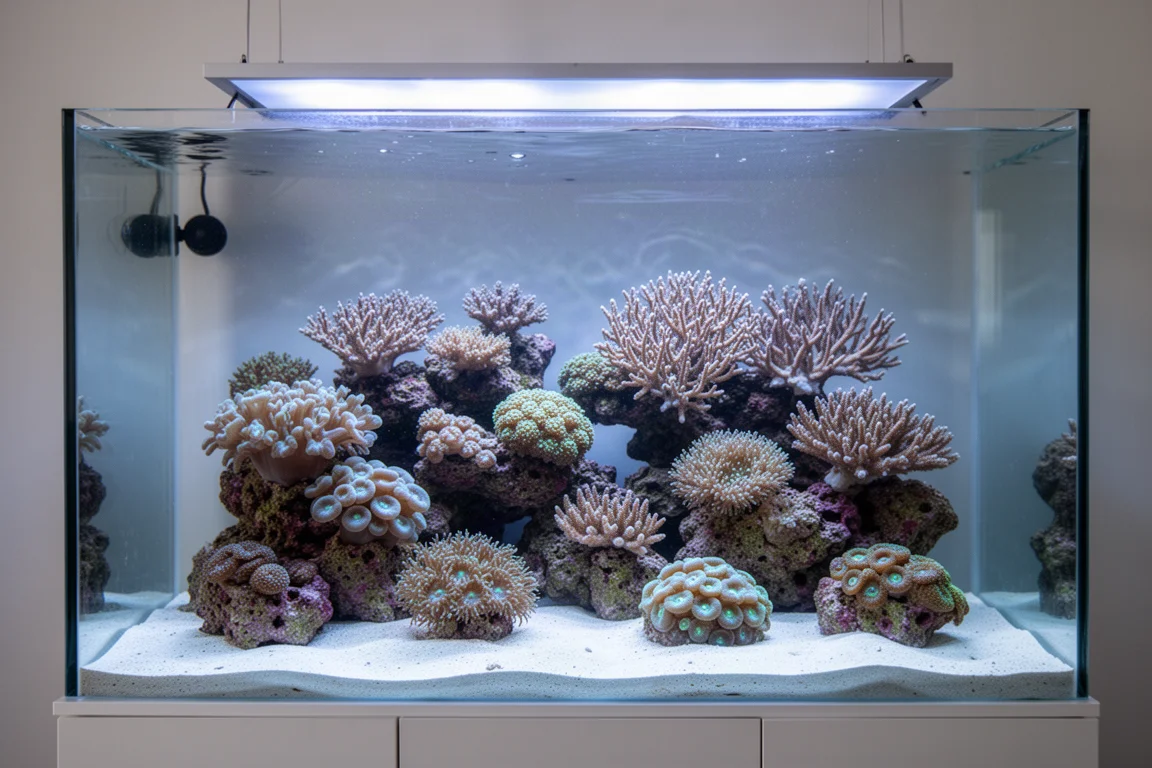
This kit suits reef keepers who want the simplicity of one additive rather than three, whether the tank is stocked with softies, LPS or SPS corals. It is also aimed squarely at anyone who liked the idea of All For Reef but found the ready-made liquid too expensive to run on a big or heavily stocked system.
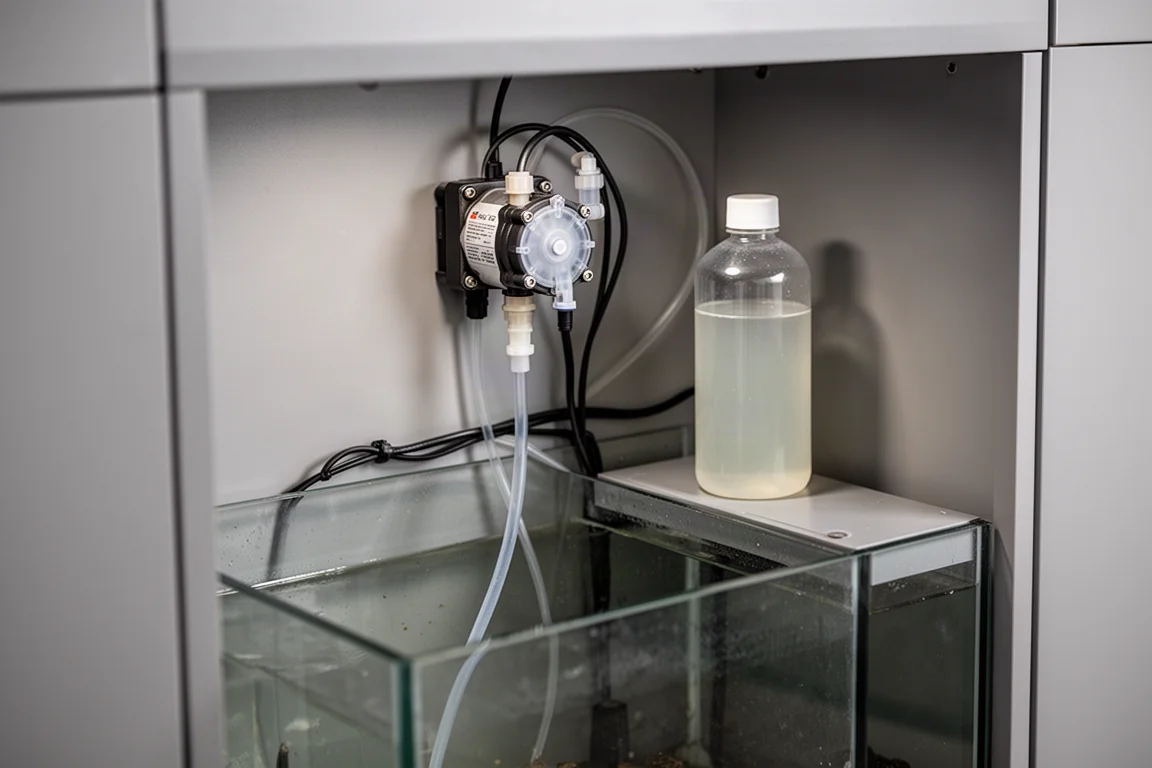
If you already prefer hands-off reefing, the appeal is straightforward: one liquid to dose, one alkalinity test to track it, and one dosing pump to run it. That combination is what makes the DIY route worth the small amount of bench work involved.
What the Kit Includes and What You Need
The kit bundles the concentrated components: carbo calcium powder, bio magnesium powder, pro trace A for the anionic elements and pro trace K for the cationic elements. Together these make up the single liquid that maintains calcium, alkalinity, magnesium and trace elements.
There are two versions. Both the five-litre and the ten-litre kits include enough bio magnesium, pro trace A and pro trace K to make ten litres of All For Reef. The difference is the carbo calcium: the five-litre kit ships with a 700 gram container, while the ten-litre kit includes a 1,400 gram container. If you start with the five-litre kit, you can pick up an extra 700 gram container of powdered carbo calcium when you are ready to mix the remaining five litres.
Main Strengths: Cost, Simplicity, and Stability
The headline benefit is price. Buying the components in bulk and mixing them yourself reduces the cost of dosing All For Reef by over 60 percent compared with the ready-made liquid, which changes the maths for large or high-demand tanks.
There are practical advantages beyond cost. Because All For Reef is not built from the calcium chloride and sodium bicarbonate pair used in traditional two-part dosing, it does not raise the salinity of a reef tank over time. It also carries no risk of pH spikes or precipitation events. The mixed liquid is very stable and can last indefinitely, so you can fill larger containers and mix new batches far less often.
The DIY format adds flexibility as well. If your tank consumes less magnesium than the formula assumes and magnesium levels start to creep up, you can reduce the magnesium component slightly in your next batch. If it consumes more, you can add extra bio magnesium directly to the tank to bring levels back up.
Mixing a One-Liter Batch Step by Step
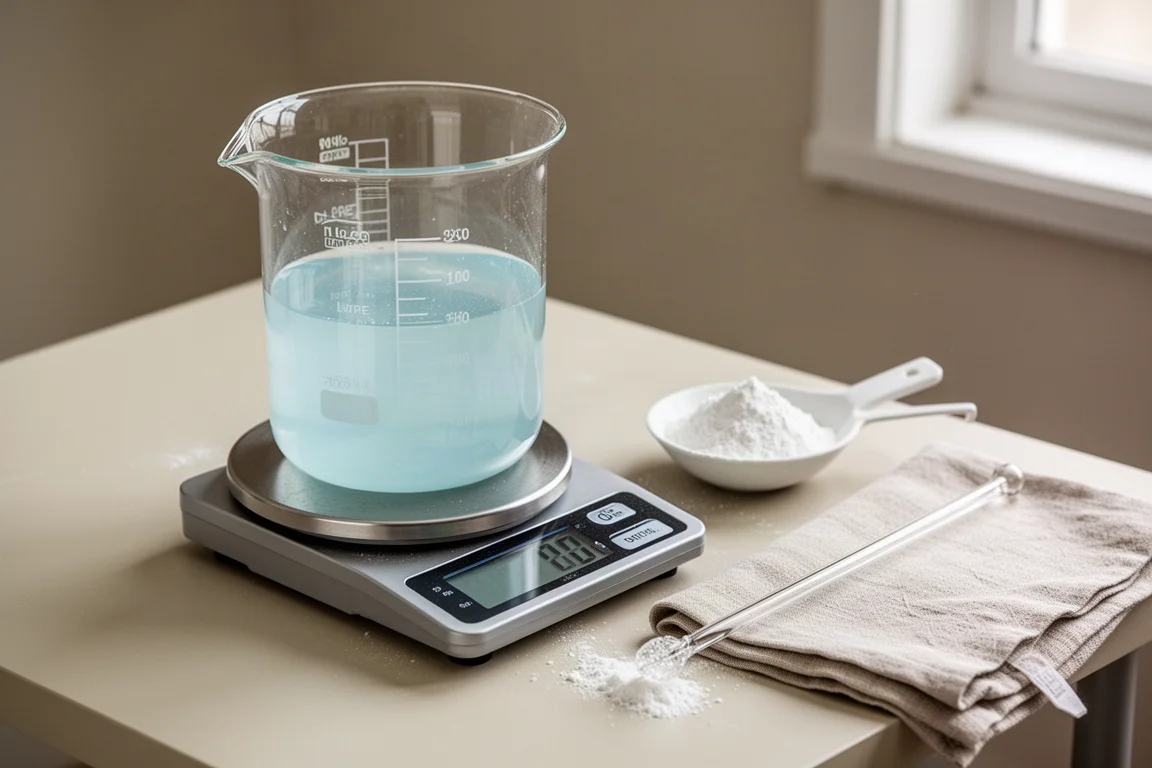
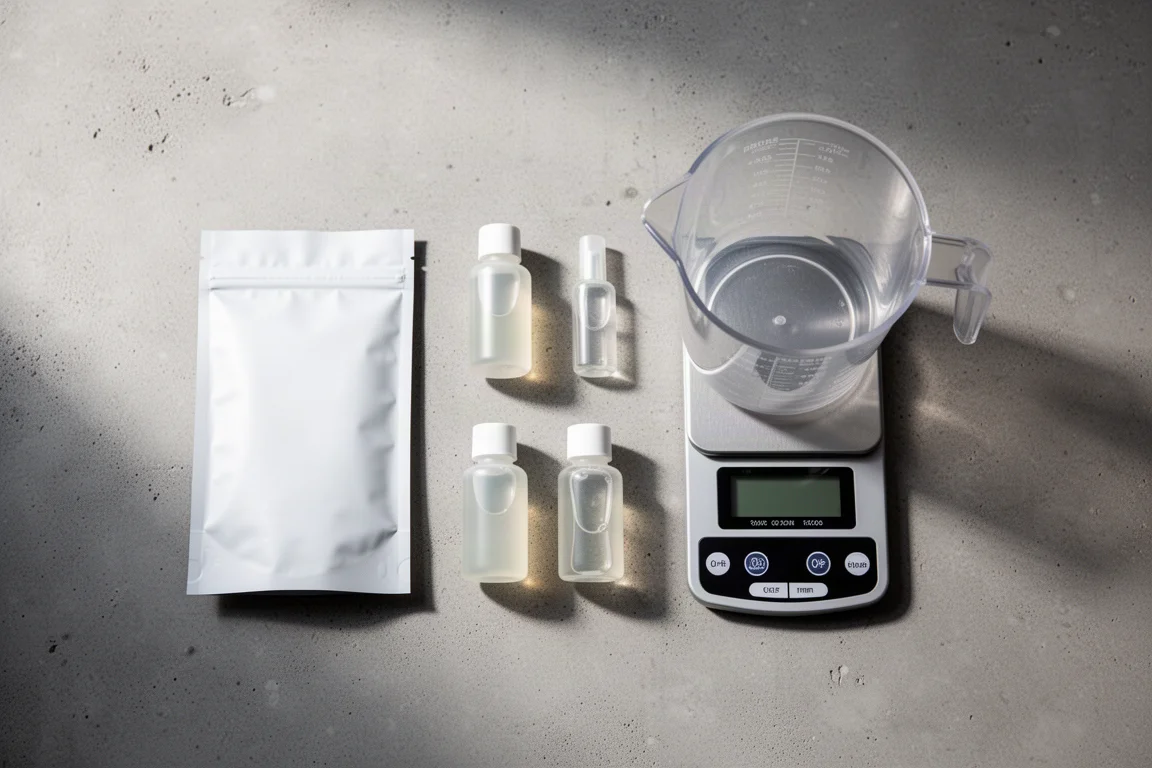
Mixing one litre is a short, repeatable process. You need a container of one litre or larger, 750 millilitres of RODI water at room temperature or lukewarm, a scale that reads in grams, and a stir stick or similar implement made from reef-safe material. An acrylic rod works well, and a magnetic stirrer makes the job faster and hands-free. Gloves are worth having if you have sensitive skin.
It helps to pre-measure everything into clean containers before you start, so you can stir continuously without stopping: 140 grams of carbo calcium powder, 12 grams of bio magnesium powder, 100 millilitres of pro trace A and 100 millilitres of pro trace K.
Add the 140 grams of carbo calcium slowly to the water while stirring. Once the powder is mostly dissolved, stir in the 12 grams of bio magnesium. When that has mostly dissolved, add the 100 millilitres of pro trace A, followed by the 100 millilitres of pro trace K, and keep stirring until the solution turns from cloudy to clear. The finished liquid is clear with a mild blue tint and ready to use.
Dosing and Adjusting Your Batch
Dosing works the same way as the ready-made liquid. Start with 5 millilitres of All For Reef per 100 litres, or 26 gallons, of aquarium water per day. Test alkalinity and increase the daily dose by 2.5 millilitres at a time until you reach your target level, which for most reef tanks sits somewhere between 7 and 9 dKH.
Calcium and magnesium are tied to alkalinity consumption, and the formula is balanced, so if alkalinity is in range those other elements, including the trace elements, should be as well. Testing calcium and magnesium is still worthwhile for confirmation, but the routine stays simple: one liquid, one main test kit, one dosing pump if you want the process automated.
Things to Consider Before Buying
The DIY route trades convenience for savings, and that means a few extra steps. You will need a gram scale, RODI water, a container and something to stir with, plus a clean place to store the mixed liquid. Measuring and mixing become part of your routine rather than something you skip.
You should also plan your kit size deliberately. Both kits carry enough of the trace components for ten litres, but only the ten-litre version includes the larger carbo calcium container, so the five-litre kit will need a top-up purchase later to reach the full ten litres. Finally, because the DIY format lets you tune the magnesium component, batches can differ slightly from one another, which is a benefit for precision but requires keeping notes.
Buying Advice
If you are dosing a large or high-demand reef tank, the bulk maths is what makes this kit compelling: the same single-liquid routine you already know, at well under half the ongoing cost. The five-litre kit is a sensible entry point, and adding the 700 gram carbo calcium container later gets you to the full ten litres without buying anything twice.
Because the mixed liquid is stable and lasts indefinitely, mixing a larger volume in one session is the efficient approach, reducing how often you have to weigh and stir. Either way, the main decision is simply whether you would rather pay per litre or spend a little time at the bench.
Conclusion
The All For Reef DIY Kit keeps everything that makes the original appealing, namely one liquid for major and minor elements, no salinity creep, no pH spike risk and a single test to track it, while removing the cost barrier that made it hard to justify on bigger systems. For reef keepers who want stable parameters without managing three separate additives, it is a practical and considerably cheaper way to dose.
Product link
View more details for Tropic Marin All For Reef DIY Kit
This product is mentioned in the review. Check the specifications, options, and compatibility before buying.
View more details for Tropic Marin All For Reef DIY KitFurther reading
Related Reviews
Reef Tank Additives
KZ Flatworm Stop and Coral Booster Review: A Reef-Safe Combo Against Acro-Eating Flatworms
How the KZ Flatworm Stop and Coral Booster combo is used against acro-eating flatworms, including dosing guidance and three practical habits that support recovery.

Reef Tank Additives
KZ Pohl's Coral Vitalizer Review: Closing the 10% Energy Gap in Reef Tanks
A practical look at KZ Pohl's Coral Vitalizer, a liquid and solid coral food concentrate that adds amino acids, bacteria and carbohydrates without pushing nitrate or phosphate up.
Reef Tank Additives
Reef Brite Reef Enhance vs Live Rock Enhance: Which Live Microplankton Jar Does Your Reef Tank Need?
A practical comparison of two live microplankton products for reef tanks, covering how each jar works, how to dose it, and which one matches your goals.