Reef Tank Additives
KZ Flatworm Stop and Coral Booster Review: A Reef-Safe Combo Against Acro-Eating Flatworms
How the KZ Flatworm Stop and Coral Booster combo is used against acro-eating flatworms, including dosing guidance and three practical habits that support recovery.
Introduction
Acro-eating flatworms are one of the few pests that can turn a healthy SPS reef into a slow-motion problem. They graze on Acropora tissue, leave pale feeding marks behind, and multiply quietly until the damage is hard to ignore. The instinctive response is to pull every affected colony and rebuild, but that is a drastic step when a more measured approach is available.
This guide looks at the KZ Flatworm Stop and Coral Booster combo: what each product is intended to do, how the pair is dosed, and three practical habits that support the treatment in a working reef tank.
Why Acro-Eating Flatworms Are Worth Acting On Early
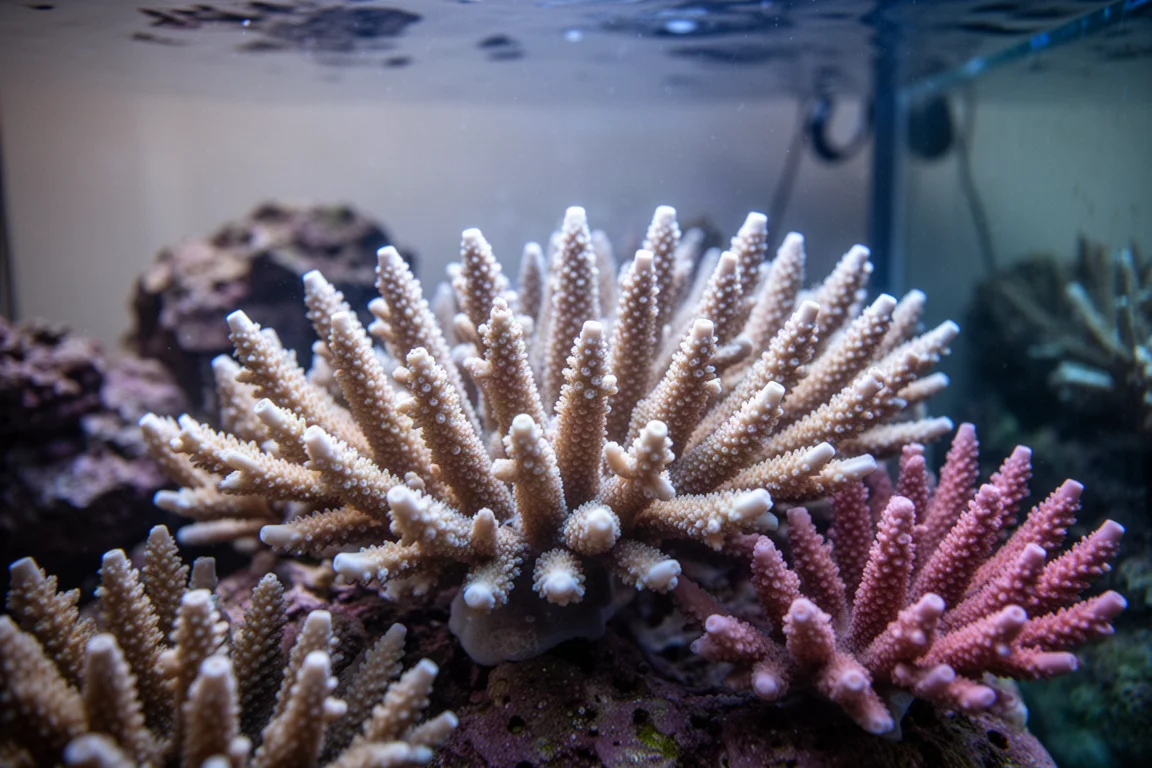
Flatworms damage corals in two ways. They feed on tissue directly, and they weaken a colony enough that recovery becomes slow and uncertain. Once an infestation settles in, patches of bare skeleton appear, growth stalls and coloration fades. That is why early action tends to matter more than aggressive action. A colony that is still encrusting and extending polyps has a far better chance of bouncing back than one that has been stripped down.
KZ Flatworm Stop is not a medication. It is a 100% reef-safe additive, so the approach is supportive rather than medicinal. The product is used to help the coral rebuild while making the coral itself a less attractive food source for the pest.
That combination of coral support and pest discouragement is what makes the pairing with Coral Booster worth understanding before you start. Dosing alone rarely tells the whole story either. Blowing flatworms off colonies, removing egg clusters and keeping the routine steady all shape the outcome, and each of those habits is covered further down.
KZ Flatworm Stop: Strengthen Corals, Starve the Pest
Flatworm Stop is designed to attack the problem from two directions at once.
First, it works to strengthen struggling acros. The essential elements in the formula encourage strong, healthy tissue growth, support rapid regeneration of damaged areas, and promote increased basal encrustation, the new growth at the base of a colony that signals a coral is recovering. The aim is straightforward: help prized SPS recover quickly and restore their coloration rather than simply holding the line.
Second, it works to weaken and starve out the acro-eating flatworm. By making the coral unpalatable, the additive removes the food source the pest depends on. Your acro is no longer viewed as a desirable meal, and a pest with no food has no way forward.
KZ Coral Booster: Trace Elements for Recovery and Color
Coral Booster is meant to be used alongside Flatworm Stop rather than on its own. It delivers a blend of trace elements in a form that lets an infected coral absorb them with minimal effort, which matters when a colony is already spending energy on repair. With those elements in place, most deficiencies are balanced out and the coral is better equipped to fight off pests and regrow tissue.
The visible response tends to arrive quickly. Polyp extension often increases almost immediately after Coral Booster is added, and over a short period coloration improves, particularly on the blue and pink SPS pieces the formula was specifically designed for.
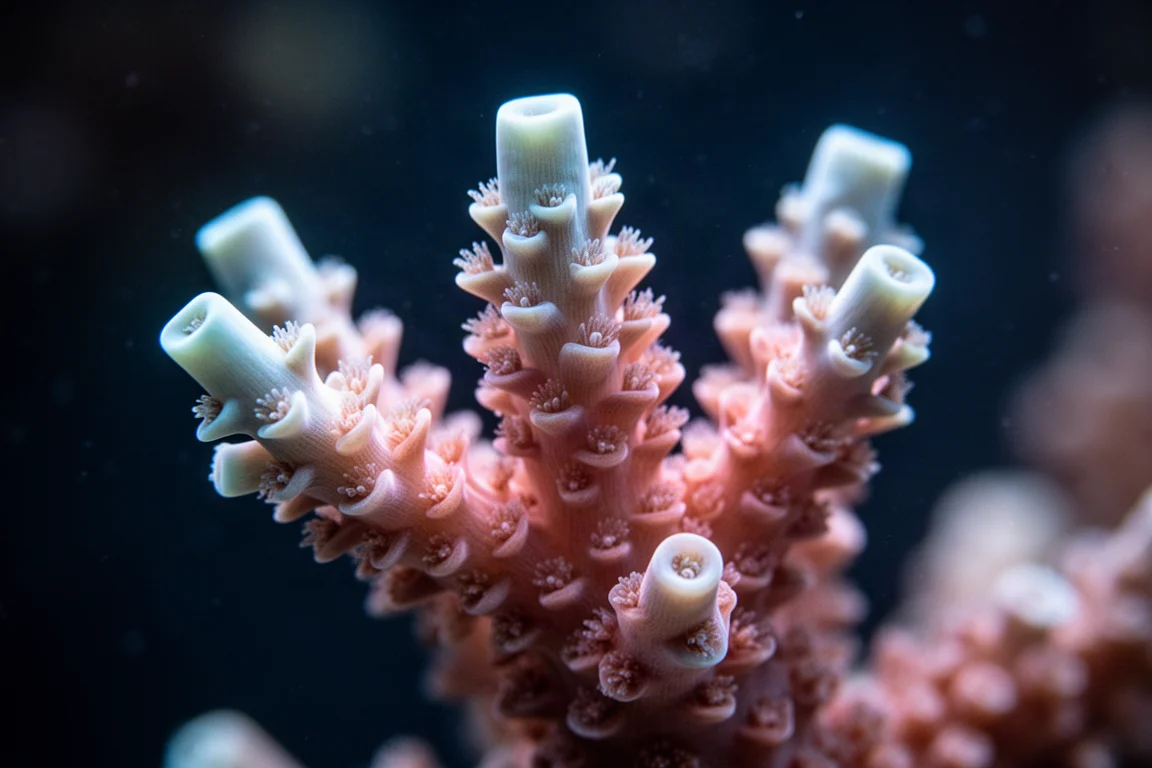
For a reef keeper, that mix of stronger tissue and richer color is the practical signal that the treatment is heading in the right direction. Recovery is rarely instant, but a coral that is feeding and coloring up is a coral that is improving.

How to Dose the Flatworm Stop and Coral Booster Combo
Start the combo the moment you suspect acro-eating flatworms are present. At a dose of one milliliter per 25 gallons daily, Flatworm Stop and Coral Booster can also be continued as a prophylactic measure, both to guard against future infestations and to keep the coral benefits coming: healthier tissue, increased polyp extension, brighter coloration and overall growth.
The routine shifts slightly when no worms are present. The daily dose then becomes one milliliter per 25 gallons of Flatworm Stop, with Coral Booster dosed at one milliliter per 25 gallons every other day.
Tip 1: Blow the Flatworms Off Your Acros
A small pump or powerhead with a narrow nozzle is the most direct tool for dislodging flatworms from SPS colonies. The tight nozzle lets you aim flow precisely at the base of an acro and work your way across it, forcing flatworms off without damaging tissue. Larger adults are often visible as they fly off the colony, and fish in the tank tend to follow along waiting for an easy meal.
What you can see is not the whole picture. Hatchlings are almost impossible to spot because of their size, so blowing off your acros a couple of times a week is worth doing regardless of whether anything comes loose.
Tip 2: Remove Egg Clusters Carefully
Whenever egg clusters appear, remove them by hand with a small brush. A medium-bristle toothbrush is a sensible balance: the bristles are coarse enough to lift the eggs but gentle enough to avoid damaging the healthy tissue around them.
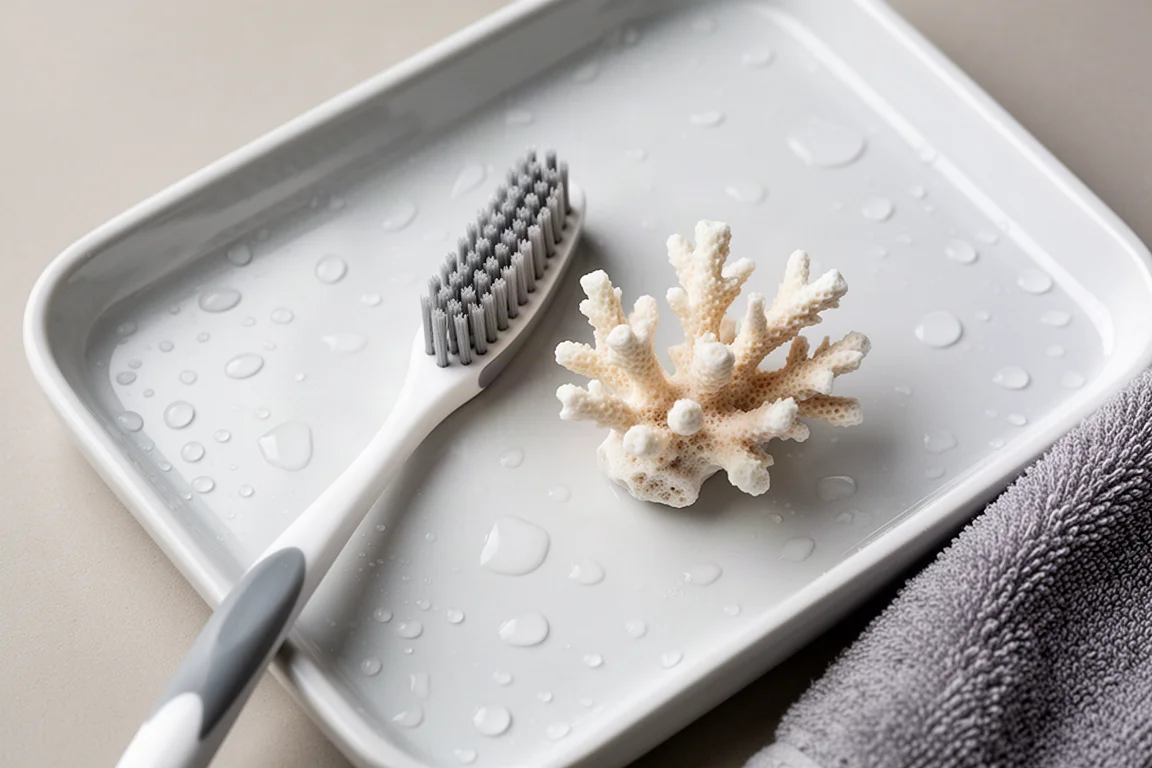
Patience matters here. Flatworms do not lay eggs on healthy coral tissue, so the area around a cluster is already compromised, and further damage only slows recovery. Work slowly, avoid pressing hard, and brush only where the eggs actually sit.
Tip 3: Automate the Dosing Routine
Consistency is often the difference between a treatment that works and one that fades out halfway through. Flatworm Stop and Coral Booster can both be run on a doser: drilling holes in the tops of the bottle caps, setting the doser to the recommended dose and letting it handle the daily schedule is a simple way to keep the routine on track.
One small maintenance note: some components of Coral Booster can settle at the bottom of the bottle over time, so give it a quick shake every once in a while.
Buying Advice
This combo makes the most sense for reef keepers running SPS-dominant systems who have spotted flatworm damage and want a reef-safe option before resorting to removing colonies. It suits hobbyists who are willing to pair daily dosing with a bit of hands-on work, since the tips above are what give the additive approach its best chance. The practical appeal is that both products are designed to be used continuously, so the same bottles that address an active problem can also serve as an ongoing prophylactic routine.

Where it fits less well is as a standalone cure. Flatworm Stop is explicitly not a medication, and it is not positioned as a knock-out treatment. Expecting it to solve an advanced infestation on its own, without flow, manual egg removal and steady dosing, is likely to lead to disappointment. Treated as part of a routine, the pairing gives struggling acros a better chance to regenerate tissue, restore coloration and get back to growing.
Conclusion
The KZ Flatworm Stop and Coral Booster combo is best understood as a two-part system: one product helps the coral recover and become unpalatable to the pest, while the other supplies trace elements that support that recovery. Pair it with regular flow to dislodge flatworms, careful manual removal of egg clusters, and a dosing schedule you can actually maintain, and you have a realistic plan that does not require tearing a tank apart.
Further reading
Related Reviews

Reef Tank Additives
KZ Pohl's Coral Vitalizer Review: Closing the 10% Energy Gap in Reef Tanks
A practical look at KZ Pohl's Coral Vitalizer, a liquid and solid coral food concentrate that adds amino acids, bacteria and carbohydrates without pushing nitrate or phosphate up.
Reef Tank Additives
Reef Brite Reef Enhance vs Live Rock Enhance: Which Live Microplankton Jar Does Your Reef Tank Need?
A practical comparison of two live microplankton products for reef tanks, covering how each jar works, how to dose it, and which one matches your goals.
Reef Tank Additives
Tropic Marin All For Reef DIY Kit Review: Mix Your Own Single-Liquid Dosing Solution
A bulk kit that lets reef keepers mix their own single-liquid additive for calcium, alkalinity, magnesium and trace elements, cutting dosing costs by more than 60 percent.