Home Theater Processors
Trinnov Altitude16 and the Wider Altitude Line: Home Theater Processors Explained
A practical look at the Trinnov Altitude16 and the wider Altitude processor line: what the software-based platform does differently, how channel counts scale, and which version suits which room.
Introduction
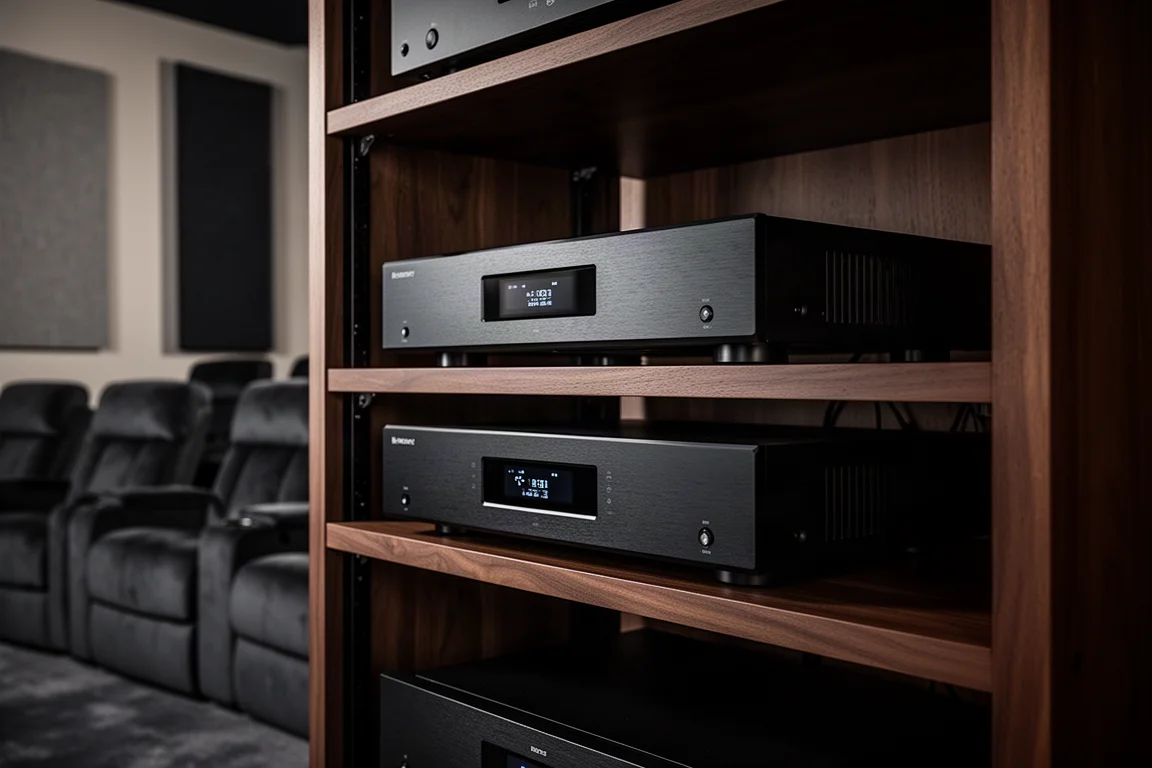
Trinnov’s Altitude processors occupy the top of the home theater processor category. They are not entry-level hardware, and anyone shopping for a budget receiver should look elsewhere. For listeners building a serious immersive audio room, though, the Altitude platform is worth understanding, because much of what it does is different in kind rather than degree.
This guide covers the two paths into the platform: the Trinnov Altitude16, which ships with 16 channels of decoding, and the wider Trinnov Altitude line, which scales up to 64 outputs for larger rooms.
What Sets Trinnov Apart
Trinnov began in 2000 as a research company focused on immersive sound, well before formats like Dolby Atmos existed. That research culture still shapes the products. The company has never built its processors around readily available off-the-shelf chips assembled into a box, and it has consistently prioritized innovation in three-dimensional sound over component sourcing.
Immersive formats are handled differently as a result. Format developers typically send their reference code to chip manufacturers, who simplify it so it can run on inexpensive DSP chips sold across a wide range of price points. Trinnov instead runs the format developers’ own code unchanged on a powerful Linux-based platform of the kind used by the companies that create formats such as Atmos. The intent is output that matches exactly what was designed, without the compromises introduced by chip-level simplification.
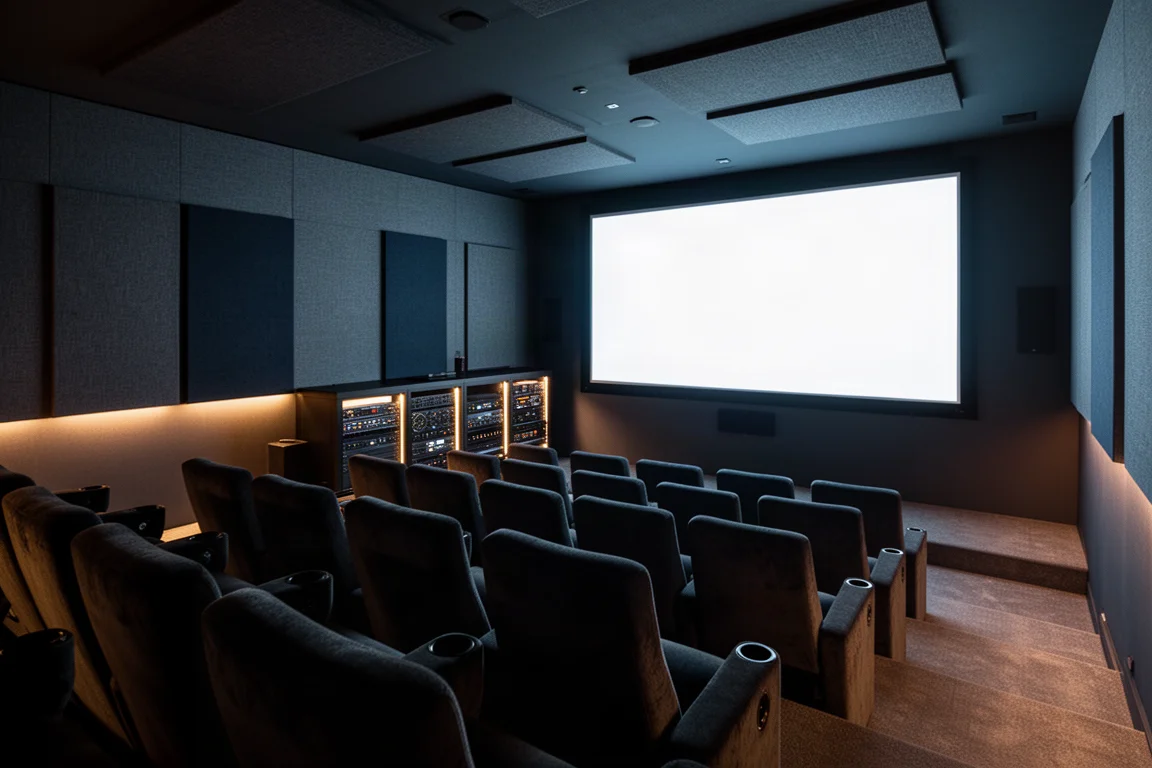
The platform is software-based, which is why owners have received free software updates as new 3D audio software has been developed. Setup and calibration flexibility is also broader than anything else on the market, giving an installer room to address real acoustic challenges and to fine-tune the system after the basics are in place.
Trinnov Altitude16: The 16-Channel Entry Point
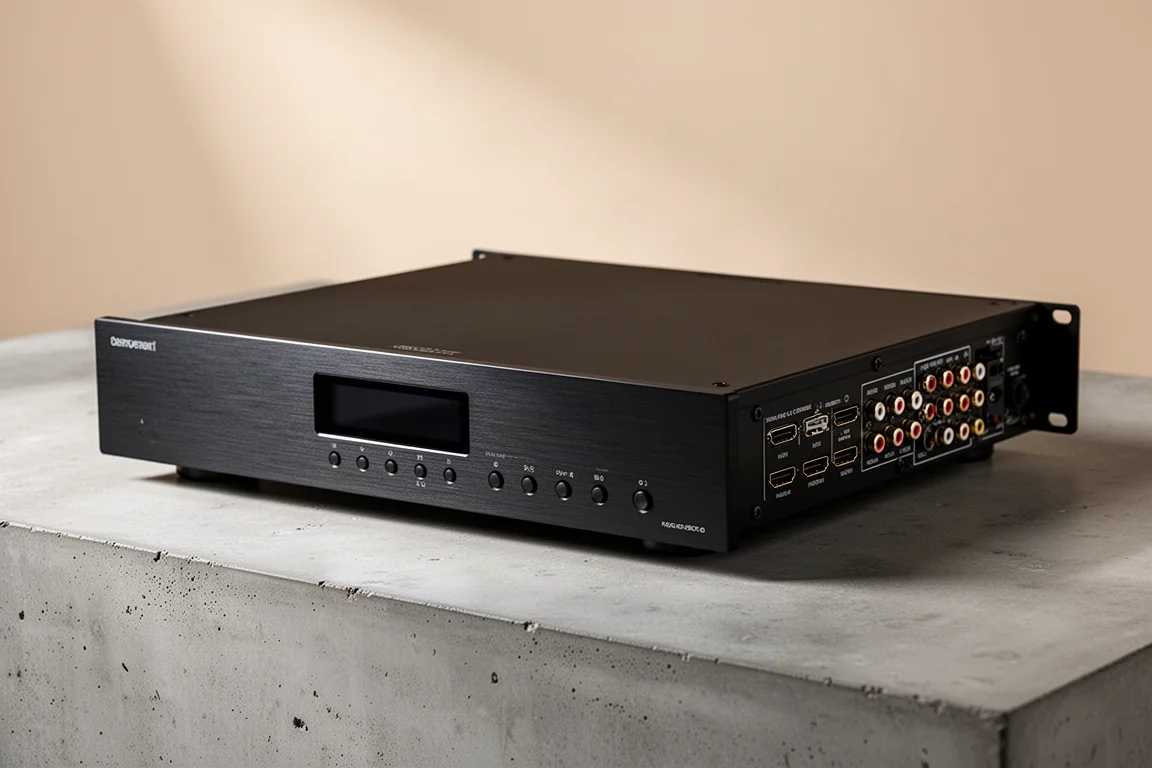
The Altitude16 is the first processor in the line and ships with 16 channels of decoding. Connectivity includes eight HDMI inputs and two HDMI outputs, a generous set of audio and digital inputs, 16 balanced audio outputs, and two stereo digital output channels.
A free software update made those four digital output channels usable as channels in their own right, bringing the total to 20. That opens the door to a 9.4.6 layout with the addition of a couple of small external units.
HDMI 2.1 arrived on the platform as well, and existing Altitude owners do not have to start over to get it. The HDMI card can be swapped inside the existing unit. There is a hardware upgrade cost, but the processor itself stays in the rack. For many home theaters, the Altitude16 will be the ultimate processor.
Trinnov Altitude: Scaling to 24, 32, 48, and 64 Channels
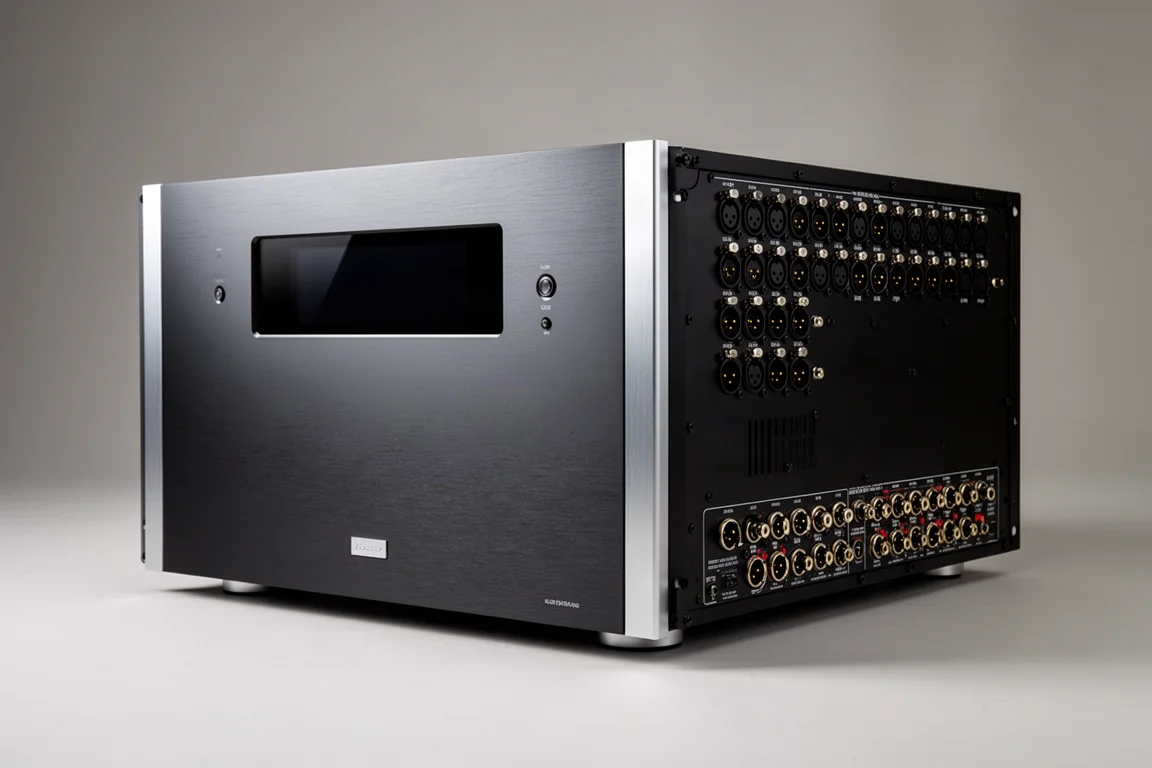
Processors in the Altitude line begin with 16 fully discrete channels and scale up to 64. Larger rooms can step to 24, 32, or 48 channel versions, and a further 16 channels can be added for a total of 64 outputs, which can be devoted to sophisticated bass management or to a large number of active crossovers.
Channel count is not just a specification. More speakers close gaps in the room. If a front left speaker and a far-back side surround are separated by a large distance, an object moving between them can jump audibly, and adding a front-wide speaker in between smooths that transition. This is why high channel counts and full-range speakers feature so heavily in the most ambitious theaters.
The platform is also used well beyond the home, in recording studios, broadcast monitoring facilities, and commercial theaters.
Calibration With the 3D Microphone
The 3D microphone supplied with the Altitude looks quite different from the microphones used with other home theater processors. Most of the competition uses a single microphone, which is enough to establish the distance to each speaker. Because the Trinnov microphone uses multiple capsules, it can also determine the exact location of every speaker in terms of angle and height, producing a full three-dimensional map of the room.
That distinction matters in real rooms. Suppose the front Atmos speakers need to sit slightly closer to the listening position than the design ideal because a joist is in the way. Other processors assume the speakers are where the angle calculations say they should be. The Trinnov system maps where they actually are and adjusts accordingly.
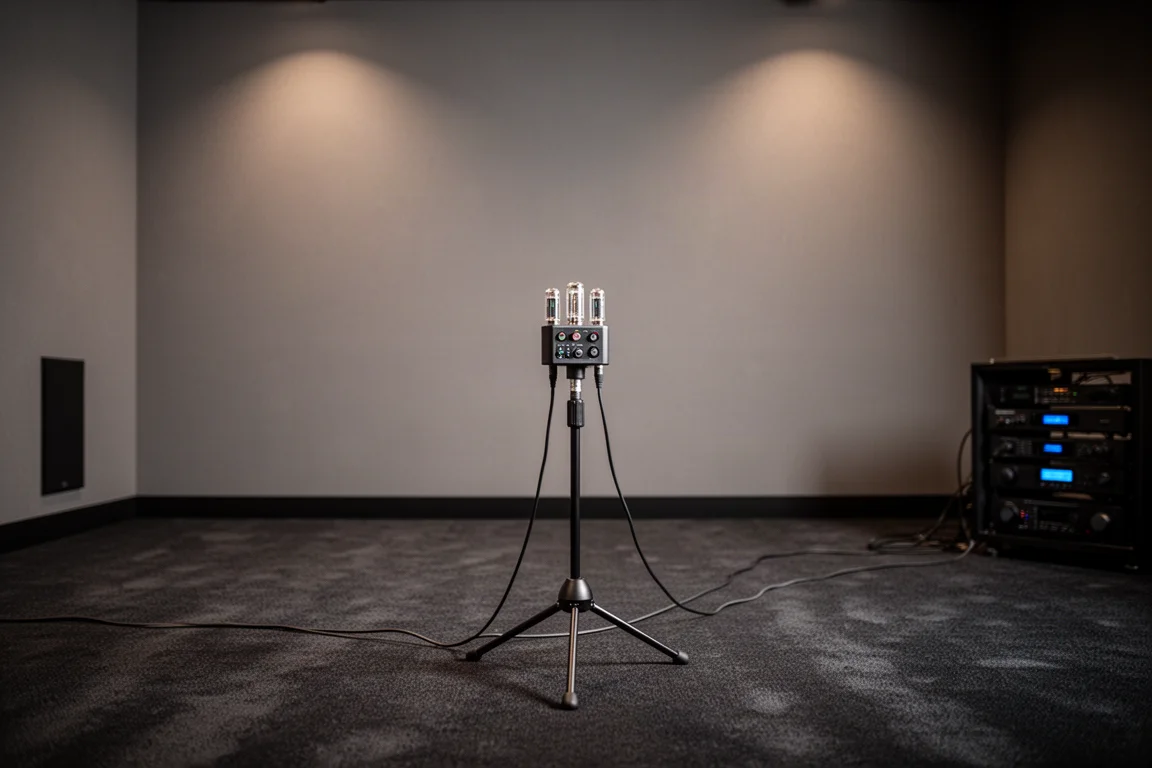
Calibration skill also plays a large role in the final result. The gap between a properly calibrated system handled by an expert and one set up with only moderate experience can be night and day, which is a good reason to work with a local dealer when one is available.
Remapping: Putting Audio Objects Where They Belong
Trinnov’s patented remapping technology compares where a director intended an audio object to be located with where the room’s speakers actually sit. It then uses two or three of the nearest speakers to make the object sound as though it is coming from that exact intended position. On the Trinnov interface, these objects appear as small yellow balls moving around the room, which makes the process easy to visualise.
The benefit is format independence. Dolby, DTS, and Auro-3D each expect speakers in slightly different locations, which is rarely possible in a physical room. Remapping places each sound where it belongs regardless of which format is playing.
Room Optimization, Target Curves, and Subwoofer Blending
The speaker and room optimizer works on a principle the company identified early in its research: accurate three-dimensional reproduction depends on sound from every speaker being matched in both amplitude and the time domain. Identical speakers still behave differently once placement is taken into account, and non-identical speakers differ further. Other room correction systems attempt to address this, but they do not have the same data or the same processing headroom.
Because the processor knows the three-dimensional position of every speaker and runs on a Linux-based platform, it can optimize the room at a level other systems cannot match. Subwoofer blending benefits too. In rooms with several subwoofers, you can assign which speakers should be paired with the nearest sub, and the optimizer handles the rest.
Optimization targets as flat a frequency response as possible, but the human ear tends to prefer a slightly boosted low end with some roll-off in the extreme high end. Target curves let you shape that preference through a graphical interface and hear the change immediately. The Harman target curve came out of Floyd Toole’s research at Harman, and a modified version of that curve is a common starting point for most rooms.
WaveForming and Even Bass for Every Seat
WaveForming is a newer addition to the platform, developed to deliver a perfectly even bass response for every seat and to control how quickly bass decays in the room. It uses multiple subwoofers positioned on the front and rear walls to virtually eliminate standing waves, a problem that has been difficult to solve until now.
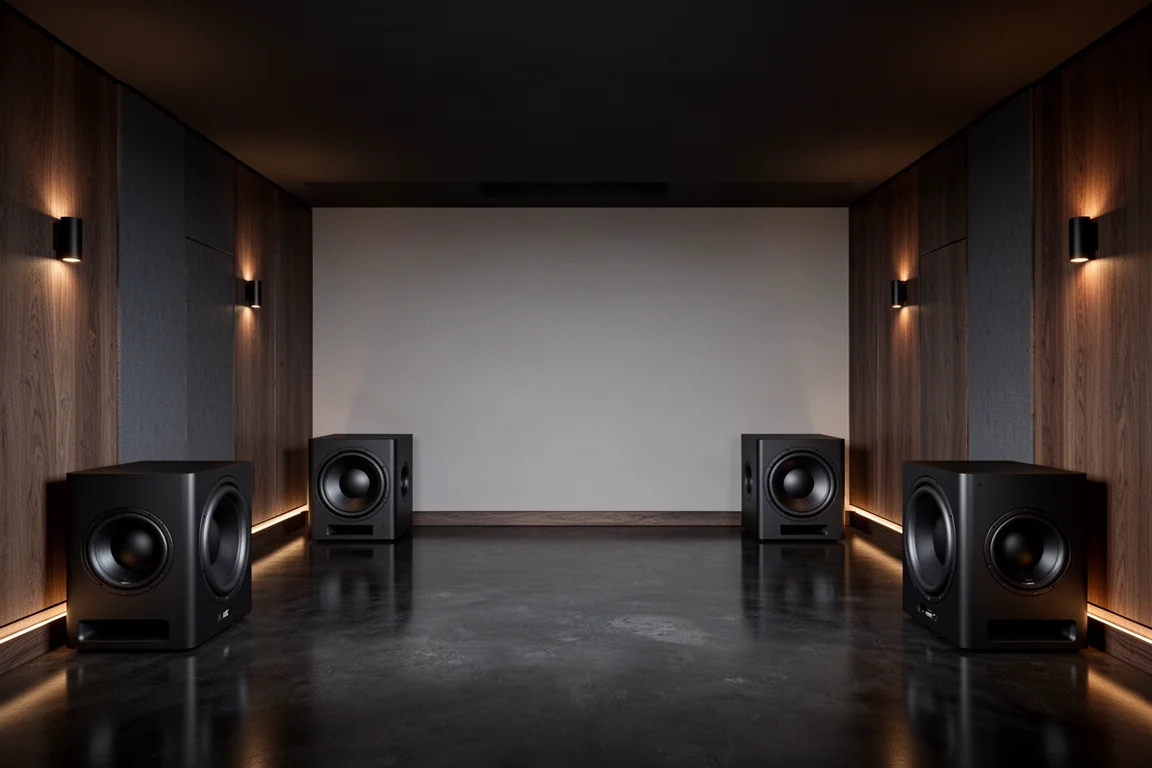
The technology works best with four to eight subwoofers or more, depending on the size of the room, which is where the higher channel-count Altitude models come into their own. As with previous software releases, the upgrade is free to Trinnov owners.
Presets, Active Crossovers, and Daily Flexibility
Many processors offer a single configuration, and better ones may offer four. The Altitude platform supports up to 29 presets, which turns small day-to-day adjustments into one-touch changes: a pure stereo setting using only the left and right speakers for music, a full surround setting for films, extra lip sync delay for a particular streaming service, a dialogue boost for a quiet mix, or reduced bass for late-night listening.
Flexibility extends to speaker configuration as well. The system can handle up to four-way active crossovers with full control over slopes, frequencies, and more, which is a significant advantage over passive crossovers for listeners running active speakers. There is also a flexible pre-EQ section for fine-tuning ahead of the optimizer.
Buying Advice
Two questions decide which Altitude makes sense. The first is how many speakers the room will ultimately hold, since that determines the channel count you need. The second is how much bass management you want, because WaveForming and multi-subwoofer setups benefit from more outputs.
Work out the speaker layout first, ideally with a dealer who knows the platform, and the processor choice becomes much clearer. If there is no local dealer, remote design and calibration support can bridge that gap, and a professional calibration is worth budgeting for from the start.
On cost, an Altitude is a larger investment than a typical home theater processor. The argument for it is lifespan: free software upgrades that bring new immersive formats and room correction improvements, plus affordable hardware upgrades such as the HDMI card swap when new chips are required. The processor keeps pace with the format instead of being replaced by it.
Conclusion
The Trinnov Altitude16 covers a wide range of home theaters with 16 channels of decoding and a clear path to 20, while the wider Altitude line scales to 64 outputs for larger rooms and more ambitious bass management. Both run the same software-based platform, with free updates, a 3D microphone that maps the room precisely, remapping that places objects where they were intended, and room optimization that goes further than typical correction.
If the budget allows and the room deserves it, this is a platform built to stay current for a long time.
Further reading
Related Reviews
Home Theater Processors
Anthem AVM 90 vs AVM 70: Which Anthem Surround Processor Fits Your Theater?
A practical look at the Anthem AVM 90 flagship surround processor, how it differs from the Anthem AVM 70, and which one makes more sense for your room.

Backpacking Gear
Building a 10 lb Base Weight: An Ultralight Backpacking Gear List
A practical walkthrough of the ultralight pieces behind a 10 lb base weight, from a 765 g pack and a roomy one-person tent to a full camp chair and a dependable water filter.

Road Bikes
10 New Road Bikes Worth Watching: Aero, Titanium, Steel and Endurance Standouts
A practical roundup of 10 new road bikes, from aero flagships chasing single-watt gains to titanium, steel and endurance platforms built for real roads.