Hi-Fi Speakers
Triangle Borea BR04 vs Monitor Audio Bronze 50 7G: Two Standmount Speakers Compared
Two standmount speakers at the same price point with very different characters: one warm, full-bodied and easy to drive, the other highly resolving and demanding of amplifier current.
Introduction
Two standmount speakers, one price bracket, and two very different approaches to hi-fi. Triangle has been building speakers since 1980, when Parisian founder Renaud de Vergnette traded a career in interior design for loudspeaker design. Monitor Audio has been at it since 1972, and its current range is deliberately forward-looking, built around ceramic coated metal drivers rather than retro styling.
The Triangle Borea BR04 is the largest model in the Borea range, with an asking price of £499. The Monitor Audio Bronze 50 7G is now in its seventh generation and is the most affordable hi-fi speaker the brand offers, at £500 a pair. Both are two-way standmount designs with two sets of binding posts, and both are aimed at listeners building a first serious system.
This comparison covers how each speaker is built, how each one sounds, what it asks of an amplifier, and how it stacks up against the alternatives above and below it. By the end, the decision should come down to the presentation you prefer and the amplifier you already own.
Design, Build, and Finishes at This Price
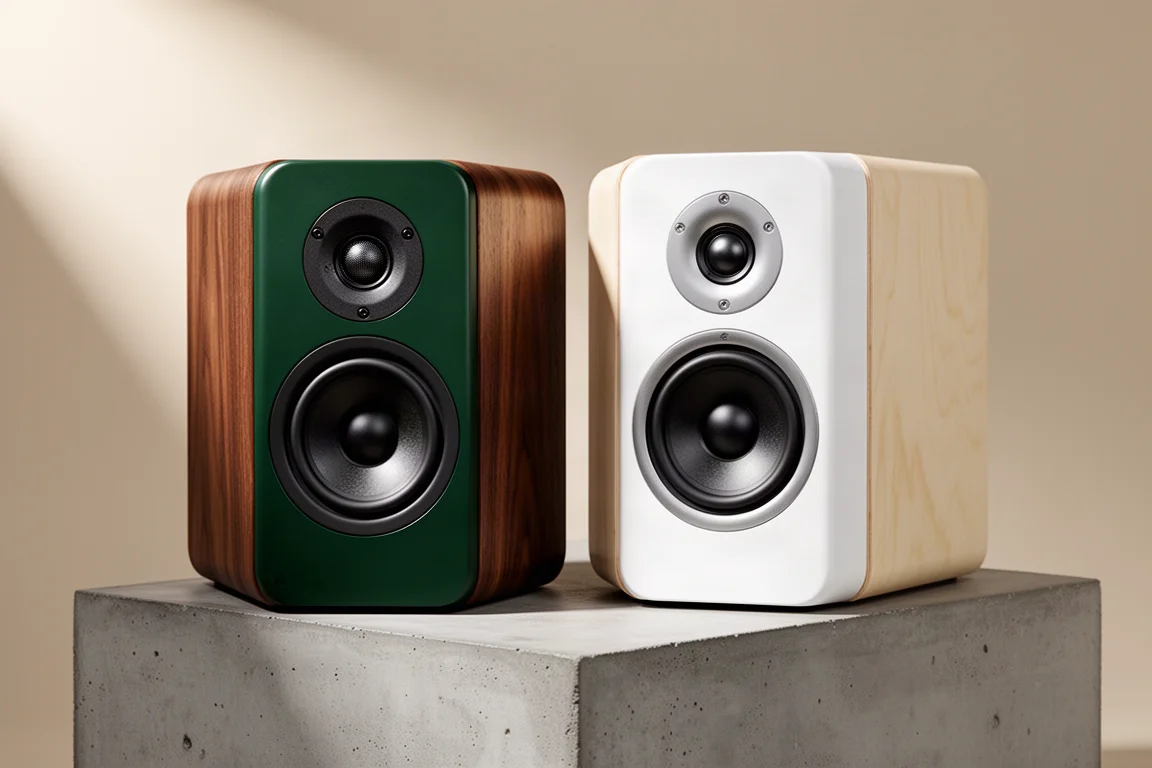
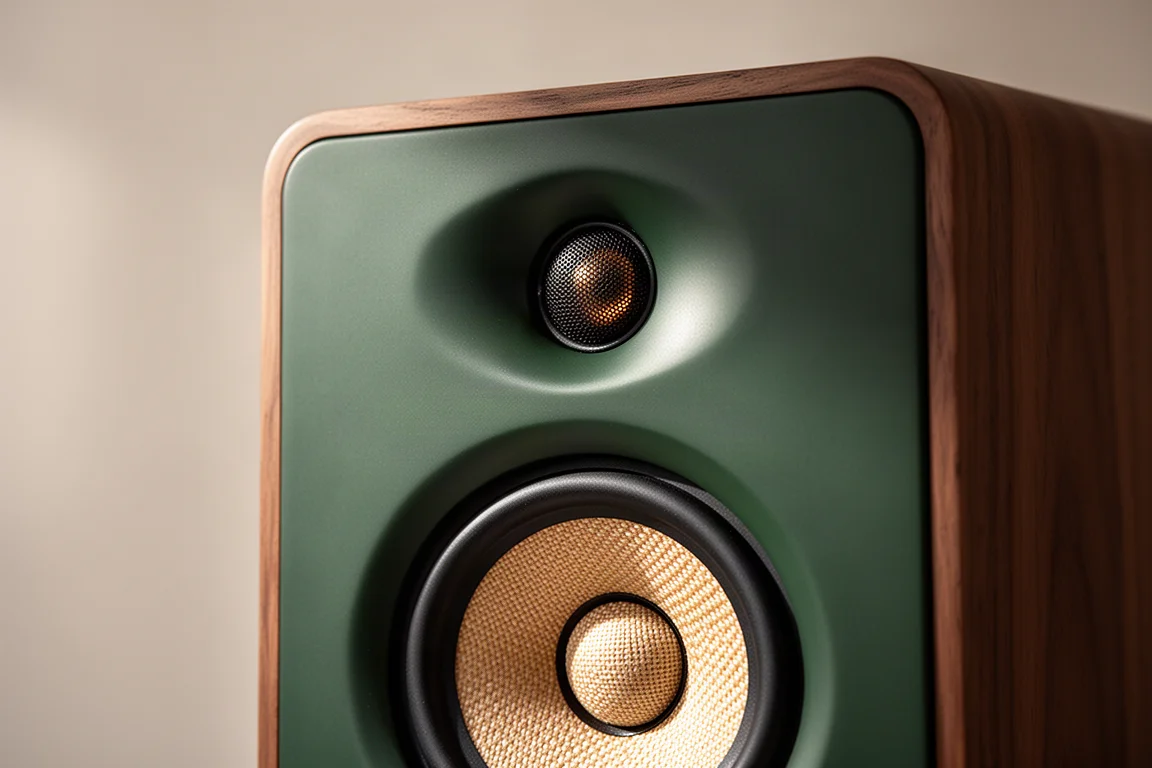
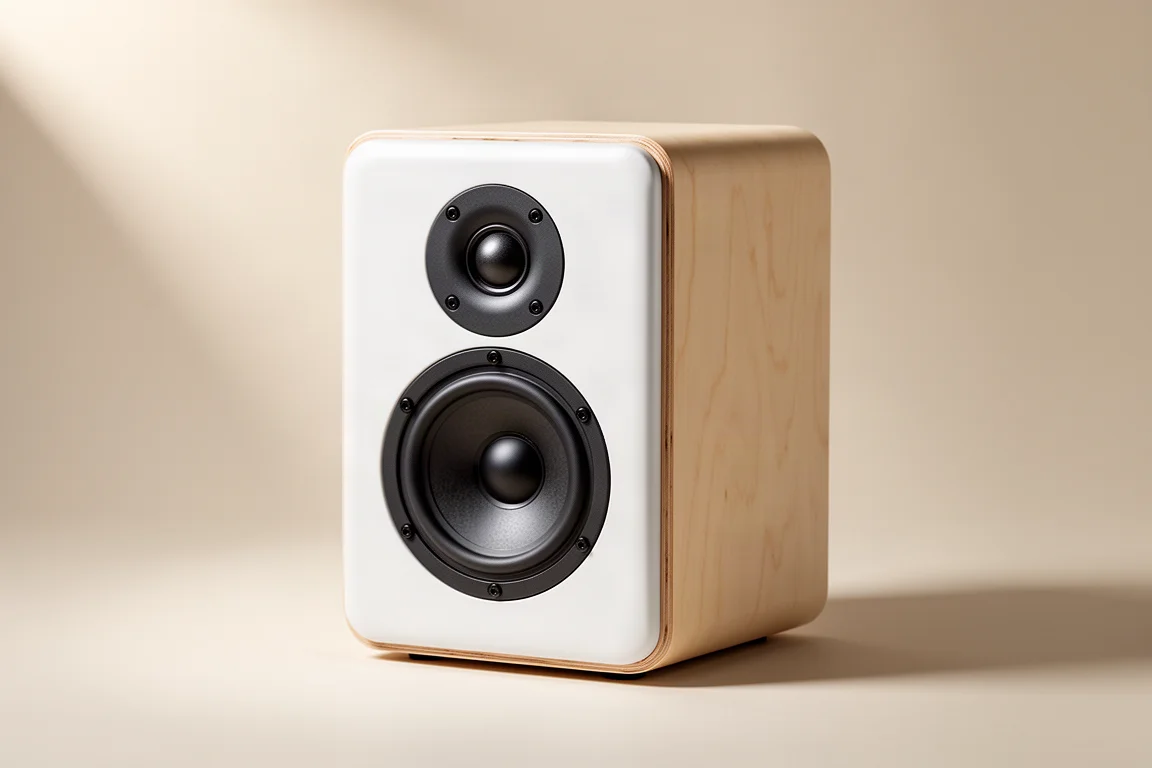
The BR04 measures 525 x 425 x 314 mm and weighs 8.6 kg per speaker. Triangle offers six colour options. A dark green front baffle with walnut effect trim is one of them, and it contrasts neatly with the drivers. The cabinet is internally braced and front ported, and the vinyl wrap is good enough to make the speaker look considerably more expensive than its £499 asking price.
The Bronze 50 7G measures 335 x 185 x 328 mm and weighs 6.4 kg per speaker. Black and walnut effect finishes are available, and the satin white option makes a feature of the 18 mm plywood front baffle with its exposed sides. The rest of the cabinet is 15 mm MDF, braced internally for rigidity.
Both are two-way designs with two sets of good quality binding posts, so bi-wiring or bi-amping is possible. The BR04 is front ported, while the Bronze 50 7G uses a rear port tuned to 47 Hz. The most obvious difference is size: the Triangle is a substantially larger cabinet, and that pays off in the low end.
Triangle Borea BR04: Big Cabinet, Big Character
Inside the BR04 you get a 160 mm natural cellulose pulp bass and mid-woofer and a 25 mm silk dome tweeter mounted in a waveguide that helps dispersion and driver integration. The crossover sits at 3,200 Hz. Sensitivity is 90 dB into a nominal 8 ohm load, dropping to a minimum of 4.6 ohms, and the frequency response is quoted as 44 Hz to 22 kHz at the minus 3 dB point.
The presentation is full and generous. Bass has real weight, rounded rather than ultra-defined, and the midrange is rich enough to give vocals and brass instruments a sense of presence that stays engaging rather than tiring. Toe-tapping bass, warmth through the middle and a little bite on top is the combination often described as the classic French sound, normally achieved with compression horn tweeters. Managing it with a soft dome design is unusual, and it is part of what makes the BR04 stand out.
Resolution is very good, and the speaker has a knack for pulling you into the music rather than inviting you to analyse it. The larger cabinet also brings more bass weight, extension and dynamic range than the compact Monitor Audio can manage.
Amplification is not a burden. The BR04 does not need a powerhouse behind it, and it stays composed with affordable integrated amplifiers that would struggle with a harder load. That combination of a forgiving amplifier requirement and a rich, entertaining sound is rare at this price.
Monitor Audio Bronze 50 7G: Resolution and Definition
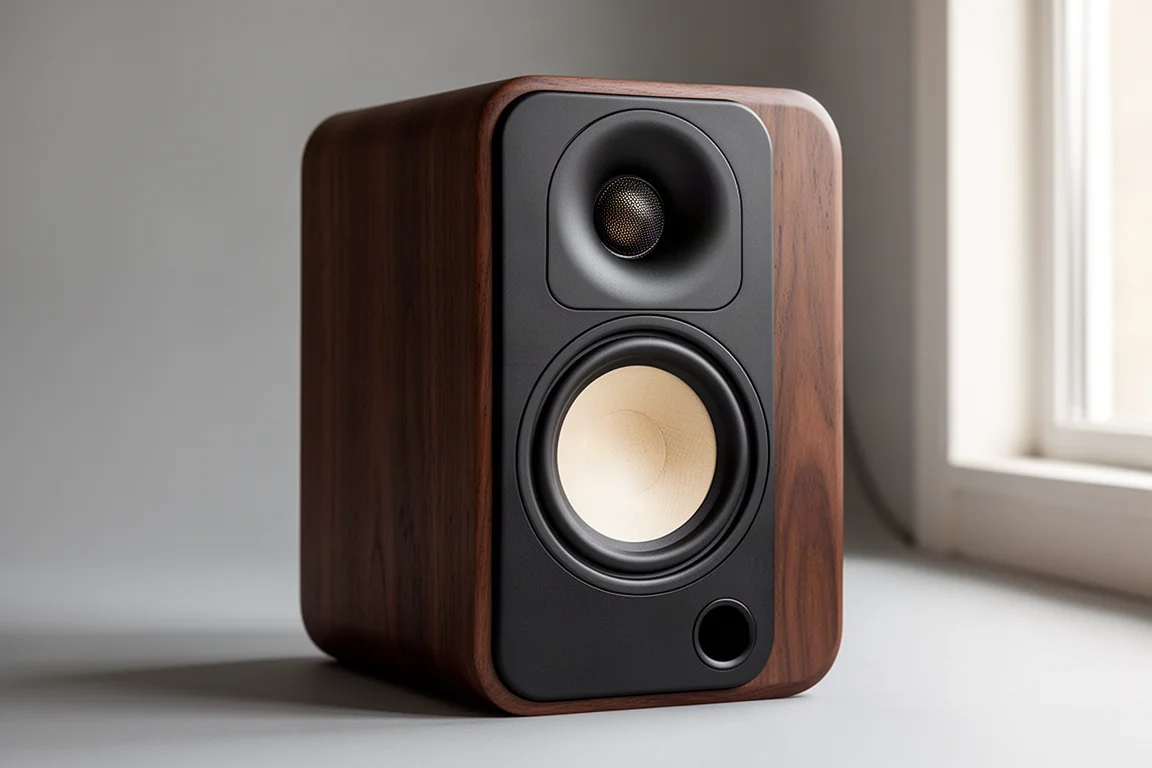
The Bronze 50 7G uses a 150 mm C-CAM mid-woofer, a ceramic coated aluminium magnesium alloy cone that has grown from 130 mm in the previous generation. It does not get the dimpled RST II surface treatment or the heavy cast chassis of the Silver series, both of which help to lower distortion. The 25 mm C-CAM gold anodized dome tweeter is shared with the Silver series, but without the compression ring between the dome and the surround, and with a simpler magnet structure and rear venting to keep costs down.
Specifications are 86 dB sensitivity into a nominal 8 ohm load, dipping as low as 4 ohms, with a frequency response of 41 Hz to 30 kHz at the minus 6 dB point. The crossover between the two drivers is set at 3 kHz, and the rear port is tuned to 47 Hz.
What you hear is definition. Bass is tight, the leading edge of notes is crisp, and the speaker resolves detail that cheaper designs tend to smear. The midrange is leaner than the Triangle’s, a presentation that suits listeners who prefer analysis to warmth. Driven by an amplifier that cannot deliver current, the tonality can turn cool. Driven properly, it opens up.
Amplifier Pairing: What Each Speaker Needs
A desktop Class D amplifier such as the Fosi Audio V3, £130 with the larger 48 V 5 A power supply and built around a Texas Instruments TPA3255 chip, can sound surprisingly clean and authoritative with entry-level speakers that present a benign load. Both of these speakers are harder work than that. With the BR04 the sound closed in, with the image stuck between the speakers. With the Bronze 50 7G instrument separation was better, but busy tracks or a raised volume brought harshness in the high frequencies, a sign of an amplifier running short of current.
The Cambridge Audio AXA35 at £349 is hardly a powerhouse at 35 W per channel into 8 ohms, yet it coped far better. It lifted the haze from the BR04 and improved refinement in the upper registers with the Bronze 50 7G. Because the AXA35 is a warm-sounding amplifier, the expectation is a better match with the leaner Monitor Audio, but the speaker’s tight bass and crisp midrange transient attacks are exactly what this amplifier softens. With the BR04 the warm character preserved the speaker’s plump bass and rich midrange rather than exaggerating them, and that pairing is easy to live with on a permanent basis.
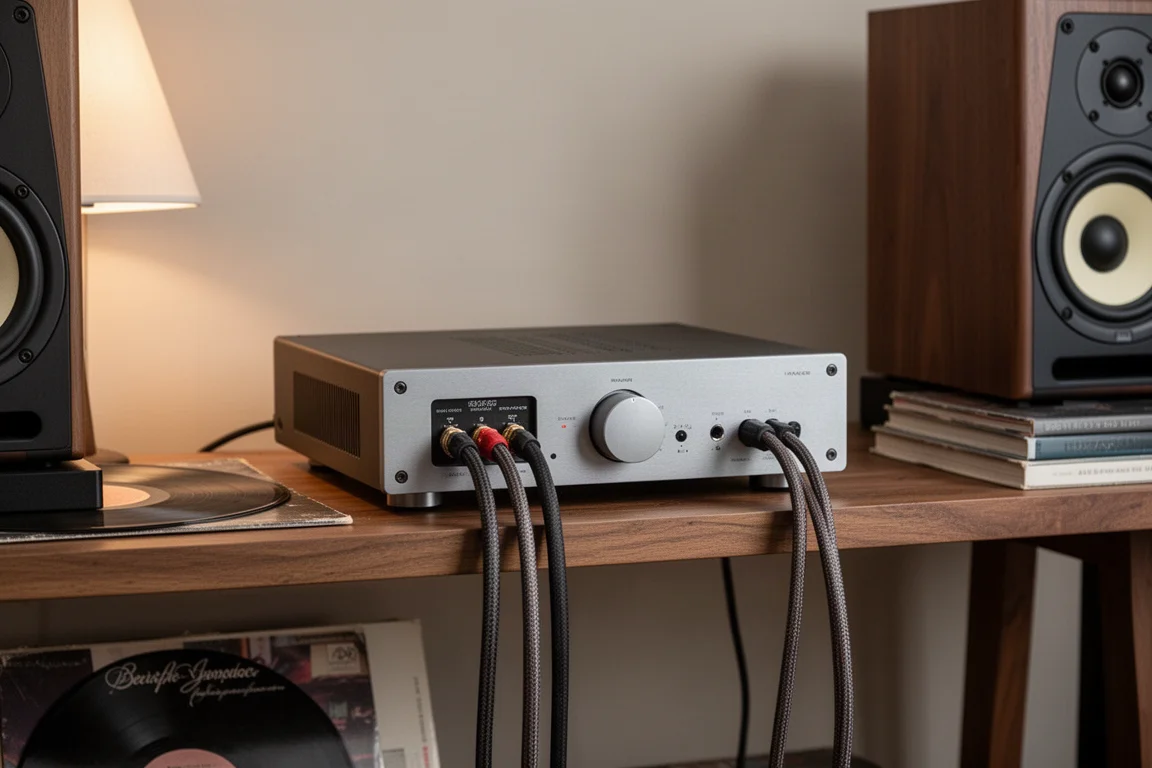
The Cambridge Audio CXA81 Mk II at £1,000 improves clarity, dynamics and control, but the gains do not justify the outlay with the BR04, and it still cushions the leading edge of notes with the Bronze 50 7G. The Audiolab 6000A Mk II at £699 is the point where both speakers reveal their full nature: plenty of low-end grip keeps the Bronze 50 7G in check, and a lack of coloration lets the BR04’s tonality shine.
Source components are simpler to sort out. On vinyl, the Dual CS 518 at £699 in standard finish comes with an Ortofon 2M Red cartridge and a built-in phono stage that is better than what amplifiers below £1,000 typically provide. The Rega Planar 3 with an ND5 cartridge at £940, paired with the £450 Rothwell Rialto external phono stage, adds a touch more resolution with both speakers, though that money is better spent elsewhere in the system. On the digital side, the Bluesound Node Nano at £299 pairs a comprehensive app with greater fidelity than WiiM products and the Eversolo DMP-A6. Handing DAC duties to a FiiO K13 brings a marginal gain in soundstage and instrument separation for £279, which makes it a nice-to-have rather than a must-have.
Where These Speakers Sit in the Market
Triangle’s own smaller models, the Borea BR03 at £399 and the BR02 at £319, save money at the cost of dynamics, bass output and some openness in the midrange. The Wharfedale Diamond 12.2i at £299 takes a more linear approach and does not energise the upper midrange the way the French speaker does, but it delivers very good fidelity with extra emphasis in the bass and lower midrange that echoes the BR04. The Acoustic Energy AE100 Mk II at £279 runs the Bronze 50 7G close, with snappy bass, neutral mids, expressive highs and a level of resolution that is rare at the price.
Look upward and the picture changes. The Monitor Audio Silver 100 at £800 offers noticeably deeper and tighter bass, greater midrange detail and a more open top end, all in a larger soundstage with better performer placement. Triangle’s Comète 40th Anniversary comfortably outperforms the BR04 in every area, with a standard EZ version at £900 and a £1,500 special edition that adds a rose gold anodized horn tweeter, an upgraded cellulose mid-woofer and fancier crossover components.
That context matters. Both of these speakers perform closer to the circa £300 designs mentioned above than to their own brands’ £800 to £900 models, which means upgrading from a £300 pair in small steps is unlikely to feel worthwhile.
Buying Advice: Matching the Speaker to Your System
Pick the Triangle Borea BR04 if you want the fuller, warmer sound, more bass weight and extension, and a speaker that is genuinely easy to drive. Its 90 dB sensitivity and 4.6 ohm minimum make it the friendlier partner for affordable amplification, and its front-ported cabinet gives you a little more freedom when you plan placement.
Pick the Monitor Audio Bronze 50 7G if resolution and definition matter more to you than warmth. It is the more revealing speaker of the two, and it rewards an amplifier with real current delivery, so budget for something like the Audiolab 6000A Mk II rather than a budget desktop amp. Its rear port is tuned to 47 Hz, which is worth keeping in mind when positioning it.
On budget: if you already own a pair of speakers in the £300 region, neither of these is a bite-size upgrade. Saving toward something just the right side of £1,000 is the more sensible move. If £500 is your limit, both speakers are strong choices, and the decision comes down to whether you want warmth and weight or clarity and control.
Conclusion
The Triangle Borea BR04 and the Monitor Audio Bronze 50 7G tackle the same price point from opposite directions. The BR04 gives you a bigger cabinet, more bass weight and extension, a rich and engaging midrange, and an amplifier requirement that will not punish a modest system. The Bronze 50 7G gives you a leaner, more analytical presentation, tighter bass definition and crisp transient attack, provided you feed it properly.
Both are easy to recommend if your budget stops around £500. Choose the Triangle for warmth, weight and forgiving amplification, and the Monitor Audio for resolution and control with an amplifier budget to match.
Further reading
Related Reviews
Hi-Fi Speakers
1723 THX Tower vs 1528 Bookshelf: Which Speaker Fits Your Room?
Two speakers at roughly the same price, built very differently. How the 1723 THX tower and the 1528 bookshelf compare on construction, bass, power needs, and sound.
Hi-Fi Speakers
Acoustic Energy AE 300 Review: Deep Bass From a Compact Standmount
A two-way standmount with real wood veneer, surprising low-end weight, and a warm, easygoing character. Here is what to know before buying.
Hi-Fi Speakers
Acoustic Energy AE1 40th Anniversary Review: A Modern Take on a British Classic
A compact standmount that revives a 1980s favorite with all-new parts, a warm mid-centric balance, and a price of £1,499 per pair.