Home Theater Speakers
Triad Gold In-Room LCR Review: A Home Theater Speaker Built for Equalization
A three-way LCR speaker with serious output and low distortion, but its raw response needs room correction to sound its best.
Introduction
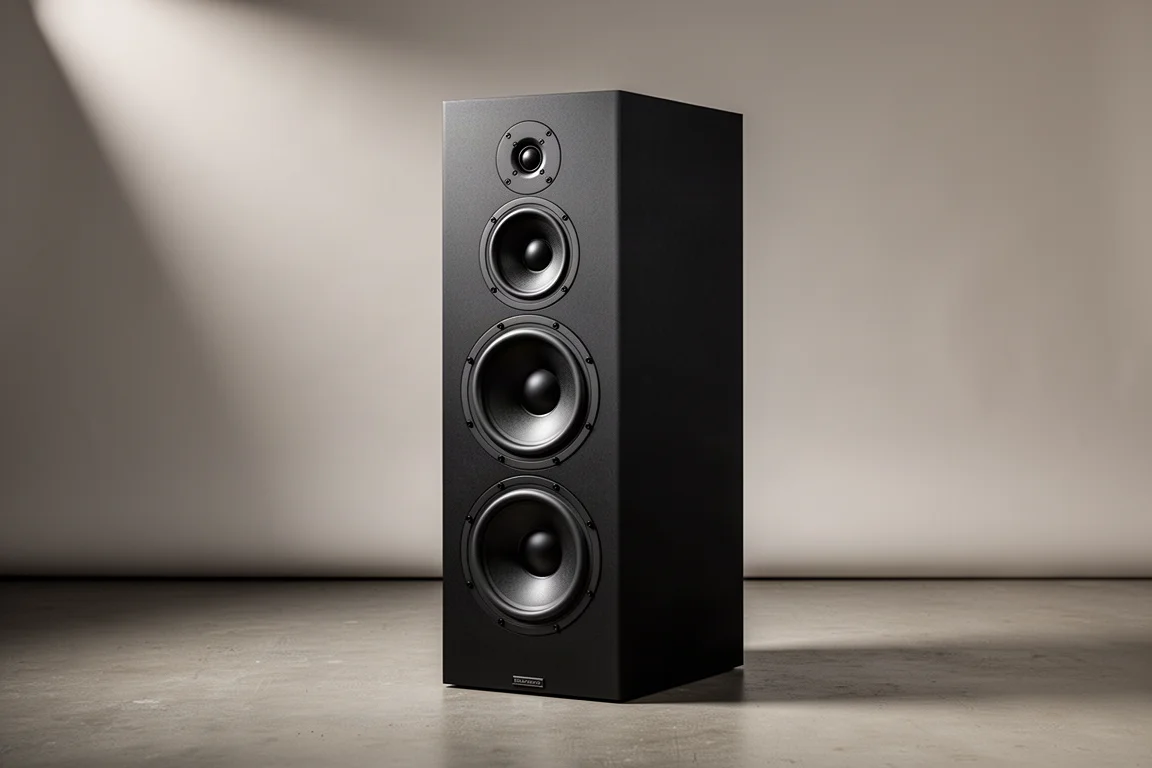
The Triad Gold In-Room LCR is a three-way passive speaker designed for multi-channel home theater systems, and at roughly $6,600 per pair it sits firmly in premium territory. Each cabinet carries two 8-inch woofers, a 5.5-inch midrange and a 1-inch dome tweeter. The design is deliberately plain, with no cosmetic flourishes, so the case for the speaker rests almost entirely on how it behaves once room correction is applied.
That last point matters. Straight out of the box and without equalization, the Gold In-Room LCR is a mixed performer: strong output and low distortion, paired with an uneven response that colors vocals and makes sibilants sound sharp. Add a few bands of EQ and the picture changes considerably. This review covers what the speaker does well, where it needs help, and who should consider it.
Who This Speaker Is For
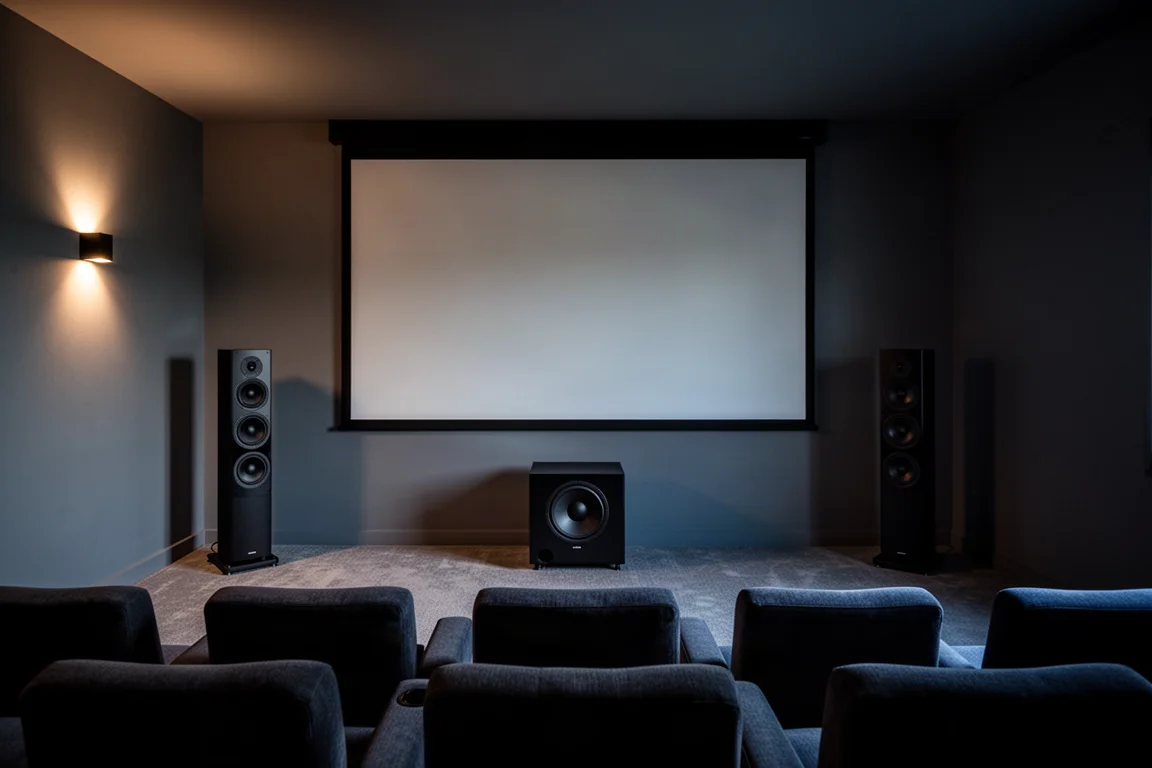
This is not a two-channel speaker for listeners who want to run a signal straight through. The Gold In-Room LCR is positioned as the left, center and right channels of a home theater system, and the design assumes a subwoofer will handle the low end. If your system already includes room correction, the speaker’s weaknesses become largely addressable and its strengths much easier to appreciate.
It also suits listeners who enjoy a wide, room-engaging presentation. Horizontal dispersion stays broad through the midrange, which tends to produce a generous soundstage rather than a tightly focused, head-in-a-vise image. Buyers who prefer pinpoint imaging from a narrow horn or waveguide design may find that trade-off goes the wrong way for them.
Buyers who plan to rely on room correction from day one will get the most from this speaker. Those who prefer a processing-free signal path will find the raw response harder to accept.
Main Strengths: Output Capability and Wide Dispersion
Dynamic capability is the headline strength. The Gold In-Room LCR stays composed at high levels, with distortion measured below roughly one percent at 86 dB down to about 50 Hz, and below one percent at 96 dB down to around 80 Hz. Multitone testing, which uses 32 bands of pink noise to approximate music, shows distortion mostly at or below one percent even at 96 dB. In practice that means the speaker plays loudly and cleanly with a standard 80 Hz crossover.
The horizontal radiation pattern is the other clear advantage. Coverage remains broad, roughly 70 to 80 degrees to each side of the on-axis line from the low midbass through the upper midrange. Above 5 kHz the 1-inch dome begins to narrow, and an on-axis diffraction dip compounds the effect, so the top octave becomes more directional. Below that point the speaker couples with the room in a way many listeners find immersive.
Vertically, the usable window is about plus or minus 20 degrees, giving a roughly 40-degree sweet spot above and below the tweeter axis. That is generous enough that front-row and back-row seats do not suffer dramatic tonal shifts.
Measured Performance: Where the Response Needs Work
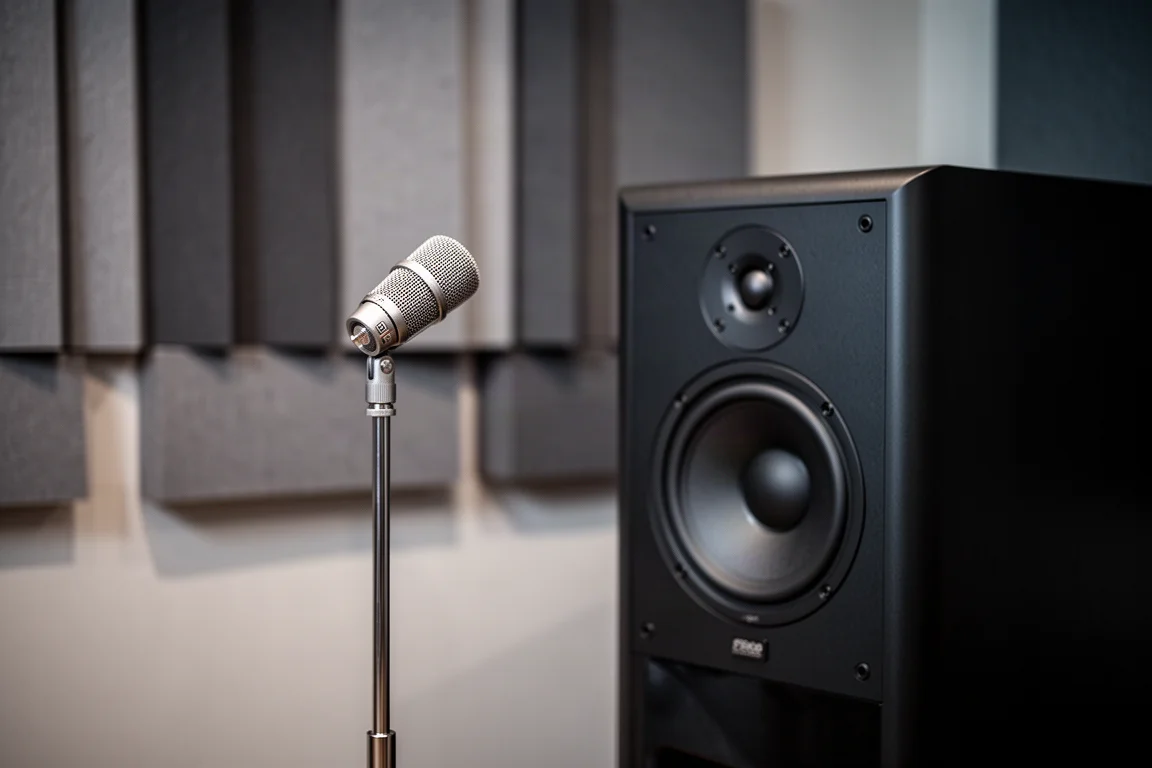
On-axis linearity is the weak point. Measured response shows a peak around 4 kHz that reads as sharp sibilance on a lot of material, and because the off-axis output shows the same behavior, it is not something you can simply aim your way out of. There is also a dip of about 2 dB between 100 Hz and 300 Hz, which is prime male vocal territory, plus a 4 to 5 dB dip near 1 kHz that adds a hollow quality to voices. Together, these two dips explain why male vocals can sound thin and short on body.
An estimated in-room response, which predicts how the speaker behaves in a real room, preserves both dips and adds an elevated treble region. The 4 to 5 kHz peak carries through as well. None of this is catastrophic, but the deviations are audible and they stack up.
Low-frequency extension is more limited than the driver count suggests. Despite the pair of 8-inch woofers, measured F3 lands in the high 50 Hz range, with F10 near 40 Hz. That is not subwoofer territory, and the speaker is clearly designed to hand bass duties to a separate sub. Sensitivity also measures lower than specified: the manufacturer rates the speaker at 92 dB at 2.83 V at 1 meter, while measurement comes in around 89 dB, roughly 3 dB below the claim. That is mid-level sensitivity rather than high, although it does not stop the speaker from getting loud.
Things to Consider Before Buying
Impedance is the practical concern. The impedance curve dips below 3 ohms in a couple of regions, so a 4-ohm stable amplifier is the sensible minimum. A high-current amplifier drove the speaker without trouble, but receivers and amplifiers with modest power supplies may struggle. The impedance data can be shared with an amplifier manufacturer to confirm compatibility before you commit.
The cabinet itself is the second consideration. The design is bare-bones and utilitarian, and it does not attempt to look like a premium lifestyle product. Buyers who care about how their speakers sit in a living space should weigh that honestly.
Finally, the value question depends entirely on how you listen. Without EQ, the frequency response is uneven enough that the price is difficult to justify on sound quality alone. The speaker’s case rests on what equalization unlocks.
Setup Notes: Aiming, Equalization, and Amplifier Matching
Aiming makes a measurable difference, and it is worth experimenting rather than setting the speaker once and moving on. Without equalization, listening roughly 20 degrees off axis proved the most tolerable, and even out to 30 degrees the speaker becomes easier to live with. With equalization applied, on-axis placement performed better. A practical approach is to run room correction for both an on-axis and an off-axis position, save both presets, and compare them with familiar music and film material.
Equalization is the single biggest improvement available here. Roughly three bands of correction are enough to flatten the on-axis response and make the speaker far more linear, and because the off-axis behavior is consistent, the EQ holds up instead of creating new problems. That combination of well-behaved directivity and fixable response is exactly why the speaker makes sense in a room-correction based system.
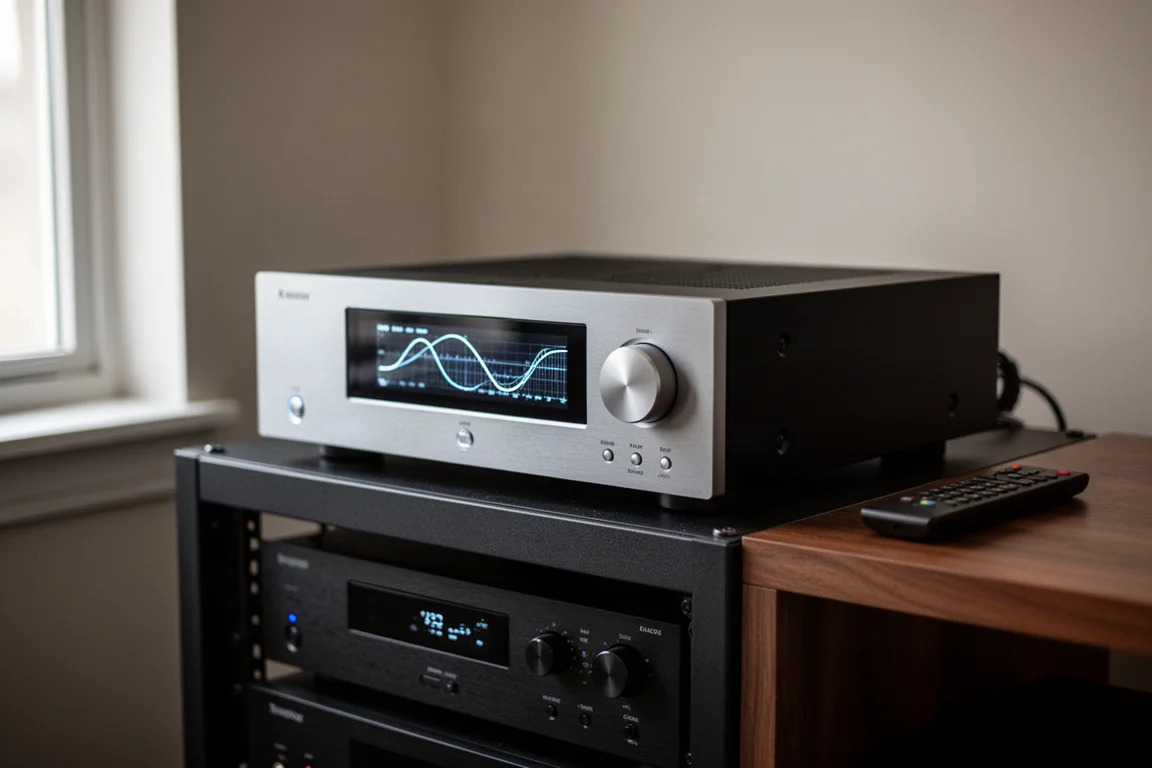
For anyone running a correction-equipped processor, the path forward is straightforward: measure, correct, and then fine-tune placement. The speaker rewards that effort far more than it rewards a plug-and-play setup.
Where the Triad Gold Fits in a Home Theater System
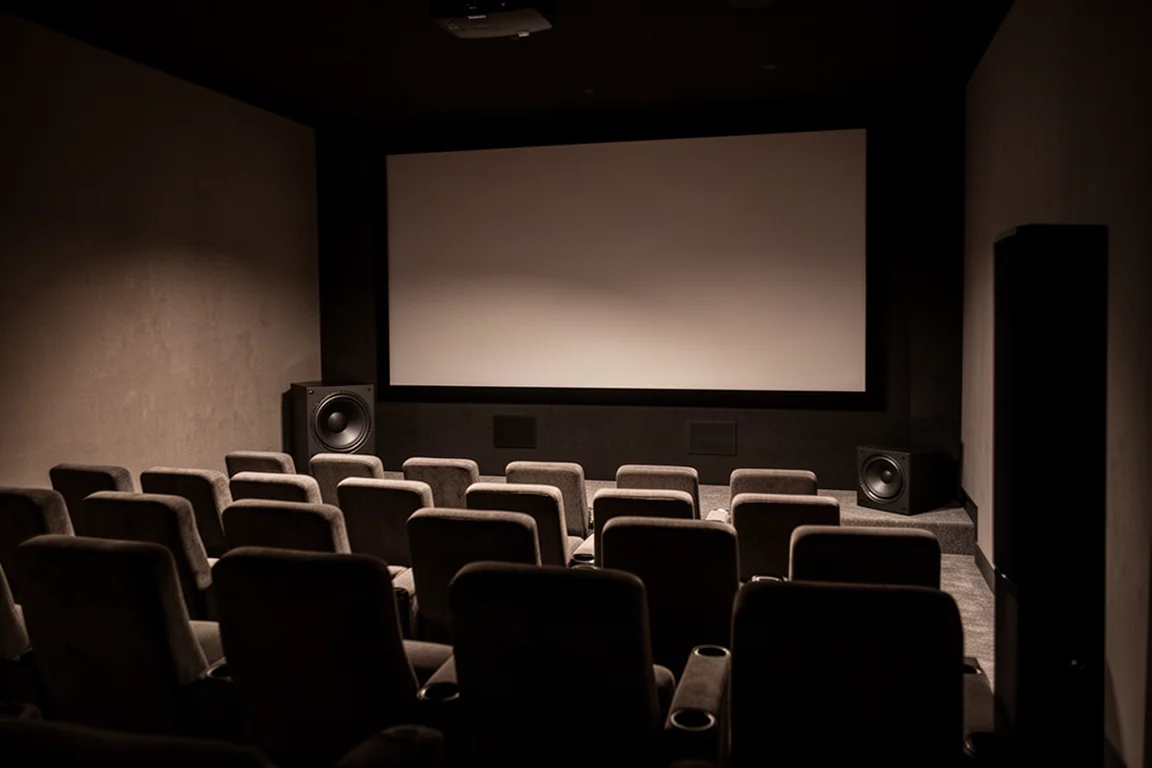
The intended role is clear. Three Gold In-Room LCR units across the front of a home theater, crossed over to a subwoofer at a standard 80 Hz. Used that way, the limited bass extension stops being a liability, because the subwoofer covers everything below the crossover while the speaker concentrates on the range where it is comfortable and efficient.
The wide horizontal dispersion also favors a multi-seat layout. A broad sweet spot across the listening area is more useful in a theater than a narrow one, and the 40-degree vertical window keeps the front and rear rows reasonably consistent. Add room correction and the system as a whole plays to the speaker’s strengths: high clean output, low distortion, and a presentation that fills the room.
Buying Advice
Consider the Gold In-Room LCR if you are building a home theater with a subwoofer and a receiver or processor that includes room correction, and if you are willing to spend a little time dialing in placement and EQ. In that context the speaker delivers serious output capability, low distortion and a wide, involving soundstage, and about three bands of correction address most of what holds it back.
Look elsewhere if you want a two-channel speaker that sounds right straight out of the box, if you need deep bass from your main speakers, or if your amplifier is not comfortable below 4 ohms.
At around $6,600 per pair, the raw, un-equalized performance is difficult to recommend on its own. Treated as the front stage of a corrected multi-channel system, the value proposition is considerably stronger.
Conclusion
The Triad Gold In-Room LCR is a specialist rather than an all-rounder. Its strengths, high output, low distortion and broad horizontal dispersion, are exactly what a home theater needs, while its uneven raw response and modest bass extension are exactly what room correction and a subwoofer are designed to solve. Buyers who plan around those requirements will get a capable, room-filling front stage. Buyers who do not will find the price hard to justify.
Product link
View more details for Triad Gold In-Room LCR
This product is mentioned in the review. Check the specifications, options, and compatibility before buying.
View more details for Triad Gold In-Room LCRFurther reading
Related Reviews
Home Theater Speakers
Arendal 1723 THX S Monitor vs 1723 THX Monitor: Which Two-Way Monitor Fits Your Room?
A practical comparison of the Arendal 1723 THX S Monitor and the larger 1723 THX Monitor, covering driver size, sensitivity, bass extension, and room fit.
Home Theater Speakers
Emotiva A1 Review: A Small Speaker With Serious Surround Flexibility
A sealed two-way speaker built for Dolby Atmos, surround, and compact desktop duty at $179. Here is what it does well and what to check before buying.
Home Theater Speakers
Emotiva C2+ Review: High Output Center Channel With a Narrow Sweet Spot
The Emotiva C2+ delivers serious output, deep bass for its size and high sensitivity, but its widely spaced midrange drivers create a horizontal sweet spot that rewards centered seating.