Hi-Fi Speakers
Tri-Art Mini Monitor Review: A Bamboo Open Baffle System for Close Listening
A specialist bamboo speaker system pairing an open baffle subwoofer stand with intimate horns. Here is what it does beautifully, where it demands patience, and who should consider it.
Introduction
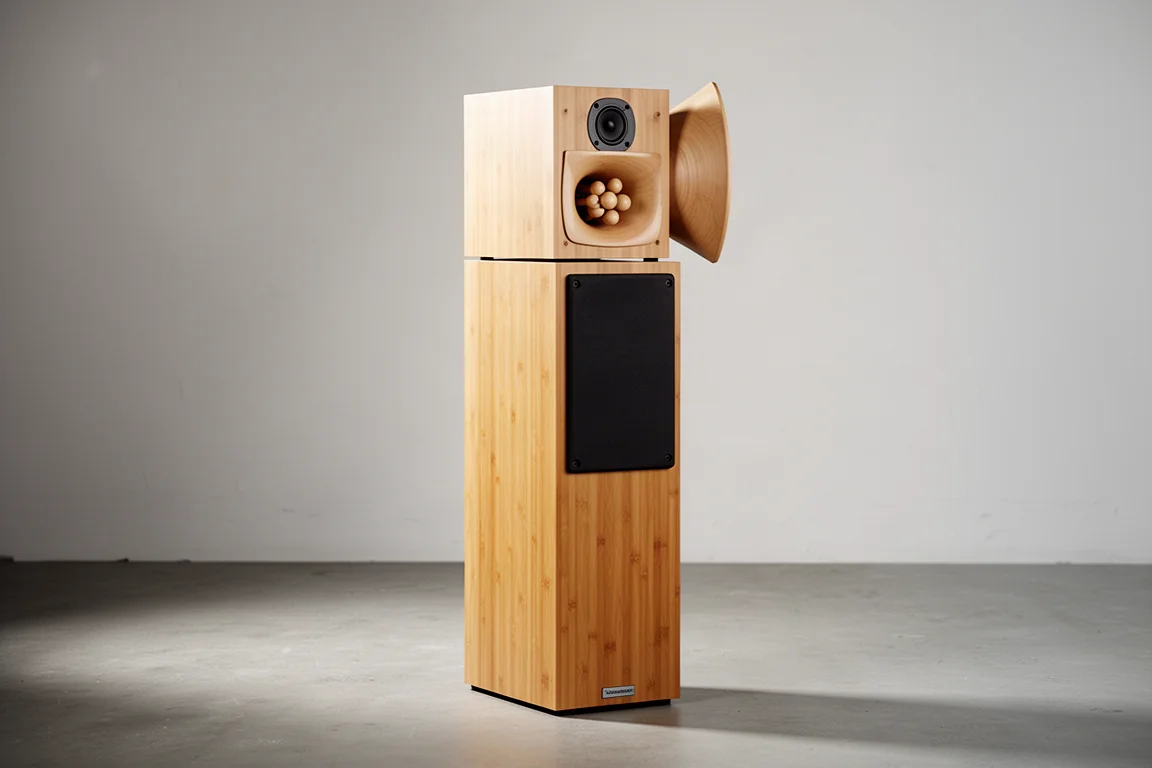
The Tri-Art Mini Monitor is one of the more unusual speaker systems you can bring into a listening room. Tri-Art is a Canadian brand based in Kingston, Ontario, and bamboo sits at the centre of the design rather than acting as decoration. The system pairs a single-driver mini monitor with a super tweeter, an open baffle stand that houses its own subwoofer, and an external crossover that sets the level of the top monitor against the bass.
The configuration discussed here was still a prototype, with a production model in development. Even so, the intent behind the design is clear. This is an intimate, specialised system rather than a speaker built to flatter everything in your library.
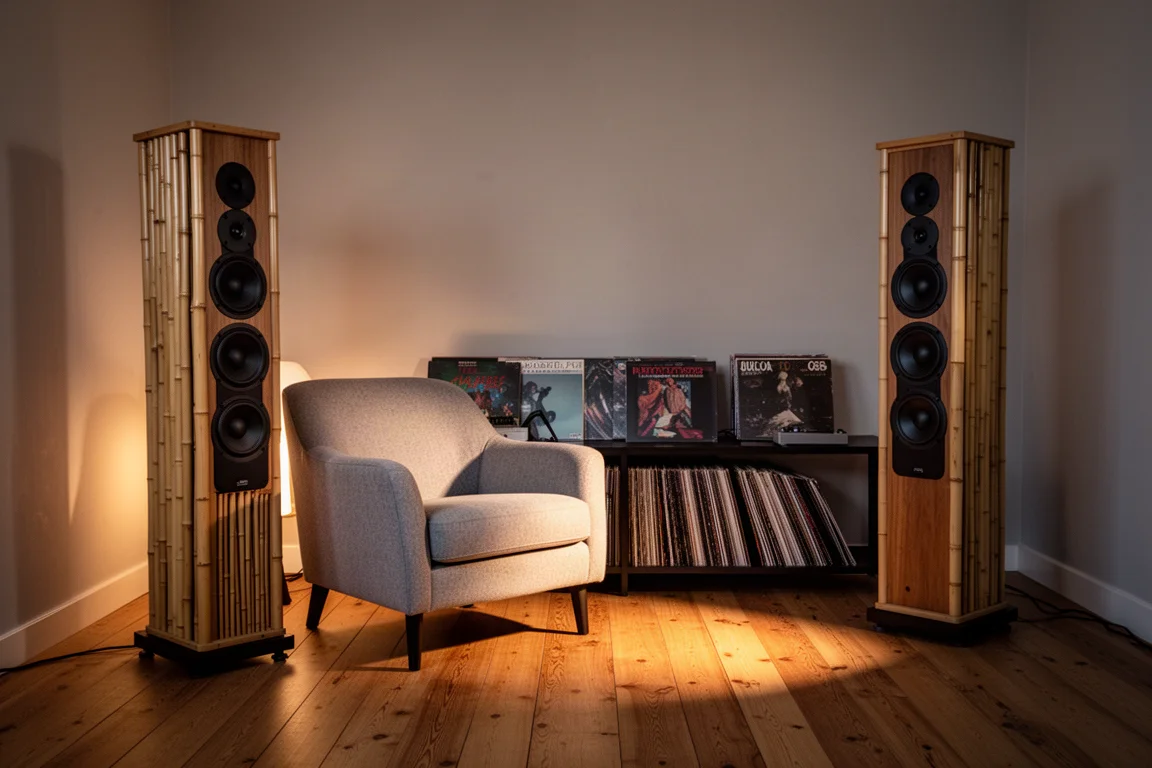
What makes it worth attention is not a specification sheet but behaviour. The open baffle stand loads a room differently from a conventional boxed subwoofer, the horn sections are designed for close-range listening, and the whole system responds strongly to careful setup. Get those elements right and the mid-range carries a sweetness that is difficult to find elsewhere.
Who This Product Is For
This is a system for listeners who sit close and enjoy tuning. The horns are meant to be intimate, which places the listening chair roughly two to three feet from the speakers rather than across the room. At that distance the presentation becomes coherent and balanced. Farther back it flattens out, feels less coherent, and loses the sense of everything arriving together.
It also suits listeners who value a particular kind of beauty over neutrality. Jazz, well-recorded strings, horn instruments, female vocals, saxophone, and acoustic guitar are where this design earns its keep. The sound is coloured rather than studio-neutral, and that colour is the point. If your library is broad and you want every recording to sound correct, a conventional point source speaker will be a more comfortable fit.
Finally, it rewards patience. The system has an adjustable crossover, an open baffle bass section, and a narrow sweet spot that depends on toe-in and ear height. Anyone who wants to unbox a speaker, place it roughly, and be finished will not get the most from it.
Main Strengths
The strengths of this system are tightly connected to its unusual architecture. A single-driver monitor supplies purity in the mid-range and treble, conical horns address what happens when you ask that monitor to play loudly, and an open baffle subwoofer supplies the lower octaves in a way that behaves differently from a sealed box.
Mid-range Purity and Tone
The mini monitor on its own is a pure-sounding speaker. Bass output is limited, but at low to medium volumes the mid-range and high frequencies come through clean, silky, and sweet, with a delicacy that explains why single-driver designs attract devoted listeners. That purity is the foundation of the whole system.

Adding the horns does not erase that character, but it does change it. The horn sections colour the sound, and small bamboo pieces were added inside them to diffuse and decompress the output so it avoids the cupped, honky quality horns can develop. The result is not an uncoloured version of the mini monitor, yet it sounds better than the bare monitor, particularly as the volume rises.
Horns That Stay Composed at Volume
A single-driver mini monitor runs into a physical limit. Push it loud and the upper frequencies become beamy and aggressive. That is precisely the problem the conical horns were added to solve, and they largely succeed. At higher listening levels the horn system beams less and sounds noticeably less forward than the monitor alone, which makes louder sessions far more comfortable.
Open Baffle Bass and Room Interaction
The open baffle subwoofer in the stand behaves differently from a sealed box design. Because the room effectively becomes the enclosure, the bass loads the space more evenly and is far less prone to boom, provided you experiment with positioning. The bass is textured rather than especially deep, with enough punch to fill a room and blend with the horns.
The external crossover is what ties the two halves together. The subwoofer runs at full output at all times, and you adjust the top monitor to taste. Lower the monitor and the balance shifts warmer and fuller. Raise it and the presentation becomes more even. That single control is what lets the system adapt to a specific room.
Things to Consider Before Buying
This is not a plug-and-play speaker, and the trade-offs are as distinctive as the strengths. Placement, listening height, recording quality, and amplifier choice all change what you hear.
Placement, Listening Distance, and Height
Setup is the single biggest variable. Toe-in matters, and the horns should end up almost facing your ears but not quite. Listening distance matters even more: move closer and the sound snaps into focus, with the drivers integrating into one coherent presentation. Listening height matters just as much. With ears level with the top horn, the upper range dominates and the balance tilts. With ears positioned between the top and bottom horn, everything settles into a more even, natural flow.
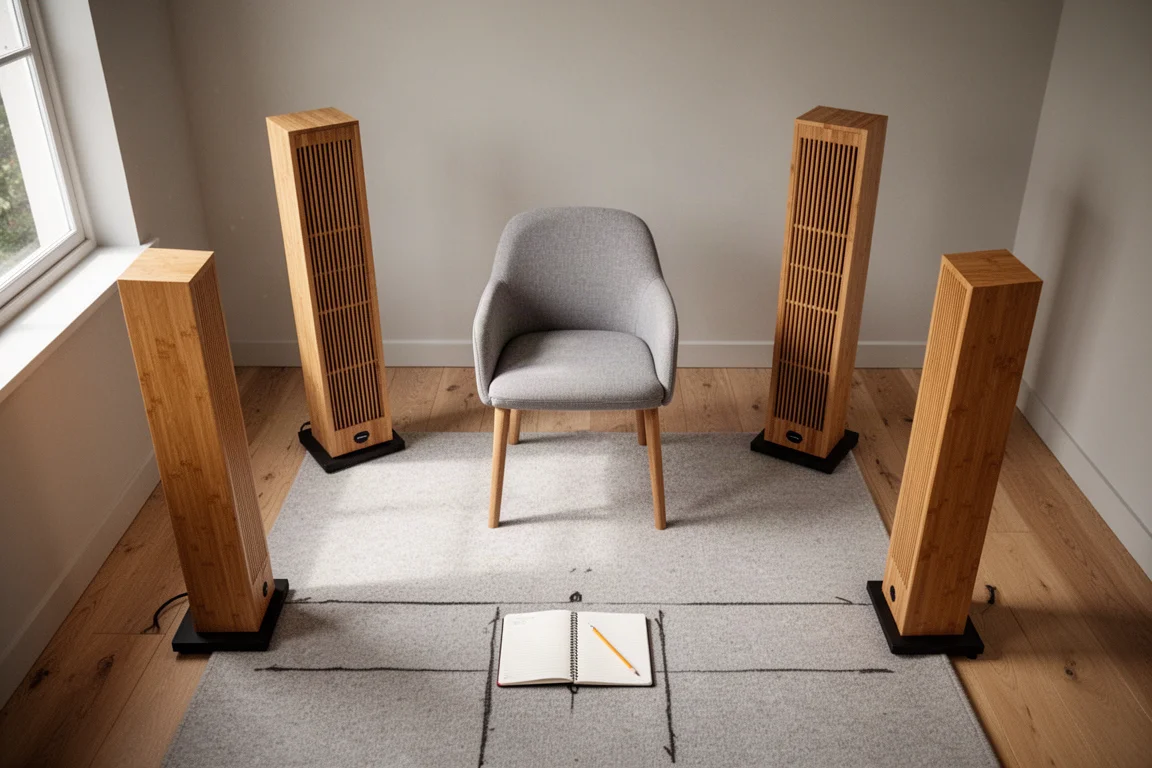
Imaging is part of the same story. A horn system like this does not deliver the pinpoint, sharply separated images that a dual concentric or point source design provides. Instead, instruments are connected to one another, floating in the space between the speakers rather than pinned to precise coordinates. Listeners who expect surgical image placement may find that a compromise. Listeners who enjoy a fuller, more continuous bloom of sound often prefer it.
Recording Quality, Amplifiers, and Cables
The system is revealing, and not every recording flatters it. Some country tracks and less carefully recorded string material can sound wrong, which is a normal consequence of a specialised design rather than a fault. Well-recorded jazz, horns, and vocals, by contrast, can sound remarkably beautiful.
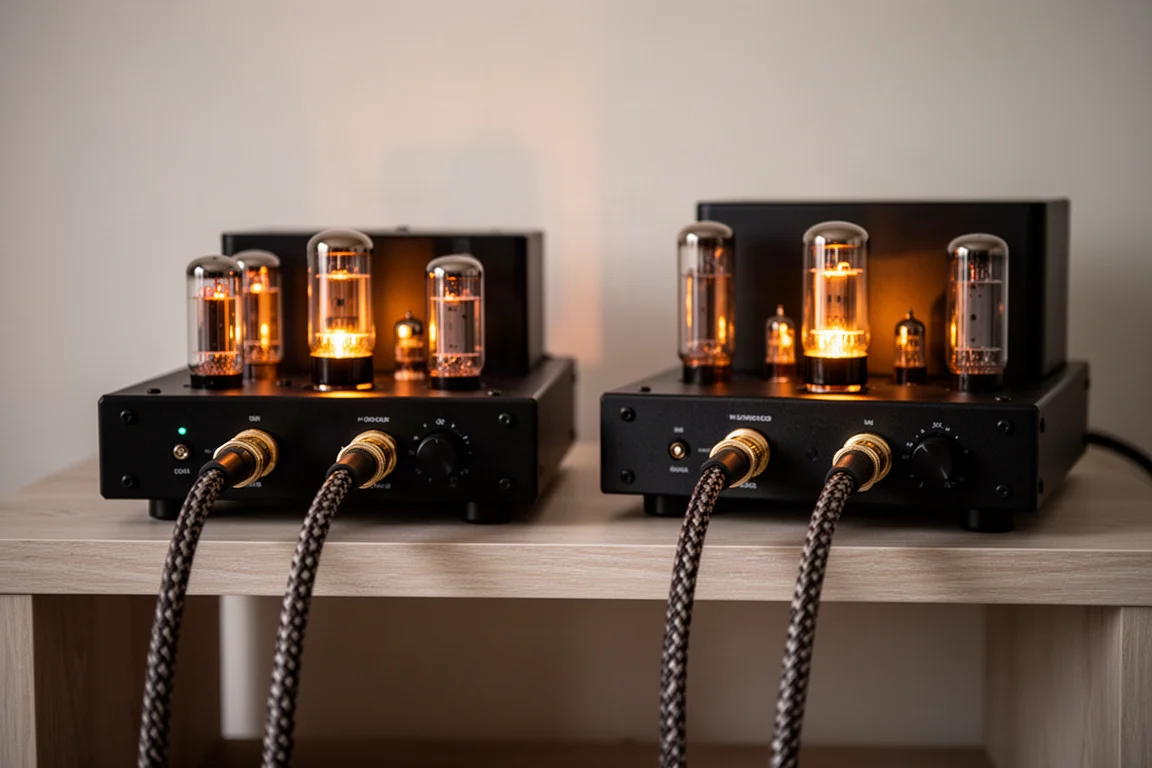
Amplifier matching made a clear difference during listening sessions. Solid state amplifiers were tried, but tube amplification suited the design better. The most balanced result came from an Audio Note tube amplifier, with a vintage Dynaco ST-70 at roughly CAD 1,000 running a close second thanks to a warmer, more inviting character. Notably, the most expensive amplifier on hand was the weakest match, which is a useful reminder that price and synergy are not the same thing. Cabling also made an audible difference, with the mid-range responding most.
Buying Advice
Approach the Tri-Art Mini Monitor as a specialist instrument rather than a general-purpose speaker. Buy it if you listen from close range, favour acoustic and jazz material, and genuinely enjoy dialling in a system. Plan for an amplifier that suits horns, budget time for placement experiments, and expect the crossover setting to become part of your routine rather than a one-off adjustment.
Because the configuration described was still a prototype, confirm the final production specification before ordering, including the crossover implementation, the finish options, and how the stand and monitor are sold together. Anyone who wants one speaker that plays everything equally well should look at point source designs instead, and there is nothing wrong with that choice. Anyone drawn to the specific mid-range character that horns and open baffles deliver will find this system worth hearing properly, in a room, at the distance it was designed for.
Conclusion
The Tri-Art Mini Monitor is a bamboo open baffle system built around a simple idea: keep the mid-range pure, add horns so it can play louder without hardening, and let an open baffle subwoofer fill in the low end in a room-friendly way. It is coloured rather than neutral, selective about recordings, and demanding about placement and amplification. In return, with the right material, the right distance, and the right ear height, it produces a warmth and mid-range beauty that conventional speakers rarely match. For the right listener, that trade is exactly the appeal.
Product link
View more details for Tri-Art Mini Monitor
This product is mentioned in the review. Check the specifications, options, and compatibility before buying.
View more details for Tri-Art Mini MonitorFurther reading
Related Reviews
Hi-Fi Speakers
1723 THX Tower vs 1528 Bookshelf: Which Speaker Fits Your Room?
Two speakers at roughly the same price, built very differently. How the 1723 THX tower and the 1528 bookshelf compare on construction, bass, power needs, and sound.
Hi-Fi Speakers
Acoustic Energy AE 300 Review: Deep Bass From a Compact Standmount
A two-way standmount with real wood veneer, surprising low-end weight, and a warm, easygoing character. Here is what to know before buying.
Hi-Fi Speakers
Acoustic Energy AE1 40th Anniversary Review: A Modern Take on a British Classic
A compact standmount that revives a 1980s favorite with all-new parts, a warm mid-centric balance, and a price of £1,499 per pair.