Mountain Bikes
Trek Slash Review: 170 mm of Rear Travel and a High Pivot Idler Suspension
Trek's latest Slash moves to a high pivot idler layout, 170 mm of rear travel, and a mixed-wheel setup on most sizes. Here is what changed and what to check before buying.
Introduction
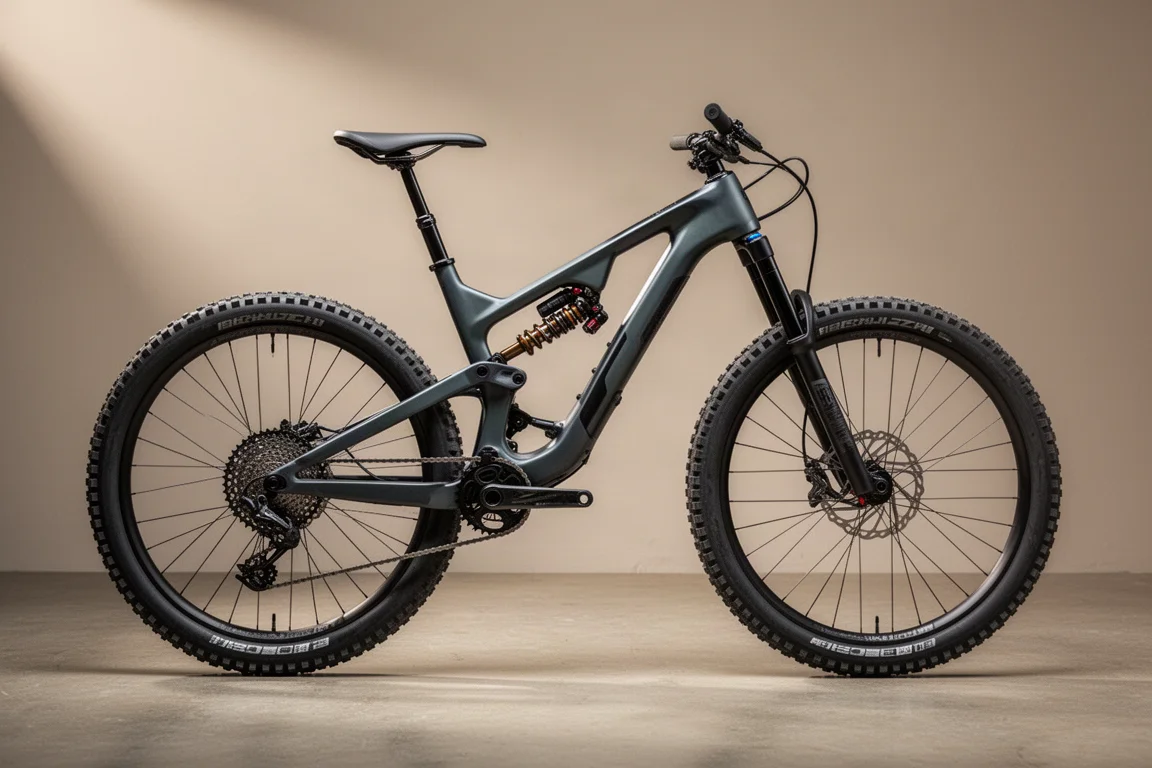
The Trek Slash has been the brand’s long-travel enduro platform since the first generation launched in 2012, and the newest version is the most substantial redesign the bike has seen. Rear wheel travel increases to 170 mm, most sizes move to a mixed-wheel setup, and the suspension layout switches to a high pivot design with a chain idler.
That is a lot of change at once, but the intent is straightforward: build an enduro bike that stays composed on rough, steep descents while remaining efficient enough to pedal back to the top. Seven models are being released, two in aluminium and five in carbon.
Who the Trek Slash Is For
This is a bike for riders who treat descents as the main event but still want to earn their turns. The suspension and geometry updates point clearly toward aggressive enduro and bike park use, while the pedalling platform has been tuned to keep the climb from becoming a chore.
Practical details reinforce that balance. Seat tubes are shorter and straighter across the range, starting at 390 mm on the size small and topping out at 470 mm on the extra large. That lets the small frame run a 170 mm dropper post and lets medium and larger frames fit a 200 mm or longer dropper without trouble, so the saddle can be moved well out of the way on steep terrain. Proportional chainstay lengths also mean each frame size is tuned individually rather than sharing one rear centre measurement.

Riders who want one bike to cover long enduro loops, technical descents, and the occasional bike park day will find the intent here easy to understand.
Main Strengths
The strongest arguments for the Slash are its suspension design, its updated geometry, and a set of frame details that show the platform has been refined rather than simply resized.
High Pivot Suspension and Idler Design
The headline change is the high pivot layout. It delivers a rearward axle path, so the rear wheel moves backwards and up in line with the force of an impact. The rear centre grows as the bike moves through its travel, reaching roughly 80 mm of growth at 135 mm of travel before the axle path arcs forward and upward again for the final 40 mm. At 30 percent sag, the chainstays sit approximately 11 mm longer than the static geometry chart suggests. The goal is to stop the suspension from hanging up on square-edge hits and to help the bike hold momentum on rough trails.
A high pivot brings extra chain growth, which is where the idlers come in. An oversized 19-tooth upper idler is positioned to limit pedal kickback and keep pedal efficiency as high as possible, while also reducing drivetrain friction. A lower idler, developed with MRP, manages chain growth below the chainstay so the suspension is not pulling against the derailleur cage. Trek states that anti-squat remains above 100 percent throughout the travel, which should keep the bike pedalling well despite how much travel it has to manage.
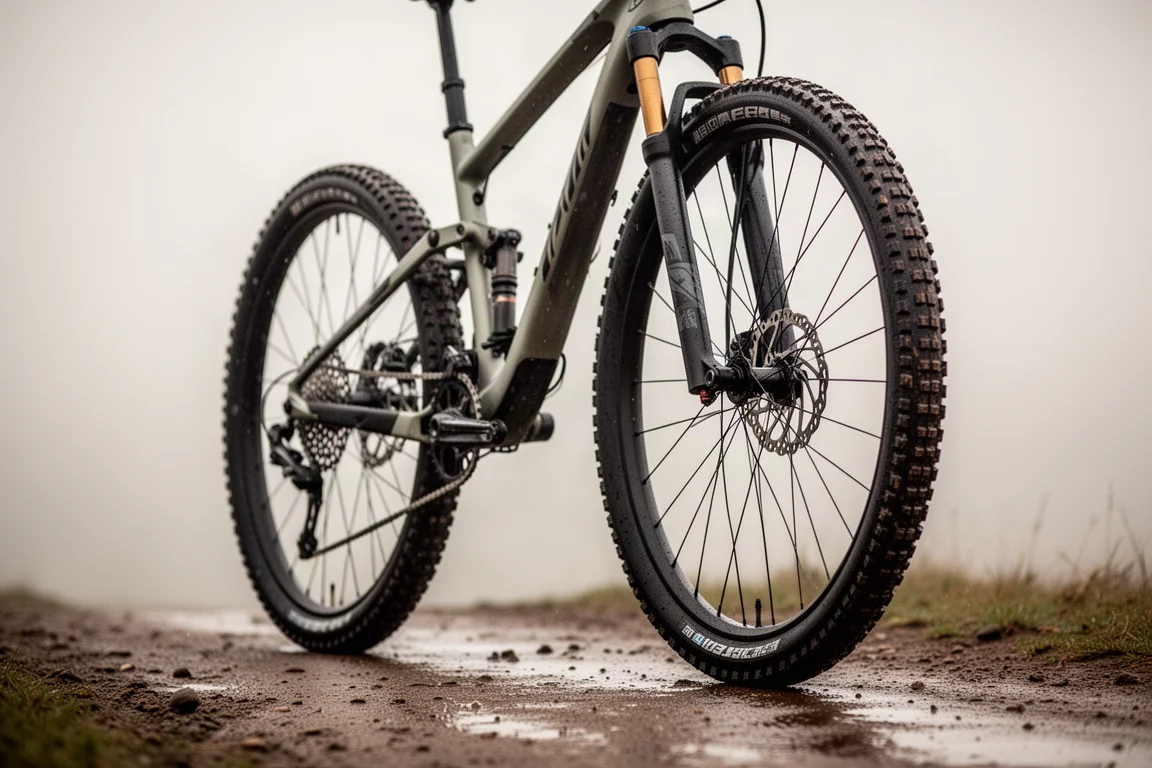
The proven ABP pivot is retained at the chainstay and seatstay junction, rotating concentrically around the rear axle, so the Slash remains a single pivot, linkage-driven shock platform. Progression can be adjusted between 20 and 25 percent with a flip chip on the lower shock mount, making the suspension harder to compress in the steeper setting.
Geometry and Mixed Wheel Setup
The Slash is slacker than before, with a 63.3 degree head tube angle as stock on mixed wheels and a 170 mm fork. Reach has not grown much: a size large measures 488 mm, within about a millimetre of the previous bike. The effective seat tube angle sits at around 77 degrees, which is not the steepest available but is a clear step up from the older version.
Wheel sizing is where the range splits. Sizes medium through extra large run a mixed setup with a 29 inch front wheel and a 27.5 inch rear. The size small keeps 27.5 inch wheels front and rear. Riders on medium and larger frames who want a full 29er can fit a 29 inch rear wheel, but it requires a different lower shock mount that drops the bottom bracket to keep the geometry consistent.
Chainstay lengths scale with frame size: 429 mm on small and medium, 434 mm on medium-large and large, and 439 mm on extra large. Those numbers look short on paper, though the rear centre grows by around 11 mm at sag.
Frame Protection and Practical Details
Carbon models keep Trek’s OCLV construction, which is intended to increase strength and impact resistance, and now add integrated carbon armour, an additional film beneath the paintwork that shields the carbon fibres. Aluminium builds use Alpha Platinum aluminium. Replaceable fenders sit under the down tube, one at the bottom bracket and another positioned to protect against tailgate contact.
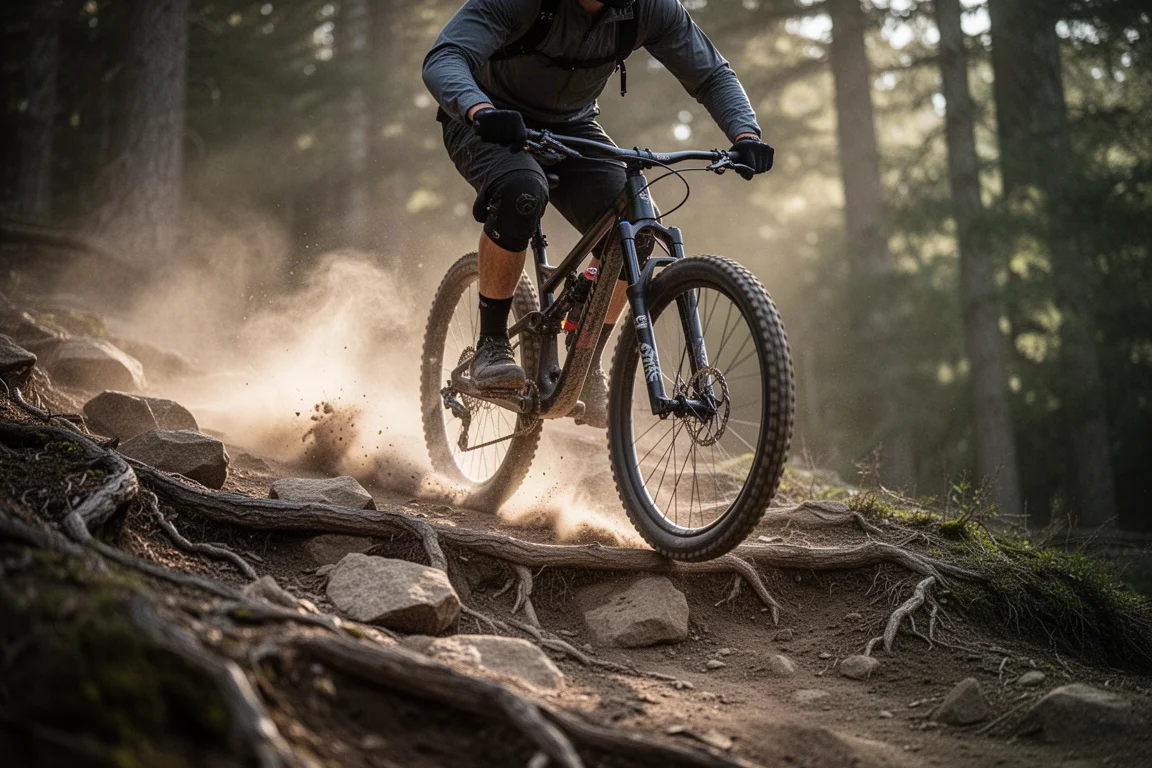
A new rear chainstay protector is shaped to reduce chain whip and limit both vertical and lateral chain movement, which should keep the bike quieter on rough ground. Trek has avoided internal headset routing, and new internal cable guides, which Trek calls channels, make installation and replacement easier while freeing up more of the integrated frame storage. The storage compartment also gets a larger hatch opening and a more reachable lever, and parts of it use recycled plastic.
Standards are refreshingly conventional: Boost 12x148 mm rear hub spacing, a threaded bottom bracket shell, a 55 mm boost chainline, a 200 mm post-mount rear brake mount, and clearance for rotors up to 220 mm.
Things to Consider Before Buying
A few details are worth understanding before you choose a build.
The full 29er rear wheel option on medium and larger frames is not plug and play. It needs a different lower shock mount, sold separately, and it lowers the bottom bracket to suit the bigger wheel.
The plus or minus 1 degree headset cup that lets you fine-tune the front end is also an aftermarket item rather than something included with the bike.
Chain replacement has a quirk of its own. Every size except extra large uses a single standard 126 link chain, while the extra large uses a 128 link chain, which in practice may mean buying two chains.
Pricing also sits at the upper end. The entry model is listed at 4,250 pounds or 4,399 US dollars, and the range climbs steeply from there. Framesets in aluminium and carbon, both with RockShox Vivid shocks, are also planned, though pricing was not available at launch.
Buying Advice
There are seven models in the range: two aluminium and five carbon. The entry point is the most affordable way into the platform at 4,250 pounds or 4,399 US dollars, and it is the sensible choice for riders who want the suspension design and geometry without paying for a top-tier build.
The 9.9 XO AXS T-Type sits second from the top at 9,400 pounds or 9,399 US dollars. It pairs the OCLV carbon frame with RockShox suspension, Bontrager carbon wheels, and an integrated bar and stem combo, which makes it the sweet spot for riders who want a race-ready build without going to the very top of the range.
Above it sits the 9.9 XX AXS T-Type, the range-topping model. If you already have components you want to carry over, the aluminium and carbon framesets offer a starting point, both supplied with RockShox Vivid shocks.
Conclusion
The latest Slash is a meaningful redesign rather than a facelift. More rear travel, a high pivot and idler suspension layout, a slacker front end, and a mixed-wheel setup on most sizes all point to a bike built for hard descending. Despite those numbers, it feels surprisingly agile and nimble, with more traction and a more planted feel than the previous design, and it climbs better than a high pivot idler bike might suggest. Compared with other 170 mm high pivot bikes, the emphasis here is on versatility across a whole mountain rather than pure plowing.
For riders who want one long-travel bike that can be pushed hard on the way down and still pedalled back up, the Slash makes a strong case. Check the sizing, the wheel configuration, and the extra parts you may want before choosing a build, and the platform should feel like a considered upgrade rather than a leap of faith.
Product link
View more details for Trek Slash
This product is mentioned in the review. Check the specifications, options, and compatibility before buying.
View more details for Trek SlashFurther reading
Related Reviews
Mountain Bikes
Atherton AM.130 Review: 3D-Printed Titanium Lugs and a 130mm Trail Bike That Descends Like a Bigger Machine
The Atherton AM.130 pairs 3D-printed titanium lugs with carbon tubes and a DW6 suspension platform. Here is how it rides, what the build delivers, and who it suits.
Mountain Bikes
Beginner Mountain Bike Buying Guide: What to Look For in a Trailworthy Hardtail
A practical framework for evaluating beginner mountain bikes, whether new or used, by examining key components that indicate real trail capability.
Mountain Bikes
Best Aluminum Mountain Bikes 2026: Five Alloy Bikes Worth Your Attention
Five aluminum mountain bikes that show how far alloy has come, from a 120mm trail bike and a versatile machined frame to a 180mm freeride machine.