Mountain Bikes
Atherton AM.130 Review: 3D-Printed Titanium Lugs and a 130mm Trail Bike That Descends Like a Bigger Machine
The Atherton AM.130 pairs 3D-printed titanium lugs with carbon tubes and a DW6 suspension platform. Here is how it rides, what the build delivers, and who it suits.
Introduction
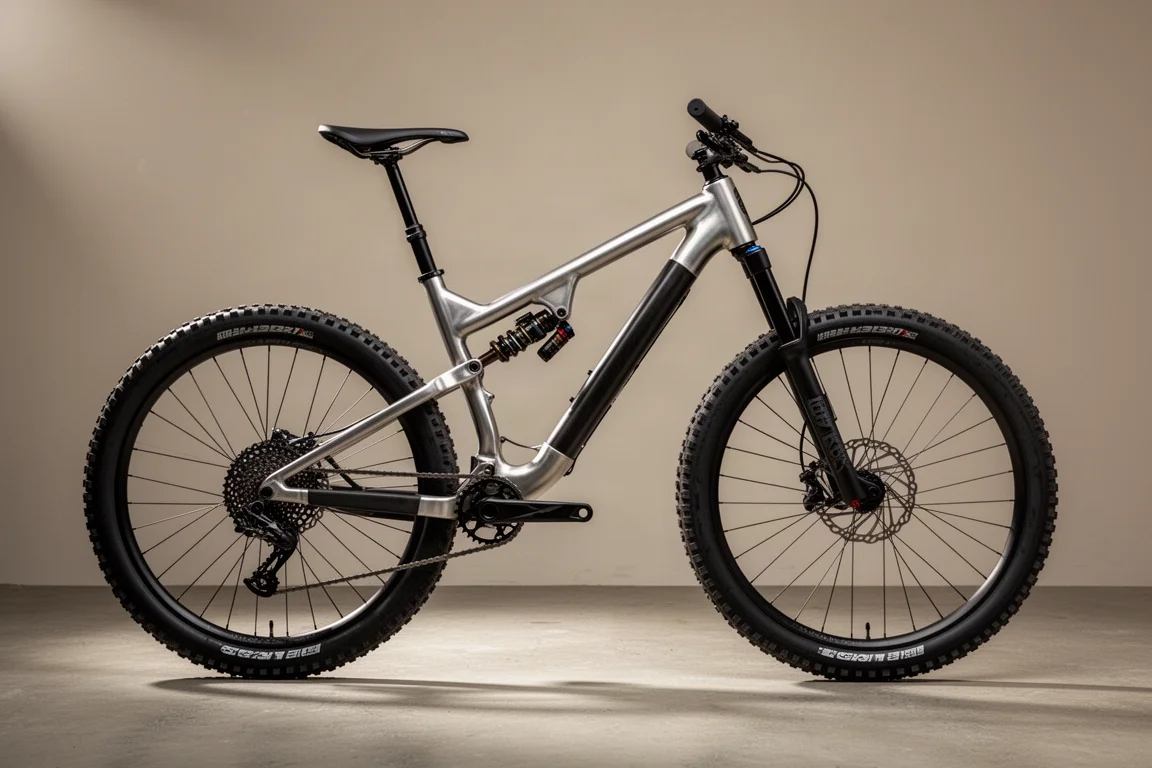
The Atherton AM.130 is a 130 mm travel trail bike from a brand built around a family with a deep downhill racing background. What sets it apart is the frame construction: titanium lugs produced by additive manufacturing and bonded to carbon fibre tubes, with the whole frame handmade in the UK. The rear suspension uses the DW6 platform, a six bar design developed with Dave Weagle.
The build tested sits at the top of the range at around £7,800 or $7,773, and a lugged aluminium range starts from £4,800 for complete builds. With 130 mm of travel on tap, the AM.130 is aimed at riders who want serious descending composure without moving up to a longer travel bike.
Who This Bike Is For
This is a bike for riders who care most about how a bike behaves on the way down and want a short travel platform that still feels calm and planted under pressure. The sizing story is a major part of the appeal: 22 frame size options plus a custom geometry route, far more than the four to six sizes most rivals offer. A size 5 was used for a 173 cm rider, giving a modest 450 mm reach, a trail friendly 65.5 degree head angle and a steep 78 degree effective seat tube angle. Those numbers combine for a comfortable 581 mm effective top tube, a short and snappy 433 mm chainstay, a low 335 mm bottom bracket height and a 380 mm seat tube that leaves plenty of room for a long travel dropper post and for moving around the bike.
Riders who prioritise climbing snap and low weight above all else will find snappier 130 mm trail bikes elsewhere. The AM.130 trades some of that eagerness for stability, which is a deliberate part of its character rather than a shortcoming.
Main Strengths
Descending Performance
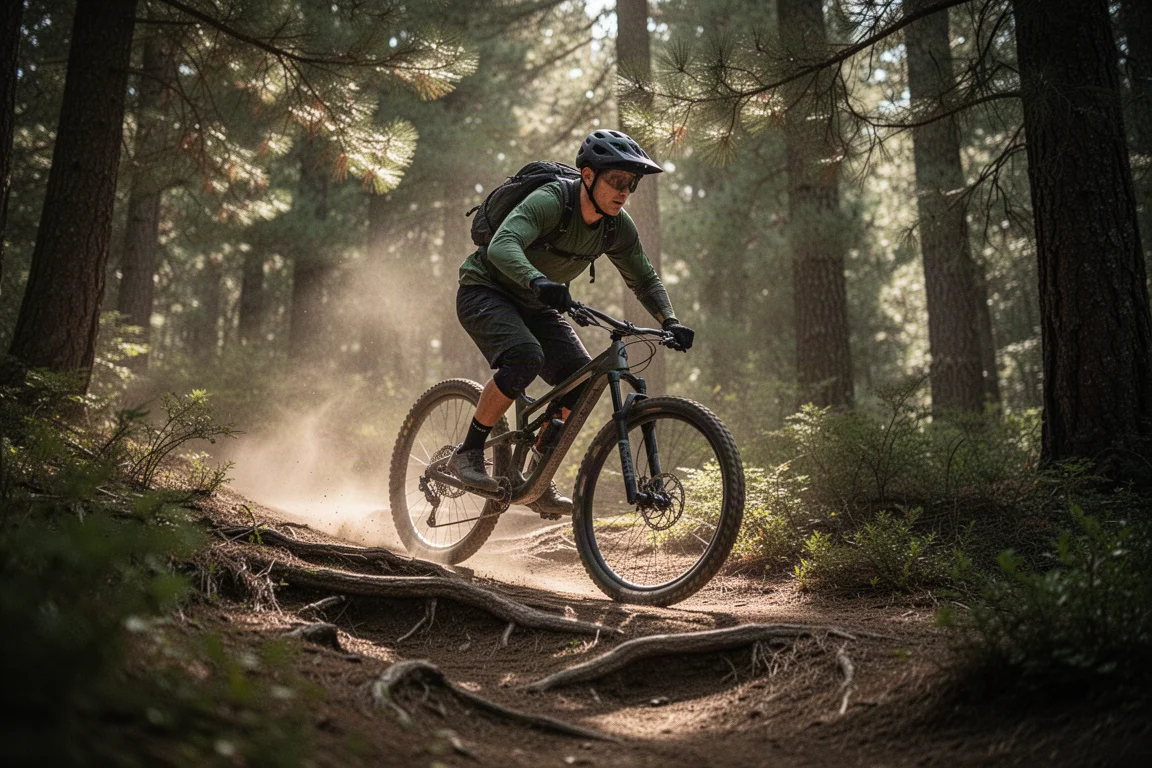
The DW6 platform offers a remarkable balance between sensitivity and support, turning a small 130 mm travel bike into a potent trail machine. Small bump compliance irons out speed sapping trail imperfections and high frequency chatter with the soothing feel of a longer travel bike, yet the bike stays light footed and eager to respond to rider input. It does not mute the trail the way a plush 160 mm enduro bike does, but it flutters over bike park rubble and trail centre chunk and takes the sting out of frustratingly bumpy but not rough surfaces. The ride feels as though there is more travel on tap than the 130 mm figure suggests.
For a short travel trail bike it absorbs bumps exceptionally well, and it stays lively and eager to charge through the turns. The numbers on paper might read as twitchy, but the bike balances its keenness to dive into corners with a stability that delivers confidence. That makes it excellent for nipping through quick, jinking turns where the nimble yet surprisingly surefooted feel comes into its own.
Climbing and Pedaling
This is not the most spirited 130 mm trail bike uphill, but it is no slouch either. Once it settles into its sag point there is a noticeable absence of demoralising bob while seated pedalling, and the rear end remains stable even with the shock set open while still offering enough sensitivity to smooth out trail imperfections comfortably. Standing up and pushing reveals the suspension’s sensitive beginning stroke, yet it does not hold the bike back when the pedals are stomped on, showing an eagerness to charge forward. Firming the rear end with the climb switch proves beneficial: it elevates the bottom bracket, steepens the head angle, adjusts the effective seat tube angle and subtly shifts weight forward. All of that is marginal, but it puts the rider in a comfortable position for managing steep terrain and means fewer pedal strikes from the low bottom bracket. Climbing performance gets an extra boost from Continental trail tyres, which roll surprisingly well without sapping energy despite the grip they offer. In the realm of 130 mm trail bikes, snappier options exist for riders chasing an extra dose of responsiveness.
Frame and Suspension Design
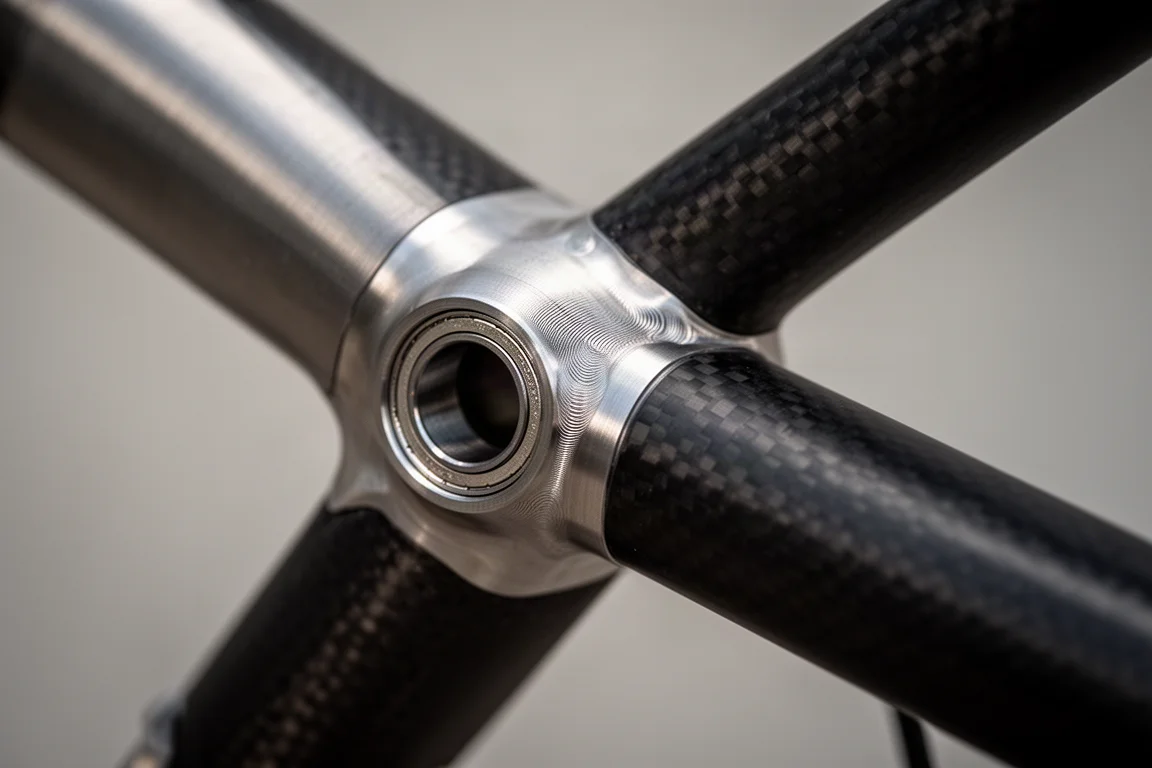
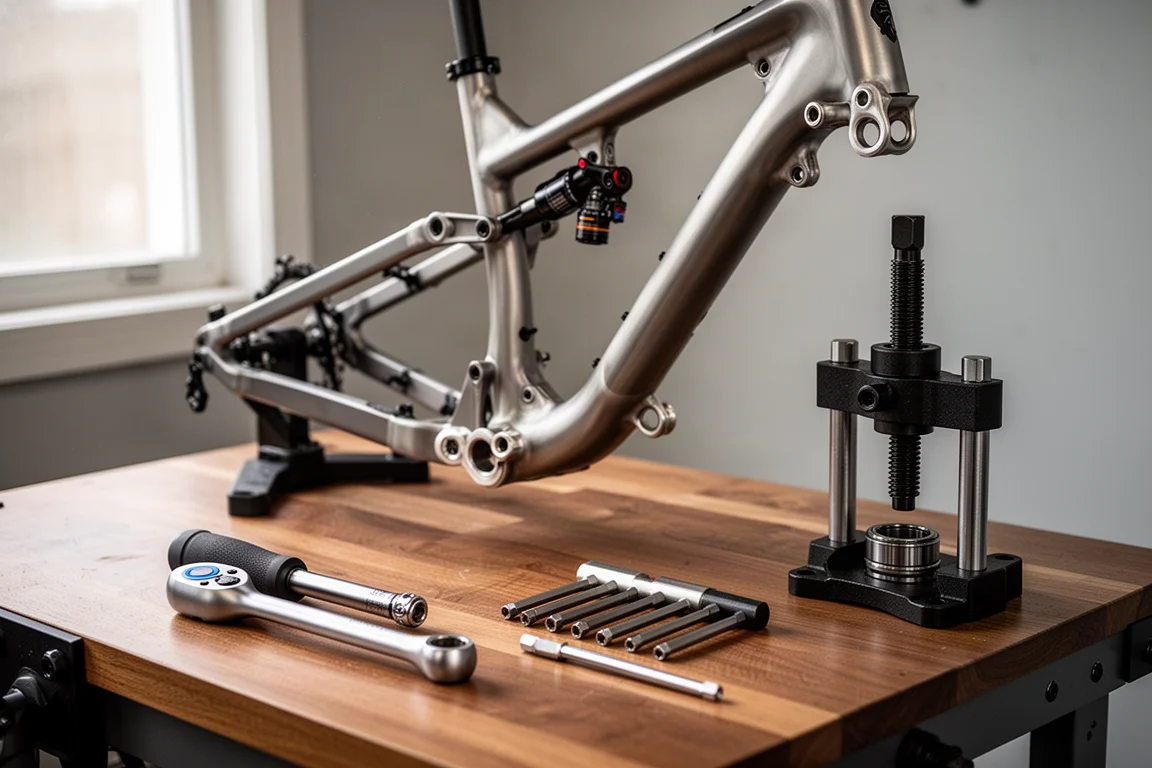
The titanium lugs are genuinely 3D printed. A machine using four lasers melts together thin layers of titanium alloy powder, building lugs of up to around 3,500 layers over approximately 16 hours. After printing, the lugs undergo heat treatment, are cut from their base and receive a hand finish, then threads and bearing seats are precisely cut before bonding to the carbon fibre tubing. Because the lugs can be designed to almost any shape and the tubes cut to specific lengths, the brand can offer 22 frame sizes along with a custom geometry option.
The frame itself is deliberately stripped back: no internal storage, no adjustable geometry and no extra mounts for tools. What it does include is practical, with a water bottle mount, internally sleeved cable routing and thoughtful frame protection on the down tube and chainstays. The DW6 suspension is more complex than the frame suggests. DW refers to Dave Weagle and the six refers to a six bar design. The six bars include the main frame, two short links connecting the chainstays, the chainstay itself, the seatstay and the upper rocker link, so the pivot setup reads as a mix of a twin link and a Horst link. The chainstays connect to the main frame through two short links that create their own centre of curvature, which moves during compression, while an extra Horst length pivot splits the rear triangle and the axle and brake mount drive a rocker on the seat tube. The aim is greater control over suspension kinematics that stay consistent as frame size changes.
Things to Consider Before Buying
Brakes and Drivetrain
SRAM G2 RSC brakes with 180 mm rotors may leave riders wanting a bit more stopping power on steep descents. The drivetrain is SRAM X01 mechanical rather than wireless, and at this price a newer wireless groupset would be a reasonable expectation. A swap to 165 mm cranks would also be a welcome addition for riders who deal with ground clearance on technical terrain.
On the plus side, X01 hardware appears across the board rather than a downgraded shifter, chain or cassette mix, which is often the compromise seen on rival builds at similar money.
Suspension Spec and Value
Suspension is handled by a 140 mm RockShox Pike Ultimate RC2 with a Charger 2.1 damper, paired with a Super Deluxe Ultimate RCT shock. The Pike runs the older 2.1 damper rather than the newer Charger 3 unit, which is worth noting for buyers who follow damper generations closely. On geometry, the key stats sit close to several more mainstream trail bikes, with the 65.5 degree head angle and 78 degree effective seat tube angle described as trail friendly rather than boundary pushing. Value is the main question mark: the price carries a clear premium over rivals, and the spec sheet is where that premium is easiest to scrutinise.
Buying Advice
The AM.130 makes most sense for riders who want a short travel bike that descends with unusual composure and who value an unusually wide sizing range or a custom geometry option. The ride quality is the core of the proposition. The price is the main hurdle, and the build details, particularly the brakes and the mechanical drivetrain, are worth weighing carefully against what the bike delivers on the trail.
Riders who find the price hard to stomach can look at the lugged aluminium range, which starts from £4,800 for complete builds and shares the brand’s approach to sizing. The 22 stock sizes plus the custom geometry route also make this a strong option for anyone who normally falls between sizes, which is a real practical advantage that few rivals can match.
Conclusion
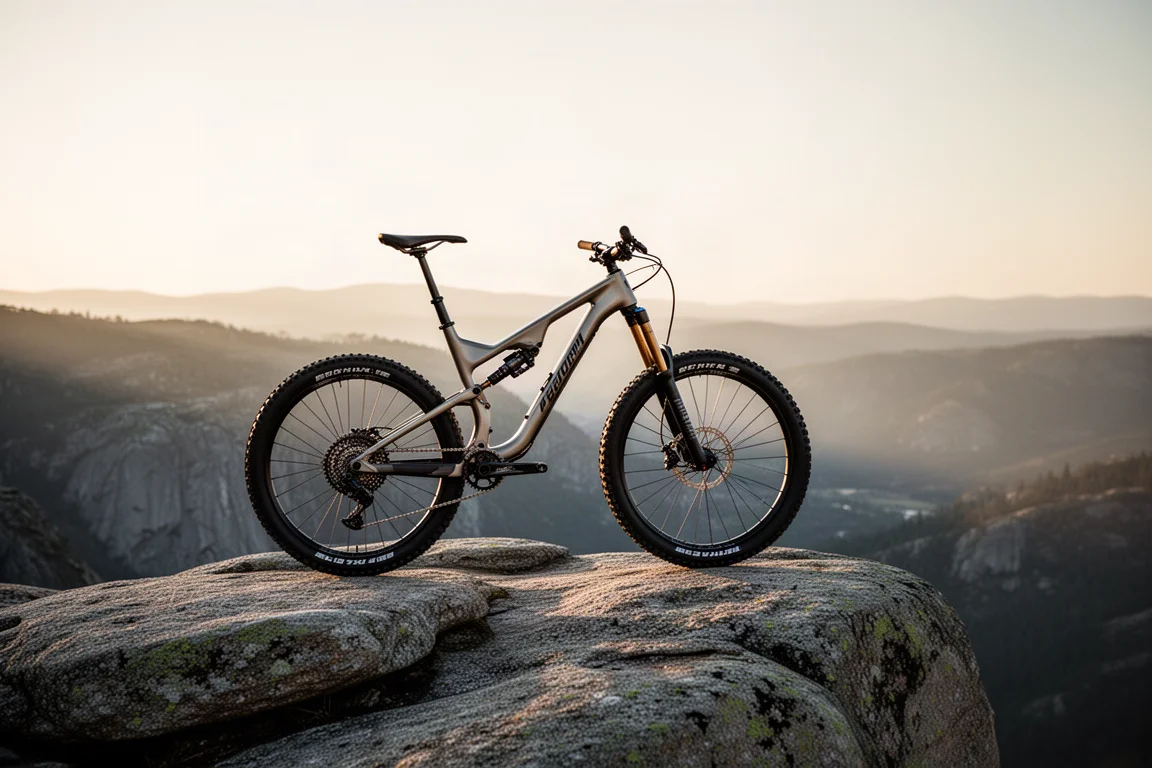
The AM.130 sets a new benchmark for short travel trail bikes on the descents, with suspension performance that is exceptional without turning the bike into a lumbering beast on the climbs. It may not be the poppiest, the most efficient or the most adjustable option in its class, but it plows its own path. The additive manufacturing process, the extraordinary sizing range and the UK hand built frame make it distinctive, while the premium price and a few spec choices are the trade offs to accept. For riders whose priority is a short travel bike that feels far bigger than its travel figure suggests, it is a compelling package.
Product link
View more details for Atherton AM.130
This product is mentioned in the review. Check the specifications, options, and compatibility before buying.
View more details for Atherton AM.130Further reading
Related Reviews
Mountain Bikes
Beginner Mountain Bike Buying Guide: What to Look For in a Trailworthy Hardtail
A practical framework for evaluating beginner mountain bikes, whether new or used, by examining key components that indicate real trail capability.
Mountain Bikes
Best Aluminum Mountain Bikes 2026: Five Alloy Bikes Worth Your Attention
Five aluminum mountain bikes that show how far alloy has come, from a 120mm trail bike and a versatile machined frame to a 180mm freeride machine.
Mountain Bikes
Best Bikes for Bike Park Wales: Five Riders, Five Setups
Five real bike setups for Bike Park Wales, from a light e-bike and an enduro rig to a full downhill bike, a mullet trail bike and a hardtail.