Electric Mountain Bikes
Trek Slash+ Review: A Lightweight eMTB Built to Descend Hard
A close look at the Trek Slash+, a 170mm high pivot electric mountain bike with a lightweight TQ motor, a 580Wh battery, and two very different builds.
Introduction
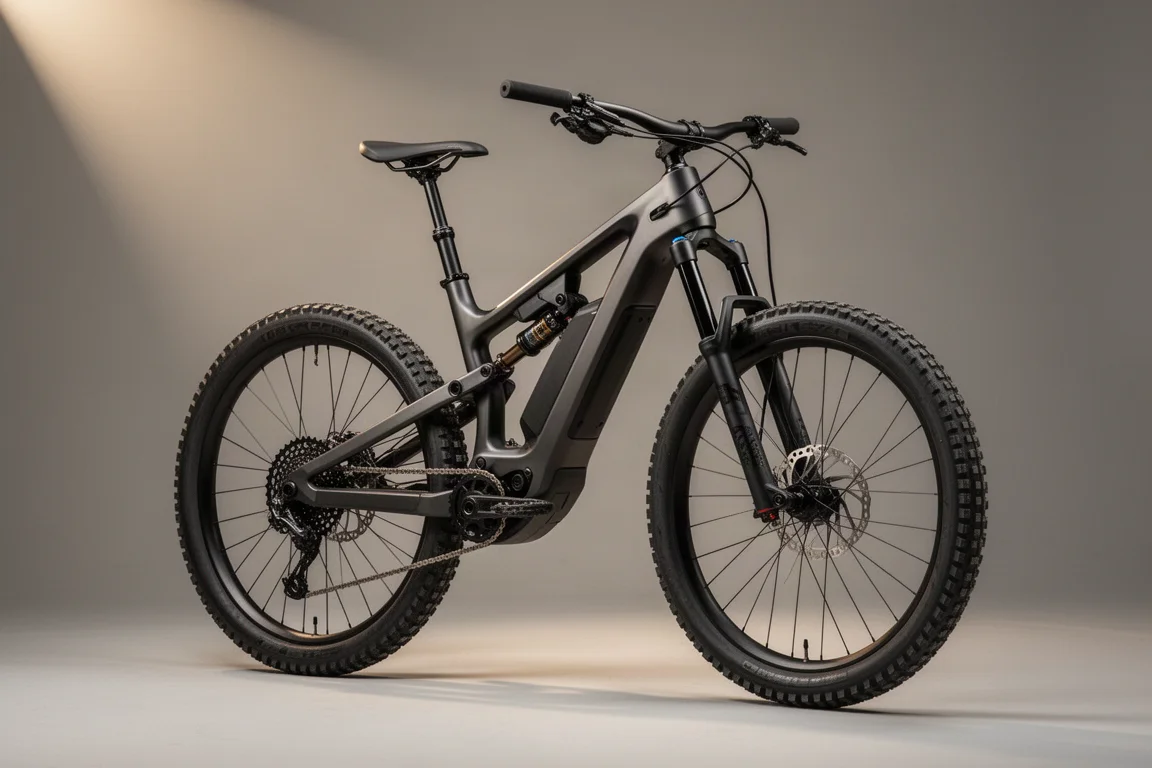
The Trek Slash+ takes the sixth generation Slash enduro platform and adds a lightweight electric motor. That means 170mm of suspension travel, aggressive geometry, and tough but light componentry, paired with a TQ drive unit that is quiet enough to keep the ride feeling like a mountain bike rather than a small motorbike. The Slash+ uses the same high pivot suspension setup and mixed wheel size design as the non-assisted Slash, so it inherits a chassis that was already built to be pushed hard on descents.
This review covers what the Slash+ is, who it suits, and the details worth weighing up before you buy.
Who This Is For
Trek places the Slash+ in its eMTB range as the bigger brother to the lightweight Fuel EXe, and as a lighter alternative to the full power Rail. The distinction matters. Trek recommends the Rail for long distances and a classic all-round eMTB experience. The Slash+ is aimed at a more aggressive rider who is focused on descending, and it is said to handle more like a traditional mountain bike.
If your priority is maximum assistance for long backcountry days, the full power end of the range is the more natural fit. If you want the feel and geometry of a hard-hitting enduro bike with enough assistance to take the edge off climbs and long transfers, this is the bike that brief describes.

It also suits riders who already get along with high pivot bikes. The idler pulley design that defines the Slash’s rear suspension adds a small amount of drag, and electric assistance offsets that penalty while keeping the descending character intact.
Main Strengths
The headline numbers read like a serious enduro bike: 170mm of travel, four-piston brakes, 203mm rotors front and rear, and aggressive Bontrager SE5 tires. Nothing about the chassis has been softened for the sake of being an e-bike.
Suspension and Geometry
The Slash+ carries over the high pivot suspension design and its 19-tooth idler pulley, which routes the chain above the swingarm. That lets Trek control pedalling characteristics and suspension behaviour independently, and the anti-squat kinematics are the same as the non-assisted Slash. The rearward axle path is a genuine asset over braking bumps, and the layout brings stability along with it.
Suspension progressivity is adjustable through a flip chip on the lower shock mount. The linear setting is aimed at traction and works with an air shock, while the more progressive setting suits hard riding with big hits or a coil shock. Trek also warrants the frame up to a 190mm travel fork, so the front end can be pushed further into extreme terrain if that is what you want.
Geometry is close to the non-assisted Slash but not identical. Head angle sits at a relaxed 63.5 degrees and can be set a degree slacker or steeper using headset cups. The effective seat tube angle is a steep 77 degrees for comfortable seated climbing, and the seat tube is long enough for a very long dropper post. Wheels are mixed, with 29 inches up front and 27.5 inches at the rear, though the smallest size runs 27.5 inches at both ends.
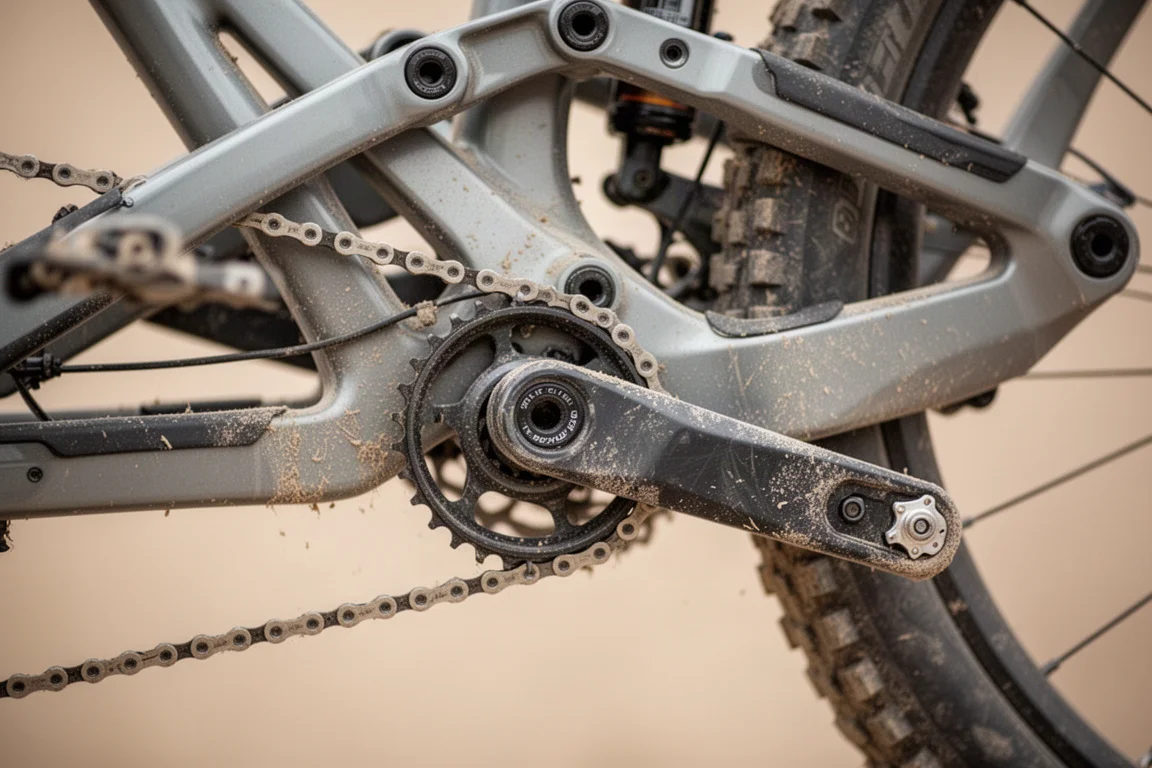
Sizing deserves close attention, because the in-between medium-large size is gone and the reach figures on the medium and large have been adjusted to cover the gap. Reach measures 448mm on the medium, 479mm on the large, and 519mm on the XL. Chainstays stay size specific and run roughly 6mm longer than the non-assisted Slash across the board: 434mm on the small, 440mm on the medium and large, and 445mm on the XL. That keeps the reach to chainstay ratio as consistent as possible between sizes.
Motor, Battery, and Range
Power comes from a TQ HPR50 motor producing 50Nm of torque and 300W of power, with a claimed motor weight of 1,850g. That puts the Slash+ firmly in the lightweight eMTB category, which at first glance seems at odds with such a hardcore, big travel bike. The reasoning is straightforward: the lighter drive unit keeps the ride closer to a normal mountain bike, and high anti-squat numbers mean efficient power delivery with minimal suspension movement even when you are mashing the pedals. The steep seat angle and slightly longer chainstays than the non-assisted Slash help here too, so seated climbing on steep, eMTB-specific ascents stays composed.
TQ also supplies the 580Wh battery, which Trek says delivers 2 to 6 hours of runtime depending on how you use the modes. It is physically larger than the 360Wh battery used on the Fuel EXe, but it is packaged so the down tube stays as slim as possible. Versatility is built in: you can fit the smaller 360Wh Fuel EXe battery to make the bike lighter, though that reduces range slightly and requires a special plastic spacer fitted to the end of the battery, sold separately.
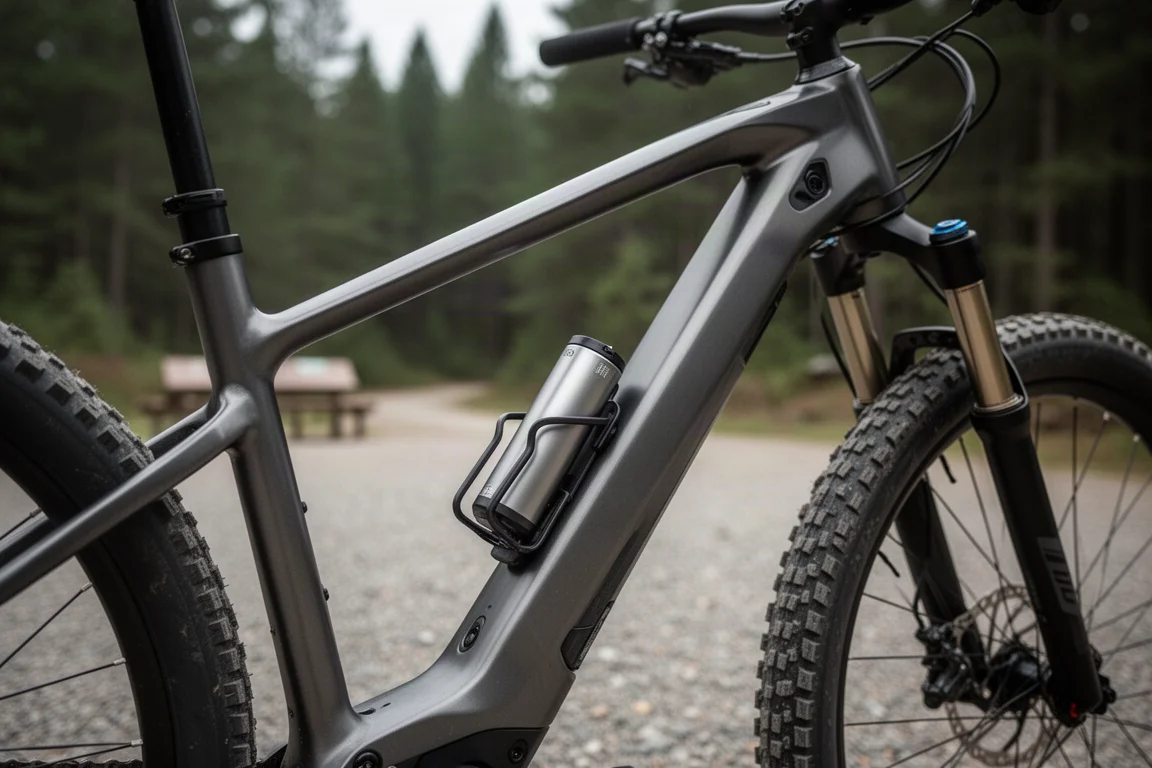
The battery is held in place by two Allen bolts, so removing it needs a tool, but it stays securely anchored and silent in the frame. Riders who want more range can add a TQ range extender, claimed at 950g and shaped to sit inside the supplied bottle cage. The extender holds 160Wh and is priced at 489.99 pounds or 549.99 dollars, and Trek says it lifts runtime to between 3 and 7.5 hours depending on mode use. Charge order is thoughtful: with an extender fitted, the main battery fills first and then the extender tops up. On the trail the extender drains before the main battery, so you can remove it once empty to shed weight while still running a full main battery. Everything from battery level and ride data to mapping and motor tuning is handled through the Trek Central app.
Build Options and Componentry
Two Slash+ builds are currently available, the 9.9 and the 9.7, and they sit at quite different points on the spec spectrum. The 9.9 runs a RockShox Zeb Ultimate fork with a Vivid Ultimate shock, Bontrager Line Pro 30 wheels, an electronic SRAM AXS drivetrain, a Reverb AXS dropper, and SRAM’s range-topping Maven Silver four-piston brakes. The 9.7 uses a Fox Rhythm 38 fork with 170mm of travel and a Performance level Float X shock, Bontrager Line Comp 30 wheels, a drivetrain mixing Shimano XT and SLX with ethirteen espec Plus cranks, and Shimano M6100 four-piston brakes for stopping power.

Both builds share the same frame, motor, and battery platform, so the difference comes down to suspension, wheels, drivetrain, and brakes rather than the ride-defining hardware. The 9.7 covers the essentials with a coil-compatible shock and a proven brake set, while the 9.9 moves into premium suspension and electronic shifting territory.
Things to Consider Before Buying
- The high pivot idler pulley adds a small amount of drag. Assistance offsets it, but it is a real characteristic of the design rather than something that disappears.
- Removing the main battery takes two Allen bolts and a tool, so it is not a quick-release job.
- Running the lighter 360Wh battery means buying a separate plastic spacer and accepting reduced range.
- The range extender is an extra purchase on top of the bike.
- There is no medium-large size, and reach steps between sizes are large, so checking the geometry chart carefully or arranging a demo is worthwhile.
- The 9.9 build uses premium suspension and an electronic drivetrain, which is a significant step up in cost over the 9.7.
- A lightweight motor and a 580Wh battery will not match a full power eMTB for outright range and assistance on very long days.
Buying Advice
Start with the riding you actually do. If you want a bike that descends like an enduro machine and only needs assistance to make the climbs and transfers manageable, the Slash+ is built around that brief. If you need maximum range and full power for long days out, Trek’s own guidance points to the Rail instead.
Between the two builds, the 9.7 covers the core platform with a Fox Rhythm 38 fork, a Performance level Float X shock, and Shimano M6100 four-piston brakes, making it the more accessible route into the frame. The 9.9 adds RockShox Zeb Ultimate and Vivid Ultimate suspension, Bontrager Line Pro 30 wheels, electronic SRAM AXS shifting, and SRAM Maven Silver brakes. If you plan to ride the bike hard and keep it for several seasons, the higher build is the one that will feel current for longer.
Two details are worth deciding on before you buy. First, whether you want the 190mm fork travel the frame is warranted for, which pushes the bike’s focus further toward steep and rough terrain. Second, whether you will genuinely use a coil shock, since the progressive flip chip setting is the one designed for it. Answer those two questions and the choice between builds becomes much simpler.
Conclusion
The Trek Slash+ is a deliberate combination: enduro geometry, 170mm of travel, mixed wheels, and a high pivot rear end, with a lightweight TQ motor and a 580Wh battery. It is not trying to be a full power eMTB, and that is the point. For riders who want a hard-hitting bike that still feels like a mountain bike on the way down, the Slash+ makes a convincing case, and the two builds offer a clear way in at different points on the spec ladder.
Product link
View more details for Trek Slash+
This product is mentioned in the review. Check the specifications, options, and compatibility before buying.
View more details for Trek Slash+Further reading
Related Reviews
Electric Mountain Bikes
Best E-Mountain Bikes: Five Electric Trail and Enduro Bikes Compared
A practical look at five electric mountain bikes, from a lightweight carbon trail build to long-travel enduro machines, with the trade-offs that matter before you buy.
Electric Mountain Bikes
Best Electric Mountain Bikes 2026: Four Price Points Compared
Four electric mountain bikes from £999 to £9,999 compared on motor power, battery capacity, weight, and trail performance.
Electric Mountain Bikes
Best Electric Mountain Bikes: Five E-MTBs Worth Shortlisting
Five full-suspension electric mountain bikes compared, from lightweight trail machines to full-power enduro rigs, with the strengths and trade-offs to weigh before buying.