Road Cycling
Trek Madone SLR Pro Race Build: Five Components Worth Knowing
A close look at a Tour-stage-winning Trek Madone SLR and the SRAM, Bontrager and Pirelli parts that make up the complete build.
Introduction
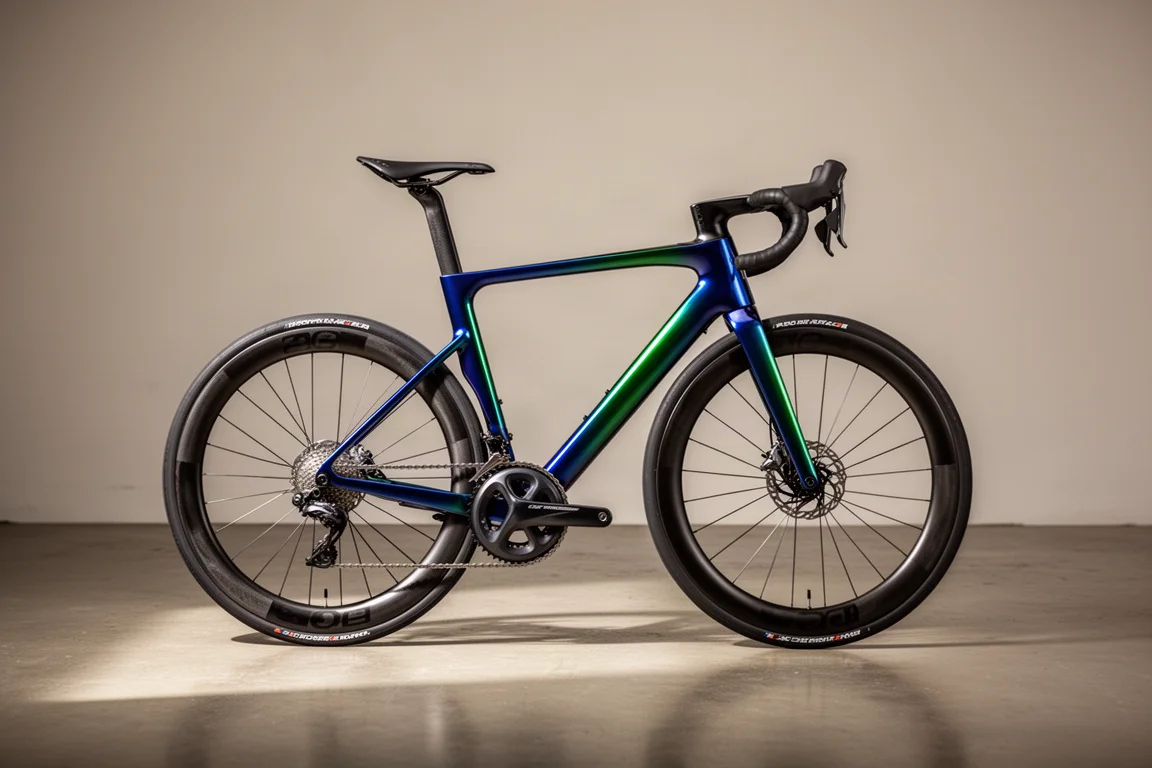
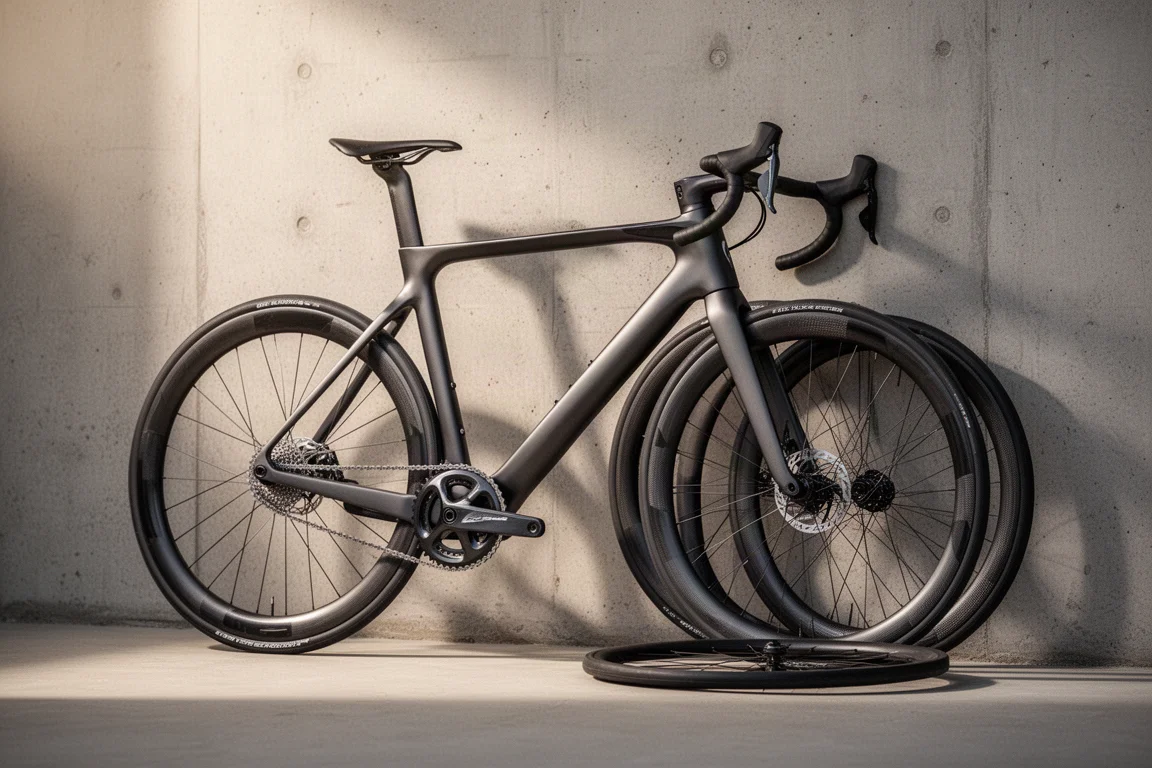
Some race bikes are easy to place instantly. The Trek Madone SLR is one of them. This particular example was raced at the Tour de France, where it won a stage, and it wears one of the most striking paint finishes Trek offers through its Project One program. Beneath the paint sits the current Madone SLR, shaped around deep aero tube profiles, an unusually narrow head tube, and a cutout through the seat tube area that Trek says improves the bike’s aerodynamic performance.
A race bike is only ever as good as the parts bolted to it, which is why this build is worth reading as five separate products: the frame, the drivetrain, the wheels, the tires and the saddle. Each one can be bought on its own, each one is a genuine upgrade in its own right, and each one has trade-offs that matter more than the marketing around it. What follows is what stands out about every piece, plus the numbers and details a buyer should weigh before spending.
What to Check in a Modern Aero Road Build
Three things separate a genuinely fast aero road bike from one that merely looks fast: fit, gearing and finishing kit. Fit comes first because it cannot be fixed later with a component swap. This bike is a size 58 frame with a saddle height of 81cm measured from the centre of the crank to the top of the saddle, and crank arms of 172.5mm. Altogether it measured 7.35 kg with the groupset fitted, two bottle cages in place, and no pedals or computer. That is comfortably above the 6.8 kg race minimum, which leaves room to work with if weight matters to you.
Gearing comes second. A race build runs taller gears than almost any rider needs, and that is a deliberate choice rather than an oversight. Finishing kit comes third, and it is where the smallest changes make the biggest day-to-day difference.
The Frame: Trek Madone SLR
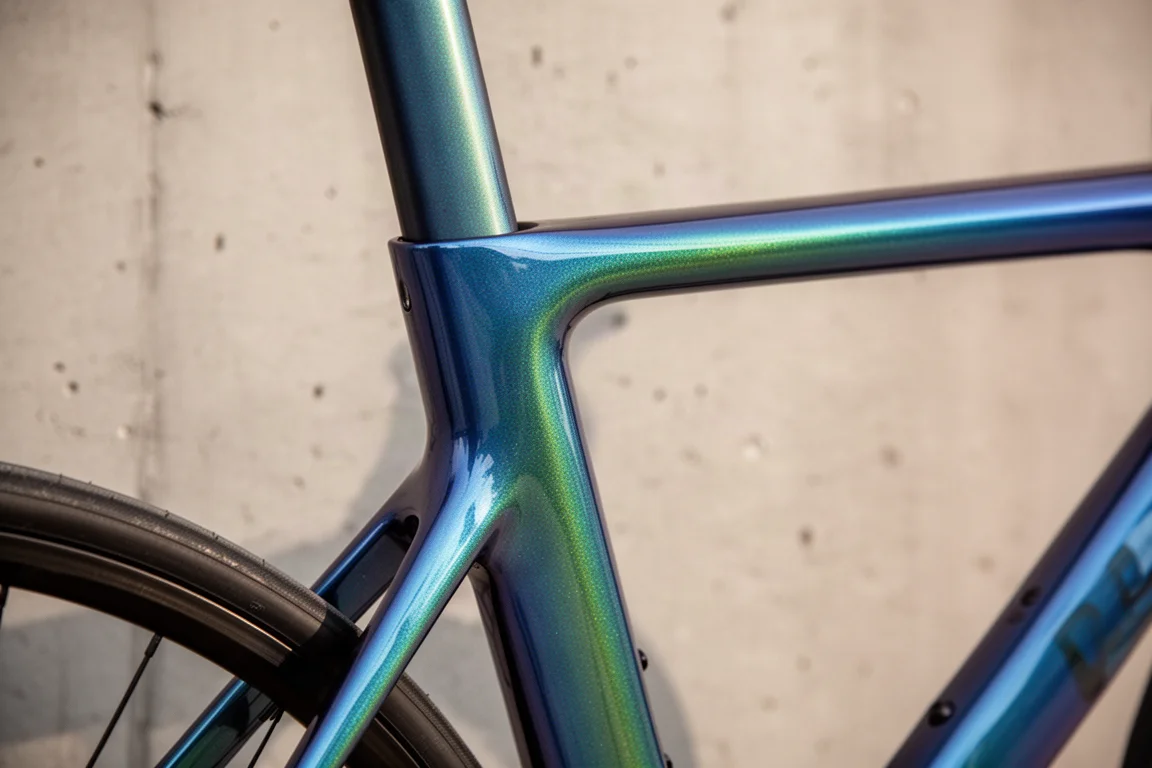
Under the paint this is the latest Madone SLR, and it is an aggressively shaped machine. The tube profiles are deep, the head tube is exceptionally narrow, and the opening through the seat tube area is a signature of the design. It looks fast standing still, and the finish on this particular example shifts and pops depending on the angle of the light.
Two practical notes for anyone shopping this frame. First, this finish is a Project One option rather than a standard colour, and it is a substantial addition to the price. Second, the fit is uncompromising: a long 140mm stem with the bars dropped essentially all the way down and no spacers to speak of. That is a position built for racing, and most riders will want to soften it considerably.
Pricing is where the reality sets in. The stock bike is around £14,500 before the custom paint, and the Project One finish seen here adds roughly £3,850 on top.
The Groupset: SRAM Red eTap AXS
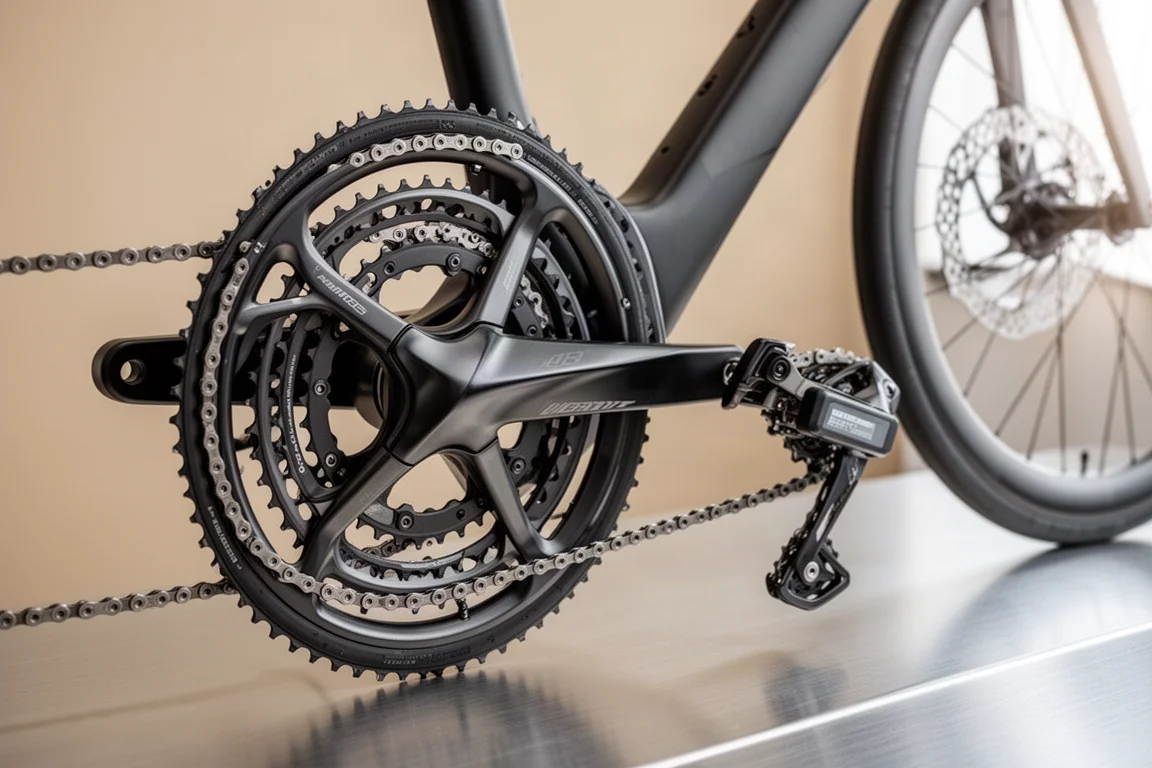
This bike runs the regular SRAM Red eTap AXS groupset, and the gearing is the most eye-catching part of it. The outer chainring is unusually large, paired with a 43-tooth inner ring, while the cassette runs to a 10-tooth sprocket at the back. Together that combination produces a remarkably tall top end, which is exactly what a rider chasing stage wins at the Tour de France needs.
Braking follows the same pattern of deliberate choices. There is a 160mm rotor at the front and a smaller 140mm rotor at the rear, which is the reverse of SRAM’s usual pairing and looks like a weight decision. A flat-top chain completes the drivetrain. One detail worth knowing before anyone goes looking for it: some of this team’s bikes ran gold chains and gold cassettes, but that specification is reserved for pro riders and cannot be bought.
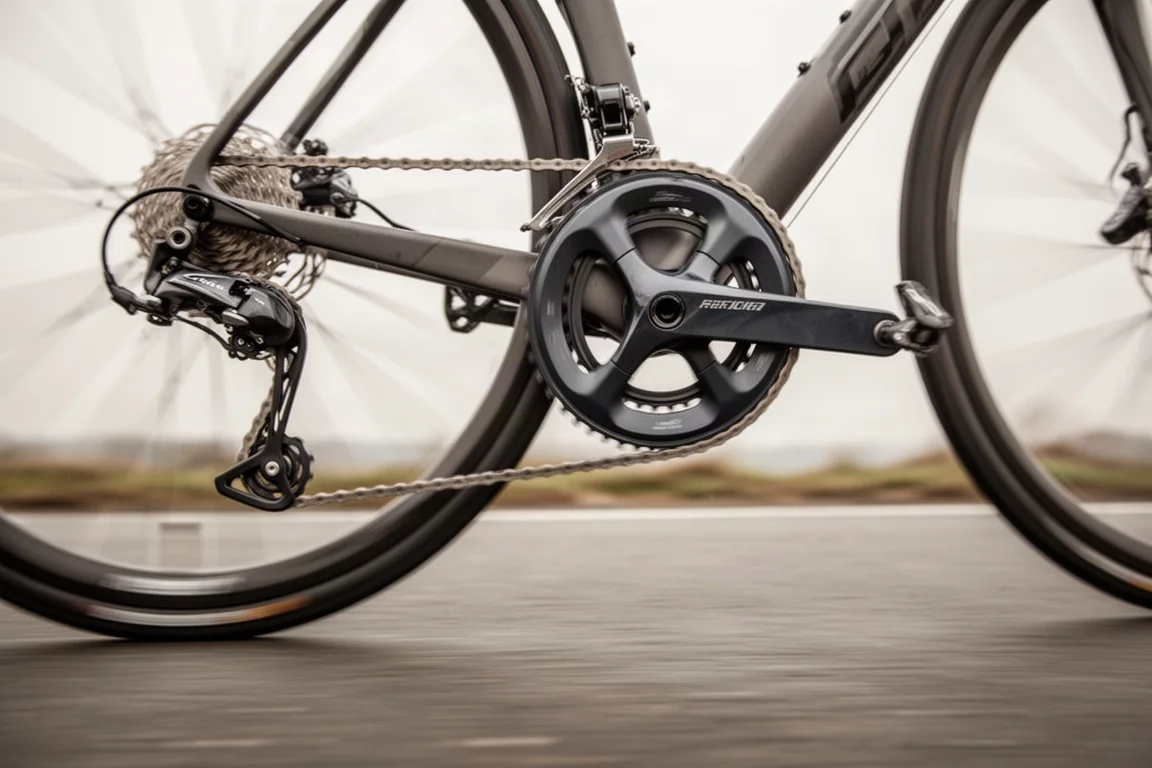
The batteries sit on the derailleurs, as they do on any electronic setup, and for most buyers this is the easiest component to justify on pure performance grounds. The gearing here is taller than a typical rider will ever need, but the system underneath it is the same one anyone can buy.
The Wheels: Bontrager Aeolus RSL 62
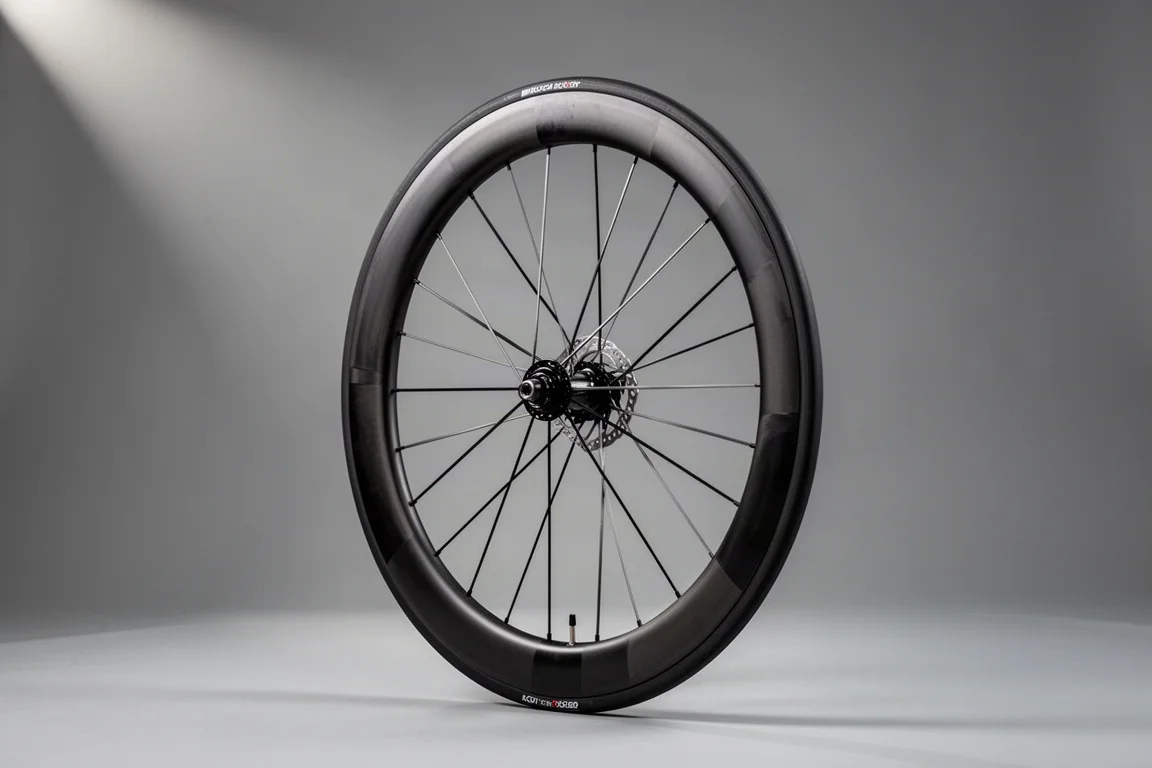
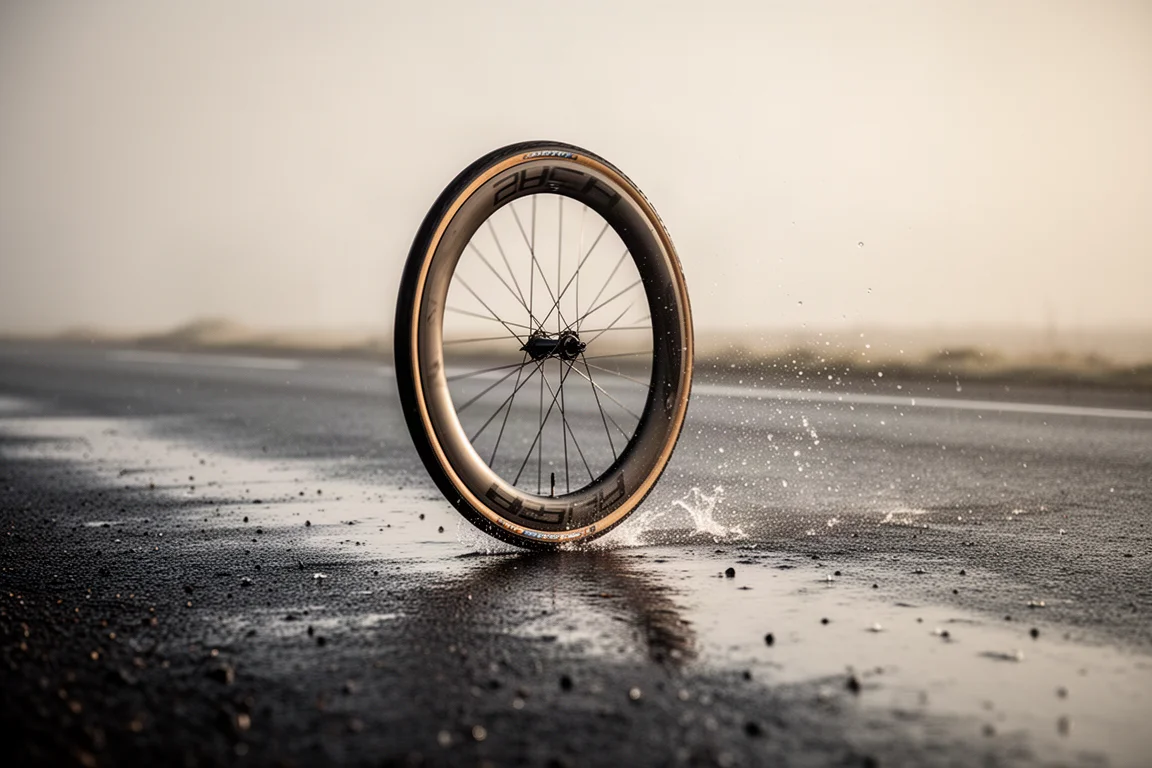
The bike rolls on a pair of Bontrager Aeolus RSL 62 wheels. They are a deep-section design with a wide rim, which is the modern recipe for aerodynamic efficiency without the harshness that deep, narrow wheels used to bring.
The freehub is very loud indeed. Whether that counts as character or as an irritation is entirely personal, but it is loud enough to be a genuine factor in how the bike feels to live with. Anyone sensitive to drivetrain noise should ride a set before committing. For riders chasing aerodynamic gains, though, the combination of depth and width here is a sensible, well-proven formula.
The Tires: Pirelli P Zero Race
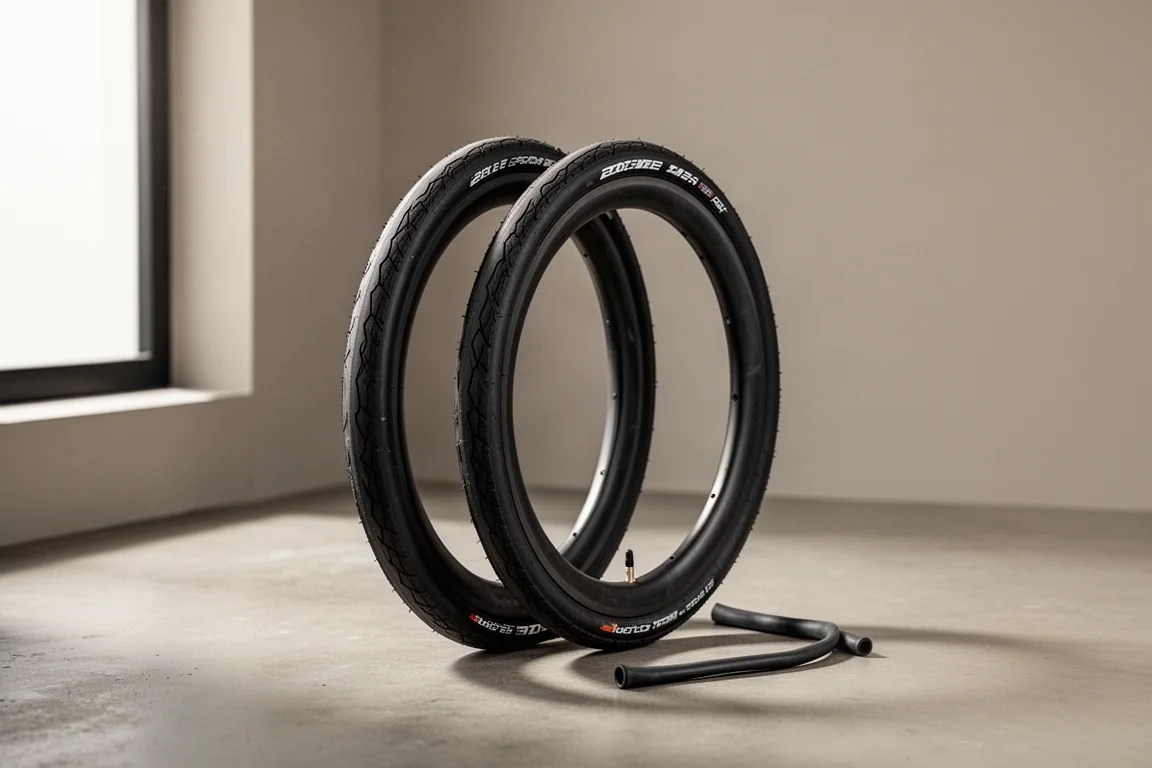
These are Pirelli P Zero Race clinchers in a 28mm width, mounted with inner tubes. That width is now standard practice even at the highest level of racing, where the rolling resistance and grip benefits of wider rubber are judged to be worth the small aerodynamic penalty.
The team on this bike uses a mix of clinchers, tubulars and occasionally tubeless setups depending on the racing, but clinchers with inner tubes are the most common choice and the configuration shown here. For most riders that is the practical option too: simple to set up, simple to replace at the roadside, and quick enough for any non-competitive goal.
If you are not buying a complete bike, tires are the cheapest way to change how an existing one feels. A 28mm race clincher is a low-risk experiment that pays off immediately in comfort and grip.
The Contact Points: Bontrager Verse Pro and the Cockpit
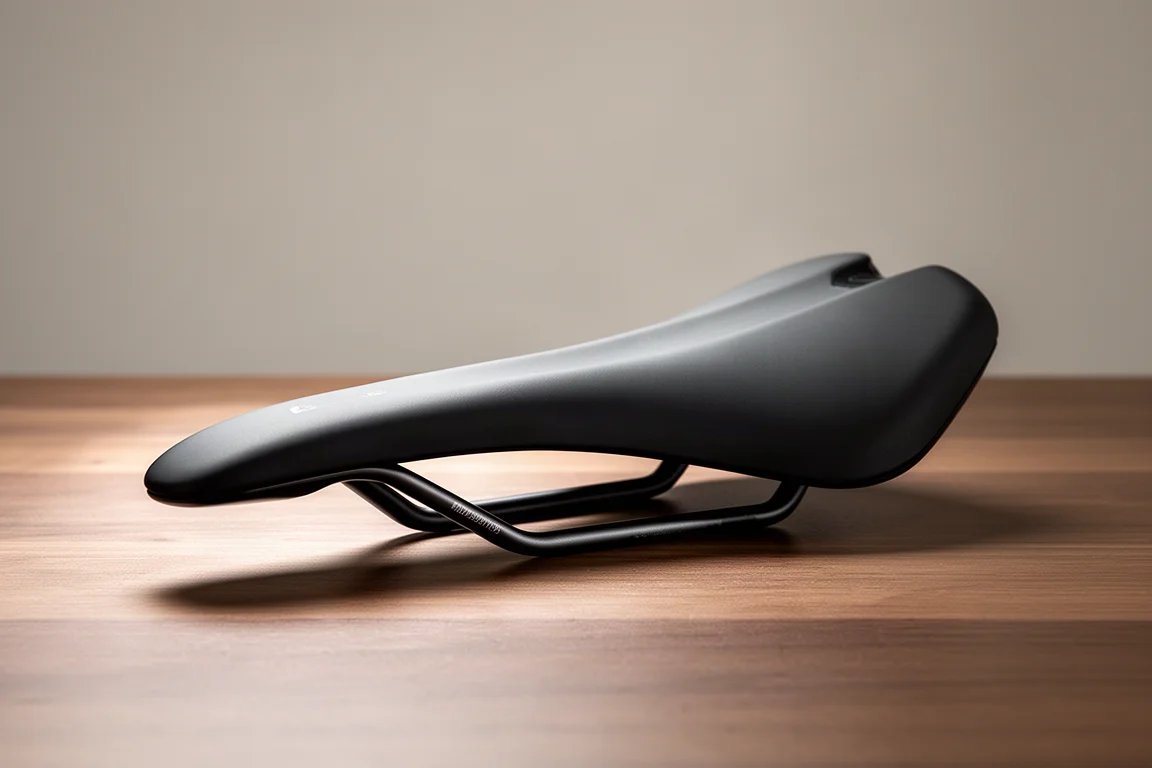
The saddle of choice is the Bontrager Verse Pro. It is paired with a one-piece carbon bar and stem that measures very narrow from centre to centre, with the hoods angled inward, a setup riders use to shave aerodynamic drag. The stem comes in at 140mm and the bars are slammed for the lowest possible position. The computer is held by a K-Edge style mount, and the bottle cages use small tabs for extra-secure bottle retention. Small details, but they are the difference between a bike that works in a race and one that works every day.
Buying Advice: What to Check Before You Commit
The appealing part of all this is simple: you can buy the same bike the professionals race. The stock Madone SLR starts at around £14,500, the custom paint finish seen here is a Project One extra of roughly £3,850, and once you add pedals, a computer and bottle cages a comparable build lands near £20,000.
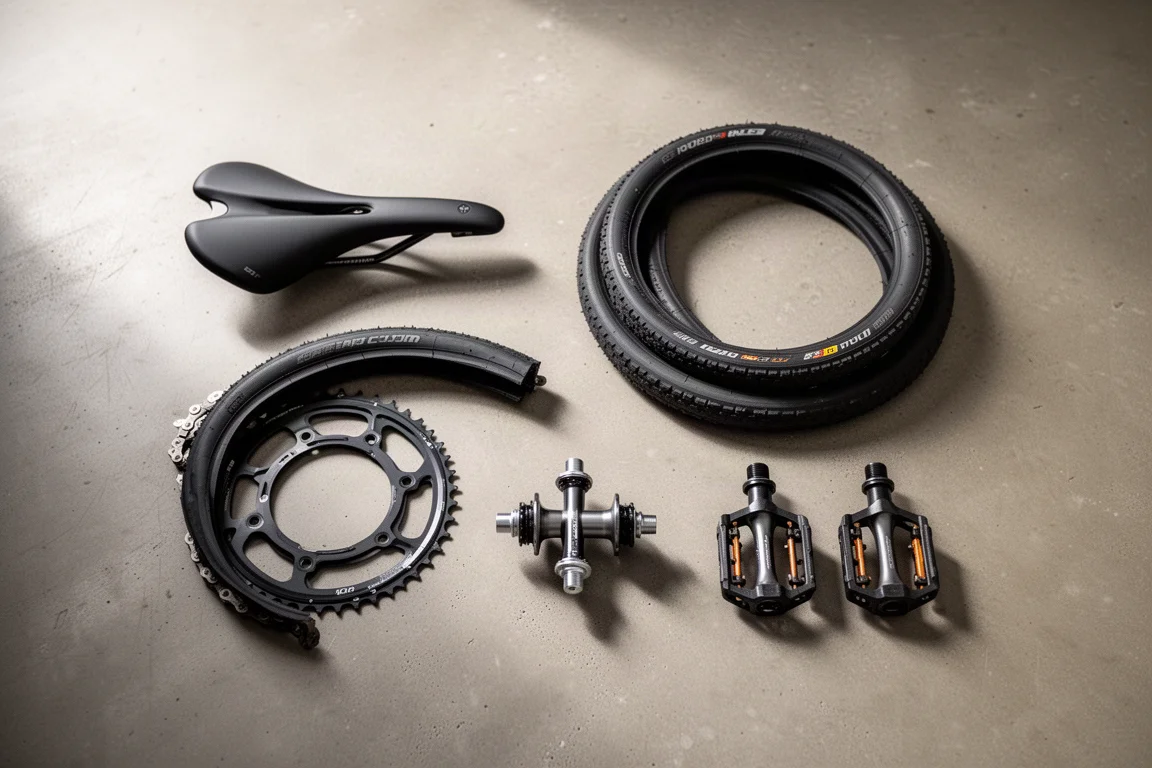
If that number is out of reach, the components are not an all-or-nothing proposition. A saddle, a set of tires or a wheelset can each be upgraded separately, and each one changes the ride noticeably. The frame is the biggest commitment and deserves the most thought: check the size against your own position, and be honest about whether a long, low, slammed front end is something you can hold for hours rather than minutes.
The measured 7.35 kg for a size 58 build, without pedals or a computer, is a useful reference point. It is not a featherweight, but it is a real-world figure for a bike with deep wheels and two cages fitted.
Conclusion
Taken as a whole, this Madone SLR build shows how a modern race bike is assembled from parts that each stand up on their own. The frame sets the character and the price ceiling, the gearing sets the top-end speed, and the wheels, tires and contact points decide how the bike actually feels underneath you. Buy the frame only if the fit works, buy the groupset if you want the fastest shifting, and treat the wheels, tires and saddle as upgrades you can make one at a time. That way the cost stays manageable and every change is one you can feel.
Further reading
Related Reviews
Road Cycling
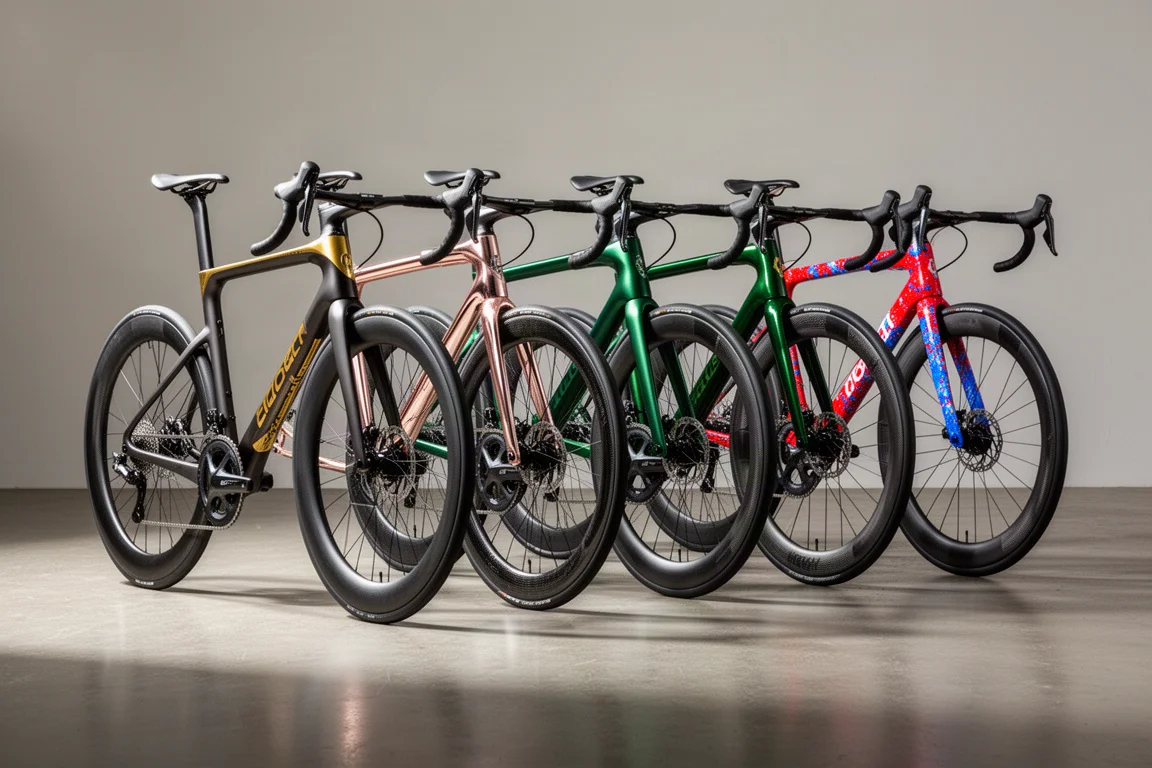
Best Looking Tour de France Bikes: Eight Race Machines and Their Paint Schemes
A closer look at eight Tour de France race bikes, from a gold-detailed presentation build to rainbow watercolours, water-transfer finishes and a clean title-sponsor livery.
Road Cycling
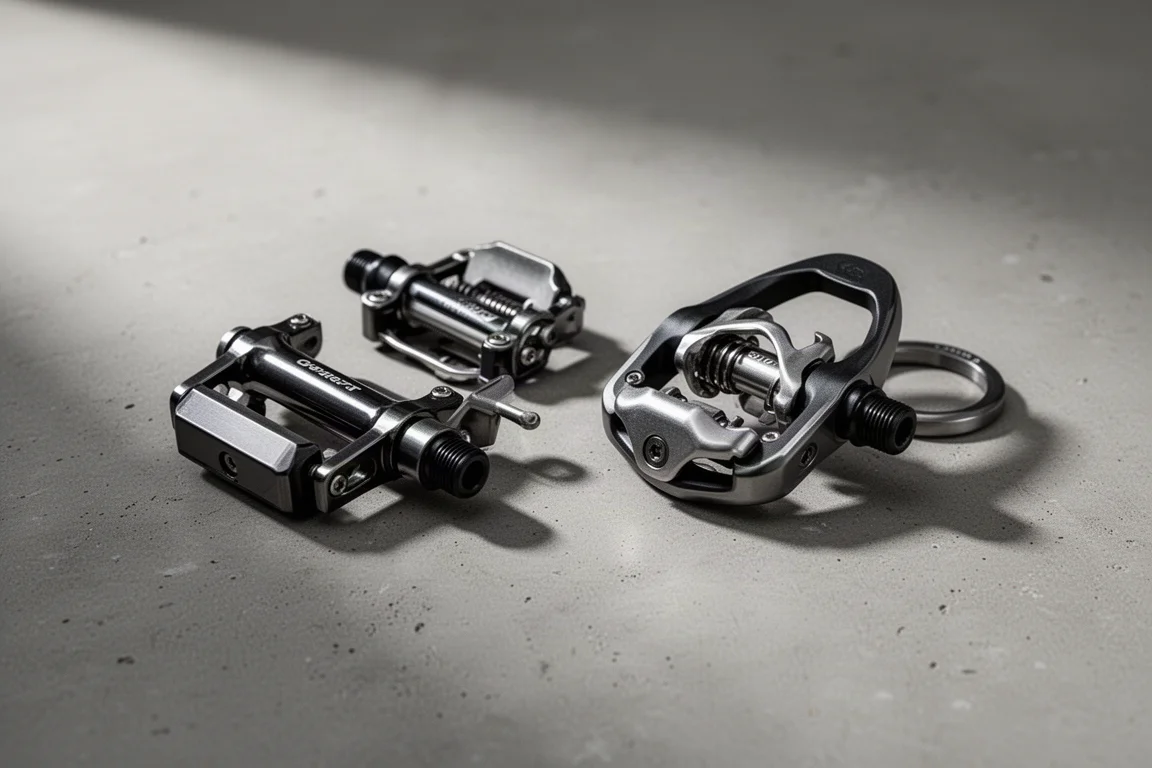
Best Road Bike Upgrades 2026: Clipless Pedals Compared and What to Change First
Two clipless pedal systems worth shortlisting for 2026, plus the lighter inner tubes, wheels, tires and saddles that genuinely change how a road bike rides.
Road Cycling
Best Road Bike Upgrades 2026: Five Pro-Level Picks Worth Buying
Five road cycling upgrades tested over months of hard riding, from a carbon-shell helmet and mixed-depth wheels to a tubeless race tire and a tight aero jersey.