Bike Lights
Trek Ion 100 R and Flare R Review: Compact Daytime Lights with USB-C Charging
The updated Trek Ion 100 R headlight and Flare R tail light bring USB-C charging, battery gauges, and improved daytime visibility to a compact form factor designed for commuters and road cyclists.
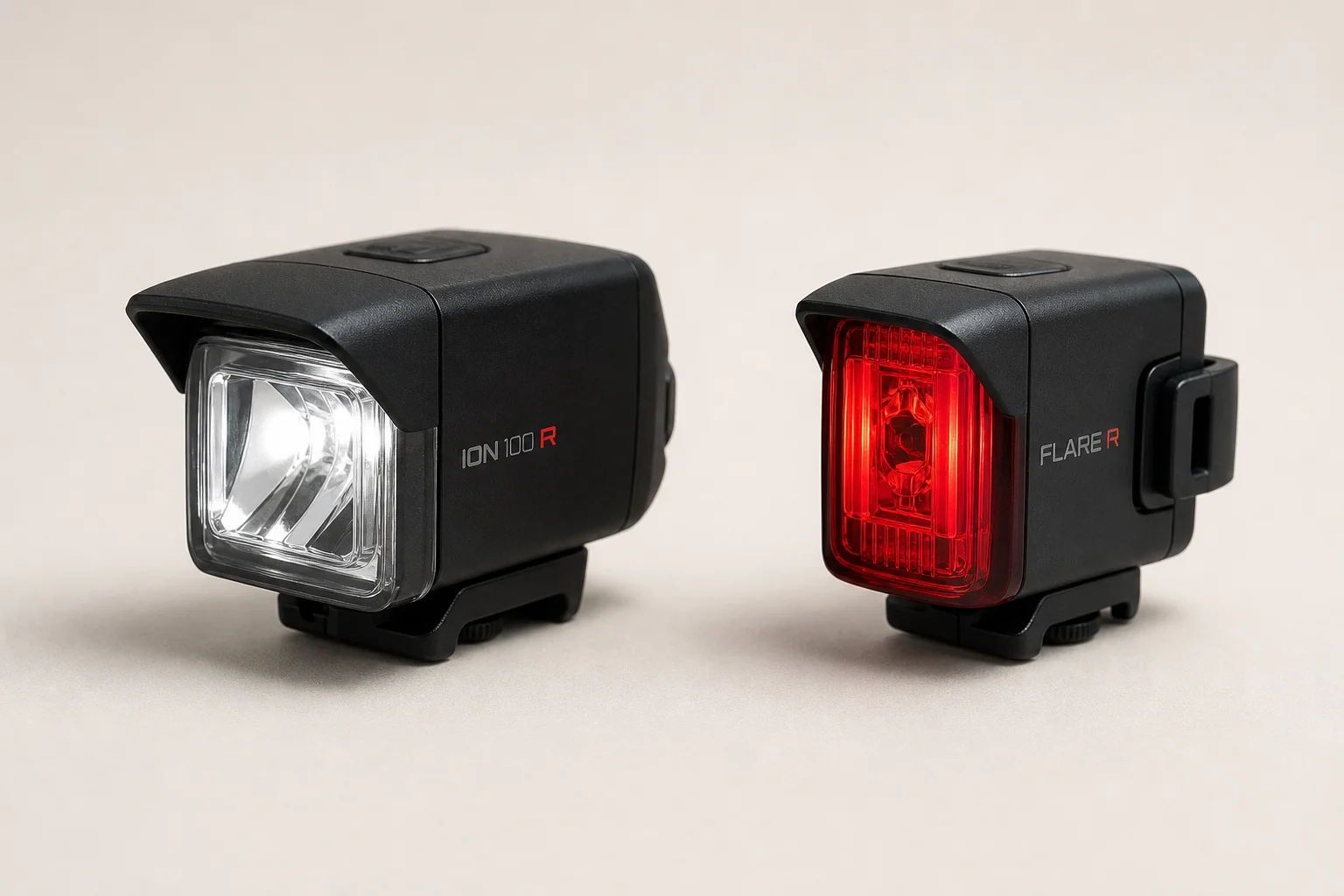
Introduction
Trek has refreshed its popular Ion and Flare light lineup with meaningful updates that address long-standing requests from the cycling community. The new Ion 100 R headlight and Flare R tail light retain the compact cubic design that made their predecessors popular with commuters and road cyclists, but add USB-C charging, a four-bar battery gauge, and refined optics including a glare shield. At $44.99 per light or $84.99 for the set, they remain positioned as daytime visibility lights rather than primary night-riding solutions, but the improvements make them a stronger value for riders who prioritize a minimal, lightweight setup.
Design and Build Quality
The Ion 100 R and Flare R maintain the iconic compact cube form factor that Trek lights are known for. Both lights weigh approximately 25 grams and share nearly identical dimensions, with the key visual difference being the white lens on the headlight and red lens on the tail light. This color distinction is a practical improvement over previous models, which required closer inspection to tell apart.
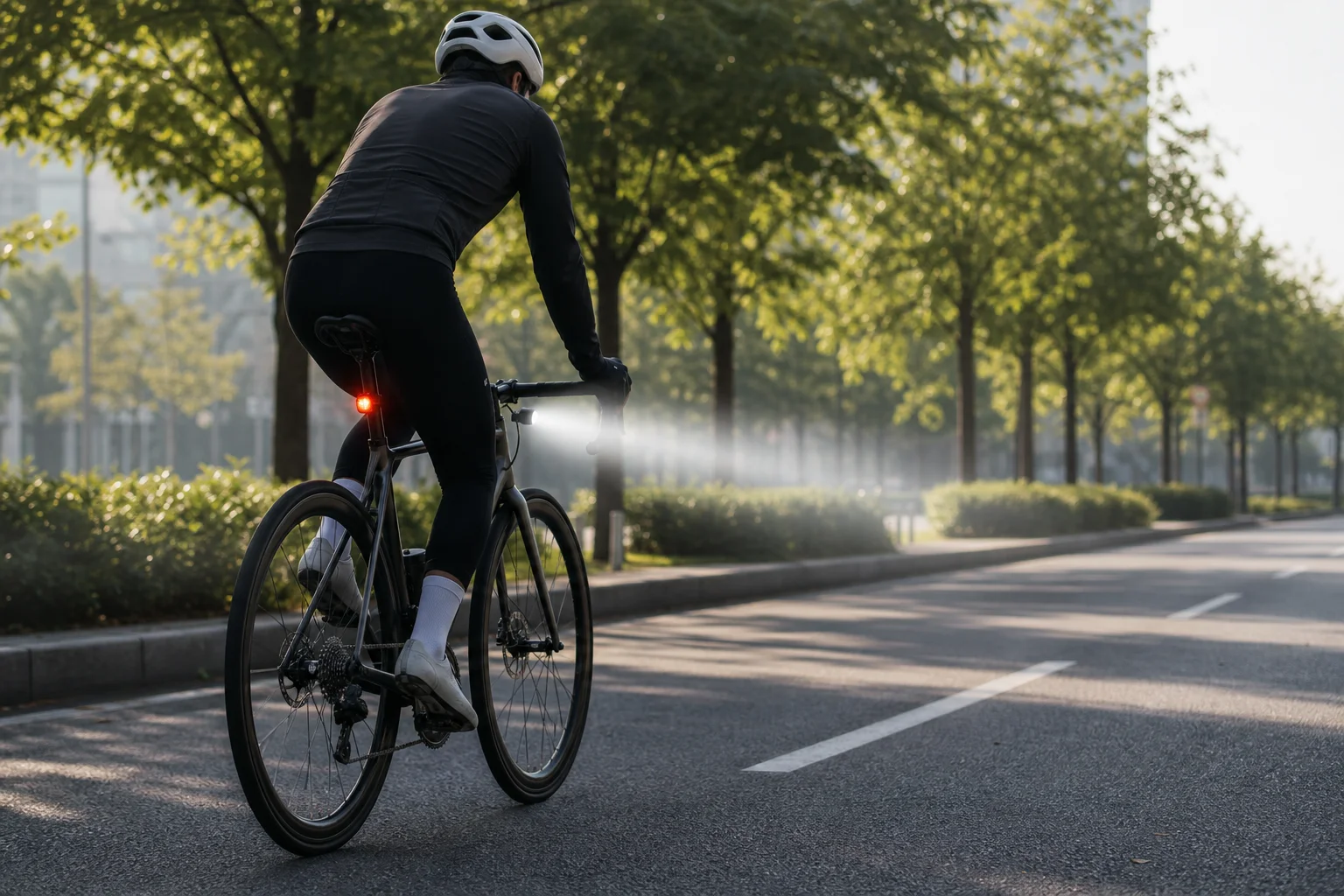
The packaging reflects Trek’s environmental focus, using cardboard throughout rather than plastic windows. The lights themselves feature several design refinements. A new dimpled surface around the main LED helps distribute light more evenly, while a glare shield on the headlight prevents the light from blinding the rider when out of the saddle. The tail light shares the same body design but the glare shield is less critical in that application. Both lights retain side windows for lateral visibility at intersections, a feature that helps ensure visibility even when the main beam is not directly visible to approaching traffic.
The minimal branding is understated, with only “Trek” printed on the bottom of the lens. The overall aesthetic is clean and professional, fitting well on modern road bikes without adding visual clutter.
Battery Gauge and Charging
The most significant functional upgrade is the addition of a four-bar LED battery gauge that displays remaining charge in 25% increments. A single press of the power button reveals the battery status through green LEDs on the headlight or red LEDs on the tail light. When battery drops below 5%, the lights enter a low-power flashing mode to ensure the rider can still make it home.
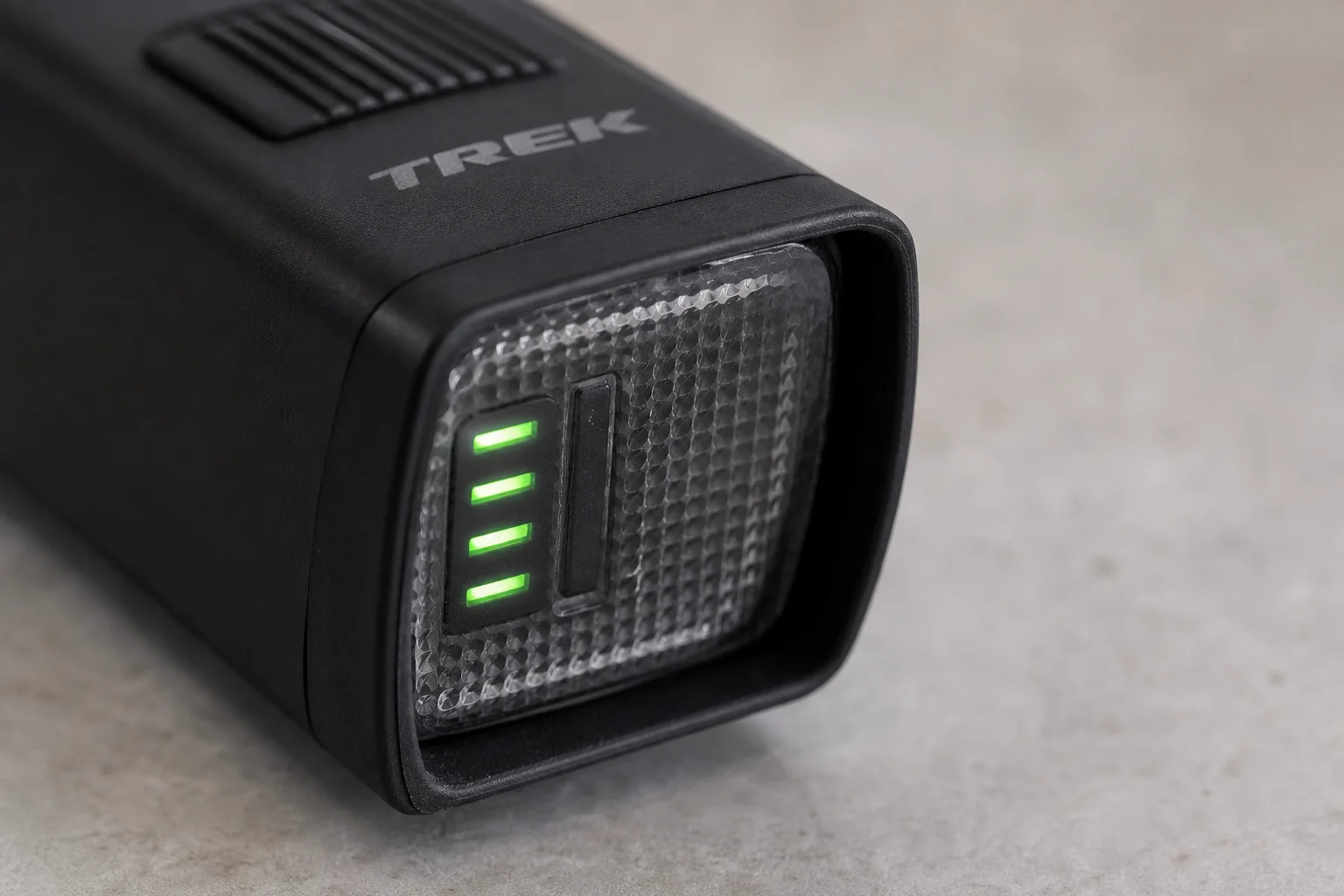
The shift to USB-C charging is equally important. Previous Trek light models relied on micro-USB, which required finding older cables and charged more slowly. USB-C is now standard across most devices, making charging more convenient and faster. The lights ship with a single USB-C cable and a comprehensive multilingual instruction manual.
Mounting and Compatibility
Both lights use Trek’s standard blender mount system, which features a simple tab-and-slot design. The package includes both a seatpost mount and handlebar mount, allowing flexible positioning. The mount itself is rotatable, giving riders some adjustment flexibility.
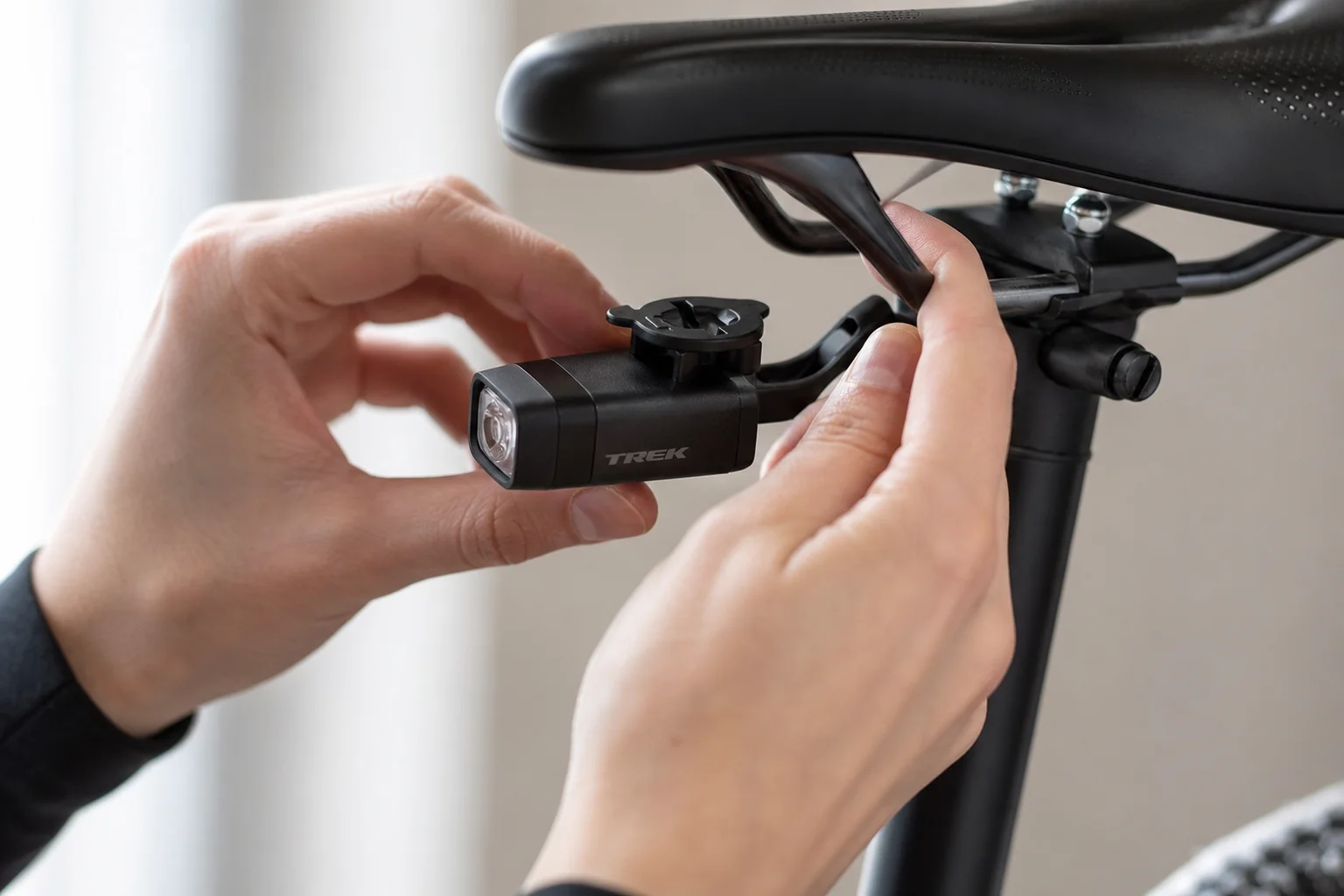
For riders who prefer additional mounting options, Trek offers dedicated blender mounts that allow direct attachment to saddles or out-front mounts without additional adapters. This compatibility with the blender ecosystem is a practical advantage over lights that use proprietary mounting systems, as it opens up more positioning possibilities across different bike setups.
Output Modes and Runtime
The Ion 100 R headlight produces 100 lumens in high steady mode, which is sufficient for commuting in well-lit areas but not bright enough to light up dark roads. The daytime flash mode, also at 100 lumens, offers an 11-hour runtime and is the recommended mode for daytime riding, as the irregular pattern is more eye-catching than a steady beam.
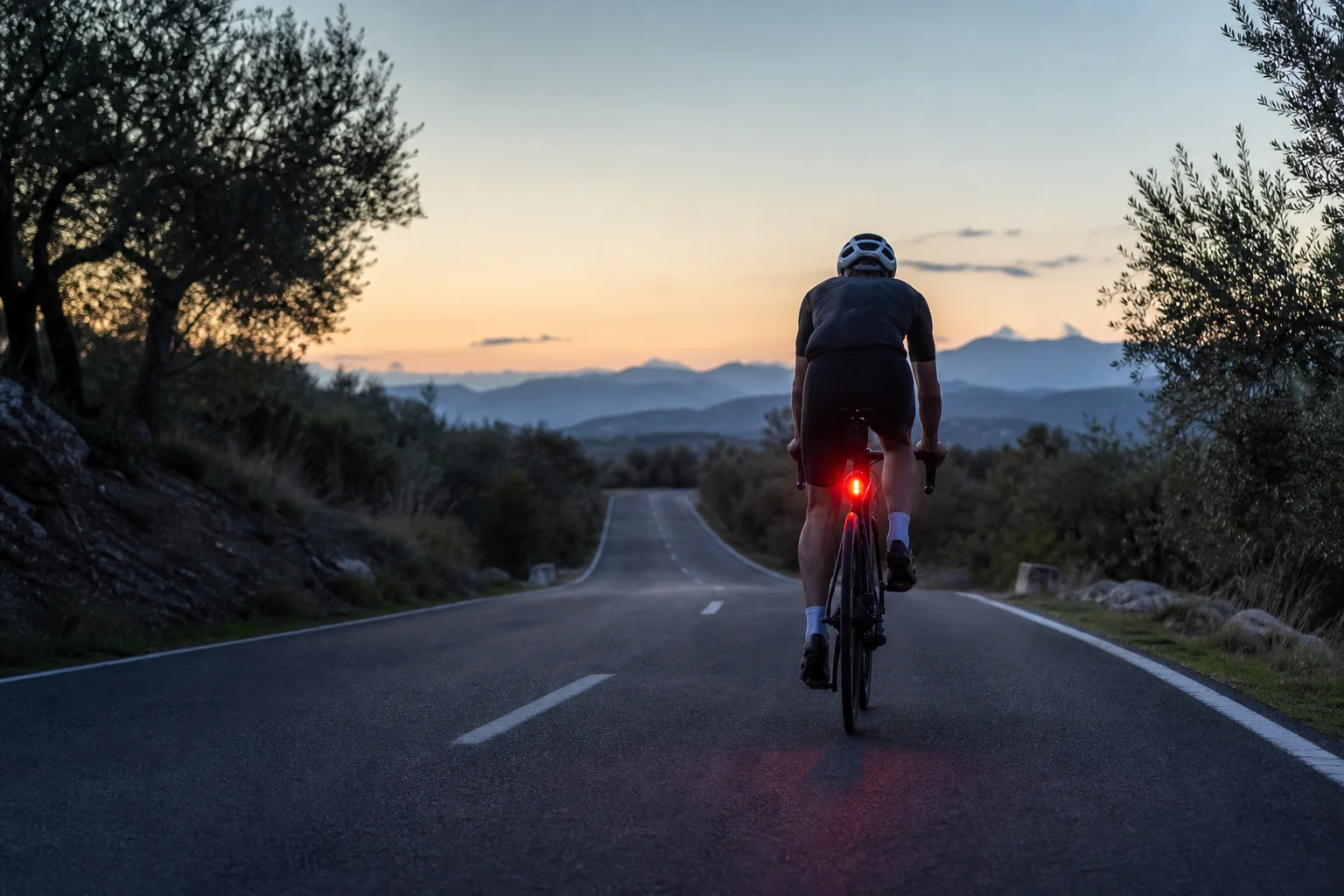
The Flare R tail light offers four modes: daytime steady at 20 lumens, night steady at 20 lumens with a 21-hour runtime, daytime flash with an irregular pattern and 10-hour runtime, and nighttime flash with a low-high pulse pattern. The daytime flash mode is the most effective for visibility during daylight hours, while the nighttime modes are less obtrusive for evening riding.
In real-world use, the focused LED design produces a surprisingly bright output for the compact size. The daytime flash mode is particularly effective at drawing attention, making these lights a solid choice for urban commuting and daytime road riding where visibility is the priority rather than illuminating the road surface.
Comparison to Alternatives
Trek’s pricing is higher than some competitors. The Magicshine Seemee lights, for example, offer brighter output and use Garmin-style mounts, which some riders find more versatile. However, the Trek lights excel at focused daytime visibility and the side windows provide a visibility advantage that some competing designs lack.
The upcoming Bontrager Ion 200 RT and Flare RT models, which share the updated design language including the glare shield and USB-C charging, are expected to offer additional features such as Bluetooth connectivity and brake sensors, though at a higher price point.
Pros and Cons
Strengths:
- Compact form factor hides easily under saddle or out-front mount
- USB-C charging is faster and more convenient than micro-USB
- Four-bar battery gauge provides clear charge status
- Daytime flash mode is highly visible and eye-catching
- Side windows improve lateral visibility
- Blender mount compatibility offers flexible positioning
- Lightweight at approximately 25 grams each
Weaknesses:
- Battery gauge LEDs on the headlight can be distracting if mounted where they are visible from the cockpit
- 100 lumens is insufficient for night riding on unlit roads
- Tail light battery gauge is red, which some may find less intuitive than a neutral color
- Not suitable as a primary night-riding light
Conclusion
The Trek Ion 100 R and Flare R represent a solid incremental upgrade over their predecessors. The USB-C charging and battery gauge address practical pain points, while the refined optics and glare shield improve both functionality and user experience. At $84.99 for the set, they offer good value for commuters and road cyclists who prioritize daytime visibility and a minimal, lightweight setup. They are not designed for night riding on dark roads, but for their intended purpose—daytime visibility and commuting in well-lit areas—they deliver reliable, focused performance in a package that disappears on the bike.
Product link
View more details for Trek Ion 100 R
This product is mentioned in the review. Check the specifications, options, and compatibility before buying.
View more details for Trek Ion 100 RFurther reading
Related Reviews
Bike Lights
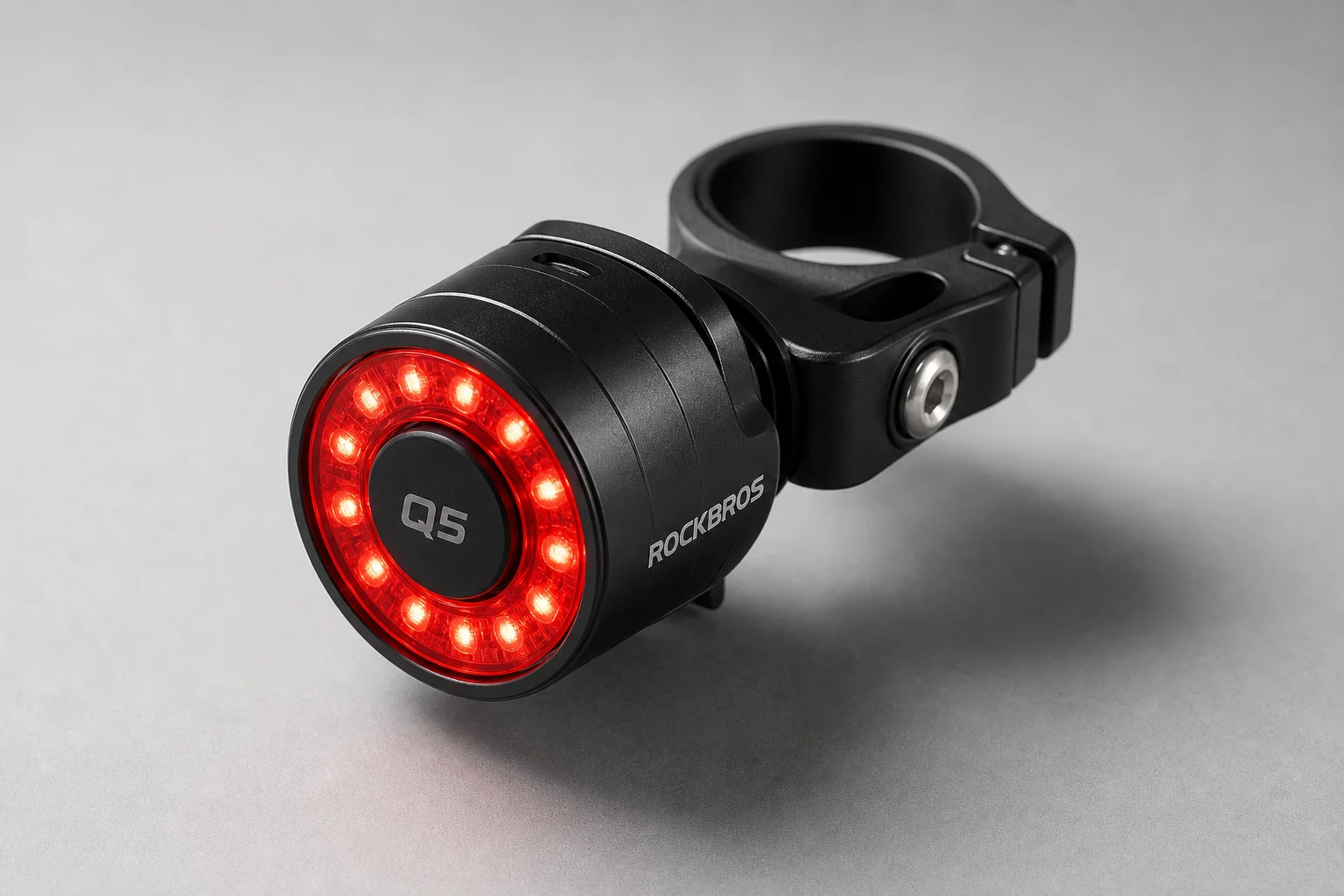
RockBros Q5 Rear Bike Light Review: Budget-Friendly Safety with Brake Detection
A compact rear light with built-in accelerometer brake detection, USB charging, and 50-hour battery life at a fraction of premium alternatives.
Bike Lights
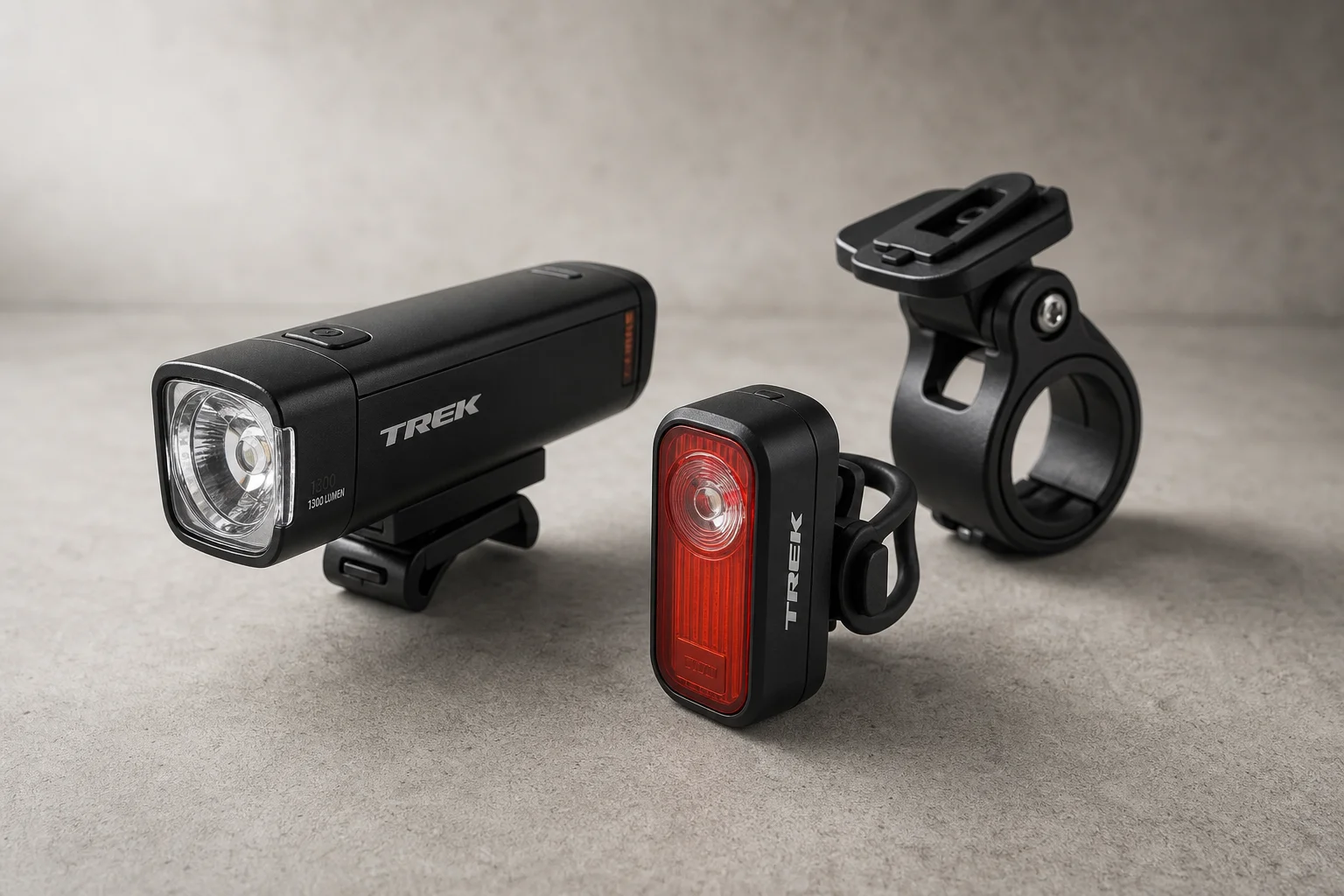
Trek Commuter Lights with Kind Beam: Seeing Without Blinding
Trek's Commuter Pro RT, Commuter Comp, and Flare RT lights use focused optics to help you see further while avoiding the glare that bothers oncoming riders and drivers.
Power Banks & Chargers
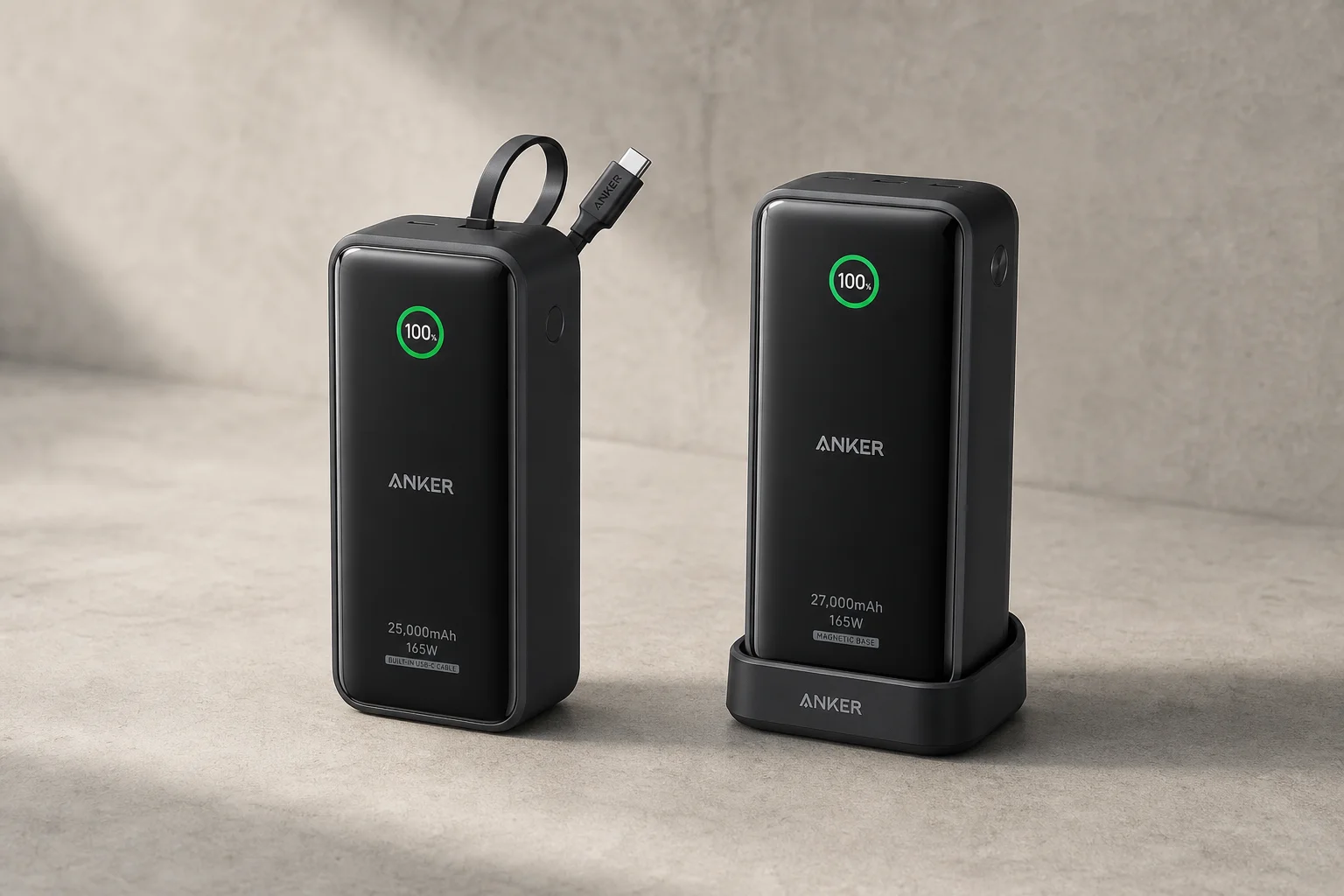
Anker 25,000mAh vs 27,000mAh Power Bank: Which Portable Charger Suits Your Needs
A detailed comparison of two Anker power banks with built-in cables, fast charging, and laptop support. Learn which model works best for your travel and work setup.