Bike Lights
Best Front Bike Lights 2026: Four 1,000 Lumen Lights Compared
A practical comparison of four front bike lights rated at 1,000 lumens or more, covering beam quality, mounting, battery life, modes and price.
Introduction
Riding after dark stops feeling like a compromise once the front light on your bars is genuinely good. A bright, well-shaped beam turns an evening commute or a winter training loop into something you can enjoy rather than simply endure.
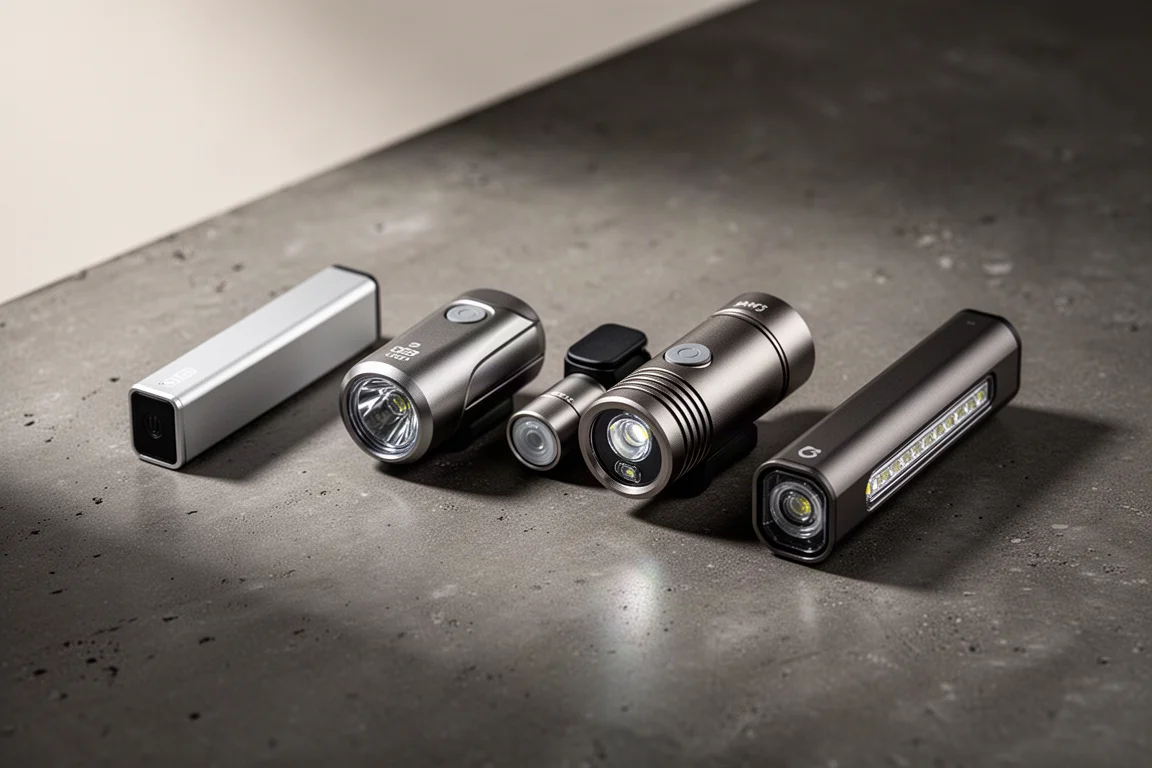
The four lights in this comparison all claim 1,000 lumens or more. That figure has become a sensible benchmark for riding after dark without second-guessing what is coming up in the road ahead. Each light was assessed on the same points: the shape and spread of the beam, how securely it mounts to the handlebar, real battery life, how many modes it offers, and the price you pay for all of it.
The result is a spread of options running from a light under $100 to one that costs more than three times as much. Working out which one suits you comes down to how you ride and how long you plan to keep the light.
What Matters Most in a Front Bike Light
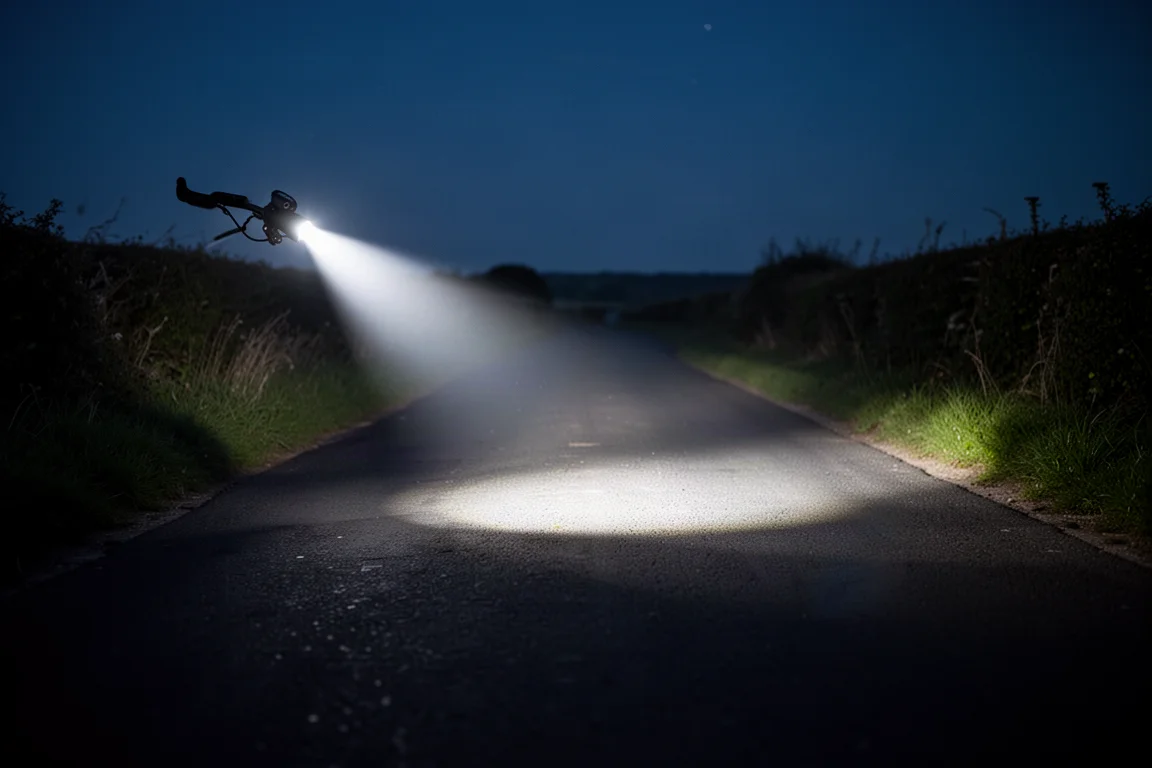
Beam shape matters as much as lumen count. A tightly focused hotspot puts a bright pool of light in the centre of your view, which works well on smooth roads. A wider, more even spread lights the edges of the road and the verges, which helps on descents, gravel and unlit lanes where you want the whole picture rather than a single bright spot.
Mounting is where many otherwise good lights fall down. Rubber straps are quick to move between bikes and rarely cause trouble on slim bars, but they can be a real stretch on chunky road handlebars. Clamp mounts take longer to swap over, yet they hold the light far more firmly and are much less likely to fail.
Battery life and the way a light communicates it are closely linked. Some lights step down to a lower mode as the battery drains, which keeps you visible but dims the road. Others simply cut out when the power runs out, which makes an accurate countdown or percentage indicator far more valuable.
Modes divide opinion. Some riders want a long list so they can match the light to the conditions. Others want a short one so they can reach their preferred setting without scrolling through everything else. Customisable modes and program-based systems are two different answers to the same problem.
Price, finally, is not only about output. The most expensive light here costs several times more than the cheapest, and much of that difference buys build quality and longevity rather than extra brightness.
Blackburn Dayblazer 1500: Light and Waterproof, With a Fragile Mount
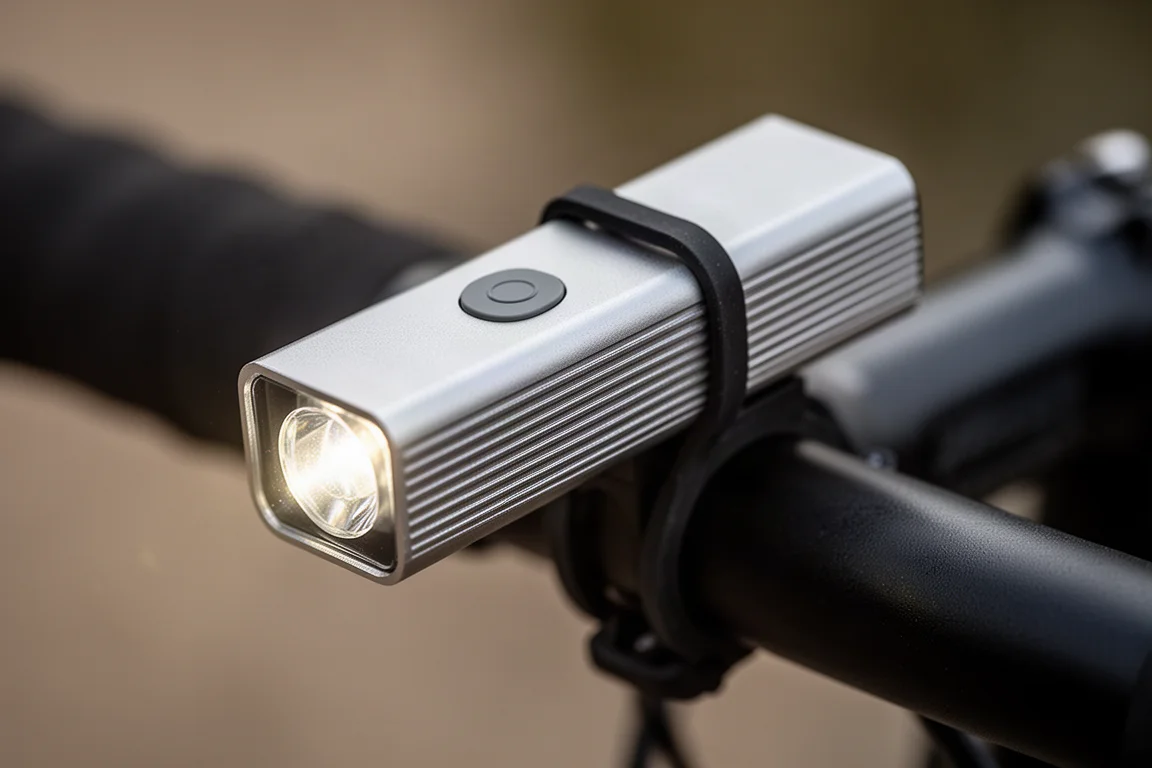
The Dayblazer 1500 is the lightest option in this comparison. Blackburn claims 140 g and it weighed 143 g, close enough to trust the figure. Its tall, narrow body takes up less room on the handlebar than a wider unit, and it carries an IP67 rating for both water and grime, so rain and road spray are not a concern.
The beam uses a TIR lens that produces a tightly focused centre with cooler light towards the edges. At 1500 lumens it feels on par with the other lights here rather than clearly brighter or dimmer, and there is little to complain about in the way it lights the road.
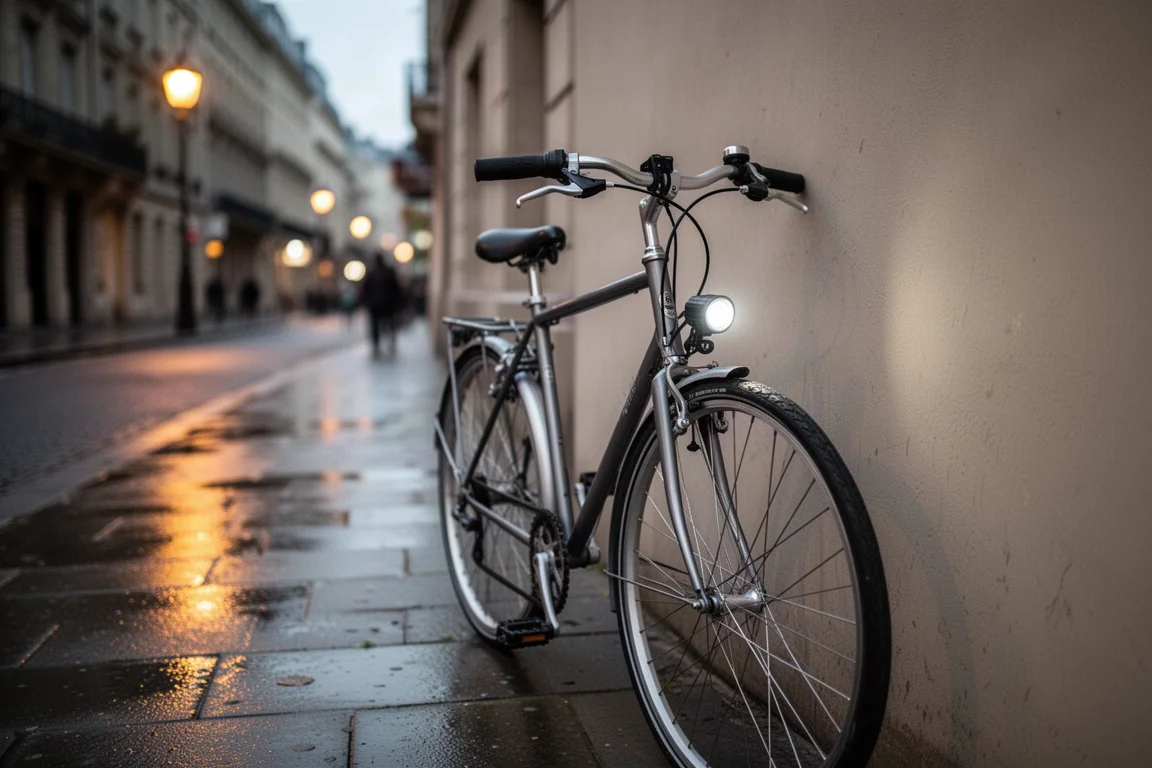
Battery life is one of its stronger points. The claimed two hours proved conservative, with the light still running past the two hour twenty minute mark on a ride, showing a red low battery indicator but continuing to work. The mode cycle is also well thought out: you can step from the first mode through to the pulsing and flashing settings and back to the start without switching the light off. A small indicator on the top edge shows green between 75 and 100 percent, orange between 25 and 75 percent, and red below 25 percent, when it stays lit.
The mount is the weak point. The strap is thin, the gap it has to stretch across is small, and pulling it over a chunky round handlebar puts it under real strain. The strap broke during use, which is a serious problem for the part that holds the whole light in place. The charging port is fussy as well: the round opening accepts the supplied cable but does not hold third-party USB cables firmly, so a knock can interrupt charging. The helmet mount listed on the packaging is only an adapter, and still needs a separate action camera style mount to work.
Knog PWR 1100 Trail: Modular Design and a Wide Even Beam
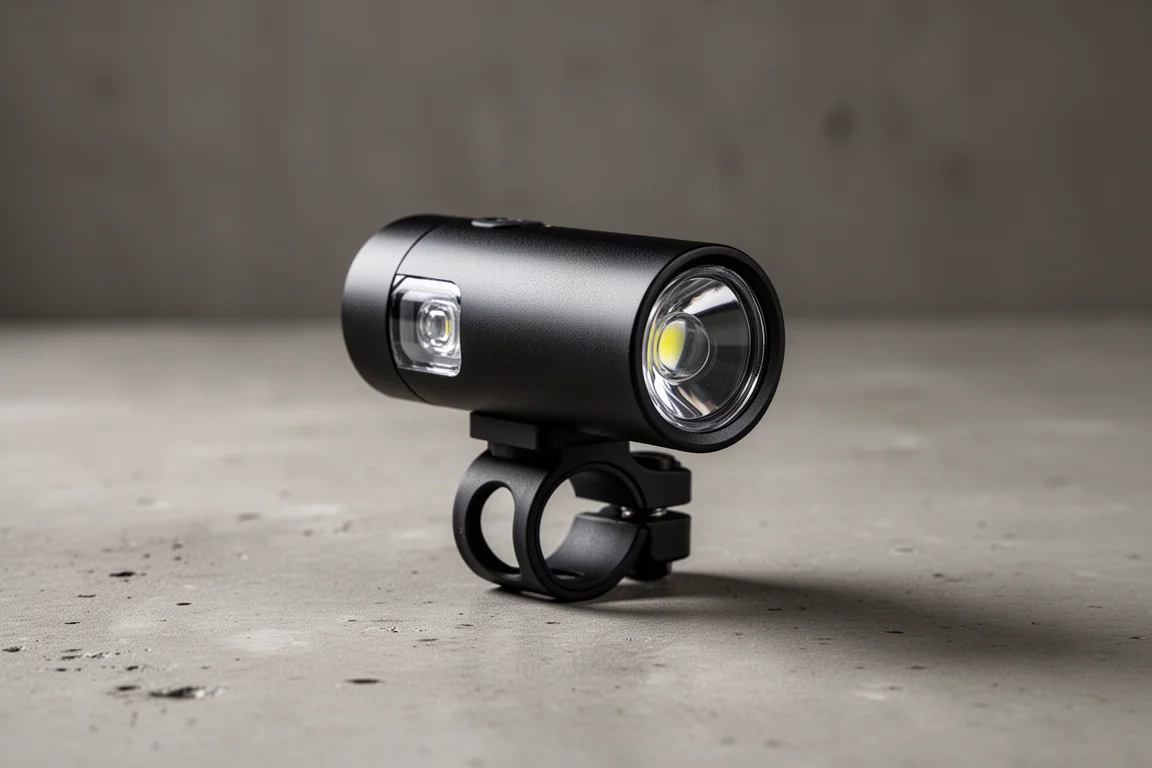
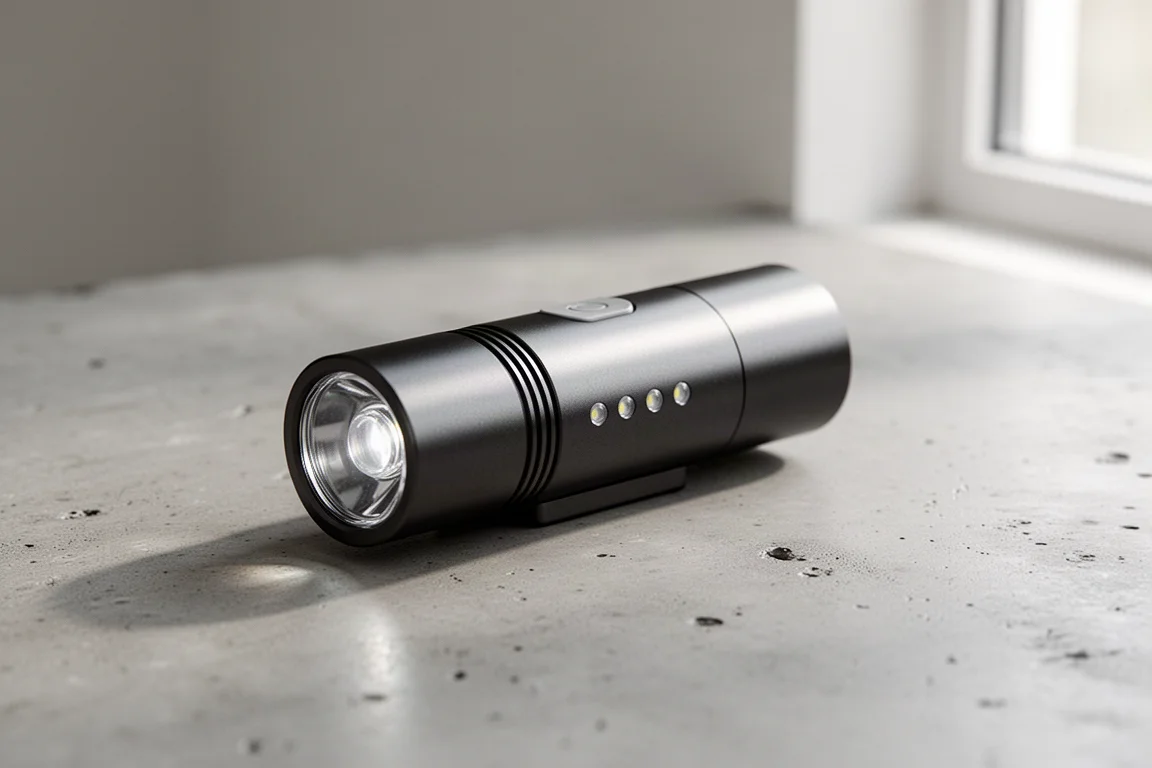
Knog built its reputation on a frog-shaped light with rubber legs, and the PWR 1100 Trail is a far more serious product from the same Australian brand. Its defining feature is modularity. The light head separates from the battery, and the battery can be attached to other accessories, run a lantern, or charge a phone when you are away from mains power. That makes it a natural fit for bikepacking.
There is no switch. You twist the body to move through the modes, and it ships with six presets. Those presets can be changed through the Knog Mode Maker app, which lets you remove modes you never use or adjust the output of the full beam. The clamp mount is built for 31.8 mm bars with a shim for smaller ones, and a thumb wheel locks it down. The light sits balanced on the bar and is narrow enough not to crowd a bike computer. It takes longer to move between bikes than a rubber strap, but it will not break the way a thin strap can.
Output is quoted at 1100 lumens, the lowest figure here, yet the beam is impressively even. Rather than a defined pattern it lights the whole road ahead with useful peripheral light, which makes fast descents far more comfortable. The quoted 1.7 hour run time, one hour and forty two minutes, proved accurate in practice.
The fuel gauge uses four red LEDs along the side, all the same colour, which makes it harder to judge urgency at a glance. When the full beam runs out the light cuts out rather than dropping to a lower mode, although you can switch it back on in a lower setting. At around £120 it costs more than the Blackburn and the Lezyne, and the modular system, the neat slim body and the solid build quality go some way to justifying that.
Lezyne Macro Drive 1300 XXL: Strong Value and a Broad Beam
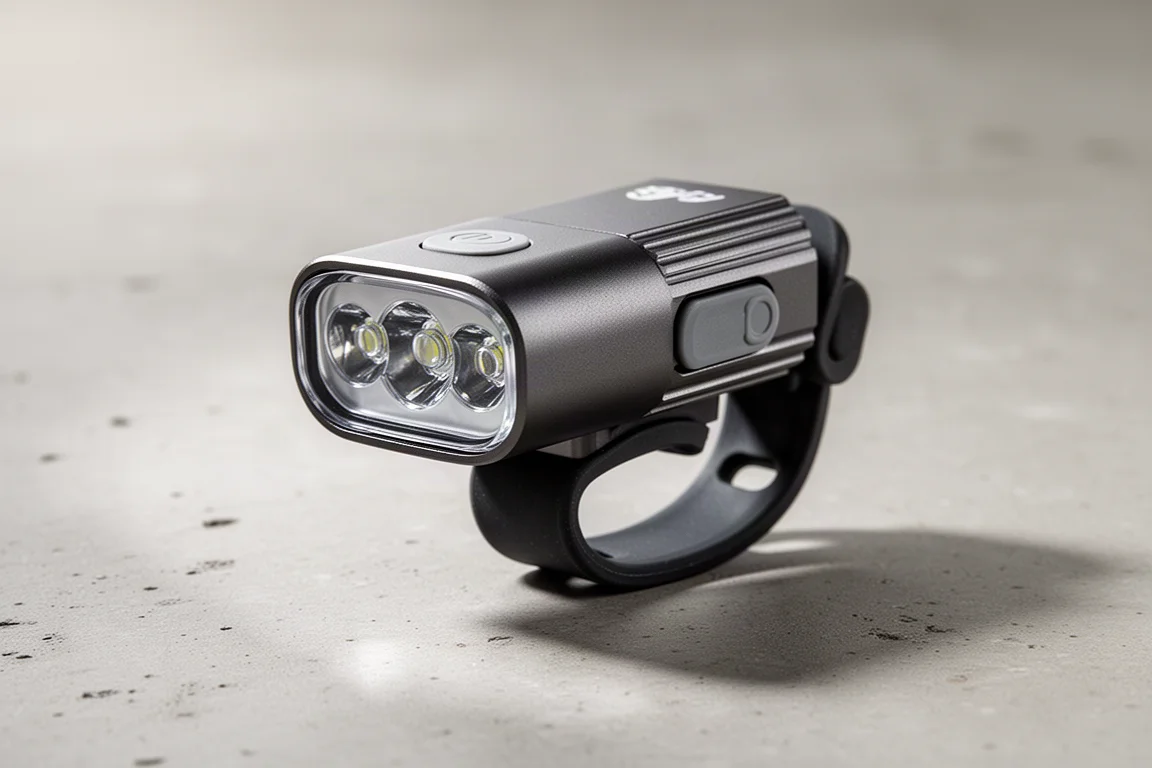
Lezyne’s Macro Drive 1300 XXL is the value option here, and it gives away very little to the more expensive lights. The aluminium body has a claimed weight of 208 g and measured 206 g, so it feels substantial in the hand, and it survived being dropped without issue. The rubber mount sits firmly on the bar, has plenty of room for the strap, and swivels stiffly enough that it stays exactly where you set it.
The beam is deliberately wide, which is a long-standing Lezyne approach and a genuinely useful one. It lights the road and the area around it, giving a strong sense of security at speed, and it is wide enough to work off road as well. Three LEDs sit behind the front lens, and there are seven modes in total.
Race mode is the interesting part. Holding the button for five seconds locks the light into a simplified setup that switches between full power and overdrive, which works much like a dip and full beam pair on a car. Standard mode offers a range of brightness settings plus a flashing option. Charging happens through a USB port under a rubber cover that needs a firm push to seat properly, but once closed it keeps out water and grit.
Claimed run time is two and a half hours, the longest claim here, and the light ran past two hours and twenty minutes. The charge indicator is green from 50 to 100 percent, amber from 10 to 50, red below 10 and flashing red at 5 percent, so the warning arrives quite late. The only real drawback is bulk: this is a wide unit that takes up meaningful handlebar space. At around £90, roughly a third of the Exposure, it is a very solid choice.
Exposure Strada MK10 SB: Bright, Precise, and Expensive
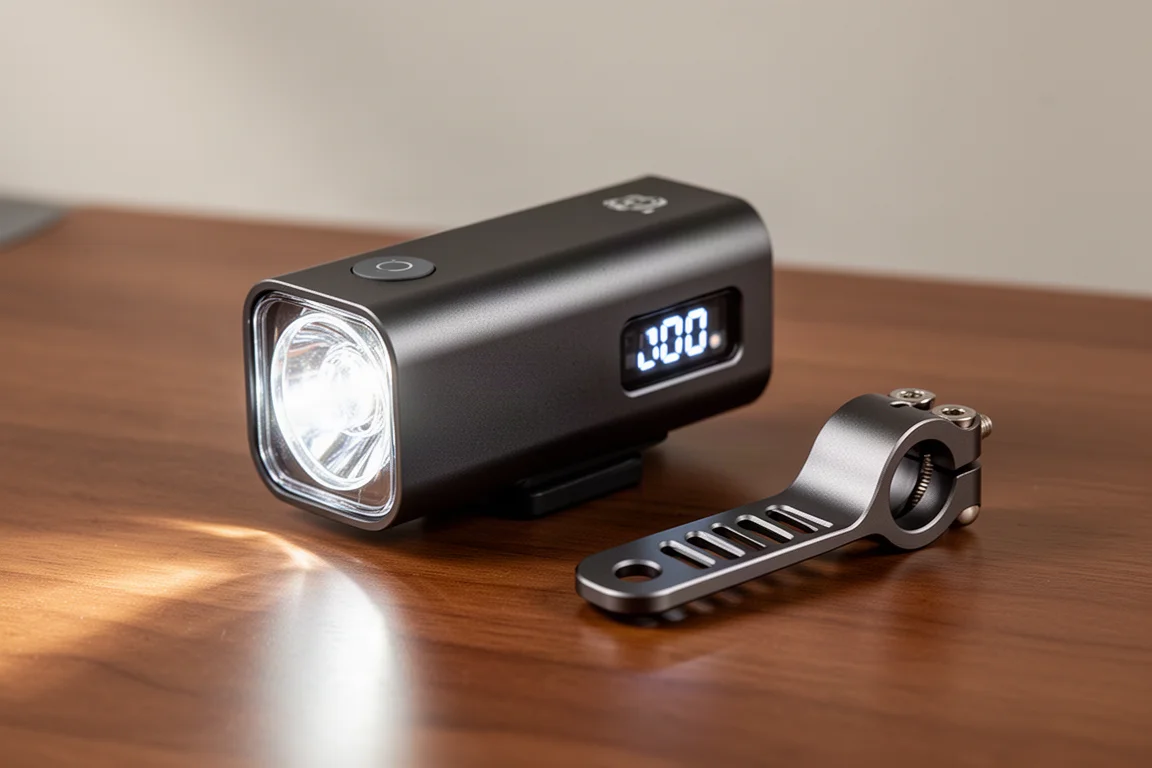
Exposure is a British brand based in the south of England with a strong reputation for high quality lights, and the Strada MK10 SB shows why. It is the most expensive light here by a wide margin at around £300, and it is also the brightest. The 1500 lumen figure is quoted as a measured output rather than a calculated one, which usually means the number reflects what you actually get on the road.
Mode handling is unusually tidy. Instead of scrolling through a long list to get back to where you started, the light offers seven programs, each containing a limited number of settings. Program one, the default, gives high, medium and low, with high delivering the full 1500 lumens. Battery life on that brightest setting is claimed at two hours, and the rear of the light shows a countdown of the remaining run time to the minute. That figure recalculates when you change settings, so switching to medium immediately shows the longer run time available. The light does cut out at the end rather than stepping down, but the countdown makes that easy to anticipate.
The mount is beautifully engineered, using a split clamp with machined slots so it fits wide bars. It is completely stable and secure, the kind of setup you could trust on rough trails. It is also fiddlier to move between bikes than a rubber strap, which matters if you share one light across several bikes. At 228 g it feels solid without being significantly heavier than the alternatives.
Charging is the one practical compromise. This is not a micro USB light, so you cannot borrow a cable to top it up. It comes with a wall charger, and a separate adapter allows USB charging. The payoff is longevity: an Exposure light can run for well over a decade without showing signs of damage, and the warranty reflects the brand’s confidence in that. If you want the best light here and expect to keep it for years, the price starts to make sense.
Which Front Light Should You Buy?
If value is the priority, the Lezyne Macro Drive 1300 XXL is the easiest recommendation. It is robust, its wide beam is genuinely useful, its battery life is strong and it costs a fraction of the Exposure. The trade-offs are bulk on the bar and a late low battery warning.
The Knog PWR 1100 Trail suits riders who want something different. Its modular battery is genuinely useful for bikepacking, the clamp mount is secure, and the even beam is better than its lumen figure suggests. The Blackburn Dayblazer 1500 is the lightest and most weatherproof option, and its run time beat its own claim, but only choose it if your handlebars are slim enough for the strap to fit without straining.
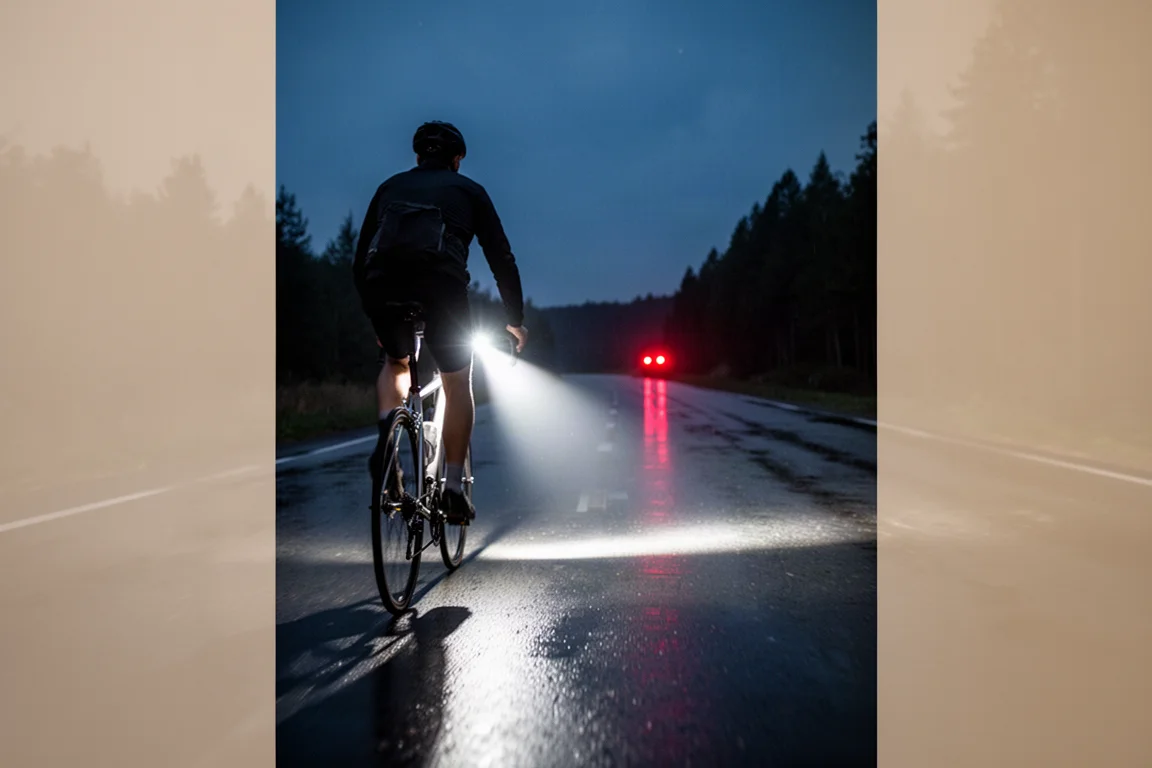
The Exposure Strada MK10 SB is the light to buy if budget is not the deciding factor. It is the brightest, the most precisely built and the easiest to live with day to day, thanks to its program system and minute-by-minute countdown. It costs several times more than the alternatives, and for many riders that will not be worth it. For anyone who rides after dark all winter and wants a light that will still be working in ten years, it is a defensible purchase.
Conclusion
All four lights here are capable of lighting an evening ride, and the differences come down to priorities rather than outright quality. The Lezyne Macro Drive 1300 XXL delivers the best balance of performance and price, the Knog PWR 1100 Trail adds modularity and a beautifully even beam, and the Blackburn Dayblazer 1500 is the lightest and most weatherproof, provided its mount suits your bars. The Exposure Strada MK10 SB sits apart at the top of the range, and for riders who want the best beam, the best build and the longest service life, it justifies the outlay.
Further reading
Related Reviews
Bike Lights
Best Front Bike Lights for Road and Gravel: Six Models Compared
Six front bike lights for road and gravel riding, from a £70 high-output option to a £355 flagship, compared on beam pattern, run time, mounting and features.
Bike Lights
How to Choose Bike Lights: Three Front Lights for Commuting, Road, and Gravel
A practical guide to picking bike lights, covering beam shape, brightness, mounts, and battery life, with three front lights that suit different kinds of riding.
Bike Lights
The Ultimate Bike Light Setup: Five Magic Shine Lights Worth Considering
A practical guide to building a winter bike light setup, with five Magic Shine models covering front, rear and helmet-mounted duties.