Bike Lights
Best Front Bike Lights for Road and Gravel: Six Models Compared
Six front bike lights for road and gravel riding, from a £70 high-output option to a £355 flagship, compared on beam pattern, run time, mounting and features.
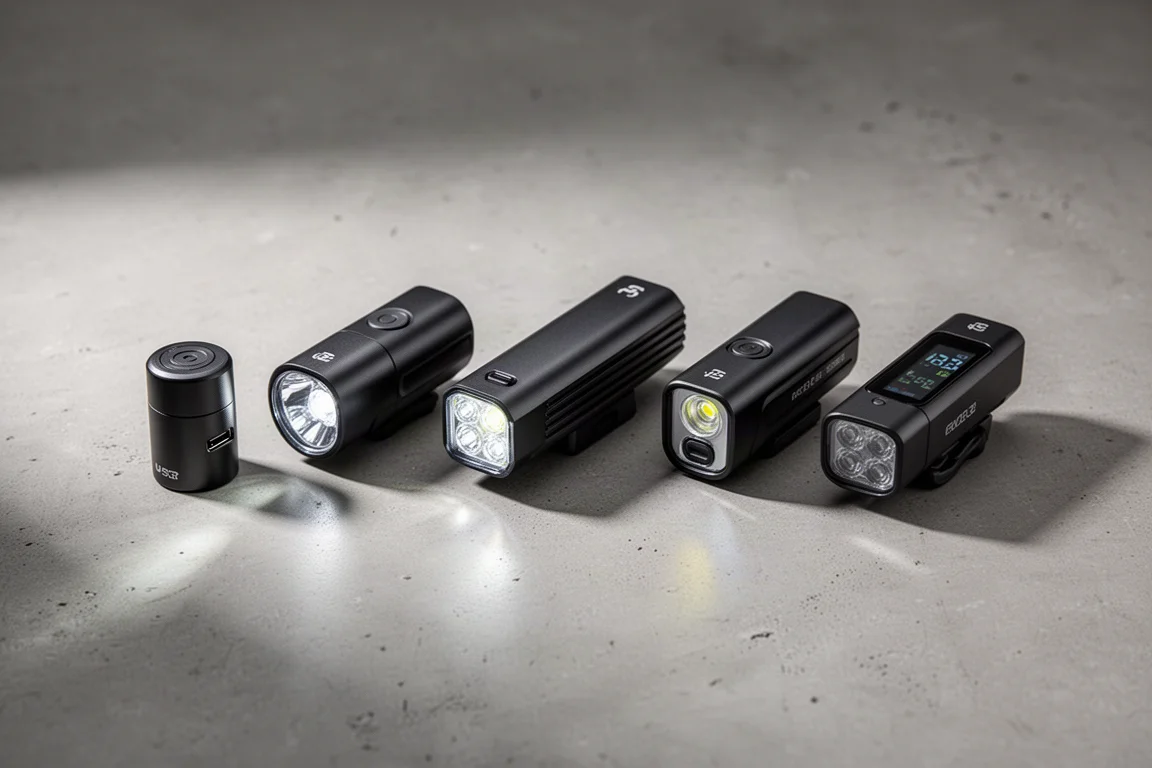
Introduction
The long, bright summer evenings have gone, replaced by darker commutes, wet roads and the grey light of autumn and winter. That shift makes a front light one of the most useful upgrades you can make to a road or gravel bike, because it decides how far ahead you can see and how early you can react to potholes, debris and roadside hazards.
The six lights here cover a wide spread of priorities. One is a £70 option that punches well above its price. Another is a £355 flagship and the most powerful light in this group. In between are lights that trade a little output for a smaller body, longer run times, app control or a remote.
How We Evaluated These Front Bike Lights
Beam pattern came first. A light that throws a focused central spot is good for seeing far ahead at speed, while a wider spread helps you spot hazards at the edge of the road. The best lights balance both, and that balance matters more than the headline lumen figure.
Run time came next. Claims are one thing, but what matters is whether a light lasts through the ride you actually do, and whether the highest setting is usable or reserved for short bursts. Charging standards, supplied cables and battery indicators all feed into that calculation.
Mounting and build quality were also part of the assessment: how secure the bracket feels on rough surfaces, how easy it is to fit and remove, and whether the body feels solid enough to survive winter road spray.
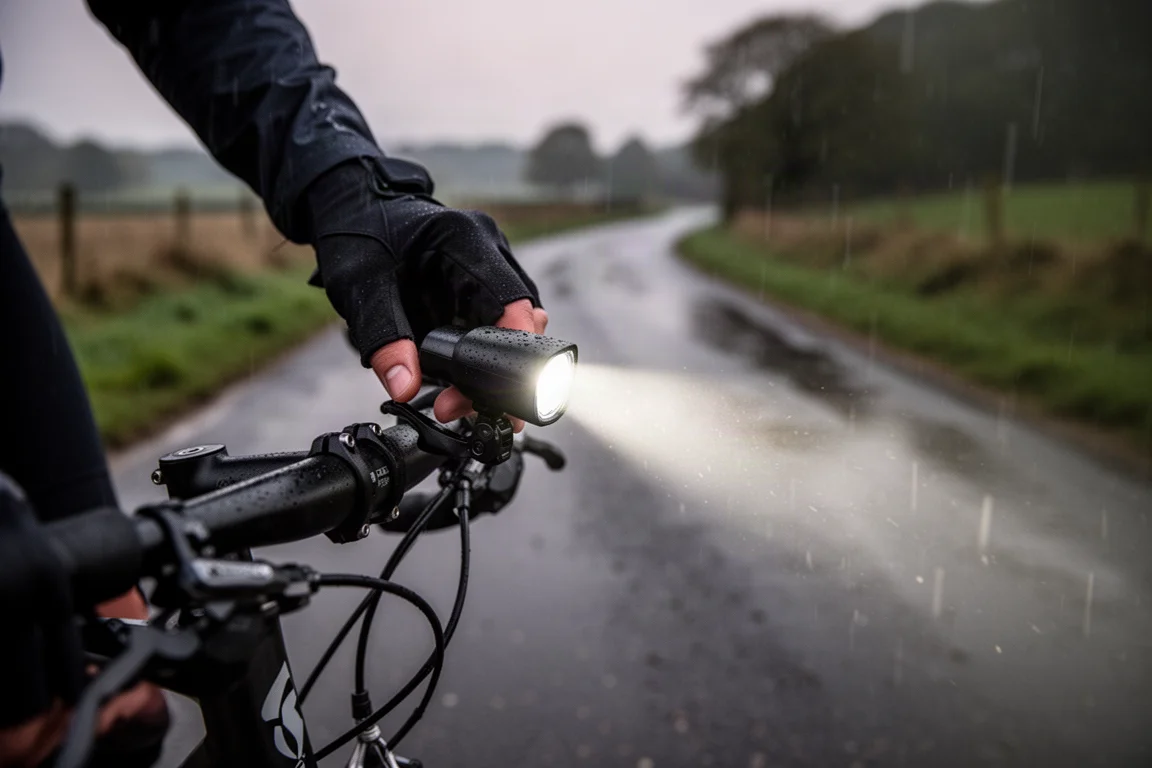
Then came the extras. Remotes, ambient light sensors, vibration-based auto shut-off, companion apps and on-light displays can all make a light easier to live with, but only when they work reliably and do not get in the way of the basics.
Price closed the loop. A light only makes sense at the point where its output, run time and features line up with how and where you ride.
Lezyne Macro Drive 1400+: Balanced Road Performance
Lezyne refreshed much of its light range with updated LEDs and optics, new body shapes designed to help with heat dissipation, new battery units and a move to USB-C recharging. The Macro Drive 1400+ sits third in the range for power, but in practice it delivers more light than most road riders will ever need without taking up much space on the bars.
The beam is fairly focused while retaining a decent amount of peripheral spread, so roadside hazards stay visible at the edges of the light pool. If you prefer a beam that does not drop off suddenly at its edges, this is an excellent option.
Battery performance held up well, landing close to the three-hour claim for the most powerful mode. The light feels solidly made and the bracket is sturdy and secure. As with most Lezyne lights, the bracket can be removed entirely and replaced with a GoPro mount for a compatible out-front mount. The move to USB-C charging is welcome, though no charging cable is supplied, so budget for one if you do not already have a spare.
Magicshine Ray 2600B: A Two-Emitter Powerhouse
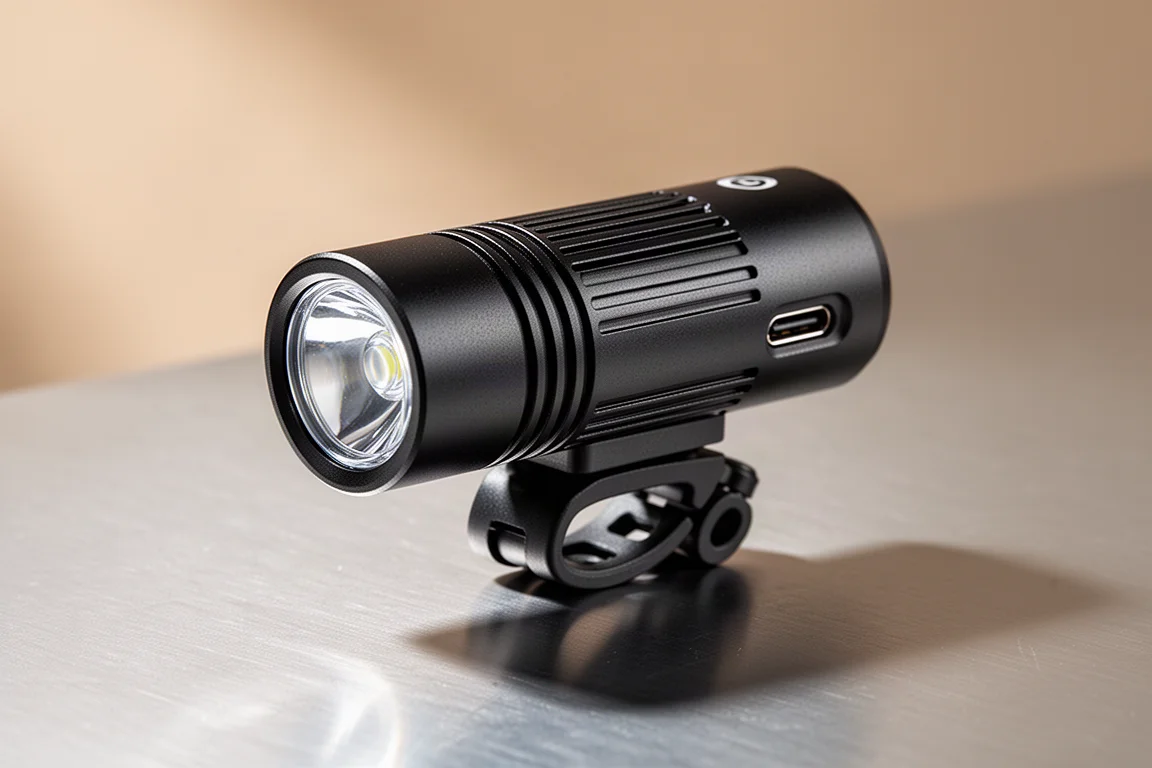
The Ray 2600B pairs two high-output LEDs: one with a focused beam and one that behaves more like a flood light. Used together, they gave enough warning of obstacles to ride comfortably above 30 km/h in full darkness, which makes this a strong choice for night rides and gravel.
Modes can be customized in the companion app, and the light ships with a remote. A built-in light sensor detects an oncoming car’s headlights and dips the beam so the driver is not dazzled, a function that worked well.
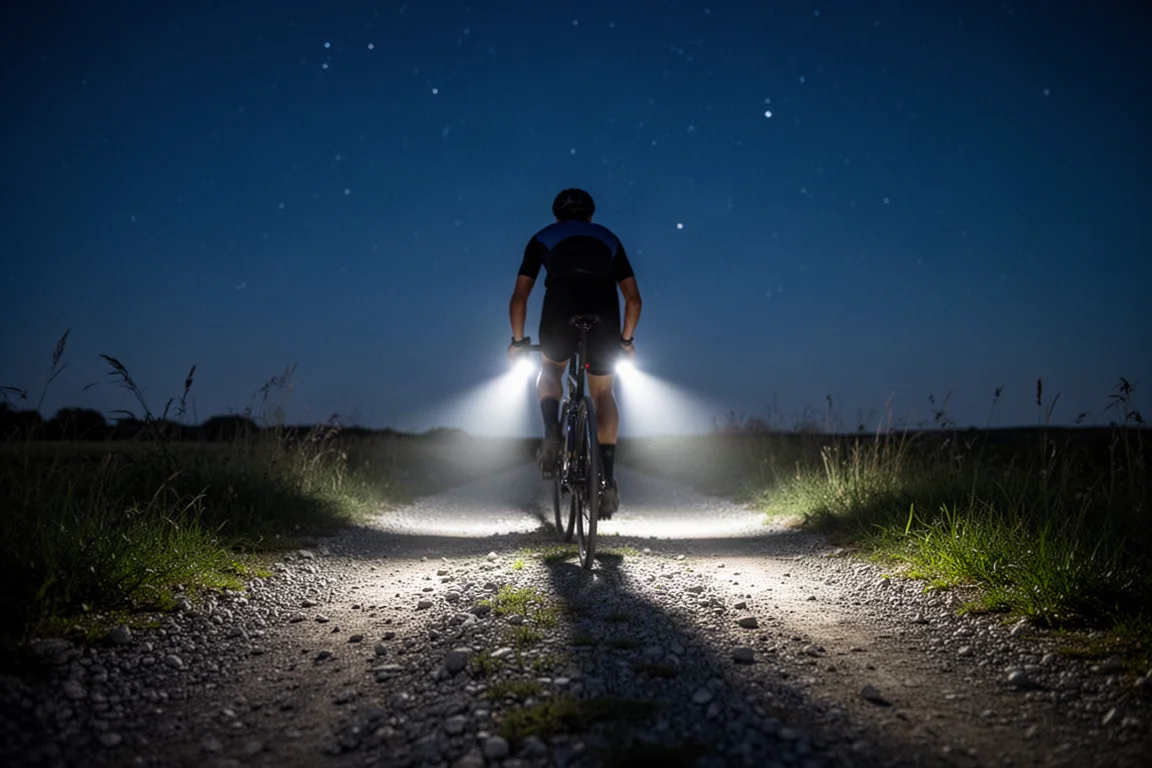
The trade-off is battery life at the top end. Prolonged use of the punchiest setting drains the battery in around one hour and 15 minutes, so the 1,250-lumen middle setting is the practical choice for most rides, offering ample light while preserving burn time. A vibration sensor powers the light down after the bike has been stationary for a while, and it is tuned well enough not to switch off at traffic lights.
There are a couple of small frustrations. Pairing with the app takes some patience because the Bluetooth remote and sensors have to be activated first, and there is no mode indicator on the light itself. Neither detracts much from a very capable front light.
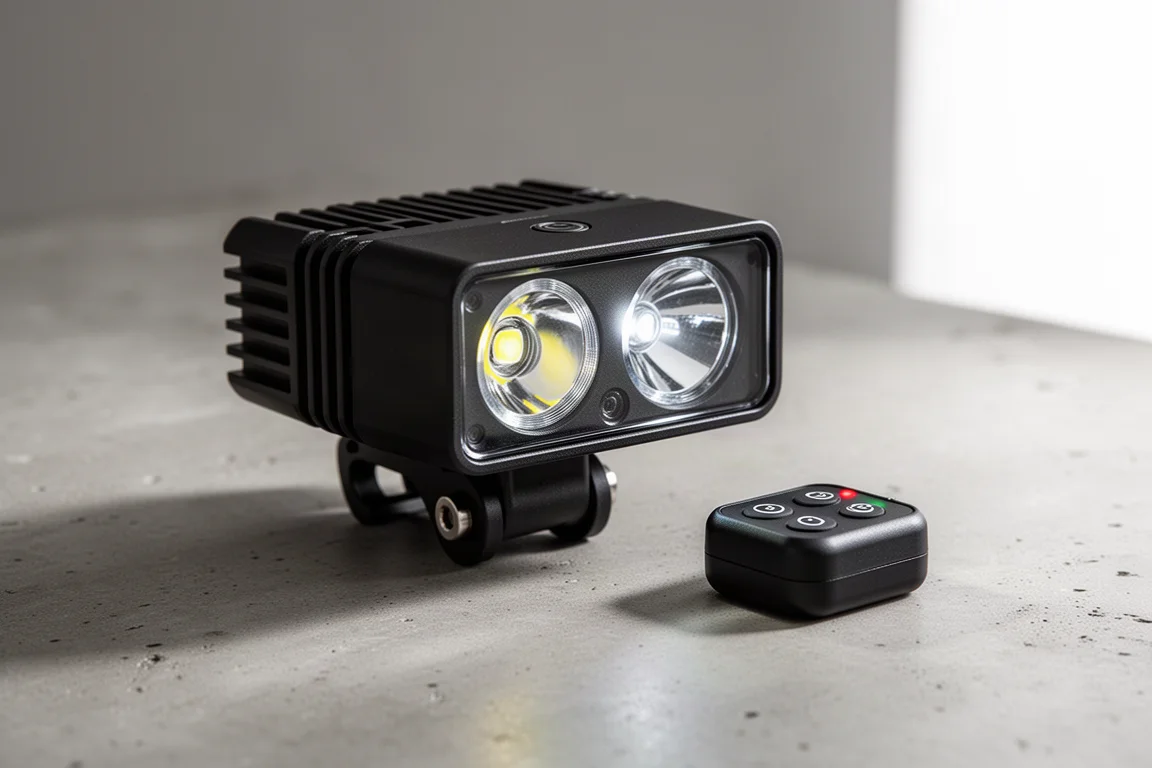
Exposure Toro Mk14: Maximum Output
If the Ray 2600B is a powerhouse, the Toro Mk14 is closer to carrying a small sun. It is the most powerful front light for road and gravel use in this group.
The beam is spread quite widely. There is still plenty of focused punch, but much of the output goes into illuminating the periphery, which means the lower power modes can feel a little under-focused. Given the near-bewildering number of settings on offer, most riders will find something that suits them.
Reflex+ is the headline feature: it spools the light up to its full 3,600 lumens as you ride faster, then dials it back when you settle into a steadier pace. It does not respond to oncoming traffic, so it is best reserved for unlit roads, paths and trails. Away from Reflex+, the 2,250-lumen maximum is more than adequate for busier journeys.
A large 10,200 mAh battery powers the light, and run times broadly matched the table etched on the underside, which doubles as a constant reminder of remaining burn time. The display flips over if you mount the light upside down under an out-front mount. Charging uses Exposure’s own rounded jack rather than USB-C, and the light comes with its cable and transformer. At £355 it is a serious investment, and given the number of settings and the single-button control, the absence of an app is a small frustration. It is beautifully made, though.
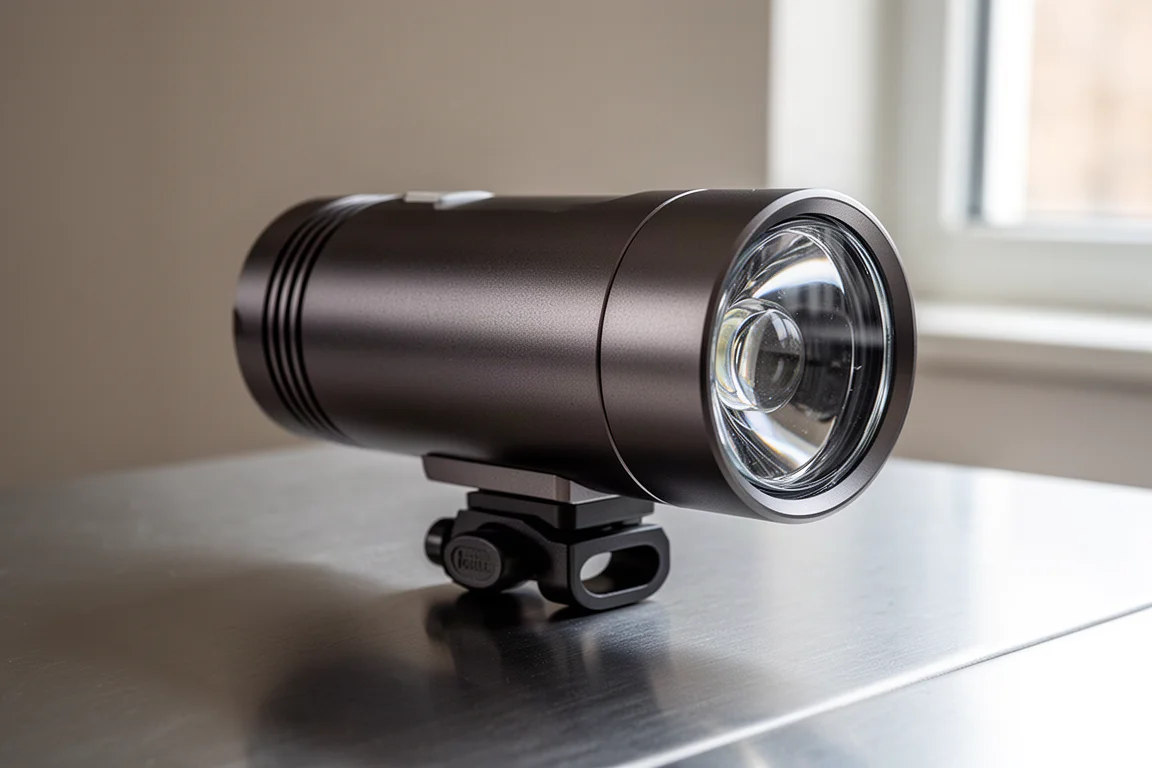
Oxford UltraTorch CL600: High Output on a Budget
For around £70, the UltraTorch CL600 emits up to 1,600 lumens, which is more than enough to light an unlit road while riding at speed.
The beam pattern is a little more diffused than some others here, lacking the focused central section many riders expect, but the three LEDs deliver decent peripheral vision as a result. Run times are not the longest, with just one hour on the highest power mode, which is unlikely to matter if your commute is short or you are happy to charge regularly.
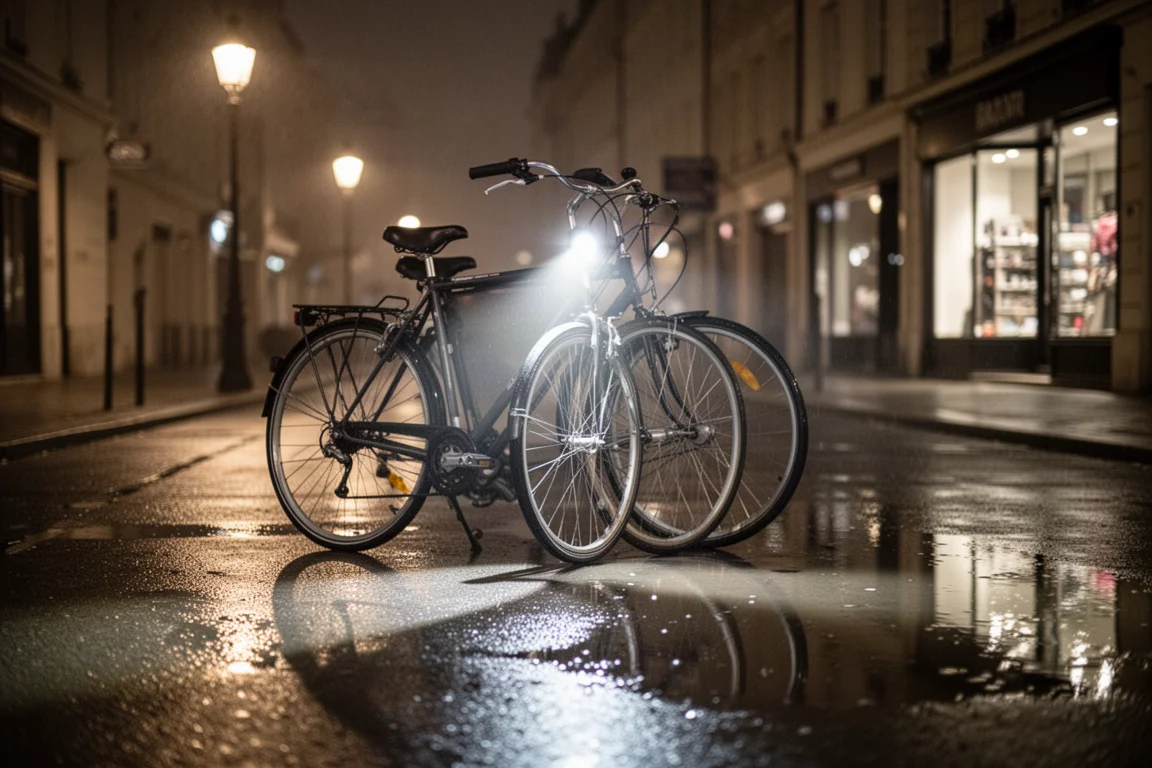
Charging uses the older micro-USB port rather than USB-C, but next to it sits a USB-A port that lets you run the light from a power bank. The core usability is well handled: a toggle switch makes mode changes easy, and the relatively large display on top shows a bar gauge for remaining charge alongside the current mode. The bracket makes fitting and removing the light straightforward. It vibrates a little more than some others when mounted, though this did not affect visibility much, and the IPX4 rating means it will cope with rain. It takes up a fair amount of bar space, which is an acceptable trade for the price.
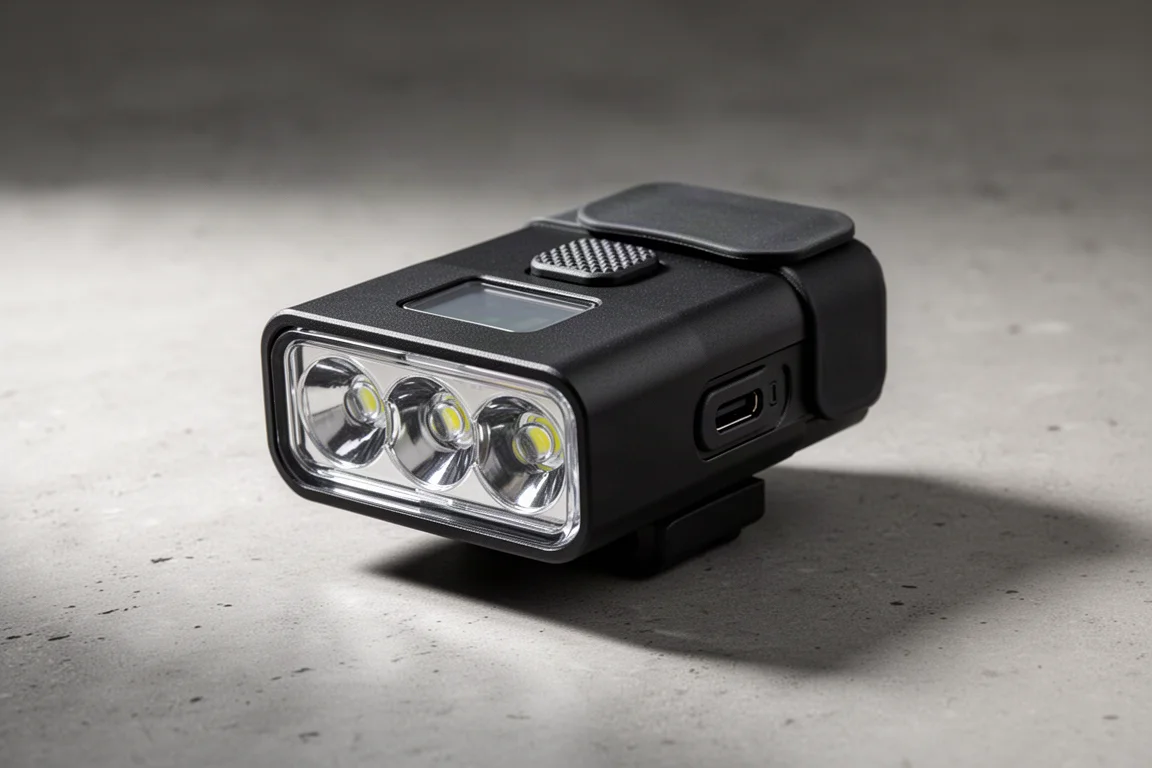
Ravemen LR1600: Compact and Feature-Rich
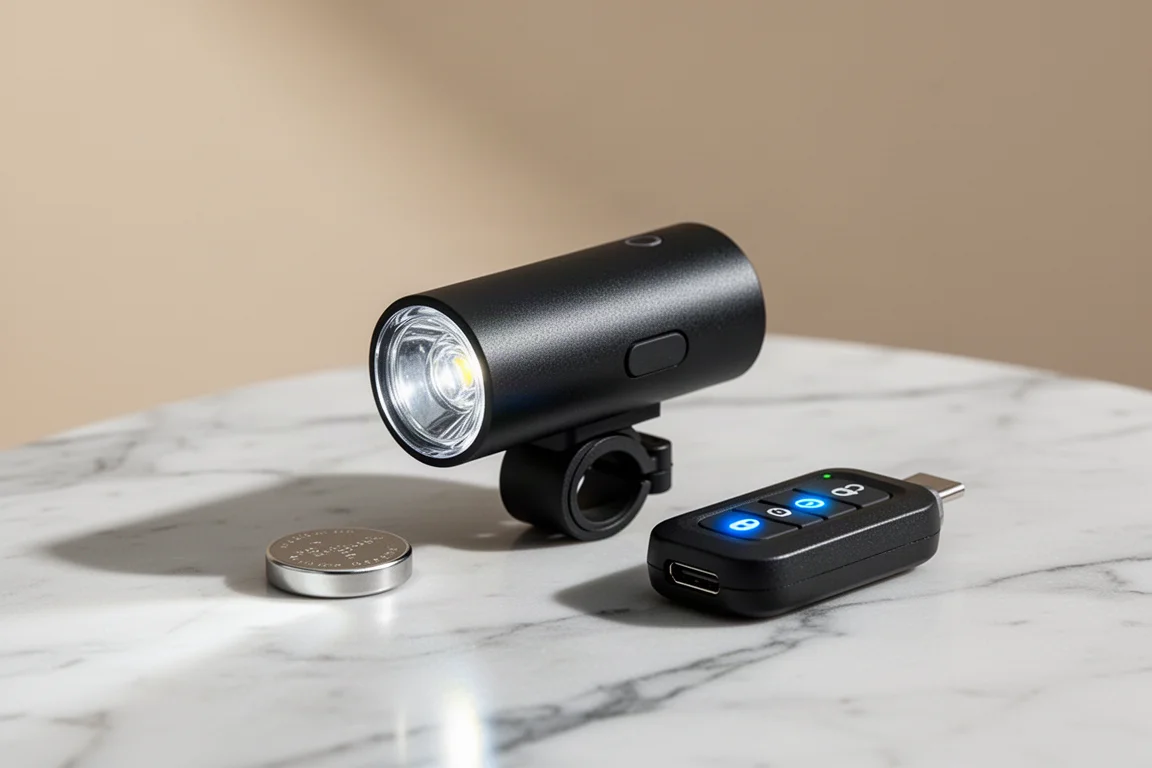
The LR1600 is a small form factor light with a single LED, yet it still produces 1,600 lumens. The beam is broad and bright for such a narrow unit, offering strong general forward illumination, though peripheral vision is not its strength, which is expected from a design this compact. It delivers up to one and a half hours of run time, which is impressive given the size of the unit.
Remotes are usually reserved for the most powerful and largest bike lights, so it is notable that the LR1600 includes one. It runs on a coin cell battery and the buttons are lit to help you find them in the dark. Compared with cycling through modes using the single button on top of the light, the remote makes it easy to toggle between settings and doubles as a shortcut for full and dipped beam.
There is only one flashing mode, which feels limiting, but an intelligent mode uses an ambient light sensor to detect low light and drop the light into a lower power mode to reduce glare for oncoming riders. The light also senses when it has been stationary for two minutes and switches off into standby, coming back on when it is moved again, which is genuinely useful if you are prone to leaving a light running. Charging is via USB-C, and an external power pack can be plugged in to extend range.
NiteRider Lumina Max 1500: Practical Everyday Light
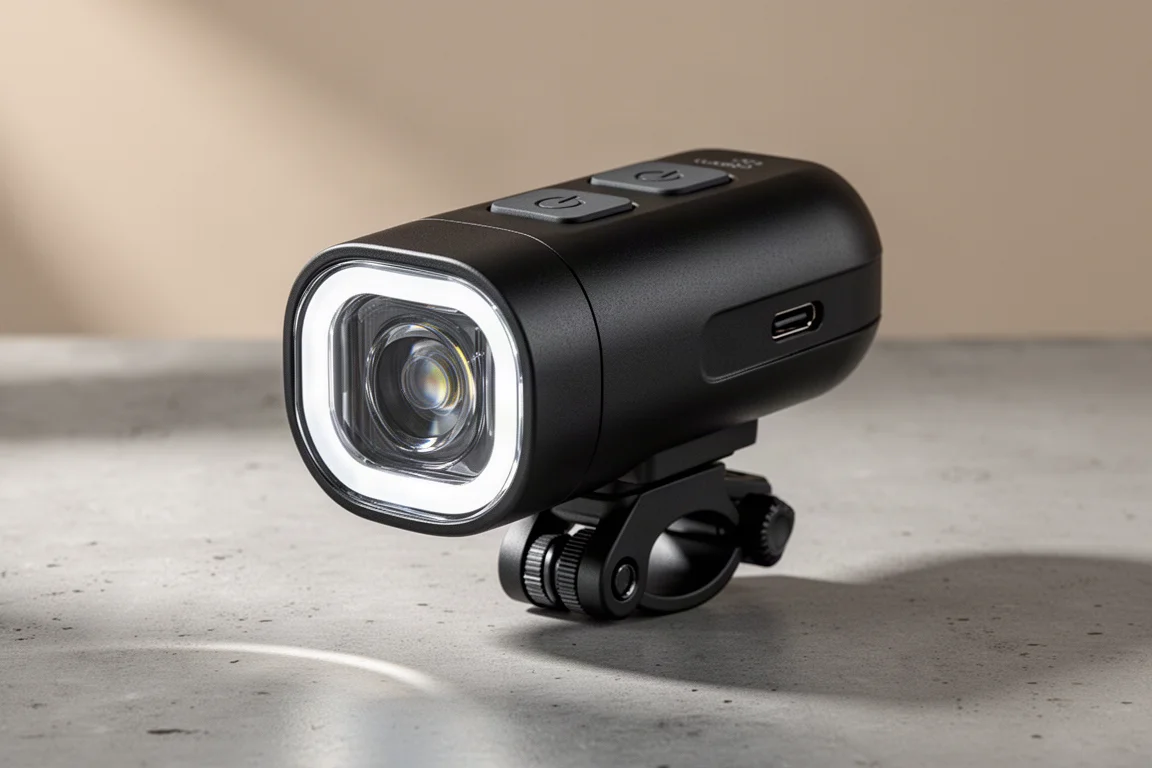
The Lumina Max 1500 has a slick user interface on top of the light: rather than a basic cyclical setup, dual-direction mode control lets you toggle up and down to the brightness you need at that moment. At maximum, it puts out 1,500 lumens across five constant modes.
The beam is rounded, with one clear and prominent central focus beam and a surrounding halo that floods the periphery. It has a definite edge to it, though it is less obvious as your eye tracks forward than a beam shot suggests. Three flashing modes live on a separate menu, which is a genuinely useful arrangement at night, since a misplaced press should not be able to drop you into a flash mode when you are relying on the beam to see.
The body is quite chunky and some riders may find the design a little old-fashioned, but it mounts securely to the supplied bracket and stayed put on rough surfaces. The bracket’s screw-down bolt does not come apart from the light, so there is little risk of losing parts. Charging uses USB-C, and NiteRider supplies a power adapter rather than a cable alone.
Which Front Bike Light Should You Buy?
If raw power is the priority, the Exposure Toro Mk14 and the Magicshine Ray 2600B are the two to look at first. The Toro Mk14 goes brightest of all and adapts its output to your speed, while the Ray 2600B combines a focused and a flood beam with app control and a remote.
If you want power blended with a smaller size, the Lezyne Macro Drive 1400+ and the Ravemen LR1600 each have something to offer. The Lezyne has the more balanced beam and the sturdier bracket, while the Ravemen is the more compact of the two and includes a remote and automatic standby.
The NiteRider Lumina Max 1500 is a solid light all around, with the clearest control scheme here and a beam that is easy to read on the road. If budget matters most, the Oxford UltraTorch CL600 offers good power for relatively little cash, provided you can live with micro-USB charging and shorter run times.
One practical point applies to all six: run time falls as output rises, so the brightest setting is rarely the one you will use for a whole ride. Choosing a light whose mid setting is bright enough for your usual route will usually serve you better than chasing the highest number.
Conclusion
Each of these lights has its own strengths, and the right one depends on where and how you ride. Maximum output suits unlit lanes and gravel trails, while a compact body, a longer run time or a lower price will matter more to commuters and riders who want a light they can simply fit and forget.
Match the light to the riding you actually do, and a dark autumn commute stops being something to endure.
Further reading
Related Reviews
Bike Lights
Best Front Bike Lights 2026: Four 1,000 Lumen Lights Compared
A practical comparison of four front bike lights rated at 1,000 lumens or more, covering beam quality, mounting, battery life, modes and price.
Bike Lights
How to Choose Bike Lights: Three Front Lights for Commuting, Road, and Gravel
A practical guide to picking bike lights, covering beam shape, brightness, mounts, and battery life, with three front lights that suit different kinds of riding.
Bike Lights
The Ultimate Bike Light Setup: Five Magic Shine Lights Worth Considering
A practical guide to building a winter bike light setup, with five Magic Shine models covering front, rear and helmet-mounted duties.