Camping Fuel Bottles
Trangia vs Vargo: Which Alcohol Fuel Bottle Belongs in Your Pack
A practical comparison of two alcohol fuel bottles: a sealed dual-spout design built to stay shut, and a low-cost bottle with a known leak problem.
Introduction
An alcohol stove is only as dependable as the bottle that feeds it. When fuel escapes inside a pack, it soaks sleeping bags, clothing, and food, and the smell stays with the gear long after the trip ends. The bottle matters more than most hikers expect.
Two bottles frame the choice. The Trangia fuel bottle is a sealed, dual-spout design that has long been familiar outside the United States and has only recently become easier to find there. It comes in three sizes and two colors. The Vargo fuel bottle is an 8 oz container that costs very little and has served as a budget pick for years.
This comparison looks at how each bottle seals, pours, carries, and holds up over time, so you can decide which one belongs in your kit.
What Matters in an Alcohol Fuel Bottle
The first question is whether the bottle stays closed. A fuel bottle rides in a pack that gets dropped, compressed, and rolled around, so the closure has to resist movement rather than simply sit in place.
The second is the pour. At camp, at the end of a long day, you want fuel to go into the stove and nowhere else. A valve that opens only when you press it, and closes the moment you let go, removes most of the guesswork.
Then come the practical details: whether fumes stay inside, whether the bottle can be carried inside a pack without a protective bag, how wide the refill opening is, how much the bottle weighs when empty, and whether more than one capacity is offered.
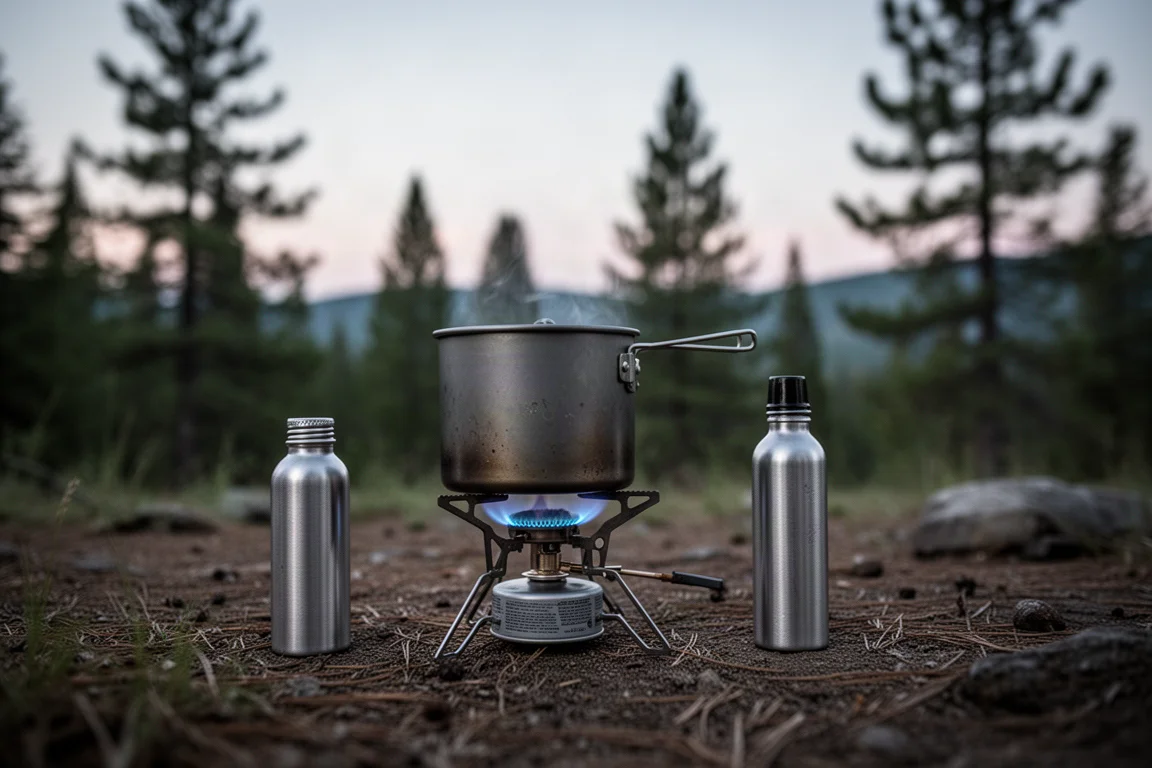
Price matters as well, but it matters last. A bottle that seals properly and pours cleanly is worth more than one that holds the same volume for less money, because the cost of a leak shows up later as ruined gear and lost fuel. The rest of this comparison applies those criteria to the two bottles.
Trangia Fuel Bottle: Design and Build Quality
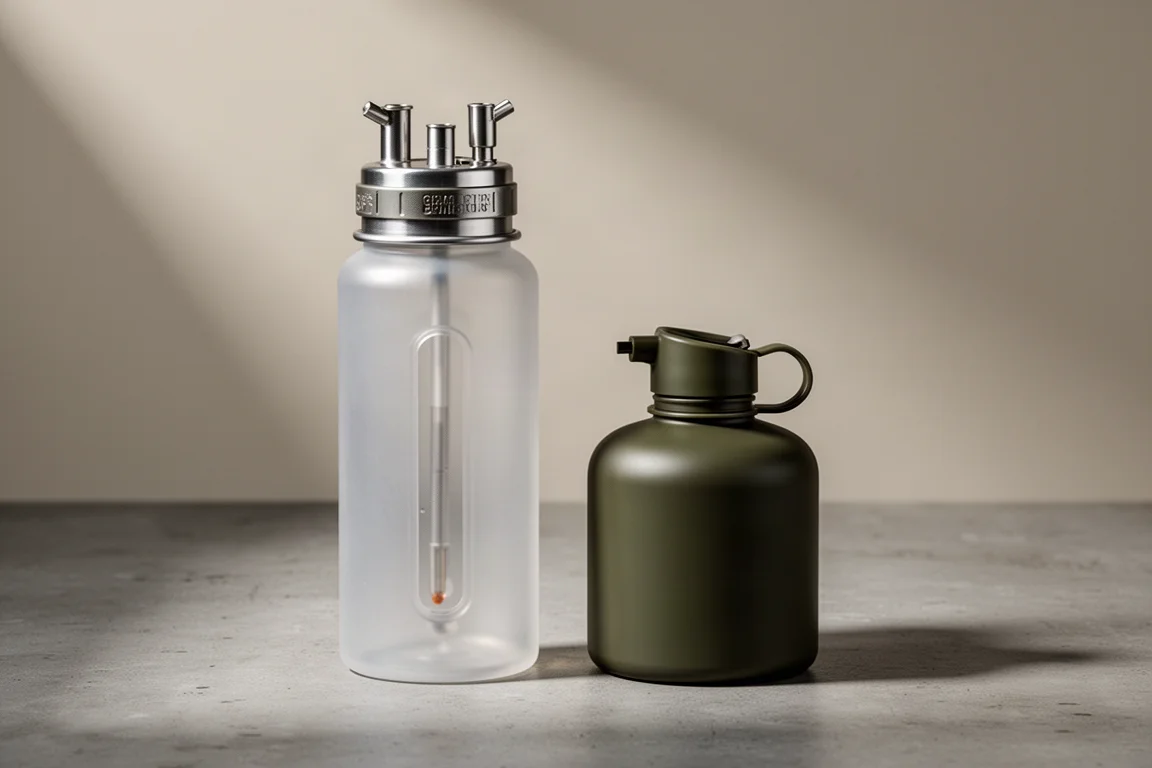
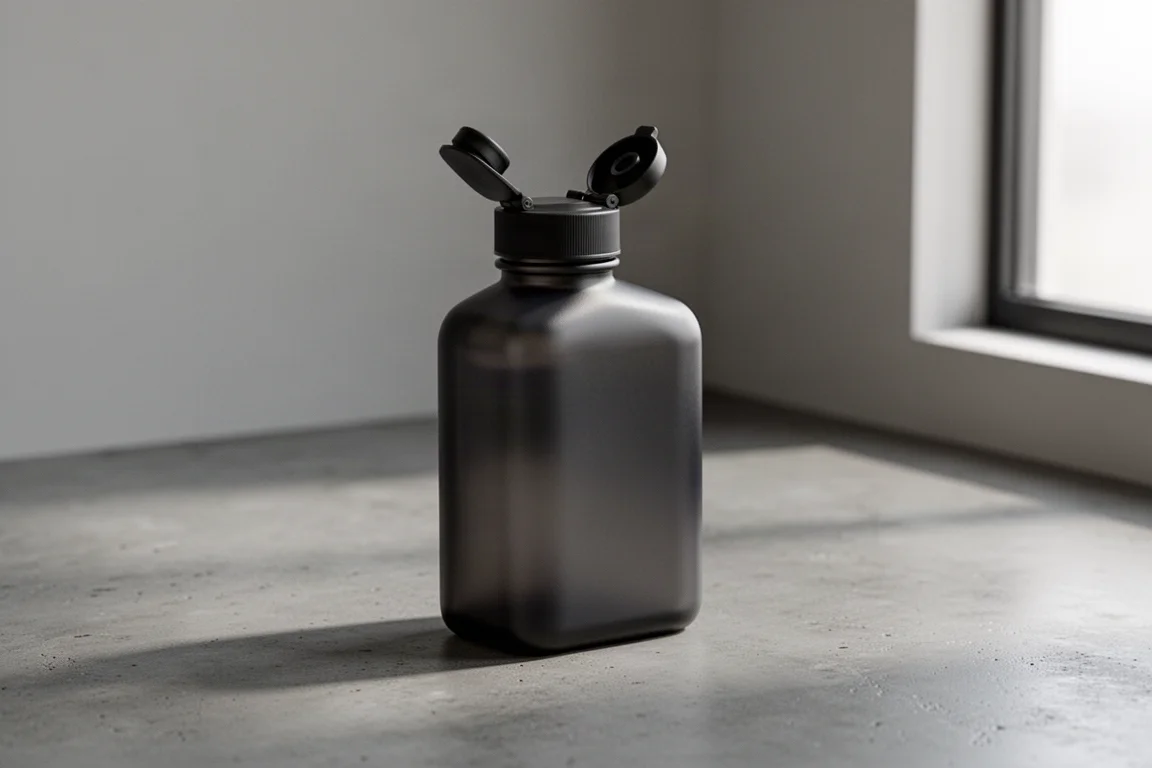
The Trangia fuel bottle is made from a combination of plastic and aluminium. It is offered in three sizes, 0.3 L, 0.5 L, and 1 L, and in two colors, green and red. A translucent strip on the body works as a fuel level indicator, so you can see how much is left without opening the cap.
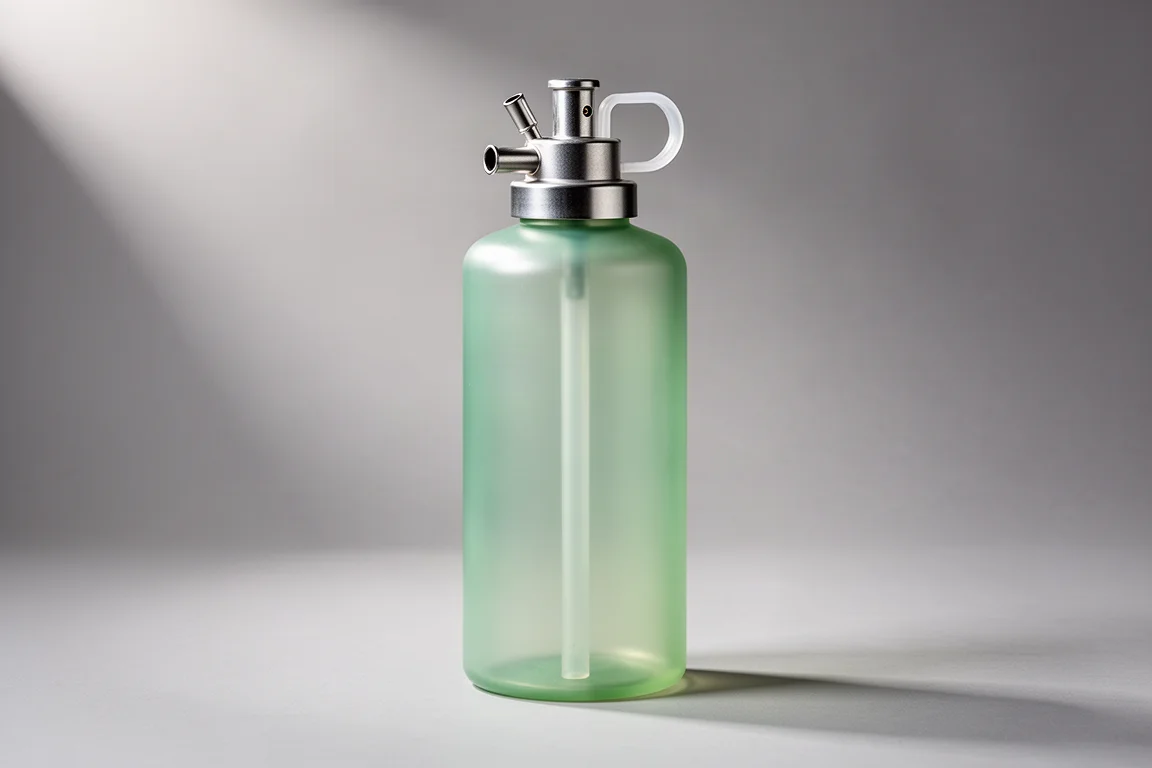
The valve is what separates it from cheaper designs. The cap carries two pour spouts, and the valve locks when it is screwed down: in that state the spout cannot be pressed, so no fuel can leave the bottle. Twist the valve to unlock it, push down to pour, and release to stop. It springs back into the locked position on its own. Because there are two spouts, the bottle pours from whichever side happens to be facing you, with no need to hunt for the right angle.
The nozzle unscrews for refilling. Underneath, a rubber O-ring seals the assembly, and a spring plate separates when the top is pressed, which is what lets fuel through either spout. The threads sit on the inside of the bottle opening, and a plastic loop on the side takes a lanyard or carabiner so the bottle can ride on the outside of a pack.
In extended field use, including trips in freezing conditions, the bottle has stayed airtight. No fuel has leaked when the bottle was turned upside down, no fumes have escaped, and the body has held up without visible scratches.
Trangia Fuel Bottle: Sizes, Weight, and Pouring in Practice
Empty weights are modest: roughly 3.5 oz for the smallest bottle, 4 oz for the medium size, and 5.6 oz for the 1 L version. The half-liter bottle stands about 9.2 inches tall and around 2.5 inches wide, and it weighs approximately 16 oz once filled with fuel.
Refilling is straightforward. The opening is not the widest on the market, but it is more than large enough to fill the bottle quickly without a funnel. Once the bottle is full, the nozzle screws back on and the valve returns to its locked state.
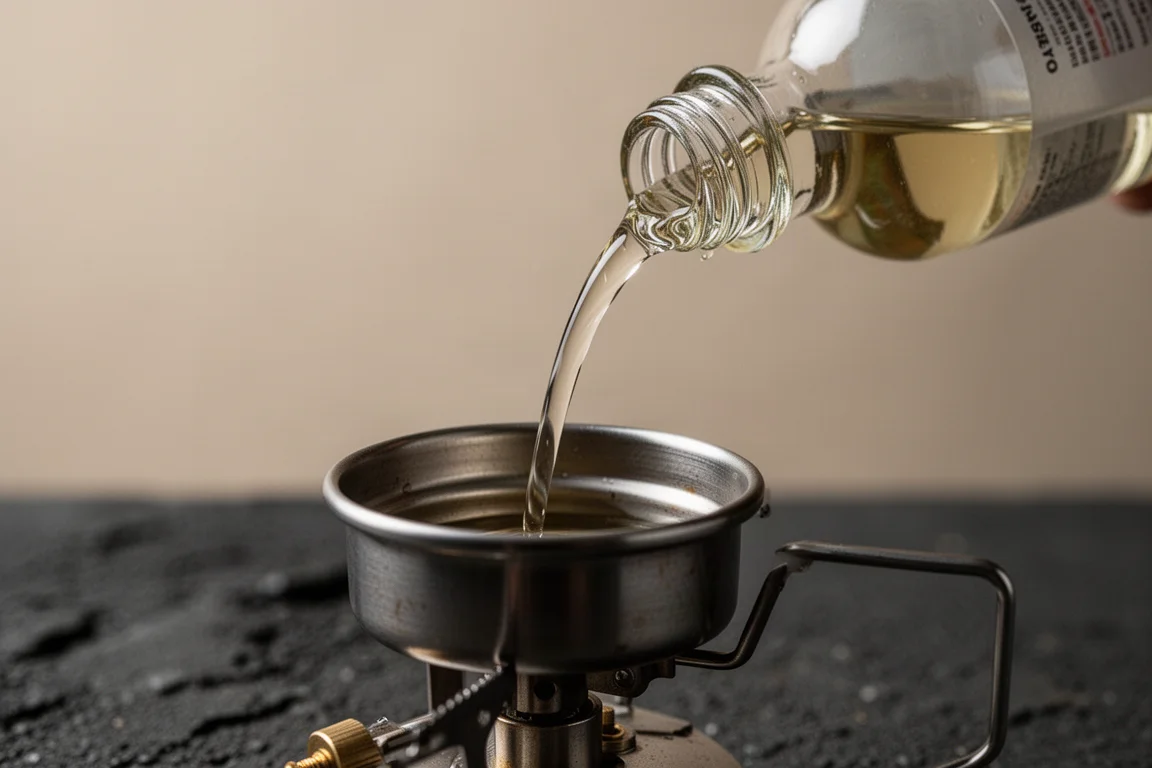
Pouring follows the same simple sequence: unlock the valve, press down, and release when the stove has enough. Flow stops immediately when the valve is released, which keeps small refills controlled. A useful habit is to release the valve after pouring and shake the bottle so any fuel left in the spout drains back instead of dripping later.
The bottle is built primarily for alcohol, and it also handles white gas and other liquid fuels.
Vargo Fuel Bottle: The Inexpensive Option and Its Trade-Offs
The Vargo fuel bottle holds 8 oz and costs around $6, a fraction of the price of the Trangia bottle. Its capacity and weight are reasonable for a small fuel container.
The pour spout is the problem. It uses a flip-up design with nothing holding it closed. When the bottle is carried inside a pack, movement can work the spout open, and once it is open, fuel leaks out and spreads through whatever is packed around it. That can mean a sleeping bag soaked in alcohol by the time camp is reached.
Two workarounds are common: wrapping a rubber band around the bottle to hold the spout down, and storing the bottle inside a Ziploc bag as a backup. Both help, and both are compromises on a part that should simply stay shut. For years this bottle was one of the few options available, and that is no longer the case.
Field Notes for Handling Fuel on the Trail
Check the fuel level indicator before committing to a long stretch without resupply. On the Trangia bottle the strip shows what is left without opening anything, which is faster than unscrewing a cap in cold weather.
Keep the valve locked whenever the bottle is not in use. Because the lock is a twist of the same valve you pour from, there is no separate cap to lose or forget.
After pouring, release the valve and shake the bottle so excess fuel clears the spout. This keeps the outside of the bottle clean and prevents a few stray drops from ending up on other gear.
When a bottle is carried inside a pack, a sealed valve is the whole point. A bottle that can be trusted upside down and rolling around is one less thing to think about on the trail. The plastic loop on the Trangia bottle also makes it easy to hang the bottle outside the pack when that is more convenient.
What to Check Before You Buy
Start with capacity. The Trangia bottle comes in 0.3 L, 0.5 L, and 1 L, so a weekend trip and a longer outing do not need the same bottle. The weight difference between sizes is small, so choose based on how much fuel you actually carry.
Next, look at the closure. A bottle that pours only when you press the valve, and locks when you do not, is the difference between carrying fuel and cleaning it out of your sleeping bag.
Finally, decide what the price difference is worth to you. The Vargo bottle is inexpensive, and the Trangia bottle costs several times more. The extra money goes into the valve, the sealing, the fuel level indicator, and the choice of sizes and colors.
Buying Advice: Which Bottle and Which Size
For most hikers, the Trangia fuel bottle is the more sensible purchase. It seals, it does not leak when inverted, it does not release fumes, and it pours from two spouts through a valve that locks itself. Prices run from about $20 for the smallest size to about $27 for the largest, with the medium size in between.
The half-liter size is a practical middle ground: light enough to carry, slim enough to pack, and it holds around 16 oz of fuel when full. Hikers who only need small top-ups may prefer the 0.3 L version, while longer trips and group cooking favor the 1 L.
The Vargo bottle makes sense only if the lowest possible price is the deciding factor and you are willing to secure the spout with a rubber band and carry the bottle in a bag. It does hold fuel, and it just does not stay closed on its own.
Conclusion
Fuel storage is one of the few parts of a stove setup where the cheapest option can cost you a sleeping bag. The Trangia fuel bottle is the better-designed product of the two: a lockable dual-spout valve, an airtight body, a fuel level indicator, three sizes, and two colors, at a fair price for what it does. The Vargo bottle remains a low-cost container, and its unsecured pour spout is a compromise worth understanding before it rides in your pack.
Further reading
Related Reviews

Backpacking Gear
Building a 10 lb Base Weight: An Ultralight Backpacking Gear List
A practical walkthrough of the ultralight pieces behind a 10 lb base weight, from a 765 g pack and a roomy one-person tent to a full camp chair and a dependable water filter.

Road Bikes
10 New Road Bikes Worth Watching: Aero, Titanium, Steel and Endurance Standouts
A practical roundup of 10 new road bikes, from aero flagships chasing single-watt gains to titanium, steel and endurance platforms built for real roads.
Bikepacking Gear
11 Bikepacking Essentials for Long-Distance Cycling
Eleven bikepacking essentials for long-distance cycling, from a steel gravel frame and a two-person tent to helmet lights, packable gloves, and a frame bag that puts weight in the right place.