Mountain Bikes
Trail Bike vs Enduro Bike: Intense Tracer 29 and Cotic FlareMAX Compared
A practical comparison of two full-suspension mountain bikes, one enduro build and one trail build, and how to decide which style suits the riding you actually do.
Introduction
Full-suspension mountain bikes look broadly similar from a distance, yet the two main categories of aggressive trail riding pull in different directions. Trail bikes and enduro bikes both offer the chance for thrills, spills and covering terrain fast, but the way each one is built changes how it feels, how it climbs and how much fun it is on the trails you actually ride.
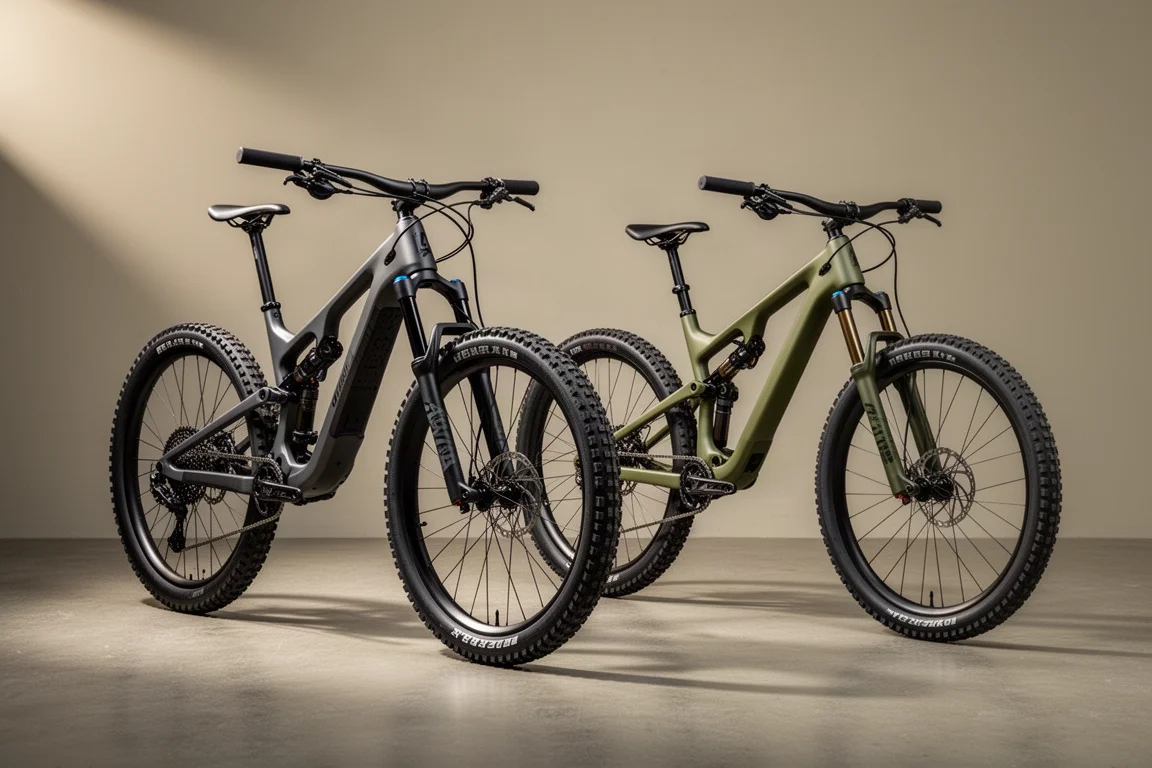
The two bikes in this comparison sit at opposite ends of that spectrum. The Intense Tracer 29 is a full enduro platform with a very slack front end and long travel. The Cotic FlareMAX is a trail bike with a steeper, more conservative geometry and a lighter build. Understanding what separates them is the quickest way to work out which one suits you.
What Separates a Trail Bike From an Enduro Bike
Travel and wheel size are the simplest ways to spot which category a bike belongs to. Trail bikes typically run between 130mm and 150mm of travel front and rear, paired with two 29-inch wheels. Enduro bikes usually offer 160mm of travel or more, with 160mm acting as the benchmark and the most aggressive builds reaching up to 190mm. Enduro bikes are commonly set up with either a 27.5-inch rear wheel in a mixed setup or two 29-inch wheels.
The similarities are just as important as the differences. Both categories use full suspension, dropper posts, disc brakes, single-ring drivetrains with large cassettes, provision for bottle cages, riser bars, short stems and roomy cockpits. What changes is how far each design pushes in one direction.
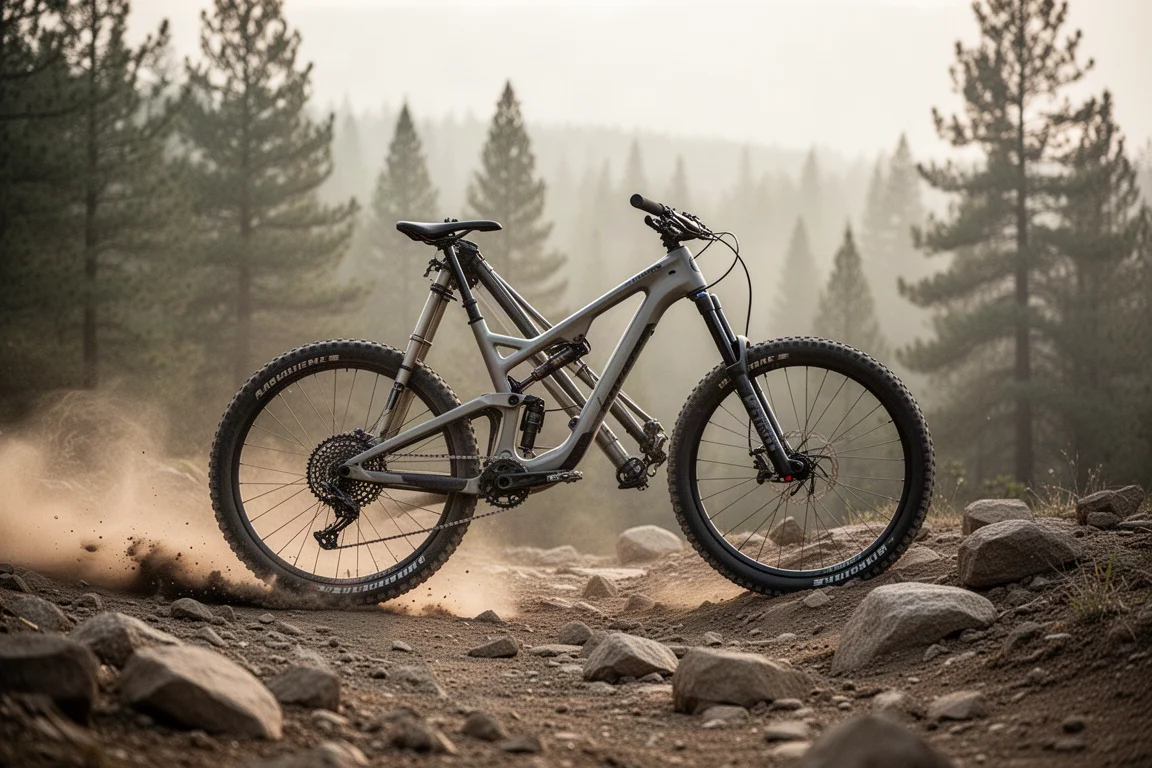
Geometry follows the travel figures. Enduro head angles have become progressively slacker, to the point where some are slacker than modern downhill bikes. Trail bikes stay more conservative, which makes them feel intuitive and playful rather than purely stable. Weight lands in a similar place too, with trail bikes around the 30lb mark and enduro bikes roughly a couple of pounds heavier at around 32lb. Those are estimates, and across both disciplines the more you spend, the lighter the bike tends to be.
Intense Tracer 29: An Enduro Bike Built for Steep, Rough Trails
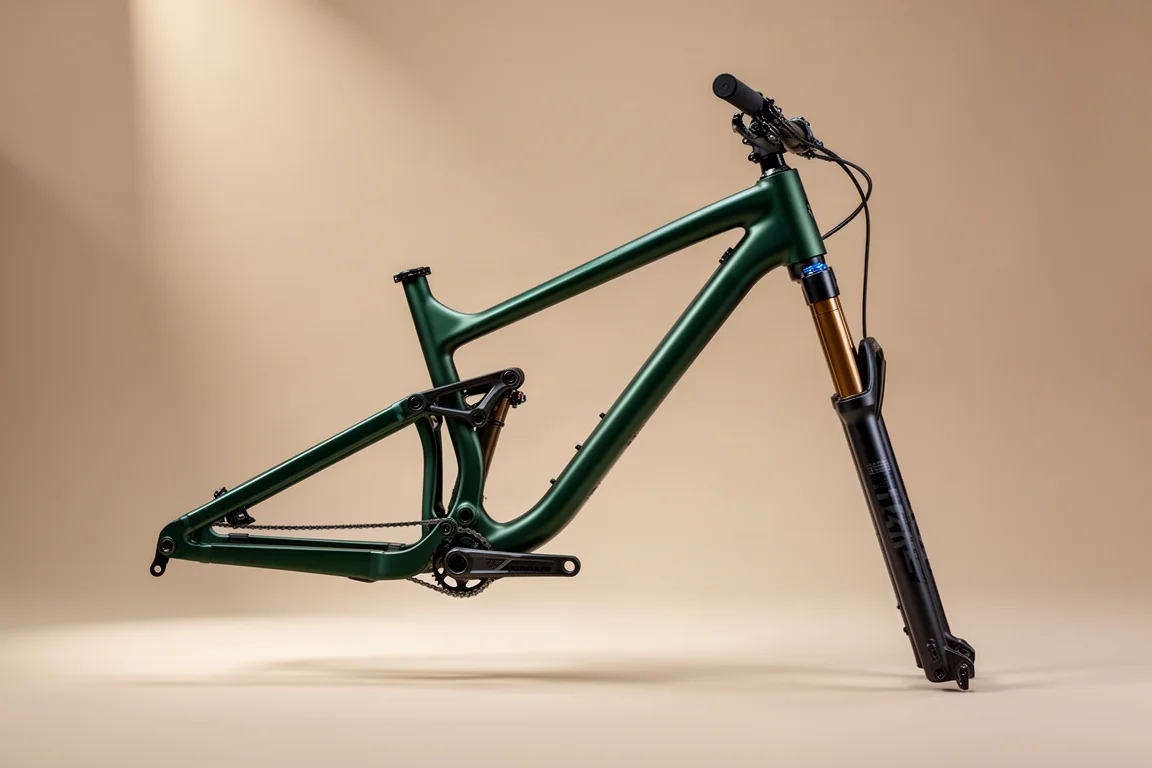
The Intense Tracer 29 is a clear example of where enduro design has landed. It runs a 63.7 degree head angle, which is squarely aimed at steep descents, and a 480mm reach that keeps the cockpit roomy without stretching it beyond what most riders can control. The build can be run as a full 29er or as a mixed setup with a 27.5-inch rear wheel, and the bike is available in either configuration according to rider preference.
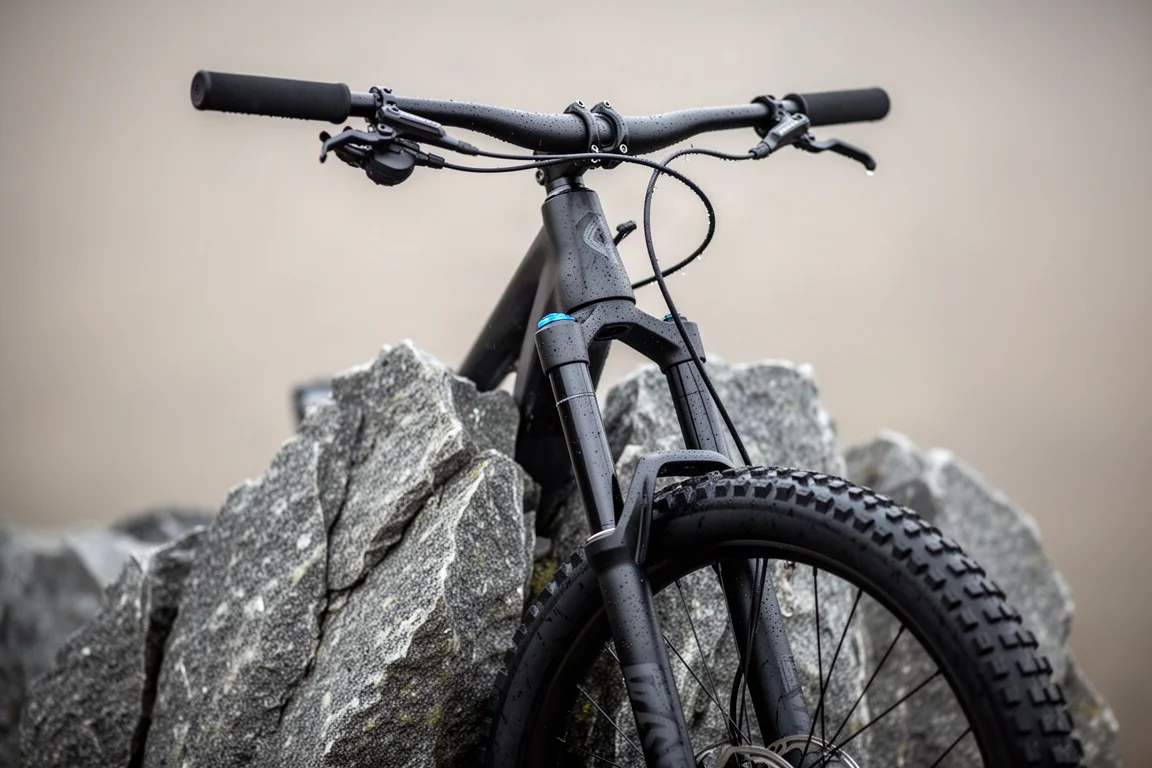
Long travel is the defining trait here, and it comes with the usual trade-offs. The extra metal needed to hold up to enduro tracks adds mass, and the higher leverage on longer suspension components means those parts have to be built beefier. Enduro tyres use tougher casings than typical trail tyres, and enduro wheels are built to shrug off big hits, which all adds weight. On the trail that translates into a bike that feels stable in rough, tight turns, tracks the back wheel smoothly under braking and carries momentum through chunky rock, at the cost of some responsiveness on flatter, faster ground.
Cotic FlareMAX: A Trail Bike Built for Flow
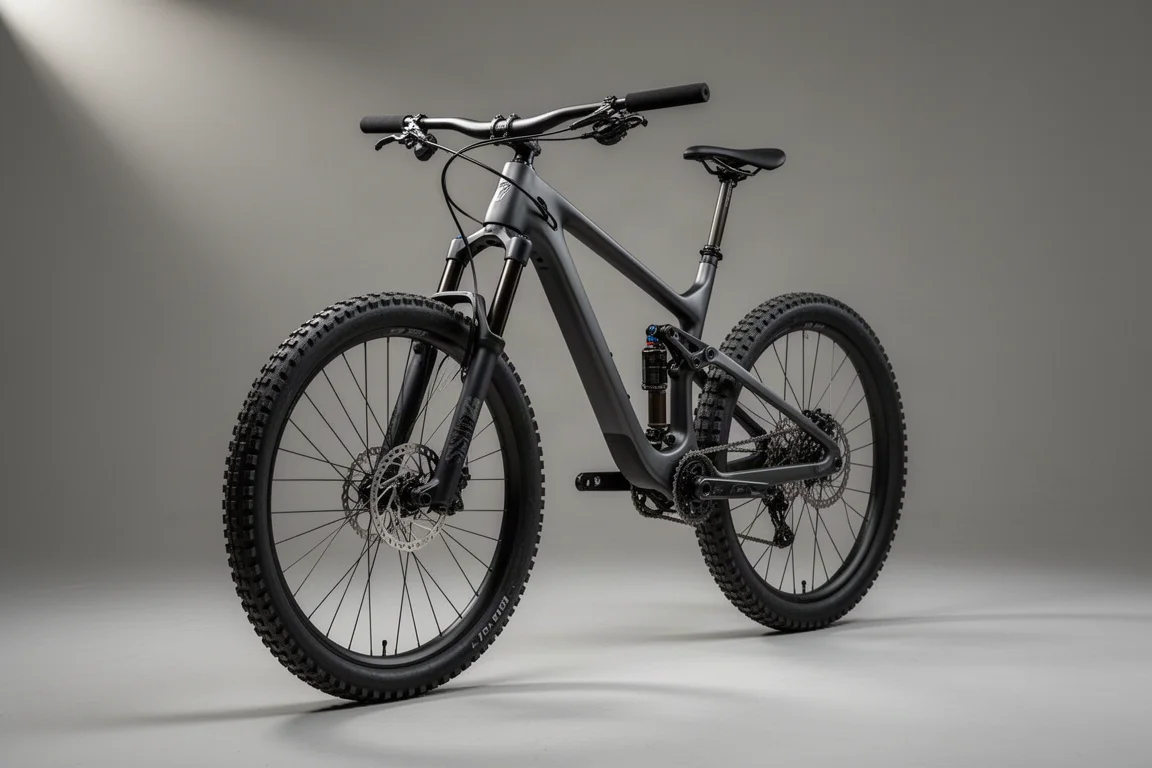
The Cotic FlareMAX takes the opposite approach. In a large frame size it has a 65 degree head angle and a reach just 10mm longer than the enduro bike, so the cockpit is close in size even though the geometry is far less radical. That steeper front end, combined with lighter wheels, lighter tyres and shorter travel, is what gives the bike its character.
Trail bikes are designed to excel on less technical terrain, and the FlareMAX follows that brief. It picks up speed quickly, accelerates, decelerates and turns faster than a longer-travel bike, and it stays easy to move around on the trail. The lighter tyres and steeper head angle let it skip and float across smoother ground in a way that feels lively and engaging.
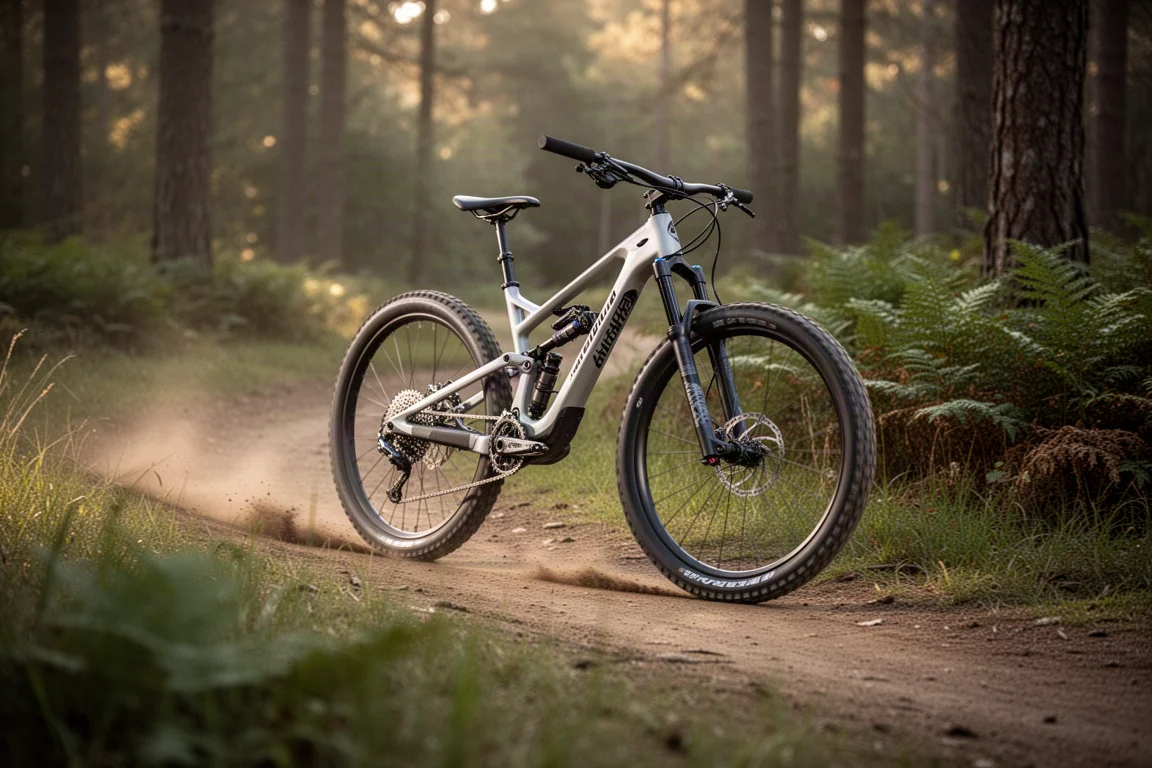
The compromise is grip and composure when the terrain gets genuinely rough. There is simply less suspension to absorb the hits, and the bike can feel skittish over rocky, high-speed ground where an enduro bike would stay planted. For riders who spend most of their time on flowing trails, that is a fair trade rather than a shortcoming.
How the Two Compare on Climbs and Descents
Point the Intense Tracer 29 downhill on a rough enduro track and the long travel eats up the bumps while the slack angles keep it stable at speed. It holds a line through tight turns and stays calm under braking. On faster, flatter sections it feels more laborious to move around, less responsive to input, and it takes more pedalling to hold the same speed a shorter-travel bike would carry. It is not as entertaining to whip around, and the extra weight of the wheels and tyres is noticeable wherever you want to pump and carry momentum.
The Cotic FlareMAX behaves almost inversely. On rough ground it skips around and does not want to slow down under braking, and the limited travel makes it feel twitchy when the trail gets chunky. On smoother, faster ground those same traits become strengths, and the bike turns into something poppy, fun and easy to throw around.
Climbing follows the same pattern. The enduro bike’s steep seat angle keeps weight forward and it will winch you up the steepest gradients, but the long-travel fork moves around, the slack head angle wanders at slow speed, and the heavier wheels and tyres make every pedal stroke feel like work. The trail bike feels less laborious, puts more of your energy into forward motion and stays easy to move around when you want to change line.
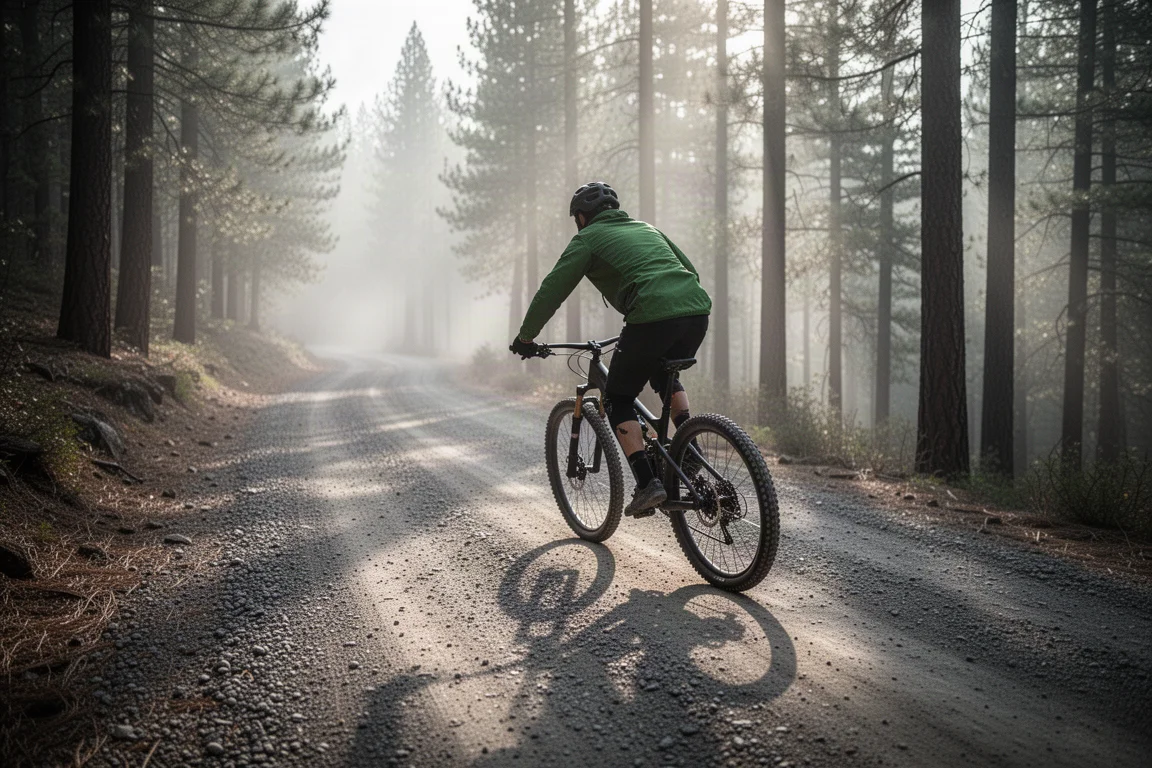
Neither bike is slow uphill in absolute terms. The difference is how much effort it takes to get there, and how much of the descent you are prepared to trade for it.
Which One Should You Buy?
The honest answer depends on the riding you do most often. If you only ride rough enduro tracks occasionally and spend the majority of your time on flatter trails or at a trail centre, a trail bike is the better fit. It will be quicker on the climbs, more engaging on smooth ground and easier to live with day to day.
If you are a committed enduro rider, do not be seduced by the lighter weight of a trail bike. It will climb faster, but descents are better handled by something tougher, with more travel and more aggressive angles, like a full enduro bike. The trade in climbing speed is real, but so is the gain in confidence and control when the trail points down.
Be honest about your own riding, too. Riding an enduro bike can help you unlock black-graded trails, but a bigger bike will not make you a better rider. Being over-biked on an enduro rig with more travel than you need is not much fun, and it can make ordinary trails feel like hard work rather than play.
Conclusion
The Intense Tracer 29 and the Cotic FlareMAX are both capable machines, and each is well matched to a different kind of rider. The Tracer 29 is the choice for steep, rough, high-speed descents and riders who accept the extra weight and effort on the way up. The FlareMAX is the choice for riders who value quick acceleration, playful handling and easier climbing on the trails they ride most weeks. Match the bike to the terrain you actually spend time on, and either one will feel like money well spent.
Further reading
Related Reviews
Mountain Bikes
Atherton AM.130 Review: 3D-Printed Titanium Lugs and a 130mm Trail Bike That Descends Like a Bigger Machine
The Atherton AM.130 pairs 3D-printed titanium lugs with carbon tubes and a DW6 suspension platform. Here is how it rides, what the build delivers, and who it suits.
Mountain Bikes
Beginner Mountain Bike Buying Guide: What to Look For in a Trailworthy Hardtail
A practical framework for evaluating beginner mountain bikes, whether new or used, by examining key components that indicate real trail capability.
Mountain Bikes
Best Aluminum Mountain Bikes 2026: Five Alloy Bikes Worth Your Attention
Five aluminum mountain bikes that show how far alloy has come, from a 120mm trail bike and a versatile machined frame to a 180mm freeride machine.