Mountain Bikes
Trail Bike vs Enduro Bike: Intense Tracer 29 and Cotic FlareMax Compared
How trail and enduro mountain bikes differ in travel, geometry, wheels and weight, with the Intense Tracer 29 and Cotic FlareMax as two clear examples.
Introduction
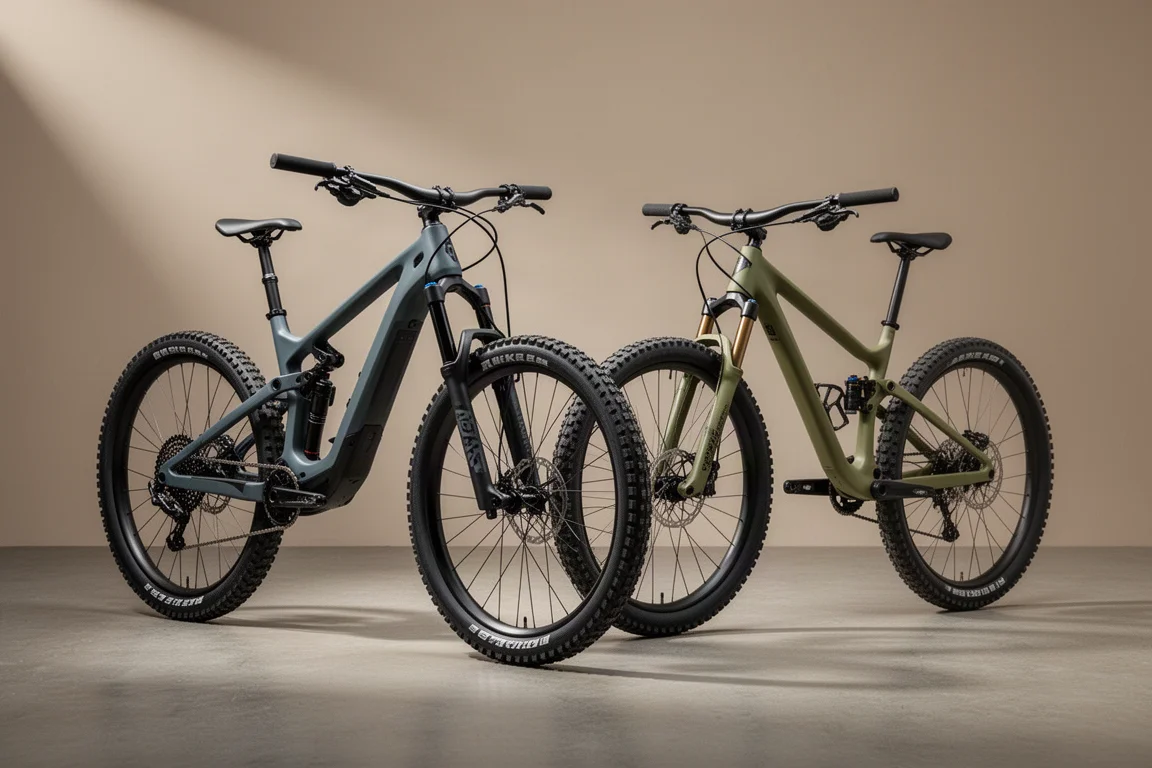
Full-suspension mountain bikes have converged on a common template: a dropper post, disc brakes, a single-chainring drivetrain with a wide cassette, mounts for a bottle cage, riser bars, a short stem and a roomy cockpit. Trail bikes and enduro bikes share all of it.
The differences sit in travel, geometry, wheel size and weight, and those differences shape how a bike behaves far more than the shared parts list suggests. This guide covers what separates the two categories, using the Intense Tracer 29 as an enduro example and the Cotic FlareMax as a trail example, and then looks at what each type of bike is like to descend and climb on.
How Trail Bikes and Enduro Bikes Differ
Travel is the clearest dividing line. Trail bikes typically offer between 130mm and 150mm of travel front and rear, and the more aggressive ones sometimes run a longer-travel fork up front. A longer fork slackens the head angle a little and adds front-end grip, while keeping rear travel shorter helps the bike carry speed on smoother terrain, where rear suspension movement can steal momentum.
Enduro bikes generally start at 160mm and go up from there, with aggressive models offering as much as 190mm. That much travel is what makes them capable on the big hits of enduro courses and keeps traction on rough ground, but the extra leverage means the suspension components have to be built stronger, and the extra material adds weight.
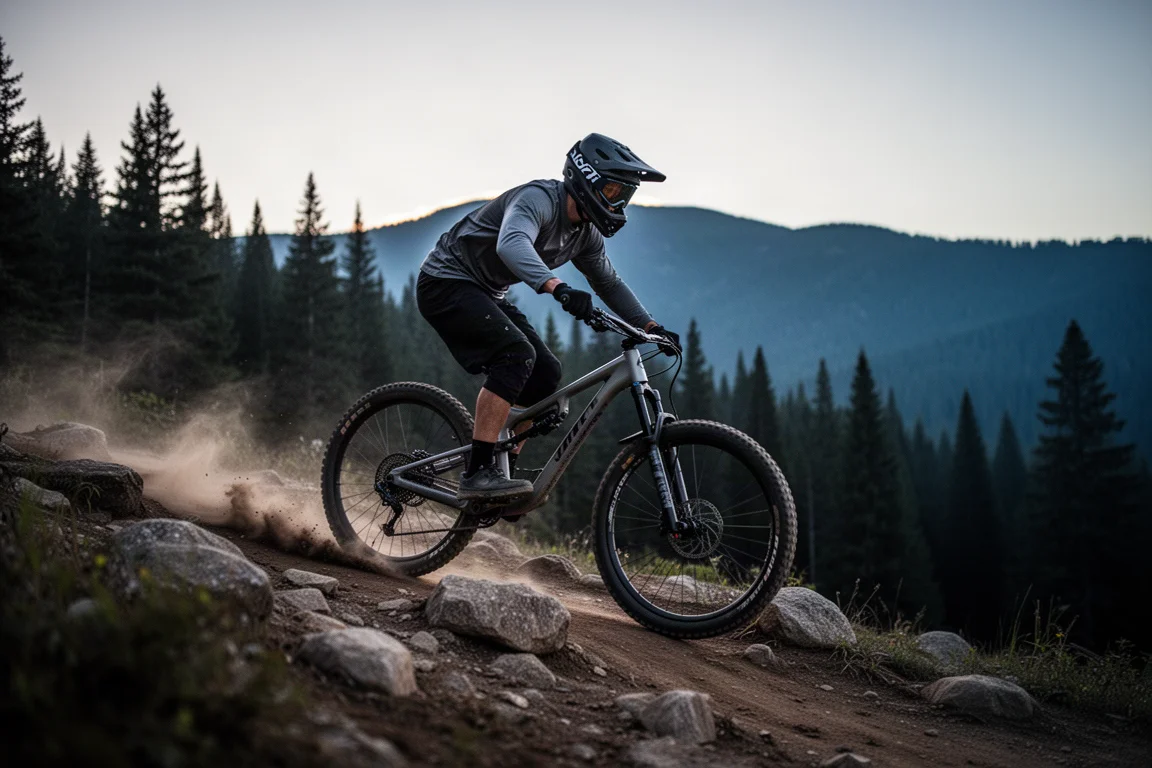
Wheel setups separate them as well. Trail bikes are usually built with 29-inch wheels front and rear, which roll faster than smaller wheels and offer more traction thanks to a larger contact patch. Modern enduro bikes run a 29-inch front wheel with either a 27.5-inch rear wheel in a mullet configuration or a matching 29-inch rear. The Intense Tracer 29 is available in both arrangements depending on rider preference.
Geometry has become more aggressive year on year, with some enduro head angles now slacker than those found on modern downhill bikes. The Intense Tracer 29 runs a 63.7-degree head angle, while the large Cotic FlareMax trail bike sits at 65 degrees. The two cockpits are close in size, with 480mm of reach on the enduro bike and the trail bike just 10mm longer, yet the trail bike’s geometry is far more conservative overall.
The reason is straightforward. Enduro bikes have to cope with extreme terrain at high speed, which is what drives the radical numbers. Trail bikes are built to excel on less technical terrain, and less radical geometry keeps them intuitive and playful rather than demanding.
Intense Tracer 29: The Enduro Bike
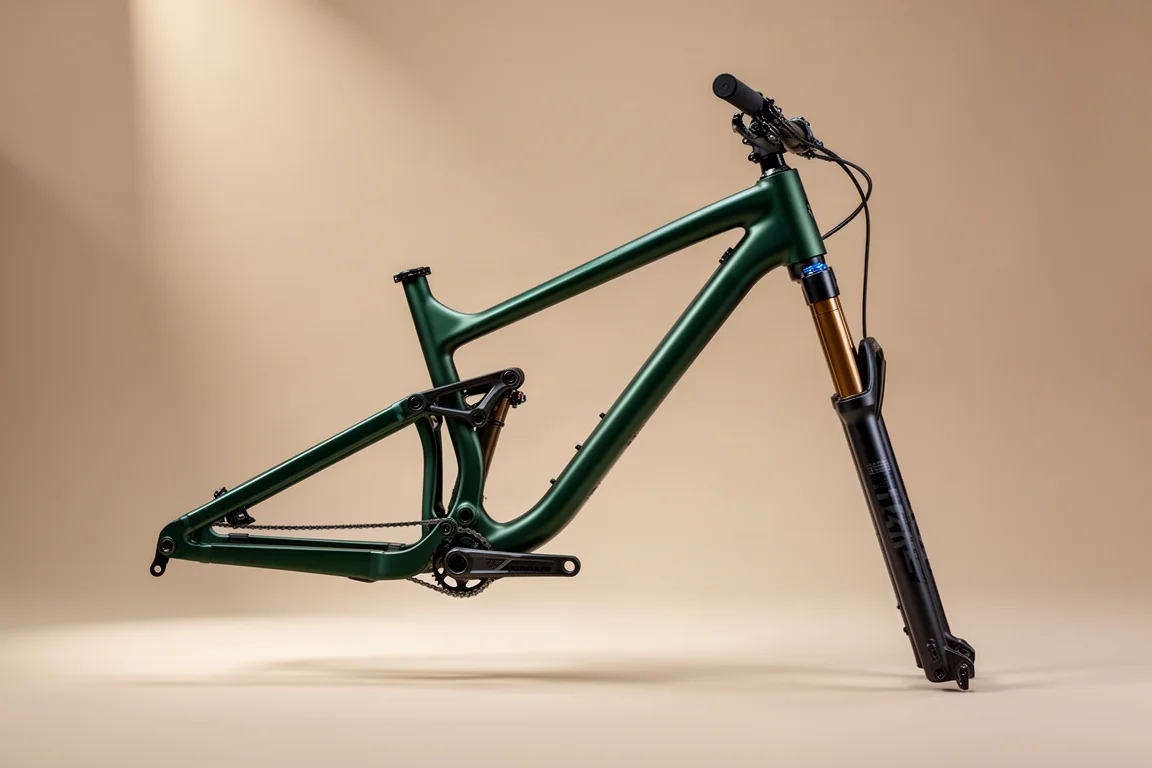
The Intense Tracer 29 is a long-travel enduro bike with a 63.7-degree head angle and 480mm of reach. The slack front end is aimed squarely at steep descents, and buyers can choose between a mullet build with a 27.5-inch rear wheel or a full 29-inch setup.
Like other enduro bikes in this class, it carries more travel than a trail bike and is built to handle the demands of modern enduro tracks. That means stronger components and more of them, which is why enduro bikes typically weigh a couple of pounds more than trail bikes, roughly 32lb against around 30lb. Those are only rough estimates, and spending more generally brings the weight down in both categories.
The intent behind the Tracer 29 is clear: stability and composure when the trail turns steep, loose and fast.
Cotic FlareMax: The Trail Bike
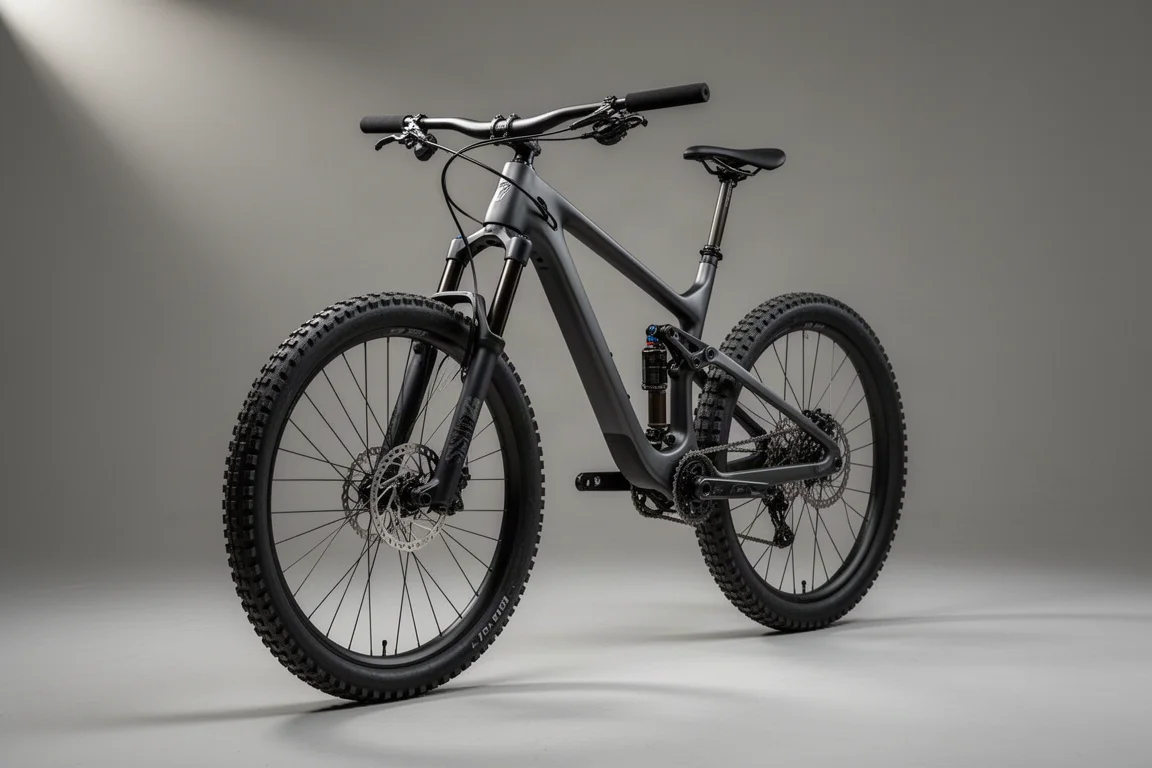
The large Cotic FlareMax is a 29-inch trail bike with a 65-degree head angle and 490mm of reach, 10mm more than the enduro bike. Its geometry is deliberately more conservative than an enduro bike’s, and that is exactly what makes trail bikes feel intuitive and easy to place on the trail.
The FlareMax follows the trail bike template: 130mm to 150mm of travel, 29-inch wheels at both ends, and a lighter build overall. Bikes in this mould use lightweight materials and careful design to keep mass down, and that shows up in how quickly the bike picks up speed.
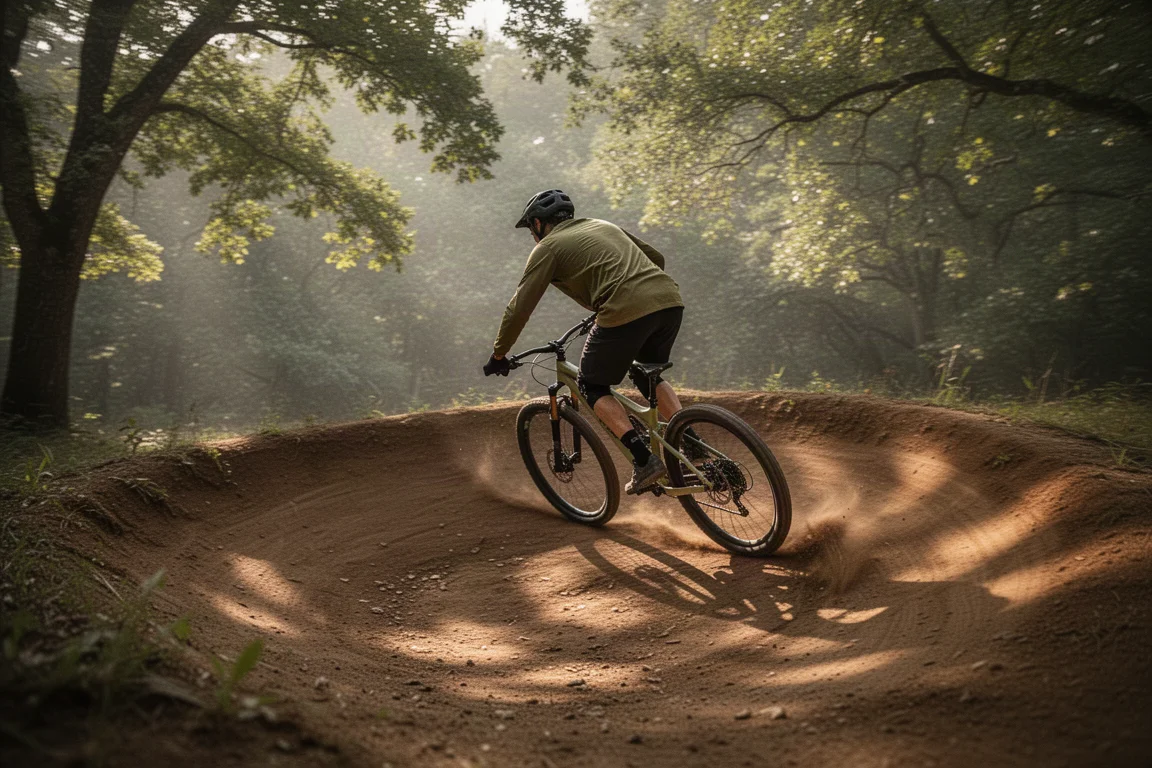
For riders who spend most of their time on flatter trails, at a trail centre or on less technical ground, this is the shape of bike that makes those rides feel quick and enjoyable.
Riding Impressions: Descending
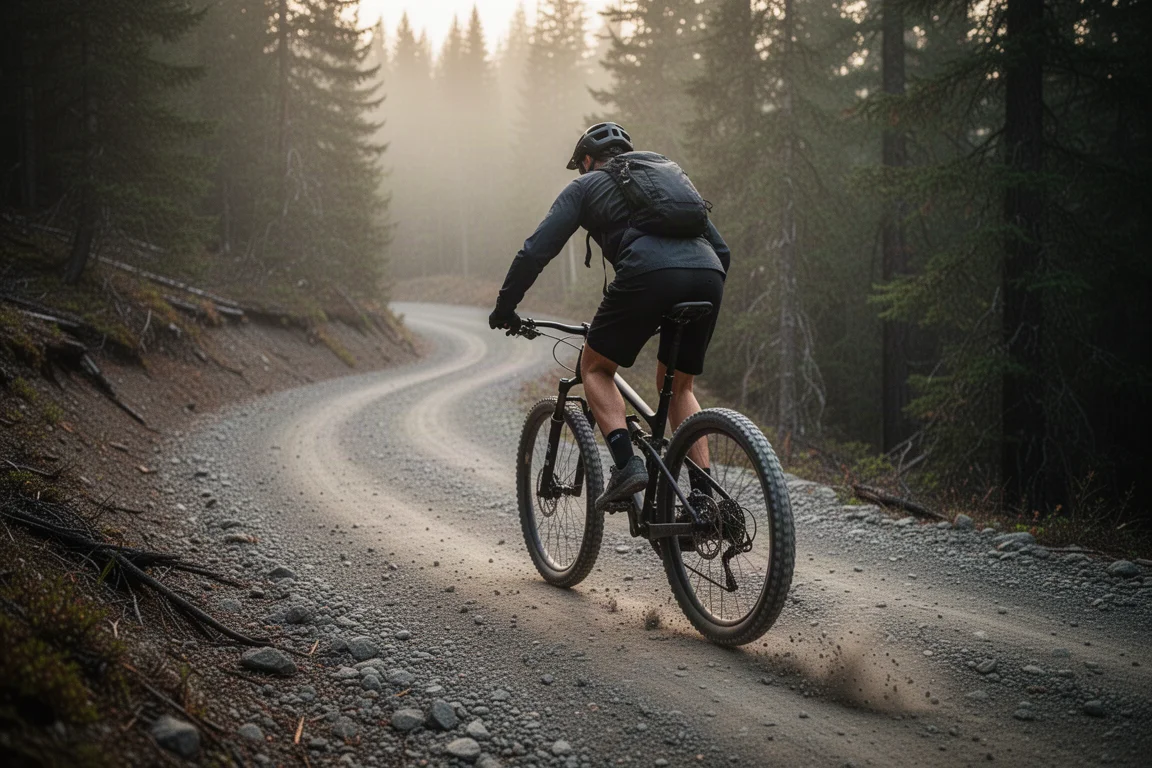
On a rough, tight enduro-style trail, the long-travel bike is remarkably stable. It holds its line through tight turns, tracks smoothly under braking, and the long travel swallows bumps that would upset a shorter-travel bike. The slack angles keep it calm as speed builds, and the tougher wheels and tires mean rocky edges can be hit without worry.
On faster, flatter sections the picture changes. The same bike feels more laborious to move around, takes more effort to pump, and responds less eagerly to rider input. The weight of the wheels and tires is noticeable in flatter turns where momentum matters, and it needs more pedalling to hold the same speed a shorter-travel bike would.
A trail bike on a rough descent does the opposite. It accelerates hard and is reluctant to slow, with good suspension quality but not much of it, so it skips and twitches over rough ground. On faster, flatter terrain those same traits turn into something genuinely enjoyable: lighter tires, a steeper head angle and shorter travel make the bike float and pop, easy to move around and far more engaging to ride.
Riding Impressions: Climbing
Climbing on the enduro bike is steadier than you might expect. A steep seat angle keeps the rider’s weight far forward, which helps on steep gradients, and the large cassette makes it happy to winch up the toughest pitches. It still does not feel sprightly, though. The long-travel fork moves around, and the slack head angle makes it wander slightly at slow climbing speeds, so holding a line takes more concentration than it would on a shorter-travel bike. The heavier wheels and tires are noticeable with every pedal stroke.
A trail bike makes the same climb feel like less work. Its lighter build is the main reason, and with the suspension locked out a lot of rider energy goes into driving the bike forward. The steeper 65-degree head angle makes it easy to move around and change line mid-climb, and the overall effect is of floating up the gradient with less effort for more ground covered.
Tires, Wheels, and Weight
Enduro tracks cover some of the harshest terrain in mountain biking, and modern courses often resemble downhill tracks with added pedalling. A puncture can ruin a race, so manufacturers build enduro tires with tougher casings, which are heavier than typical trail tires. Enduro wheels are tougher as well, to shrug off big hits, and that also carries a weight penalty.
Trail tires and trail wheels are lighter by comparison. That is why trail bikes accelerate, decelerate and turn faster than enduro bikes, and it is a big part of why they feel so lively on smoother ground. Trail riders also have an easier escape route when a tire gives up: a plug or a canister at the side of the trail sorts it out, with no race clock running.
Weight follows the same pattern. A trail bike typically lands around 30lb, with an enduro bike a couple of pounds heavier at roughly 32lb. These are rough estimates, and in both categories spending more money generally means a lighter bike.
Which Bike Is Right for You?
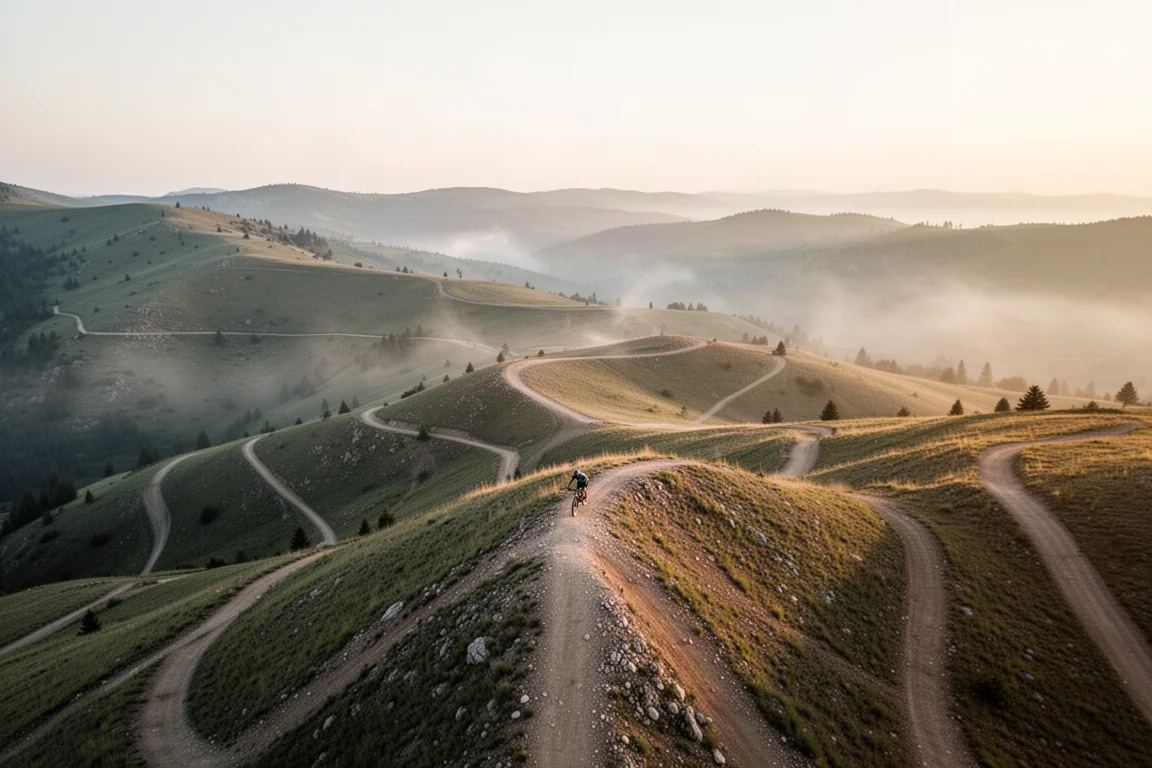
The honest answer depends on where you actually ride. If rough enduro tracks are a once-in-a-while outing and most of your time goes to flatter trails or a trail centre, a trail bike is the better fit. It will climb more easily, feel more playful, and make the terrain you ride most often more enjoyable.
If you are a committed enduro rider, do not be tempted by the lighter weight of a trail bike. It will be quicker on the climbs, but descents are better handled by something tougher, with more travel and more aggressive angles. A full enduro bike is the right tool for that job.
It is also worth being honest about ability. An enduro bike can help a rider unlock black-graded trails, but a burlier bike will not make anyone a better rider. Riding an enduro bike with more travel than your needs call for is not much fun, and it can turn ordinary trails into hard work.
Conclusion
Trail bikes and enduro bikes share far more than they differ on, but the differences that remain matter. Trail bikes pair 130mm to 150mm of travel with 29-inch wheels, lighter components and more conservative geometry, which makes them quick to accelerate, efficient to climb and playful on smoother ground. Enduro bikes step up to 160mm or more, often with a mullet wheel setup, tougher tires and wheels, and geometry as slack as 63.7 degrees on the Intense Tracer 29.
The Cotic FlareMax and the Intense Tracer 29 sit at opposite ends of that spectrum, and each is excellent at what it was designed for. Choose based on the riding you do most, not the riding you aspire to, and either bike will reward the decision.
Further reading
Related Reviews
Mountain Bikes
Atherton AM.130 Review: 3D-Printed Titanium Lugs and a 130mm Trail Bike That Descends Like a Bigger Machine
The Atherton AM.130 pairs 3D-printed titanium lugs with carbon tubes and a DW6 suspension platform. Here is how it rides, what the build delivers, and who it suits.
Mountain Bikes
Beginner Mountain Bike Buying Guide: What to Look For in a Trailworthy Hardtail
A practical framework for evaluating beginner mountain bikes, whether new or used, by examining key components that indicate real trail capability.
Mountain Bikes
Best Aluminum Mountain Bikes 2026: Five Alloy Bikes Worth Your Attention
Five aluminum mountain bikes that show how far alloy has come, from a 120mm trail bike and a versatile machined frame to a 180mm freeride machine.