Telescope Mounts
Track the Stars Panther Light Review: Push-To Simplicity for Heavy Telescopes
A manual push-to telescope mount with built-in encoders and multiple configurations, built to bring heavy scopes back into regular use.
Introduction
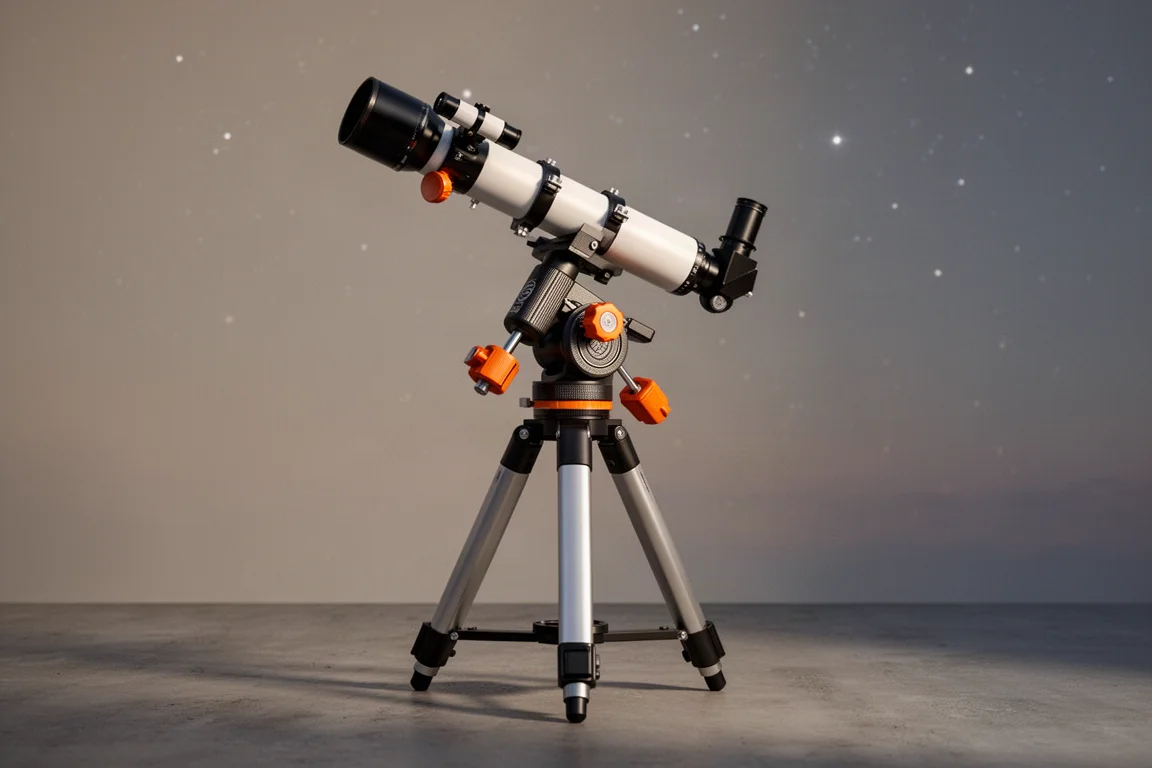
The Panther Light from Track the Stars is a premium, high-capacity push-to manual mount with built-in encoders. The core idea is simple: you move the telescope completely by hand, and the mount still knows exactly where it is pointed. Paired with a device like the Nexus 2, the encoder data feeds straight into Sky Safari on your phone, guiding you to targets with an encoder accuracy of just 16 arcseconds.
That combination addresses a very specific frustration for seasoned observers: many of us own heavy telescopes we barely use. Large equatorial mounts meant for astrophotography are slow to set up and put the eyepiece in awkward positions, while lighter alt-azimuth mounts often feel shaky. The Panther Light aims to bring those heavy telescopes out of the garage and back into circulation.
What’s in the Box and Key Hardware
The review setup included the mount head and tripod, plus the components needed to cover every possible configuration: several counterweight bars, dovetail adapters, a cell phone mount, two 4 kg counterweights, an 8 kg counterweight, and the Nexus 2 unit that lets the mount communicate with Sky Safari.
On the mount itself, a few items matter most in daily use. There is an altitude axis lock, used to safely install the telescope and when changing heavy accessories. Two orange clutches, one for altitude and one for azimuth, adjust the tension along each axis and control how much force is required to move the mount by hand. There is also a port for the encoders, which should point in the same direction as the telescope, and a magnetic holder for the Nexus box. Attaching the mount to the tripod is straightforward: slide it on, line up the holes, twist it into the slots, and tighten.
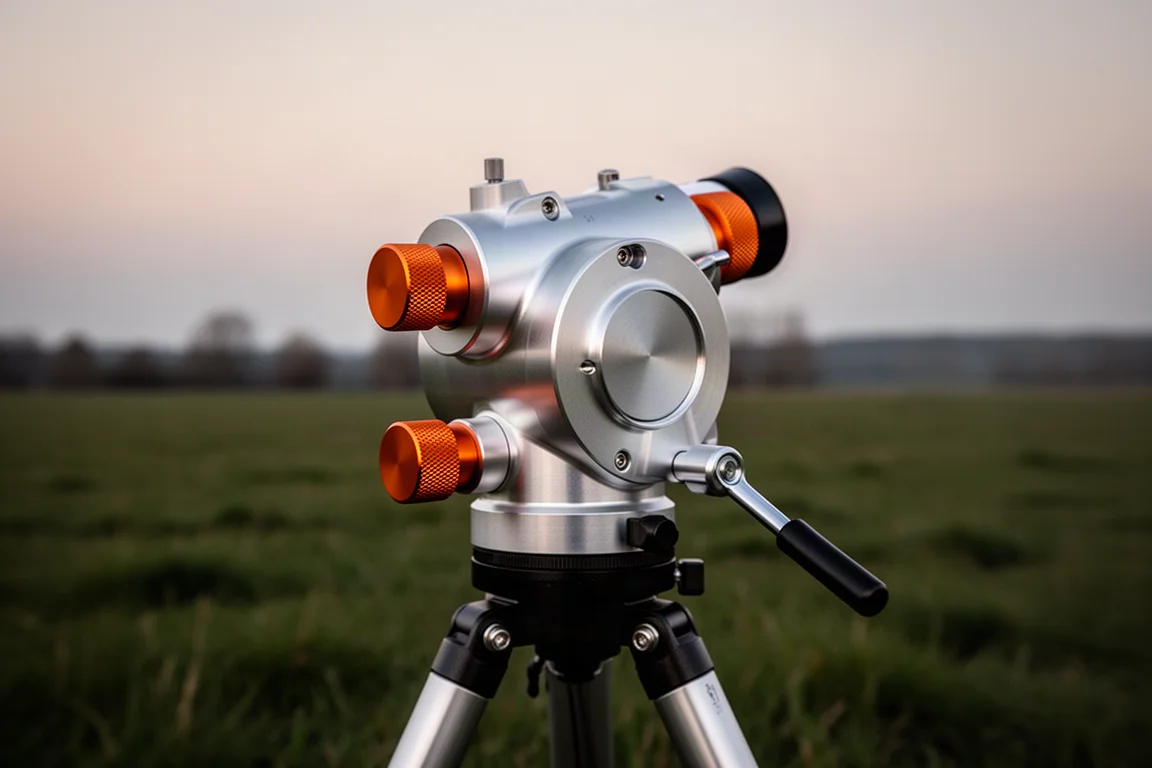
A small but welcome detail: the mount ships with a generous set of Allen wrenches, so the one you need is usually within reach. Just note that the transport bracket requires its own wrench, so keep a spare handy.
Configurations and Balancing
Flexibility is the headline feature here. The Panther Light supports six configurations, and you will likely pick one and stick with it.
Configuration one is side-mounted with normal balancing, using a dovetail saddle attached with M4 screws and a balancing bracket with M5 screws. Configuration two is nearly the same but adds comfort balancing: the counterweight arm lets you roll the counterweights along the arm to fine-tune balance, which is especially handy when swapping between lightweight and heavy eyepieces. The real payoff is that the telescope can be installed pushed far forward, limiting how much the eyepiece height changes. With the eyepiece close to the axle, viewing objects high in the sky becomes much easier.
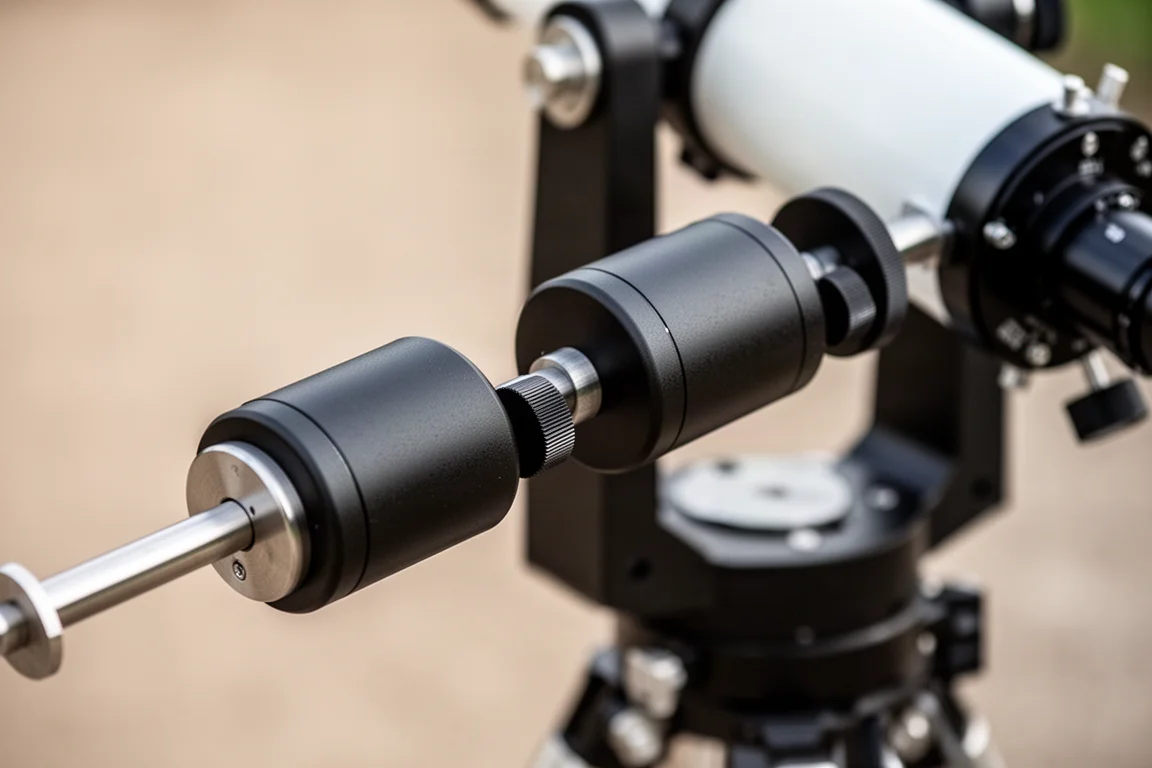
Configuration three is for top-mounted telescopes, supporting setups up to 25 kg (about 50 lbs) when balanced with the appropriate counterweights. One caveat: if the counterweight sits at its lowest position, it can hit the tripod, in which case a pier extension is required. Configuration four attaches two telescopes side by side, each up to 20 kg (about 40 lbs), as long as the difference between the two scopes is less than 15 kg. Configurations five and six extend this to two or three telescopes, with normal or comfort balancing respectively. In the three-scope setup, a top-mounted telescope can carry up to 20 kg while the side-mounted telescopes handle a combined 15 kg.
Whatever configuration you choose, balancing is required for smooth operation and to prevent unnecessary strain on the mount. Release the altitude lock, hold the telescope, and adjust the scope or counterweights until the telescope stays exactly where you put it when you let go.
Connecting to Sky Safari
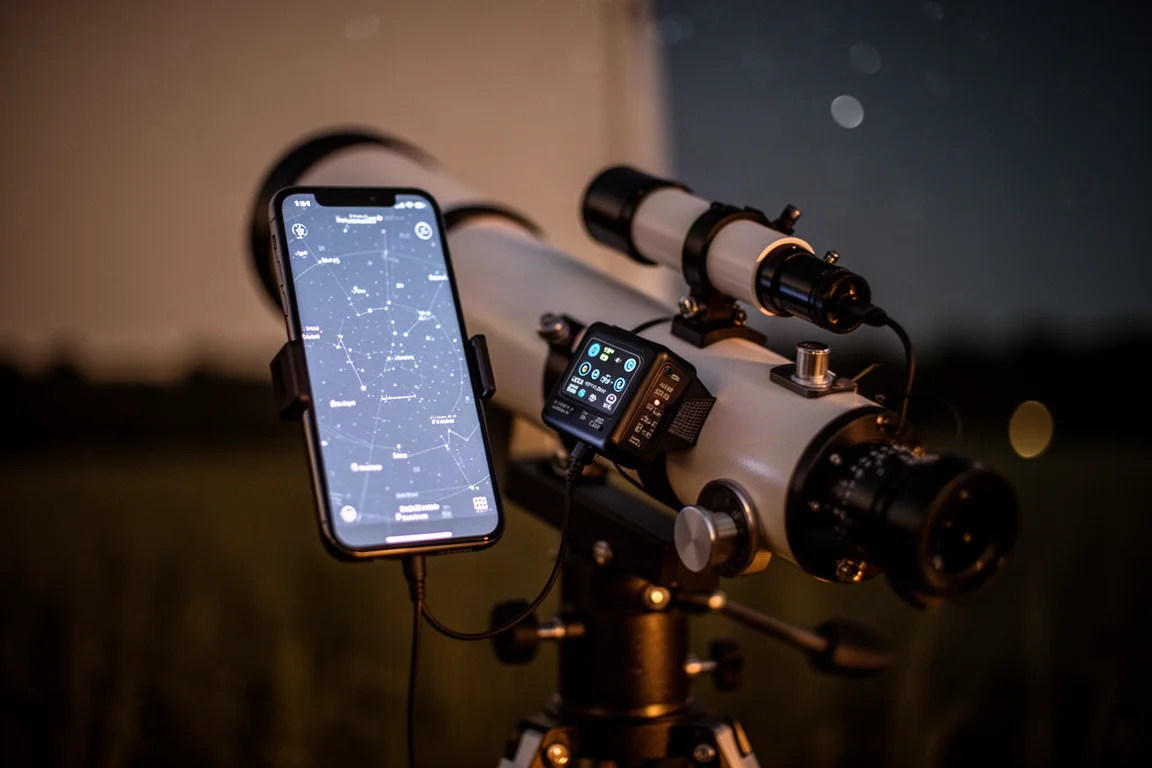
The Nexus 2 connects to the mount’s encoder port via cable and snaps onto its magnetic holder. Power it on with the switch, and a blinking status light confirms it is running. On your phone, connect to the Nexus 2 Wi-Fi network, then open Sky Safari and set it up: add a device, choose Other, choose Alt-Az Push-To, then Basic Encoder System. The port needs to be 460, the readout rate set to 10 per second, and the encoder steps per revolution must be set manually: +7988 for RA and +79888 for declination. Save, select the preset, hit connect, and the app knows exactly where the telescope is pointed.
Field Impressions
Testing took place under Bortle 2 skies at a dark sky event, where the mount drew plenty of attention. Using Sky Safari to find targets went fairly well: with the high-resolution encoders and a clear on-screen guide, the target landed within the eyepiece field of view every time. The guide arrow does disappear when you get close to the target, so it is worth using your lowest magnification while searching; hunting at high magnification could be more of a challenge.
The two-scope configuration also revealed some practical lessons. Two telescopes on the same mount pointing the same way will not necessarily aim at the same spot; in this case they were misaligned by about a degree, which can be corrected by adjusting the screws on the telescope’s dovetail. Attaching the counterweight bar in the vertical position is also smart, since heavy eyepieces can shift the center of gravity and make the scopes want to fall forward on low targets or backward on high ones. A vertical counterweight bar lowers the center of gravity and solves this.
Who This Mount Is For
The Panther Light solves a very specific problem for experienced astronomers with heavy telescopes that go unused. It is not a tracking mount for astrophotography; instead, it is a stable, precisely encoded platform that makes big visual scopes quick to set up and pleasant to use. Even a short-exposure wide-field camera setup on a ball head is a plausible pairing for those who accept that the mount does not track.
Buying Advice
If you own a heavy telescope that mostly sits in storage because of setup time or awkward eyepiece placement, the Panther Light is built for exactly that situation. Decide on your preferred configuration before buying accessories, and remember the pier extension caveat if your counterweights would sit too low. Budget for the Nexus 2 if you want the full push-to experience with Sky Safari, since it is the piece that turns hand movement into precise target guidance.
Conclusion
The Track the Stars Panther Light is a thoughtfully machined, high-capacity push-to mount that makes heavy telescopes practical again. With six configurations, comfort balancing that keeps eyepiece height changes minimal, and encoder accuracy of 16 arcseconds feeding Sky Safari, it earns its premium positioning. For observers with big scopes and a desire to use them more often, it is a compelling option.
Product link
View more details for Track the Stars Panther Light
This product is mentioned in the review. Check the specifications, options, and compatibility before buying.
View more details for Track the Stars Panther LightFurther reading
Related Reviews
Telescope Mounts
Celestron Advanced VX Review: A Practical First Step Into Astrophotography Mounts
A 30-pound payload, familiar NexStar-style hand control, and free computer control software make the Advanced VX an approachable upgrade for visual astronomers moving into imaging.
Telescope Mounts
iOptron SkyHunter Mount Review: A Portable Go-To Mount for Visual and Astrophotography
A lightweight portable go-to mount that works for visual observing out of the box and can handle astrophotography with the right setup.
Telescope Mounts
Track the Stars Panther Pro Review: A Premium Alt-Az Mount Built for Speed and Outreach
A Danish premium alt-az mount that skips polar alignment entirely, and what that means for solar, planetary, EAA, and public outreach use.