Hi-Fi Speakers
Tower vs Bookshelf Speakers: Five Options Worth Considering in 2026
A practical look at how speaker size shapes performance, plus five current models that span compact bookshelf designs and slim floorstanders.
Introduction
Home speakers have been shrinking for the better part of seventy years, and the shift happened gradually enough that most listeners never noticed it. What was once a room-dominating piece of furniture is now a compact box on a stand, while floorstanding towers have become the more specialised purchase.
That raises a fair question for anyone building a system today: does size still matter, and which format actually suits the way you listen? The two designs are closer in real-world performance than the price gap suggests, and a handful of current models make the trade-off easy to see.
This guide covers five speakers that span the range, from a compact bookshelf design to a slim floorstander, and explains the history that shaped them.
Why Speakers Kept Getting Smaller
In the 1950s, a serious home setup usually meant a cabinet the size of a piece of furniture, whether a console stereo or a large horn-loaded design. That changed in 1954 with the arrival of acoustic suspension, a sealed enclosure approach that produced genuine bass from a much smaller box. A refrigerator-sized cabinet was no longer a requirement for low frequencies.
In the 1970s the BBC developed the LS3/5A, a small monitor built for mobile broadcast work that excelled with voices and sold in large numbers. In the United States, Advent, EPI and KLH pushed affordable, space-saving designs for listeners in small apartments, and the Realistic Minimus arrived in 1978 as a genuinely compact option.
The 1980s brought mass production and lower prices. Wharfedale’s Diamond, introduced in 1982, measured roughly five litres and still made an impression with a small woofer, which put decent sound within reach of students and first-time buyers. Then home theatre changed the priorities again. Few people wanted five large towers in a living room, and compact satellite systems paired with a hidden bass module became the default recommendation in mainstream electronics stores.
Two further forces pushed in the same direction. Amplifiers grew more powerful, making smaller speakers easier to drive, and driver technology improved to the point where a five-inch woofer could move roughly the same volume of air as an older eight-inch unit. Subwoofers became mainstream alongside this, so deep bass no longer had to come from the main speakers.
Manufacturing also moved overseas through the late 1980s and 1990s, first to China, Taiwan and Malaysia, and by the early 2000s most large brands had relocated production. Smaller cabinets cost less to build and far less to ship, and retailers could display more models in the same floor space. The result is the market available now, where bookshelf speakers dominate the affordable end and floorstanders have to justify their footprint.
What to Look For in a Modern Speaker
Three specifications do most of the work when comparing a compact speaker with a floorstander.
The first is low-frequency extension. A cabinet that reaches lower on its own gives you more flexibility and fewer boxes in the room. The second is sensitivity, which describes how loud a speaker plays for a given amount of amplifier power. A more sensitive speaker is easier to drive and sounds more effortless at the same volume setting. The third is the cabinet itself. Modern designs use bracing and composite materials to control resonance, and that engineering is often what separates a budget box from a carefully built one.
Driver materials matter as well. Aluminium, Kevlar and woven fibre cones are now common because they are stiff and light, and stiffer cones flex less when the music becomes demanding. Crossover design and port tuning have also improved steadily through mass production, which is one reason today’s compact speakers perform well beyond their dimensions.
Placement is the factor no specification sheet captures. A bookshelf speaker on a stand occupies roughly the same floor area as a slim tower, but it can also sit on a media console or a shelf, and it can be moved closer to a wall or further into the room. A floorstander is a fixed object, which is either a convenience or a limitation depending on your space.
Q Acoustics 3050C: The Tower That Punches Above Its Price
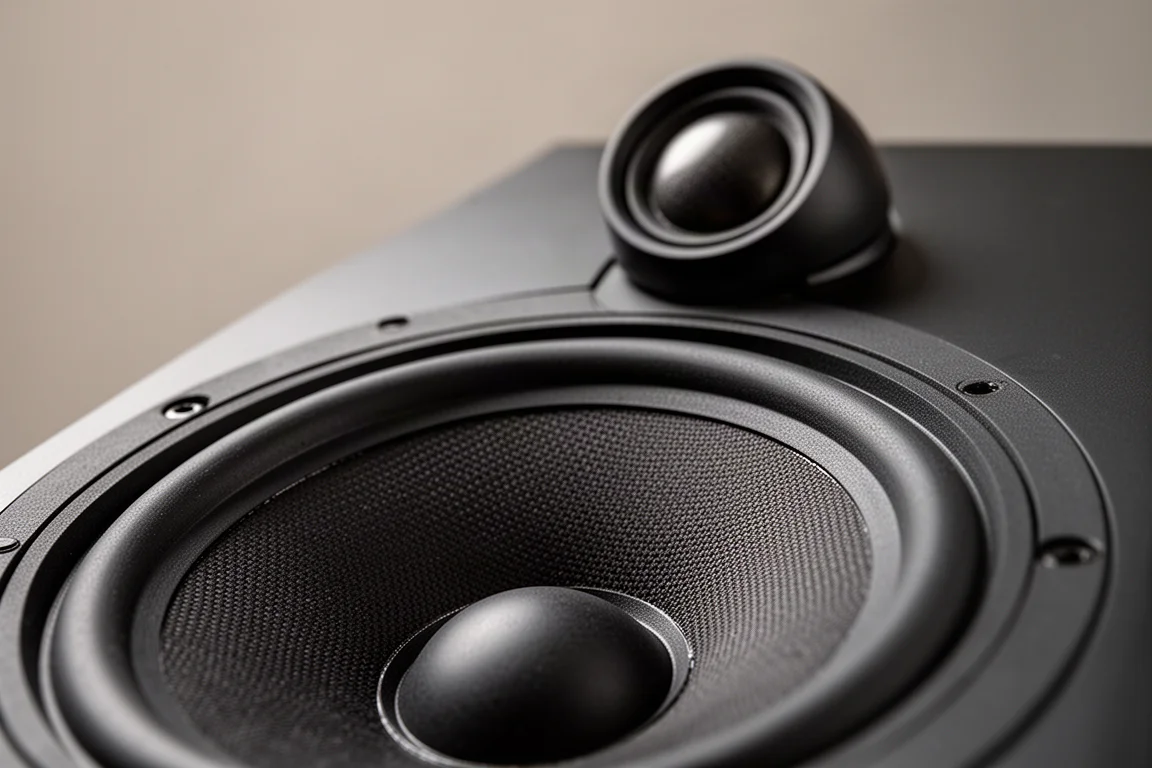
Q Acoustics has been building speakers since 2006, and the 3000C series is the current version of its entry line. The 3050C is the tower in that range: two 5.5-inch woofers and a one-inch tweeter, with rated extension down to 42 Hz. Sensitivity is quoted at 90 dB, and each cabinet weighs around 40 lb.
The design carries over ideas from the more expensive 5000 series, which in turn inherited technology from the Concept range. That includes point-to-point bracing and a gel-filled sandwich construction inside the cabinet, both aimed at reducing resonance. The result is a clean, curved European aesthetic rather than a sharp-edged box, which makes the speaker easier to live with in an ordinary room.
In use, the 3050C delivers noticeably more output and scale than a compact speaker. The extra sensitivity means it reaches high volumes without straining, and dynamic material can push it toward peaks in the high 90s dB range. It also has a slightly forgiving character: recordings with a grainy or harsh edge come across as smoother than they do on more clinical speakers, while the top end stays clear. It is not fussy about amplification either, and maintains its own voicing across a range of integrated amplifiers rather than simply mirroring whatever it is connected to.
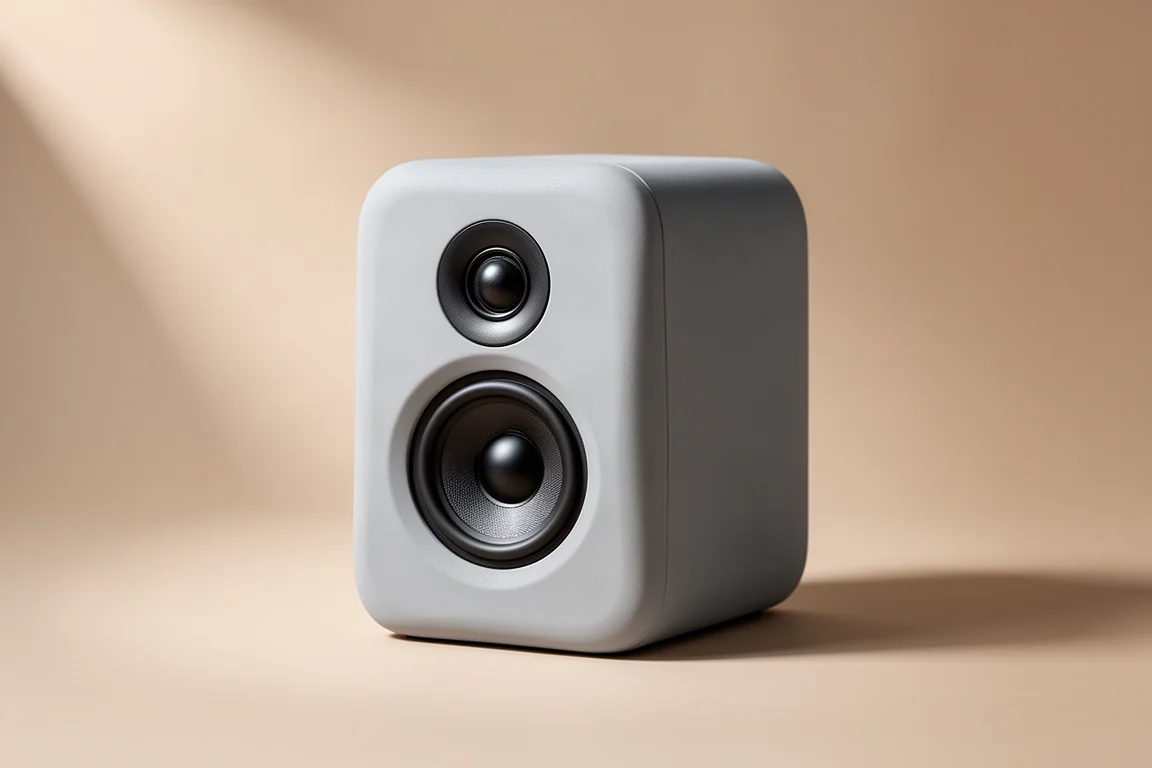
Q Acoustics 5020: Compact Bookshelf With Real Flexibility
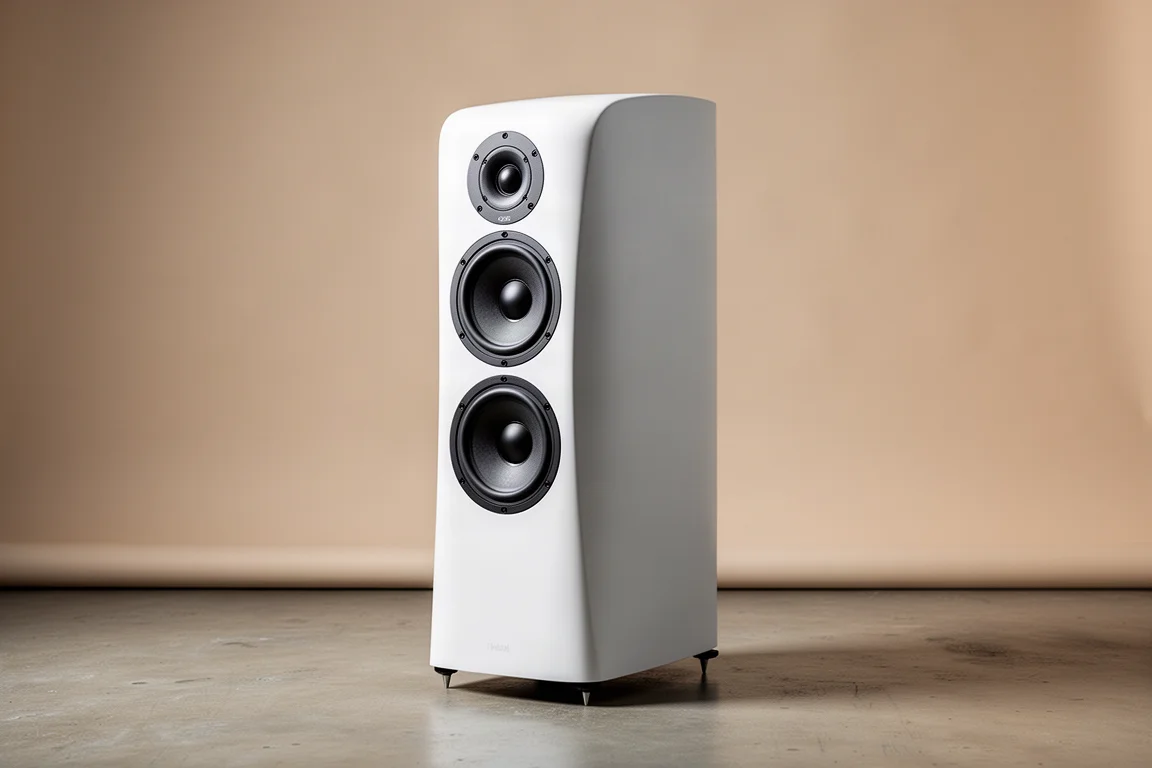
The 5020 is the bookshelf model in the 5000 series, with a five-inch woofer and a one-inch tweeter, and rated bass extension to 53 Hz. Sensitivity is 87.9 dB, and the pair is priced at $900.
That combination gives the 5020 a different proposition to a tower. Its extension stops short of the 3050C and its lower sensitivity means it needs more amplifier power for the same volume, but the trade-off is placement freedom. Paired with a good subwoofer, the 5020 lets you position the bass where it works best in the room, adjust levels to taste and move the speakers themselves without rebuilding the system.
The 5000 series is also where the brand’s house sound came together. The presentation is dynamic and organic rather than strictly neutral, with enough top-end clarity for detail and a relaxed quality that keeps imperfect recordings listenable. If your listening sits between 70 and 85 dB, the 5020 covers it comfortably.
Q Acoustics 5040: A Step Up in the 5000 Series
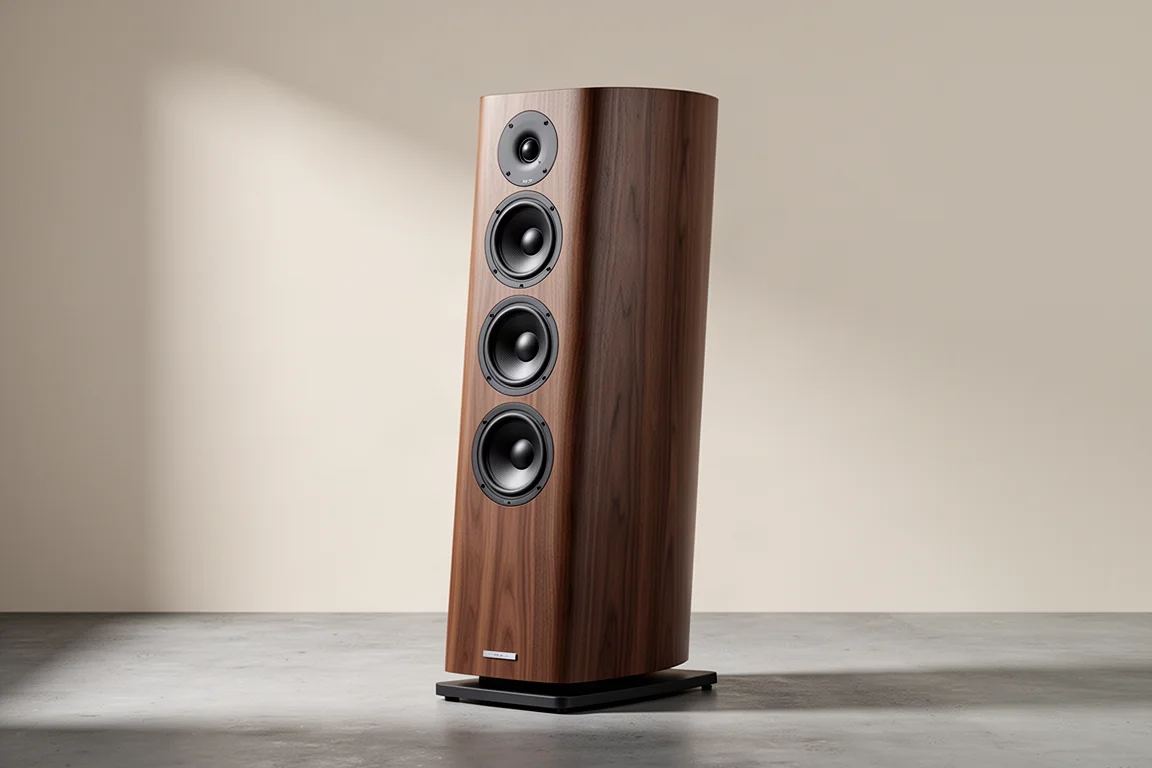
The 5040 is the smaller floorstander in the 5000 series and costs roughly $300 more per pair than the 3050C. In practice the two sound remarkably close, with the 5040 offering a marginal gain in clarity rather than a distinctly different character. The 3050C borrows much of its voicing from this speaker, which is a large part of why it represents such strong value.
For listeners who want the 5000 series’ sound in a floorstanding cabinet, the 5040 is the natural step up. For everyone else, the question is whether the small improvement in clarity justifies the extra outlay, particularly when the same budget could go toward a source component or a subwoofer instead.
The 5040 also sits between the 3050C and the larger 5050 in the range, so comparing all three in the same room is worthwhile before committing.
Q Acoustics 5050: The Larger Floorstander
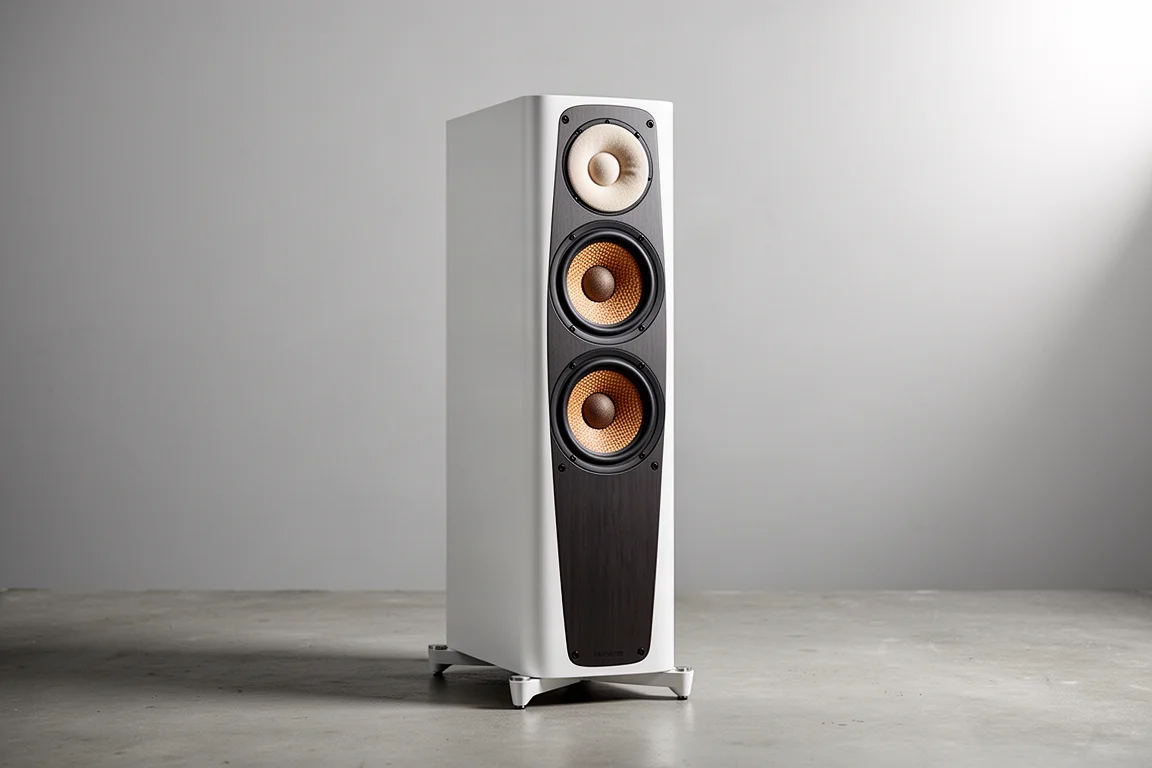
The 5050 is the biggest floorstander in the 5000 series, and it takes a slightly different tonal approach from the 5040. More cabinet does not automatically mean a better result: the 5040’s balance is arguably the more enjoyable of the two, and listeners who assume the largest model in a range is always the upgrade may be surprised.
That makes the 5050 a speaker worth hearing rather than buying on specification alone. If you have the room and prefer its particular presentation, it delivers the scale and presence a larger cabinet can provide. Weighed against the 3050C, however, the price difference is significant, and the 3050C already covers a great deal of the same ground.
Sonus Faber Lumina II Amator: Premium Compact Sound
The Lumina II Amator is a compact speaker priced at around $1,500 per pair, which makes it the most expensive option in this group. Its character sits close to the Q Acoustics 3050C, with the tower offering more size and output for less money.
That comparison is the interesting one for anyone shopping in this bracket. The Lumina II Amator keeps a small footprint and the expectations that come with a premium compact design, while the 3050C trades some of that exclusivity for scale and a lower price. Which one suits you depends on how much you value the compact format and how the rest of your budget is allocated.
Tower or Bookshelf: How to Decide
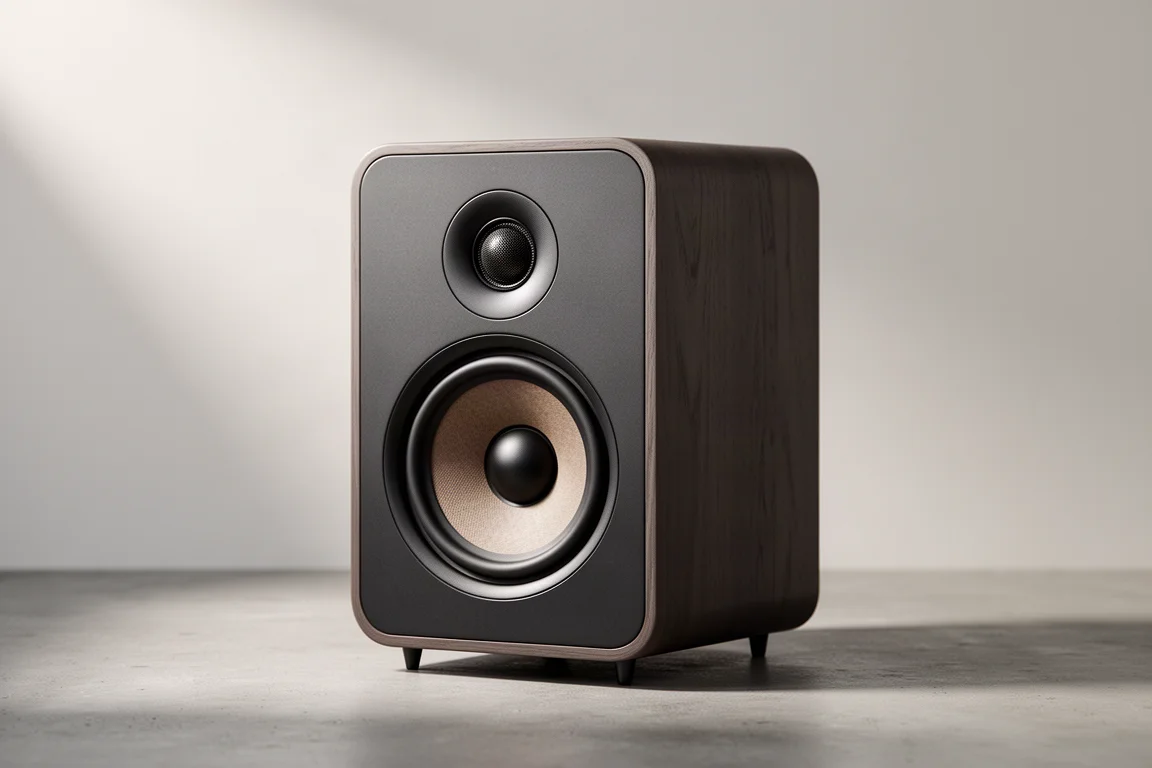
Start with the room. A floorstander is a fixed piece of furniture and takes up a defined patch of floor, while a bookshelf speaker on a stand occupies a similar footprint but can also sit on a console or shelf and can be repositioned when the room changes.
Then consider bass. Even today’s floorstanders rarely reach the lowest octaves on their own, so a subwoofer is usually part of the plan either way unless you are buying a full-range design, and affordable full-range speakers are increasingly rare. If you are going to run a subwoofer regardless, a compact speaker plus sub gives you the most control, because the bass module can be placed where it performs best and its level adjusted independently.
Efficiency and scale are the other half of the decision. A tower like the 3050C plays louder for the same amplifier power and provides a sense of weight a small cabinet cannot match. If your listening stays between 70 and 85 dB, a compact speaker handles it easily. If you want the system to remain composed at higher levels with dynamic music, the extra sensitivity and cabinet volume of a floorstander earns its place.
Finally, weigh the money honestly. A pair of 5020s at $900, a pair of 3050Cs at $1,200 and a pair of Lumina II Amators at $1,500 are all legitimate endpoints, and the difference between them buys a source component, a subwoofer or a turntable. The speaker that fits your room and your listening habits will outperform the one that simply costs more.
Conclusion
The speaker market moved in one direction for seventy years, and the result is that compact speakers now deliver performance that once required a much larger cabinet. That does not make towers obsolete. It makes them a deliberate choice rather than a default one.
Among the five speakers here, the Q Acoustics 3050C stands out for combining tower output and sensitivity with a price that undercuts the 5040 by around $300, while the 5020 remains the more flexible option if you plan to run a subwoofer. The 5040 and 5050 are worth hearing if you want the 5000 series’ character in a floorstanding cabinet, and the Sonus Faber Lumina II Amator is the premium compact alternative for listeners who prioritise footprint and presentation.
Whichever you choose, match it to your room and your listening levels first. Size is only a proxy for performance.
Further reading
Related Reviews
Hi-Fi Speakers
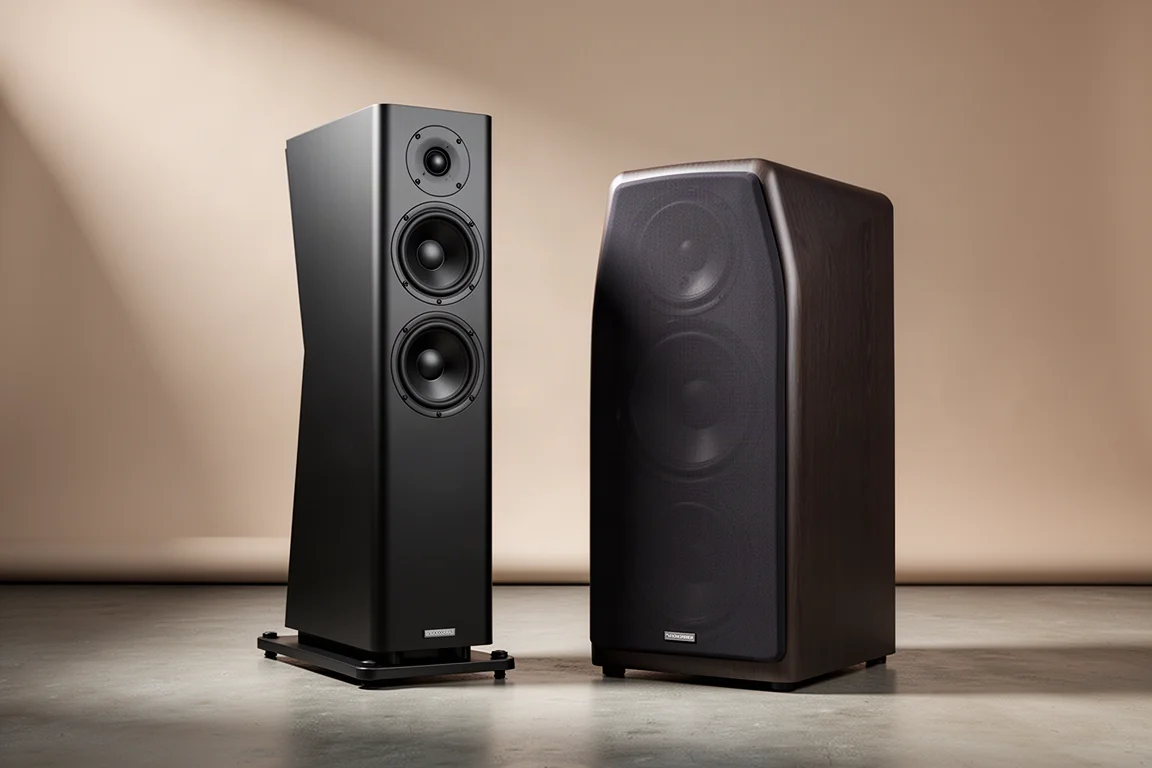
1723 THX Tower vs 1528 Bookshelf: Which Speaker Fits Your Room?
Two speakers at roughly the same price, built very differently. How the 1723 THX tower and the 1528 bookshelf compare on construction, bass, power needs, and sound.
Hi-Fi Speakers
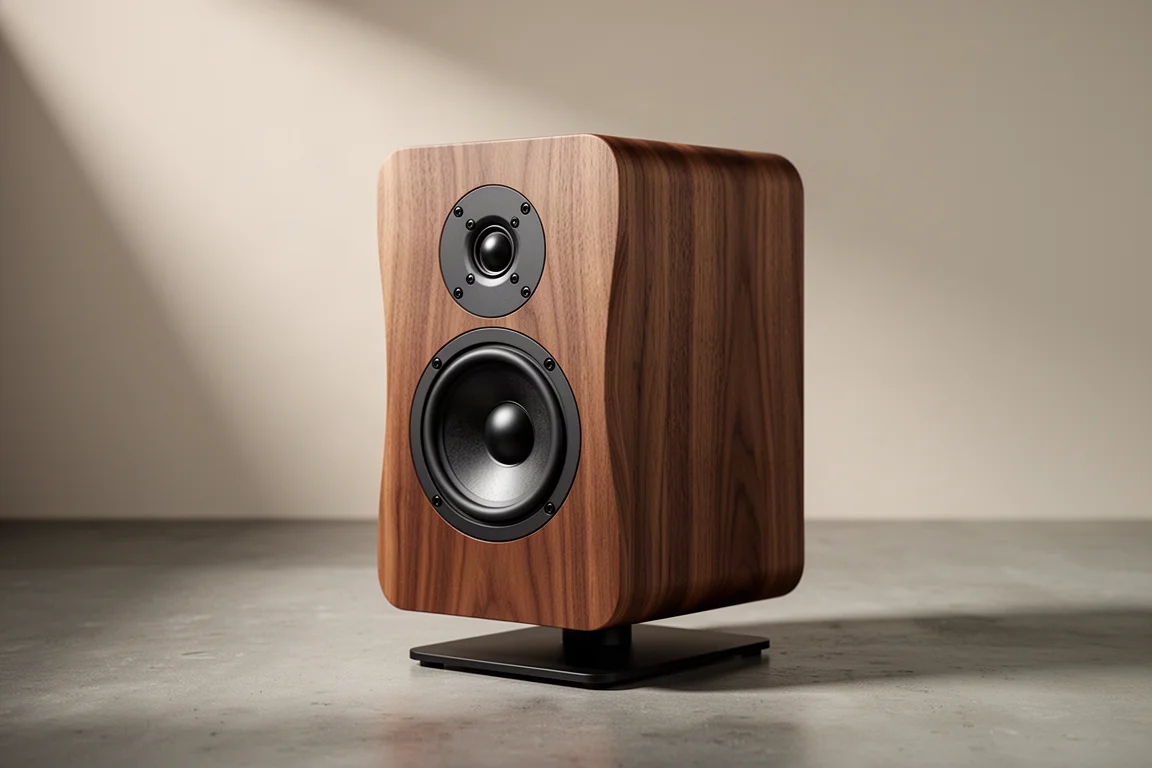
Acoustic Energy AE 300 Review: Deep Bass From a Compact Standmount
A two-way standmount with real wood veneer, surprising low-end weight, and a warm, easygoing character. Here is what to know before buying.
Hi-Fi Speakers
Acoustic Energy AE1 40th Anniversary Review: A Modern Take on a British Classic
A compact standmount that revives a 1980s favorite with all-new parts, a warm mid-centric balance, and a price of £1,499 per pair.