Astrophotography
Touptek AE676C Review: A Compact USB-C Cooled Camera for Beginners
The Touptek AE676C brings Peltier cooling, a Sony IMX676 sensor, and USB-C power into a tiny package that suits beginners and portable setups.
Introduction
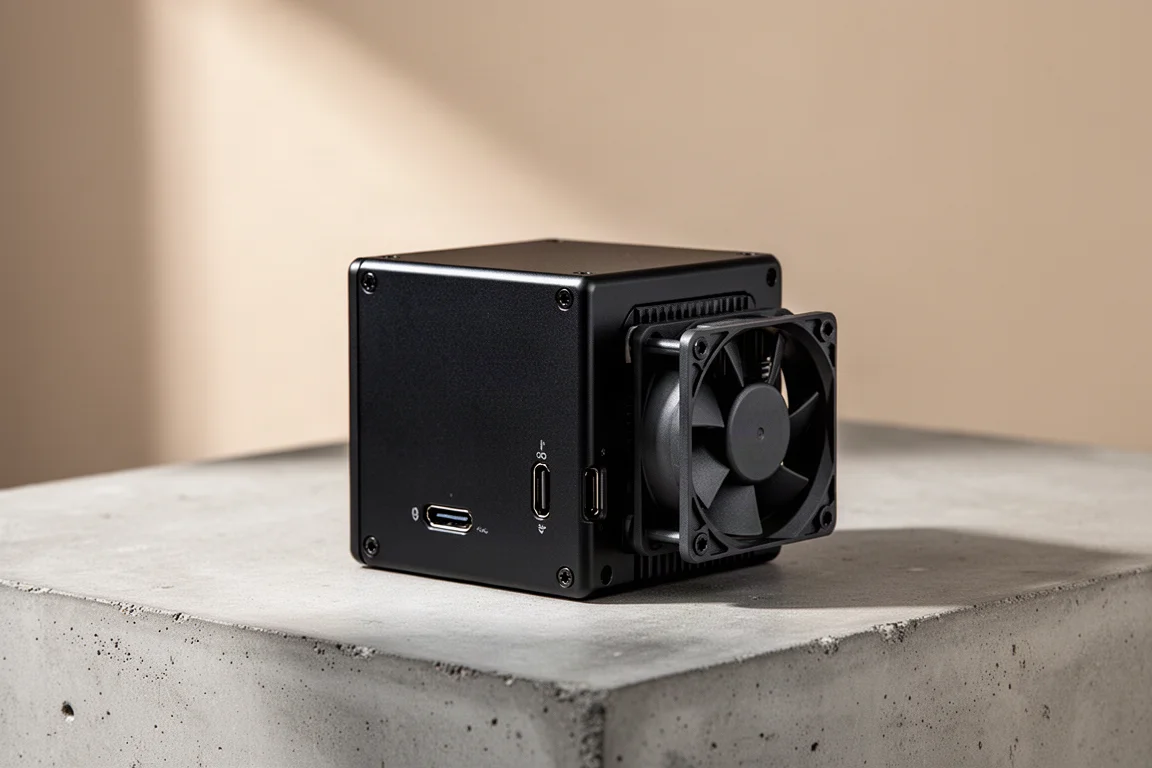
The Touptek AE676C is a compact cooled astrophotography camera that challenges the idea that cooling requires a bulky 12V power supply. It uses a Sony IMX676 sensor with 12.5 megapixels and a square 7.7mm by 7.7mm surface area. What makes it stand out is that it is powered entirely through a single USB-C port, with no separate 12V input. A Peltier cooler provides thermoelectric cooling, and a magnetic fan unit can be attached to the rear for deeper temperature drops.
This camera was first revealed during NE 2026. At first glance, the removable fan and USB-C-only power might seem like a gimmick. But the more you look at the specs and what the camera can do, the more it makes sense as a practical tool for beginners and portable setups.
Who This Camera Is For
The AE676C is aimed at beginners who want a cooled astrophotography camera without dealing with 12V batteries and large power supplies. Because it runs on 5V USB-C power, you can power it from a laptop, a Raspberry Pi, or even a standard smartphone power bank. That removes a significant hurdle for people new to the hobby.
It is also a good match for small refractors and camera lenses. The small 2-micron pixels pair well with fast, small telescopes like the SVBONY SV535 or SV545, the Hope 60D, and similar compact guide scopes. The camera body is tiny, which makes it easy to handle and store.
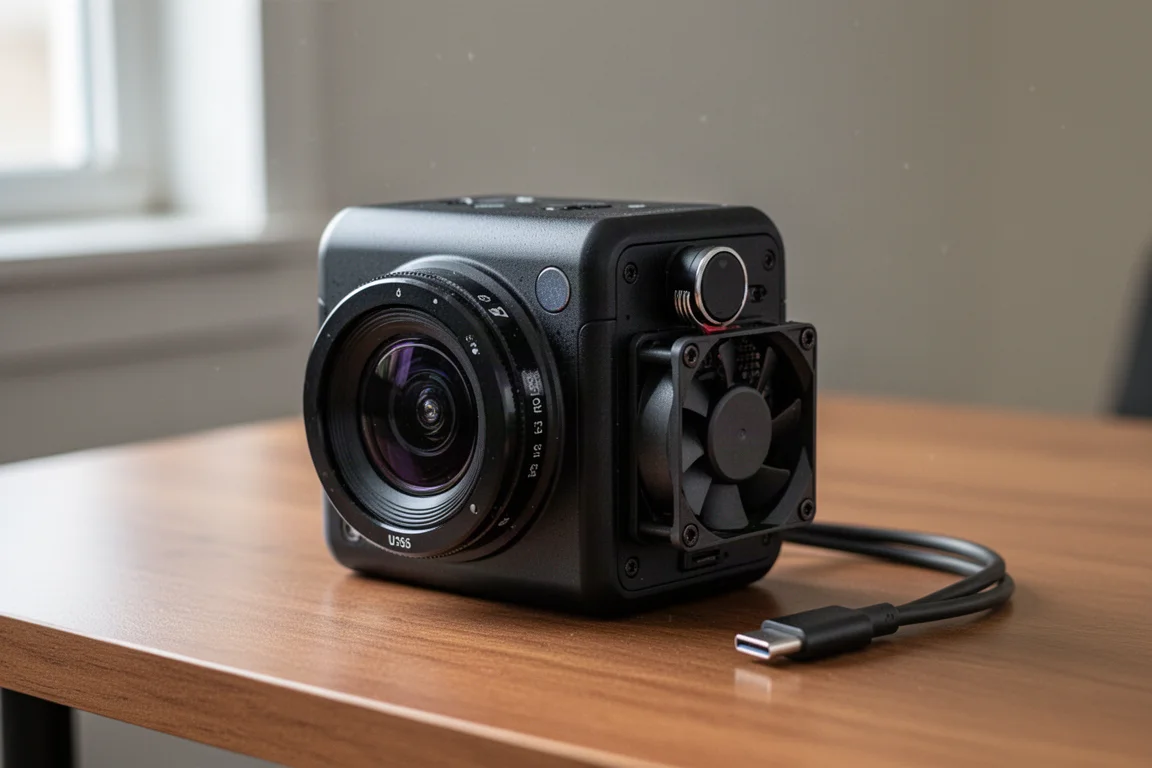
If you want a lightweight, portable setup that you can take to a dark site without a car full of gear, this camera is worth considering. It also works as an all-sky camera for Milky Way imaging from light-polluted cities, thanks to its near-infrared sensitivity.
Main Strengths
USB-C Power and Portability
The single USB-C port is the defining feature of this camera. There is no 12V barrel connector, no external power brick. Everything runs from the USB connection. This makes the camera much easier to power than traditional cooled cameras. A small power bank can keep it running all night.
The USB-C connection itself is solid. The included cable is a USB-A to angled USB-C, and it locks firmly into place. There is no wobble or loose connection, which addresses a common concern about USB-C ports on astro cameras.
Effective Peltier Cooling
Despite the small size, the cooling performance is genuinely impressive. The camera body is all metal, including the rear panel, and there are grid fins inside that act as a heat sink. This allows the Peltier cooler to work even without the fan.
In testing, the camera reached 20°C with an ambient temperature of 28°C, which is 8°C below ambient. That is better than the 5°C below ambient that the manufacturer advertises. Outside at night, with wind helping to dissipate heat, it achieved 15°C below ambient without the fan.
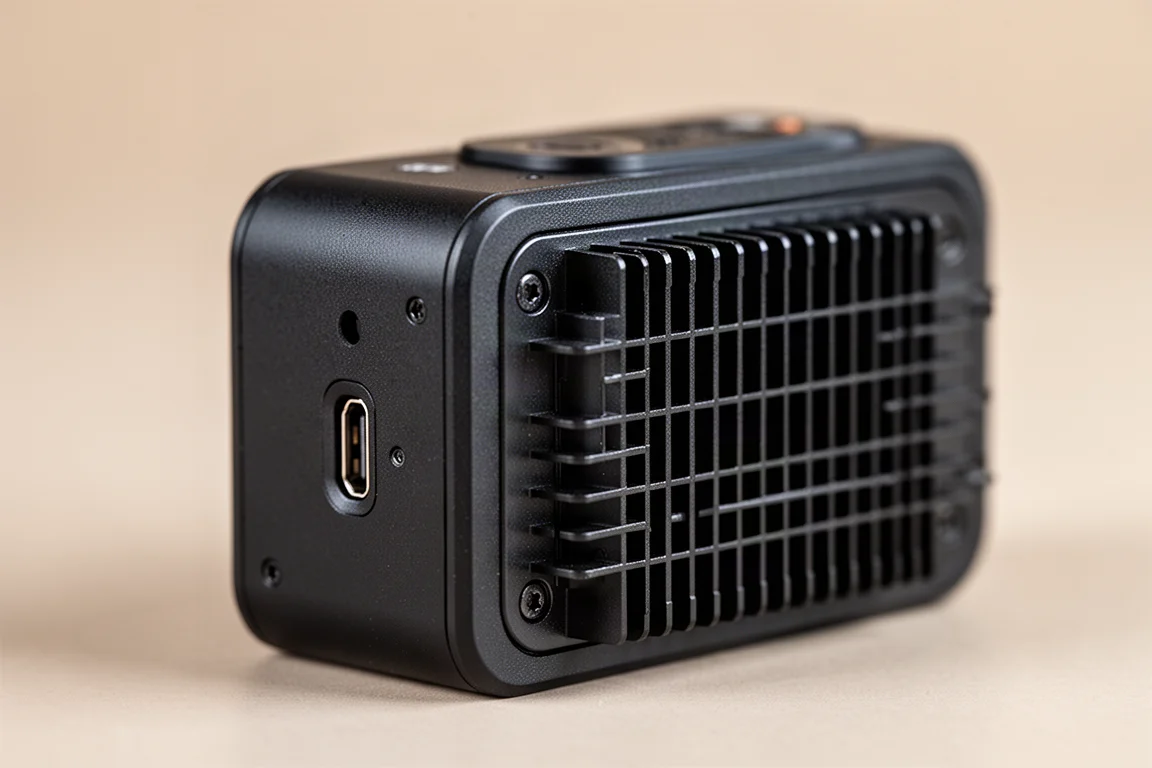
With the fan attached, the camera reached 6.3°C at 28°C ambient, which is about 21.7°C below ambient. That is slightly better than the advertised 20°C. A practical target for most users would be 15°C below ambient, leaving headroom for temperature fluctuations during the night.
Near-Infrared Sensitivity
The IMX676 sensor is highly sensitive to near-infrared light. In the near-infrared range, the Bayer matrix becomes transparent, effectively turning the camera into a monochrome sensor. This makes it excellent for Milky Way imaging from light-polluted areas using a near-infrared filter.
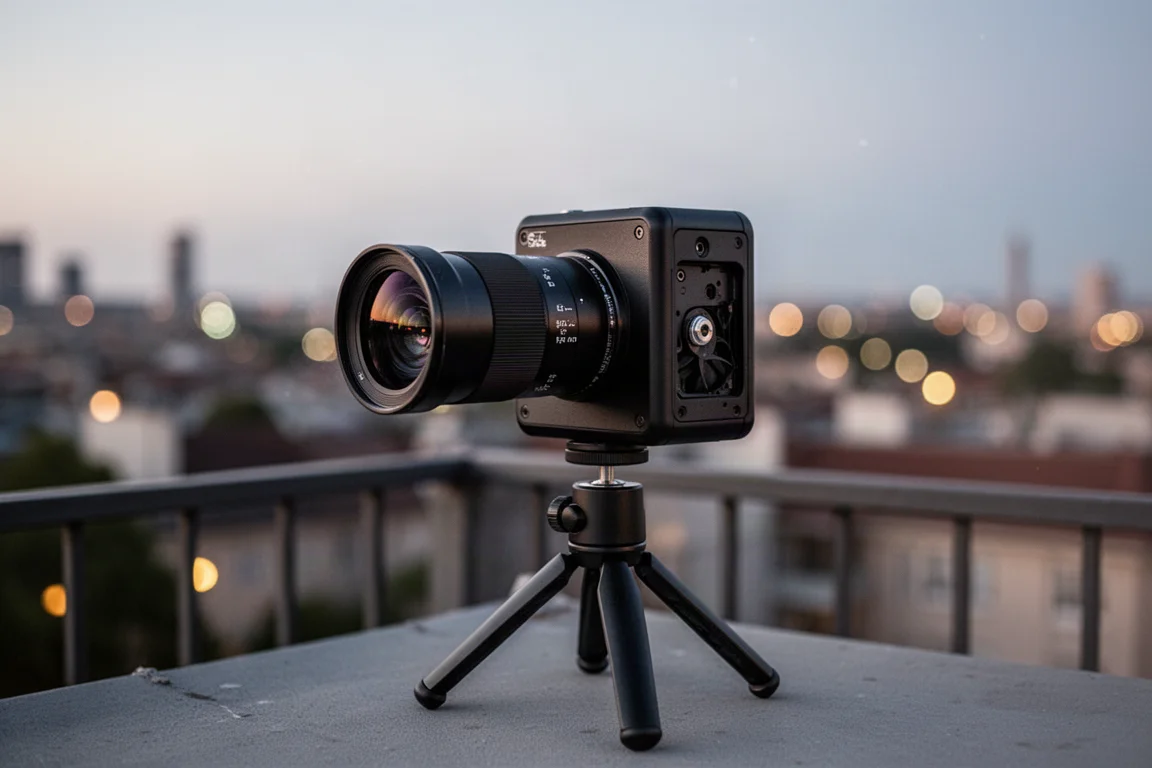
The camera comes with an all-sky lens and a near-infrared filter in the box. You can slide the filter onto the lens, tighten the screw, and mount the whole thing on a tripod using the 1/4-inch mount point at the back. This turns the camera into a dedicated Milky Way imaging platform out of the box.
Multi-Purpose Design
The AE676C is presented as a multi-purpose camera. It can do deep-sky astrophotography with the fan on and cooling enabled, planetary photography using video capture, and all-sky Milky Way imaging. The included accessories support all of these use cases.
The box includes a C-mount to M42 adapter ring, a 1.25-inch barrel extender, and the all-sky lens with near-infrared filter. The M42 adapter gives you the standard 17.5mm back focus, making it easy to achieve the 55mm back focus required by most refractors.
Things to Consider Before Buying
Quantum Efficiency
The quantum efficiency of the IMX676 sensor peaks at 83%, compared to 91% for the IMX585 sensor. This means that 17% of incoming photons are not registered, which is a slight handicap for faint deep-sky targets. The smaller 2-micron pixels also collect fewer photons per pixel per unit of time.
That said, the camera performs well in red and green, and its relative sensitivity in blue is better than the IMX585. The near-infrared performance is also a strong point. For most beginners, the difference in quantum efficiency will not be a dealbreaker.
Square Sensor
The sensor is square, which some people like and others do not. A square sensor means you need to care less about framing, but it also means the field of view is different from a typical rectangular sensor. This is a matter of personal preference.
Hardware Binning Not Yet Available
The manufacturer advertises hardware 2x2 binning for higher frame rates, but this feature was not available in the camera’s software during testing. Only digital binning was found, which does not improve frame rates. This may be an upcoming feature, but it is not something you can rely on right now.
No Dust Cap for M42 Adapter
When the M42 female adapter is installed, there is no dust cap included. Only the C-mount dust cap comes with the camera. It would be nice to have both, given that the camera supports both mounting options out of the box.
Fan Attachment Can Be Finicky
The magnetic fan attachment works well once it is spinning, but it can be a little finicky to seat correctly. A slight twist can stop the fan, and you may need to adjust it to get it spinning again. This is a minor annoyance rather than a serious flaw.
Frame Rates and Planetary Use
For planetary, solar, and lunar photography, frame rates matter. At full resolution, the camera delivers about 31 frames per second in 8-bit mode and about 15 to 16 frames per second in 12-bit mode over USB 3. These figures match the manufacturer’s specifications.
If you set a region of interest, frame rates increase significantly. At a small ROI in 16-bit RAW mode, the camera reached 105 frames per second. Switching to 8-bit at the same resolution produced 210 frames per second, which is sufficient for planetary targets like Jupiter.
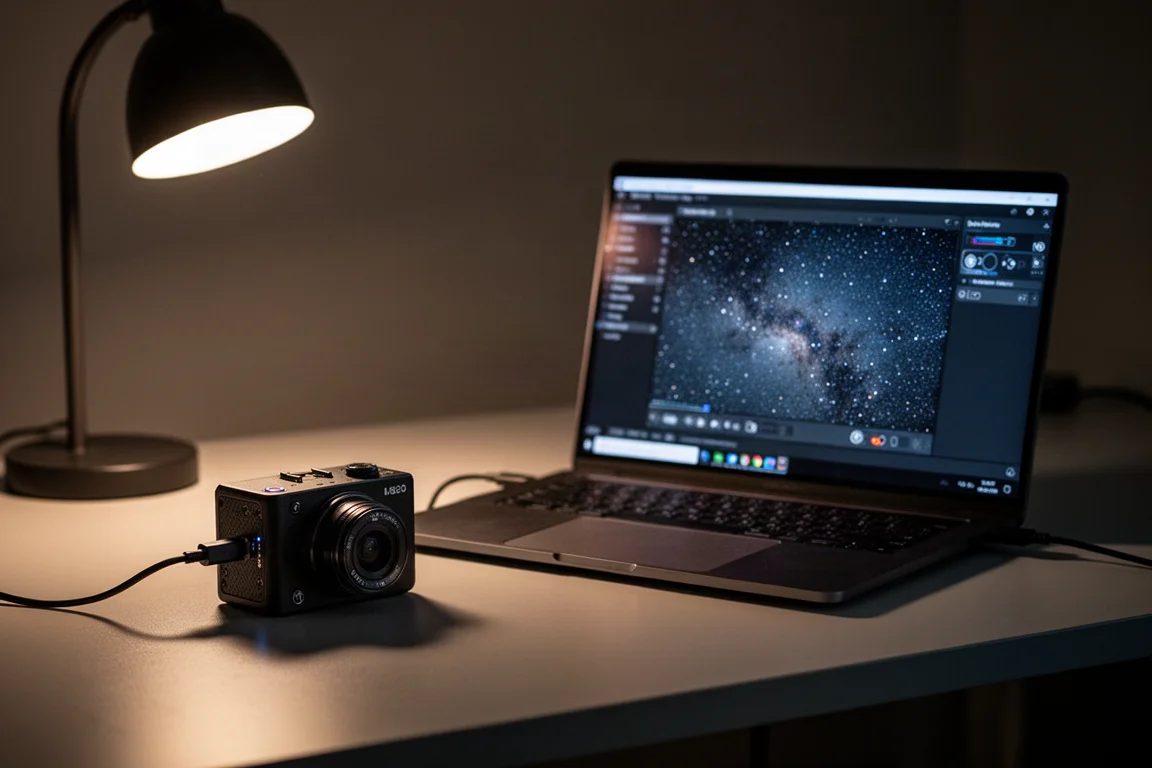
The hardware binning feature advertised by the manufacturer was not found in the software during testing. Only digital binning was available, which does not change frame rates. This may be added in a future software update.
Buying Advice
The Touptek AE676C is priced at $369, which is notably lower than most cooled astrophotography cameras. The cheapest alternatives on the market are typically above $500. For example, the Touptek 585 camera sells for $580.
For that price, you get a cooled camera that can do deep-sky imaging, planetary photography, and all-sky Milky Way work out of the box. The USB-C power requirement makes it easy to build a portable 5V setup with a compatible mount and a Raspberry Pi, all powered from a single power bank.
The cooling performance is better than advertised, and the near-infrared sensitivity opens up imaging possibilities that are not available with many other cameras in this price range. The main trade-offs are the lower quantum efficiency compared to the IMX585 and the square sensor format.
If you are a beginner looking for an affordable entry into cooled astrophotography, or if you want a lightweight camera for travel and portable setups, the AE676C is a strong choice. It is not the best sensor on the market, but it offers a lot of capability for the price.
Conclusion
The Touptek AE676C turns out to be much more than a gimmick. The USB-C-only power design, effective Peltier cooling, and near-infrared sensitivity make it a versatile and practical camera for beginners and portable setups. The included accessories cover multiple imaging use cases, from deep-sky to planetary to all-sky Milky Way photography.
The main drawbacks are the lower quantum efficiency, the square sensor, and the missing hardware binning feature. But at $369, the value proposition is hard to beat. If you are looking for an affordable cooled camera that is easy to power and carry, this is worth a close look.
Product link
View more details for Touptek AE676C
This product is mentioned in the review. Check the specifications, options, and compatibility before buying.
View more details for Touptek AE676CFurther reading
Related Reviews
Astrophotography
ASKAR FRA400C Review: A Versatile 400mm Refractor for Astrophotography and More
The ASKAR FRA400C is a compact 72mm refractor that balances reach, versatility, and portability for astrophotographers and visual observers.
Astrophotography
Askar SQA106 Review: A Premium 106mm Astrograph With Exceptional Optics
The Askar SQA106 is a premium 106mm quintuplet astrograph with impressive sharpness across full-frame sensors, though its price and weight demand careful consideration.
Astrophotography
Astro Imaging Gear 2026: Eight New Products Worth Watching
A look at the most interesting new astrophotography and astronomy products announced this year, from fast telescopes to smart cameras and wireless accessories.