Hi-Fi Speakers
Totem Bison Twin Towers Review: A Slim Tower With Genuinely Deep Bass
A slim floorstanding speaker with a warm, full-bodied mid-range, a wide and deep sound stage, and bass extension that reaches far lower than its cabinet suggests.
Introduction
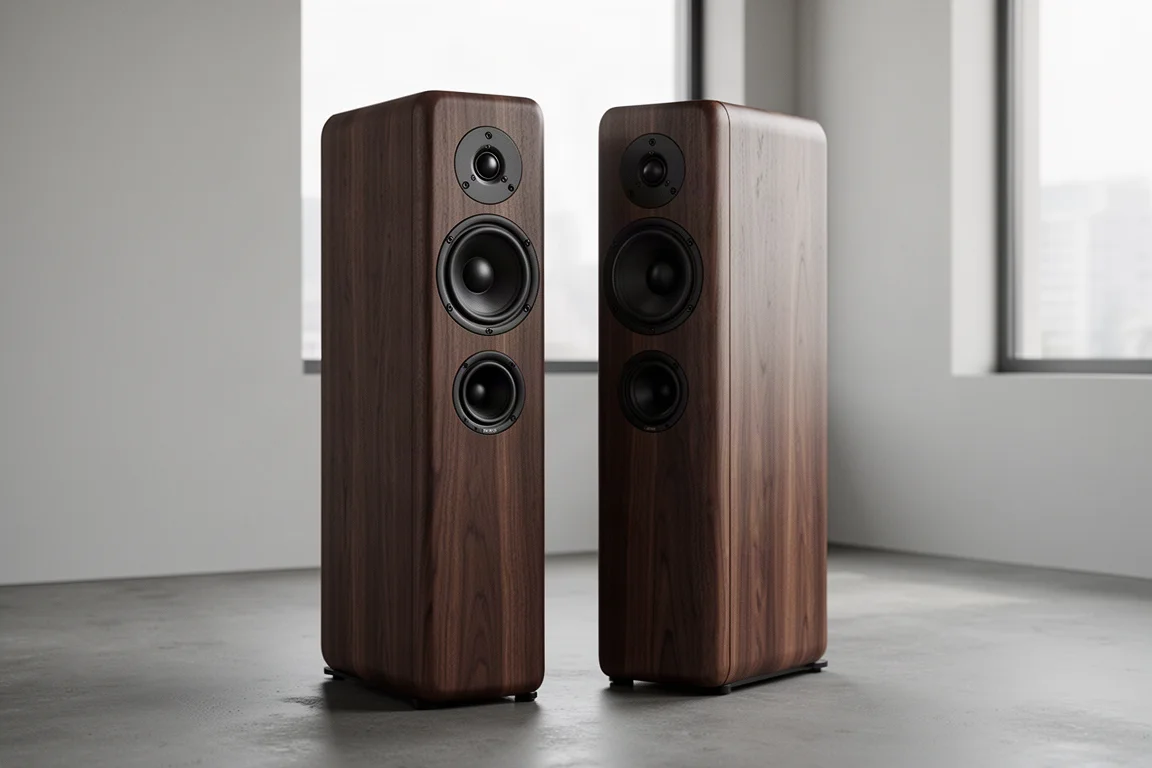
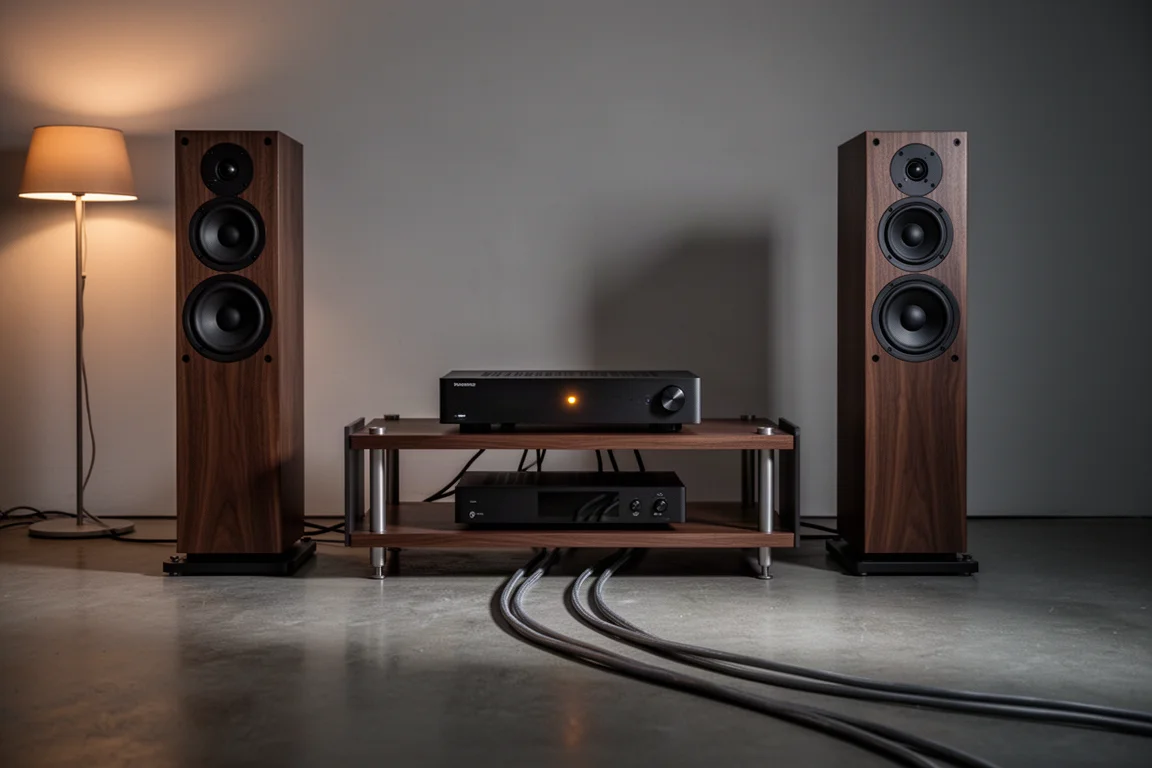
Slim floorstanding speakers usually come with an unspoken agreement: you accept a small footprint and a tidy living-room look, and in exchange you accept limited low-end weight and a modest sense of scale. The Totem Bison Twin Towers are designed to break that agreement. Two 5.25 inch paper woofers and two ports sit in a narrow cabinet, and Totem states an F3 of 31 Hz. That is subwoofer territory on paper, and it is the kind of claim that deserves to be tested rather than taken on faith.
The more interesting question is how a cabinet this slim gets that low at all. The answer involves the driver set, an enclosure tuned without conventional damping material, and one deliberate resonance that would look like a design error on a measurement chart but was designed in on purpose.
Here is what the Bison Twin Towers do well, where they ask for care, and which listeners are likely to get the most from them.
Who These Speakers Are For
These are for listeners who want a musical, emotionally engaging presentation rather than a clinical one. The tuning is warm, the mid-range is full, and the sound stage is wide and deep, so the speakers reward long listening sessions more than short analytical ones.
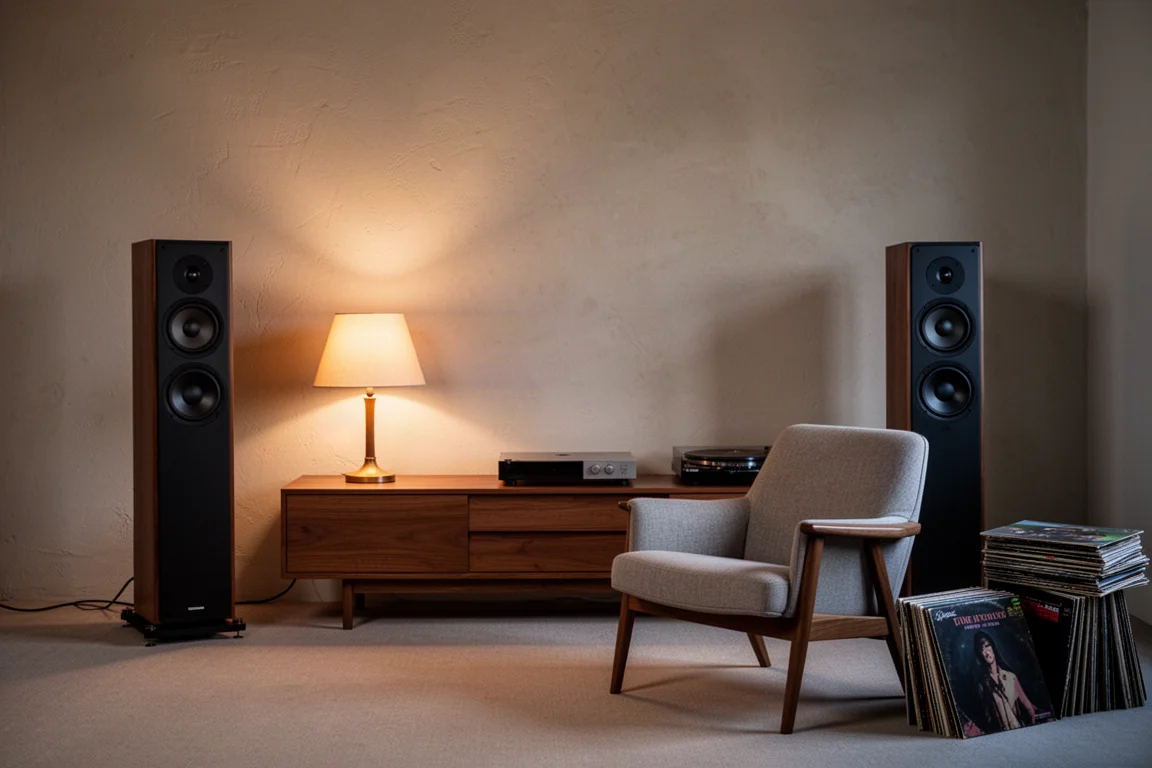
They also suit smaller spaces. The cabinet is narrow enough to disappear into a modest living room, and the bass output is substantial enough that a separate subwoofer is not an obvious requirement for music. With a sensitivity of 90 dB at 1 metre, they are easy to drive to high volumes, and they stayed clean and composed even when pushed. The load is 4 ohms and dips below 4 ohms at certain frequencies, so capable amplification is a sensible pairing rather than an optional nicety.
Sound Stage, Imaging, and Separation
The first thing that stands out is scale. The stage is wide and deep, and the imaging is precise: instruments and voices sit in clearly defined positions rather than smearing into each other. Separation holds up on dense material too, including heavy metal mixes where crowding is the usual outcome.
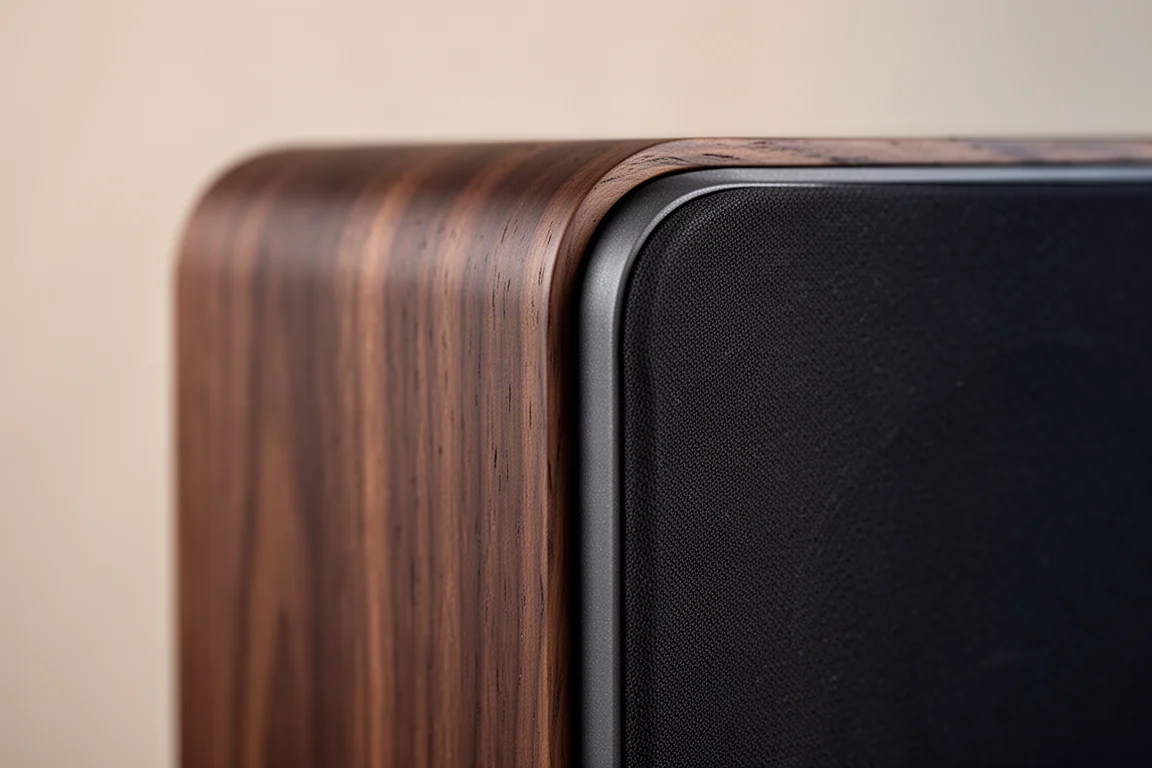
Part of that comes from the form factor. Slim speakers tend to throw a larger stage and give stronger spatial cues than bigger cabinets, and the Bison Twin Towers make the most of it. The cabinet has rounded corners on both the sides and the top to reduce diffraction from the baffle edges, and the drivers are flush mounted so no protruding rims interfere with the response. Compared with large high-output speakers that generate more air and pressure, these take the lead on stage width, depth and image focus.
A Warm, Full-Bodied Tone
Tonally, these speakers lean warm. The mid-range is full and inviting, with the kind of body that makes vocal recordings easy to sit with for hours. That warmth does not come at the cost of clarity. High frequencies and the upper mid-range stay clean and articulate, and the sound never turns bright, even at high volume.
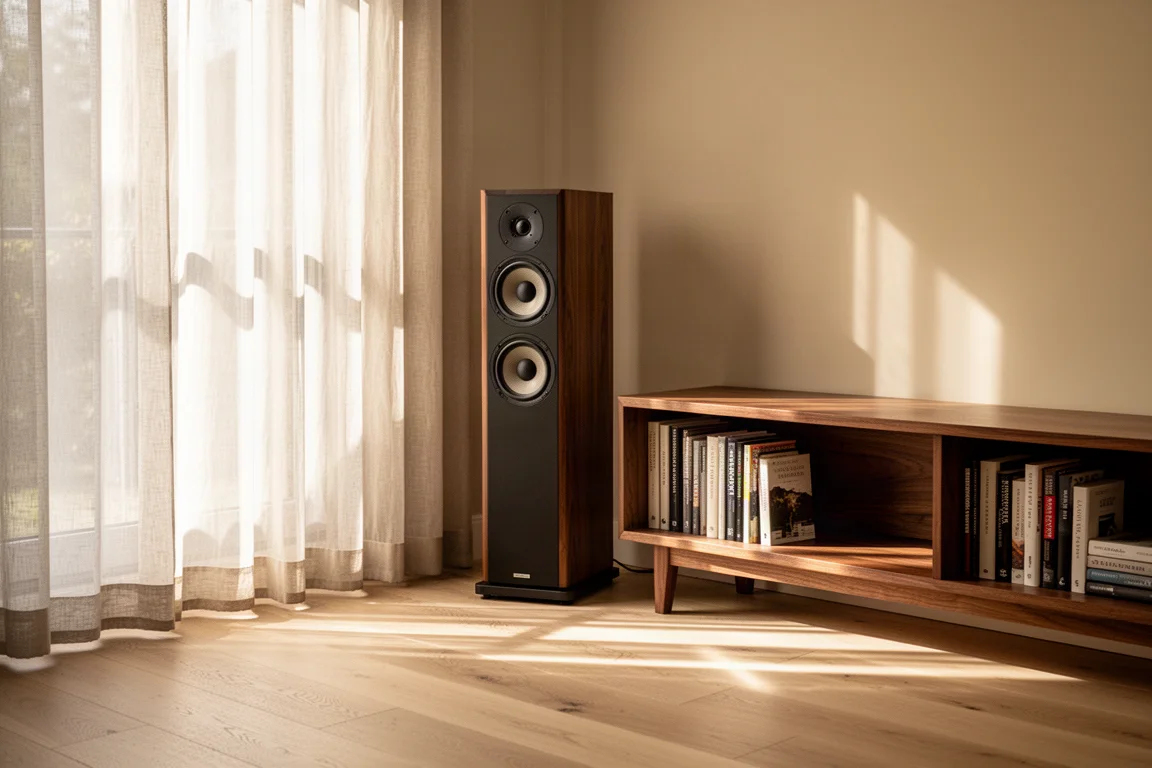
The tweeter is a large part of the explanation. It is a 1.3 inch soft dome, slightly bigger than the 1 inch domes common in this market, and it sits behind an intentionally small waveguide. That combination lets it cross over to the woofers at 2.5 kHz, which is low enough to sit well inside the mid-range. Handing the upper part of the mid-range to a dedicated tweeter means lower distortion and better definition than a woofer can manage in that region, and the result is a presentation that is warm and clear at the same time.
That balance is what makes the tuning work. A purely warm speaker can sound soft and slow, and a purely clinical one can sound thin, and the Bison Twin Towers avoid both extremes while keeping the character on the richer side.
Bass Extension That Belies the Cabinet Size
Bass is where the specification looks most ambitious, and the measurements back it up. A snapshot of the speaker’s own response, taken without room reflections, shows extension down to the stated 31 Hz F3 point. In a real room the response reaches further still, with usable output down into the 20s, though room reflections create dips that are the room’s contribution rather than the speaker’s.
The subjective result is just as striking. Placed against a much larger speaker with two 8 inch woofers in a transmission line cabinet, the smaller towers gave up some pressure and air, but the amount of bass was roughly comparable. Hearing a slim tower dig this low with authority is genuinely unusual, and it is the single most surprising thing about the design.
The 175 Hz Resonance: An Intentional Design Choice
One feature of the measured response will divide listeners. The Bison Twin Towers show a sharp rise around 175 Hz, matched by a small impedance dip at the same frequency and visible as a resonance in a waterfall plot. It is audible: an isolated test tone at that frequency plays noticeably louder, and the cabinet vibrates more there than at neighbouring frequencies.
That looks like a flaw, and Totem treats it as a feature. The chief designer explains that the peak is deliberate and vital to the tuning, because it integrates the mid-range with the bass. Remove it with a sharp-Q EQ cut and the sound develops a hole between the mid-range and the low end, turning hollow and disconnected. In a real room the peak also looks far less out of place than it does in an anechoic measurement, because it sits alongside the room’s own behaviour rather than above it.
For listeners who insist on a flat frequency response with no resonances of any kind, this will still be a problem, and no amount of explanation changes that. For listeners who prioritise musical engagement, the trade-off looks very different.
Cabinet Construction and the Borosilicate Coating
Inside, the cabinet breaks with convention. There is no traditional absorption material. Instead, the inner walls are coated with a white borosilicate paint, a material known for its thermal resistance. Totem gives three reasons for the choice: it frees up internal volume that damping material would otherwise occupy, it avoids the parameter drift that conventional damping can suffer as temperatures change over time, and it keeps the speaker from sounding dead.
The cabinet itself was developed over roughly three years, with much of that time spent on final tuning. Small changes in cabinet dimensions shift the tone and the resonances, so the enclosure was treated as a tuned instrument rather than a box. The measured behaviour of the cabinet, outside that single 175 Hz region, is clean and orderly, which is a notable result for an enclosure with no damping material inside.
Amplifier Pairing and System Matching
With 90 dB sensitivity, these speakers are easy to get loud, and they performed well across a wide range of amplifiers. They also scale: better amplification gives back more bass texture, more mid-range body and a more resolved top end.
Two mid-priced pairings stood out. An integrated amplifier around the $1,500 mark kept the bass weight, mid-range and stage intact, though it pushed the low end slightly forward, which is worth knowing if the speakers have to sit close to a wall in a small room. An amplifier around the $1,800 mark gave the most neutral presentation, delivering the speakers’ strengths without exaggerating any part of the range. At the other end of the scale, reference monoblock amplification costing many times more added micro-detail and nuance, and proved especially strong at low listening volumes.
Things to Consider Before Buying
Placement matters more than usual. About 3.5 ft from the back wall to the front baffle gave the best balance of imaging and stage depth, and 2.5 ft still kept the bass controlled. At roughly 1.5 ft the low end started to sound boomy and less disciplined, so a room that allows some breathing space is a real advantage.
The 175 Hz resonance is measurable and audible in isolation, and anyone who wants a textbook-flat response should weigh that carefully. The 4 ohm load dips below 4 ohms at certain frequencies, so budget for amplification that can handle it comfortably. And while the Bison Twin Towers share the slim Totem form factor, they do not use the Torrent driver technology found in some other Totem models, so they are not as transient-fast or as transparent as those designs. Their strength lies elsewhere: warmth, body and scale.
Buying Advice
These speakers make the most sense for listeners who value musicality, a large sound stage and deep bass from a small footprint. If the room can give them a few feet of space behind them and the amplifier is comfortable with a 4 ohm load, they are easy to recommend and easy to live with. If the priority is analytical neutrality with no measurable character, other designs will suit better.
On value, the picture is straightforward. The cabinet, driver and tuning work here is aimed at making a small speaker behave like a large one, and the result holds up against far bigger and more expensive alternatives on bass extension and stage size, even where those alternatives win on sheer dynamic pressure. Pair them with amplification that suits the room, and the system as a whole is likely to feel more expensive than it is.
Conclusion
The Totem Bison Twin Towers are a slim floorstanding speaker that refuses to sound slim. Bass reaches genuinely deep, the sound stage is wide and deep, imaging is precise, and the warm, full-bodied mid-range is easy to enjoy for long sessions. The 175 Hz resonance is real, audible and deliberate, and it will be the deciding factor for some listeners either way. For anyone who wants an engaging, spacious, deep-reaching speaker in a small footprint, these deserve a serious place on the shortlist.
Product link
View more details for Totem Bison Twin Towers
This product is mentioned in the review. Check the specifications, options, and compatibility before buying.
View more details for Totem Bison Twin TowersFurther reading
Related Reviews
Hi-Fi Speakers
1723 THX Tower vs 1528 Bookshelf: Which Speaker Fits Your Room?
Two speakers at roughly the same price, built very differently. How the 1723 THX tower and the 1528 bookshelf compare on construction, bass, power needs, and sound.
Hi-Fi Speakers
Acoustic Energy AE 300 Review: Deep Bass From a Compact Standmount
A two-way standmount with real wood veneer, surprising low-end weight, and a warm, easygoing character. Here is what to know before buying.
Hi-Fi Speakers
Acoustic Energy AE1 40th Anniversary Review: A Modern Take on a British Classic
A compact standmount that revives a 1980s favorite with all-new parts, a warm mid-centric balance, and a price of £1,499 per pair.