Hi-Fi Amplifiers
Topping PA5 Review: Powerful Class D Sound and the Aiyima A300 Alternative
A practical look at the Topping PA5 compact amplifier, from its balanced TRS inputs and 125 W power rating to the lower-cost Aiyima A300 alternative.
Introduction
The Topping PA5 is a compact two-channel Class D amplifier priced at $350. On sound alone it is easy to like: smooth, full, detailed, and far more powerful than its small chassis suggests. The hesitation comes from somewhere else entirely. The PA5 uses TRS inputs that are uncommon in most home setups, its external power connection feels less substantial than the rest of the unit, and at $350 it sits above several amplifiers that offer more features for less money. This article covers what the PA5 does well, what to weigh before buying, and how the Aiyima A300 compares as a lower-cost alternative.
What the Topping PA5 Is
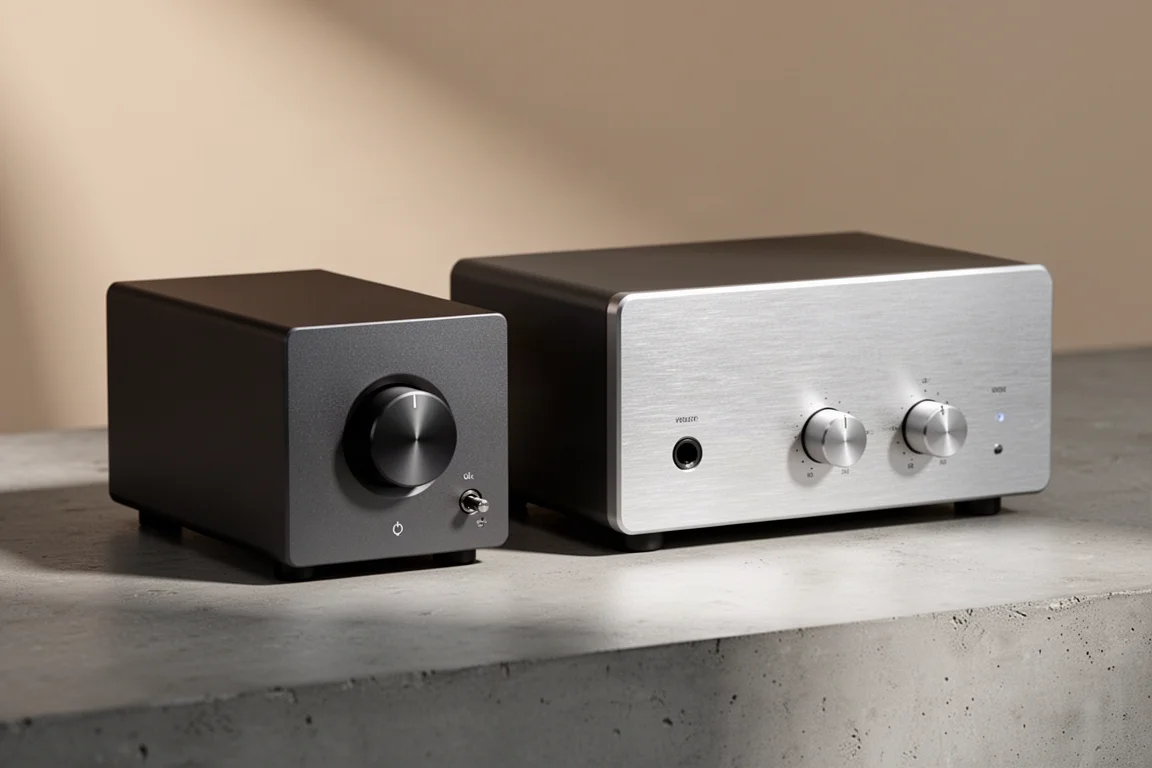
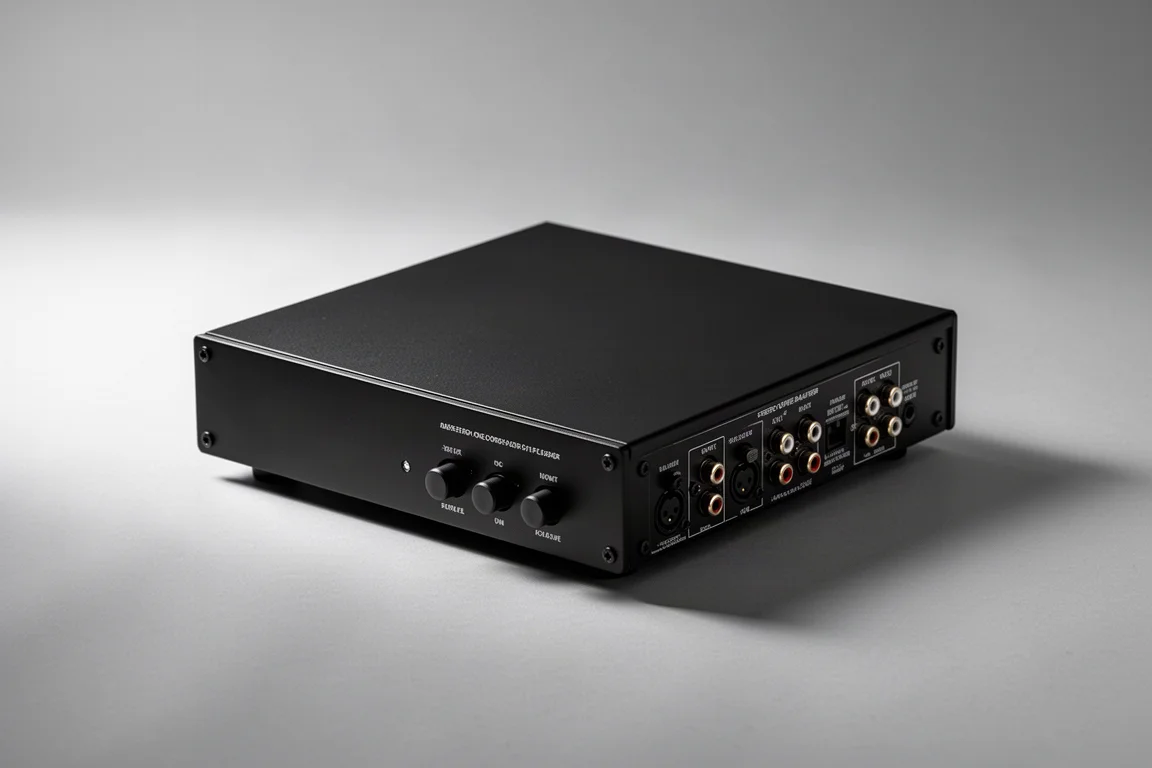
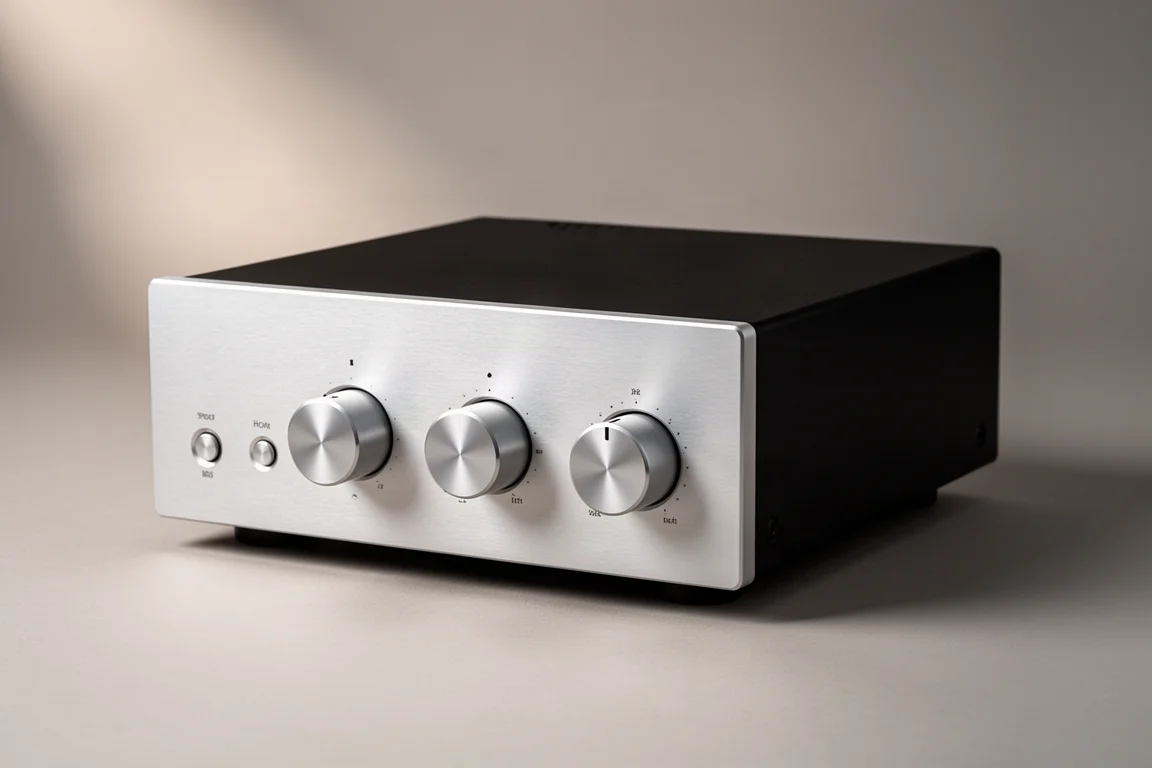
The PA5 is a two-channel Class D amplifier with a deliberately simple front panel: a volume knob, a toggle power switch, and an input selector for inputs one and two. Some color variants add a small accent stripe. Vent holes along the side keep the chassis breathing, and the rear panel is just as uncluttered, with two sets of inputs, two sets of speaker outputs, and a single power connection.
Inside, the design is fully balanced and built around a TI 3255 Class D amplifier chip. The published ratings are 125 watts per channel into 4 ohms at 1 percent total harmonic distortion or lower, and 65 watts per channel into 8 ohms at the same distortion threshold. Higher-distortion figures exist as well, including 85 watts into 8 ohms at 10 percent, but those are not the numbers worth planning around. The 4-ohm and 8-ohm ratings at 1 percent distortion or lower are the honest picture of what this amplifier delivers.
Connections and Power Supply Trade-offs
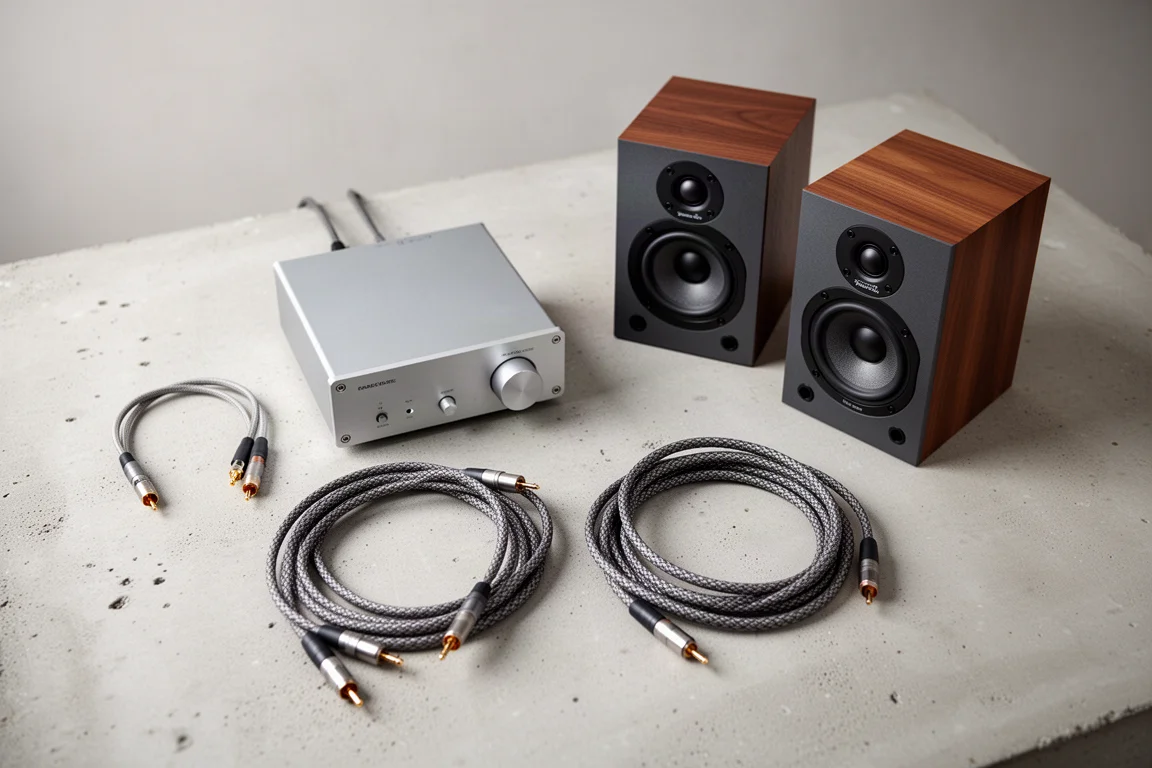
Both inputs on the PA5 are TRS, which is a deliberate design choice. The amplifier was built to pair with Topping’s own separates, and a fully balanced signal path from a matching source is exactly what that connection is for. The difficulty is that TRS is not widely used outside that ecosystem. Cables are harder to find, and converting an unbalanced RCA output into a TRS input works against the benefit of the balanced design rather than preserving it. A cable that keeps two signal conductors plus a ground, such as an XLR to TRS run, is a better fit than an RCA to TRS adapter. Even so, a single RCA input alongside a TRS input would have made the PA5 far easier to live with, without compromising the balanced path for buyers who want it.
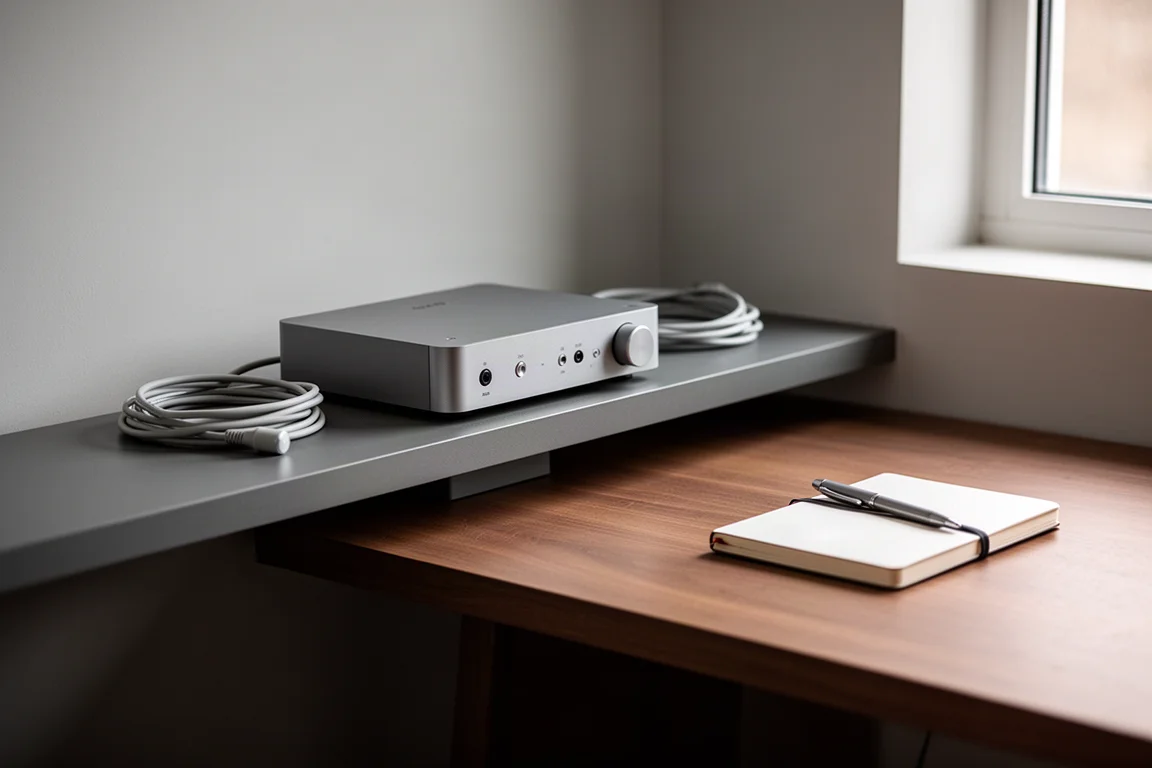
The power side raises a smaller but similar concern. The PA5 uses an external 38-volt supply brick, which is unremarkable on its own and easy enough to tuck behind a rack. What stands out is the connector: a threaded collar locks it in place, but the surrounding assembly feels noticeably less solid than the amplifier itself, down to a pair of Phillips head screws that do not inspire much confidence. Given the voltage involved, it is worth handling that connection carefully and keeping it secure.
Sound Quality and Real-World Power
Where the PA5 has no trouble at all is sound. It is smooth, full, and detailed, and it throws a sound stage far larger than a compact desktop amplifier has any right to produce. Power delivery feels effortless rather than strained, which matters more in practice than a wattage figure on a spec sheet.
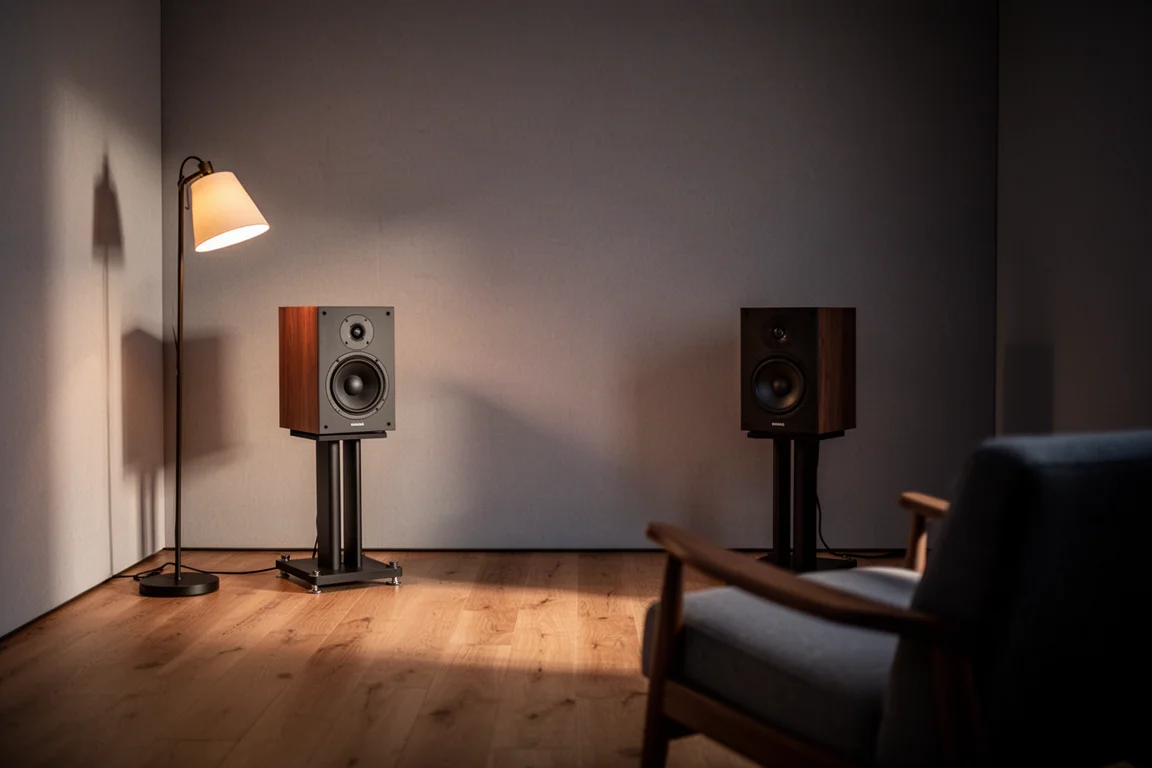
That impression held up with Polk R100 speakers, which are not especially difficult to drive but are not the most sensitive option either. The PA5 woke them up noticeably, adding weight and drive that smaller amplifiers struggle to match. Tonally it leans rich and thick in the lower registers, closer in character to something like a Cambridge Audio AXA25 or AXA35 than to the lean, clinical sound some listeners expect from Class D, but with considerably more power on tap.
Aiyima A300: A Feature-Rich Alternative
The Aiyima A300 is the amplifier that makes the PA5 a harder sell. It costs $175, roughly half the price, and it uses the same TI Class D amplifier chip. Sharing a chip does not guarantee identical sound, and the two have not been compared side by side here, but the feature differences are clear.
The A300 includes balanced inputs and an RCA input, so it connects easily to gear people already own. It also adds bass and treble tone controls, which could be genuinely useful given how rich the PA5’s low end sounds, along with Bluetooth for wireless playback. For a buyer who wants one compact amplifier to handle a range of sources, that combination is difficult to argue with.
Price and Value Considerations
At $350, the PA5 asks for a premium over several well-regarded compact amplifiers. It does not include a remote control. That is a reasonable omission in a purist design, and in a Topping stack the matching DAC handles remote duties anyway, but other amplifiers in this price range include one even without an internal DAC.
The value question is not really about whether the PA5 sounds good, because it does. It is about whether the sound justifies the price and the connection compromises. For listeners already committed to a Topping stack, the answer can still be yes. For everyone else, the PA5 would be a much easier recommendation closer to $250.
Matching an Amplifier to Your Speakers and Room
Power ratings deserve a second look before buying either amplifier. The PA5’s usable figures are 125 watts per channel into 4 ohms and 65 watts per channel into 8 ohms at 1 percent distortion or lower, which is enough for most bookshelf speakers in a small to medium room. Speakers with lower sensitivity benefit most from that headroom, and that is exactly where the PA5 made the biggest difference.
Impedance matters too. A 4-ohm speaker draws more current and lands closer to the amplifier’s higher output rating, while an 8-ohm load sits at the lower figure. If your speakers already lean warm, the A300’s tone controls give you a way to trim the low end, something the PA5 does not offer.
Buying Advice
Choose the Topping PA5 if you already own a Topping DAC or headphone amplifier and want a stack that matches visually and electrically, and if you are comfortable sourcing TRS cables. The balanced signal path is a real benefit in that setup, and the sound quality rewards the effort.
Choose the Aiyima A300 if convenience and price matter more. Balanced and RCA inputs, tone controls, and Bluetooth cover more real-world situations at half the cost, even though the same amplifier chip does not guarantee identical sound. Buyers who want the simplest path to good sound from a variety of sources will find the A300 easier to live with.
Conclusion
The Topping PA5 is a genuinely excellent sounding compact amplifier, with the smooth, full character and effortless power to bring out the best in a pair of bookshelf speakers. Its weaknesses are practical rather than sonic: TRS-only inputs, a power connector that feels less solid than it should, no remote, and a $350 price that sits above more flexible options.
If you are building around Topping separates, the PA5 earns its place. If you want balanced and RCA inputs, tone controls, Bluetooth, and a lower price, the Aiyima A300 is worth a serious look.
Further reading
Related Reviews
Hi-Fi Amplifiers
Accuphase E-280 Review: Entry-Level Accuphase With Flagship Attention to Detail
A close look at the Accuphase E-280 integrated amplifier, covering its champagne build, AAVA volume control, sound quality, and the speakers and sources that suit it best.
Hi-Fi Amplifiers
Advance Paris A10 Classic vs Yamaha A-S301: Two Integrated Amplifiers Compared
A practical comparison of a $350 integrated amplifier and a $2,500 reference model, covering the differences that matter and the ones that do not.
Hi-Fi Amplifiers
Affordable Chinese Amplifiers Worth Buying: Five Budget Hi-Fi Amps Compared
A practical look at five affordable amplifiers, what each one does well, and the trade-offs to weigh before you buy.