Desktop Audio
Topping MX5 Review: A One-Box DAC, Headphone Amp, and Speaker Amp
The Topping MX5 packs a DAC, a headphone amplifier, and a speaker amplifier into one compact chassis. Here is what it does well and what to check before buying.
Introduction
The Topping MX5 is a compact desktop component that handles three jobs in one chassis: it is a speaker amplifier, a headphone amplifier, and a DAC with Bluetooth built in. It follows the earlier MX3, and the differences between the two are easy to spot once you look at the connections.
The headphone output moves from a 3.5 mm socket to a full-size 6.35 mm jack, the display is larger, and the chassis has grown. One feature does disappear: the MX3 offered a subwoofer output on the back, and the MX5 does not. That single change shapes who this amplifier is really for.
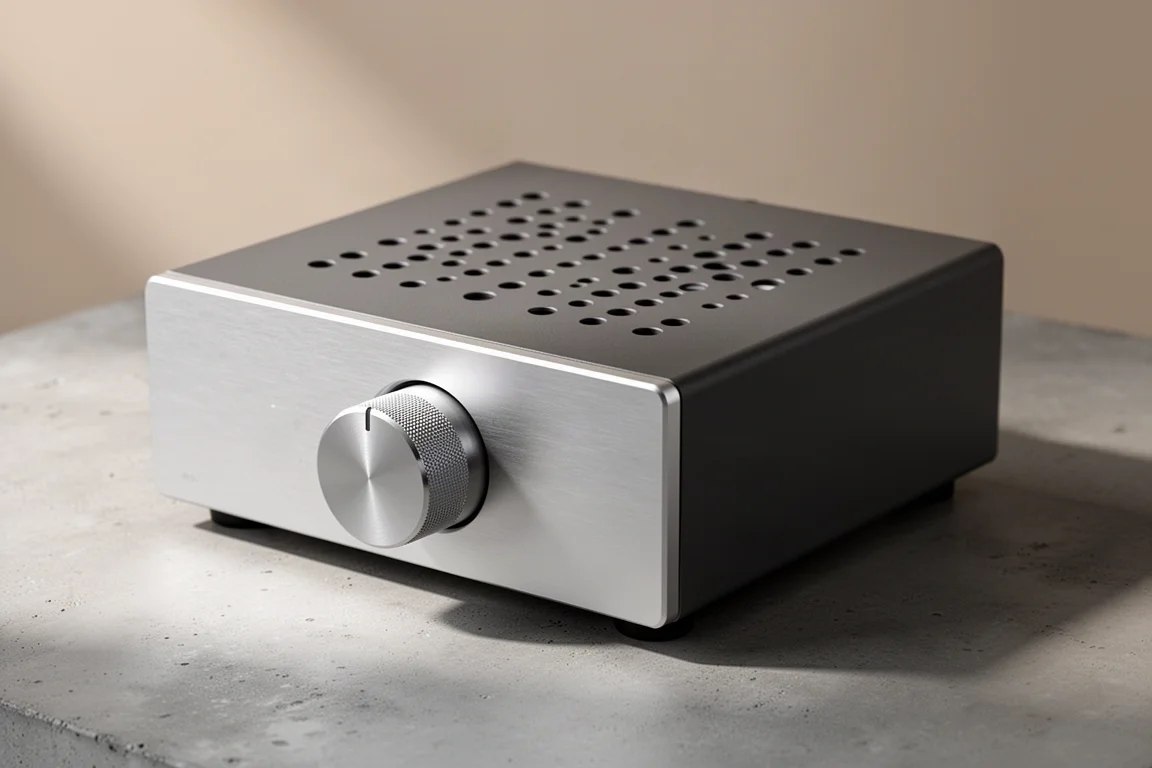
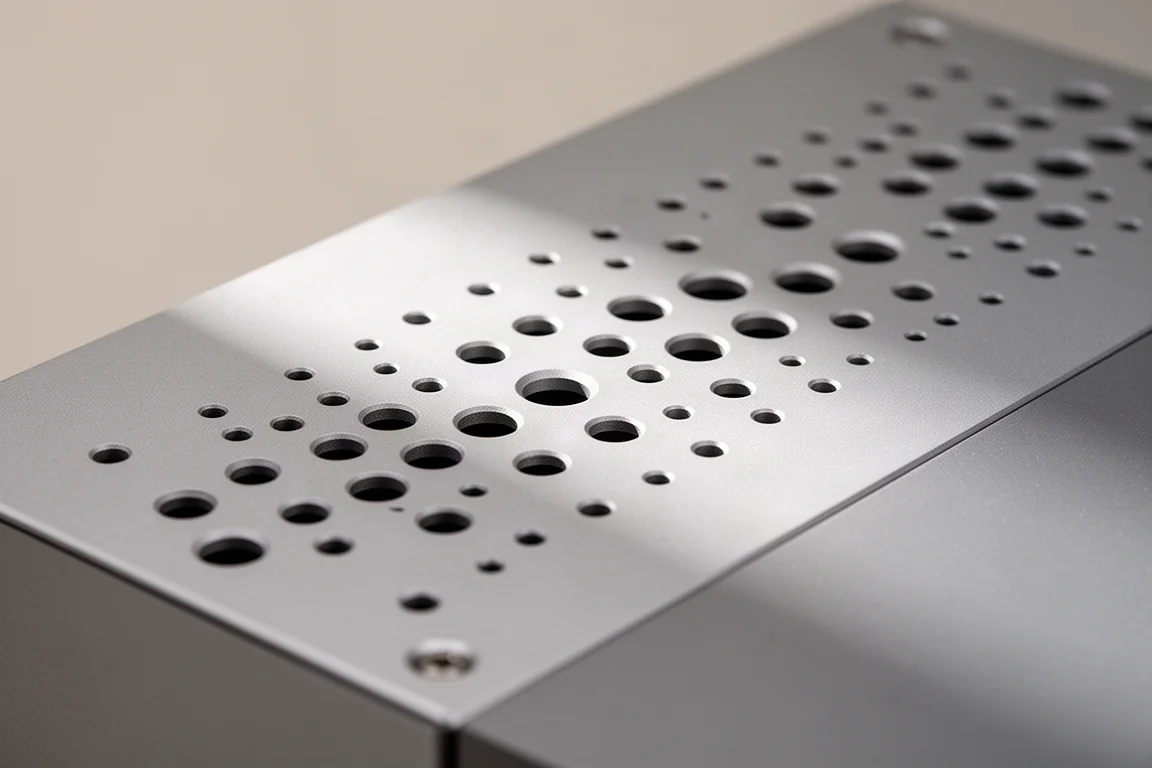
Build quality is a clear strength. The case feels solid, the silver faceplate looks good, and the volume knob has a well-weighted, deliberate feel. Ventilation holes of several different sizes are cut into the top, the sides, and the bottom, which keeps the internals visible through the grille and reinforces the sense that this is a carefully assembled piece of hardware.
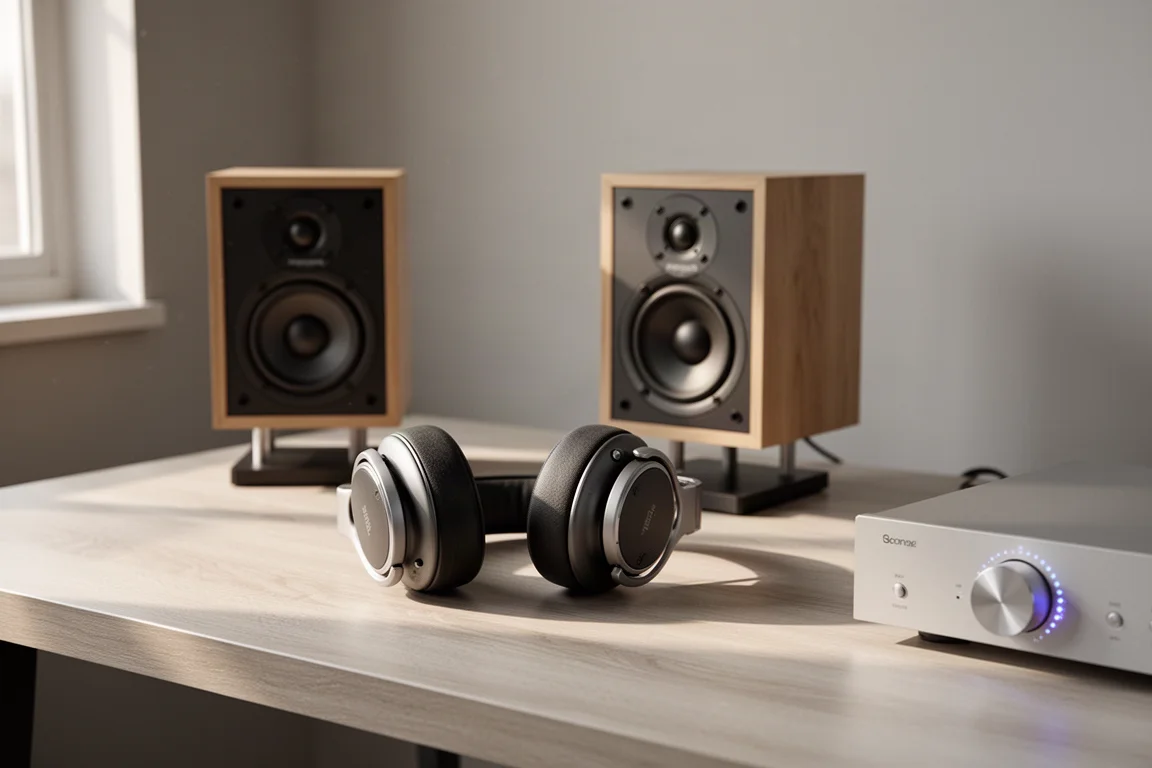
At around $300, the MX5 is aimed squarely at a desk, a small room, or a soundbar replacement where one box is preferable to a stack of separates.
Who This Product Is For
The MX5 suits listeners who want one small unit to power a pair of bookshelf speakers, drive full-size headphones, and accept digital, analog, and Bluetooth sources without extra components.
Headphone listeners get equal attention here. The headphone stage is genuinely capable, so the MX5 can work as a headphone-first system with speakers added later.
Speaker matching deserves a moment of thought. Speakers rated around 87 dB sensitivity or higher are the safest pairing, since sensitivity determines how loud a speaker plays for a given amount of power. A pair of Polk R100 speakers caused no trouble at all. The second-generation ELAC Uni-Fi is driven fine, although a more powerful amplifier can pull more dynamics out of it, and the first-generation version is a harder load that this amplifier is not the best match for.
Main Strengths
Speaker Amplifier Performance
The headline power rating of 70 W per channel into 4 ohms is quoted at 10 percent total harmonic distortion, which is not a usable figure in practice. The numbers that matter are the ones quoted at 1 percent distortion and below: 55 W into 4 ohms and 35 W into 8 ohms. That is enough to get most bookshelf speakers playing at realistic levels in a small or medium room.
Sound quality is where the MX5 clearly improves on its predecessor. The MX3 had a tendency to sound thin and light at the bottom end, with limited body and dynamics. The MX5 moves in the right direction, adding weight and more resolution, and it comes across as almost warm for a compact class D amplifier in this price bracket. Bass and treble controls are available if you want them, but they are barely needed: a small treble boost was enough to shape the sound, and adjustments beyond roughly three steps in either direction start to sound strange.
Headphone Amplifier and DAC
The headphone amplifier delivers 1.6 W into 32 ohms, which is a generous amount of power for most full-size headphones. It uses NFCA amplification technology, and the result is very clear and clean without draining the life out of the music. Only extremely hard-to-drive headphones are likely to want more.
Inside, the DAC section uses a Sabre chip alongside an XMOS processor, and Bluetooth runs on a Qualcomm chip. Supported Bluetooth codecs include AAC, SBC, aptX, aptX Low Latency, and aptX HD, which covers both Apple and Android devices. There is no MQA support.
Design, Connectivity, and Controls
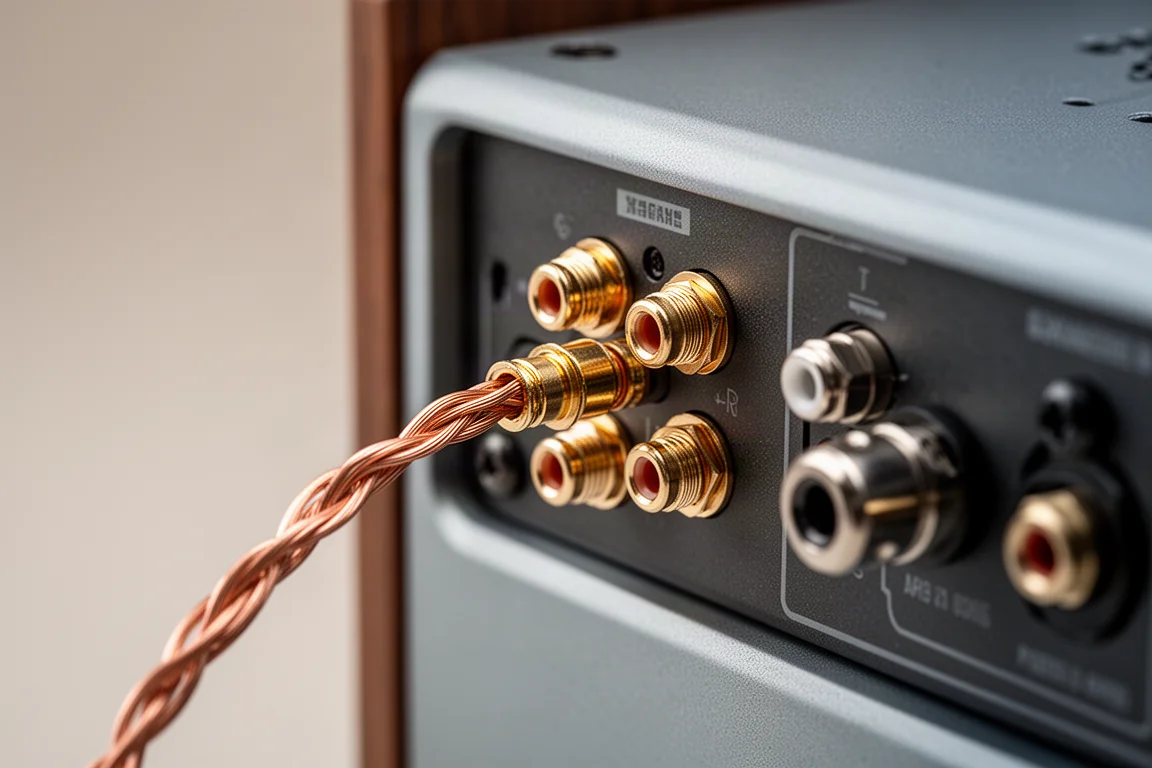
The rear panel is unusually flexible for a one-box amplifier. From left to right you get speaker outputs on five-way binding posts that accept bare wire, balanced TRS inputs, a single-ended RCA input, a full-size optical input, a full-size coaxial input, a Bluetooth antenna, and a full-size USB input. Power comes from an external 28 V brick.
A remote control is included and it handles the essentials: input selection, volume, and the tone controls. Bass and treble are accessed with the A and B buttons, with ten steps on either side of zero. Inputs can also be changed on the unit itself, and signal sensing can switch inputs automatically when a connected source powers on, which is handy in a soundbar replacement setup.
Three output modes are available: speaker amplifier only, headphone amplifier only, or both running at the same time. The combined mode is what makes the workaround for subwoofer use possible.
Value and Versatility
At $300, you are getting a DAC, a headphone amplifier, a speaker amplifier, and a remote control in a single chassis. Separates can sound better, but putting together a comparable set usually costs more. The MX5 is a jack of all trades that still sounds very good, which is exactly what most desk systems need.
Things to Consider Before Buying
The missing subwoofer output is the main compromise. There is a way around it: a 6.35 mm to dual RCA cable from the headphone output lets the headphone amplifier act as a preamp output for a subwoofer input, with the unit set to run both outputs together. It works, but it is unconventional and requires a specific cable.
Speaker sensitivity matters more than raw power here. Plan on speakers rated around 87 dB or higher, and expect very demanding headphones to want a dedicated amplifier.
If MQA decoding is part of your workflow, this is not the product for it.
Buying Advice
If the goal is one compact box that covers speakers, headphones, and streaming from a phone or computer, the MX5 is a straightforward recommendation at this price. It looks good, it feels solid, and it has enough power for the vast majority of desktop speakers and headphones.

Buyers who plan to add a subwoofer should weigh that decision carefully, since the workaround adds a cable and a settings change to something that is normally a single connection. And if you already own a well-chosen separate DAC and amplifier, a meaningful sound upgrade means stepping up to something in the class of the Topping E50 or the Geshelli J2, which costs more.
Conclusion
The Topping MX5 earns its place as a one-box desktop solution. It improves on the MX3 with more body and resolution, offers a genuinely capable headphone amplifier, and packs flexible connectivity and a remote into a chassis that feels better than its price suggests. The lack of a subwoofer output is the one thing to think through in advance, but for most desktop listeners the trade-off is easy to accept.
Product link
View more details for Topping MX5
This product is mentioned in the review. Check the specifications, options, and compatibility before buying.
View more details for Topping MX5Further reading
Related Reviews
Desktop Audio
ADAM Audio D3V vs Kali Audio LP-UNF: Two $299 Desktop Monitors Compared
Two compact powered desktop monitors at the same price, compared on bass extension, linearity, placement settings, directivity, and realistic output limits.
Desktop Audio
Aiyima T9 Review: A Compact Tube Desktop Amplifier With a Built-In DAC
A budget desktop amplifier that pairs class D power with two tubes, a full DAC section, Bluetooth, tone controls, and a working VU meter.
Desktop Audio
Aune S9c Pro Review: A Weighty Desktop DAC and Headphone Amplifier With Real Power
A desktop DAC and headphone amplifier with a linear power supply, dual Sabre converters and five watts of balanced headphone output. Here is what to weigh before buying.