Desktop Audio
Aiyima T9 Review: A Compact Tube Desktop Amplifier With a Built-In DAC
A budget desktop amplifier that pairs class D power with two tubes, a full DAC section, Bluetooth, tone controls, and a working VU meter.
Introduction
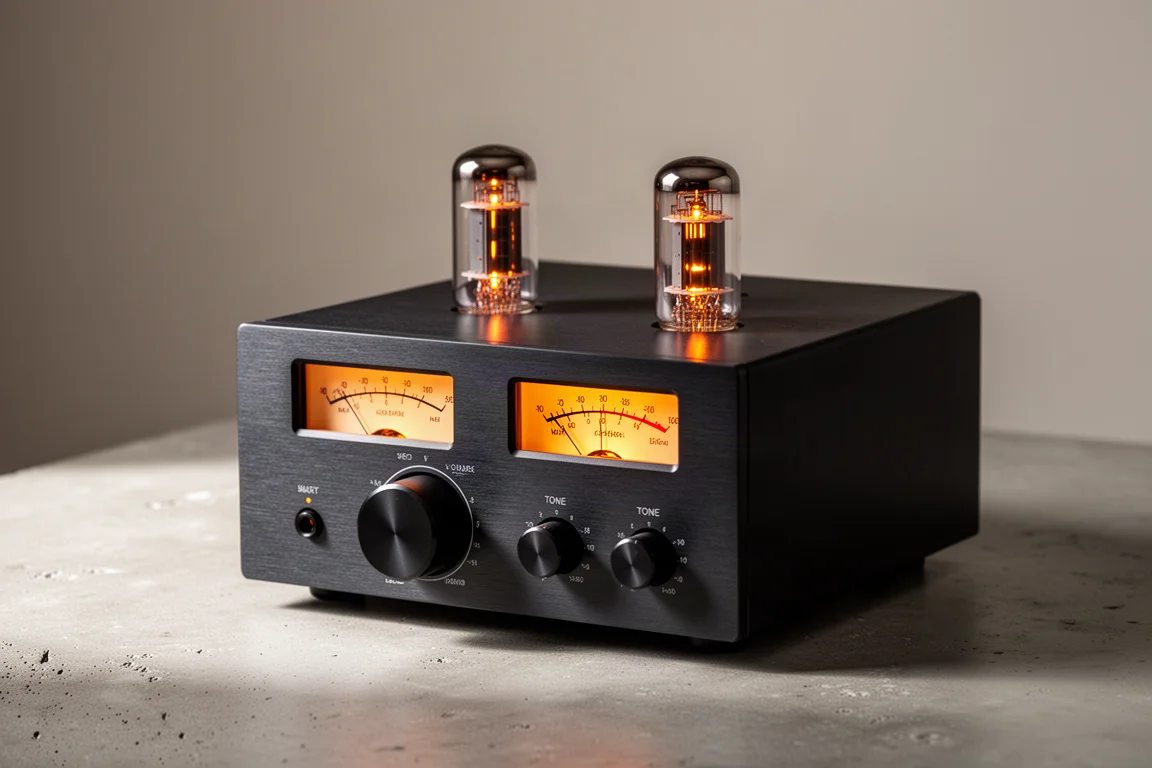
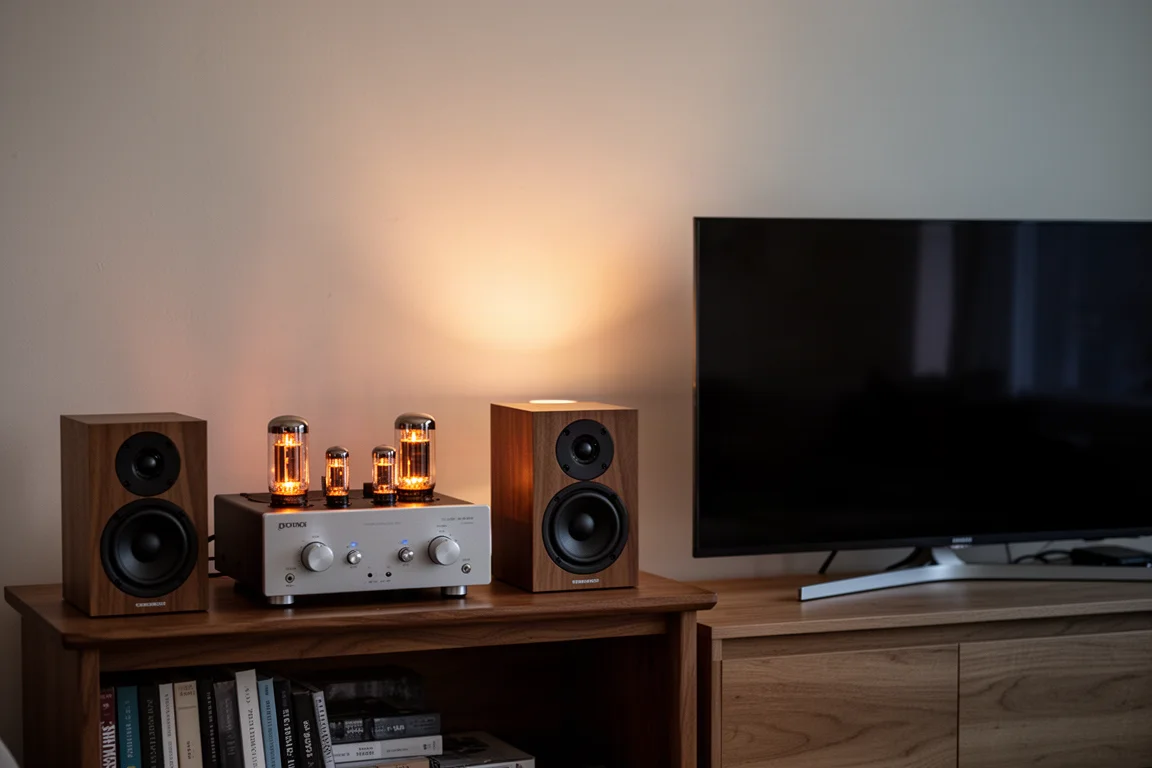
The Aiyima T9 is a compact desktop speaker amplifier that combines a class D power stage with two vacuum tubes, a built-in DAC, Bluetooth, and a working analog VU meter. At roughly $120 it sits firmly in budget territory, yet the feature list reads more like a small hi-fi hub than an entry-level desktop amp: USB, optical, and coaxial digital inputs, an analog RCA input, bass and treble tone controls, a remote control, and a variable aux output that can feed a subwoofer.
Aiyima builds its amplifiers around Texas Instruments class D chips, and the T9 uses the 3000 series amplifier chip. The result is a warmer, fuller presentation than the thin and sterile character that some budget class D designs fall into, and the retro front panel makes it one of the more distinctive pieces of gear you can put on a desk.
Who This Amplifier Is For
The T9 makes the most sense for three kinds of listeners.
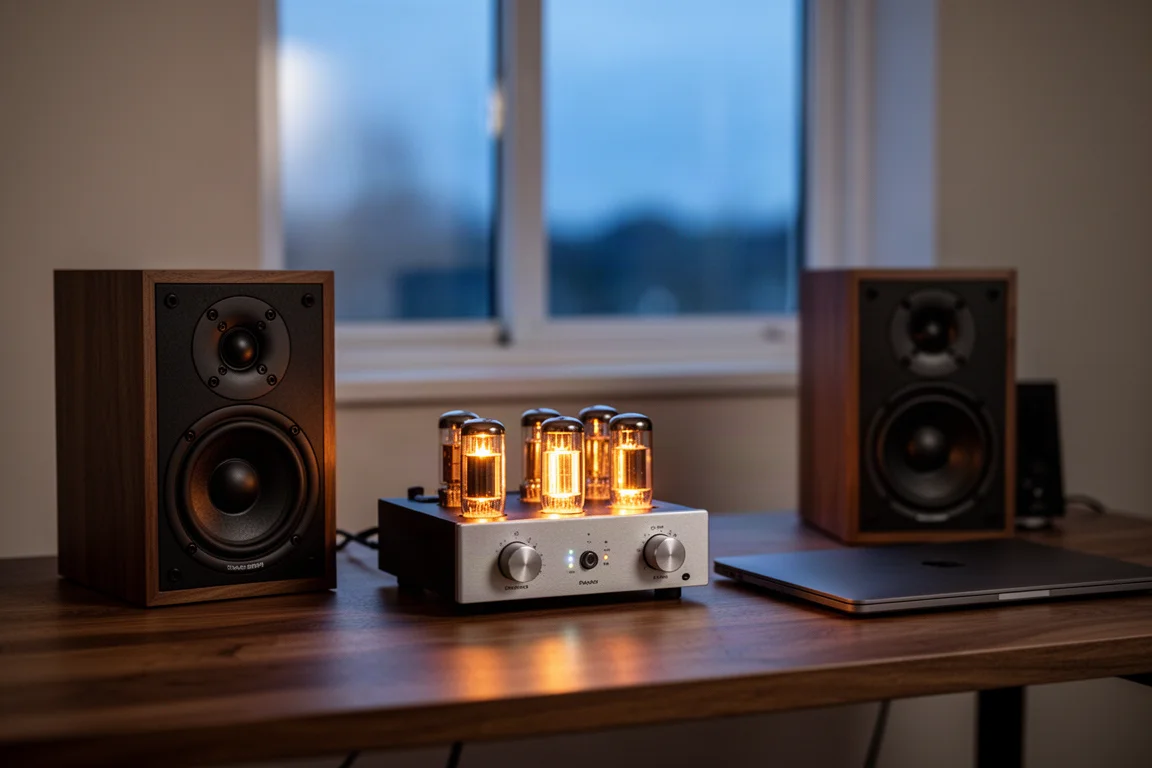
The first is the desktop listener who already owns, or plans to buy, a small pair of passive bookshelf speakers. The second is someone who wants to replace a soundbar near a television, running the optical output from the TV into the amp and letting the tubes and meter glow in a dark room. The third is a listener who wants a flexible starting point: the T9 can serve as a DAC and preamp now, and if more power is needed later, a beefier power amplifier can be added while the T9 stays in the chain.
It is not aimed at anyone who needs to drive large or demanding floorstanding speakers in a big room.
Main Strengths
A Warm, Full-Bodied Sound
Connected to a modest pair of passive two-way bookshelf speakers, the T9 pushed them to very listenable levels without strain. The tonal balance leaned warm rather than thin, and backing the treble off a couple of notches while lifting the bass by the same amount made small speakers feel comfortable, with no real need for a subwoofer in that setup.
Detail held up well. On a sparse, voice-forward recording, the vocal sat slightly back in the mix, which smoothed the presentation without obscuring what was there. Bass can get a little loose with inexpensive speakers, which is a reasonable trade at this price point. The clearest sign of how the pairing worked was simple: it made you want to hear the next track, and then the one after that.
A Fully Featured Digital Hub
The rear panel covers more ground than most amplifiers at this price. There is Bluetooth with a screw-on antenna, an analog RCA input, and three digital inputs: USB, coaxial, and optical. That means the T9 works as a complete DAC, so a computer, a DVD player, a game console, or a television with a digital output can all connect without an extra converter box.
The variable aux output is the quietly useful part. A 3.5mm to RCA cable into a powered subwoofer lets you set the subwoofer level and crossover on the sub itself while controlling overall volume from the amp. Power input accepts 18 to 30 volts DC, and the unit was run here on a 24 volt supply.
Output is rated at around 100W into 4 ohms, but that figure is quoted at 10 percent total harmonic distortion. Working from the chip’s published specifications, a more realistic estimate is roughly 60W into 4 ohms at 0.1 percent THD, and somewhere around 40 to 50W into 8 ohms. In practice it drove a pair of larger, more expensive standmount speakers without complaint, which says more about its stability than the headline number does.
Controls, Tubes, and the VU Meter
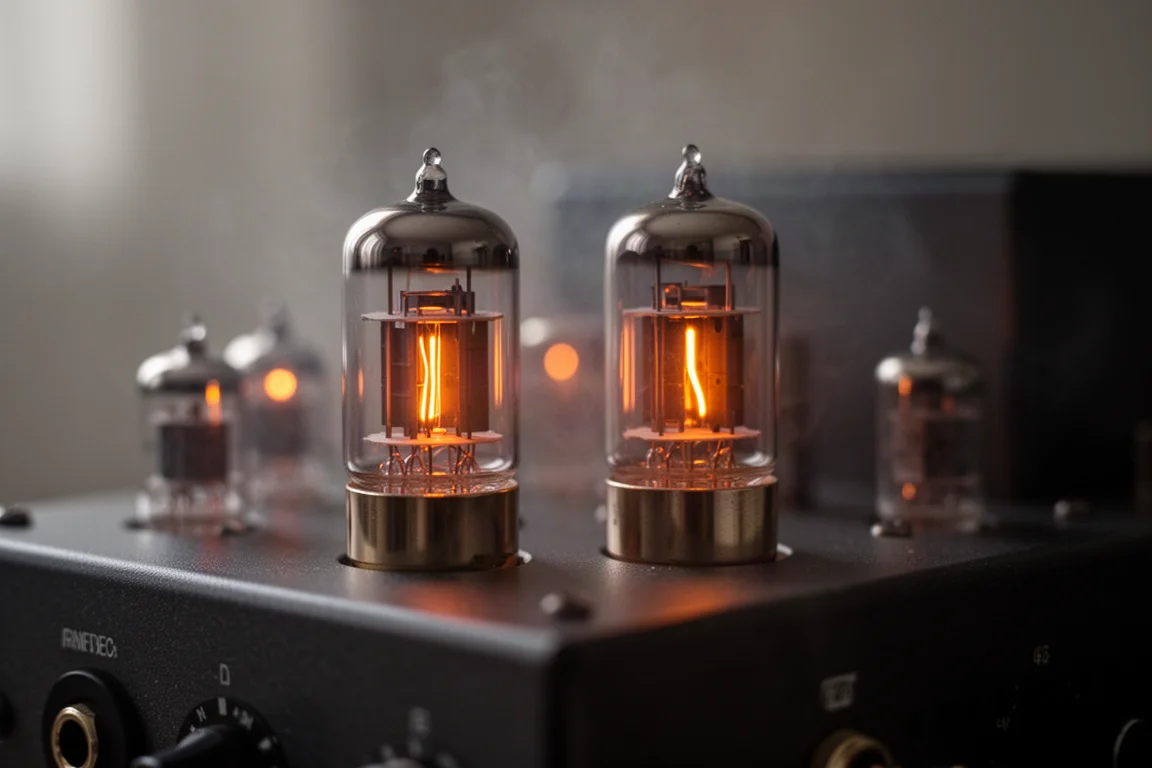
Two tubes sit on top, and the manufacturer lists their type, so tube rolling is possible if you want to experiment. The stock tubes already sound good out of the box; a different pair may add a little more space and air, but it is not a requirement.
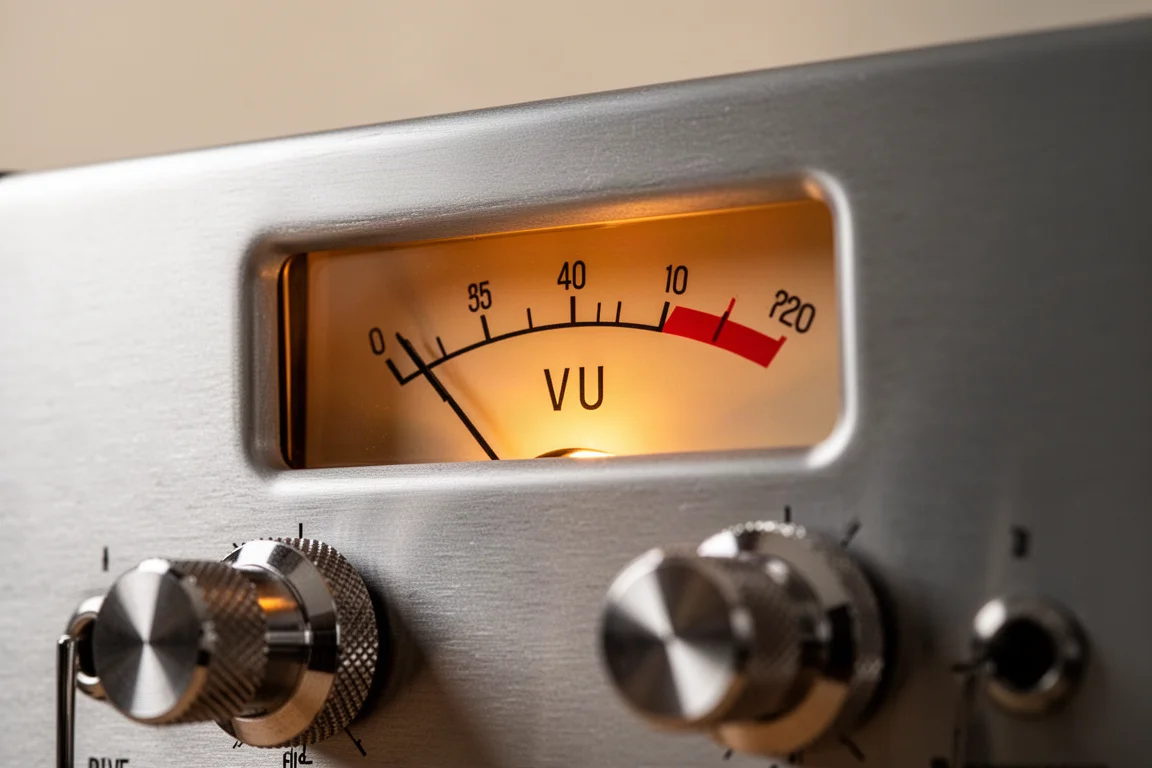
The volume knob spins freely with no start or end stop, which takes a moment to get used to. The bass and treble controls have soft detents that click as you turn them, and both are genuinely useful for tailoring small speakers. The VU meter works and moves with the music, which is the kind of detail that older receivers were loved for and that rarely appears on modern budget gear.
A remote control is included. It feels light in the hand, and the white ring around it will likely wear off with regular use, but it works, and it includes track skip and mute functions. That matters if the amp lives next to a television and you would rather not get up to change the volume.
Things to Consider Before Buying
Power is the main limitation. The T9 is comfortable with efficient bookshelf speakers at desktop or small-room levels, but it is not the right choice for large rooms or speakers that demand a lot of current.
The remote is functional rather than refined, and its finish may not hold up to heavy use. The volume knob has no physical end stops, so there is no tactile reference point at minimum or maximum.
Inputs are standard rather than exotic. There is no MQA support and no premium digital connections beyond the usual USB, optical, and coaxial set, which is exactly what most households actually have.
Bass control can get slightly loose with very inexpensive speakers, and the presentation is tuned for warmth rather than absolute neutrality. Listeners who prefer a lean, analytical sound may want to look elsewhere.
Buying Advice
The strongest argument for the T9 is what a complete system costs. Around $120 for the amplifier plus a roughly $65 pair of passive bookshelf speakers, with speaker cable that many people already have at home, lands a full desktop setup under $200. For that outlay you get Bluetooth, a working DAC, tone controls, a remote, and a VU meter.
It also grows with you. If you eventually want more power, the T9 can hand off amplification duties to a more powerful power amplifier and continue as a DAC and preamp, which is more flexibility than most budget amplifiers offer.
Two scenarios make the most sense. If you listen at a desk with small passive speakers, this is an easy recommendation. If you want a soundbar replacement near a television, the optical input plus the subwoofer output covers the job, and the tubes and meter give it a character most soundbars cannot match. Anyone who needs serious output into difficult speakers should plan for more power instead.
Conclusion
The Aiyima T9 delivers a warm, engaging sound with a feature set that is unusual at this price. A built-in DAC, Bluetooth, tone controls, a subwoofer output, a remote, and a functioning VU meter in a single compact chassis make it a versatile centerpiece for a desktop system or a television setup, and the retro styling gives it a personality that most budget amplifiers lack. If your speakers are efficient and your room is modest, the T9 is a confident buy.
Product link
View more details for Aiyima T9
This product is mentioned in the review. Check the specifications, options, and compatibility before buying.
View more details for Aiyima T9Further reading
Related Reviews
Desktop Audio
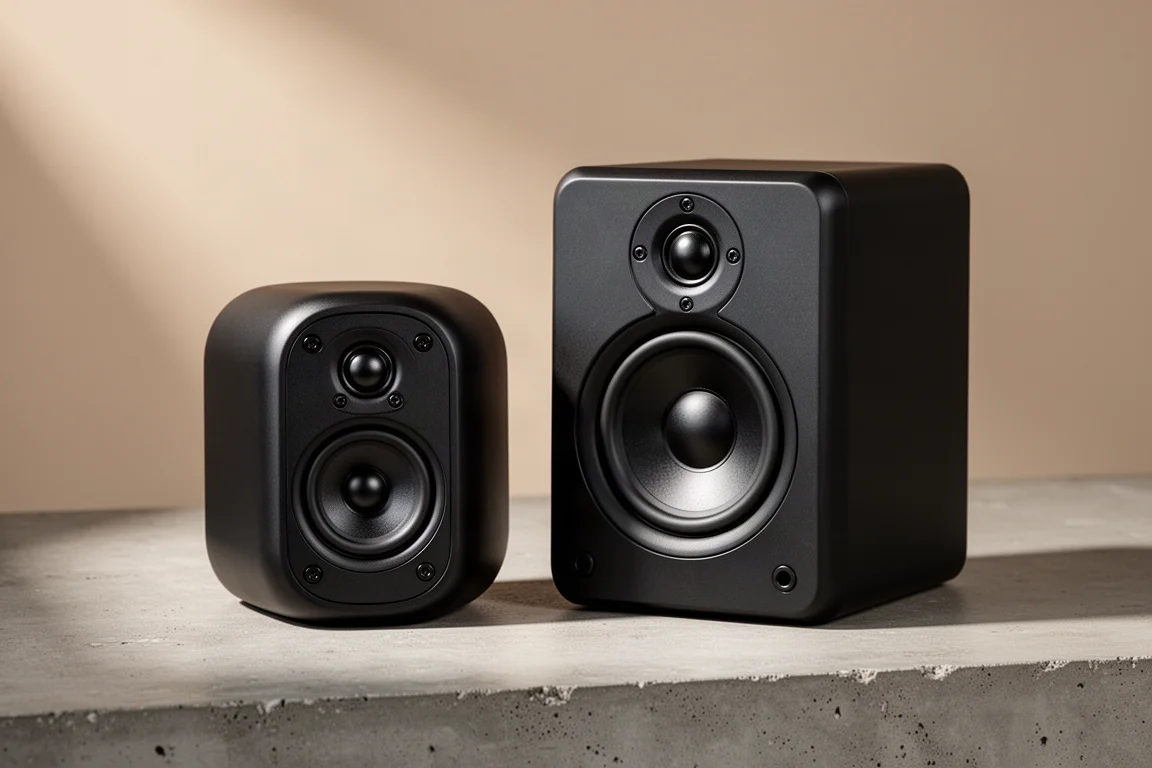
ADAM Audio D3V vs Kali Audio LP-UNF: Two $299 Desktop Monitors Compared
Two compact powered desktop monitors at the same price, compared on bass extension, linearity, placement settings, directivity, and realistic output limits.
Desktop Audio
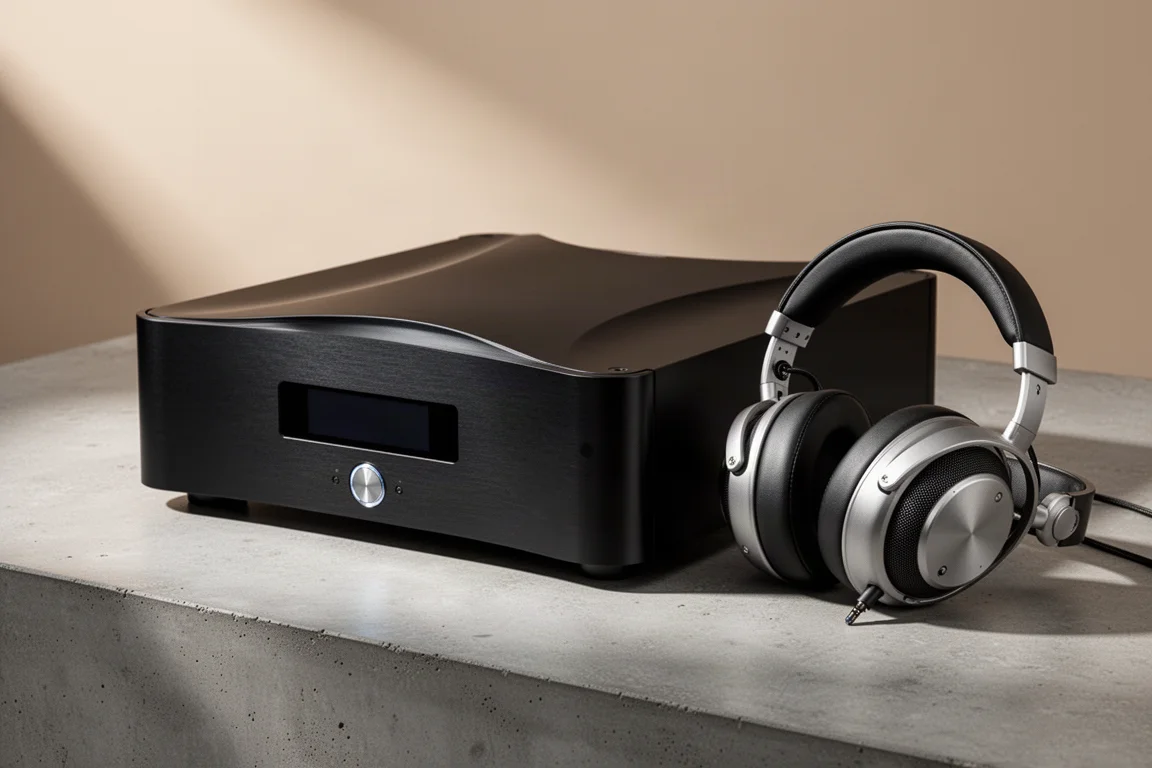
Aune S9c Pro Review: A Weighty Desktop DAC and Headphone Amplifier With Real Power
A desktop DAC and headphone amplifier with a linear power supply, dual Sabre converters and five watts of balanced headphone output. Here is what to weigh before buying.
Desktop Audio
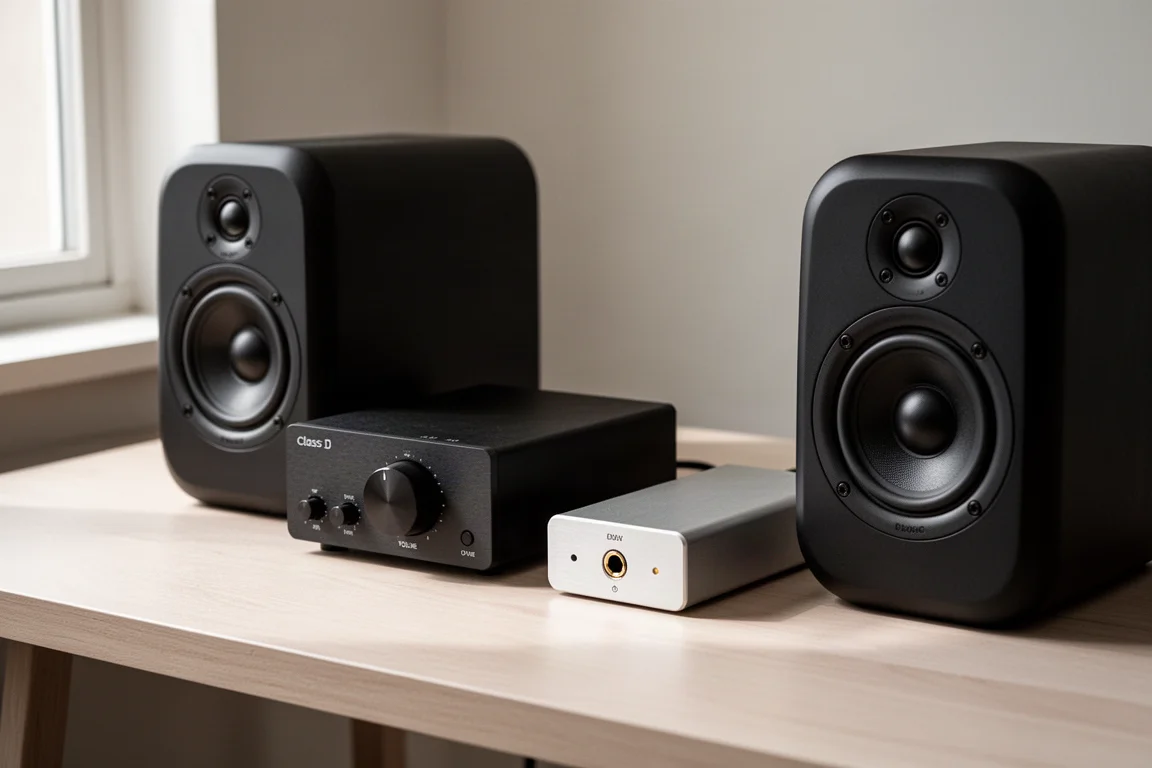
Budget Desktop Audio System: Five Components for Around $250
A complete desktop audio chain for around $250: two amplifier options, two pairs of bookshelf speakers, and a DAC with a built-in headphone amplifier.