Desktop Audio
Aune S9c Pro Review: A Weighty Desktop DAC and Headphone Amplifier With Real Power
A desktop DAC and headphone amplifier with a linear power supply, dual Sabre converters and five watts of balanced headphone output. Here is what to weigh before buying.
Introduction
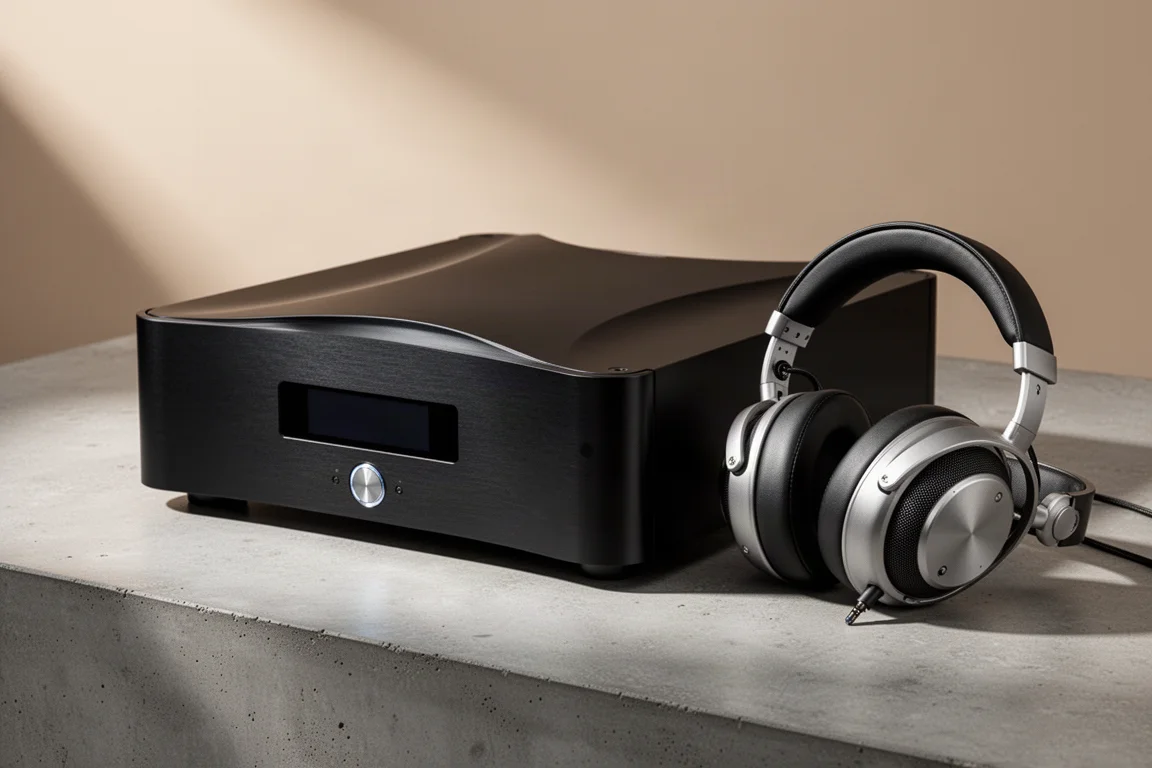
The Aune S9c Pro is a desktop digital-to-analog converter and headphone amplifier that takes a deliberately old-school route. Rather than shrinking everything into a compact chassis and leaning on a switching power supply, it houses a large linear supply, a toroidal transformer and a five-watt headphone amplifier inside one substantial enclosure. It comes in black or silver, and in versions with or without a Bluetooth antenna, with pricing around $699 to $700 depending on the configuration and where it is bought.
That combination of a serious power supply, dual converters and a built-in headphone amplifier is unusual at this price, and it is the main reason the S9c Pro deserves a closer look.
Who the Aune S9c Pro Is For
This is a component for listeners who want one box to handle both conversion and headphone drive on a desk, without adding a separate amplifier later. It suits owners of full-size headphones that benefit from real current delivery, and it suits anyone who values a simple control scheme over deep menus.
It also makes sense for listeners who already run a preamplifier and a power amplifier and want a line-level source with both balanced and single-ended outputs. The unit can switch between headphone output and line output from the top panel, so the same box can feed a speaker system and a pair of headphones.
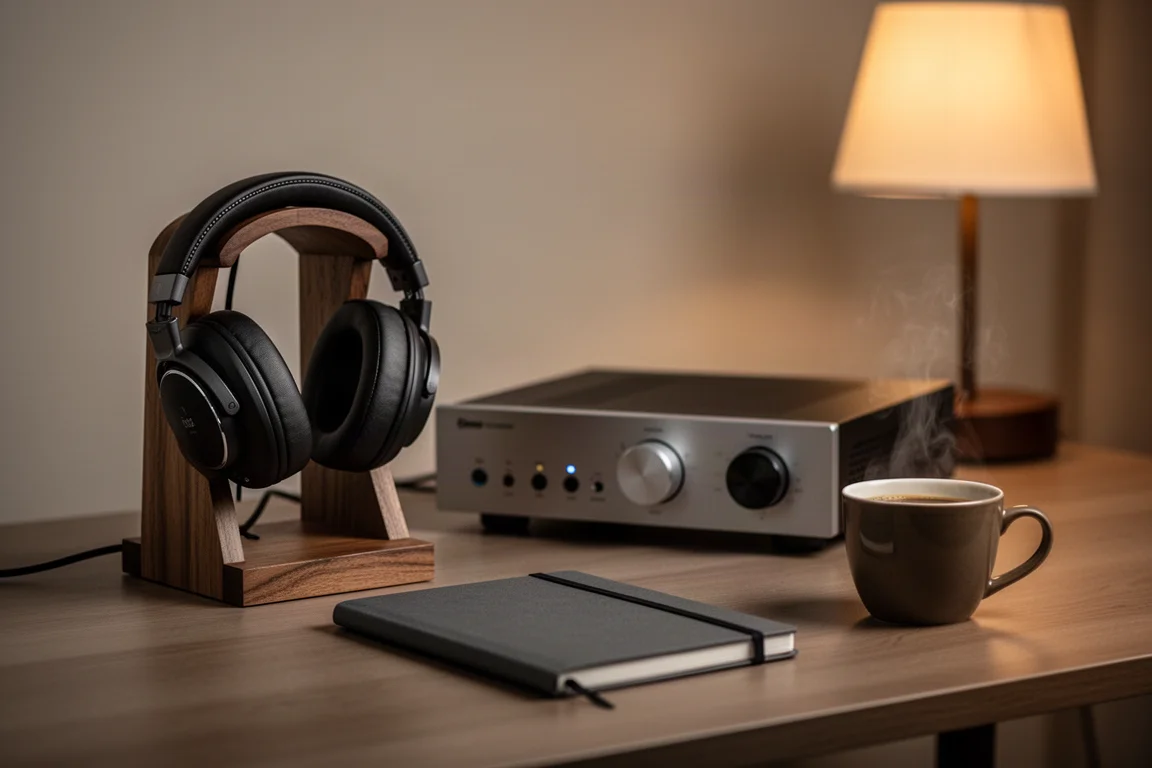
The version question is straightforward. The two models are otherwise the same, and the only difference is whether a Bluetooth antenna is included, so buyers who never plan to stream wirelessly can choose the version without it.
Design, Build Quality, and Internal Hardware
The first thing anyone notices is the weight. Inside, Aune uses a large linear power supply built around a 50-watt low-ripple toroidal transformer and a 23,900 microfarad capacitor array, with a total component count of 1,080. The top panel has a gentle curve, and a small display sits in the middle of the front panel with clean, restrained typography rather than oversized or decorative fonts.
Digital conversion is handled by two Sabre ES9068 converter chips running in parallel and in sync, supported by dedicated clocking for the USB input and the other digital inputs. There is also support for an external clock, a feature usually reserved for more expensive converters. High-resolution support runs up to 768 with 32-bit depth, along with DSD512.
The curved top is a design decision worth noting. It looks good, but it limits how much can be stacked on top: components with their own feet can sit there, while flat, heavy items will not balance comfortably.
Connectivity and Day-to-Day Controls
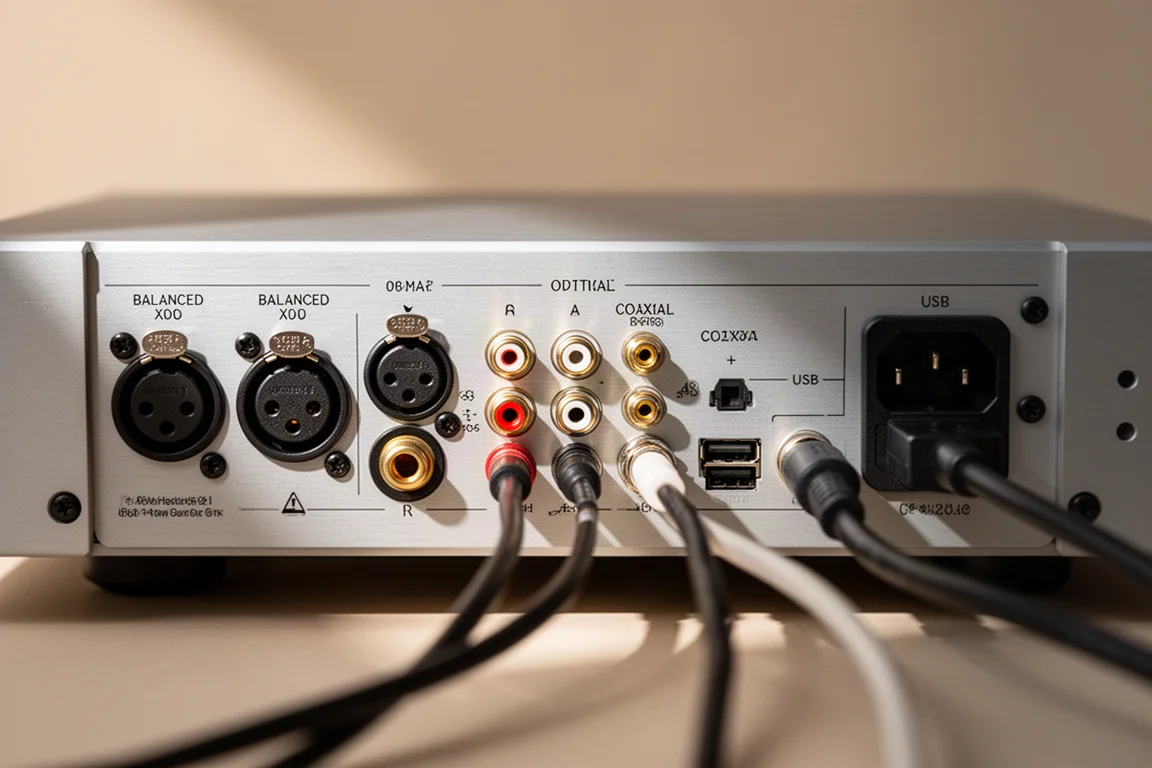
The front panel covers the three headphone connections most listeners need: a balanced four-pin XLR output, a 6.35 mm single-ended output and a 4.4 mm Pentaconn output. The rear panel is unusually complete for the price, with balanced XLR line outputs, single-ended RCA outputs, an AES input, an optical input, a coaxial input, an external clock connection, a full-size USB input, a Bluetooth antenna connector, a master power switch and an IEC power inlet.
Controls are refreshingly simple. Three buttons on the top panel handle input selection, switching between the two filter modes and toggling between headphone output and line output, while two more buttons adjust volume. There are no nested menus to work through, and there is no front-panel power or standby button, so the rear master switch is how the unit is turned on and off.
The supplied remote is compact and slim, and it takes a very small Allen key to open the battery compartment. A battery comes pre-installed. Bluetooth support includes LDAC for higher-quality wireless streaming.
Sound Quality and Amplifier Performance
The headphone amplifier is the headline specification. From the single-ended output it delivers around 1,460 mW into 32 ohms, and from the balanced outputs that figure rises to 5,500 mW, or five and a half watts. Into 300 ohms it produces 672 mW, and into 600 ohms it produces 336 mW. That is enough headroom for demanding planar magnetic headphones and for high-impedance dynamic models alike.
Two filter modes are available, and the difference between them is audible rather than theoretical, which makes them worth trying with familiar tracks.
In listening, the stage and imaging come across as wide and spacious for a converter, and percussion has a slightly more prominent, snappy character. Vocal clarity is strong, with a presentation that is a touch more forward than some reference converters. Against a Geshelli Labs J2 fitted with its AKM converter and an aftermarket op-amp upgrade, the S9c Pro gave up roughly 15 percent of stage width, although the two are likely to sound much closer when stock op-amps are used rather than upgraded ones.
Used as a headphone amplifier with a planar magnetic pair, the S9c Pro sounded natural, dynamic and organic, and noticeably less clinical than a THX-based all-in-one unit. That combination of a capable converter and a genuinely strong amplifier section is what makes the price easier to justify.
Things to Consider Before Buying
There is no front-panel standby control, so the unit is switched on and off at the rear. The curved top panel limits stacking. MQA decoding is listed in the specification, but it did not engage in practice, so buyers who depend on MQA should treat that feature with caution.
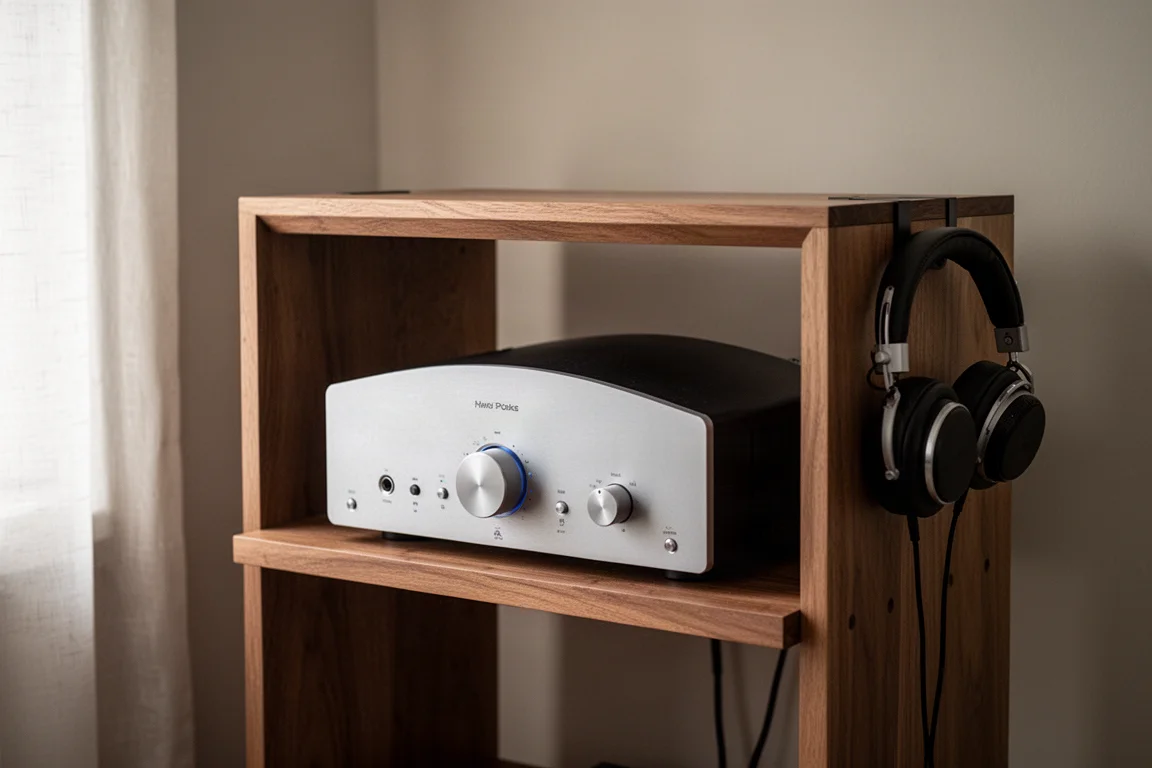
It is also a large and heavy desktop component. Anyone short on desk space, or anyone who prefers a small footprint with an external supply, should measure before committing.
The $699 to $700 asking price is significant, and it is worth comparing against the total cost of alternatives. A reference DAC with an aftermarket op-amp upgrade and an added linear power supply lands in roughly the same territory, and that path does not include a headphone amplifier.
Pairing It With Headphones and a Desk System
Because the balanced outputs deliver so much more power than the single-ended output, owners of harder-to-drive headphones should plan on using the four-pin XLR or 4.4 mm Pentaconn connection to get the most from the amplifier. With efficient headphones, the single-ended output is more than adequate.
On the line-output side, the S9c Pro can feed a preamplifier through either balanced XLR or RCA connections and then pass signal on to a power amplifier and speakers. That makes it a reasonable hub for a desk system that mixes speakers and headphones, with the top-panel output switch handling the changeover.
Buying Advice
At around $700, the S9c Pro is a fair price for what it includes: dual converters, extensive clocking, a large linear supply, a broad set of inputs and outputs, and a five-watt headphone amplifier. Buyers who would otherwise purchase a DAC, a separate headphone amplifier and an upgraded power supply separately will find the single-box approach simpler and often no more expensive.
Choose the Bluetooth version only if wireless streaming matters to you, since the hardware is otherwise identical. For anyone building a desk system around full-size headphones, or looking for a line-level source with both balanced and single-ended outputs, this is an easy recommendation.
Conclusion
The Aune S9c Pro earns its place through fundamentals: a serious power supply, a simple control scheme, generous connectivity and an amplifier section with real output. Its quirks are minor and easy to live with, and the value proposition holds up well once the cost of comparable separates is added up.
Product link
View more details for Aune S9c Pro
This product is mentioned in the review. Check the specifications, options, and compatibility before buying.
View more details for Aune S9c ProFurther reading
Related Reviews
Desktop Audio
ADAM Audio D3V vs Kali Audio LP-UNF: Two $299 Desktop Monitors Compared
Two compact powered desktop monitors at the same price, compared on bass extension, linearity, placement settings, directivity, and realistic output limits.
Desktop Audio
Aiyima T9 Review: A Compact Tube Desktop Amplifier With a Built-In DAC
A budget desktop amplifier that pairs class D power with two tubes, a full DAC section, Bluetooth, tone controls, and a working VU meter.
Desktop Audio
Budget Desktop Audio System: Five Components for Around $250
A complete desktop audio chain for around $250: two amplifier options, two pairs of bookshelf speakers, and a DAC with a built-in headphone amplifier.