Audio Amplifiers
Topping LA90 Discrete Review: A Compact Amplifier Built Around Sound Quality
A close look at the Topping LA90 Discrete, a bridgeable stereo amplifier with balanced inputs, a bypassable volume control, and a sound-first design.
Introduction
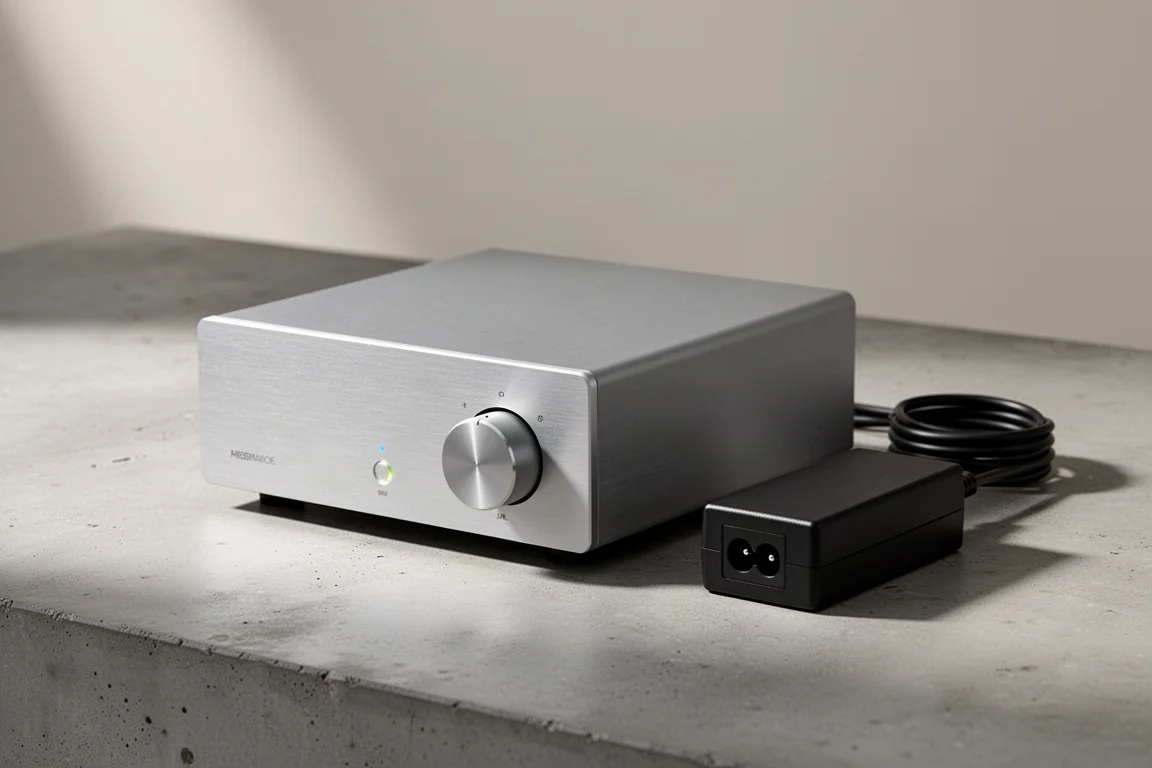
The Topping LA90 Discrete is a compact stereo speaker amplifier built around discrete components: separate capacitors, transistors, and resistors rather than a single integrated circuit board. It is the current version of the LA90 line, and it arrives with a clear priority. This is not an amplifier sold on watts per dollar. It is sold on how it sounds.
That focus shows up in the published power figures, which are modest in stereo mode, and in the feature set, which is deliberately narrow. The result is a component that rewards careful system matching and does not suit every room or every pair of speakers.
Who the Topping LA90 Discrete Is For
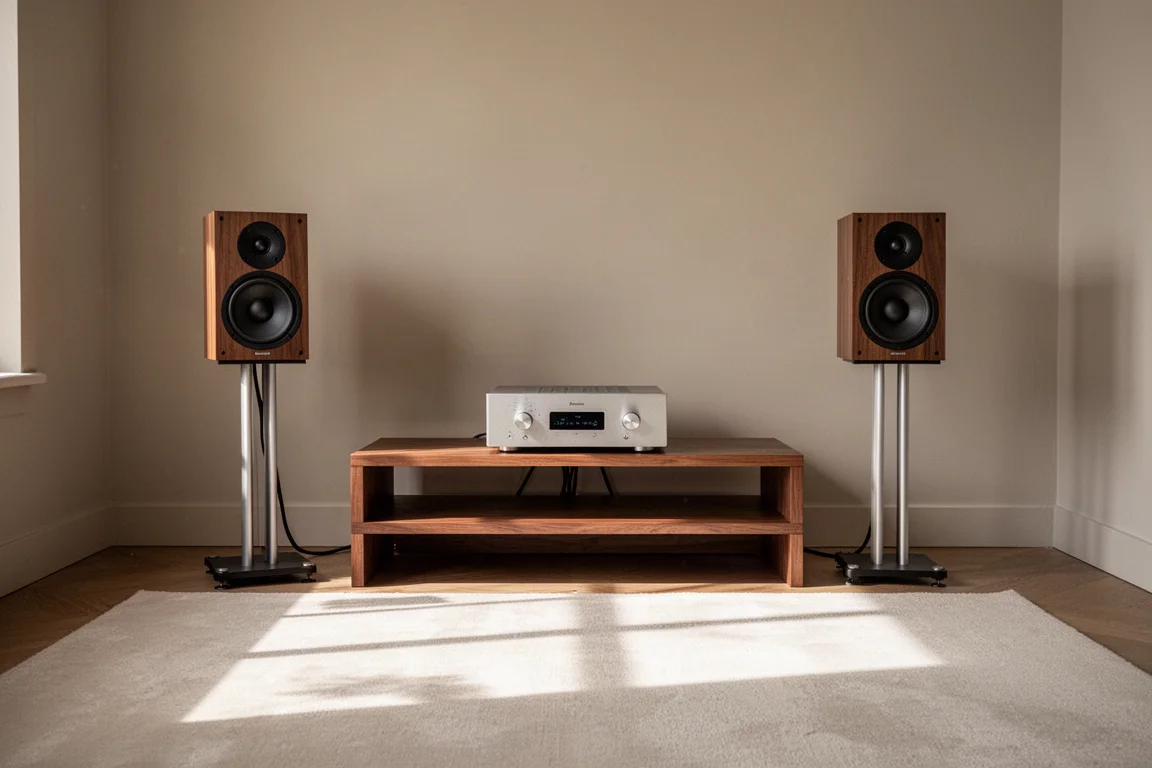
This amplifier suits listeners who already own reasonably efficient speakers and who care more about tone, staging, and a low noise floor than about headroom figures on a spec sheet. It is a natural fit for a desktop or small-room system, where the compact chassis and external power supply are easy to place.
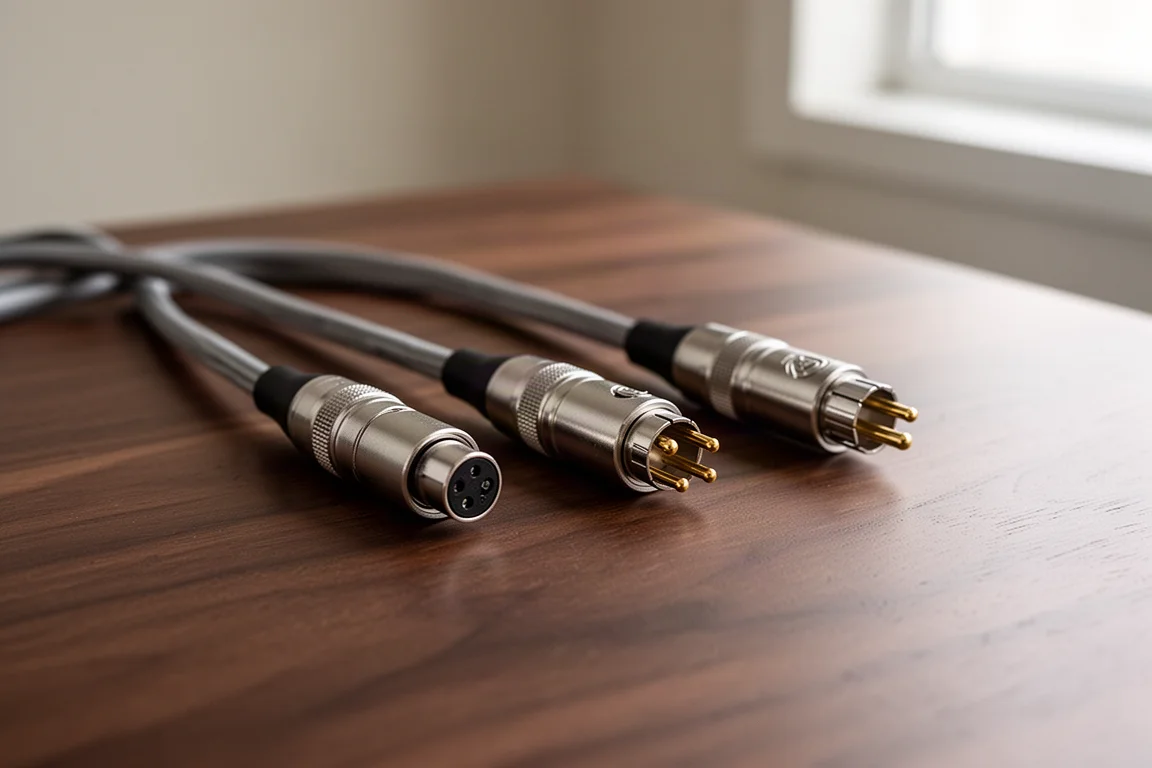
It also makes sense for anyone building a separates system around balanced sources. All three inputs are XLR or TRS, so preamplifiers and digital-to-analog converters with balanced outputs connect directly without adapters.
It is a poor fit for anyone running large, inefficient tower speakers that demand serious current, or for anyone who measures value purely in watts per dollar.
The amplifier can also be bridged into mono mode, which raises the usable output per channel. That path requires two units and a correspondingly larger budget, so it is best treated as a long-term upgrade rather than an entry point.
Main Strengths: Sound Quality
The defining strength of the LA90 Discrete is its sound. The noise floor is very low, the sound stage is large, and the low end is punchy without smearing the rest of the range. The mid-range stays clean and the highs stay natural rather than forward.
That combination is uncommon. Amplifiers with strong bass often lose clarity through the mids, and amplifiers with clean mids often sound thin at the top. This one holds all three together, and it does so without needing tone controls to compensate.
The character is consistent with the better Topping designs, including the Class D PA5, which shares a similar signature at a much lower price. The difference is one of degree: the LA90 Discrete simply does more of it, with a wider stage and a more natural presentation. Against comparably priced monoblock options, the advantage is staging and openness rather than raw output.
Power Ratings and System Matching
Topping publishes honest figures here, including the distortion conditions behind them. In stereo mode, the amplifier delivers 120 watts per channel into 4 ohms at under 10 percent total harmonic distortion, dropping to 90 watts per channel at under 1 percent. Into 8 ohms, it delivers 66 watts per channel at 10 percent distortion and 56 watts per channel at under 1 percent.
In bridged mono mode, output rises to 220 watts into 8 ohms at under 10 percent distortion, or 180 watts at under 1 percent. Topping also lists 180 watts into 4 ohms in mono. Two units would be needed for stereo playback in mono mode, which puts the cost at roughly $1,600.
On paper, these numbers look modest, especially next to monoblock amplifiers that advertise far more power. In practice, the amplifier drove efficient standmount speakers into the 90 dB range without strain, and the usable power felt greater than the ratings suggest. Listeners with efficient speakers in small to medium rooms are unlikely to run out of headroom. Anyone with a genuinely difficult load should look elsewhere.
Connections, Controls, and Setup
The back panel is where the amplifier asks for compromises. There are three inputs, all of them XLR or TRS balanced connections. There is no RCA input, and adapters are the only workaround. For a desktop system built around unbalanced sources, that is a real inconvenience, and it is a deliberate nudge toward balanced equipment.
Gain is selectable with two settings, which behave differently depending on the mode. In stereo, the low setting provides 9.4 dB and the high setting 19.4 dB. In mono, the low setting provides 15.4 dB and the high setting 25.4 dB. The low setting is the more conservative choice for the quietest possible background, though in listening the difference between the two is subtle.
Dip switches on the back handle mode selection, gain, and a pure power amplifier setting that bypasses the volume control entirely. There is also a 12 volt trigger input, which matters here because the amplifier has no remote control. In a rack, the trigger lets a preamplifier or another component switch the amplifier on and off automatically. A USB-C receptacle is provided for firmware updates.
The power supply is an external brick rated at 60 volts and 4 amps, connected through an XLR-style plug with a locking ring. The connection is secure and stays put, though the fitting does not feel especially refined for a product at this price.
Things to Consider Before Buying
Power is the first consideration. Stereo output is genuinely modest, and anyone expecting big numbers should either plan for a bridged pair or choose a different amplifier with more headroom for difficult speakers.
Inputs are the second. With no RCA connections, sources need balanced outputs or adapters, so the amplifier effectively steers buyers toward balanced equipment.
Reliability deserves a mention. Topping has a history of quality control complaints across parts of its range, and buyer feedback on this specific model is still thin, with a single five-star customer rating listed. That is not a reason to dismiss the amplifier, but it is a reason to buy from a seller that handles returns and warranty service. A reputable dealer with local support makes a meaningful difference on a purchase at this level.
Finally, the LA90 Discrete costs roughly eight times as much as capable budget Class D amplifiers such as the Aiyima A07 Pro or the Fosi Audio BT20A Pro. Those amplifiers are genuinely good and cost far less. This one is better in ways that matter to careful listeners, but the price gap is real and should be weighed honestly.
Buying Advice
Buy this amplifier for its sound, not its spec sheet. If the system is built around efficient speakers, balanced sources, and a listening position where staging and low noise matter, the LA90 Discrete delivers in a way that is hard to match at the price.
If the priority is power for difficult speakers, monoblock amplifiers with higher output are the more sensible route. If the budget is tighter, a good Class D amplifier covers most of the ground for far less money.
Matching matters more than raw numbers. Efficient standmount speakers in a small or medium room are the sweet spot, and a preamplifier with a 12 volt trigger output makes daily use far more pleasant given the absence of a remote. For anyone weighing the upgrade, the honest answer is that this amplifier earns its price through sound quality rather than features or flexibility.
Conclusion
The Topping LA90 Discrete is a narrow, opinionated amplifier. It offers three balanced inputs, a bypassable volume control, bridgeable mono operation, and modest stereo power, all in a compact chassis with an external supply and no remote.
What it offers in return is a low noise floor, a wide sound stage, punchy bass, a clean mid-range, and natural highs. For listeners with the right speakers and the right sources, that trade is easy to justify.
Product link
View more details for Topping LA90 Discrete
This product is mentioned in the review. Check the specifications, options, and compatibility before buying.
View more details for Topping LA90 DiscreteFurther reading
Related Reviews
Audio Amplifiers
AGD Audion Mark III Review: A Compact Class D Amplifier With Tube-Like Musicality
A gallium nitride Class D amplifier that delivers tube-like midrange warmth, serious bass grip, and a modular upgrade path in a very small chassis.
Audio Amplifiers
Best Class D Amplifiers Under $100: Douk Audio A5 vs Fosi Audio V3
Two sub-$100 Class D amplifiers built on the same 3255 chipset, compared on bass weight, midrange body, treble presence, and real-world speaker matching.
Audio Amplifiers
Best Power Amplifiers Under $500: Six Stereo Amplifiers From $74 to $579
A practical roundup of six stereo power amplifiers under $500, covering real-world power, connectivity, cooling, and which kind of system each one suits.