Audio Amplifiers
Best Power Amplifiers Under $500: Six Stereo Amplifiers From $74 to $579
A practical roundup of six stereo power amplifiers under $500, covering real-world power, connectivity, cooling, and which kind of system each one suits.
Introduction
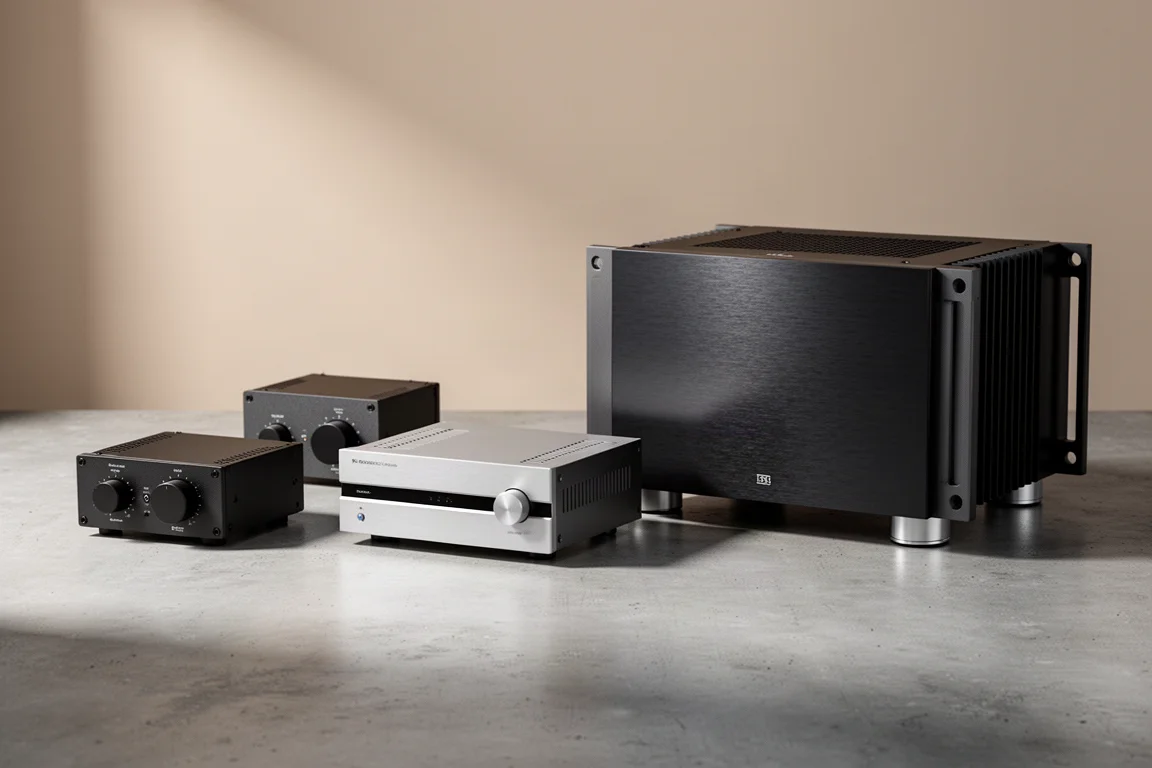
Power amplifiers have quietly become one of the most interesting corners of budget hi-fi. A handful of compact designs built around the Texas Instruments 3255 chipset now deliver genuinely usable power for a few dozen dollars, while full-size traditional amplifiers with linear supplies and toroidal transformers sit a few hundred dollars higher.
There is one thing to understand before shopping in this category. Many of these are separates in the strictest sense. Some have no volume control at all, and others offer a volume knob but only a single pair of RCA inputs. Volume and input switching usually happen at the source or through a preamp.
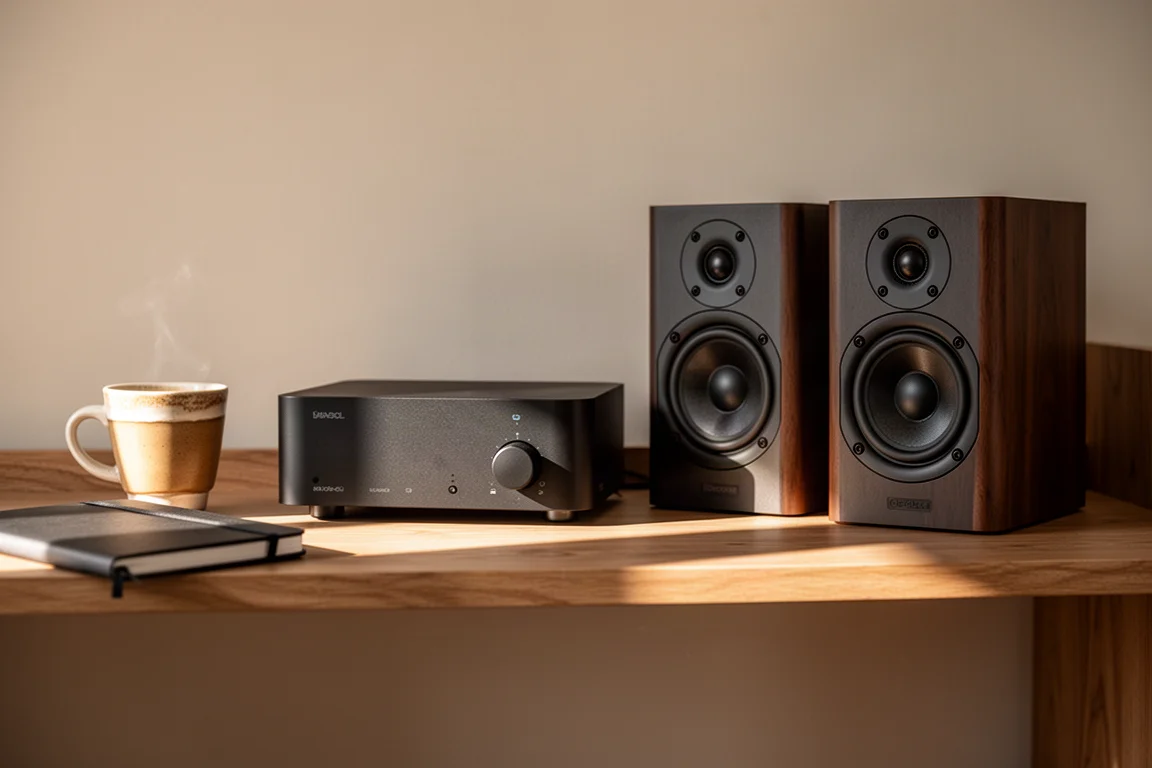
The six amplifiers below are ordered from least to most expensive, running from roughly $74 to $579. All are current products rather than discontinued models, and each one earns its place for a different reason.
What to Expect From a Sub-$500 Power Amplifier
Rated power is the first place expectations need adjusting. Compact amplifiers frequently advertise figures near 300W, but real output lands far lower. Expect roughly 50 to 80 watts into 8 ohms and 90 to 100 watts into 4 ohms from the chipset-based models here. That is still plenty for most speakers in most rooms.
Cooling matters as much as the chipset. Amplifiers with more ventilation and more internal space can sustain output for longer, which is why two models using the same chipset can behave noticeably differently under load.
Power supplies are the hidden cost. Several compact amplifiers ship with a lower-voltage adapter, and a 48V 5A or 10A supply is needed to reach full output. On the least expensive models, that supply can cost as much as the amplifier itself.
Tone controls are absent across the board. Any tonal shaping has to come from the source, an equalizer, or op-amp changes on the models with removable op-amps.
Fosi Audio V3: The Entry Point
The V3 arrives at around $81 and was the first of Fosi Audio’s more audiophile-leaning components. Its strengths are cleanliness and space: it images well, places instruments convincingly, and presents a larger stage than most amplifiers using the same Texas Instruments 3255 chipset, helped by extra cooling that allows more sustained output.
The trade-off is a slightly lean low end. Bass is present but not especially weighty, so speakers that already lean bright may not be the most natural match.
Ventilation runs across both the top and bottom panels, and the rear is minimal: one pair of RCA inputs and speaker outputs. A single volume knob sits on the front, and the op-amps can be swapped for third-party options if you want to tune the character further. The version at around $81 ships with a 32V power supply. To extract the most power you would need a 48V 5A or 10A unit, and that can cost more than the amplifier itself. Even with the stock supply, the V3 plays comfortably into the high 80s in a large room with speakers of around 85 dB sensitivity.
Aiyima A07 Max: The Value Play
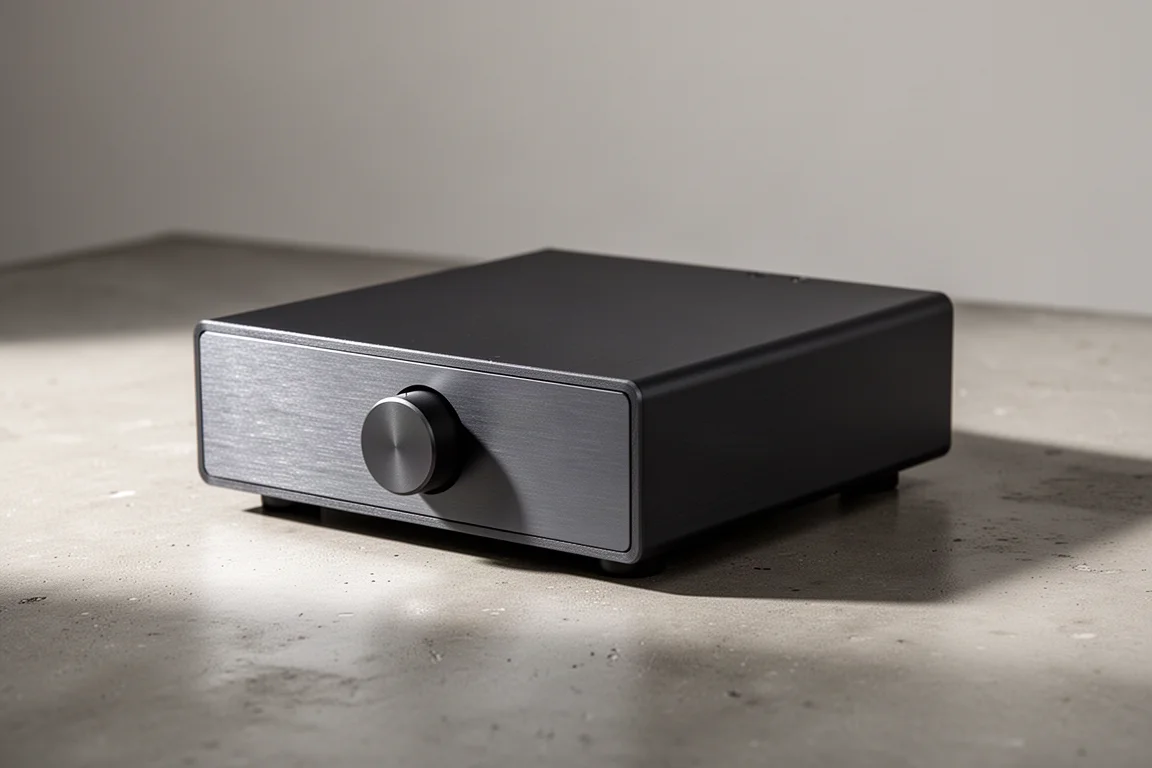
At $73.59 the A07 Max costs less than the V3 while offering more functionality. It uses the same Texas Instruments 3255 chipset and adds a mono mode, so you can start with one unit as a stereo amplifier and add a second later for more power per channel. Cooling on the side panels is decent.
Low-end performance is the clearest advantage over the V3, with more weight and thickness in the bass. Where the V3 wins is air and spatial presentation, and because both models have removable op-amps, you can shift that balance with a swap.
Rated power deserves some scepticism. Claims around 300W do not reflect reality, and even burst testing falls well short of them. Usable output sits closer to 50 to 80 watts into 8 ohms and 90 to 100 watts into 4 ohms, which remains very workable for the money.
Fosi Audio ZA3: The Flexible All-Rounder
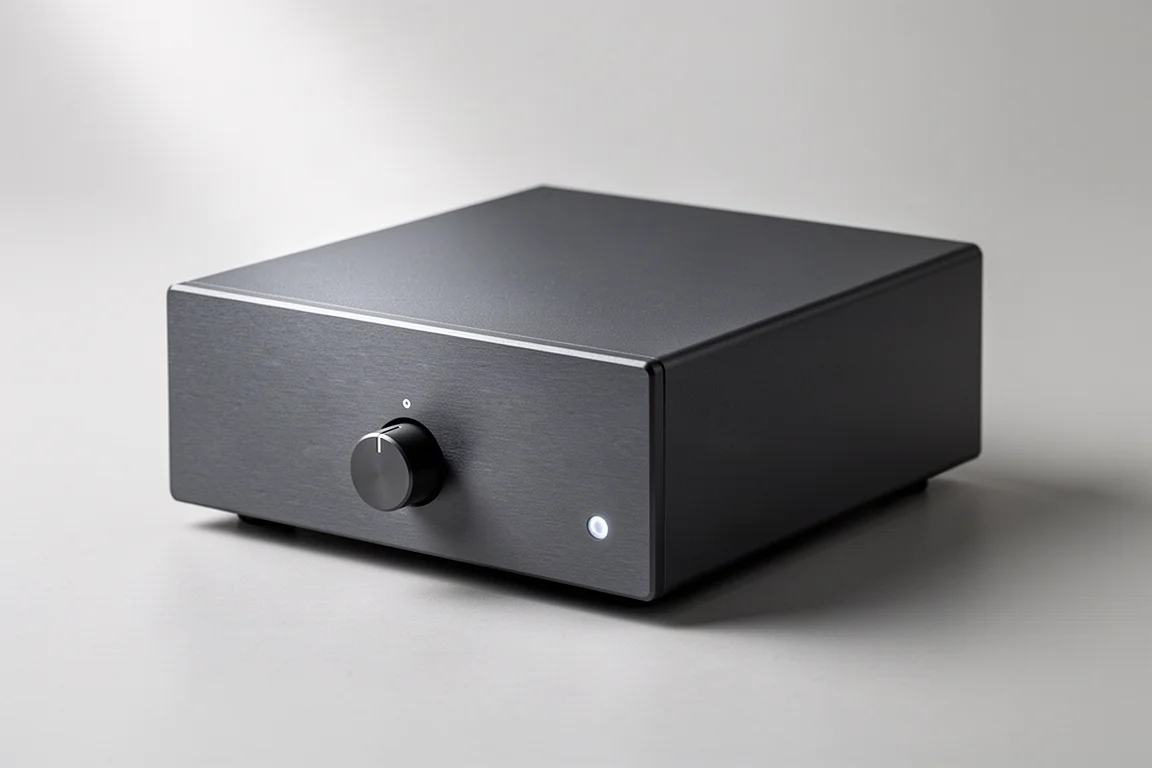
The ZA3 is the most flexible compact amplifier in this group. The rear panel carries RCA inputs, balanced XLR inputs, a subwoofer output, and a trigger input so a preamp or DAC can switch the amplifier on. Two switches on the front select between XLR and RCA, and between stereo and mono.
Mono operation does not double power, but it does improve channel separation, because each amplifier then carries a single channel with no crosstalk between them.
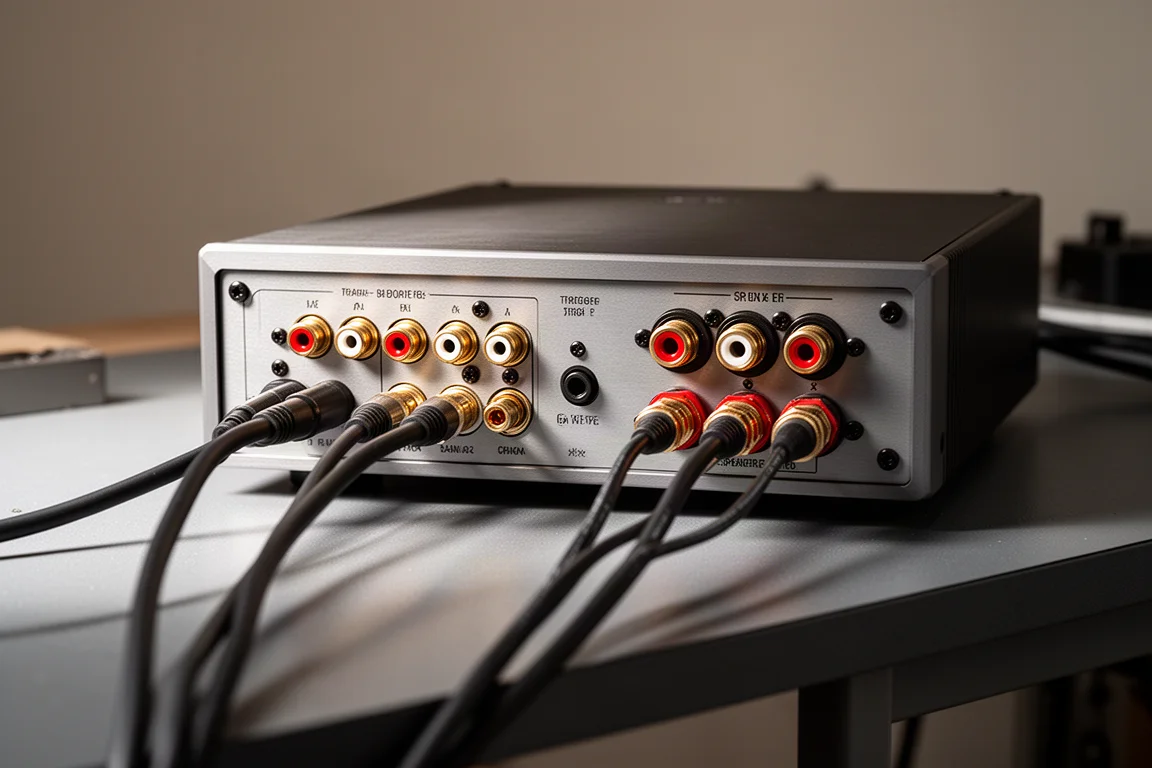
It ships with a 48V power supply, so reaching full output costs nothing extra. Inside there is more real estate and better cooling than the smaller models, which makes op-amp swaps easier to live with. Low-end weight is stronger than the V3, which suits warmer, fuller sounding systems.
The main caution is price. At $149, or around $142 with a 5% coupon, two units reach roughly $300, and for the price of a single ZA3 you could buy two A07 Max amplifiers instead.
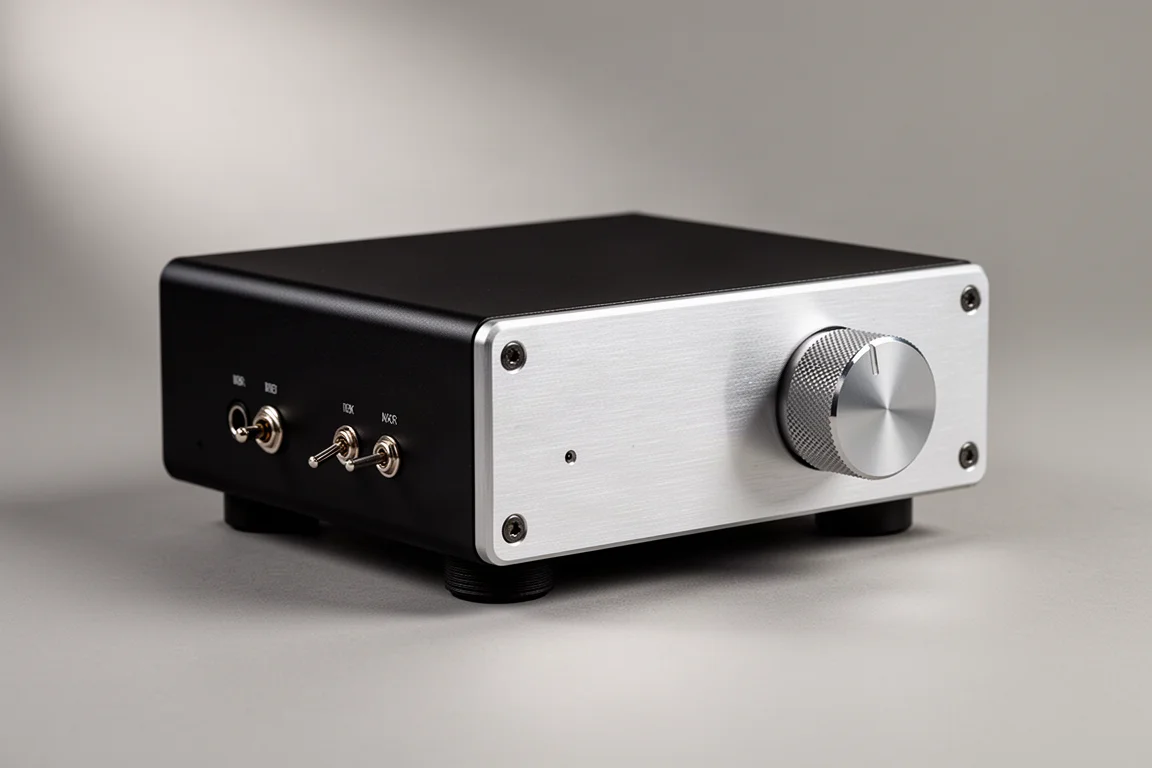
Emotiva A2m Stereo Flex Amplifier: Class AB on a Desk
This is the first amplifier here with a true class AB output stage, paired with a low-noise, high-frequency switching power supply. It is a smaller component from left to right than a full-size amplifier, but noticeably deep front to back, so shelf depth is worth checking before you buy.
Power is rated at 50 watts into 8 ohms at under 0.1% THD and 90 watts into 4 ohms. A capable headphone amplifier sits on the front panel, and the box includes a jumper that routes full power to demanding headphones. Using that jumper is done at the owner’s own risk.
At $279, down from a regular $349, the A2m costs less than a pair of ZA3 units. For a budget around $300 and a genuine need for a power amplifier, this is the most straightforward recommendation on the list.
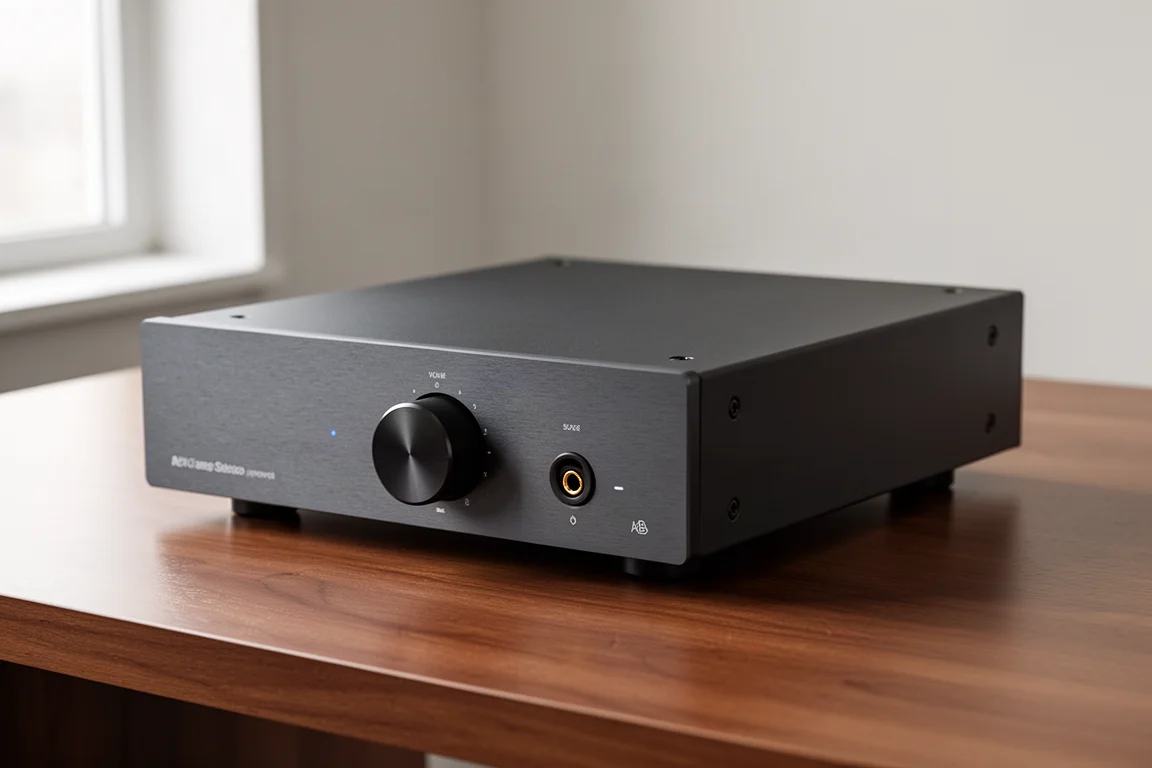
Monoprice Monolith 2-Channel Amplifier: Full-Size and Linear
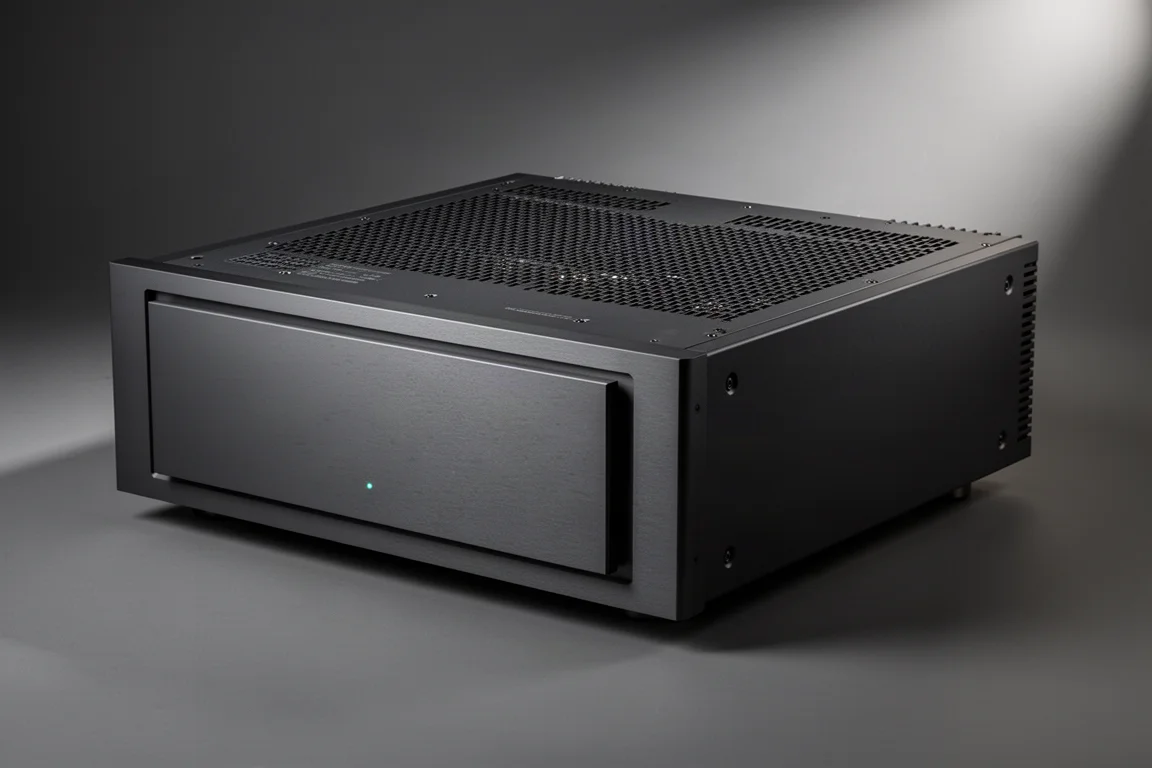
The Monolith is the first full-size traditional amplifier in this group. It delivers 90 watts per channel into 8 ohms from a linear power supply, and it behaves like a conventional component rather than a desktop accessory.
Connectivity covers RCA inputs and balanced inputs, though the balanced inputs are there for convenience only, since the amplifier is not a balanced or differential design.
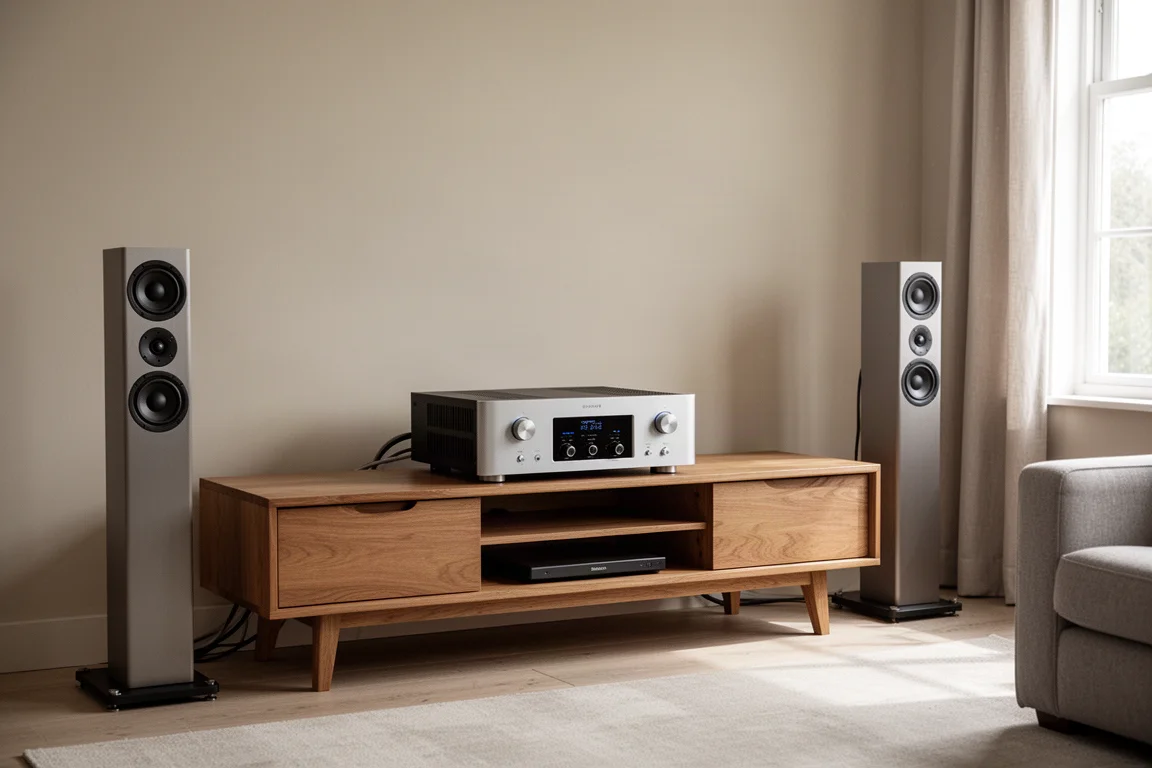
Pricing sits at $399, and the amplifier goes on sale periodically for around $300, which is remarkable for a linear-supply design with this much output on tap. The 4-ohm power rating is not specified here, but it will comfortably exceed what most speakers require.
Emotiva BasX A2: The Most Powerful Option
The BasX A2 sits above the $500 mark at $579, and it is included as the ceiling of this group rather than as a budget pick. Military and first responder discounts, along with bundle offers, can bring the effective price closer.
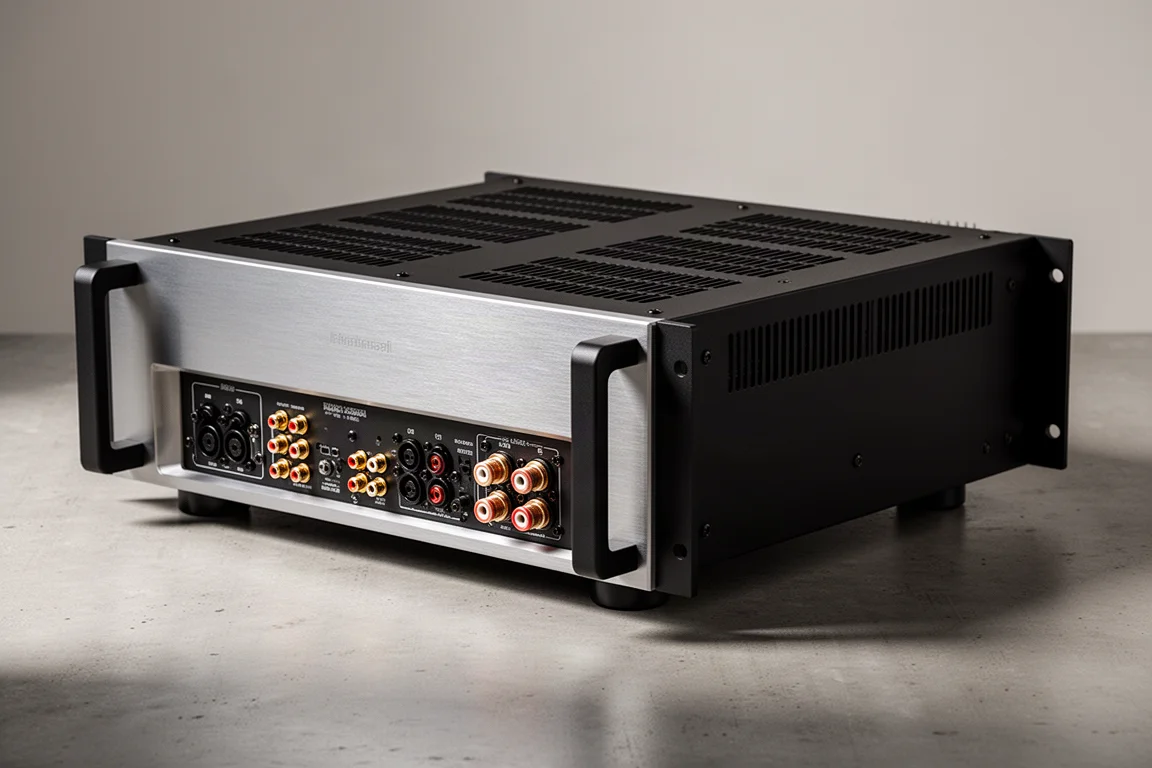
It is a traditional stereo amplifier built around a toroidal transformer, with no XLR connection. Output is rated at 160 watts RMS into 8 ohms and 250 watts RMS into 4 ohms, making it by far the most powerful amplifier here. The sound is punchy and dynamic, with headroom for essentially any speaker you are likely to pair with it.
Buying Advice: Matching an Amplifier to Your System
The right choice comes down to budget, speakers, and how you plan to control volume.
Under $100, the Aiyima A07 Max and the Fosi Audio V3 are the two obvious starting points. Choose the A07 Max for more low-end weight and a path to mono operation, or the V3 for a wider, airier presentation. Around $140 to $300, the ZA3 adds balanced inputs, a subwoofer output and a trigger, while the Emotiva A2m brings a true class AB stage and a headphone amplifier. At $300 to $400, the Monolith offers full-size construction and a linear supply. Above that, the BasX A2 delivers the most power and the most headroom.
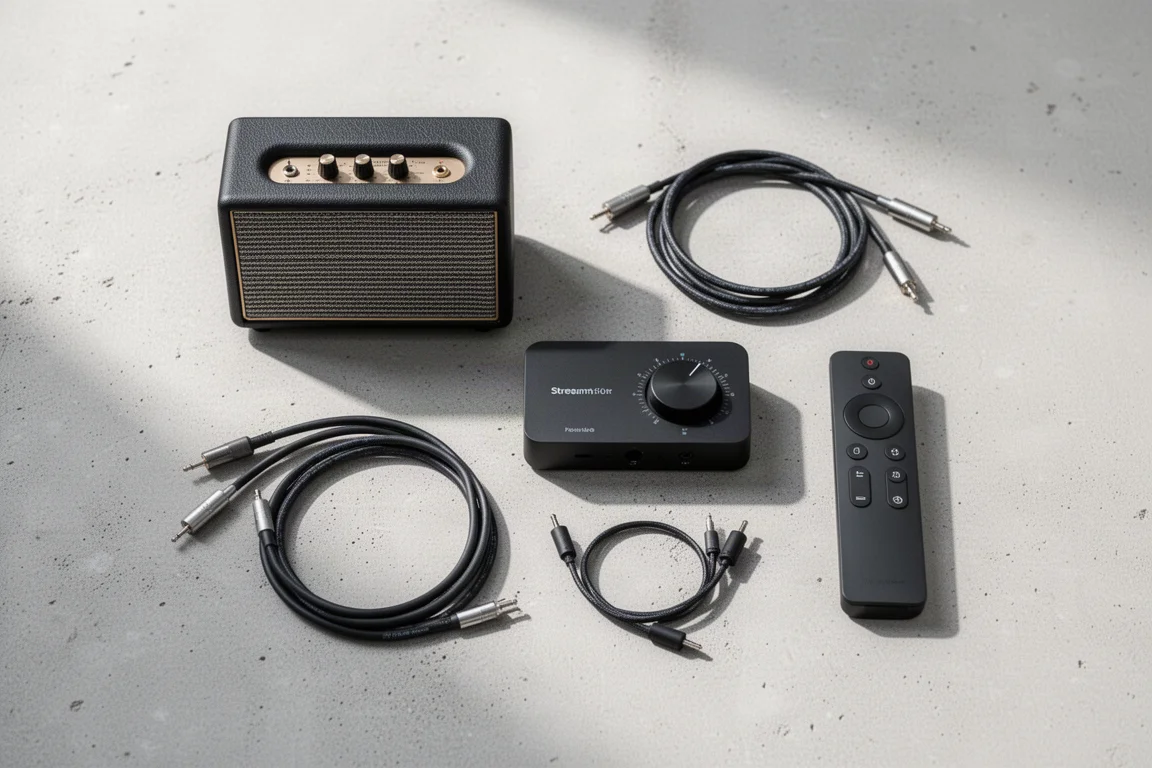
Volume control needs a plan. A dedicated preamp is the traditional route, but it is not mandatory. Listeners with digital sources only can run a network streamer with variable output straight into a power amplifier and control level from the streamer, and compact DAC units with a volume knob and a remote control work just as well. Any of those approaches keeps total system cost reasonable while still separating the amplification from the source.
Finally, remember that none of these amplifiers include tone controls. If you like to adjust bass or treble, plan to do it at the source or with an equalizer, or choose a model with removable op-amps and experiment there.
Conclusion
The sub-$500 power amplifier market is in good shape. Compact chipset designs deliver real usable power for very little money, and the Emotiva A2m marks the point where traditional class AB design becomes genuinely affordable. Above that, the Monolith and the BasX A2 offer full-size build, linear or toroidal transformer designs, and substantially more output.
Match the amplifier to your speakers and settle your volume-control plan first, and any of these six will serve well for years.
Further reading
Related Reviews
Audio Amplifiers
AGD Audion Mark III Review: A Compact Class D Amplifier With Tube-Like Musicality
A gallium nitride Class D amplifier that delivers tube-like midrange warmth, serious bass grip, and a modular upgrade path in a very small chassis.
Audio Amplifiers
Best Class D Amplifiers Under $100: Douk Audio A5 vs Fosi Audio V3
Two sub-$100 Class D amplifiers built on the same 3255 chipset, compared on bass weight, midrange body, treble presence, and real-world speaker matching.
Audio Amplifiers
Best Value Amplifiers 2026: Four Class D and Class AB Options Compared
A practical look at four stereo amplifiers priced from about $195 to $600, covering power claims, features, sound character, and the support trade-offs of buying imported gear.