Audio Amplifiers
AGD Audion Mark III Review: A Compact Class D Amplifier With Tube-Like Musicality
A gallium nitride Class D amplifier that delivers tube-like midrange warmth, serious bass grip, and a modular upgrade path in a very small chassis.
Introduction
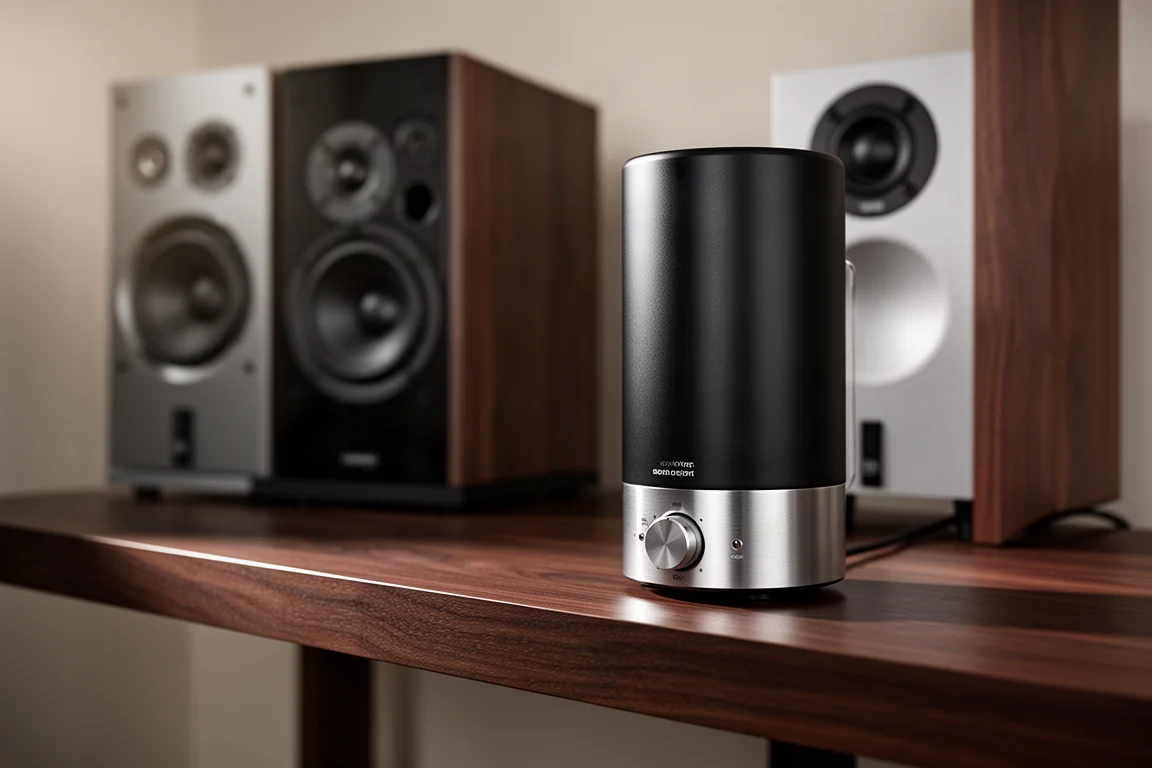
The AGD Audion Mark III is a small amplifier that makes a very large claim on your attention. Its chassis is shaped like a vacuum tube, but inside sits a gallium nitride MOSFET power stage, which makes this a Class D design. That detail matters, because the Audion Mark III does not sound like the lean, glassy Class D amplifiers many listeners have learned to expect.
The first encounter happened at a hi-fi show in Florida. Late in the day, walking past an unfamiliar room, the sound coming through the door was enough to stop the wandering. Thirty minutes of listening followed, which is an unusually long stay in a show environment, and the room held up against far larger systems elsewhere in the building, including rooms built around enormous tube monoblocks. At the time the small amplifiers were assumed to be tube designs. They are not.
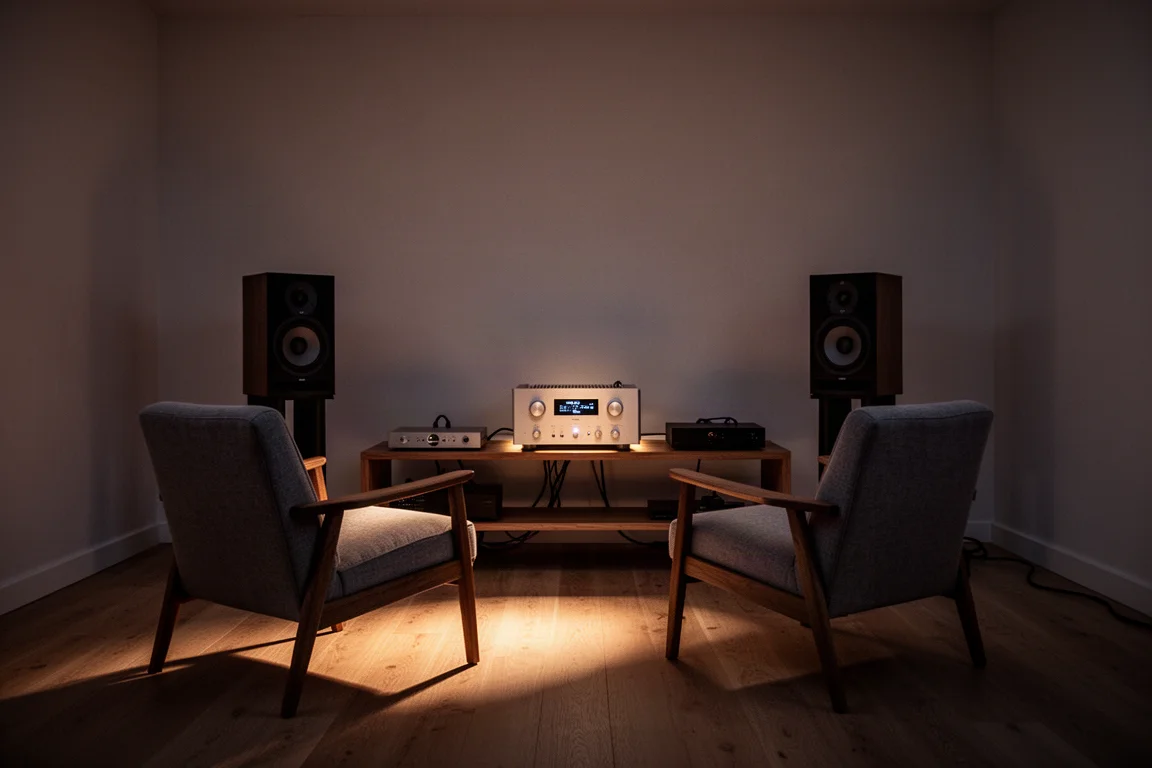
Back in a home listening room, the Audion Mark III did more than hold its ground. It sounded better than it had at the show, with tighter bass control, a fuller midrange, and a sense of space that made familiar speakers feel newly capable. After living with it across roughly twenty pairs of speakers, it is fair to call it one of the two finest amplifiers heard to date, and the only Class D design in that group.
Who This Amplifier Is For
This amplifier is aimed at listeners who care about musicality first. If you have admired the midrange warmth and flow of a good tube amplifier but dislike the maintenance, the heat, and the noise floor, the Audion Mark III targets exactly that gap. It keeps the body and texture in vocals and guitars while running far quieter in the background.
It also suits listeners who change speakers often or who own several pairs. The Audion Mark III proved unusually tolerant across warm, neutral, and mildly analytical speakers, which is rare. Most amplifiers lock into one or two happy pairings and struggle elsewhere.
Finally, it fits buyers who dislike replacing equipment every few years. The GaNTube stage is modular, so an existing unit can be upgraded rather than retired.
Main Strengths
The strengths below are the ones that show up consistently, across different rooms and different loudspeakers.
Midrange, Tonality, and Musicality
The midrange is the centre of this amplifier’s character. Vocals carry weight and body rather than the thin, glassy upper midrange that Class D designs are often criticised for. Guitars, jazz, and classical recordings all sit in a smooth, well-lit space with no harsh edge, even when the recording itself is forward or poorly produced.
What stands out is that detail retrieval and smoothness arrive together. Every nuance is present, yet nothing is pushed at the listener. Recordings that normally sound bright or fatiguing become easier to sit with, and long listening sessions do not end in ear fatigue.
The background is also exceptionally black. Because the design runs with a very low noise floor, quiet passages and small dynamic shifts are easier to hear. The overall balance leans neutral with a touch of warmth, closer to a well-kept analogue source than to a studio monitor.
Bass Control and Speaker Matching
Size is genuinely misleading here. The Audion Mark III is rated at 125 watts into 8 ohms and 250 watts into 4 ohms, and each unit carries 30,000 microfarads of reservoir capacitance, split between the main amplifier board and the power supply. That storage is what allows the amplifier to handle demanding loads without strain.
In practice, the bass grip is the surprise. Extension, texture, and control come across as more authoritative than from many full-size amplifiers, and demanding stand-mount speakers have never sounded better in the same room. Even large planar magnetic speakers, the kind that can shut down lesser amplifiers, are driven without any sign of stress. The designer uses planar magnetic speakers in one of his own listening rooms, which suggests the pairing was considered deliberately.
Matching is unusually broad. Speakers with a touch of warmth, such as Rosso Fiorentino models, work beautifully, and so do Sonus Faber designs and more neutral options. Mildly analytical speakers benefit from the added body. That range covers a large share of what most listeners own.
Dynamics and High-Frequency Detail
High frequencies are detailed without being tilted up. The treble is sweet rather than bright, never forward, and never veiled either. Micro details and room cues are all there, but they sit behind the performers rather than in front of them, which creates a presentation that feels like a good seat a few rows back in a concert hall: intimate, wide, and deep.
Soundstaging is the other standout. Width and depth are enormous for the price and footprint, and instruments are placed precisely. Imaging holds up with complex material, and the amplifier keeps its composure when the music gets loud.
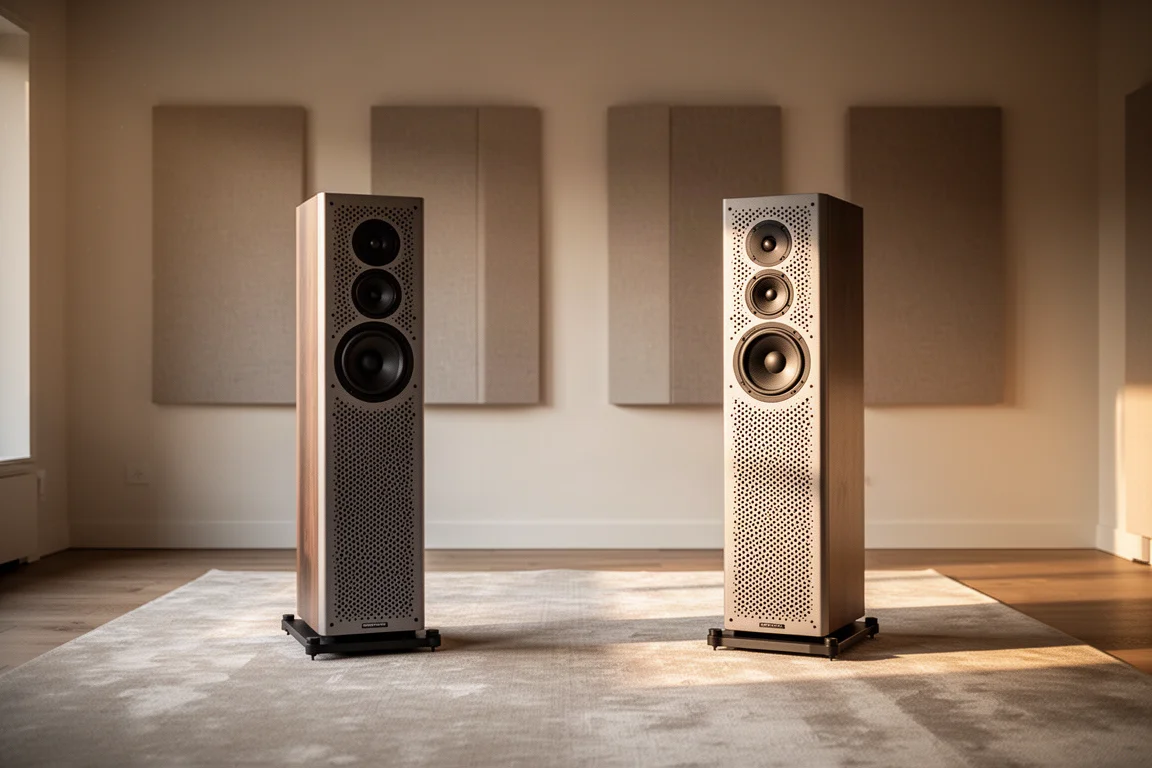
Dynamics follow the same pattern. Slam and extension are present without any hardening of tone, which keeps energetic material enjoyable rather than aggressive. Even metal, a genre that exposes forward treble quickly, stays listenable.
Things to Consider Before Buying
No amplifier is a universal match, and this one is no exception. The Audion Mark III flatters a wide range of speakers, but that range is not infinite. Extremely bright or unusually difficult loads should still be considered on a case-by-case basis before committing.
The design is also not a tube amplifier, despite appearances. You cannot roll a KT88 into it, and anyone hoping for classic tube swapping will be disappointed. What the GaNTube architecture offers instead is a factory upgrade path, so a Mark II owner can move to the Mark III specification without buying a completely new amplifier.
Scepticism about Class D is understandable, and measurements alone do not settle the question. The Audion Mark III measures at a state-of-the-art level, but the designer has been clear that strong numbers on paper do not automatically produce good sound, which is why the tuning work behind the design matters as much as the topology.
Finally, this is a premium amplifier. It sits well below the cost of large reference monoblocks, but it is not a budget purchase, and buyers should plan the rest of the system around it rather than treating it as an impulse add-on.
Buying Advice
Buy the Audion Mark III if musicality is your priority and you want it without tube maintenance. It is the rare amplifier that delivers midrange warmth, a very low noise floor, and serious bass control in the same chassis, and it does so while matching a broader range of speakers than most alternatives.
Pay attention to the speakers you already own. If they lean warm or neutral, or if they are mildly analytical and you want more body, this amplifier is likely to be a strong fit. If you have previously dismissed Class D on tonal grounds, this is the design worth revisiting.
Consider the upgrade path as part of the value. Because the GaNTube stage is swappable, the amplifier can be brought up to a newer specification later rather than replaced outright, which softens the long-term cost of ownership. Buyers who already own an earlier version should check the current upgrade option before considering a new unit.
If you are weighing this against a much larger reference amplifier, note that the Audion Mark III has been compared directly with a large monoblock design costing many times more, and the two were difficult to separate. Speaker matching is the deciding factor, and on that measure the compact amplifier is the more flexible of the two.
Conclusion
The AGD Audion Mark III earns its recommendation on sound rather than novelty. It brings tube-like midrange body, precise imaging, and commanding bass from a chassis small enough to sit on a shelf, and it does so with the low noise floor of a modern switching design.
It is not the right amplifier for every system, and it is not inexpensive. But for listeners who want one amplifier that handles a wide spread of speakers, upgrades over time, and hours of fatigue-free listening, this is one of the most convincing options available.
Product link
View more details for AGD Audion Mark III
This product is mentioned in the review. Check the specifications, options, and compatibility before buying.
View more details for AGD Audion Mark IIIFurther reading
Related Reviews
Audio Amplifiers
Best Class D Amplifiers Under $100: Douk Audio A5 vs Fosi Audio V3
Two sub-$100 Class D amplifiers built on the same 3255 chipset, compared on bass weight, midrange body, treble presence, and real-world speaker matching.
Audio Amplifiers
Best Power Amplifiers Under $500: Six Stereo Amplifiers From $74 to $579
A practical roundup of six stereo power amplifiers under $500, covering real-world power, connectivity, cooling, and which kind of system each one suits.
Audio Amplifiers
Best Value Amplifiers 2026: Four Class D and Class AB Options Compared
A practical look at four stereo amplifiers priced from about $195 to $600, covering power claims, features, sound character, and the support trade-offs of buying imported gear.