Hi-Fi Audio
Topping E50 and L50 Review: A Compact DAC and Headphone Amp Stack
A practical look at the Topping E50 DAC and the Topping L50 headphone amp, covering inputs, power, sound character, filter settings, and who should consider buying the pair.
Introduction
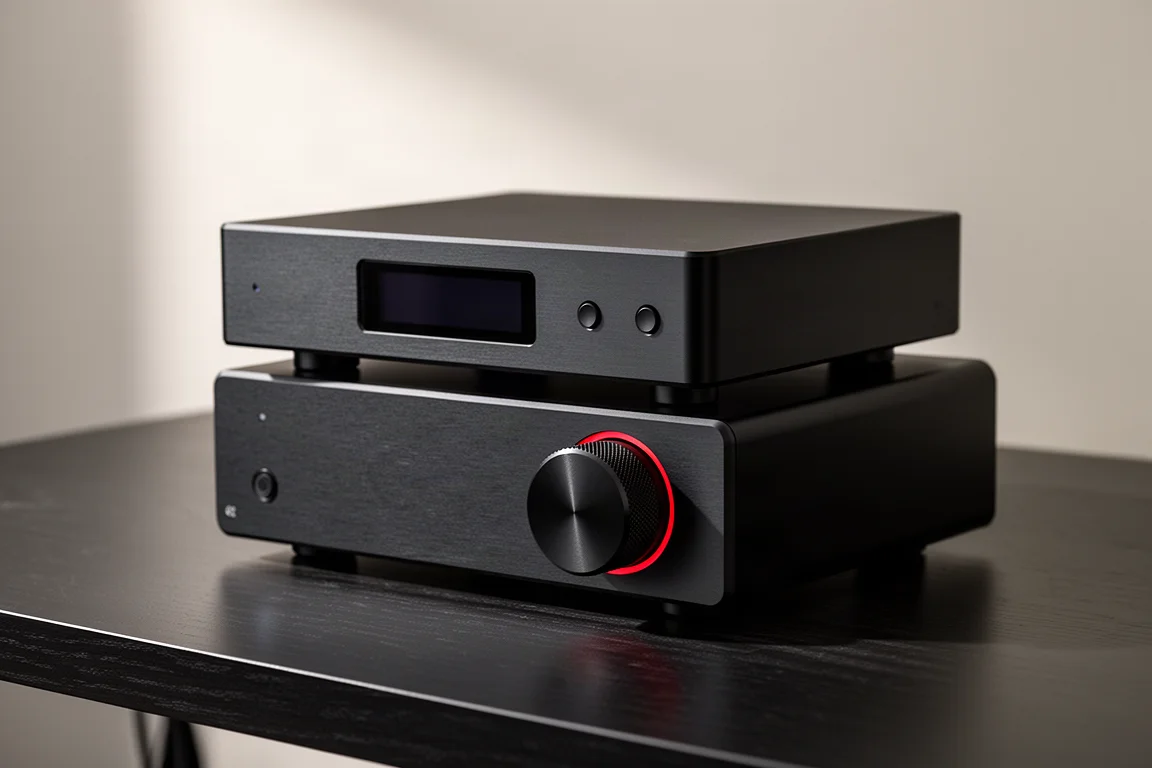
The Topping E50 and the Topping L50 are two separate components that solve two separate problems. The E50 is a dedicated digital-to-analog converter priced at $270, and the L50 is a dedicated headphone amplifier priced at $230. Bought together, they form a compact desktop stack for around $500.
Neither unit tries to be an all-in-one box. There is no Bluetooth anywhere in this stack, and no wireless streaming built in. What you get instead is a focused converter and a focused amplifier, connected to each other with a balanced cable.
Why This DAC and Amp Pair Stands Out
The first argument for this stack is straightforward value. A dedicated converter at $270 and a dedicated amplifier at $230 sit well below what a flagship desktop DAC can cost, and the pair still comes in under many single-box converter and amplifier combinations.
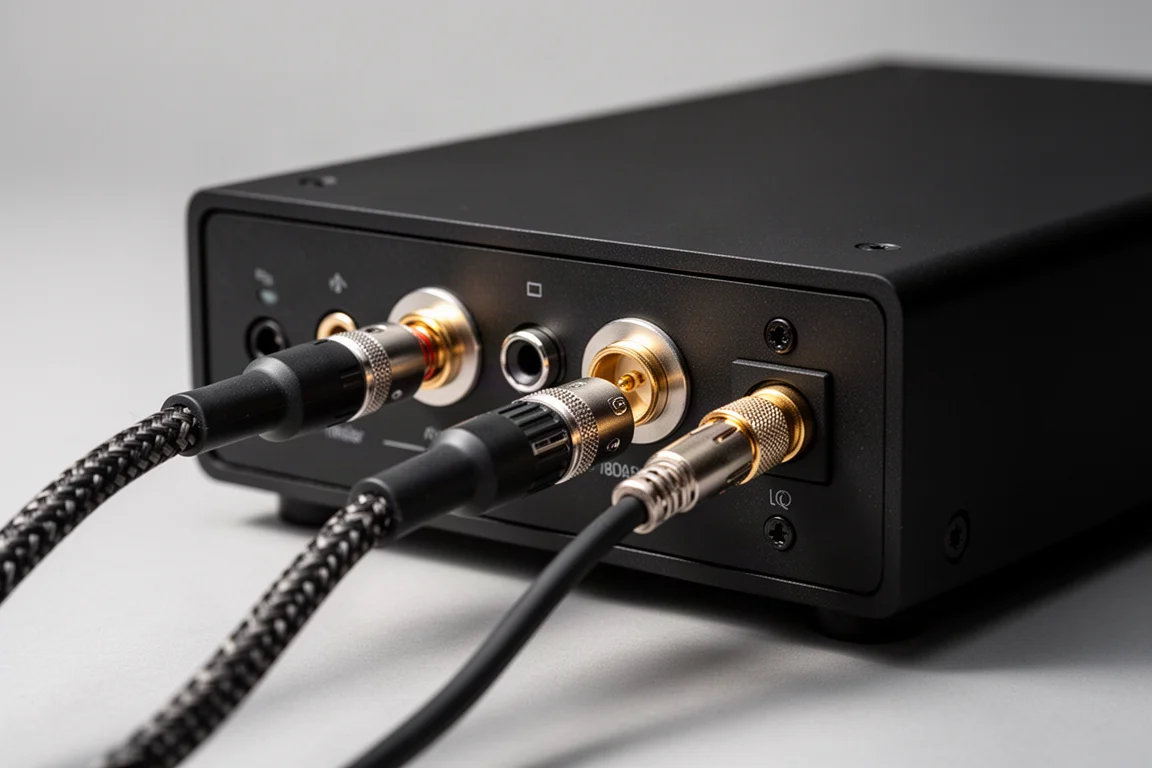
The second argument is connectivity. Both units support balanced operation, which is unusual at this price point. The L50 uses TRS-style balanced connectors on the rear rather than XLR, which matters mainly because TRS balanced cables are relatively affordable and easy to find. The E50 pairs that with balanced output of its own.
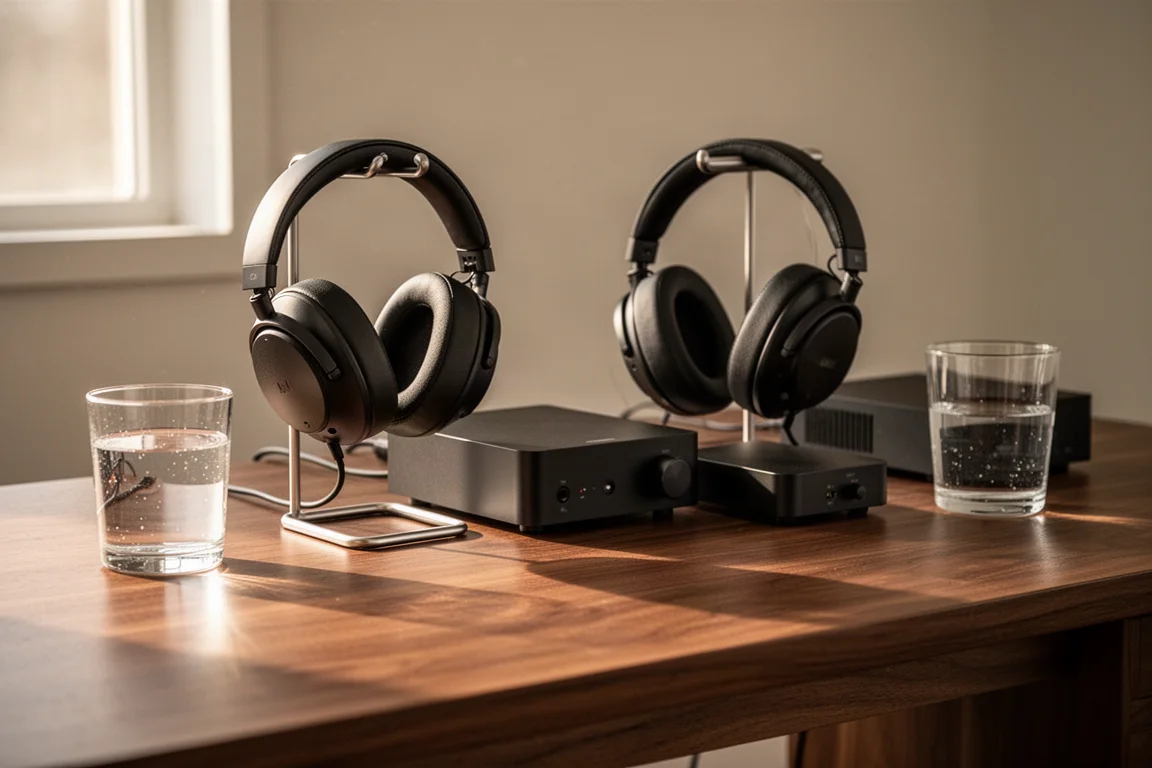
The third argument is quietness. With sensitive in-ear monitors on the low gain setting, the L50 stays silent, with no audible noise floor sitting under the music. The E50, meanwhile, accepts MQA on every one of its digital inputs, so listeners who care about that format are covered no matter which input they use.
Topping E50: A DAC That Handles Every Input
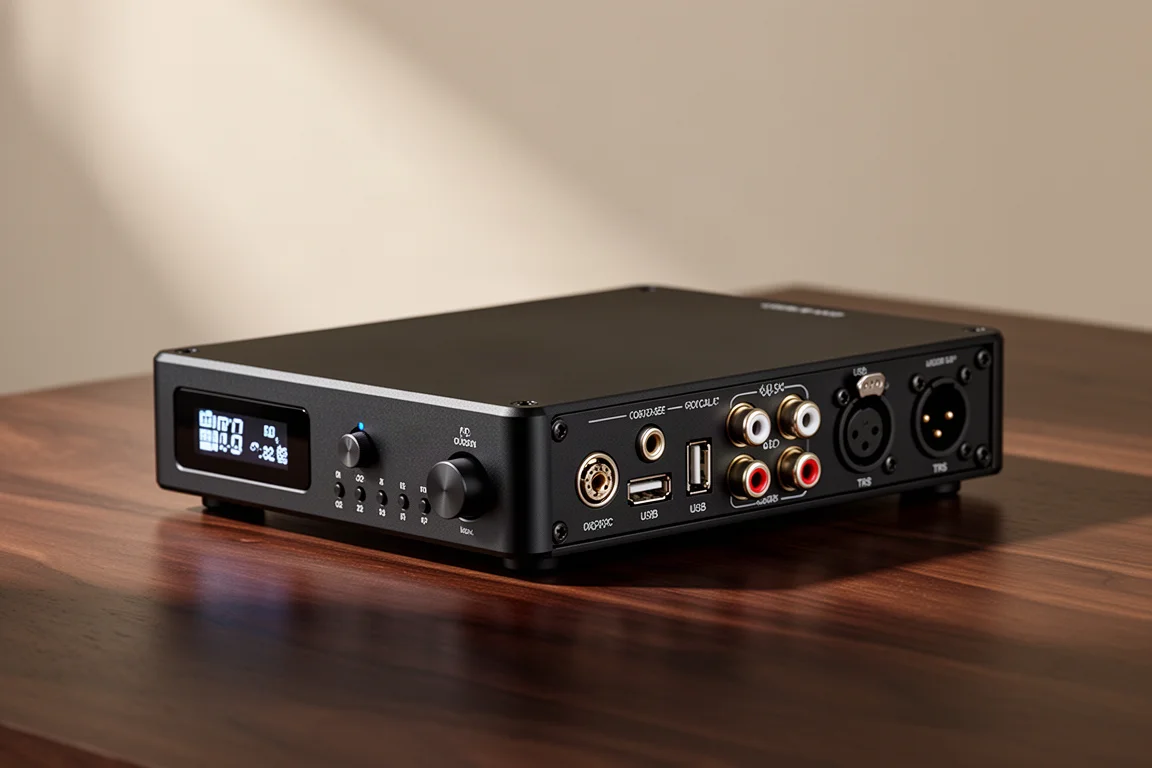
The E50 is a compact desktop converter with full-size USB, full-size optical, and full-size coaxial inputs. All three of those inputs can handle MQA. Inside, the unit uses the ES9068 converter chip.
A remote control is included as standard, and it handles volume and input selection, along with the filter settings described below. The rear panel offers balanced output, which is what makes the pairing with the L50 tidy.
The one thing the E50 does not offer is Bluetooth. If wireless playback from a phone or tablet is part of your routine, this is not the converter for that job. If your sources are a computer, a streamer, or a disc transport, the input selection is more than sufficient.
Topping E50 Sound Quality and Filter Settings
The E50 leans neutral rather than warm or analytical. The low end stays full without sounding thick, and the midrange and treble stay clean. Against the earlier Topping E30, the E50 is a clear step up: better balanced, fuller at the bottom, and more natural sounding overall.
There are three filter roll-off settings, and they are selectable from the remote. The differences are audible rather than theoretical. The third setting adds a little more weight at the bottom end, which suits listeners who like a bit of punch and heft in the low frequencies.
The E50 also gets close to a flagship desktop DAC that costs roughly three times as much. The more expensive unit includes Bluetooth, which the E50 does not, and on speakers the E50 does not throw as wide a soundstage as some alternatives. On headphones, though, it is a strong performer for the money, and it is a particularly sensible choice for anyone who already owns a headphone amplifier they like and simply wants a better converter in front of it.
Topping L50: Power for Almost Any Headphone
The L50 is rated at 3.5 watts into 16 ohms and around half a watt into 300 ohm headphones. In practice that is enough power for just about anything you are likely to plug into it, from sensitive in-ear monitors to harder-to-drive dynamic models.
The amplifier uses an NFCA topology, which stands for nested feedback composite amplifier. In plain terms, it applies negative feedback to reduce distortion, and the result is very low, effectively imperceptible noise. Three gain settings are available: low, medium, and high. The low setting is the one that matters most for in-ear monitors, and it keeps the background completely black even with sensitive models.
On the measurement side, the L50 is part of a generation of headphone amplifiers that have been improving steadily. It puts out plenty of power, keeps noise low, and looks clean on a desk. It is also broadly comparable in character to other well-regarded desktop amplifiers in the same bracket.
Topping L50 Features and Everyday Use
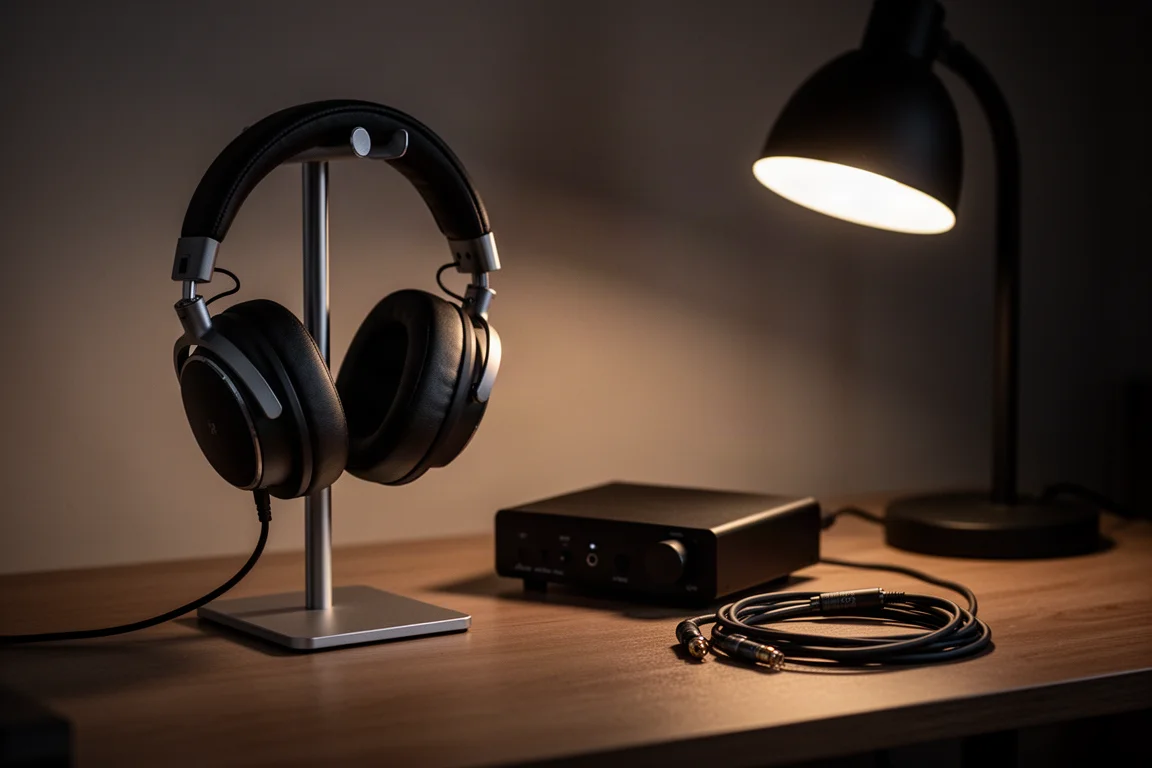
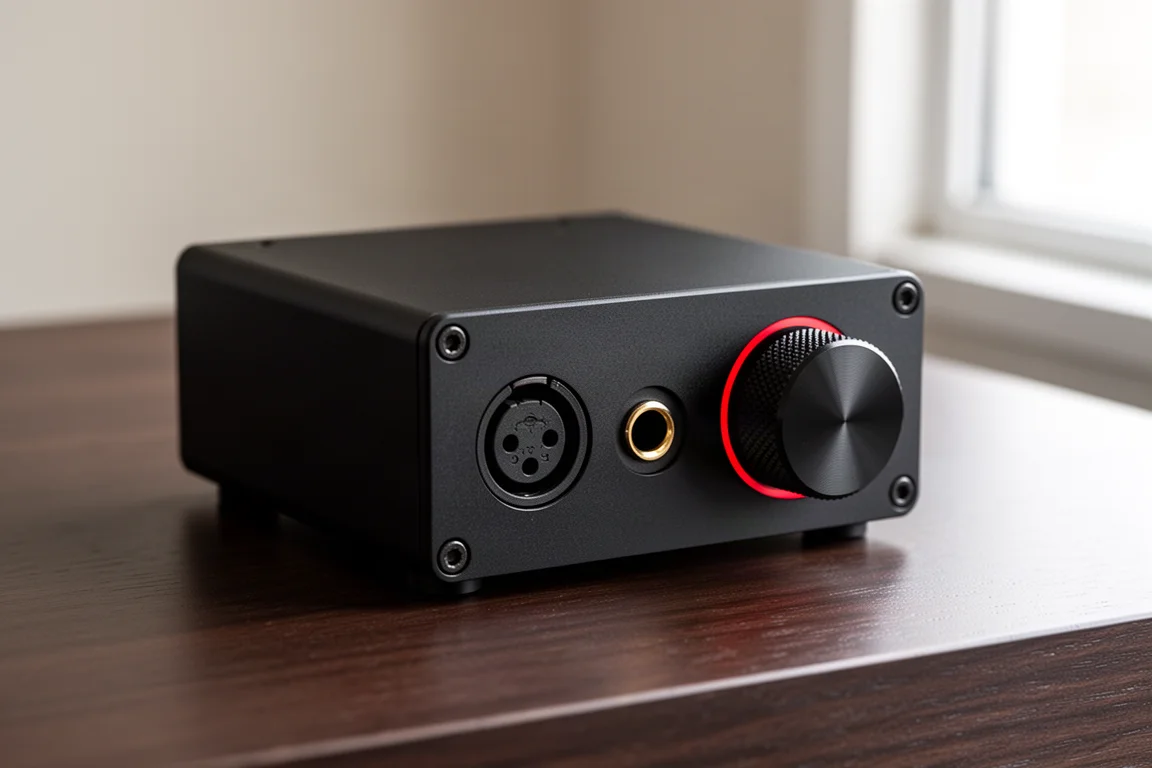
The front panel offers a 4-pin XLR output and a standard quarter-inch output, so both balanced and single-ended headphones connect without an adapter. On the rear there are balanced TRS connectors plus a single-ended input and output. That single-ended output means the L50 can double as a preamp, which is useful if you ever want to feed powered speakers from the same stack.
The chassis is compact and takes up very little desk space. The review unit here is black with a thin red ring around the volume knob, and the amplifier is available in a range of other colors if black is not the look you want.
The three-position gain switch is the feature that makes the L50 easy to live with day to day. Sensitive in-ear monitors sit comfortably on low gain, while higher-impedance headphones can be driven on the higher settings without strain. Switching between the two takes a moment and nothing else.
Using the E50 and L50 Together
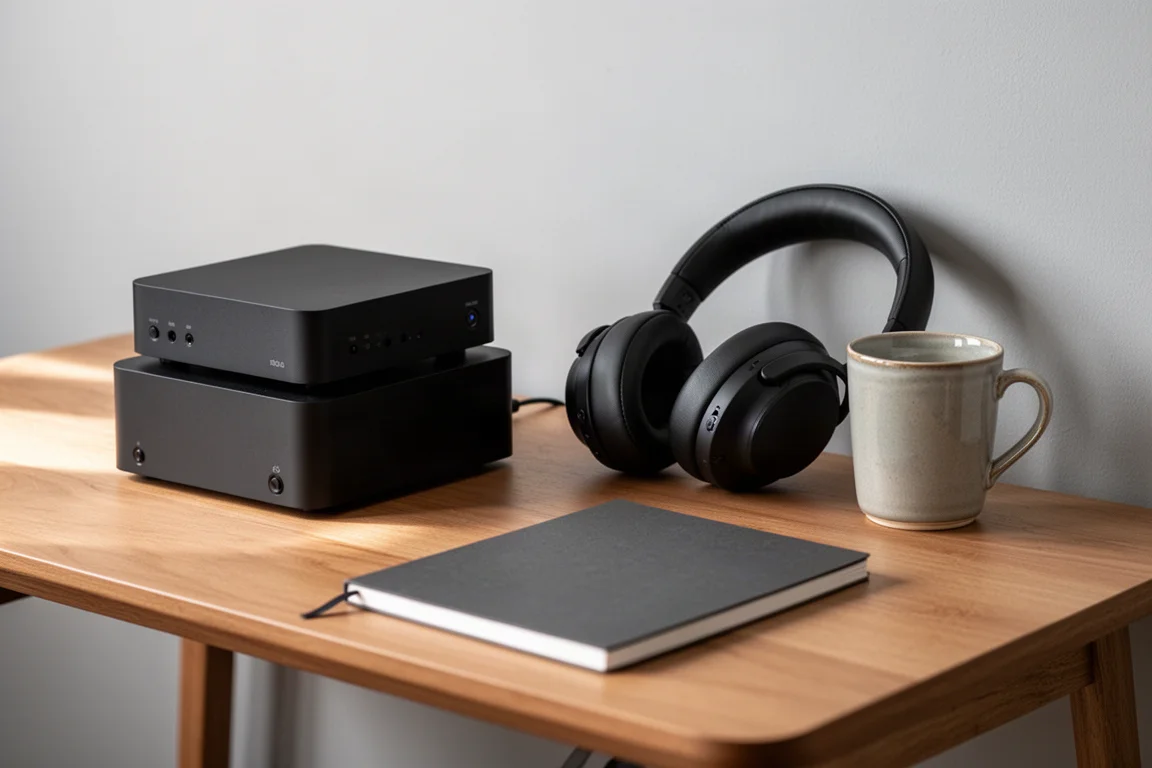
Connected as a pair with a balanced cable, the E50 and L50 behave like a single, well-matched component. The combined price is around $500, which is the same territory as many all-in-one converter and amplifier boxes, but the separates approach has advantages: each half can be replaced or upgraded independently, and the amplifier section carries more power than most combined units at this price.
Compared with an all-in-one converter and amplifier combination, the stack sounds noticeably fuller at the bottom end without smearing or covering up detail in the midrange or the treble. That combination of a full low end and clean upper registers is the main reason to run these two together rather than choosing a single box.
There is one trade-off to keep in mind, and it is the same one noted earlier: no Bluetooth. If wireless input is essential, this stack is not the answer. If it is not, the pairing is hard to fault at the price.
Buying Advice: Do You Need Both?
If you need both a converter and a headphone amplifier, buying the E50 and the L50 together is the most coherent route. At roughly $500 for the pair, you get balanced connectivity, a remote-controlled DAC with MQA on every input, and an amplifier with enough power for almost any headphone.
If you already own a headphone amplifier you are happy with, there is no obligation to replace it. The E50 stands on its own as a converter upgrade, particularly for listeners who want MQA support across USB, optical, and coaxial inputs, or who want a neutral converter with a bit of weight in the low end.
If your listening is mostly through headphones and you are starting from nothing, the pair makes the strongest case. The L50’s three gain settings cover sensitive in-ear monitors and demanding full-size headphones alike, and the E50 gives it a clean, neutral source. If speakers are your main system and a wide soundstage is the priority, it is worth comparing alternatives before committing.
Conclusion
The Topping E50 and Topping L50 are a well-matched pair rather than two products competing for the same job. The E50 is an affordable, neutral converter with full-size USB, optical, and coaxial inputs, MQA support on all three, three filter settings, and a remote in the box. The L50 is a compact, quiet amplifier with 3.5 watts into 16 ohms, three gain settings, and balanced connectivity at a price where balanced is often missing.
The main compromise is the absence of Bluetooth, and the E50 gives up some soundstage width on speakers compared with pricier alternatives. For headphone-first listeners, though, this stack delivers a lot of capability for around $500, and each half can be bought on its own if only one of them fills a gap in your system.
Further reading
Related Reviews
Hi-Fi Audio
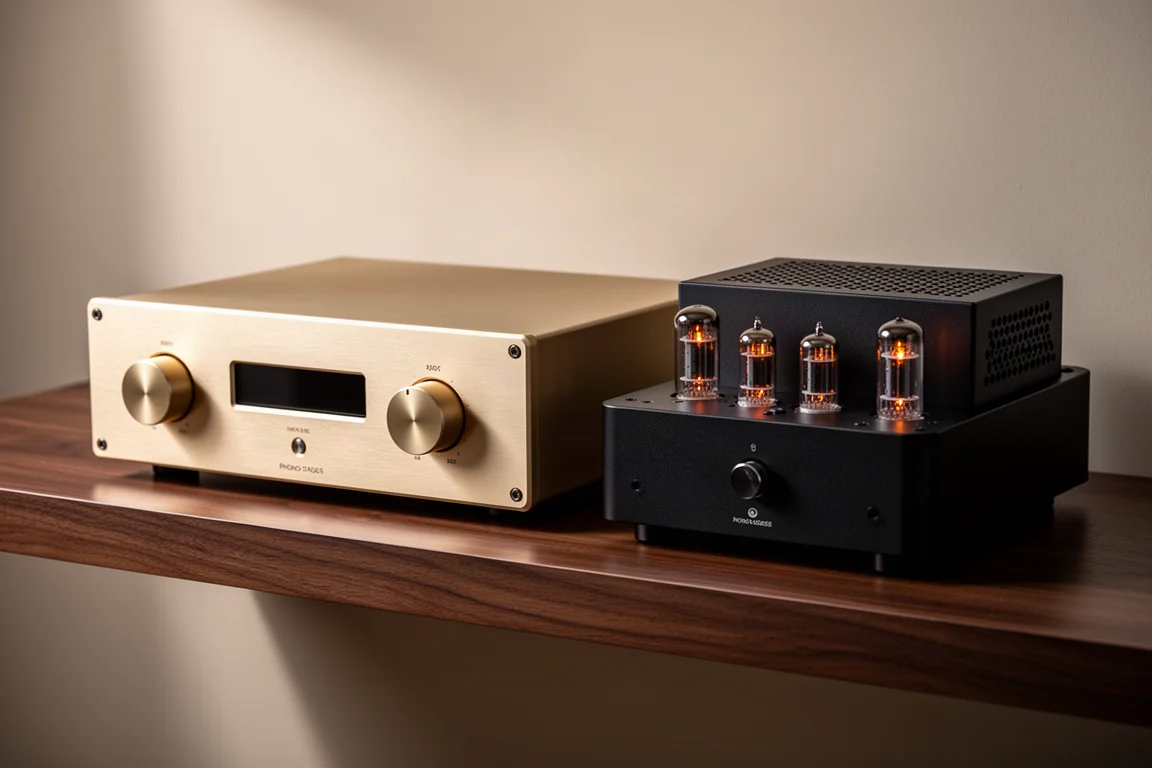
Accuphase C-57 vs Allnic H-7000V: Two High-End Phono Stages Compared
A fully balanced solid-state phono stage with a pitch-black noise floor meets a tube design built for well-loved records. Here is how to choose between them.
Hi-Fi Audio
Active vs Passive Hi-Fi: Five Components for a Modern System
Five components that define modern active and passive hi-fi systems, with the strengths, trade-offs and setup details worth weighing before you buy.
Hi-Fi Audio
Advance Paris A10 Apex Review: A Hybrid Integrated Amplifier That Covers a Lot of Ground
A French hybrid integrated amplifier with a class A tube preamp stage, analogue power meters, and an internal DAC and phono stage good enough to make extra boxes unnecessary.