Desktop DACs
Topping E30 Mark II Review: Familiar Sound, Familiar Trade-Offs
The Topping E30 Mark II is a compact desktop DAC with flexible 5V power and straightforward connectivity, but a remote-dependent control scheme and a bright, sibilant character shape who should buy it.
Introduction
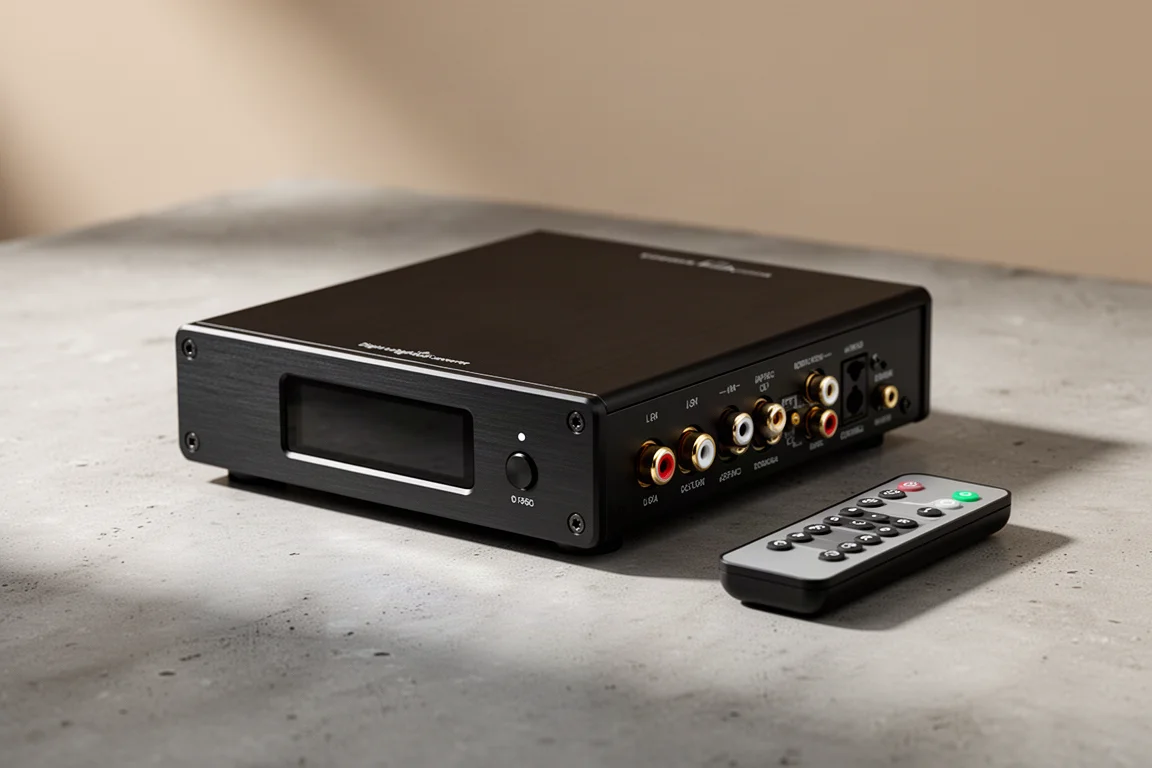
The Topping E30 Mark II is the successor to a desktop DAC that built a loyal following before it was discontinued during the AKM chip shortage. Put the two side by side and most listeners would struggle to tell them apart, because the exterior is carried over almost unchanged. The real differences sit inside the chassis.
Pricing is worth addressing early. The original E30 landed at around $100. The Mark II now comes in at about $150, a fifty percent increase. In context, comparable DACs in this bracket have moved up in a similar way, so the jump is not unique to this model, but it does change the value calculation.
At the centre of the design are two AKM 4493S converter chips. That pairing shapes the sound, and it also explains why this DAC divides listeners so sharply.
Who this product is for
This is a compact desktop DAC for people who want a simple digital hub: USB from a computer, optical or coaxial from another source, and a pair of RCA outputs feeding an amplifier or receiver.
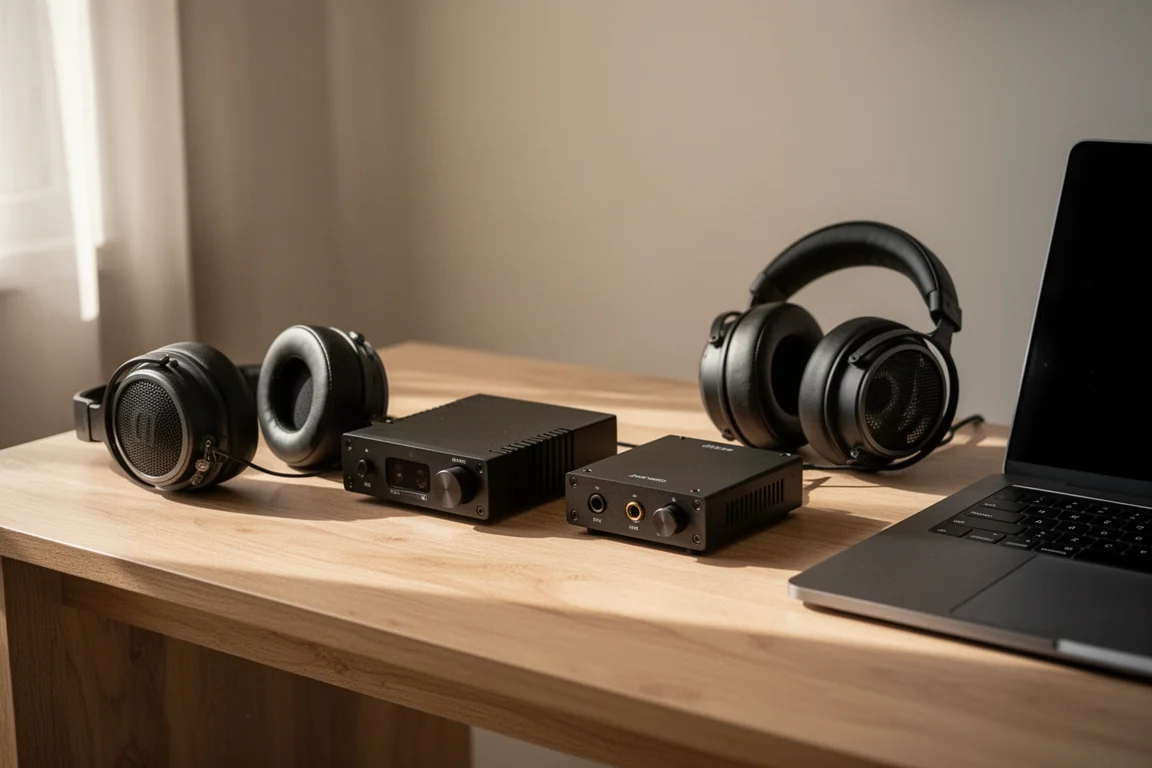
It is likely to suit you if you keep track of the supplied remote control and if your headphones or speakers lean warm. Paired with a warmer headphone such as the Sennheiser and Drop 6XX, it makes for a reasonable listen.
It is likely to frustrate you if your system is revealing, or if you expect to adjust volume from the front of the unit. Both points are covered in more detail below.
Main strengths
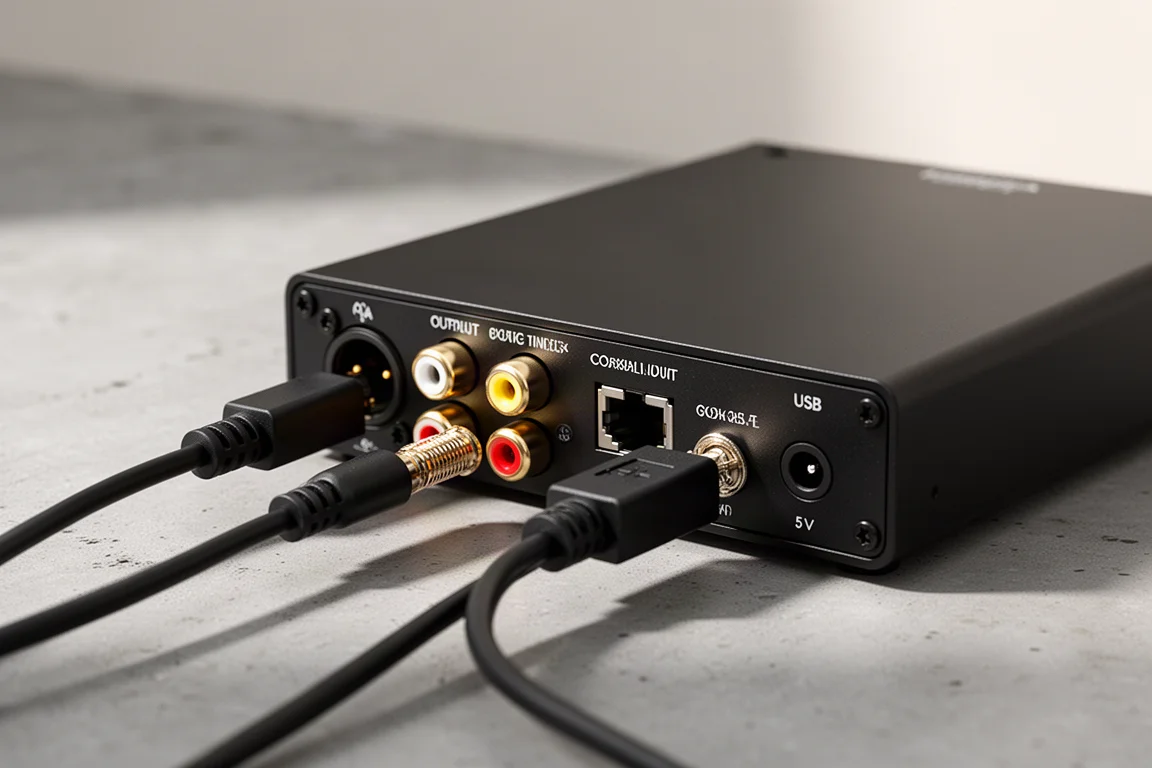
Connectivity is straightforward and genuinely useful. The rear panel offers one set of RCA outputs, left and right, so the E30 Mark II works with a conventional amplifier or an older receiver without adapter cables. Alongside those outputs you get a full-size coaxial input, a full-size optical input, and a full-size USB input.
Power is the most interesting practical detail. The unit uses a standard barrel connector running at 5 volts DC, which means almost any 5 volt adapter can be used, including a phone charger. That opens up the option of running the DAC from a battery pack rather than a wall supply, something listeners sometimes try when chasing a quieter power source. It also makes it easy to put the supply on a smart switch and cycle it on and off through the day.
The included remote handles volume up and down, the roll-off setting, and display brightness. There are six roll-off options to choose from. The chassis itself is compact and unobtrusive, taking up very little desk space.
Whether the dual AKM 4493S implementation translates into a sound you enjoy is a separate question, and one covered further down.
Design, controls, and connectivity
The front panel is where the E30 Mark II asks for the most patience. There is no volume knob and there are no pressable buttons. What you get is a touch button that handles input switching, with a long press to power the unit off. In practice that touch button does not always register, and input switching is essentially the only thing you can do from the front.
That matters because the remote is the only way to change output volume. Lose it and you lose control of the DAC’s level entirely. If you want to bring a vintage receiver into a digital setup, or you simply want to change volume quickly at the desk, the absence of a physical control is a real limitation. It was a common complaint about the first E30, and the Mark II keeps the same approach rather than fixing it.
Things to consider before buying
Sound is the bigger consideration. In a direct comparison, the E30 Mark II and the SMSL D6 were so close that they sounded like the same product. The sibilance heard on the D6 is present here as well.
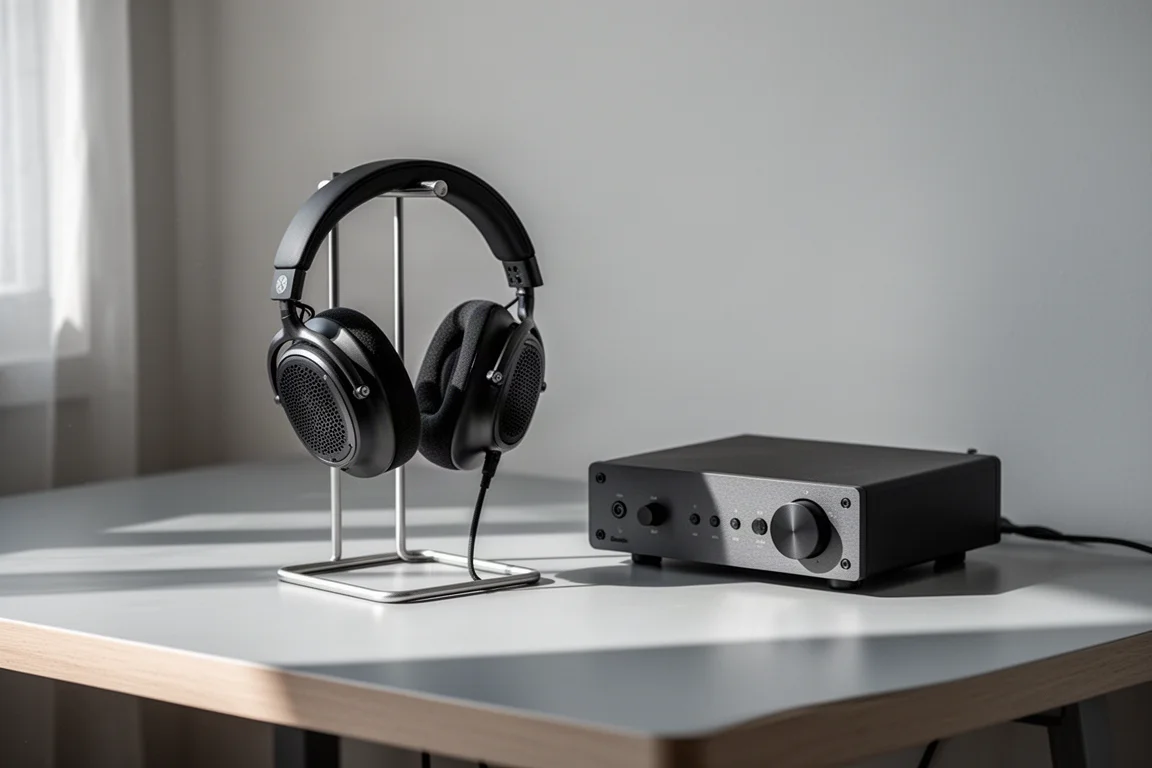
With revealing gear, that character becomes difficult. High percussion, cymbals in particular, came across as harsh and out of place. Paired with a revealing headphone such as the HiFiMan Edition XS, the combination did not work well.
With a warmer headphone the story is friendlier. The Sennheiser and Drop 6XX smoothed things out and made for a reasonable listen.
For someone who has never used a capable outboard DAC, the E30 Mark II will likely impress at first. The open question is how it holds up over time once a resolving system sits around it.
Price deserves a mention here too. Moving from roughly $100 to roughly $150 is a meaningful jump, even allowing for the wider market moving in the same direction.
How it compares with alternatives
The closest competitor is the SMSL D6, which shares the same sonic character in a side by side listen; it does place controls on the front, but that alone does not make it the better buy. The Schiit Modi is another option in this territory, and the earlier AKM version was, from memory, more enjoyable than either the D6 or the E30 Mark II. Within Topping’s own range, the E50 sounds noticeably better and costs roughly $100 more, though it carries some of the same front panel limitations. If you specifically like a bright, revealing presentation and you are running a warmer system, the E30 Mark II could balance out; with a revealing preamp, amplifier, and speakers, it will likely be too much.
Buying advice
If you decide to buy the E30 Mark II, treat the remote as part of the product. Keep it somewhere you will not lose it, because the front panel will not help you recover control.
Pair it with warmer headphones or speakers rather than resolving ones. If your system already leans bright, or you want the option of quick volume changes at the desk, this is not the DAC to build around.
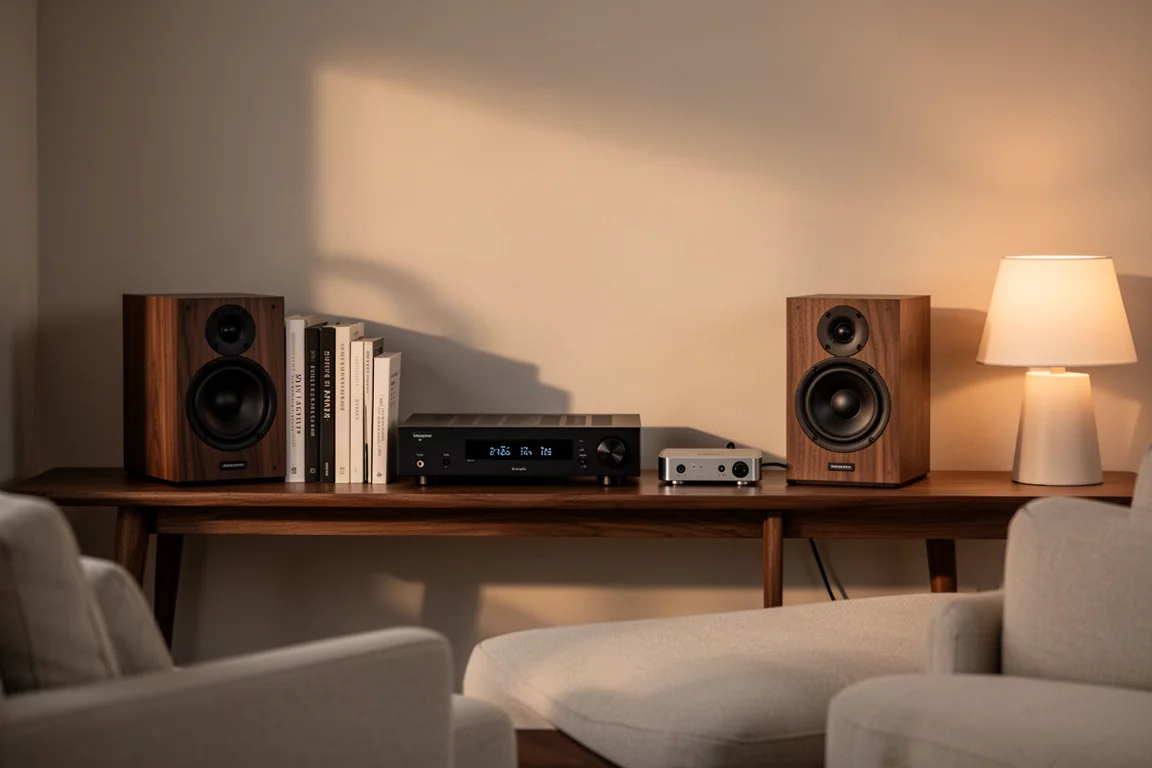
Set expectations on price as well. At around $150, the E30 Mark II sits in a band where genuinely satisfying options are thin, which is the main reason it stays in the conversation at all. If the budget can stretch, the E50 is the more convincing choice from the same brand.
Conclusion
The Topping E30 Mark II is a familiar desktop DAC with a familiar set of compromises. On one side: solid connectivity, flexible 5 volt power, and a clean, compact chassis. On the other: a remote-dependent control scheme and a bright, sibilant character that demands careful system matching.
For listeners with warmer gear who keep the remote close at hand, it can work well. For anyone running a revealing system, the sound is the sticking point. Buy it knowing which of those two groups you belong to.
Product link
View more details for Topping E30 Mark II
This product is mentioned in the review. Check the specifications, options, and compatibility before buying.
View more details for Topping E30 Mark IIFurther reading
Related Reviews
Desktop DACs
Fosi Audio ZD3 Review: A Compact Desktop DAC With HDMI ARC and Swappable Op-Amps
The Fosi Audio ZD3 pairs a Sabre 9039 Q2M DAC with HDMI ARC, Bluetooth, and a socketed op-amp stage at a $179 retail price. Here is what it does well and what to check first.
Desktop DACs
Geshelli Labs J2 Review: AKM 4493 vs Sabre 9038Q2M
A practical comparison of the Geshelli Labs J2 in its AKM 4493 and ESS Sabre 9038Q2M versions, covering sound character, inputs, build options, and how to choose.
Desktop DACs
JDS Labs J2 AKM 4499 Review: A Two-Chip DAC Built for Speaker Listening
The JDS Labs J2 AKM 4499 version pairs two AKM chips with three socketed op amps. Here is what the upgrade adds, how the op amp options change the sound, and where the 4493 version still makes sense.