Headphone DACs and Amps
Topping DX5 Review: An All-in-One DAC and Headphone Amp
The Topping DX5 combines a balanced DAC, a headphone amplifier, LDAC Bluetooth, and a remote in one compact chassis. Here is what it does well and what to weigh first.
Introduction
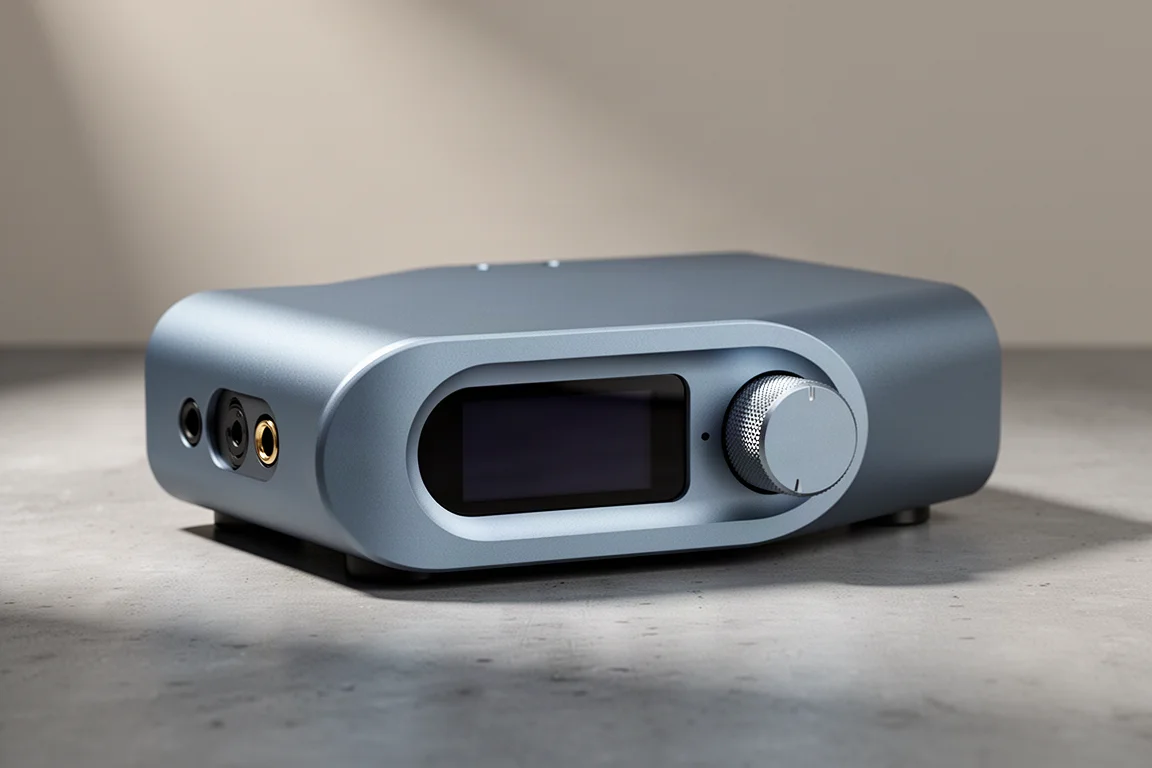
The Topping DX5 is an all-in-one DAC and headphone amplifier, which means digital conversion and headphone amplification live in the same chassis. Instead of pairing a separate DAC with a separate amplifier, you get a single desktop unit with a balanced headphone output, a single-ended output, Bluetooth, and a remote control in the box.
At around $450, the value argument rests on consolidation. A balanced DAC, a balanced headphone amplifier, and a variable volume control would normally be two or three separate purchases, and the DX5 folds them into one component.
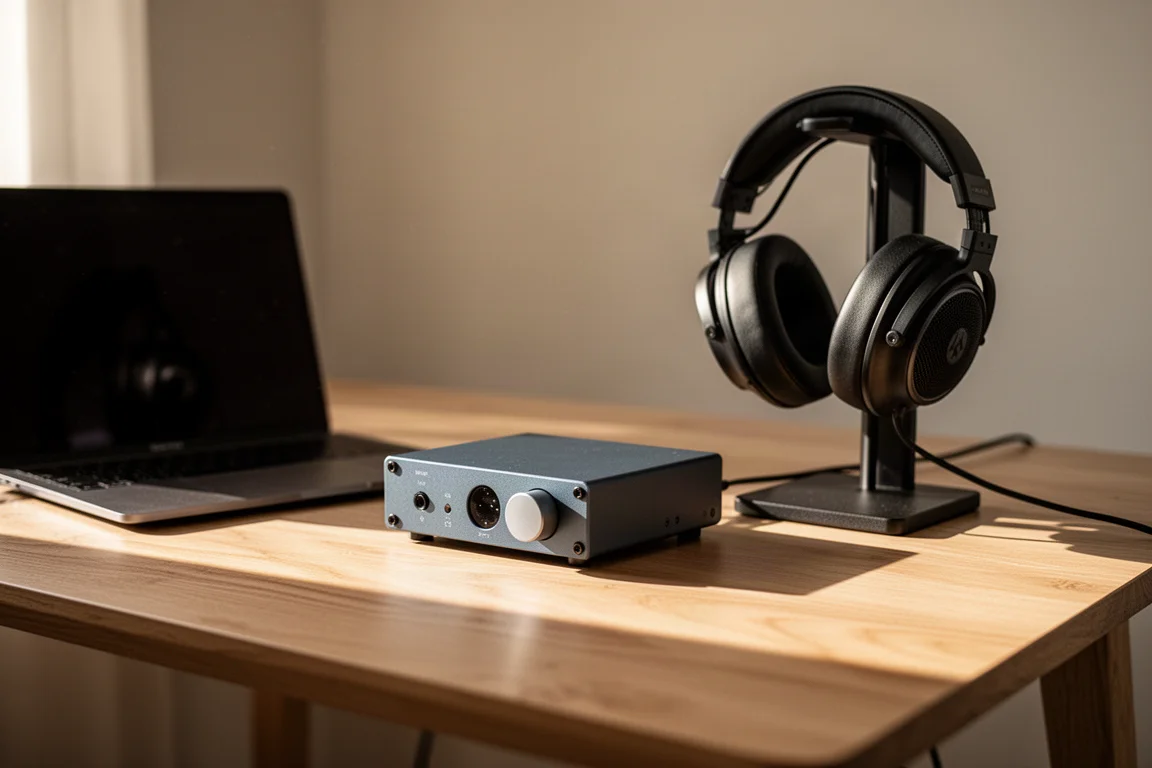
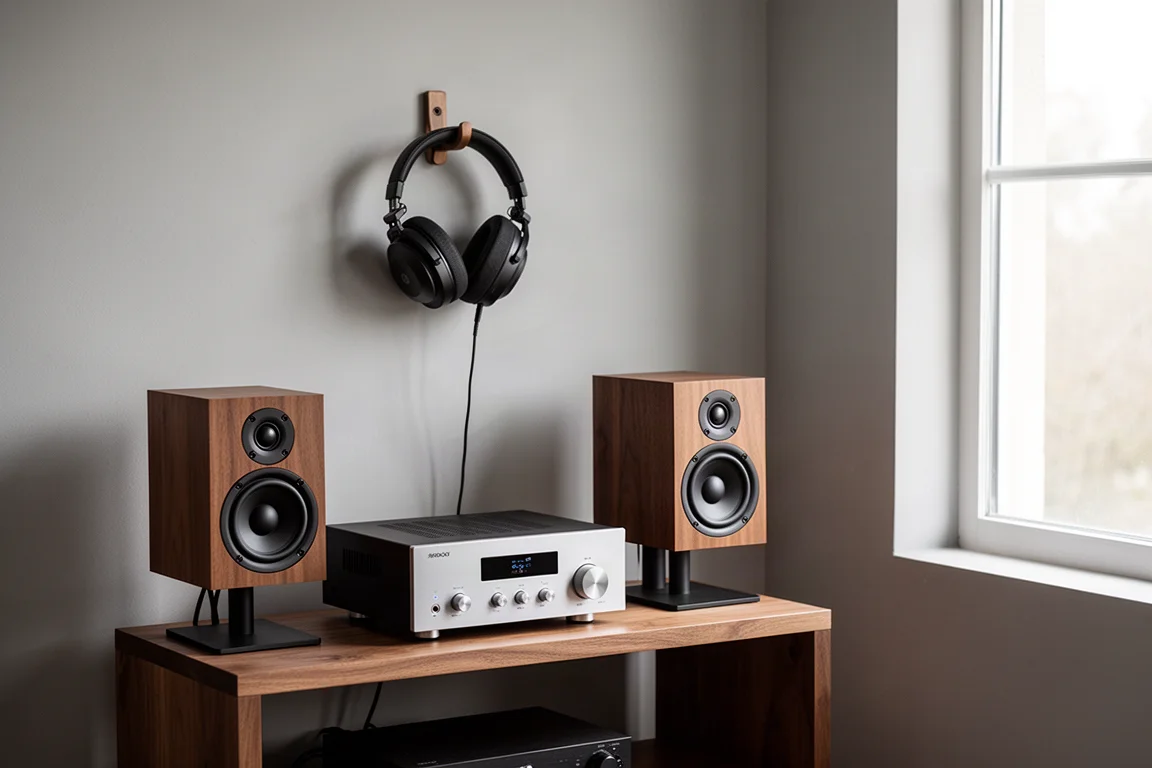
The same flexibility extends beyond headphones. Because the DX5 includes Bluetooth and a remote, it can also serve as a source and volume control for a stereo or an older receiver, adding wireless playback and remote operation to equipment that was never designed for either.
Who This Is For
The DX5 suits listeners who want one box on the desk rather than two, and who value having balanced outputs, wireless playback, and remote control available without adding separate components. If you already own a capable amplifier and only need conversion, a dedicated DAC will usually be the simpler purchase.
It also suits people who travel. The chassis is compact enough to fit in carry-on luggage, and unlike a dongle DAC it does not depend on the host laptop for power. That matters on longer trips, where a dongle can run out of headroom with harder-to-drive headphones.
A third group will find it useful for modernising an older system. Connecting the DX5 to a vintage receiver or a stereo without network features adds Bluetooth and remote volume control to equipment that lacks both, although balanced outputs bring little benefit in that setup because the receiving equipment is single-ended.
Main Strengths
The strengths here are practical rather than exotic: enough power for a wide range of headphones, a complete set of full-size inputs, and wireless playback that supports a high-quality codec.
Connectivity and Inputs
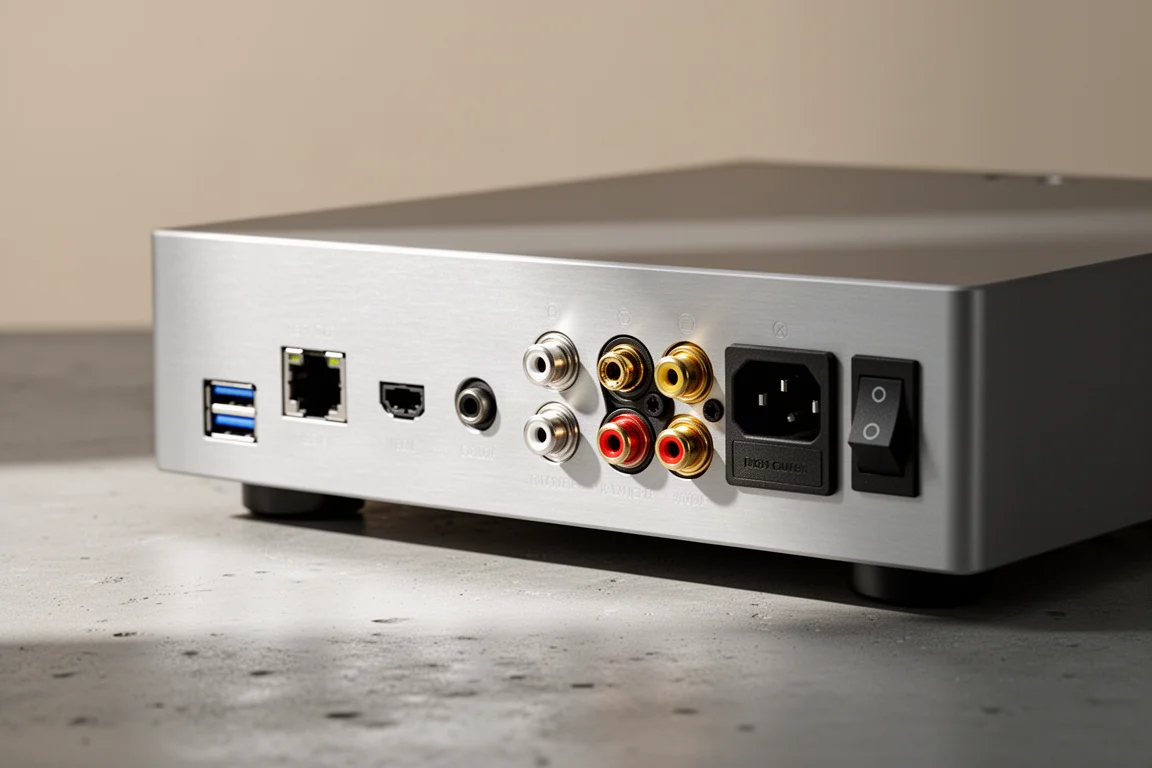
The rear panel carries a balanced output, a single-ended output, a full-size USB input, a full-size optical input, and a full-size coaxial input. Power arrives through a standard IEC connection, so there is no external power brick to hide, and a master power switch sits on the back as well.
The front panel holds a balanced headphone output, a single-ended headphone output, a display, and a clicky volume knob that shows the level numerically. Bluetooth support extends to LDAC, and using it requires an LDAC-capable source at the other end, such as a suitable Android device.
Sound Quality and Power
Power output is rated at 1,800 mW (1.8 W) into 32 ohm headphones at 1% THD, which is enough to drive most headphones without strain. Format support covers PCM up to 32-bit/768 kHz, DSD, and full MQA decoding, and measured performance is strong.
In listening, the presentation is detailed and airy, with a slight sibilance and a tendency to lean hard at the top end. It reads as analytical and forward rather than warm or relaxed. Set against a similarly priced rival with comparable functionality, the DX5 sounded slightly fuller, though the gap was small. Set against a separate DAC and amplifier stack, that stack offered a more robust and weightier presentation while the DX5 stayed clinical.
Things to Consider Before Buying
Two things are worth knowing before you commit: how the unit handles MQA-encoded material, and how little of the operation is available from the front panel.
The MQA Playback Issue
With MQA-encoded masters and the connected computer running in exclusive mode, playback stuttered at the start of almost every track, sometimes twice before settling into the music. Taking the computer out of exclusive mode and playing without MQA removed the problem completely.
Away from MQA, playback was stable. The stutter is therefore confined to one specific playback path rather than affecting the unit’s general operation, and listeners who do not use MQA are unlikely to encounter it at all.
Controls and the Remote
The front panel is deliberately minimal. It offers power and input switching, nothing more: a long press powers the unit off, while a short press cycles through the inputs. There is no obvious way to reach the settings menu from the front panel, which makes the supplied remote effectively mandatory for configuration. The remote itself is the familiar handset used across this class of equipment, and it works well, but it is worth keeping somewhere you can find it.
Buying Advice
The DX5 is straightforward to recommend if you want a single compact component that covers balanced conversion, headphone amplification, Bluetooth, and remote volume control. It is also a sensible way to bring wireless playback and a remote to a vintage receiver or an older stereo, even though balanced outputs are largely wasted there.
If your priority is sound quality per dollar, cheaper routes exist. A separate DAC and amplifier stack can cost roughly half as much and delivered a fuller, more robust presentation in listening, though without a remote control. A mid-priced DAC and amplifier pair from another brand, at around $250, includes a remote and Bluetooth and sounded broadly comparable, but it is single-ended only.
The deciding factors tend to be practical: whether you need balanced outputs, whether you would rather own one box than two, and whether MQA matters to your library. If MQA sits at the centre of your collection, the playback behaviour described above is worth weighing carefully before you buy.
Conclusion
The Topping DX5 gets the fundamentals right. It is an all-in-one DAC and headphone amplifier with a balanced output, 1.8 W of power into 32 ohms, LDAC Bluetooth, full-size inputs, and a remote, all in a chassis small enough to travel with. For around $450 it replaces two or three separate purchases, and it can quietly upgrade an older stereo at the same time.
The caveats are equally clear. The sound leans analytical and bright rather than warm, the front panel gives you almost no control without the remote, and MQA playback proved unstable in one specific configuration. Buyers who do not depend on MQA and who want one tidy box on the desk will find plenty to like; buyers chasing the fullest, most relaxed sound per dollar should compare a few alternatives first.
Product link
View more details for Topping DX5
This product is mentioned in the review. Check the specifications, options, and compatibility before buying.
View more details for Topping DX5Further reading
Related Reviews
Desktop DACs and Headphone Amps
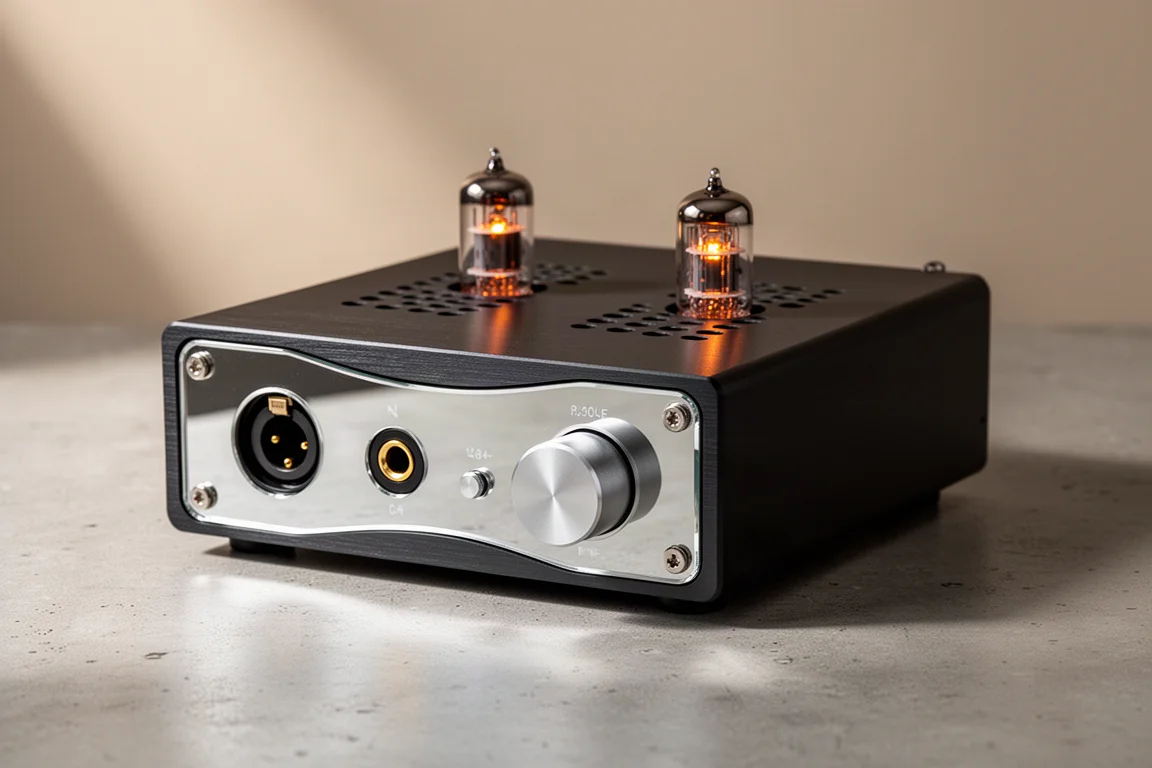
Aoshida DILV Poetry DAC DT-1 Review: A Tube-Buffered DAC and Headphone Amp With Bluetooth
A $219 desktop DAC and headphone amplifier with a tube buffer, Bluetooth, a remote, and two headphone outputs. Here is what it does well and what to weigh first.
Desktop Audio
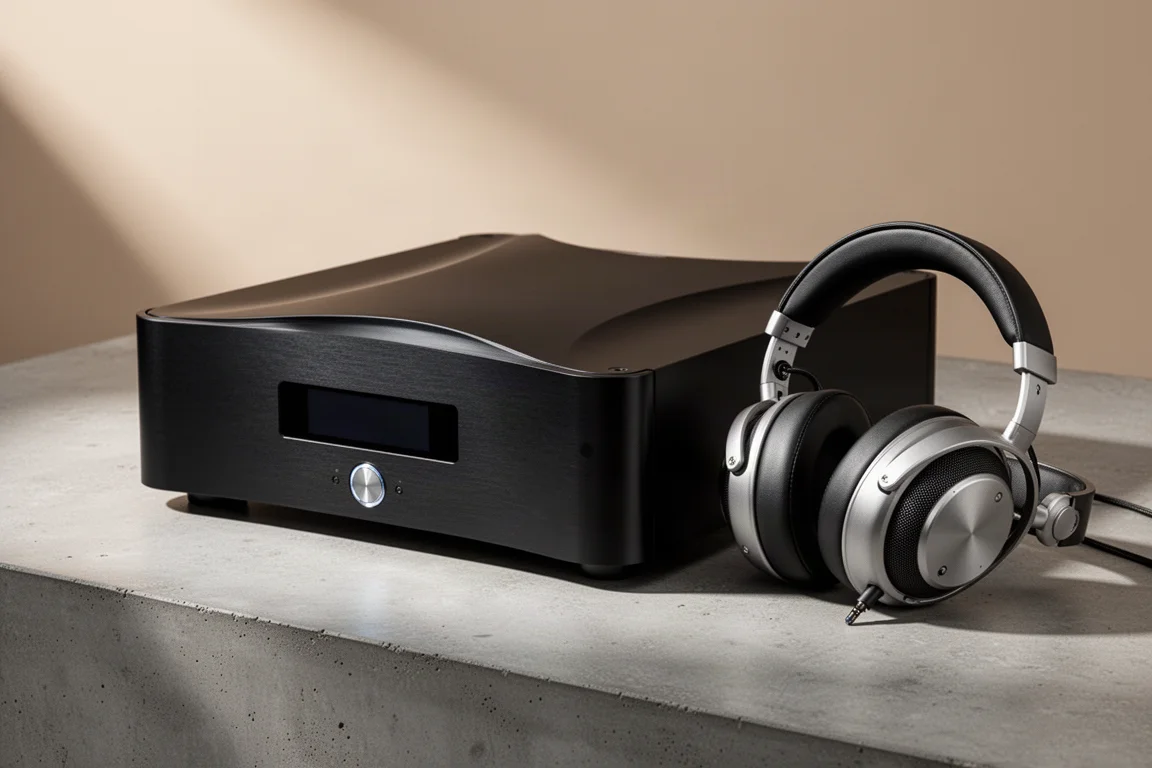
Aune S9c Pro Review: A Weighty Desktop DAC and Headphone Amplifier With Real Power
A desktop DAC and headphone amplifier with a linear power supply, dual Sabre converters and five watts of balanced headphone output. Here is what to weigh before buying.
Hi-Fi Audio
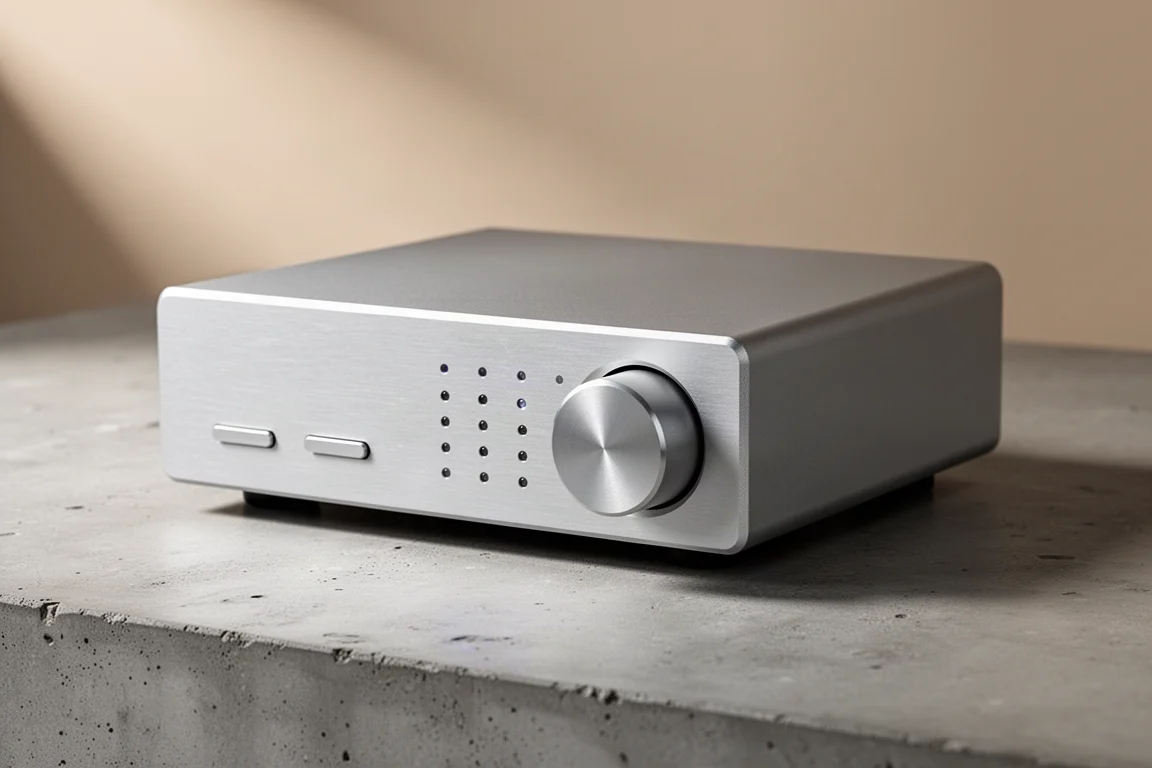
Cambridge Audio DacMagic 200 Review: A Smooth, Feature-Packed Desktop DAC
A $500 desktop DAC with twin ESS Sabre chips, balanced outputs, a headphone amplifier, and a warm, analog-leaning character.