Desktop DACs and Headphone Amps
Aoshida DILV Poetry DAC DT-1 Review: A Tube-Buffered DAC and Headphone Amp With Bluetooth
A $219 desktop DAC and headphone amplifier with a tube buffer, Bluetooth, a remote, and two headphone outputs. Here is what it does well and what to weigh first.
Introduction
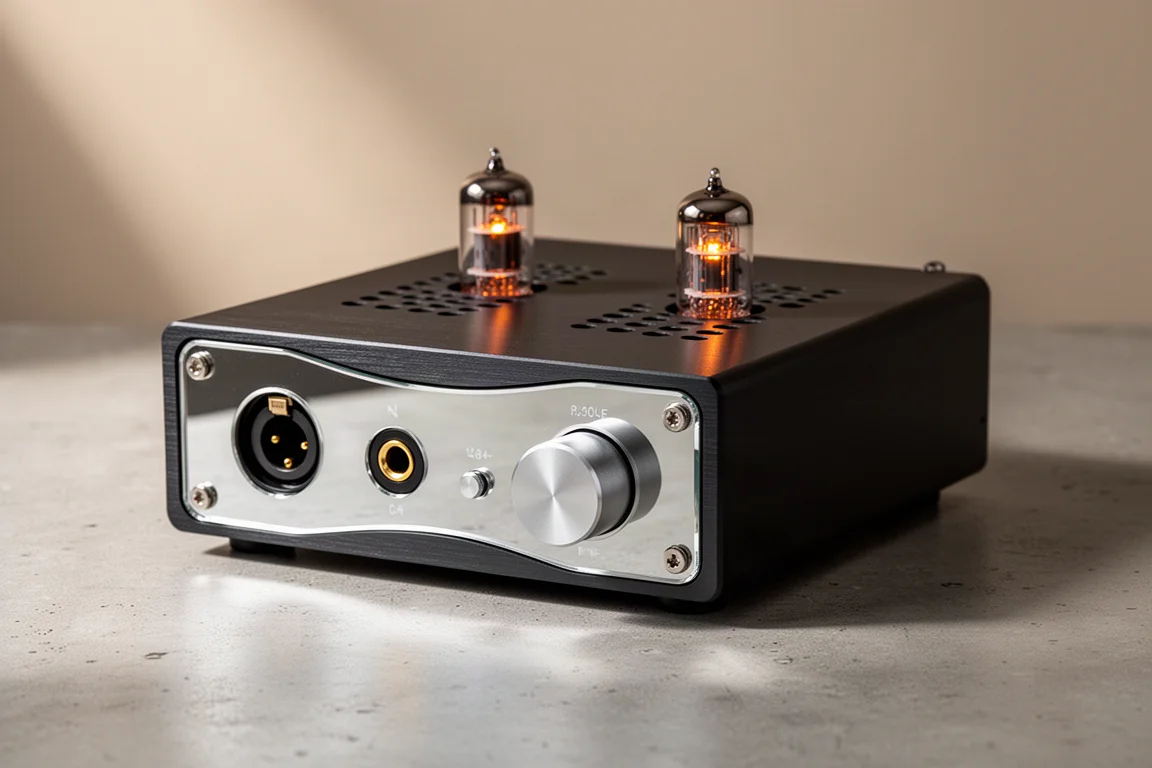
The Aoshida DILV Poetry DAC DT-1 is a desktop digital-to-analog converter and headphone amplifier that adds a tube buffer, Bluetooth, and a fully functional remote to a compact chassis. It sells for around $219, and it takes a noticeably different approach to the usual black box that sits on a desk.
What makes it interesting is the combination rather than any single specification. Inside there is a Sabre ESS ES9038QTM DAC chip, a set of Texas Instruments op amps, a Qualcomm Bluetooth chip, and an XMOS USB controller, all feeding a tube stage built around 6N3 tubes. The result is a device that can serve as a headphone amplifier, as a DAC for a two-channel system, and as a Bluetooth receiver, all from the same box.
Who This Product Is For
This is a sensible option for a desk listener who wants one device instead of three. It replaces a standalone DAC, a headphone amplifier, and a Bluetooth receiver, and it adds a remote so volume and settings can be adjusted without reaching for the chassis.
It also suits anyone who is curious about tube character without committing to a dedicated tube amplifier. The tube stage here is a buffer rather than the whole amplification chain, so the sound stays clean while picking up a little extra warmth and space.
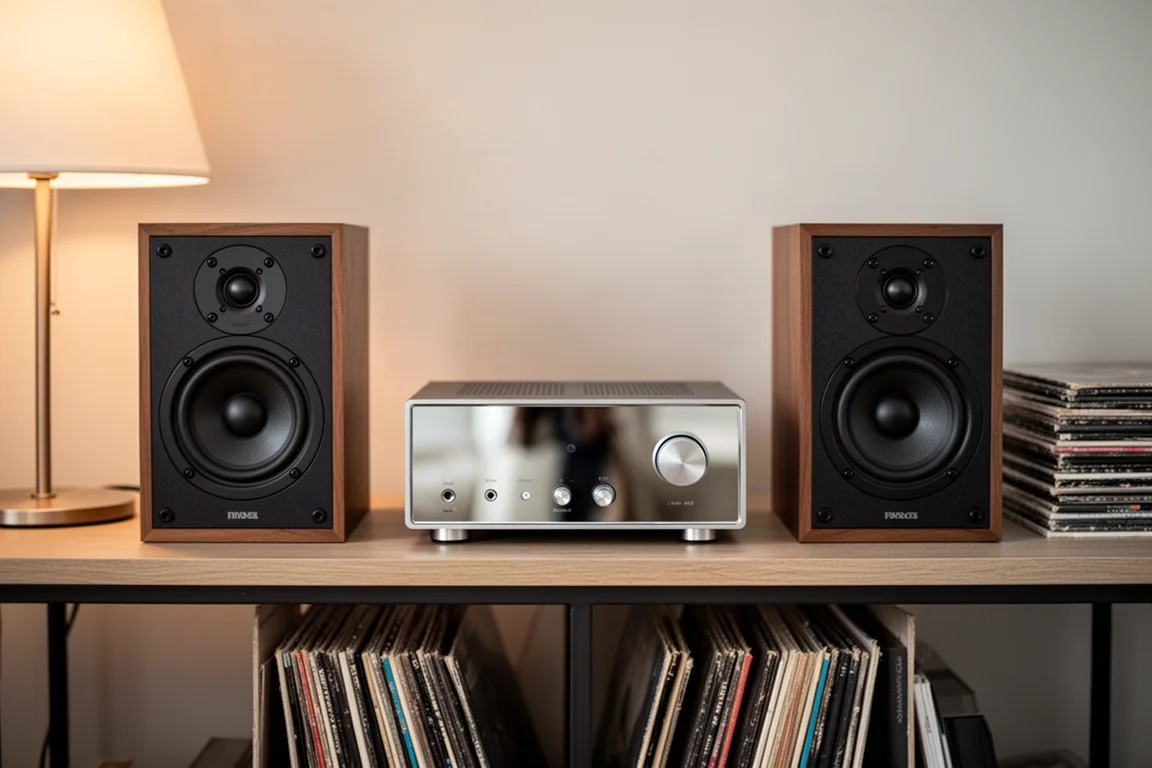
Two-channel listeners get value as well, because the RCA outputs let the DT-1 feed a vintage receiver or a class D speaker amplifier. That makes it a flexible front end for a small hi-fi shelf, not just a headphone rig.
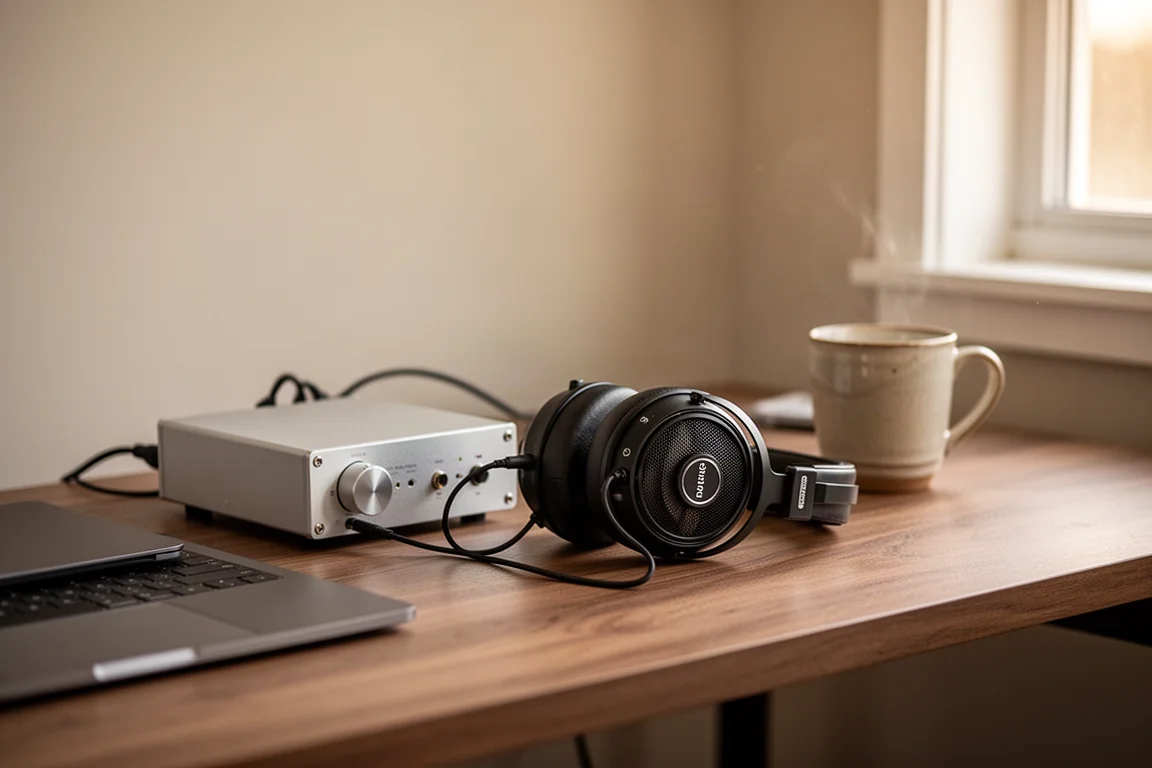
It is not aimed at owners of the most demanding planar headphones. A hard-to-drive pair will work, but it will use most of the available volume range, which is worth knowing before buying.
Design and Front Panel
The front panel is the first thing anyone notices. It is a wavy, mirrored surface carrying the Aoshida name, a treble clef, and the DILV Poetry DAC DT-1 lettering. It is a distinctive look rather than a neutral one, and it reads as a slightly retro design choice. Buyers who want their desk gear to blend into the background may not love it, while buyers who want something with personality will.
Two headphone outputs sit on the front: a standard 6.35mm single-ended jack and a 4.4mm Pentaconn output. The 4.4mm connection is there for convenience, so owners of balanced cables do not need an adapter. The internal signal path is not a fully balanced design and there are no balanced outputs on the rear, so the 4.4mm socket is best treated as a convenience feature rather than a true balanced architecture.
A remote control is included and works fully, which is unusual at this price. Around the back you get a 12V power input, RCA outputs, full-size coaxial and optical inputs, full-size USB, and Bluetooth.
Main Strengths
The core hardware is where the DT-1 makes its case. The DAC section uses the Sabre ESS ES9038QTM, a chip that has built a strong reputation for clean, detailed conversion. Around it sit six Texas Instruments OPA1656 op amps, plus additional Texas Instruments chips handling the amplifier stage. A Qualcomm chip manages Bluetooth and an XMOS controller handles USB. It is an unusually international parts list for a budget desktop unit, drawing on components from the United States and the United Kingdom alongside the assembled design.
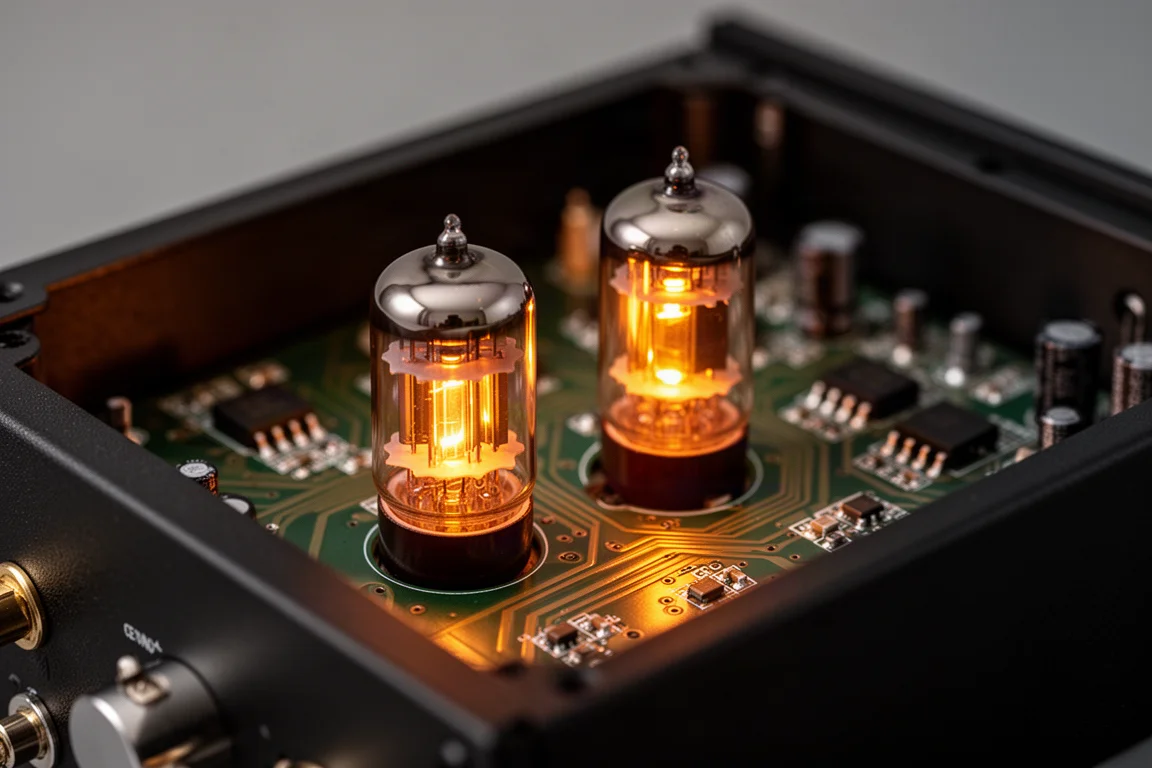
The tube buffer runs on 6N3 tubes, a type that appears in many compact headphone amplifiers and is widely available, which makes tube rolling practical for owners who want to experiment. Tone controls are provided, and the tube stage can be switched off entirely if a listener prefers the solid-state path. In practice there is little reason to do so, because the tube section is a large part of the appeal.
Bluetooth and Connectivity
Bluetooth support covers LDAC, aptX HD, aptX, and AAC. That covers the codecs most listeners will actually use for phone, tablet, or streaming playback, and LDAC in particular is now common enough that it is no longer a premium-only feature. Wired options are equally complete, with USB, coaxial, and optical inputs on the rear panel.
Sound Character
The DT-1 sounds clean and composed, and the tube stage adds a gentle sweetness rather than heavy coloration. The soundstage is broad for a headphone setup and carries a sense of three-dimensional space, which is exactly what a good tube buffer should contribute. Bass stays controlled and does not smear into the rest of the range.
Driving headphones is straightforward in most cases. A pair of Sennheiser HD560S presented no difficulty at all, and a Dan Clark Aeon Closed ran without complaint. The DAC section also works well when feeding a two-channel system, where it adds the same sense of space and a little extra sweetness through the tube stage.
Things to Consider Before Buying
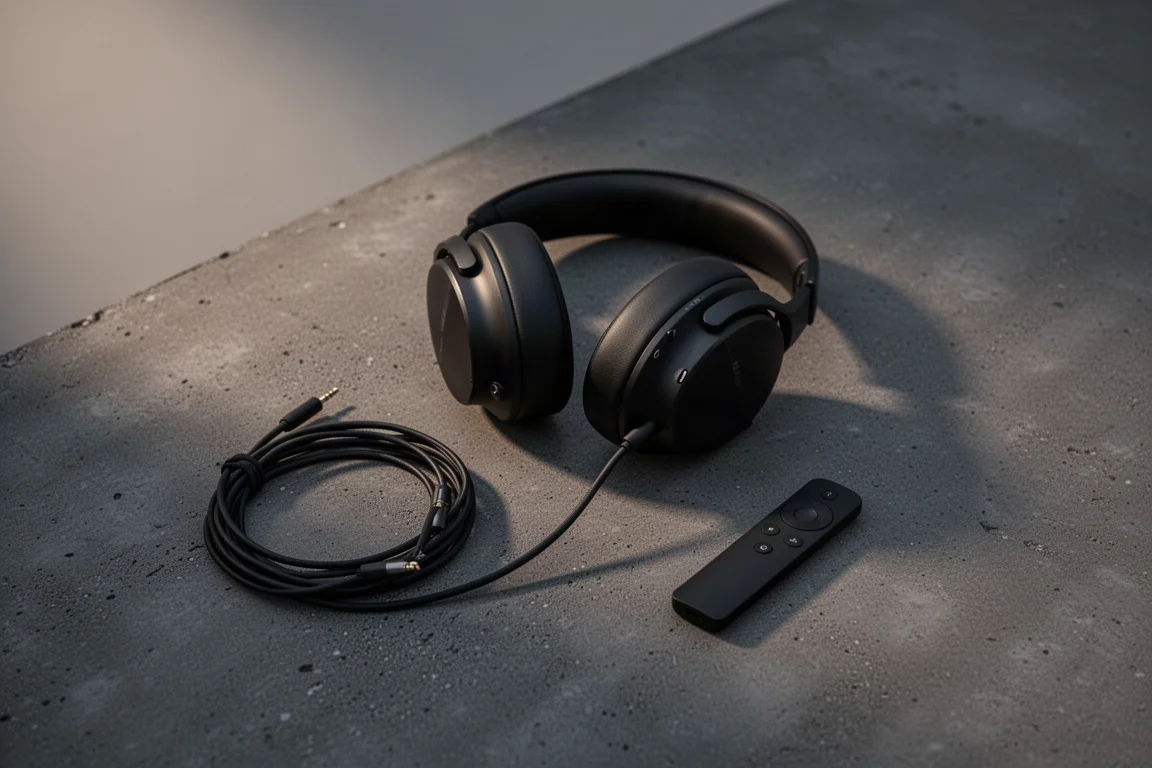
Power output is the main question mark. The only published figure available is 80 milliwatts into 600 ohms for a single chip, and there are two of those chips in the unit, so the total output rating is not clearly documented. In practice, a hard-to-drive planar such as the Fostex T40RP needed the volume close to 90 on a scale that runs from 0 to 99, and heavy bass hits showed a small amount of distortion at that level. Most dynamic headphones will be perfectly comfortable, but the most demanding planars may want more headroom than this offers.
The 4.4mm output deserves a second mention. It is genuinely useful for anyone who already owns a balanced cable, but it does not indicate a balanced internal design, and there are no balanced outputs on the rear panel. Buyers specifically shopping for a balanced DAC should look elsewhere.
Styling is a matter of taste, and this design is polarising. The mirrored, wavy front panel is memorable, but it will not suit every desk. Availability also appeared limited at the time of writing, so anyone interested may want to check stock before planning a purchase.
Setup and Everyday Use
Setup is simple. Connect the 12V power supply, attach sources on the rear panel, and plug headphones into the front. There is no complicated menu system to learn, and the remote handles the everyday adjustments.
The RCA outputs make it easy to slot the DT-1 into an existing two-channel system. Feeding a vintage receiver worked well, and the tube stage added character on top of what that receiver already provided. With a class D speaker amplifier, the tone controls on the DT-1 give a useful amount of adjustment, and the ability to bypass the tube stage means listeners can compare the two presentations directly.
For desk use, the combination of a remote, two headphone sockets, and Bluetooth means the unit rarely needs to be touched at all. That convenience is a large part of why it works as an all-in-one solution rather than a specialist component.
Buying Advice
At $219 to $220, the DT-1 packs an unusual amount into one chassis. A well-regarded Sabre DAC chip, a tube buffer with widely available tubes, Bluetooth with LDAC support, a working remote, tone controls, and two headphone outputs is a lot for the money. Similar tube-buffered designs often cost around $100 more, which strengthens the value argument here.
The honest recommendation is this: buy it if you want a single desktop box that covers headphones, speakers, and Bluetooth, and if you like the idea of a little tube sweetness layered over a clean solid-state foundation. Skip it if you need verified high power output for difficult planar headphones, if you require a genuinely balanced signal path, or if the mirrored styling is not something you want on your desk.
The DT-1 is a strong contender in its price range for the right listener, and its mix of features is hard to match without spending considerably more or accepting several separate boxes.
Conclusion
The Aoshida DILV Poetry DAC DT-1 is a distinctive desktop DAC and headphone amplifier that delivers a clean, spacious sound with a touch of tube warmth. Its DAC chip, op amp selection, and Bluetooth implementation are all solid, and the included remote, tone controls, and dual headphone outputs add real everyday value at around $219.
The caveats are clear rather than hidden. Power output is not documented in a way that gives confidence with the hardest-to-drive headphones, the 4.4mm output is a convenience rather than a balanced architecture, and the styling will divide opinion. For most headphone owners, though, this is a flexible, good-sounding, and genuinely fun piece of desktop gear at a price that is easy to justify.
Product link
View more details for Aoshida DILV Poetry DAC DT-1
This product is mentioned in the review. Check the specifications, options, and compatibility before buying.
View more details for Aoshida DILV Poetry DAC DT-1Further reading
Related Reviews
Hi-Fi Audio
Affordable Hi-Fi Upgrades Worth Doing: Four Practical Improvements
Four affordable hi-fi upgrades, from a dedicated DAC to speaker isolation and a proper phono stage, with notes on what each one actually changes.
Hi-Fi Accessories
Five Affordable Hi-Fi Upgrades to Modernize a Vintage or Budget System
Five inexpensive add-ons that bring HDMI, extra inputs, phono support, and CD playback to a modest hi-fi setup.
Stereo Amplifiers
Aiyima A01 Pro Review: A Compact Bluetooth Amplifier With a Full Tone Stack
A practical look at the Aiyima A01 Pro, a budget Class D amplifier with bass, middle, and treble controls, LDAC Bluetooth, and a clear set of trade-offs.