Hi-Fi Audio
Cambridge Audio DacMagic 200 Review: A Smooth, Feature-Packed Desktop DAC
A $500 desktop DAC with twin ESS Sabre chips, balanced outputs, a headphone amplifier, and a warm, analog-leaning character.
Introduction
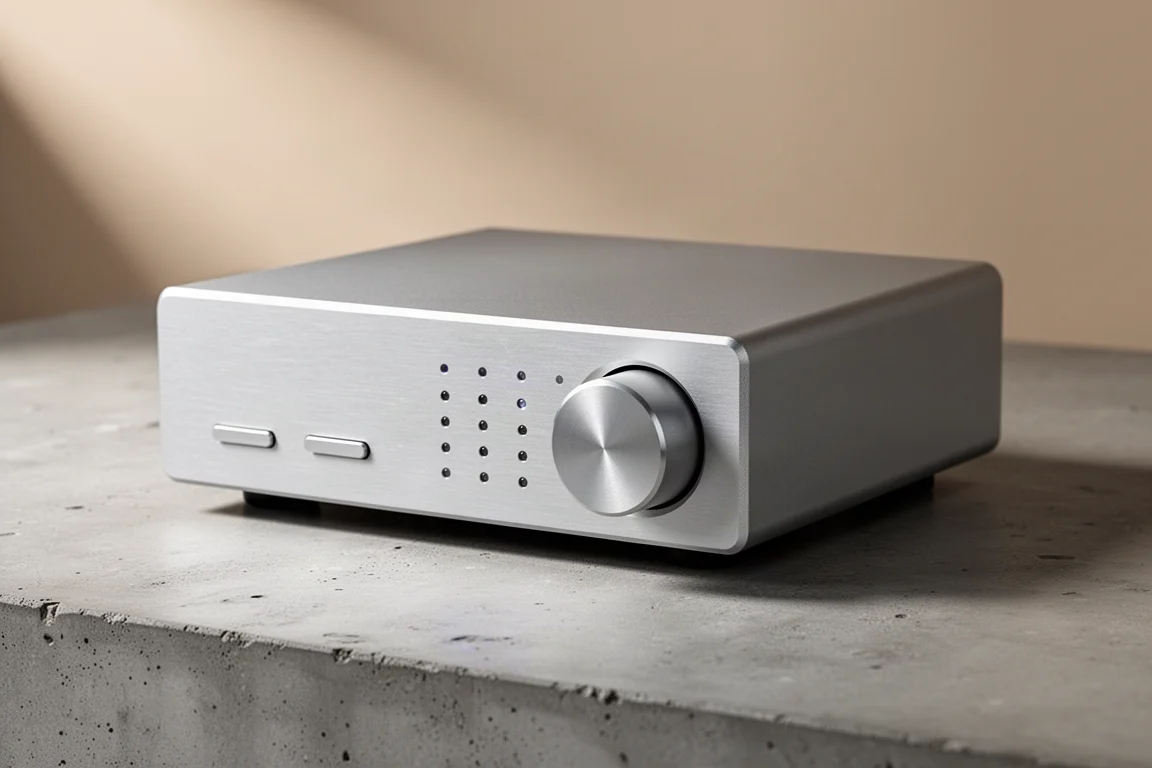
The Cambridge Audio DacMagic 200 is a desktop digital-to-analog converter priced at $500. It pairs twin ESS Sabre 9028 series chips with a generous set of inputs, balanced outputs, a built-in headphone amplifier, and Bluetooth, all in a compact silver chassis.
That combination puts it directly against the SMSL M500 Mark II, which arrives at roughly the same price with a very similar feature list. The more useful question is not which one wins on paper, but which one suits the way you actually listen.
Who the Cambridge Audio DacMagic 200 Is For
The DacMagic 200 is aimed at listeners who want a single box to handle everything on a desk. It accepts USB, two optical and two coaxial digital sources, plus Bluetooth, so a computer, a disc player, a streamer, and a phone can all stay connected at once.
On the output side there is a quarter-inch 6.35 mm headphone jack on the front panel and both single-ended RCA and balanced outputs on the rear. That makes it a sensible hub for someone running active speakers or feeding a preamplifier, while also listening on headphones at the same desk.
It also suits listeners who find highly analytical converters tiring. The DacMagic 200 leans smoother and warmer than some rivals at this price, which tends to reward long sessions rather than short critical ones.
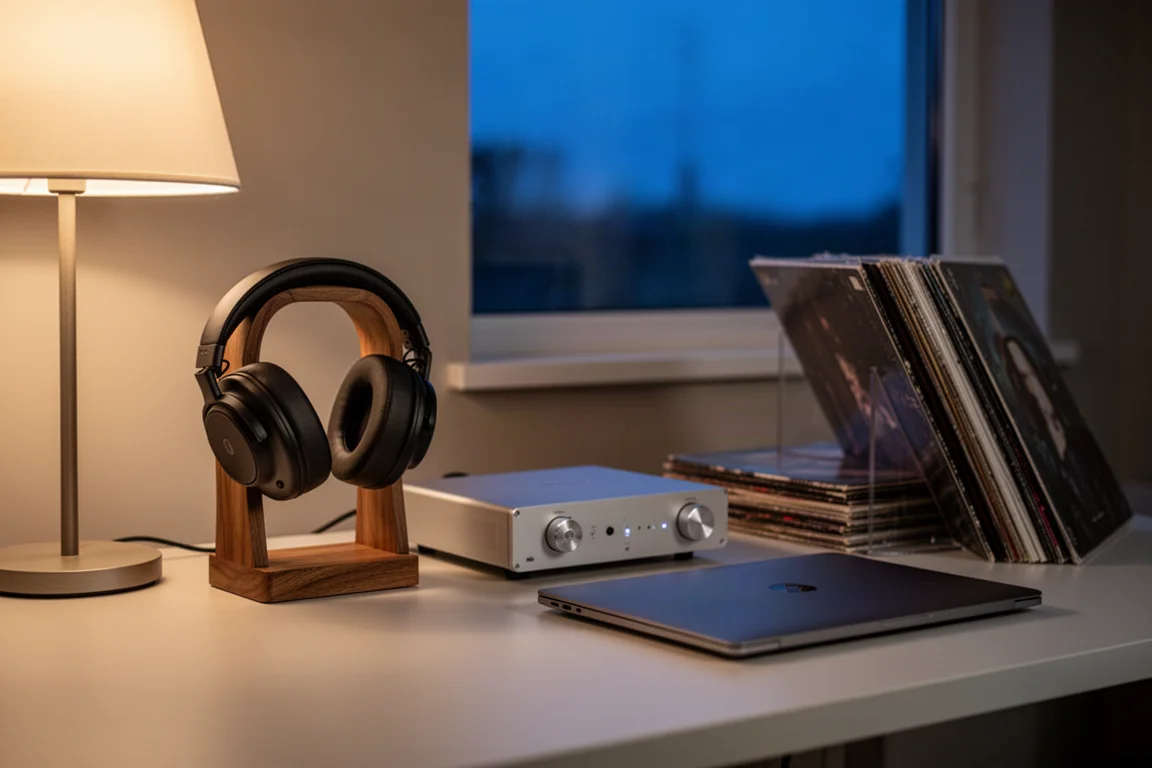
The trade-off for that flexibility is a wall adapter rather than an internal power supply, and a chassis that stays modest in size and weight. Build quality is solid, and the front panel is slightly wider than the rest of the enclosure, which gives it a distinctive look without being fussy.
Main Strengths
Twin ESS Sabre Conversion and Flexible Inputs
Cambridge Audio uses two ESS Sabre 9028 series chips, one per channel, and the input count reflects that headroom. Alongside USB, two optical and two coaxial inputs, there is a full-size USB connection with a ground-lift switch on the rear panel. The switch exists for one purpose: if USB noise becomes audible, lifting the ground can remove it. It is not meant to be left engaged otherwise.
A Bluetooth antenna connector sits next to the digital inputs, and power comes from a 12 V DC wall adapter. There is no internal transformer, which helps explain why the unit stays reasonably light without feeling hollow.
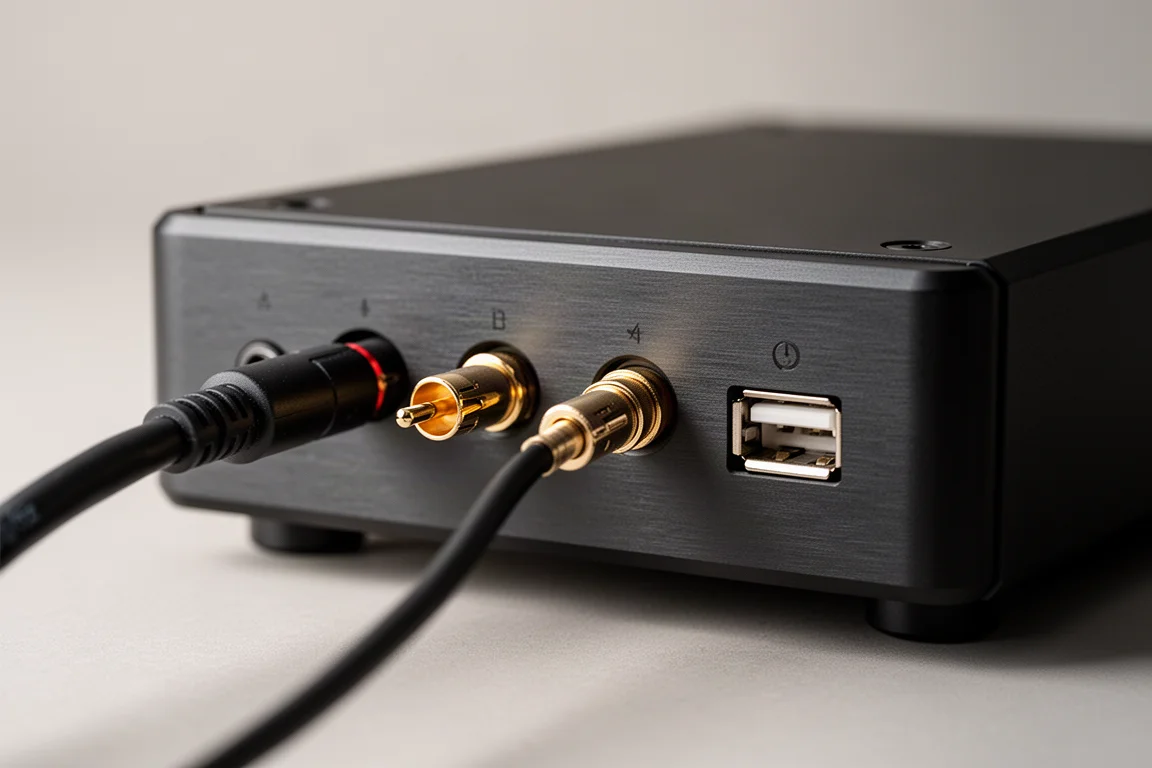
Every one of those sources remains selectable from the front panel, so moving between a computer and a disc player is a single button press rather than a cable swap. That convenience is a large part of what the asking price buys.
Roll-Off Modes, MQA Indication, and Headphone Output
The front panel carries a power button with a two-stage LED, a source selector, a volume knob, and a button that cycles through three roll-off modes: fast, slow, and short delay. Three settings is a manageable number, and the differences between them are audible, which makes the feature worth using rather than ignoring.
A row of LEDs handles status. The MQA indicator changes colour depending on the sample rate of the incoming MQA stream, and further LEDs cover ten PCM sample rates plus two-channel DSD. If DSD is part of your library, the DacMagic 200 supports it.
The headphone output is a standard quarter-inch jack with its own volume control, which keeps headphone listening simple without an extra amplifier on the desk.
Sound Character: Smooth, Warm, Analog-Leaning
Compared directly with the SMSL M500 Mark II, the DacMagic 200 comes across as the smoother of the two. Sibilance is noticeably reduced, vocals sit slightly warmer, and the overall presentation is less analytical. The M500 Mark II counters with a little more air and a touch more detail, but that extra transparency can also expose flaws in imperfect recordings. The DacMagic 200 is more forgiving across a wider range of material, and it is not short of detail in its own right.
Bass on the Cambridge unit is a little fuller, if slightly less defined than the SMSL. On speakers, the DacMagic 200 also produces a better sense of soundstage and imaging than the M500 Mark II. It does not stage as large or as deep as the Geshelli Labs J2, a converter that sells for $250 without USB and $300 with it, but it retrieves more treble detail and clarity than the Geshelli. On headphones, the gap between the two narrows considerably, and preference comes down to whether you value extra top-end detail or a bigger sense of space.

Whether that warmth reads as colouration or as musicality depends entirely on your taste, and it is the single biggest reason to choose this unit over its closest rival.
How It Compares With Other DACs
Comparing converters is genuinely difficult. Output levels differ even between well-matched units, and a small level difference can shift perceived sound quality. Most competent DACs sound more alike than different, which makes the DacMagic 200’s character the more useful thing to judge.
Against the SMSL M500 Mark II, the choice is essentially tonal. The Cambridge is smoother, warmer, and easier on bright recordings, while the SMSL is more revealing and slightly more forward in the treble. Against the Geshelli Labs J2, the Cambridge offers more inputs, more features, and more top-end clarity, while the Geshelli counters with a larger soundstage.
Things to Consider Before Buying
There is no remote control, so every adjustment happens at the unit itself. That is a real consideration if the DAC will sit across the room from your listening position.
There is also no digital display. Status is communicated entirely through LEDs, which is clean but less informative than a screen showing the exact incoming format.
Bluetooth is version 4.2 with aptX, which is better than average but not the most recent standard. The 12 V DC wall adapter keeps the chassis light, though some buyers prefer an internal power supply on principle. Finally, the ground-lift switch is a fix for USB noise only, not a general-purpose control.
Buying Advice
At $500, the DacMagic 200 has to justify itself against strong competition, and it largely does. Twin converters, balanced outputs, a headphone amplifier, Bluetooth, MQA support, and selectable roll-off modes add up to a substantial feature set at this price.
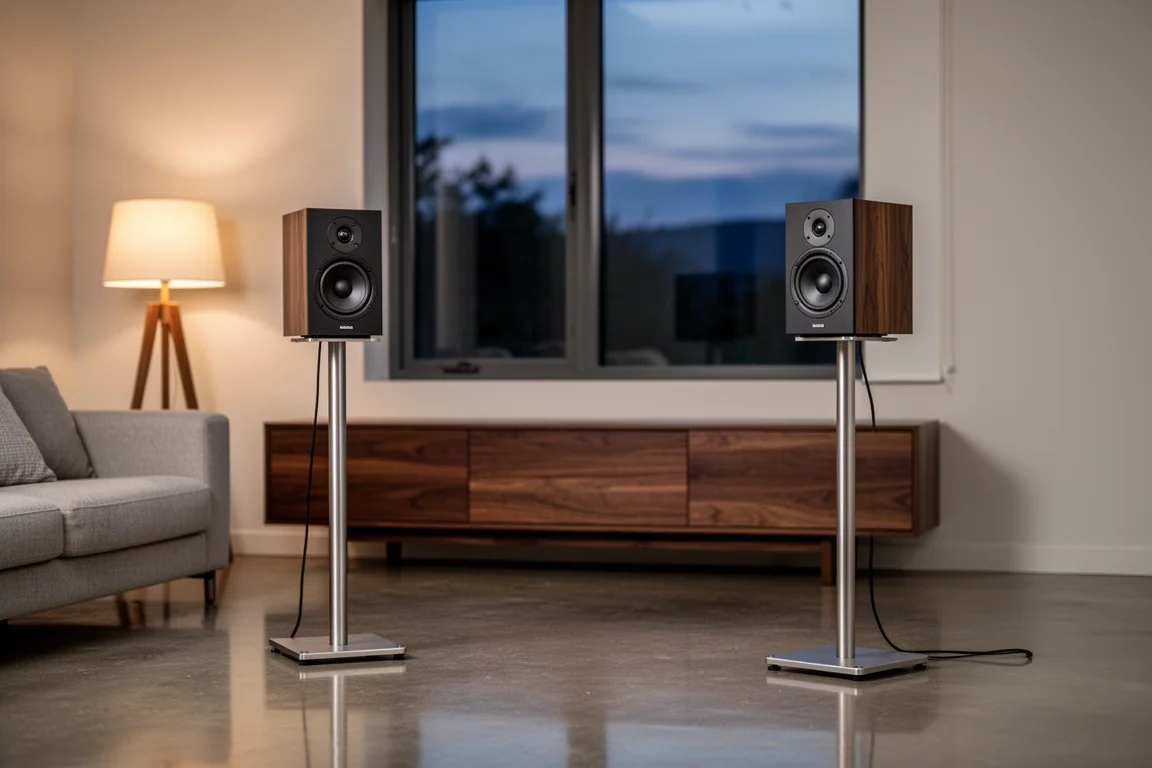
The decision comes down to character. If you want the most detail-forward presentation available at this price and you mostly play well-recorded material, a more analytical converter may appeal. If you want a desktop hub that plays nicely with a wide range of recordings, keeps bright tracks in check, and gives you balanced outputs and a headphone jack in one box, the DacMagic 200 makes a strong case.
It is also worth weighing how you listen most often. On headphones the differences between this unit and its closest rivals shrink to the point where features matter more than tone, while on speakers the warmer, wider presentation is easier to appreciate.
Conclusion
The Cambridge Audio DacMagic 200 is a well-built, generously equipped desktop DAC with a smooth, warm, analog-leaning sound that is easy to live with. It gives up a little detail and air to the SMSL M500 Mark II and a little soundstage to the Geshelli Labs J2, but it gains flexibility, a headphone output, and a forgiving nature that suits long listening sessions. The missing remote control is the main practical annoyance. For $500, it is a straightforward recommendation for the right listener.
Product link
View more details for Cambridge Audio DacMagic 200
This product is mentioned in the review. Check the specifications, options, and compatibility before buying.
View more details for Cambridge Audio DacMagic 200Further reading
Related Reviews
Hi-Fi Audio
Accuphase C-57 vs Allnic H-7000V: Two High-End Phono Stages Compared
A fully balanced solid-state phono stage with a pitch-black noise floor meets a tube design built for well-loved records. Here is how to choose between them.
Hi-Fi Audio
Active vs Passive Hi-Fi: Five Components for a Modern System
Five components that define modern active and passive hi-fi systems, with the strengths, trade-offs and setup details worth weighing before you buy.
Hi-Fi Audio
Advance Paris A10 Apex Review: A Hybrid Integrated Amplifier That Covers a Lot of Ground
A French hybrid integrated amplifier with a class A tube preamp stage, analogue power meters, and an internal DAC and phono stage good enough to make extra boxes unnecessary.