Astrophotography
Topek Astro Pure Sight A1 Review: A Pre-Shifted Narrowband Filter for Fast Telescopes
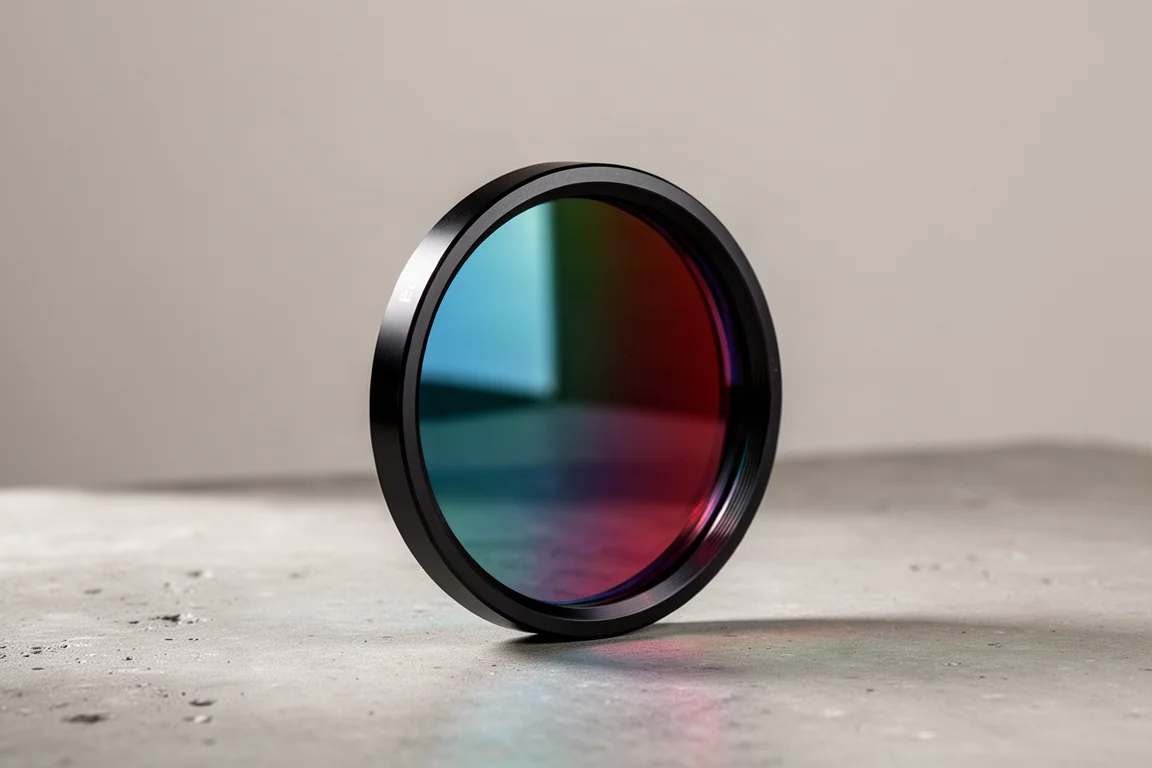
The Topek Astro Pure Sight A1 is a dual-band H-alpha and Oxygen III filter with pre-shifted band passes designed to perform well on fast optics down to f/3.2.
Introduction
Narrowband filters are essential tools for astrophotographers who want to capture emission nebulae from light-polluted skies. Most dual-band filters on the market work well at standard focal ratios, but fast telescopes present a unique challenge: the steep light cone causes a blue shift that can push emission lines out of the filter’s band pass. The Topek Astro Pure Sight A1 takes a different approach by pre-shifting its band passes toward the red, allowing it to maintain full transmittance even on very fast optics.
This filter is designed as a standard H-alpha and Oxygen III narrowband filter, but with a twist. The band passes are shifted slightly toward the red while still maintaining full transmittance. This makes it guaranteed to work down to f/3.2, and likely even down to f/2 with acceptable signal in both H-alpha and Oxygen III. For owners of fast Newtonian telescopes or other short-focal-ratio instruments, this could be a meaningful upgrade over standard dual-band filters.

What Makes the Topek Astro Pure Sight A1 Different
The key innovation of this filter is its pre-shifted band passes. On fast telescopes, the angle of incoming light causes the effective wavelength of emission lines to shift toward the blue. Standard narrowband filters can lose significant transmittance under these conditions because the emission line moves away from the center of the band pass. The Topek Astro Pure Sight A1 compensates for this by shifting its band passes toward the red, so that even after the blue shift occurs, the emission lines still land within the filter’s transmission window.
The filter features band passes of 5 nanometers wide, with some tolerance. In H-alpha, the band pass is 5 nanometers plus or minus 1.2 nanometers. In Oxygen III, it is 5 nanometers plus or minus 1 nanometer. This means the worst-case H-alpha band pass could be 6.2 nanometers, while Oxygen III could reach 6 nanometers. The wider H-alpha tolerance is less concerning because H-alpha is not as affected by moonlight as Oxygen III.
Another notable feature is the optical density blocking of 5 or greater. This is an important specification for narrowband filters, as it ensures strong rejection of out-of-band light, which is critical when imaging under light-polluted skies or during moonlit nights.
Individual Test Results and Measured Performance
One of the most distinctive aspects of the Topek Astro Pure Sight A1 is that each filter comes with an individual test report. This is not a generic specification sheet; it is a measurement of the specific filter you receive. The report includes the measured band pass width and peak transmittance for both H-alpha and Oxygen III.
For the sample tested, the individual report indicated an H-alpha band pass of 6.2 nanometers, which is the worst-case scenario for that channel. The Oxygen III band pass measured 4.8 nanometers, which is slightly better than the advertised 5 nanometers. The peak transmittance was reported at 96.9 percent.
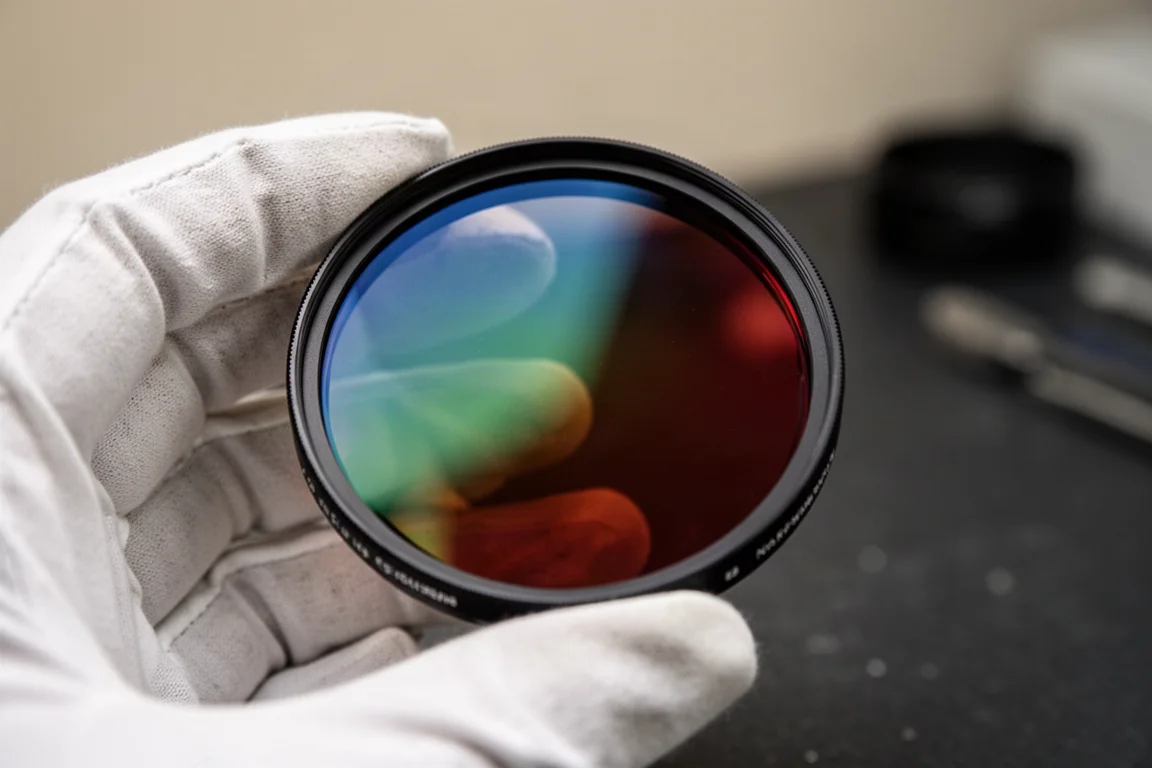
The fact that the test report matches the actual performance of the filter is significant. It means that when you purchase this filter, you know exactly what you are getting. There is no uncertainty about whether your particular sample falls at the favorable or unfavorable end of the tolerance range. This is a meaningful advantage over competitors that advertise a nominal band pass but do not provide per-unit measurements.
Spectrophotometer Verification
To verify the claims made by the manufacturer, the filter was tested using a spectrophotometer. The measured transmission graph showed two distinct peaks corresponding to the H-alpha and Oxygen III band passes. The H-alpha peak was measured at approximately 657.5 nanometers, which is shifted about 1.2 nanometers toward the red from the standard H-alpha wavelength. At the standard H-alpha wavelength, the transmittance was still approximately 94 percent, confirming that the filter works well for both slow and fast optics.
The full width at half maximum for H-alpha was measured at roughly 6.5 nanometers, which is close to the individual test report’s 6.2 nanometers. The small difference is within the measurement precision of the spectrophotometer. For Oxygen III, the peak was measured at approximately 501.5 nanometers, again shifted about 1 nanometer toward the red. At the standard Oxygen III wavelength, transmittance was approximately 85 percent. The full width at half maximum measured 5 nanometers, closely matching the individual report’s 4.8 nanometers.
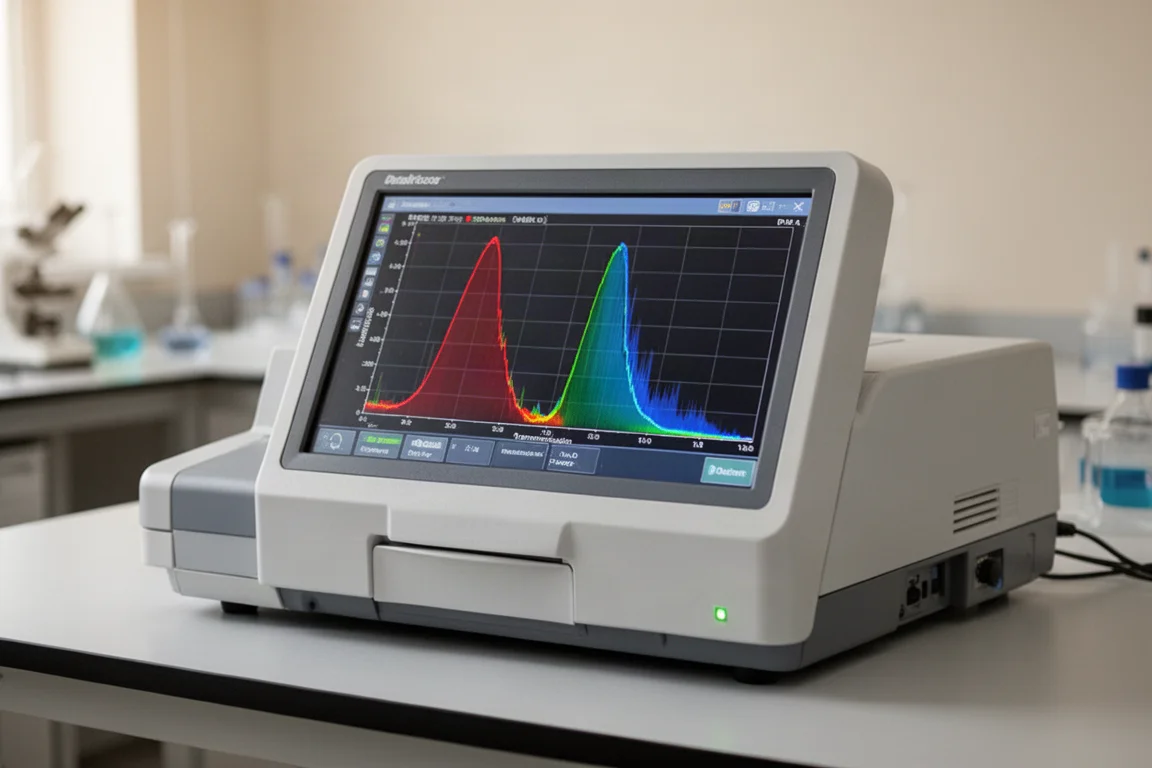
These measurements confirm that the filter performs exactly as specified. The pre-shifted band passes are real, and the transmittance at standard wavelengths remains high enough for excellent results with slower telescopes as well.
Real-World Imaging Test
Beyond laboratory measurements, the filter was tested in the field using a telescope at f/4.7 on a full-frame sensor. The test target was a bright star, with 60 exposures of 60 seconds each, totaling one hour of integration time. The goal was to check for halos around bright stars, which can be a problem with some narrowband filters.
The results showed a very slight halo around the star. However, this is not necessarily a concern. When testing a telescope with a UV-IR cut filter under similar conditions, a similar halo was observed. This suggests that the halo may be more related to the telescope optics than the filter itself. For one of the brightest stars in the sky with a full hour of exposure, the halo control is well within acceptable limits.

The filter’s performance in the field matches its laboratory measurements. There were no surprises, and the pre-shifted band passes delivered the expected results. For astrophotographers using fast telescopes, this filter should provide clean, halo-controlled images of emission nebulae.
Buying Advice
The Topek Astro Pure Sight A1 is priced at approximately $289, which places it in the upper mid-range category for dual-band narrowband filters. It is not the cheapest option available, but it offers several features that justify the price. The individual test report for each filter is a significant value-add, as it removes the uncertainty of whether your particular sample is within spec.
The closest competitor is the Antlia ALP-T dual-band 5 nanometer high-speed filter, which also features pre-shifted band passes for fast optics. However, the Topek Astro Pure Sight A1 is pre-shifted to a different degree, positioning it as a cross between the standard and high-speed versions of the competitor’s filter. This makes it a versatile option that works well across a wide range of focal ratios.
This filter is ideal for owners of fast Newtonian telescopes, such as those imaging at f/3.4 or f/3.5, where standard narrowband filters would suffer from blue shift. It also works perfectly well at slower focal ratios, making it a flexible choice for astrophotographers who use multiple telescopes.
Conclusion
The Topek Astro Pure Sight A1 is a well-engineered narrowband filter that solves a real problem for fast telescope users. The pre-shifted band passes maintain high transmittance even at f/3.2 and below, while still performing excellently at slower focal ratios. The individual test report for each filter is a standout feature, providing transparency and confidence that you are getting a filter that meets its specifications.
Laboratory measurements confirm that the filter performs exactly as advertised, and real-world testing shows well-controlled halos even on bright stars. While the price is higher than entry-level dual-band filters, the combination of pre-shifted band passes, strong optical density blocking, and per-unit testing makes it a compelling choice for serious astrophotographers. If you image with a fast telescope and want a filter that delivers consistent, reliable results, the Topek Astro Pure Sight A1 is worth serious consideration.
Product link
View more details for Topek Astro Pure Sight A1
This product is mentioned in the review. Check the specifications, options, and compatibility before buying.
View more details for Topek Astro Pure Sight A1Further reading
Related Reviews
Astrophotography
ASKAR FRA400C Review: A Versatile 400mm Refractor for Astrophotography and More
The ASKAR FRA400C is a compact 72mm refractor that balances reach, versatility, and portability for astrophotographers and visual observers.
Astrophotography
Askar SQA106 Review: A Premium 106mm Astrograph With Exceptional Optics
The Askar SQA106 is a premium 106mm quintuplet astrograph with impressive sharpness across full-frame sensors, though its price and weight demand careful consideration.
Astrophotography
Astro Imaging Gear 2026: Eight New Products Worth Watching
A look at the most interesting new astrophotography and astronomy products announced this year, from fast telescopes to smart cameras and wireless accessories.