Tools & Sensors
Top Test RT 389 Refrigerant Sensor Review: A Leak Detector That Can Pay for Itself
A sensitive handheld refrigerant leak detector with a flexible gooseneck, self-tests, and a built-in flashlight, pitched at DIYers and pros alike.
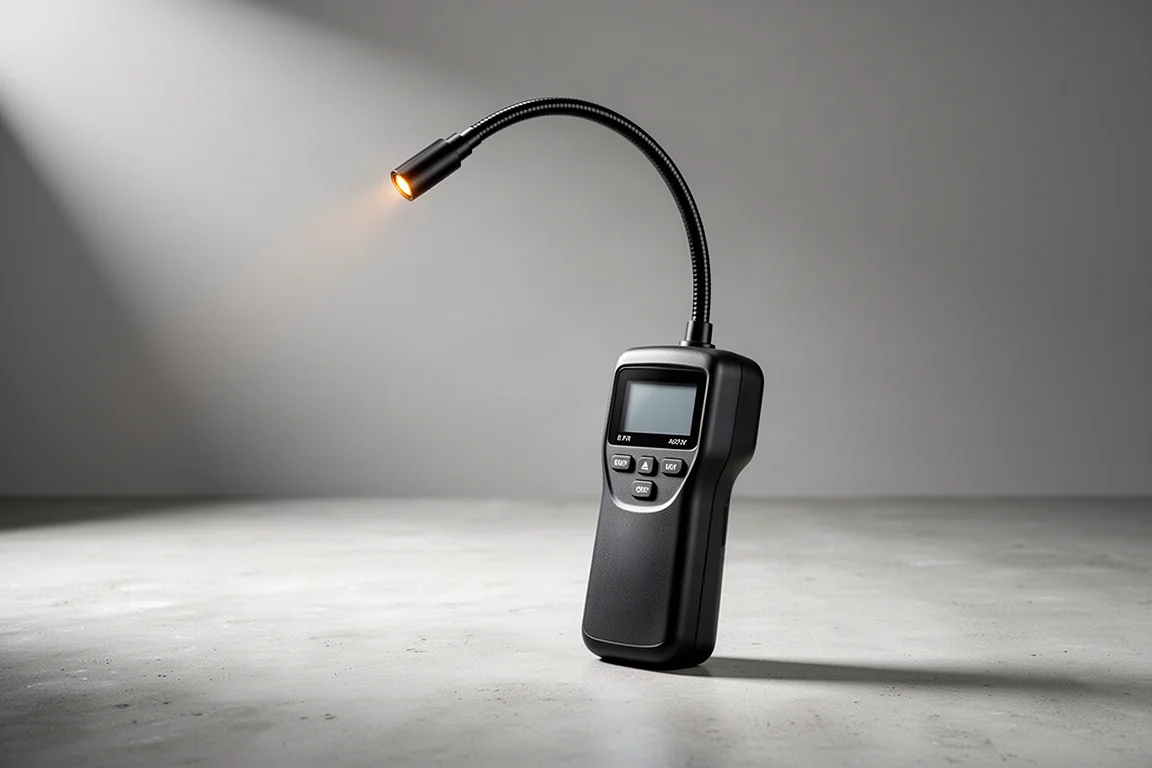
Introduction
Sensors tend to fall into two camps: the kind that save your life, like carbon monoxide detectors and radiation monitors, and the kind that save your money. The Top Test RT 389 refrigerant sensor sits firmly in the second camp. It is built to detect refrigerant loss down to roughly 3 g per year, which matters because an average household refrigerator may only hold between 40 and 50 g of refrigerant in total. Catch a slow leak early and you may avoid calling out a technician at all.
At a price of a little over a hundred dollars, the math is easy to see. A single professional leak-hunting visit can run to hundreds of dollars, and a car air conditioning leak, if you can find and fix it yourself, could save you as much as $1,000 in repair and recharge costs. This is the kind of tool that can potentially pay for itself with one use.
What It Detects
The RT 389 covers the usual suspects in the refrigerant world: HFCs, HCFCs, CFCs, PFCs, HFO-1234yf, R-717, HC blends, and other common refrigerants and chemicals in that range. In practical terms, that means one sensor works across old refrigerators, car air conditioners, HVAC units, and more, which is what makes it genuinely versatile rather than a single-job gadget.
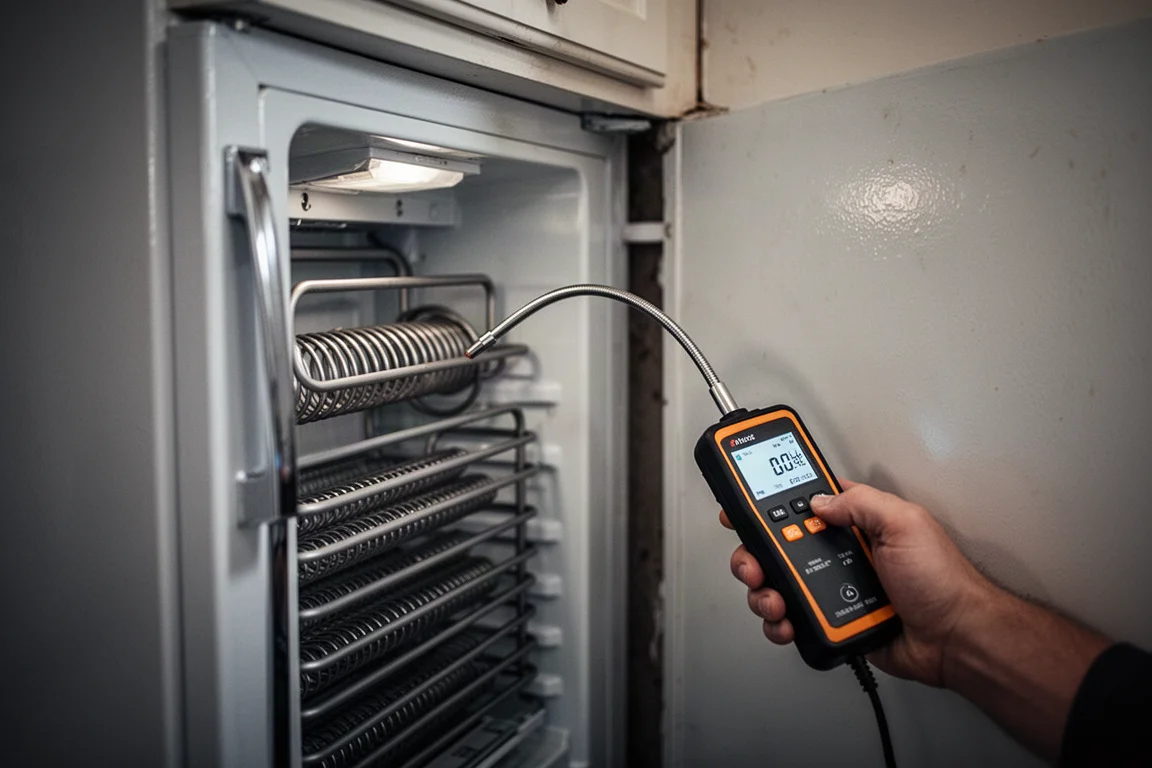
The gooseneck probe is a standout design choice. It bends into places a conventional, shorter-headed sensor simply cannot reach, such as behind a refrigerator or deep inside an HVAC cabinet. You only need to get the tip somewhere near a possible leak point and the sensor does the rest.
Startup and Self-Testing
Turning the unit on triggers a series of self-tests, and that matters more than it might first appear. A real sensor should prove it is working before it reports a reading, rather than just blinking and claiming it senses something. The buzzer checks in at a stated 90 dB and there is a vibration alert as well, so if there is a problem, you are going to notice.

There is also a settings menu, with an advanced section protected by an access code, plus date setting and other system configuration options. It behaves like a proper instrument rather than a toy, which is reassuring at this price.
Real-World Use
In one practical scenario, the sensor was placed near a basement freezer that had stopped freezing properly. When it came into the presence of refrigerant, it fired up immediately, and moving it to fresh air cleared the alert. That is exactly how you want a leak detector to behave: loud, clear, and quick to confirm.
That single capability unlocks a lot of jobs. You can test an old refrigerator that seems to have lost its chill, sweep a car’s AC system for leaks before recharging, or check HVAC units indoors and vehicles outside. As an old-school side note for checking whether a freezer is holding temperature, the classic trick still works: freeze a cup of water with a dense object like a coin on top of the ice, and if the object ends up at the bottom after a while, something is wrong.
Built-In Flashlight
One detail that is easy to overlook but gets used constantly is the flashlight on the unit. Work behind a refrigerator or inside a mechanical room is rarely done in good lighting, and having the illumination built into the detector means one less thing to juggle in a tight, dark space.
Things to Consider Before Buying
The RT 389 is a detection tool, not a repair kit. It tells you that refrigerant is escaping and helps you localize the leak, but the actual fix is still on you or a professional. Also note that the advanced settings menu requires an access code, so budget a little time to learn the menu structure rather than expecting a one-button experience.
Buying Advice
If you own or work on refrigerators, vehicle air conditioning, or HVAC equipment, this is an easy recommendation. It sells for a little over a hundred dollars, which is a fraction of a typical professional leak-detection callout, and it slots naturally into any DIY or professional kit. The gooseneck, the self-tests, the loud alert, and the flashlight together make it a practical everyday instrument rather than a shelf queen.

For someone who suspects a slow leak but is not yet sure, this sensor gives you a head start: identify the problem yourself, and you may skip the middleman entirely.
Conclusion
The Top Test RT 389 is a straightforward, well-thought-out refrigerant leak detector with the sensitivity to catch losses as small as about 3 g per year, the flexibility to reach awkward spots, and enough built-in practicality, from the 90 dB buzzer to the flashlight, to earn a place in a working toolkit. For the price of a single professional callout, it is a sensor that could pay for itself the first time it finds a leak.
Product link
View more details for Top Test RT 389 Refrigerant Sensor
This product is mentioned in the review. Check the specifications, options, and compatibility before buying.
View more details for Top Test RT 389 Refrigerant SensorFurther reading
Related Reviews

Smart Home
Five Smart Home Sensors Worth Your Attention in 2026
A practical look at five smart home sensors with useful features, including rechargeable battery options, temperature probes, and accurate presence detection.

Power Tools
Impact Driver vs Drill: Key Differences and When to Use Each
Understand the mechanical differences between impact drivers and drills, and learn when to reach for each tool based on your specific task.
Aquarium Monitoring
Neptune Systems LDK Leak Detection Kit Review: Early Warning for Reef Tanks
A practical look at the Neptune Systems LDK Leak Detection Kit, from box contents and Apex Fusion setup to probe placement, alerting, and the extra ways an FMM module can protect a tank.