Aquarium Monitoring
Neptune Systems LDK Leak Detection Kit Review: Early Warning for Reef Tanks
A practical look at the Neptune Systems LDK Leak Detection Kit, from box contents and Apex Fusion setup to probe placement, alerting, and the extra ways an FMM module can protect a tank.
Introduction
Water finding its way out of a reef tank is one of the few failures that can damage both the livestock and the room around it. Floors, walls, furniture, and electrical equipment all sit downstream of a slow drip from a bulkhead, a failing auto top off line, or an overflowing sump. The Neptune Systems LDK Leak Detection Kit exists to shorten the gap between the moment water escapes and the moment you know about it.
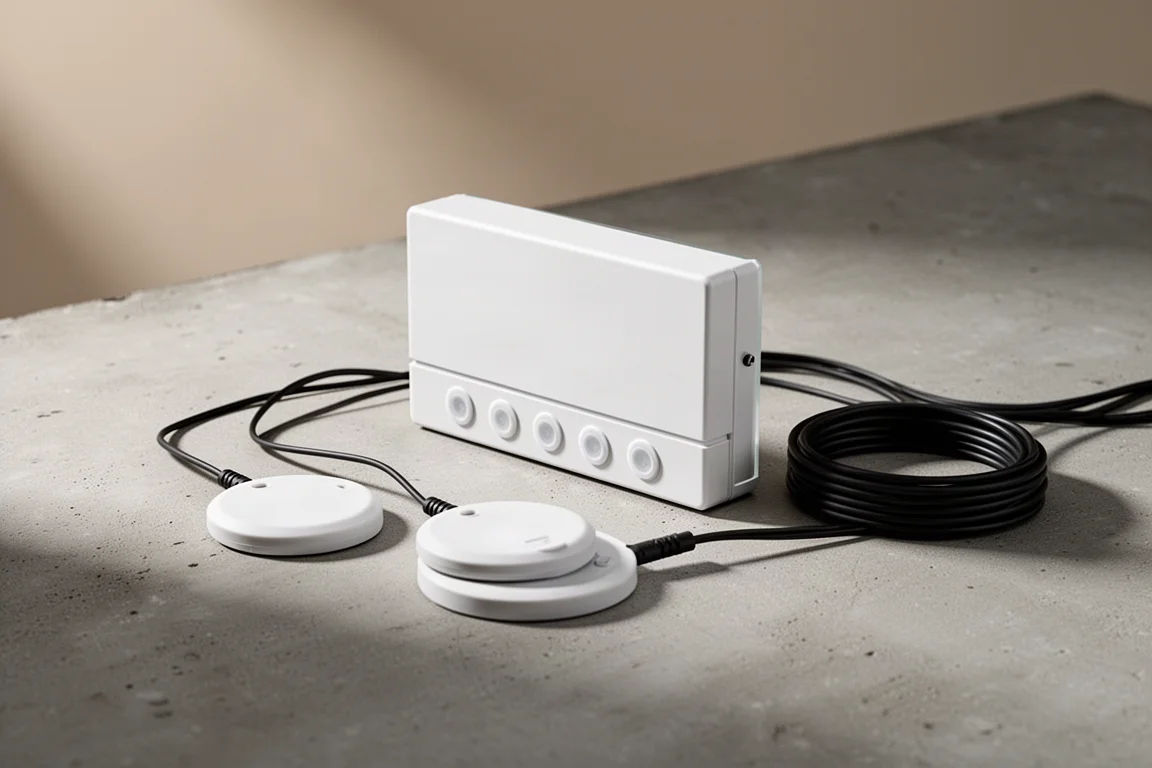
The kit pairs a Fluid Monitoring Module, usually shortened to FMM, with two leak detection probes. It connects to an Apex controller, reports through Apex Fusion, and can send alerts by text and email so you are informed whether you are in the next room or away for the weekend. Just as importantly, the Apex can be programmed to act on its own when a probe reports water.
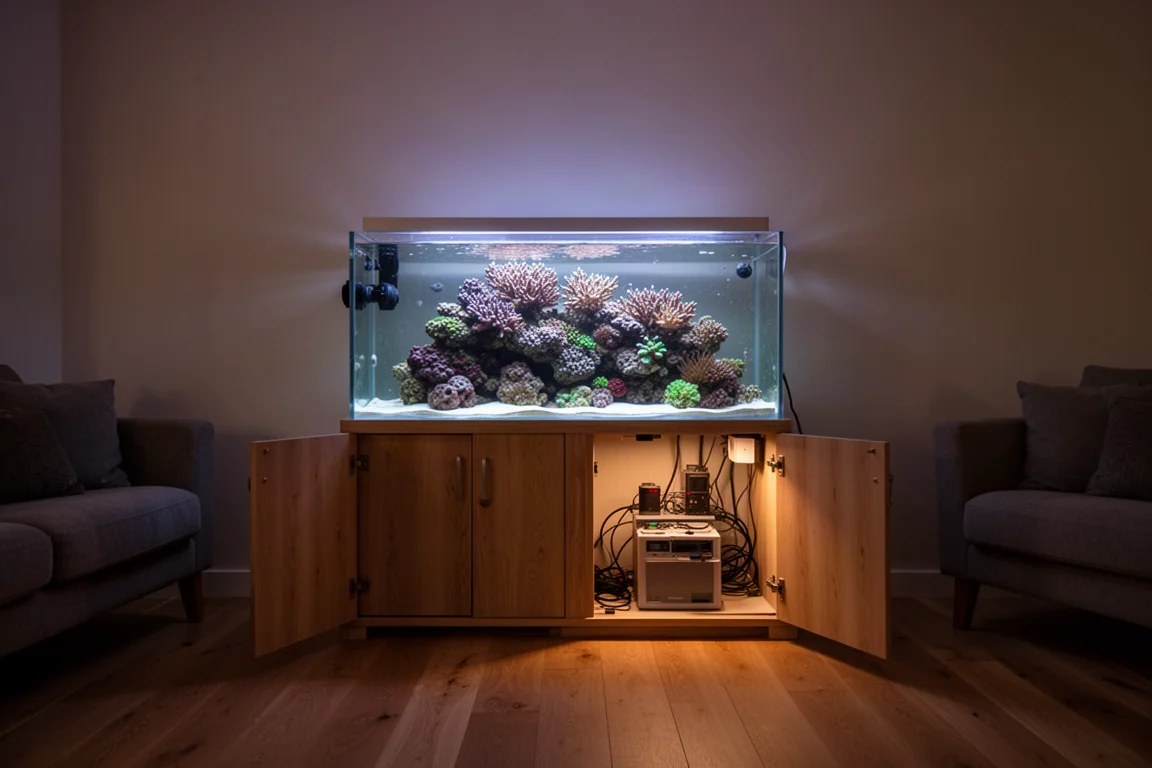
Redundancy is always the better first line of defence. Proper insulation, check valves, and sensible plumbing all reduce the odds of a leak, but no backup plan covers every scenario. Catching a leak early is what limits the damage when something eventually fails, and that is exactly the gap this kit is built to close.
Who This Kit Is For
The LDK is aimed at anyone already running an Apex controller. It works with every version of the platform, so a Junior, Classic, full Apex, or Apex EL owner can all use it, and the setup process is the same across the range. If you want leak detection tied into the same system that already controls your return pump, heater, and dosing, this is the most direct way to add it.
It also suits hobbyists who want remote visibility rather than an alarm that only works when someone is home. Notifications arrive through Apex Fusion on a phone or tablet, so the response can start before you walk through the door.
Anyone without an Apex controller is not the audience here. The kit is an add-on module, not a standalone leak alarm, and its value comes from being part of a larger control system.
What Comes in the Box and How Setup Works
Opening the box reveals three items: the FMM module, two LD2 leak detection probes, and a three foot AquaBus cable. That is enough to cover a typical installation without extra shopping.
Setup runs through the Tasks function in Apex Fusion. Plug the FMM into the Apex using the AquaBus cable, click the clipboard icon, search the task list for LDK, and follow the prompts. The whole process takes only a few minutes, and the task walks through the steps rather than leaving you to configure outlets and inputs by hand.
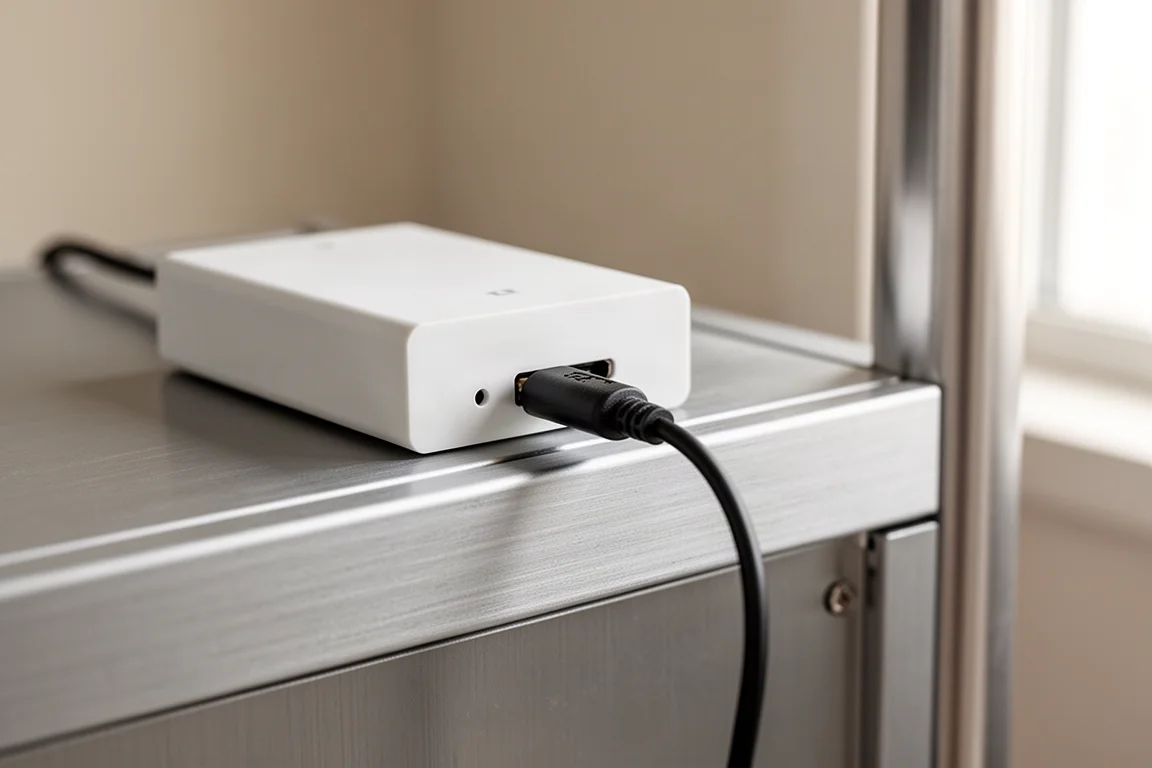
There is also a dedicated task for adding a single leak detection probe to an FMM you already own, which matters if the module is currently serving another piece of equipment such as an auto top off. That task keeps the expansion path simple and consistent with the initial setup.
Main Strengths
The FMM module has four ports along its bottom edge and supports up to four probes in total. The kit ships with two, so there are two spare ports available for wider coverage or for other sensor types.
Because the module handles more than leak detection, it can serve as a hub for other monitoring hardware. Flow sensors and optical sensors both connect to the same FMM, which makes it possible to build several layers of protection around one aquarium instead of adding a separate controller for each function.
Alerting is flexible. Text messages and emails cover the notification side, and Apex Fusion allows remote action from a mobile device. Beyond that, the controller can be configured to react automatically the moment a leak is detected. One example is triggering the Adaptive Reef 24 volt audible and visual alarm, which gives you a loud, bright warning inside the house when your phone is charging or simply not in your pocket.
Placement and Probe Options
Placement decides how well any leak detection setup performs. The sensible starting points are the places water is most likely to come from or pool first: the floor near external equipment or an overflow box, beside the sump or the auto top off reservoir, close to auto top off or dosing lines, near the skimmer, and beside or underneath the aquarium stand.
A simple trick for finding the right spot is to place a marble on the floor and let it roll. Water tends to follow the same path to the same low point, which makes that spot a strong candidate for a probe.

The LD2 probes included in the kit work best on solid surfaces such as hardwood, tile, or the floor inside an aquarium stand. If the area around the tank is carpeted, LD1 low profile probes can be tucked underneath and hidden from view, and they also suit awkward, tight spaces inside a stand where a larger probe will not sit flat.
Beyond Leak Detection: Extra Uses for the FMM Module
The two unused ports on the FMM are worth planning for rather than leaving empty. An optical sensor can report when the water level in the sump climbs too high or drops too low. Combined with a leak probe, that information can point to a specific cause, such as an auto top off that has failed in the on position and is pushing water where it should not go.
With that diagnosis in hand, the Apex can be set to cut power to the auto top off remotely, stopping the flow before you get home. Flow sensors on the same module add another layer by confirming that water is moving where it should be.
Things to Consider Before Buying
The first consideration is the one that decides everything else: the LDK requires an Apex controller. Without one, the module has nothing to connect to.
Second, the kit includes two probes. On a longer tank, or one with several pieces of external equipment, two may not cover every risk area. Extra probes are available separately, and the two spare ports on the FMM give you somewhere to plug them in.
Third, probe type matters more than it might appear. The included LD2 probes are intended for hard surfaces. A carpeted install will likely need low profile probes instead, which is an additional purchase.
Finally, coverage depends entirely on placement. A probe only reacts to water that actually reaches it, and the automatic responses that make the system so useful require some configuration in Apex Fusion beyond the initial task. Budget a little time for both.
Buying Advice
If you already own an FMM with free ports, you can skip the kit entirely and simply add probes to the open ports, using the dedicated Fusion task to register them. That is the most economical route for anyone whose module is already in place.
For everyone else, the LDK is the straightforward option: one purchase that delivers the module, two probes, and the cable needed to get started. Before ordering, walk the area around the tank and count the spots where water would realistically pool first. If that list is longer than two, plan on extra probes at the same time so the system is complete from day one.

It also helps to think about what you want the Apex to do automatically, not just what you want it to tell you. Deciding in advance whether a detected leak should shut down an auto top off, trigger an audible alarm, or both makes the configuration step much faster once the hardware is connected.
Conclusion
The Neptune Systems LDK Leak Detection Kit is a focused piece of safety hardware for Apex owners. It arrives with everything needed for a basic two point installation, sets up in minutes through Apex Fusion, and turns a silent leak into an immediate notification you can act on from anywhere.
Its real strength is integration. The same module that watches for water can monitor flow and sump level, and the same controller that sends the alert can also shut equipment down or sound an alarm in the house. Add careful probe placement and a realistic look at how many sensors your tank actually needs, and the kit becomes a genuinely reassuring layer of protection for both the reef and the room it sits in.
Product link
View more details for Neptune Systems LDK Leak Detection Kit
This product is mentioned in the review. Check the specifications, options, and compatibility before buying.
View more details for Neptune Systems LDK Leak Detection KitFurther reading
Related Reviews

Saltwater Aquarium Setup
10 Questions About Cycling a Saltwater Aquarium: What You Need to Know
Essential questions and answers for cycling a reef tank or saltwater aquarium, from biome building to light management and bacterial supplements.

Aquarium Equipment
Adaptive Reef Hybrid Algae Reactor Review: One Reactor, Three Ways to Grow Algae
A close look at the Adaptive Reef Hybrid Algae Reactor, which runs as an algae turf scrubber, a macro algae reactor, or a refugium, and pairs with the AI Blade Refugium LED.

Aquarium Filtration
Adaptive Reef Refugium Reactor Review: A Simple Way to Grow Nuisance Algae Outside Your Display
A vessel designed to grow nuisance algae in a controlled space so it stops taking over the display tank, with an adjustable stand, a removable basket, and a single LED light on top.