Backpacking Gear
Six Ultralight Backpacking Products Worth Knowing in 2026
A practical look at six new ultralight backpacking products, from a 2 g carbon fiber tent stake to a collapsible bear canister, with honest trade-offs and price notes.
Introduction
Most ultralight gear evolves in small steps, so a season that produces several genuinely new ideas is worth a closer look. The six products here each solve a specific problem in a pack: anchoring a shelter, keeping a phone charged, protecting food from wildlife, and making a cook kit easier to handle at the end of a long day.
They are not all the same kind of purchase. A couple are inexpensive fixes for daily annoyances, one is a precision item for people who count every gram, and one is a larger investment that changes how much space your food occupies. Below is what each one does, what it costs, and who it actually suits.
What Makes These Six Products Stand Out
Three themes run through this group. First, weight: the lightest items here are measured in single grams, which matters when a shelter or cook kit is already close to its practical minimum. Second, materials and manufacturing: carbon fiber, translucent polymers, and small-batch 3D printing are appearing in places they did not a few years ago. Third, problem focus: several of these products do one narrow job and do it without adding complexity to the rest of the kit.
That narrow focus is also the main limitation. A product built around a single task is only worth carrying if that task is one you actually run into, so the notes below flag where each item earns its place and where it may not.
Pacha Mama 2g Carbon Fiber Tent Stake: The Lightest Stake We Have Found
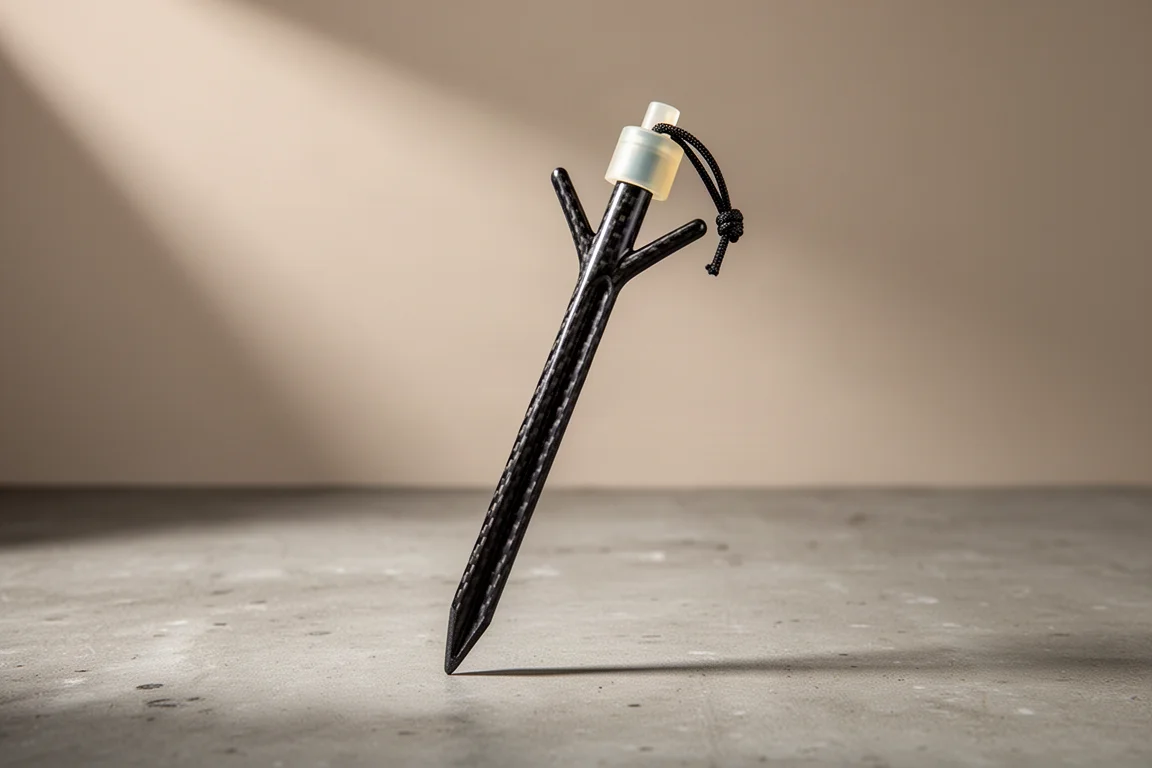
This is a carbon fiber tent stake that weighs 2 g, which makes it the lightest stake in this roundup by a wide margin. The name is also the specification, and the numbers hold up. A small cap sits on top of the stake, which keeps the shaft from digging into your hand when you push it in, and the cap glows in the dark so it is easier to spot around camp.
The stake is more capable than its weight suggests. It took a considerable amount of force to break one deliberately, and it holds well when it is driven in at an angle, where the ground and the stake work together. Where it struggles is the same place any thin stake struggles: if it is placed loosely or at a poor angle, it is more likely to pull out than a heavier, wider stake. This is fair-weather hardware, not a stake to rely on in a storm.
Price is the other consideration. Each stake costs about $3.90, so a full shelter set adds up quickly, and that is before you decide whether you want spares. For backpackers who already count grams carefully, that trade is easy to justify.
Nitecore NB10000 Gen 4: A Lighter Power Bank With a Smarter Cable
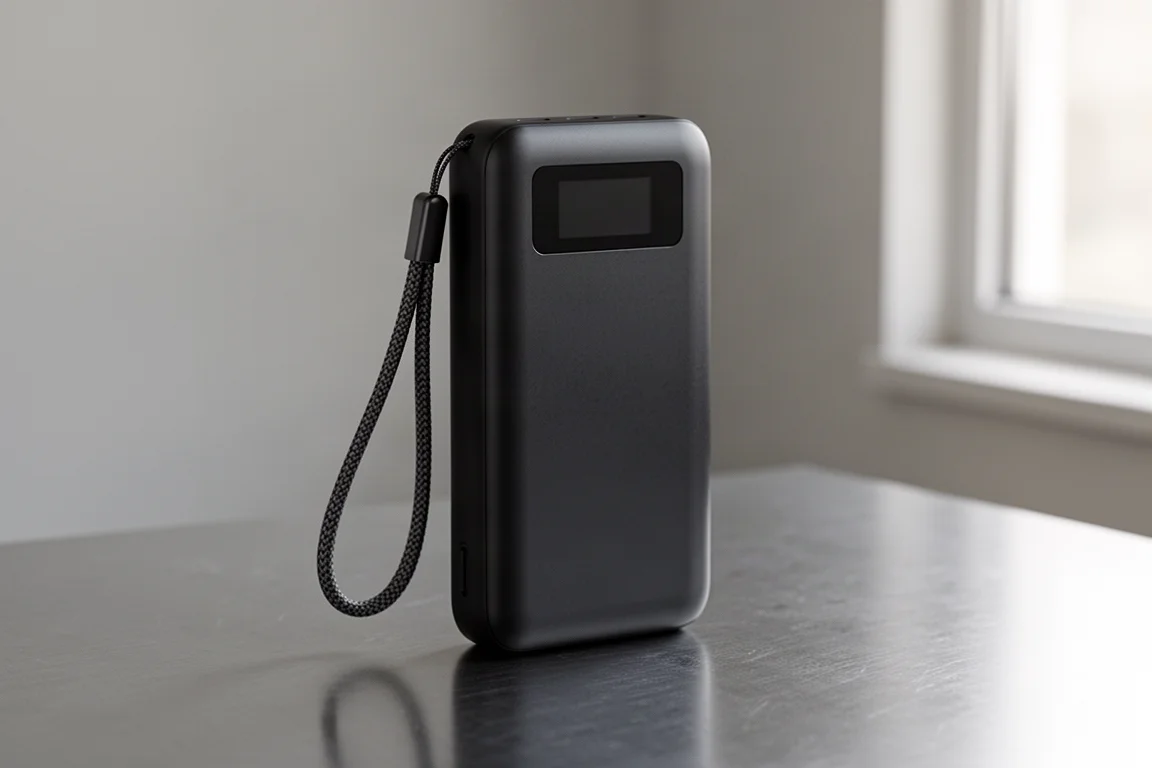
The NB10000 Gen 4 is the newest version of a long-running 10,000 mAh power bank, and it is the lightest power bank on the market at roughly 5 oz. Compared with earlier generations, the shape is a little narrower and slightly taller, and the improvements are practical rather than cosmetic.
The display wakes with a knock, so you can check the remaining charge without hunting for a button. The charging cable doubles as the lanyard, which means it stays attached to the bank instead of disappearing into a pack pocket. For anyone who has finished a trip with a dead phone and a missing cable, that detail is worth more than it sounds.
The Gen 4 costs about $83.95. That is a lot for a power bank, and if you already own a Gen 3 there is little reason to replace it. If you are buying a power bank for the first time, or replacing one that has reached the end of its working life, this is the version to get.
BearVault BV500: A Bear Canister That Shrinks as You Eat
The BV500 is the newest canister from BearVault, and it takes a different approach to a familiar problem. Standard canisters keep the same external volume for the whole trip, so the space you free up by eating food is space you carry anyway. The BV500 collapses as the contents shrink, so the pack gets smaller and better balanced as the trip goes on.
The lid uses a new mechanism: you pinch two tabs to release it, which is a simpler motion than the multi-step openings on other BearVault models. The body is translucent, so you can see what is left without opening it. It also works as a seat, and because the height is adjustable, that seat can be set to a comfortable level. Realistic capacity depends on how much you eat and how many people you are feeding, and a larger version could cover roughly four days for some parties.
Pricing has not been confirmed. The expectation is around $130, and the canister is not widely available yet, so it is worth checking availability before planning a trip around it.
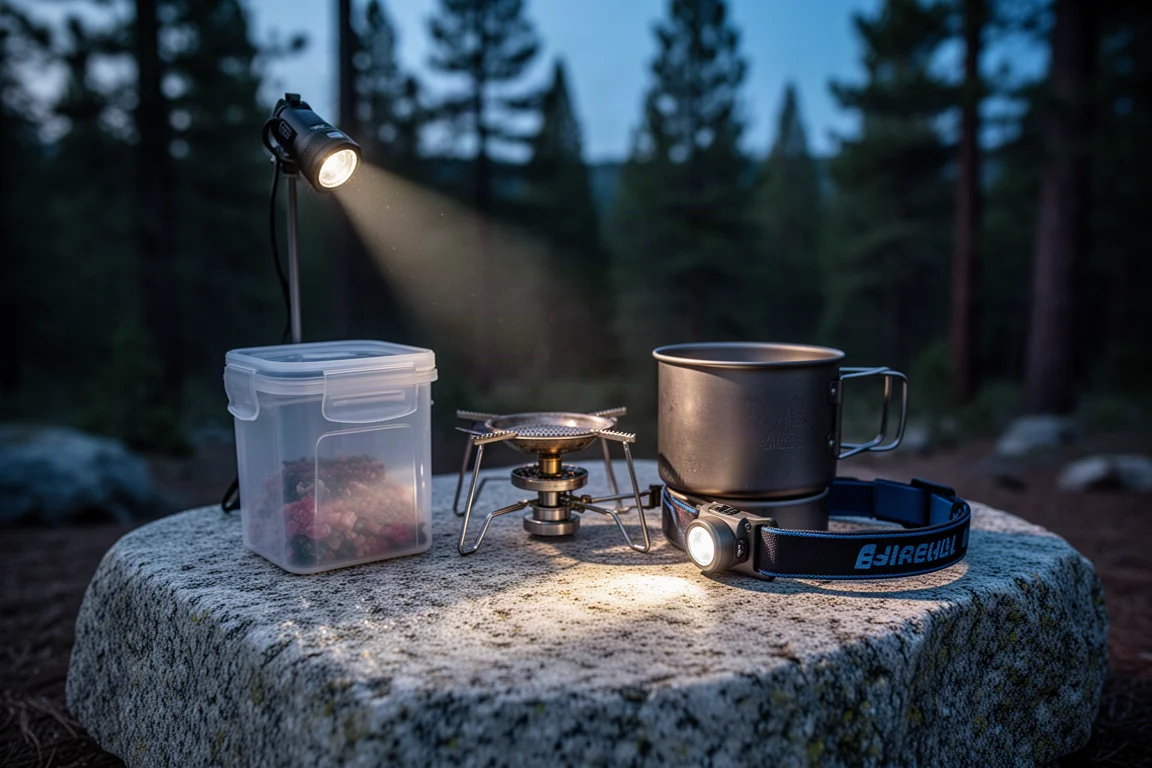
The collapsing design is the most meaningful change here, because it addresses volume rather than weight, and volume is what most people actually run out of on a multi-day carry.
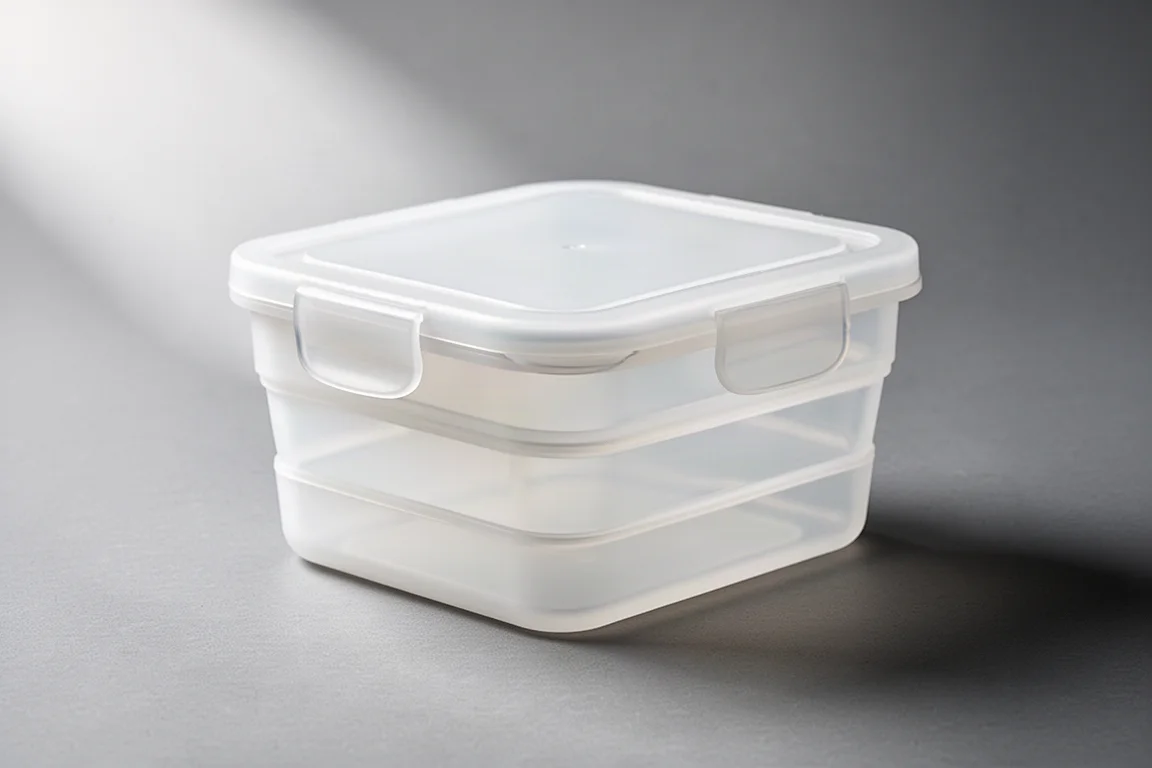
Kims Outdoor Pot Knob: A Tiny Fix for a Hot Pot Lid
If you have ever tried to lift a lid off a pot of boiling water by its thin wire handle, you know the problem this solves. The Pot Knob is a small 3D-printed part that snaps over the triangular lid tab found on many titanium pots. It is grooved to match the shape of the handle, so it seats firmly, stays in place while you lift, and comes off easily when you want it gone.
Installation takes a couple of seconds and no tools. Because the knob gives you something cool and wide to grip, you can move a hot lid without a pot gripper and without burning your fingers. It is a single-purpose accessory, and it only fits pots with that triangular lid tab, but for the many backpackers who own one of those pots, it removes a small, repeated annoyance for good.
At $6.95 the price is easy to accept, especially compared with the cost of a 3D printer and the time it would take to design something similar yourself.
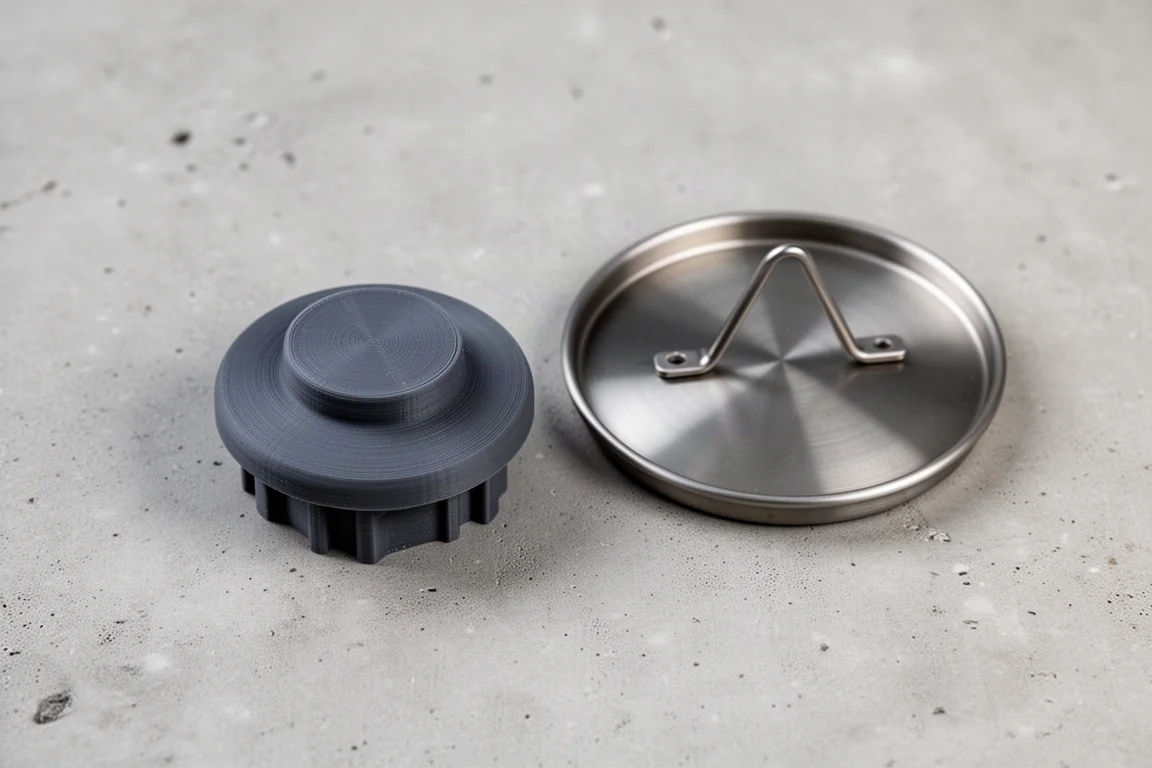
Migo 1L Bottle: Squeezable, Measured, and Ready for an Insert
The Migo bottle is already a familiar shape in ultralight kits, and the 1 L version sells for about $18.95. Two things make it useful on the trail: the body is squeezable, which means it works as the dirty-water side of a squeeze filter setup, and the side is printed with measurements, which helps when you are mixing drinks or tracking how much you have drunk.
A new accessory for the bottle is on the way. It is a removable insert that sits inside the neck, and its job appears to be keeping ice, fruit, or other solid additions from blocking the opening while you drink. No specification sheet or price has been published yet, so the practical details are still open.
The bottle itself is the safer recommendation today. It is light, it is easy to squeeze, and it works with the filters most backpackers already carry.

If the insert turns out to be as simple as it looks, it will be a small convenience upgrade rather than a reason to replace an existing bottle.

Ignis Gear Pot Hopper: A 4.5 g Pot Gripper That Works
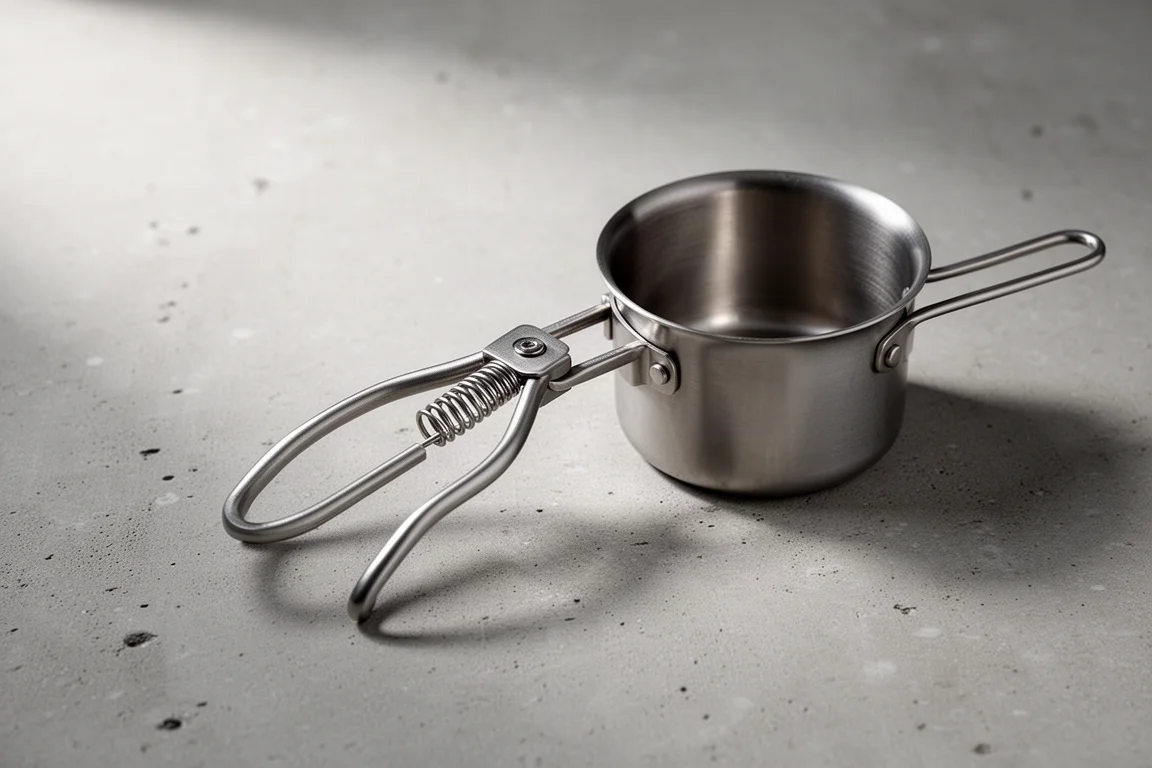
The Pot Hopper is a pot gripper that weighs 4.5 g, roughly half the weight of typical alternatives. It has a springy action with two curved arms, and the shape, which is what gives it its name, is compact enough to disappear into a cook kit. It arrives in a small cardboard canister.
In use it grips a pot rim firmly enough to lift a full pot with confidence, and it is small enough to be a sensible addition for anyone carrying a handleless titanium pot. If you want a backup grip, it can also be clipped onto a lid, though that is not the job it was designed for. It is a niche tool for a specific style of cook kit, and it does that job well.
The catch is price. At $23.99 it costs more than many people expect to pay for a pot gripper, and that will be the deciding factor for some buyers. For anyone who has already spent money to shave grams elsewhere in the kit, halving the weight of a gripper for that price is a reasonable trade.
Overall Buying Advice
Work out which problem you actually have before you buy. The Pot Knob and the Migo bottle are low-cost fixes that make existing gear nicer to use, and both are easy to justify. The Pacha Mama stakes are the most specialised purchase here: excellent if you count grams and pitch carefully, less suitable if you camp in exposed or stormy conditions.
The Nitecore NB10000 Gen 4 is the simplest recommendation of the group, because a reliable power bank is useful on almost every trip, and this is the lightest and most refined version of a well-established design. The BearVault BV500 is the one to watch rather than order immediately, since pricing and availability are still being settled, but the collapsing design is the kind of change that could affect how you pack for longer trips.
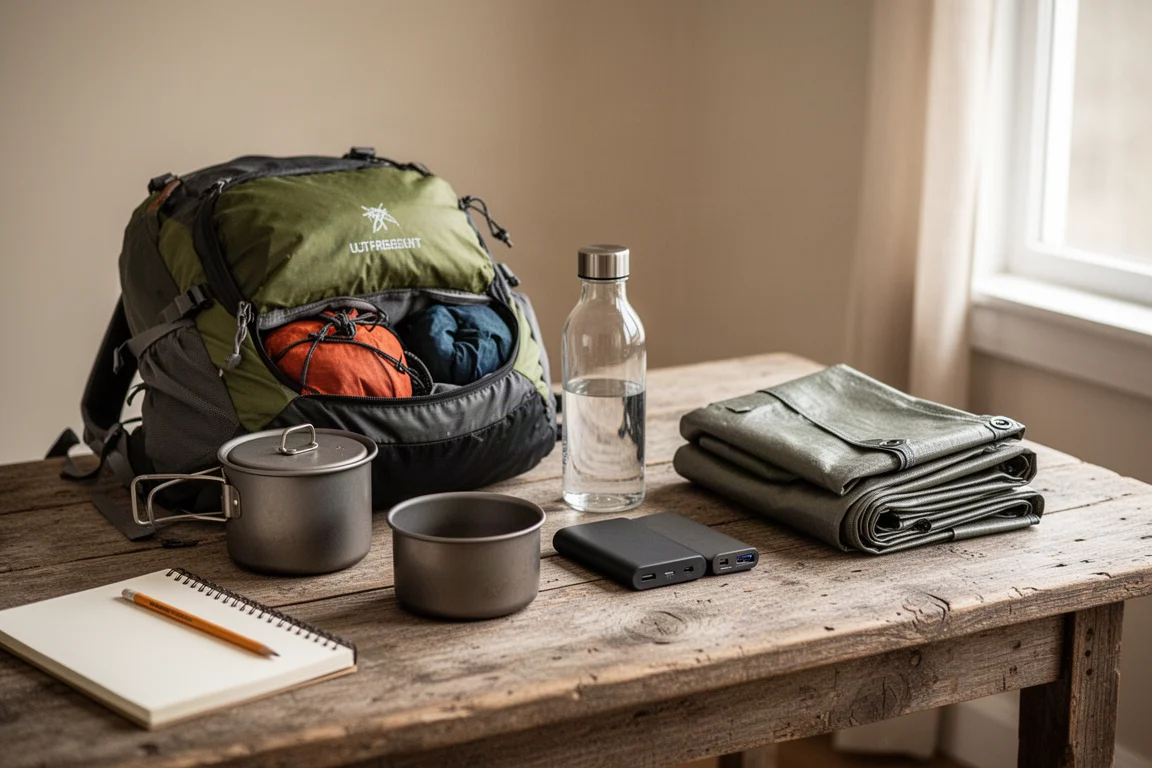
If you are building a kit from scratch, start with the items that solve recurring annoyances and add the specialised pieces only when a trip demands them.
Conclusion
These six products share a useful quality: each one removes a small friction point without making the rest of the kit heavier or more complicated. The least expensive options here are the easiest to recommend, and the two pricier items, the power bank and the collapsing canister, justify their cost with real functional gains rather than cosmetic updates.
Further reading
Related Reviews

Backpacking Gear
Building a 10 lb Base Weight: An Ultralight Backpacking Gear List
A practical walkthrough of the ultralight pieces behind a 10 lb base weight, from a 765 g pack and a roomy one-person tent to a full camp chair and a dependable water filter.
Backpacking Gear
A 15-Pound Lightweight Backpacking Gear List for Solo Trips
A beginner-friendly 15-pound backpacking setup built from easy-to-find gear, with notes on what each piece does, how it packs, and where to spend your attention.
Backpacking Gear
8 Ultralight Backpacking Gear Upgrades Worth Carrying
Eight small, affordable backpacking upgrades that solve real trail annoyances, from a pillow that stays put to a fuel valve that rescues leftover canister gas.