Family Backpacking Gear
Toddler Backpacking Gear List: 5 Pieces That Made a First Overnight Work
A practical look at the child carrier, wearable sleeping bag, foam pad, water filter, and food bag that handled a toddler's first one-mile backpacking overnight, plus the trade-offs worth knowing before you buy.
Introduction
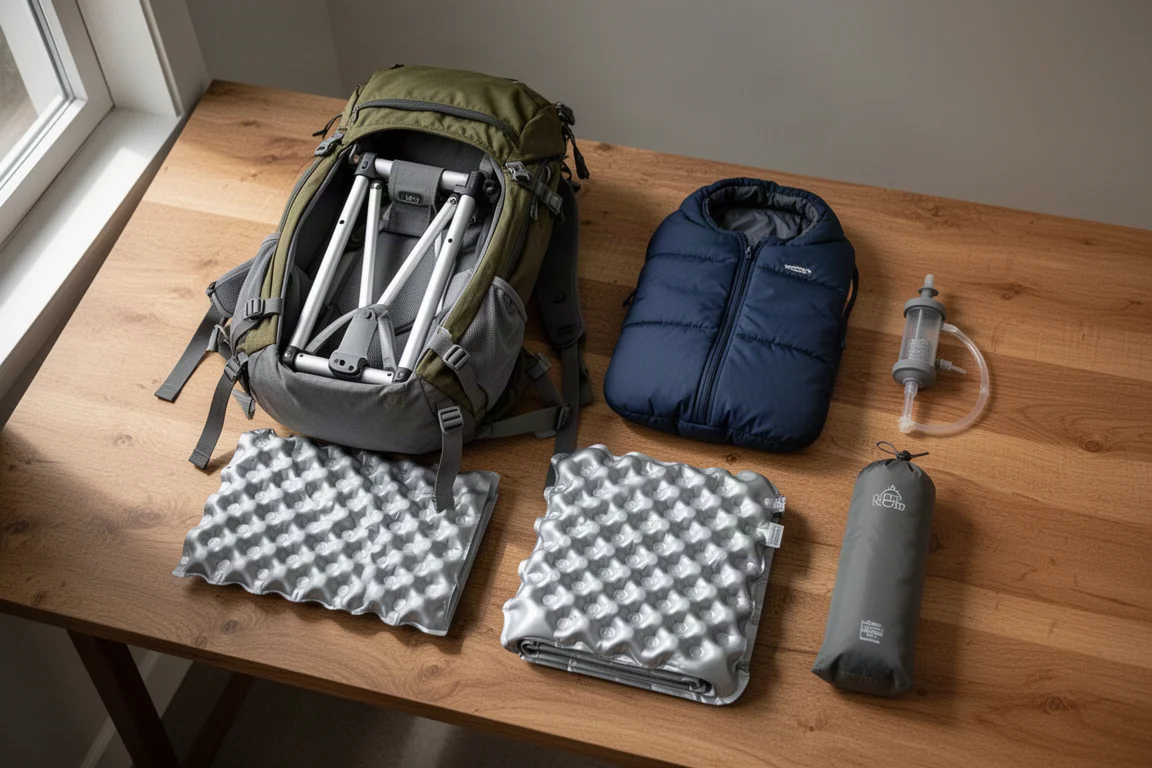
A first backpacking trip with a toddler does not have to be ambitious to be worth doing. Ours was intentionally small: one mile up Springer Mountain, one night camped, and one mile back to the trailhead the following morning. The point was not distance. It was to learn whether our son would enjoy being outside, and whether the gear we had picked for him would hold up to a real overnight.
The load told its own story. His gear came to roughly 15.5 pounds, he weighed about 23 pounds, and that put the combined figure near 38.5 pounds before food, water, and pumping supplies were added. The carrier we chose tops out at 48.5 pounds, so the numbers were tight enough to watch but not tight enough to be a problem.
This is the gear that made the trip work, what each piece does well, and where the compromises showed up.
How This Gear List Came Together
Choosing gear for a small child is a different exercise than choosing it for yourself. Three priorities shaped every decision here. The first was protection: a structured carrier with a frame felt safer than a soft one, because a fall onto a soft carrier offers a child no protection at all. The second was comfort, since a child who is not comfortable will not tolerate the ride. The third was storage, because carrying the child and the child’s belongings in one system keeps the load balanced and keeps the other adult from absorbing everything else.
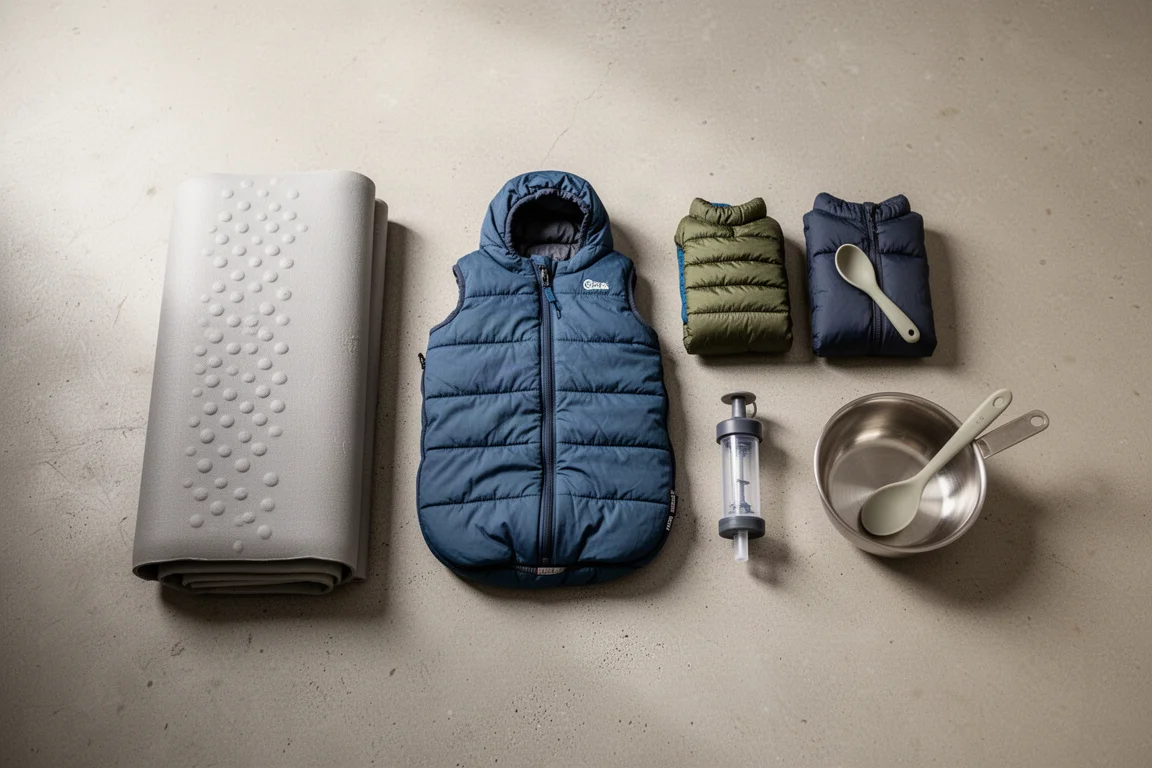
A fourth priority was insulation strategy. Down is the default for adults, but for a small child it is a risk: a leak or a spill leaves down wet and effectively useless, while a wet synthetic layer still insulates. Every sleep and clothing decision below follows from that.
Because the trip was short and stayed within a mile of the car, it also worked as a low-stakes test. If a piece of gear failed, the consequence was a short walk rather than a safety problem.
Osprey Poco Premium: The Child Carrier
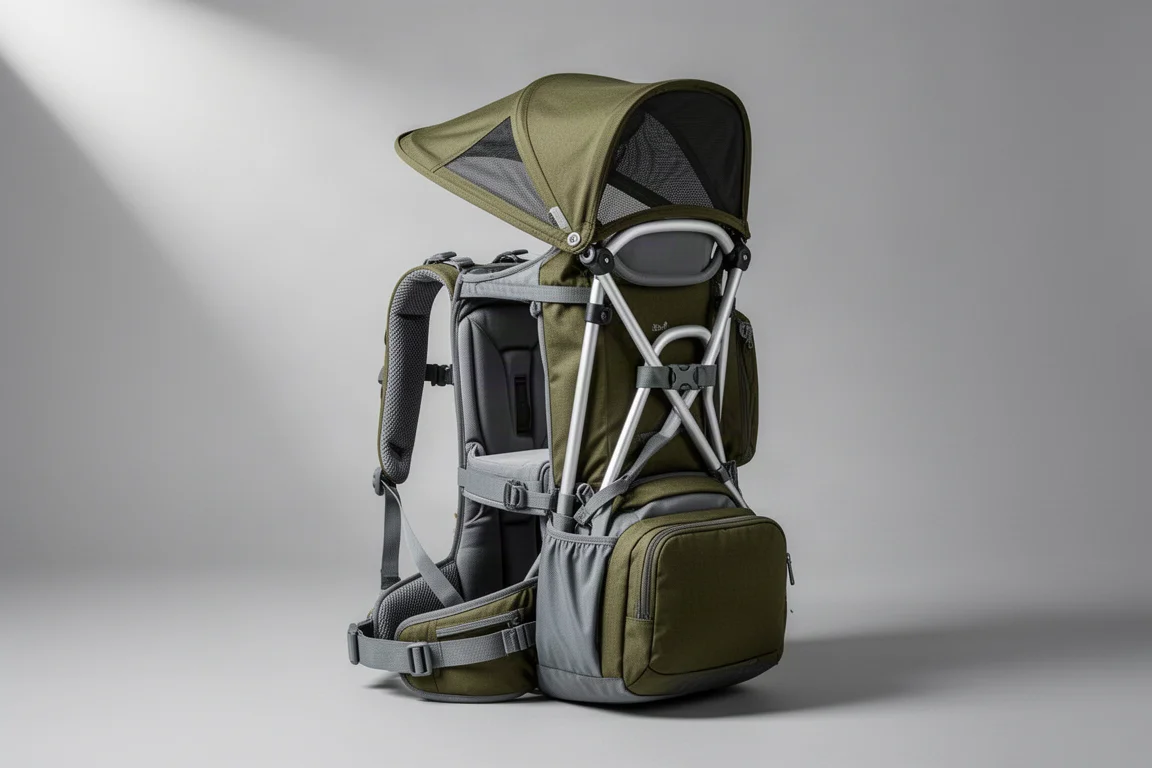
The carrier was the piece that caused the most deliberation, and it is the piece that mattered most. The Poco Premium was the model that kept coming up, and it fits the brief: 36 liters of storage, an internal aluminum frame, and a 48.5 pound weight limit that includes the child, the carrier itself, and everything you load into it.
On the trail it behaved well. It adjusted to the wearer’s body without fuss, and while the hips were sore at the end of the first day, that is normal after months away from a loaded pack, and there was no bruising. Our son was secure in the seat and harness, and he was content as long as we kept moving. He was comfortable enough that he slept through the entire descent.
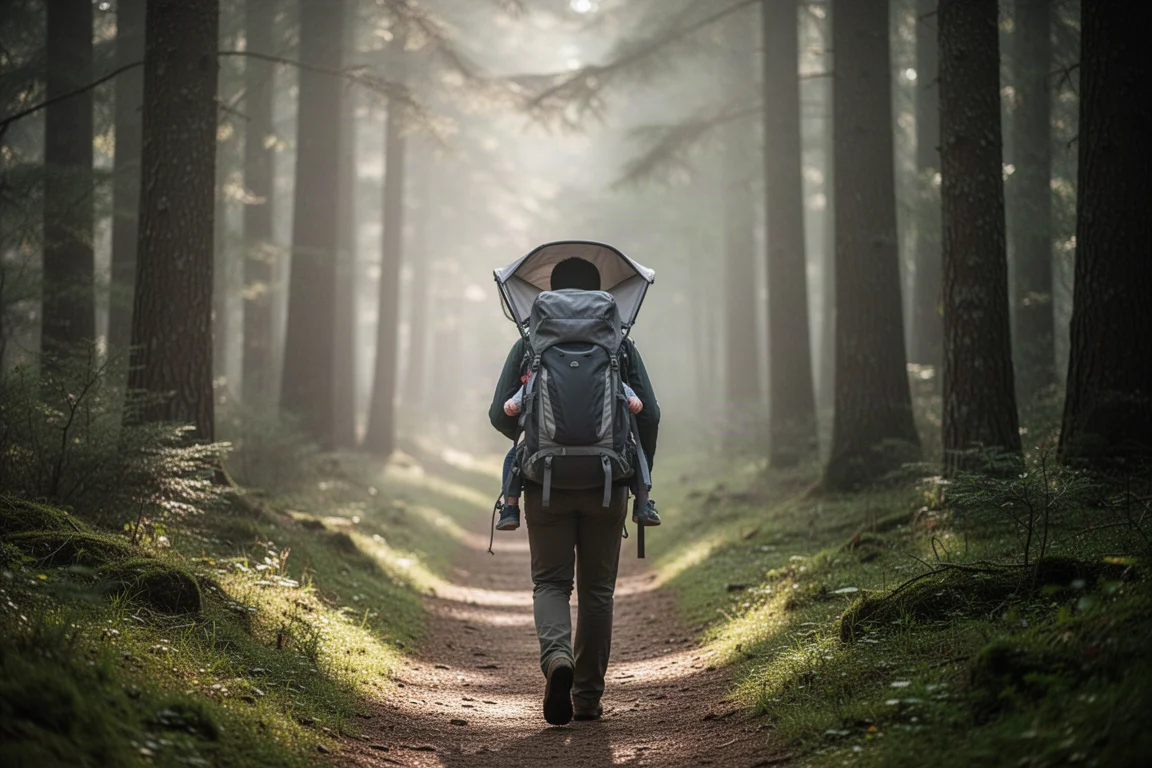
Two things are worth knowing before buying. The cup holders on the top are shallow, and a top-heavy bottle will flop out of them unless it is wedged tightly against something else. The integrated sunshade is ventilated by design, which makes it useful as light rain protection but not something to rely on in sustained weather; a dedicated rain cover is sold separately. Storage is honest rather than generous. The 36 liters was just enough for a toddler’s clothing, sleep gear, bottles, and pumping supplies, and it would go further on a trip where bottles are no longer part of the load.
Little Mo 40: The Wearable Sleeping Bag
Keeping a quilt or bag on a sleeping toddler through the night is a losing battle, which is exactly what a wearable sleeping bag solves. The Little Mo 40 is rated to 40 degrees Fahrenheit, and with overnight temperatures in the lower 50s it was the right call. There was some concern about overheating, but our son slept through the night without issue.
The construction matters as much as the rating. It uses a nylon shell with synthetic insulation, which is the correct choice for a small child: a diaper leak or a spill ruins down, while synthetic insulation keeps working when damp. Wearing it also removes the middle-of-the-night adjustment cycle entirely, so everyone sleeps better.
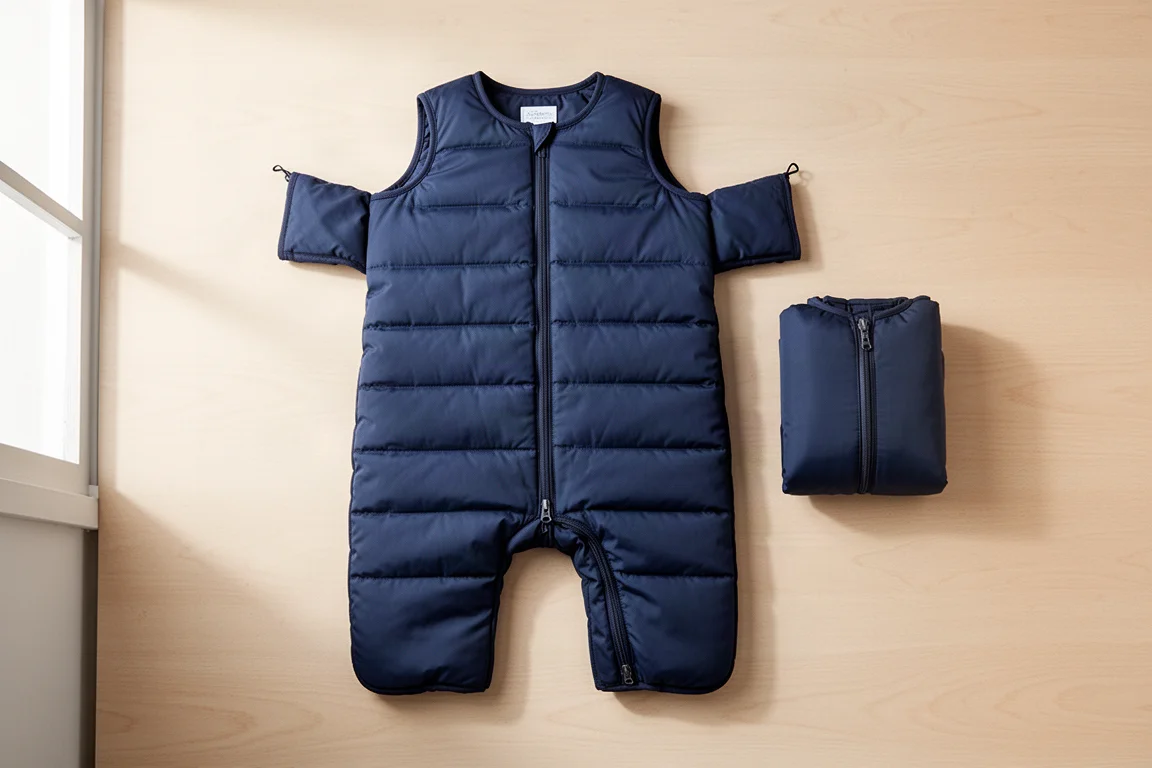
Therm-a-Rest Z Lite Sol: The Sleeping Pad
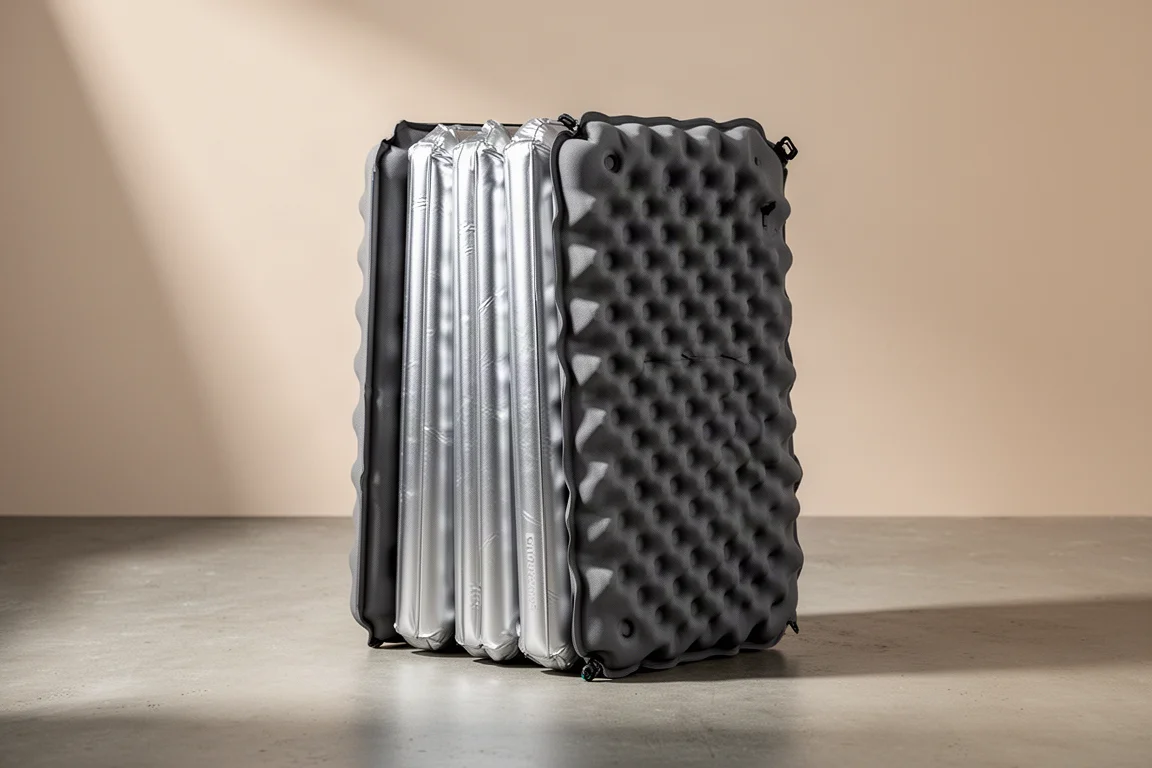
An inflatable pad is more comfortable, but comfort was not the deciding factor here. A toddler who rolls off an inflatable pad lands on cold ground with no insulation, and an inflatable pad can be punctured. A closed-cell foam pad cannot deflate and cannot be rolled off entirely, so the trade-off was deliberate: slightly less cozy, reliably warm.
The Z Lite Sol carries an R-value of about 2.0 on its own, and doubling it over brought the effective insulation to roughly 4.0. Trimming it down to save weight was considered and skipped, which turned out well because the extra length made the doubling simple. The pad sits lower than an adult pad, which raised a concern about adult pads compressing together and squeezing a small sleeper in between, but everything stayed in place overnight. On a steeper site that could become a real problem, and the plan for future trips is either to keep carrying a wider adult pad or to pair an inflatable pad with closed-cell foam underneath it.
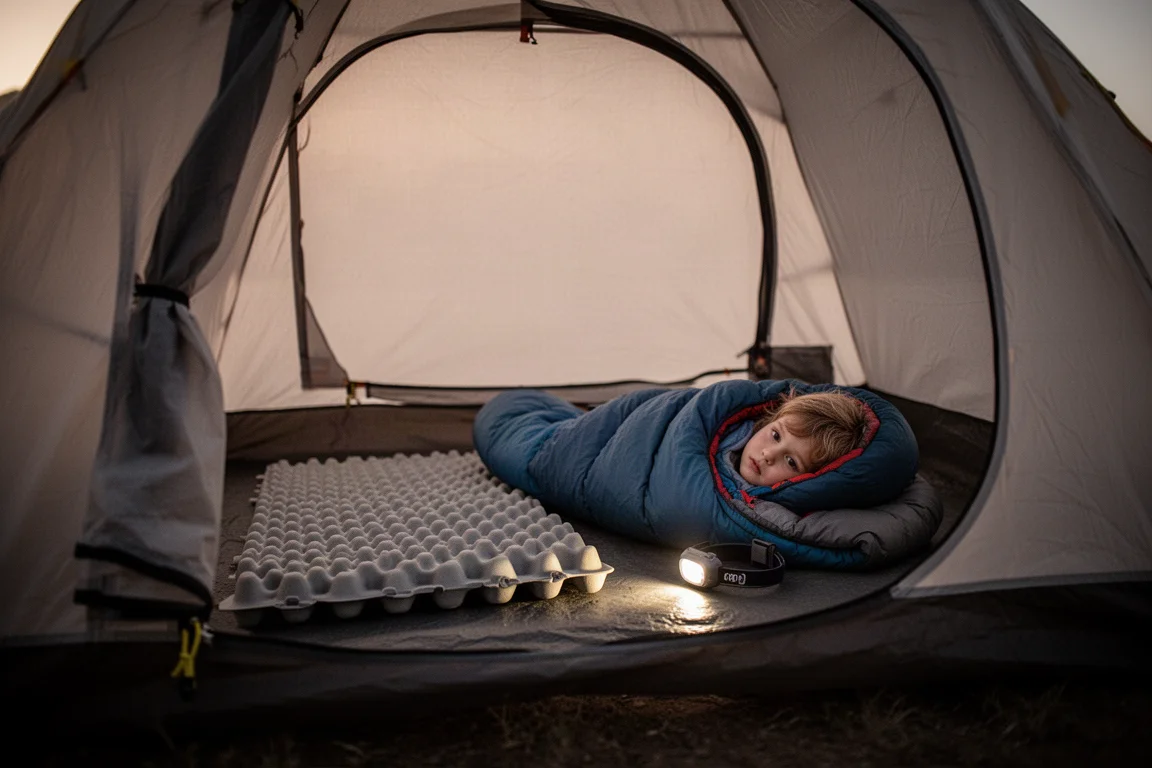
For a first overnight with a toddler, closed-cell foam is the conservative choice, and the doubling trick adds insulation without adding cost. It is also the pad that will still work once a child is old enough to carry their own gear.
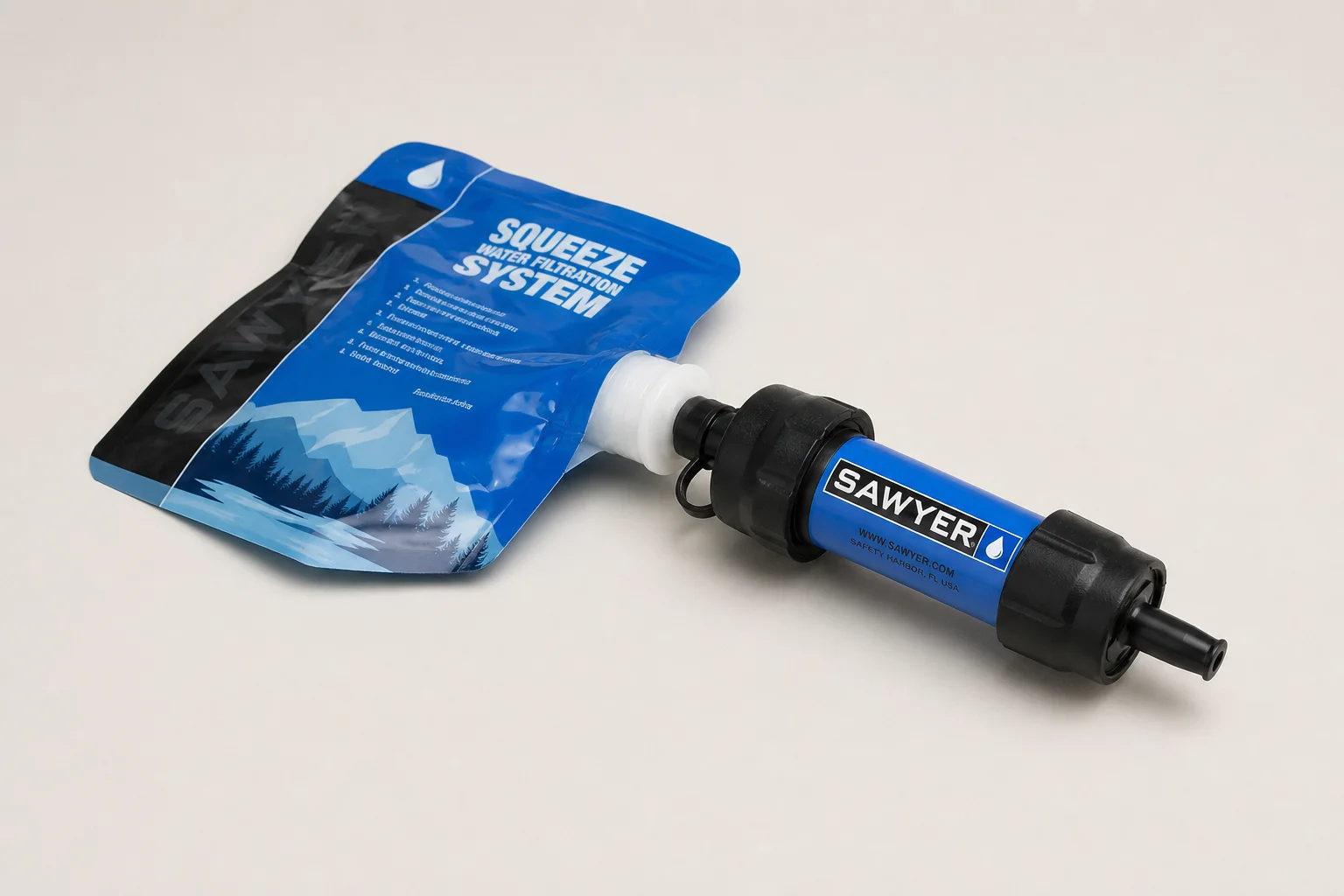
Sawyer Squeeze: Water Filtration
Water treatment was the one category where nothing needed to change for a child. The same Sawyer Squeeze used for the adults’ water handled the toddler’s as well, refilling a spill-proof straw cup that survived being thrown onto rocks. One filter for the whole group keeps the kit simple and the packing list short, and it is a piece most backpackers already own.
Zpacks Food Bag: Keeping Food Sorted
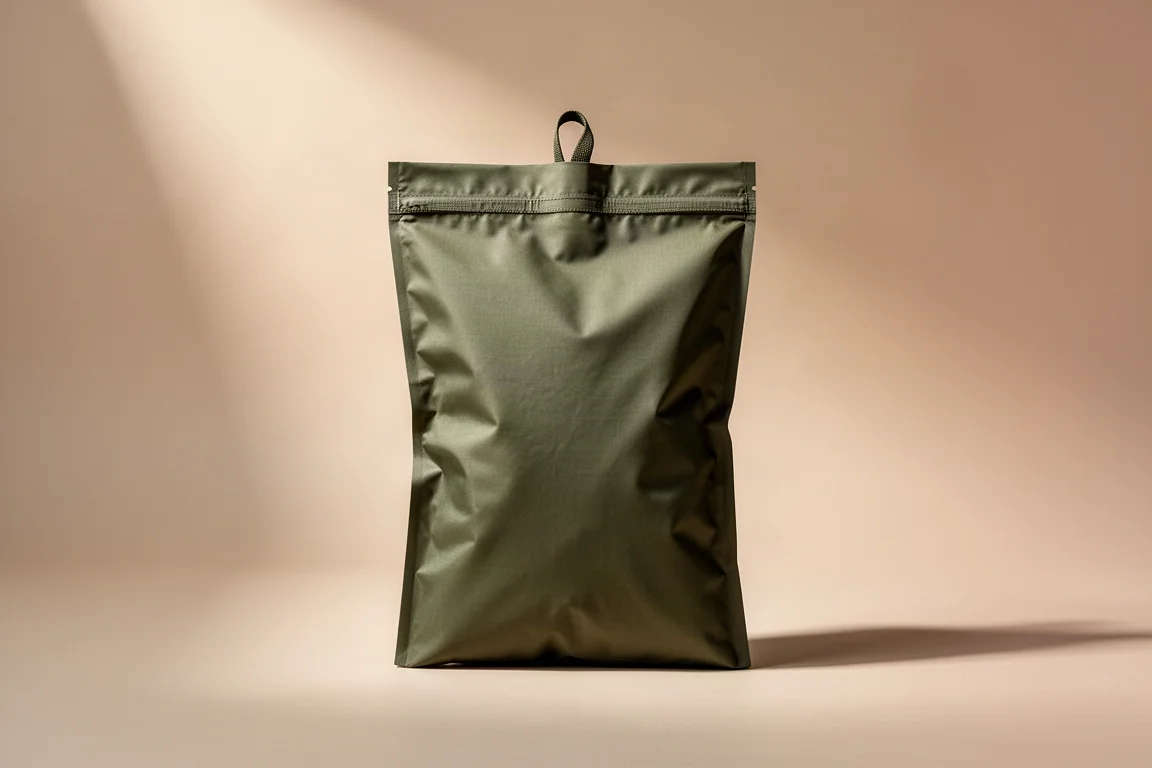
A dedicated food bag for the toddler solved an organizational problem rather than a technical one. Freeze-dried chicken and vegetable mash, mashed sweet potato, a stainless steel bowl, and a silicone spoon all lived in one lightweight bag, so nothing had to be dug out of a shared stash at mealtime. Giving each person their own bag makes the whole system easier to manage, and the fabric on this one keeps the weight negligible. That said, the same job can be done by any inexpensive food bag, so this is a convenience purchase rather than a necessity.
What We Would Change Next Time
Rain protection for a small child is the area that did not go to plan. An oversized emergency poncho, cinched at the waist, looked workable until the child went into the carrier, at which point it slid upward and stopped covering anything useful. Properly sized rain gear is the fix for any trip longer than a short walk back to the car.
Season timing is the other lesson. The overnight temperatures were mild, and the trip would not have been worth attempting if it had been meaningfully colder, particularly with rain in the forecast. Warmer weather also reduces the weight of an adult’s own insulation, which buys back some of the headroom a longer trip would need for food.
Finally, the pad arrangement is worth reconsidering on sloped ground. A wider adult pad under the child, or an inflatable pad backed by closed-cell foam, removes the risk of a small sleeper sliding between two adult pads.
Buying Advice
Start shorter than you think you need to. A one-mile overnight close to a vehicle is a genuine test of both the gear and a child’s tolerance, and it costs almost nothing to abandon if it goes badly. Size the carrier against real numbers before you buy: the weight limit covers the child, the carrier, and everything you put inside, so add up gear, food, and water and leave yourself headroom. If a longer trip is the goal, that load will only grow.
For sleep, prioritize warmth over plushness with a young child. A closed-cell foam pad and a synthetic, wearable sleeping bag remove two common failure modes: rolling off the pad and kicking off the cover. Choose synthetic insulation for anything a child sleeps in or wears as a layer, and treat down as an adult-only material until a child can be trusted to keep it dry.
If you are unsure about a high-priced item, buy it somewhere with a return window and test it on a short trip first. That approach is what made the carrier decision comfortable rather than risky.
Conclusion
None of this gear is exotic, and that is the point. A structured carrier with enough storage, a wearable synthetic sleeping bag, a foam pad, one water filter for the group, and a simple food bag covered a toddler’s first overnight at about 15.5 pounds of gear. The trip was short, the weather was mild, and there were still stressful moments, but the gear did its job and the weight stayed inside the carrier’s limit with room to spare.
For parents who want to start early, the advice is straightforward: keep the first trip small, stay near the car, choose insulation that survives getting wet, and let the gear prove itself before committing to anything longer.
Further reading
Related Reviews

Backpacking Gear
Building a 10 lb Base Weight: An Ultralight Backpacking Gear List
A practical walkthrough of the ultralight pieces behind a 10 lb base weight, from a 765 g pack and a roomy one-person tent to a full camp chair and a dependable water filter.
Backpacking Gear
A 15-Pound Lightweight Backpacking Gear List for Solo Trips
A beginner-friendly 15-pound backpacking setup built from easy-to-find gear, with notes on what each piece does, how it packs, and where to spend your attention.
Trail Running Gear
28-Mile Trail Run Pack Loadout: Ultralight Gear for High Alpine Self-Supported Running
A complete breakdown of gear, clothing, hydration, nutrition, and safety equipment for a 28-mile high alpine trail run with 7,800 feet of elevation gain.