Family Backpacking Gear
Toddler Backpacking Gear: 4 Items That Made a First Overnight Trip Work
A short-trip gear list for backpacking with a toddler, covering a framed child carrier, a wearable sleeping bag, a closed-cell foam pad, and a squeeze water filter.
Introduction
Backpacking with a toddler is mostly a packing problem. The walking is fine. The real question is whether you can carry a small passenger, keep them warm and dry, and still have room left for the food and water you both need.
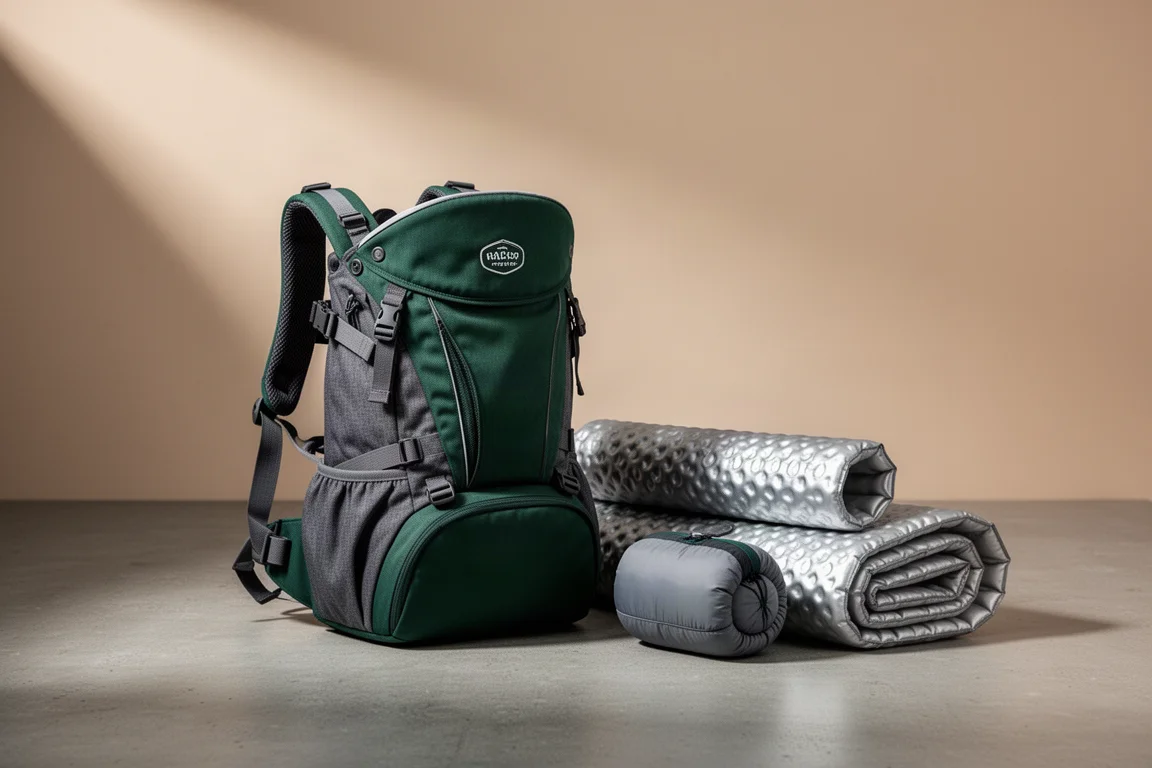
A one mile climb up Springer Mountain, a single night camped, and a one mile walk back to the car the next morning is a sensible way to test that question. It is short enough to stay low risk and long enough to reveal what actually works. The four items below are the ones that carried the trip: a framed child carrier, a wearable sleeping bag, a closed-cell foam pad, and a squeeze water filter.
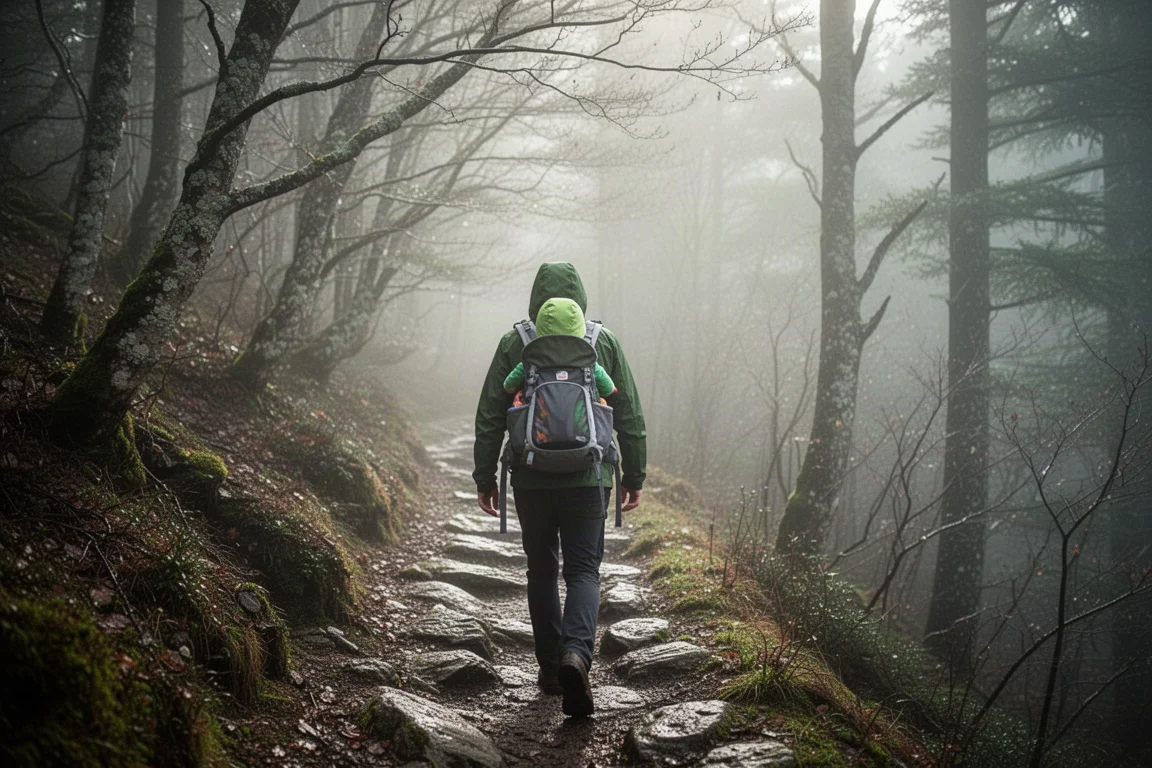
Clothing, food, and small extras went into the carrier too, and they matter, but they are details you can improvise. These four pieces are the ones that decide whether an overnight with a toddler feels manageable or miserable.
What to Look For in Toddler Backpacking Gear
Three things shaped every choice here. Protection comes first: a child riding on your back should sit inside a structure that holds its shape, not a soft sack that collapses if you stumble. Insulation comes second, and it should keep working when it gets damp, because small children are not careful with their gear and a wet down bag stops insulating almost entirely.
The third factor is weight budget. Everything a child needs counts against the same carrying limit as the child, so a lighter pad, a lighter bag, and a lighter filter all buy you room for food later.
Warmth, protection, and packable weight rarely come free together. The useful exercise is deciding which of the three you are willing to trade on for the trip you actually have planned.
Osprey Poco Premium Child Carrier
The carrier was the piece that took the longest to choose. It needed to be comfortable for the passenger, protective if the adult fell, and roomy enough to swallow the child’s own gear rather than spreading it across two packs.
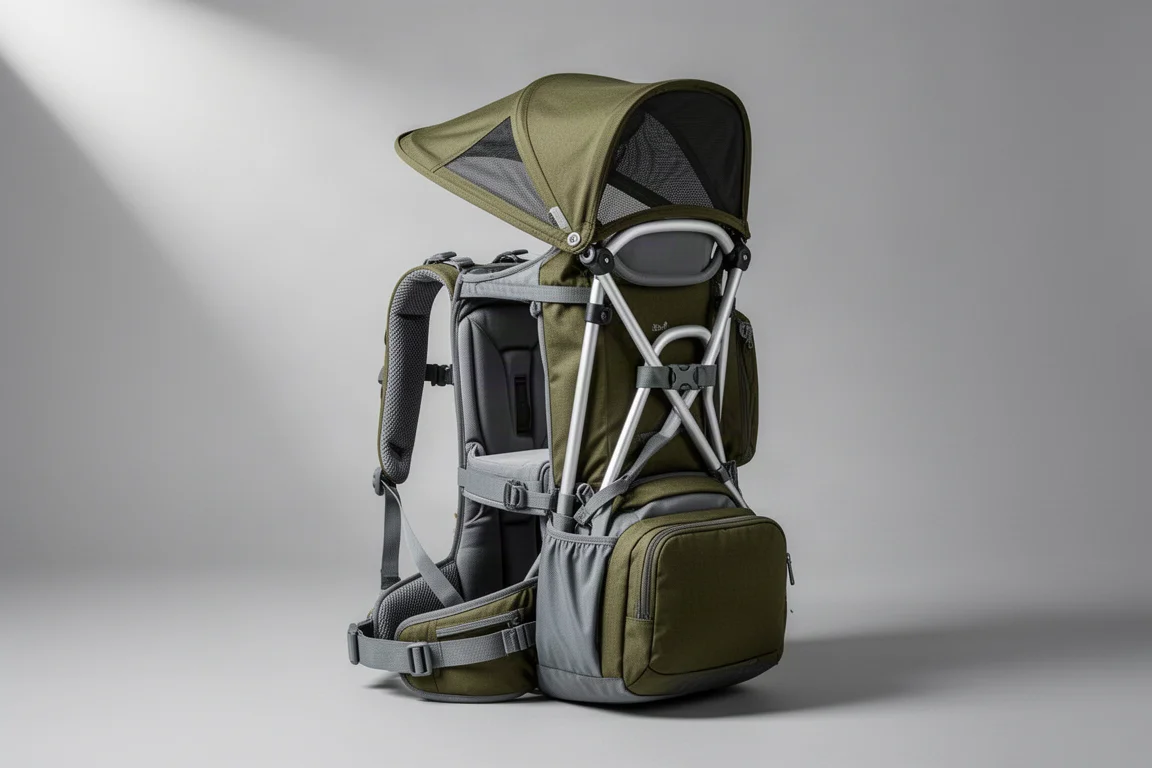
The Poco Premium answers that with 36 L of storage, an internal aluminium frame, and a total weight limit of 48.5 lb covering the child, the carrier itself, and whatever gear, water, and food you load into it. The framed structure was the deciding factor, since a fall onto a soft carrier is exactly the scenario worth avoiding. The seat and buckle arrangement holds a small passenger securely, and the harness adjusts far enough to fit an adult properly.
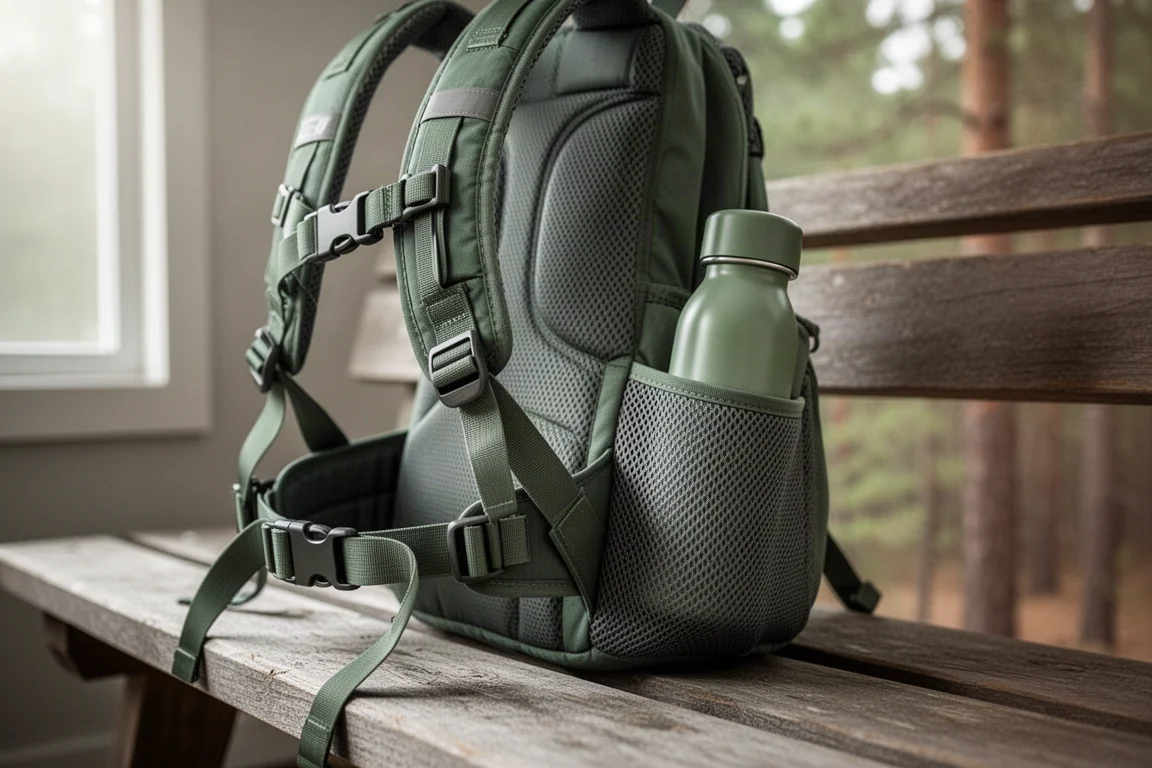
Two practical notes are worth knowing before you buy. The sun shade is ventilated and water resistant, which is fine for a light sprinkle over a short distance, but the mesh sides are porous by design and it is not a substitute for real rain protection. A dedicated rain cover is available separately. The other quirk is the bottle holders on top: they are shallow, so a top-heavy bottle flops out unless you pack items tightly around it.
On the trail the carrier was comfortable over a full day, adjustable to the adult’s body, and stable enough that the passenger napped through the entire descent. The 36 L capacity covered a child’s clothes, sleeping bag, and food for one night. It sits at a high price point, and the Poco range also includes lighter and less expensive models, so the premium version makes most sense if you expect to use it regularly.
Little Mo 40 Wearable Sleeping Bag
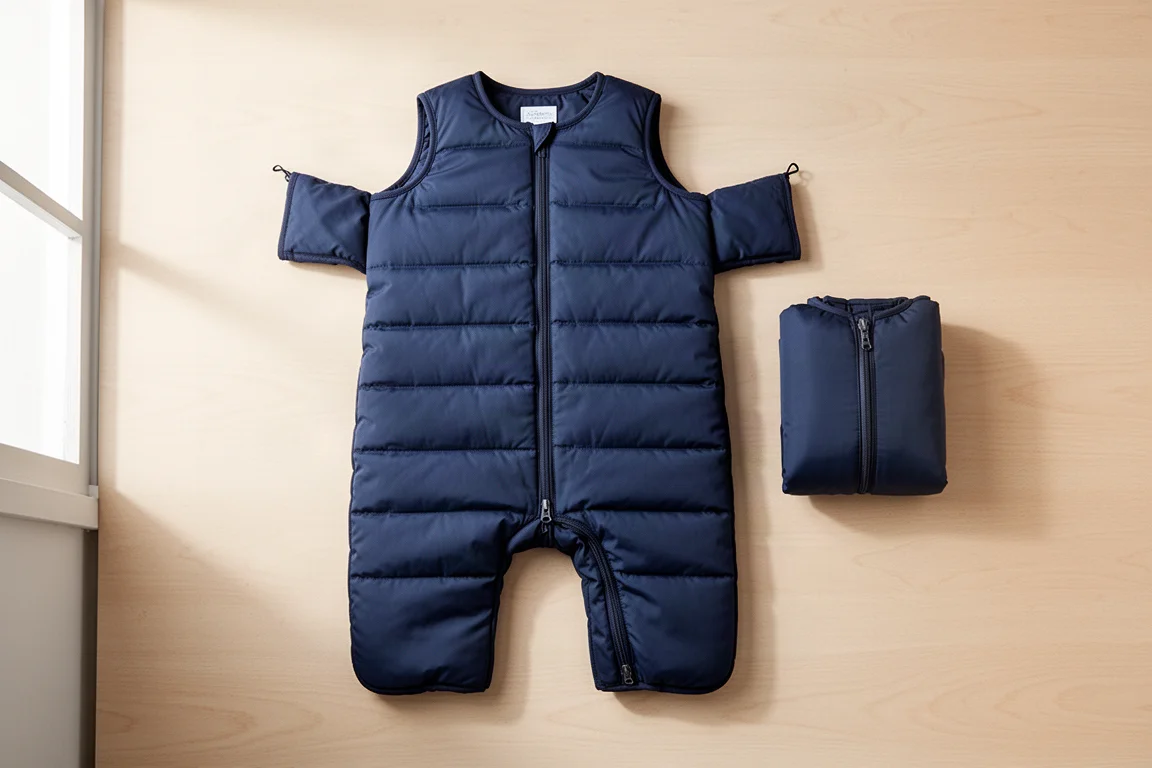
Keeping a quilt on a toddler overnight is a losing battle. The Little Mo 40 solves it by being worn rather than draped, so there is nothing to kick off at two in the morning and no need to wake up repeatedly to re-tuck it.
It is rated down to 40 degrees and built from nylon with synthetic insulation. That rating suited nights forecast in the lower 50s, where the child slept well without overheating. Synthetic fill was a deliberate choice over down: a leaky diaper or any other moisture source ruins down completely, while synthetic insulation still does its job when damp. For a small child who cannot be trusted to keep a sleeping bag dry, that is the more forgiving option.
Therm-a-Rest Z Lite Sol Sleeping Pad
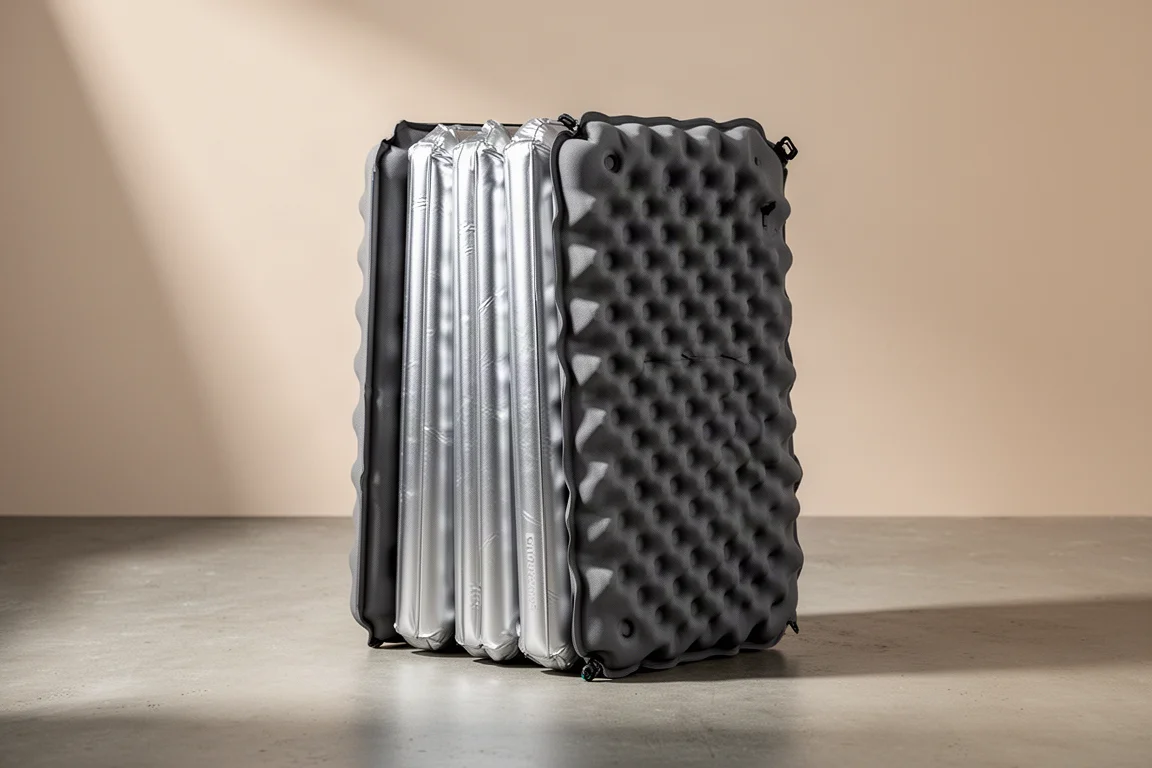
An inflatable pad is the more comfortable choice for an adult, but comfort was not the priority here. A closed-cell foam pad cannot deflate, cannot be punctured, and cannot leave a small sleeper with nothing underneath them.
The Z Lite Sol has a typical R-value of 2. Folding it over on itself doubled that to roughly 4, which added insulation between the child and cold ground without any extra purchase. Trimming the pad down to save weight was considered and then abandoned, which turned out well because the full length was needed for the doubling trick. Even at the base rating, the pad would likely have been warm enough for the conditions.
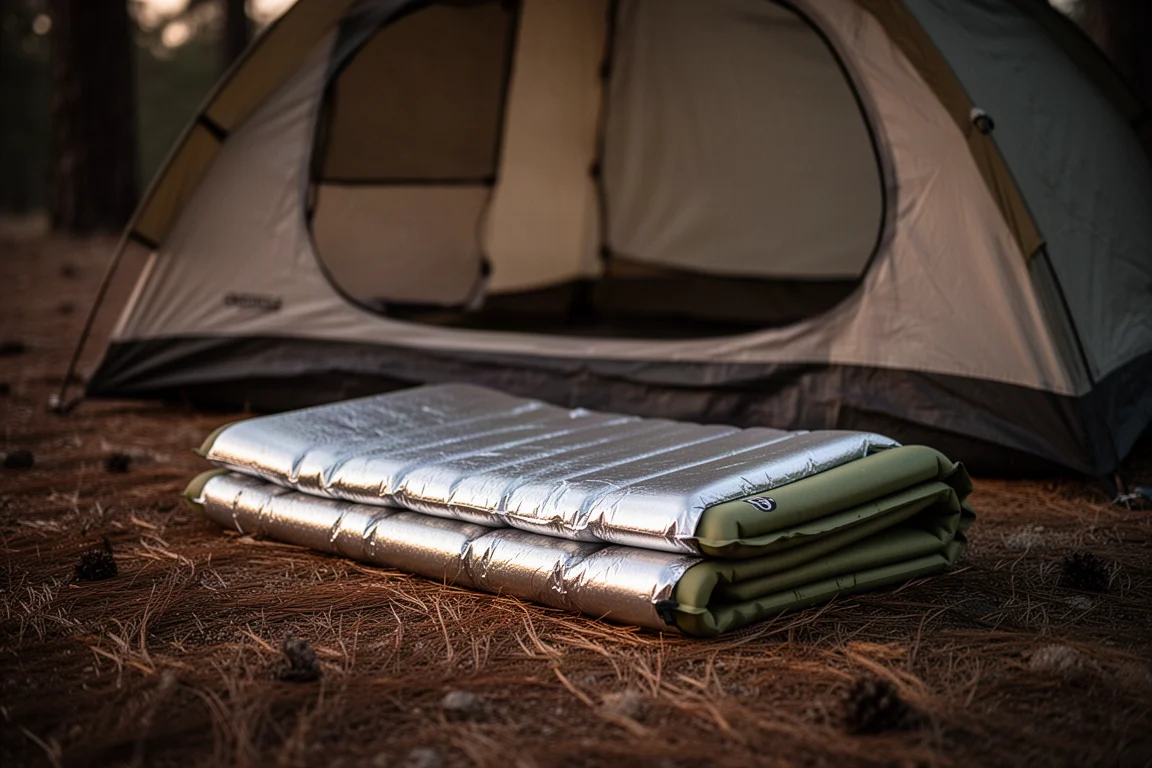
One thing to watch is height. A foam pad sits noticeably lower than adult inflatable pads, and a child sleeping between two adults can end up in the dip where those pads meet. In practice everything stayed put on relatively flat ground, and a wider adult pad was available as a fallback. On a steeper pitch that could become a real problem, which is why a good long-term setup pairs an inflatable pad with a closed-cell pad underneath, so a child who rolls off the inflatable still lands on insulation.
Sawyer Squeeze Water Filter
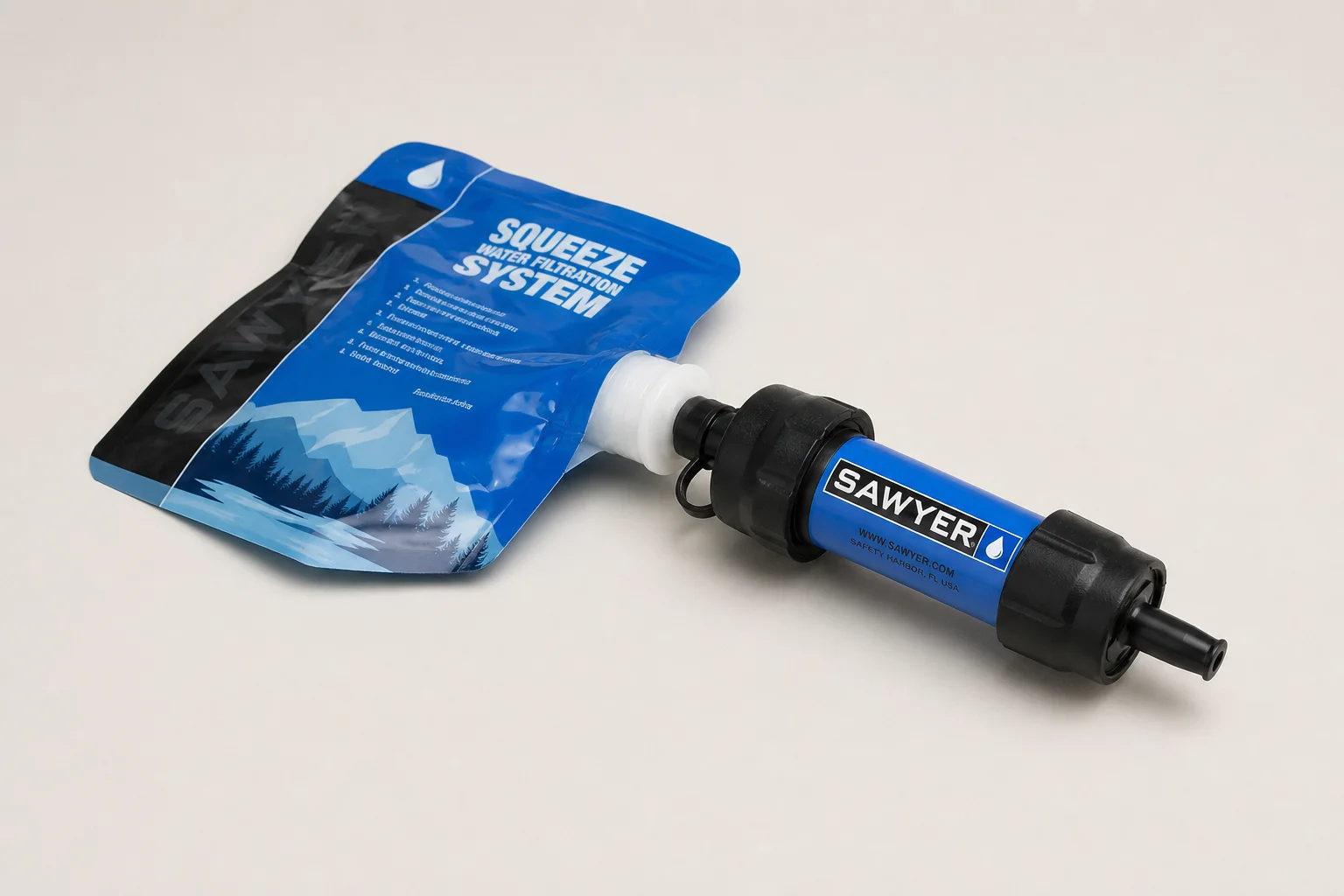
Water treatment is easy to overlook when you are packing for two adults and a toddler, but a child drinks steadily and you will be filtering more than you expect. The Sawyer Squeeze handled the child’s drinking water using the same filter as the adults’ supply, which keeps the water routine simple rather than adding a second device to the pack.
Overall Buying Advice
Run the numbers before you commit to a long trip. In this setup, roughly 15.5 lb of child gear plus a 23 lb child came to about 38.5 lb, leaving around 5 lb of headroom under the carrier’s 48.5 lb limit before food, water, and pump supplies were added. That is workable for an overnight close to the car, but it is tight enough that a longer trip would need more room for food.
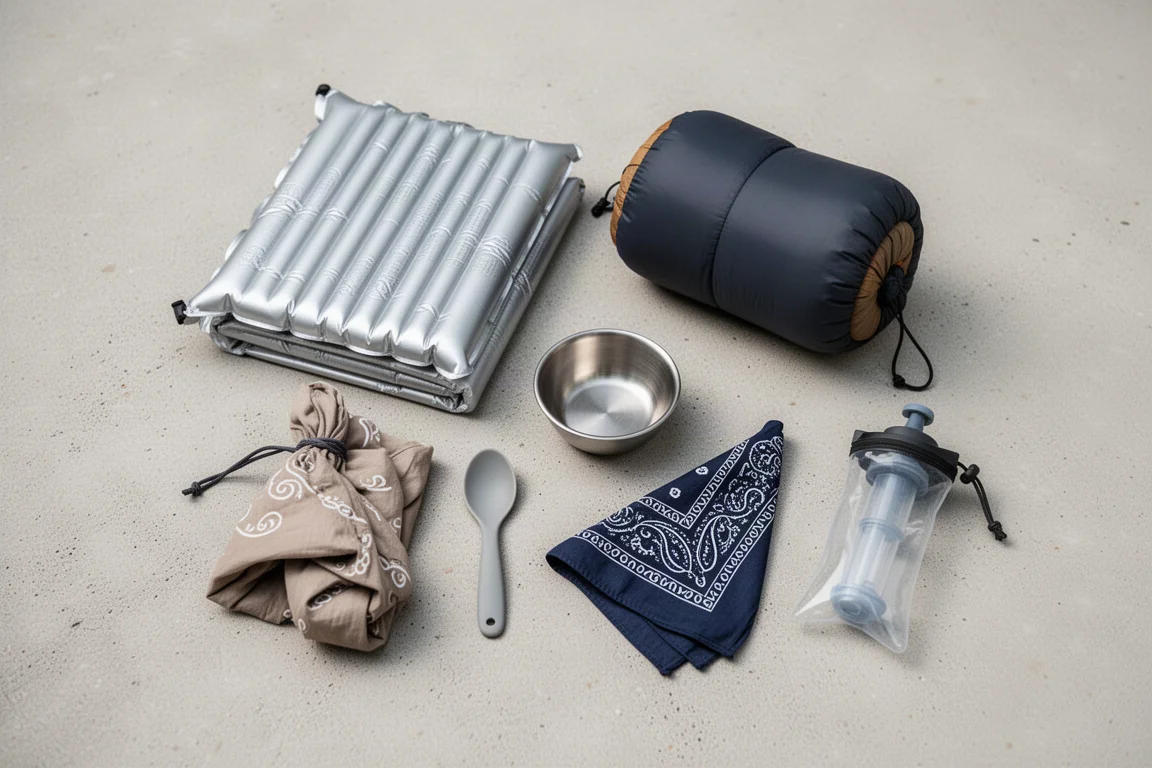
The good news is that the math improves on its own. Bottles and pump supplies took up a meaningful share of both weight and volume, and those needs fade as a child grows. Combined with the roughly 5 lb of spare capacity, the carrier should keep working for a good while yet.
Two habits make the first trips far easier. Keep the distance short and stay close to the vehicle, so a bad night or a change in weather is an inconvenience rather than a problem. And wait for warmer, drier conditions. Cold and rain are the two variables that turn a simple overnight into a risk, especially while you are still relearning how to backpack with someone who depends on you.
Conclusion
None of these four items is exotic, and that is the point. A framed carrier that protects and carries, a wearable sleeping bag that stays on, a foam pad that cannot fail, and a filter that keeps everyone’s water clean together cover the parts of a toddler overnight that are genuinely hard to improvise.
Start small, pick the warmest and driest window you can, and treat the first trip as a gear test rather than an expedition. The kit above is a proven starting point for exactly that.
Further reading
Related Reviews
Family Backpacking Gear
Toddler Backpacking Gear List: 5 Pieces That Made a First Overnight Work
A practical look at the child carrier, wearable sleeping bag, foam pad, water filter, and food bag that handled a toddler's first one-mile backpacking overnight, plus the trade-offs worth knowing before you buy.

Backpacking Gear
Building a 10 lb Base Weight: An Ultralight Backpacking Gear List
A practical walkthrough of the ultralight pieces behind a 10 lb base weight, from a 765 g pack and a roomy one-person tent to a full camp chair and a dependable water filter.
Road Bikes
10 New Road Bikes Worth Watching: Aero, Titanium, Steel and Endurance Standouts
A practical roundup of 10 new road bikes, from aero flagships chasing single-watt gains to titanium, steel and endurance platforms built for real roads.