Hi-Fi Amplifiers
Tiger Harmony TTA 1000B Review: A Polish Class A Tube Amplifier and Four Alternatives
A close look at the Tiger Harmony TTA 1000B, a £1,649 Polish class A KT88 integrated amplifier, plus four alternatives that trade warmth for clarity or neutrality.
Introduction
Hi-fi has changed a great deal over the past two decades. Brands from parts of the world that were never traditionally associated with high-end audio now build genuinely competitive components, and events such as the Warsaw Audio Show have given those companies a platform that would have been hard to imagine twenty years ago.
Poland is a good example. Tiger Harmony has been building electronics and speakers for around 30 years, yet the name is still unfamiliar to many listeners outside its home market. That may be about to change: the company’s class A tube amplifier has been taken on for UK distribution by one of the country’s largest hi-fi retailers, an employee-owned business with a strong reputation for customer service. Retailers of that size rarely take on an unknown brand without a reason.
The amplifier in question is the Tiger Harmony TTA 1000B, a 24 kg KT88 integrated that sells in the UK for £1,649. This article covers what it offers, where it stands out, and how it compares with four amplifiers that buyers are likely to consider alongside it: the Willsenton R8, the Sugden A21 Signature, the Heaven 11 Billie MkII and the Exposure 2510.
What to Look For in a Class A Tube Amplifier
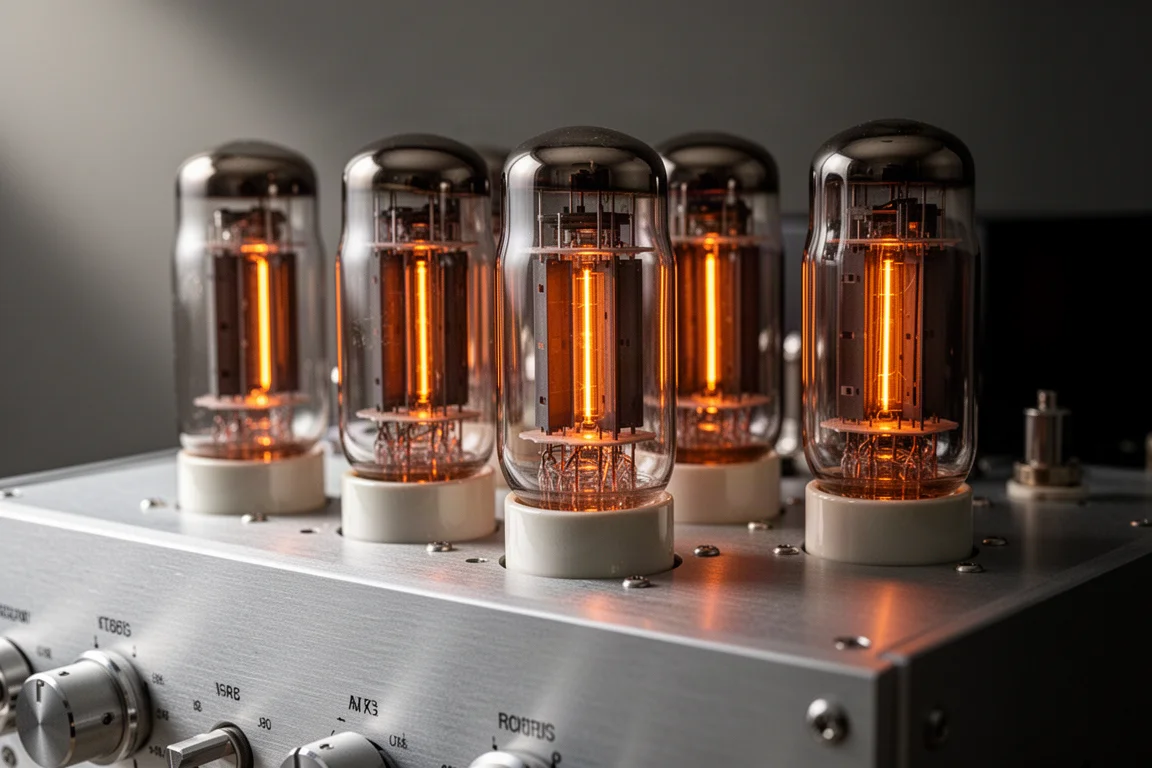
Class A operation defines this category, and it shapes everything else. Because the output devices conduct continuously, class A designs avoid crossover distortion, which is a large part of why they are associated with smooth, harmonically rich sound.
Power delivery matters as much as the headline wattage. The TTA 1000B is rated at 30 W per channel into 8 ohms and doubles to 60 W into 4 ohms. That doubling is a useful signal that the power supply has real current reserves, which in turn determines how comfortably the amplifier copes with speakers that present a difficult load.
Practical questions are worth weighing too. Tube amplifiers run hot, so room size and climate matter. Bias adjustment affects long-term ownership, which is why an auto-biasing circuit is a genuine convenience. And input provision, particularly a built-in phono stage, decides how much extra equipment a turntable owner needs to add.
Speaker matching deserves its own note. Sensitivity and nominal impedance only tell part of the story; overall current provision is what determines whether an amplifier drives a speaker well. Warm-sounding class A amplifiers tend to work best with speakers that present a benign load and sit on the cooler side of neutral.
Tiger Harmony TTA 1000B: A Polish Class A Integrated
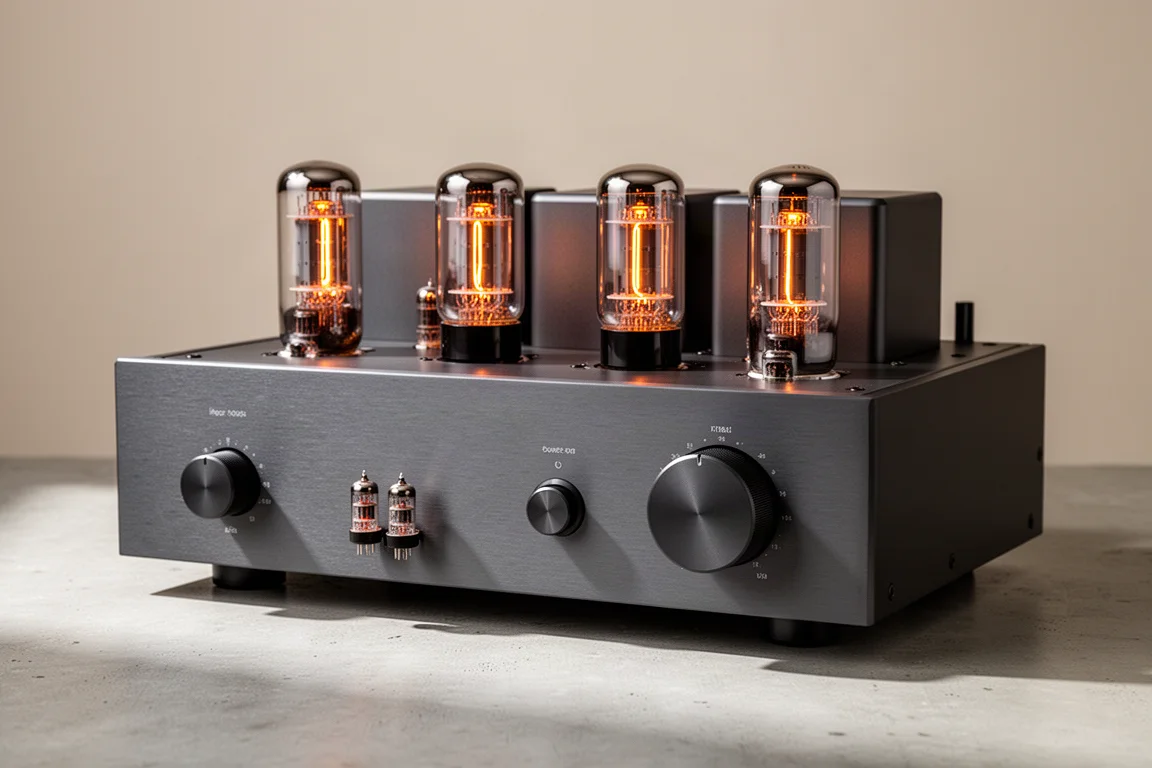
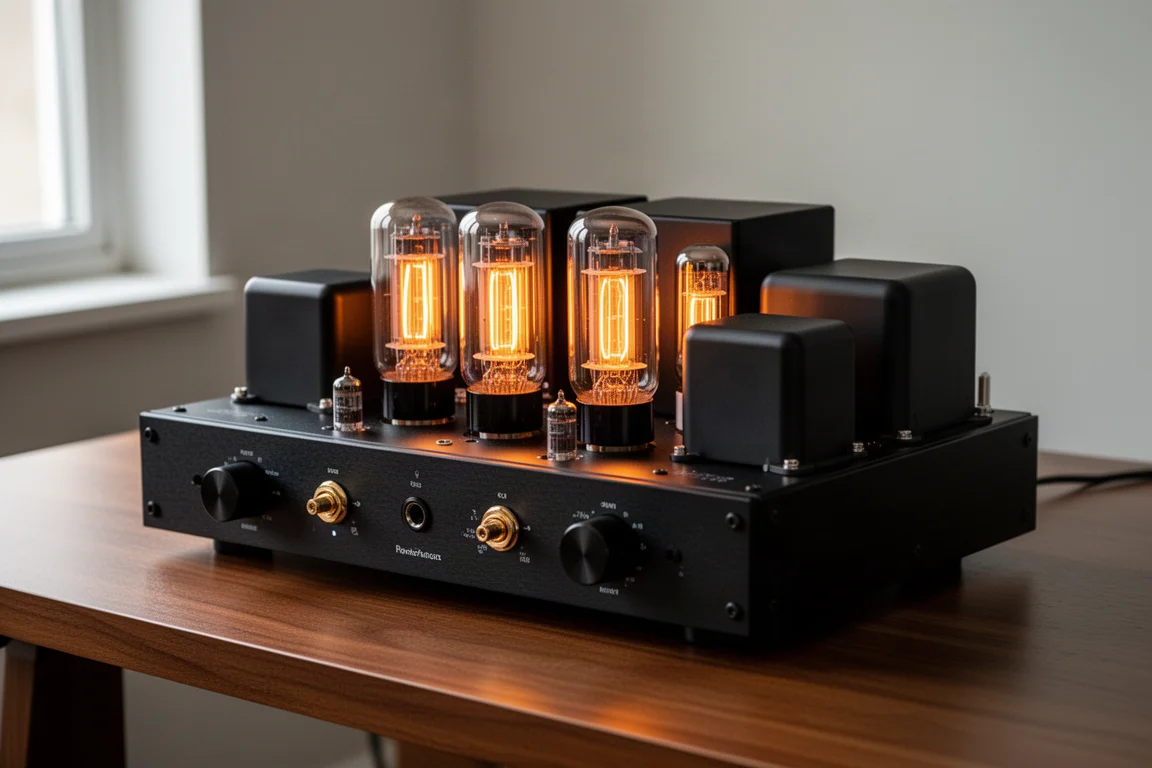
The TTA 1000B is a full rack-width unit built from thick aluminium platework. It stands 225 mm (8.9 in) tall and weighs 24 kg (53 lb), and the finish is more considered than the price suggests: a gunmetal grey brushed aluminium top plate, ceramic tube sockets with gold-plated contacts rather than plastic, and a metal remote control that mirrors the amplifier’s simple functions.
A few design decisions land less well. The power button sits centrally, with the motorised Alps potentiometer volume control on the right. The left-hand dial switches inputs through relays, and it is sensitive enough that it can occasionally skip a selection. The logo could also be more restrained. Those are minor points, and the industrial design holds up well overall.
The output stage uses four KT88 power tubes in a push-pull class A configuration, producing 30 W per channel into 8 ohms and 60 W into 4 ohms. An auto-biasing circuit makes tube replacement straightforward. Up front, a 12AX7 (ECC83) high-gain triode handles the preamplifier stage, while two 6N7s take care of phase splitting and driving the power tubes. The supplied tubes are common types that are inexpensive and easy to replace, which is a meaningful long-term advantage.
Connectivity is solid rather than spectacular. Three RCA inputs and a set of preouts use good-quality solid brass terminals, one input is reserved for turntables, and the built-in phono stage supports both moving magnet and moving coil cartridges. The gold-plated speaker terminals feel reassuringly substantial. Bluetooth is included as well, though it is an odd addition at this level: a wireless receiver is a potential source of noise and interference that can affect other inputs.
Inside, the amplifier uses a large printed circuit board rather than the point-to-point wiring found in many tube designs. Component quality is good, with metal oxide resistors and quality capacitors throughout.
Sonically, two characteristics stand out. The first is a rich, harmonically saturated presentation, likely the result of a fair amount of second harmonic distortion. Listeners who prize warmth will find that appealing; those who prioritise neutrality will hear it as colouration. The second is genuine dynamic ability. The 30 W rating is enough to drive lower-sensitivity speakers to average listening levels around 80 dB in small to medium rooms, and the doubling into 4 ohms confirms the power supply has current in reserve.
Bass carries plenty of weight, though there are alternatives with better definition. The midrange is liquid smooth, with very good macro detail and excellent instrument separation. Micro detail, the fine nuance and texture within individual notes, is less forthcoming. The soundstage is impressive, though not quite on the scale of a 300B single-ended triode design that costs roughly twice as much and delivers only 8 W per channel. The TTA 1000B offers a broadly similar sonic profile with far more power, which greatly widens the range of speakers it can sensibly drive.
One practical warning: it runs hot. Touching a power tube is uncomfortable at best, and in a warm climate with a small room that alone may rule it out.
Willsenton R8: Clarity and Tube Rolling Flexibility
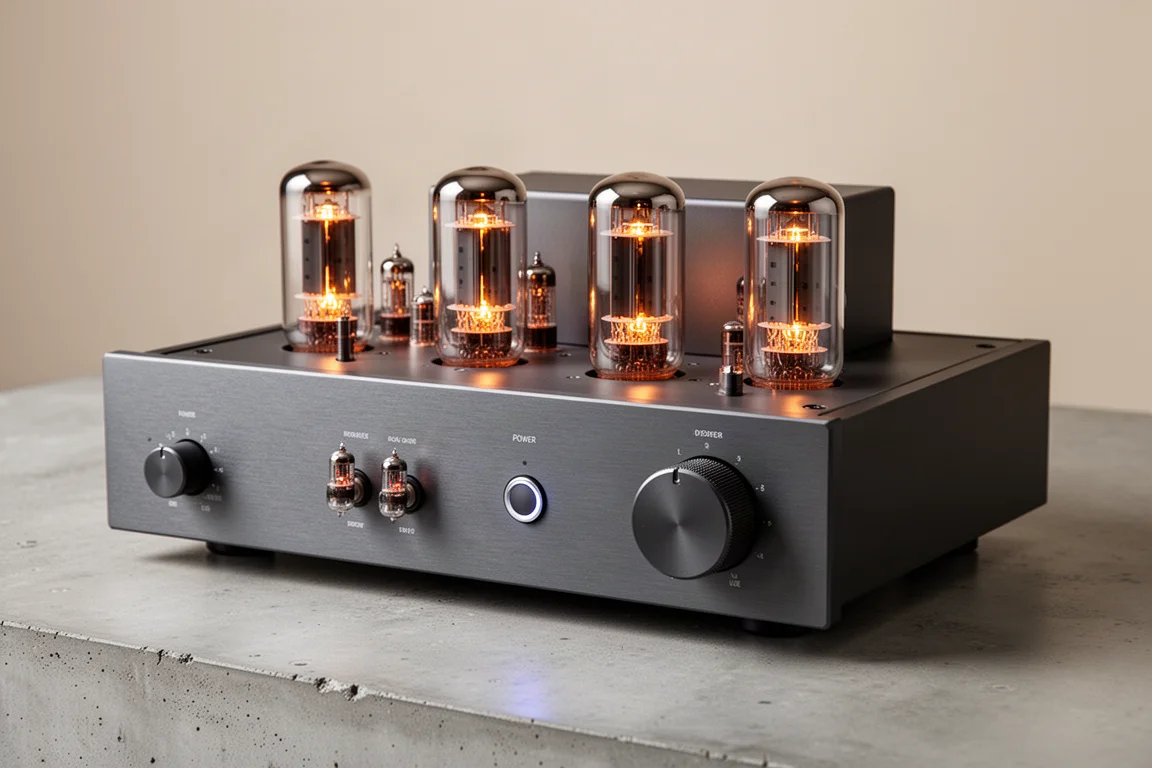
The Willsenton R8 is the most direct comparison. With its stock tubes it offers clarity but lacks the midrange body and refinement of the Tiger Harmony. Fit upgraded KT88 and CV181 tubes to the power and driver stages along with a 6SL7 in the preamp, and the R8 pulls ahead on overall fidelity, although only by a small margin: leading edges gain a crisper attack and notes carry more texture. With those upgraded tubes fitted, the total outlay lands around the same figure as the TTA 1000B.
The R8’s real advantage is flexibility. It can run EL34 output tubes as well as KT88s, and EL34s typically deliver a softer, richer sound. A matched quad of vintage-style EL34s costs around £250 and moves the R8’s character noticeably closer to the Tiger Harmony.
For listeners who enjoy tuning and experimenting, the R8 offers more scope. For those who want the sound to be right from the first listen, the Tiger Harmony is the more complete package out of the box.
Sugden A21 Signature: Solid-State Class A at a Higher Price
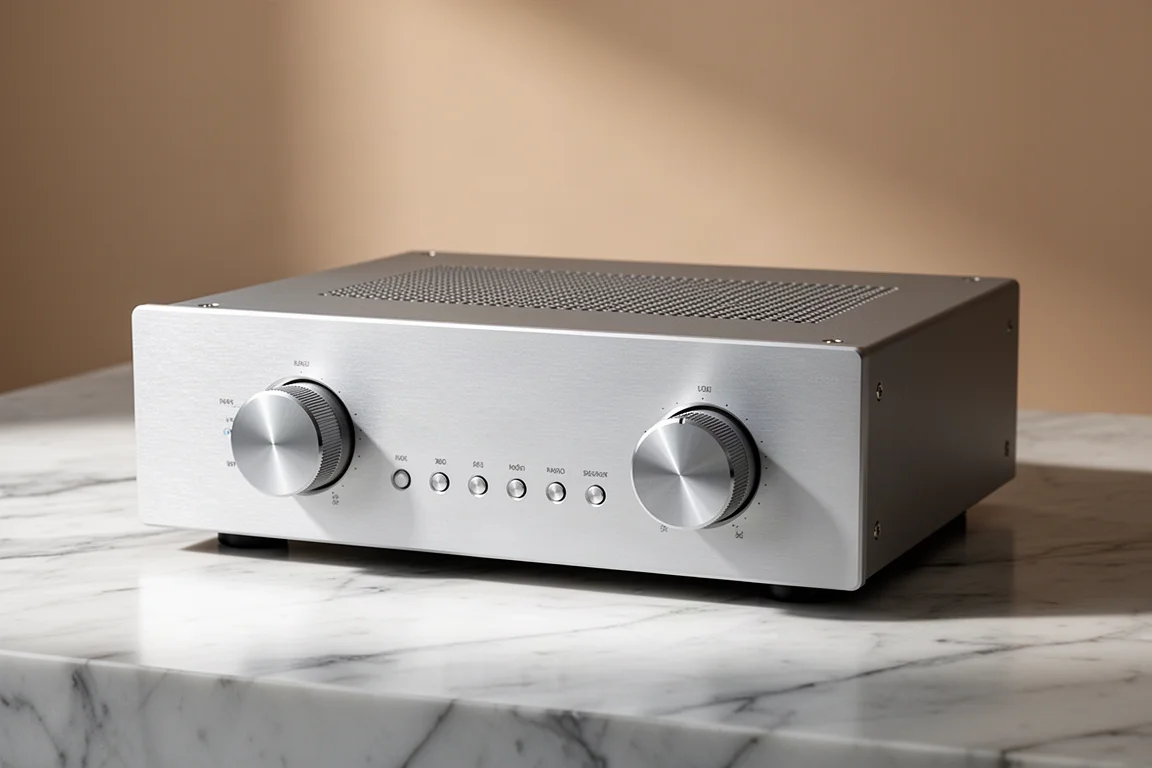
The Sugden A21 Signature proves that a big, harmonically saturated sound does not require tubes at all. It is a solid-state class A design, and it shares the Tiger Harmony’s tone, scale and dynamics to a surprising degree.
The obstacle is cost. The A21 Signature now sells for the best part of £3,000, roughly twice the price of the TTA 1000B. Listeners who want that class A richness without the practicalities of valves will find the premium easier to accept, but the Tiger Harmony delivers a comparable character with considerably more power for a good deal less money.
Heaven 11 Billie MkII: Hybrid Resolution
The Heaven 11 Billie MkII approaches the same goal from a different direction. It is a hybrid design: ECC99 tubes add harmonics in the preamplifier section, compensating for a class D ICEpower output stage. The result is class-leading resolution and bass control, with superb midrange transient attack.
Where it falls short of the Tiger Harmony is naturalness. Adding harmonics is never quite the same as preserving them in the first place, and the Billie MkII can sound slightly less organic as a consequence. Buyers weighing the two are effectively choosing between maximum resolution and maximum richness.
That distinction matters more than any specification. A listener who values insight into the recording will lean toward the hybrid, while a listener who values body and flow will lean toward the class A tube design.
Exposure 2510: The Neutral Reference
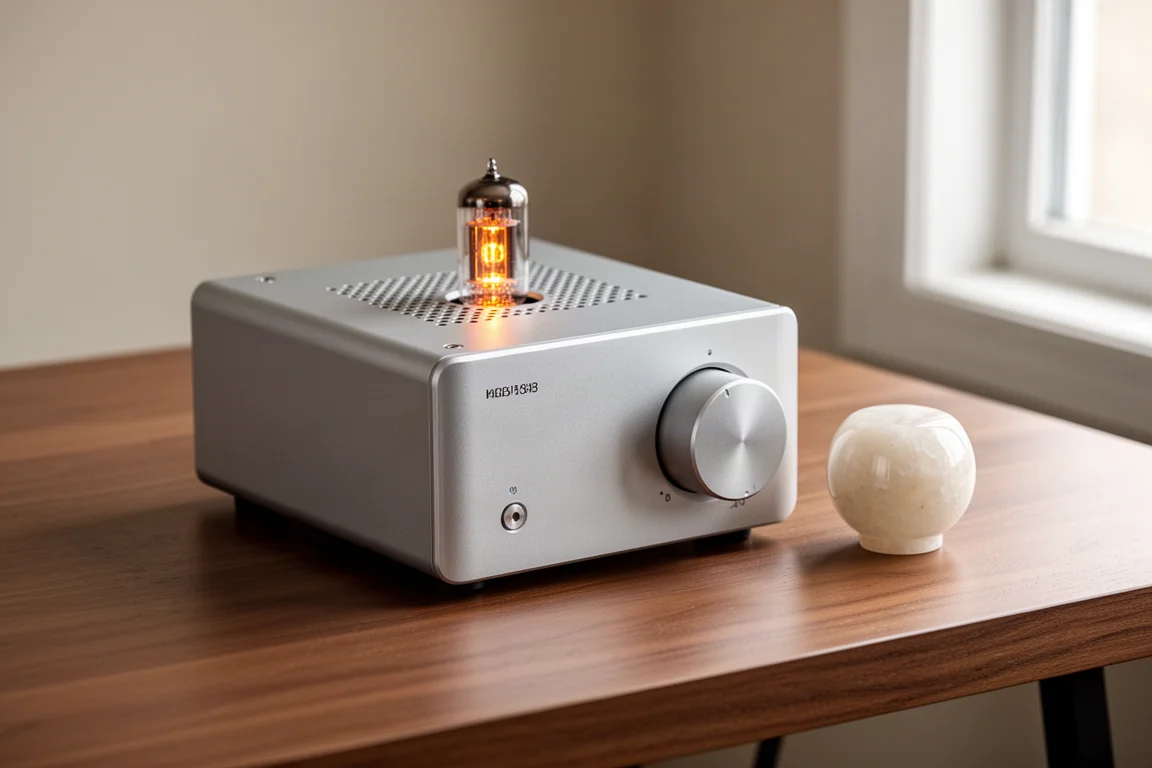
The Exposure 2510 remains the benchmark in the region of £2,000. It does not chase warmth or harmonic saturation; it aims for neutrality and consistency, which is exactly what makes it a useful reference when judging everything else here.
Anyone cross-shopping the Billie MkII, the Exposure 2510 and the Tiger Harmony needs to decide what kind of sound they are actually looking for. Added second harmonic distortion brings richness, but it also softens the presentation and costs a degree of detail. The TTA 1000B sits firmly on the warm side of that spectrum. The Exposure sits on the neutral side.
Buying Advice: Matching the Amplifier to Your Room and Speakers
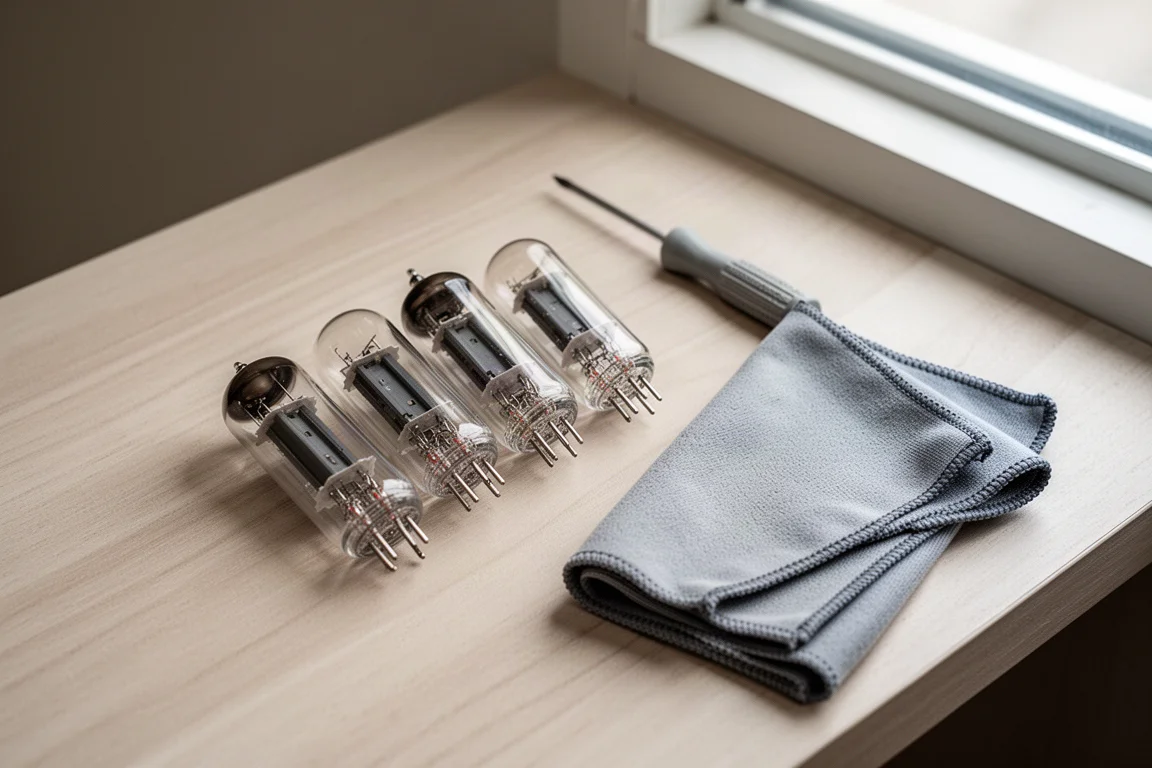
Tube rolling is the first temptation with any KT88 amplifier, and the KT88 has more options than most. Premium matched quads command serious money, with flagship sets running to roughly $655 plus shipping and taxes, and a pair of upgraded driver tubes adding several hundred dollars more. Spending close to the price of the amplifier itself on valves is difficult to justify. The stock tubes are worth living with first, and a mid-tier upgrade is a more sensible second step, capturing most of the available improvement for around three-quarters of the flagship cost.
Speaker matching is the other decision that shapes the result. The TTA 1000B is a good partner for neutral-sounding speakers, and its warmth and liquid midrange come through clearly with that kind of pairing. It also drives difficult speakers to moderate levels with reasonable control. The safest approach is a speaker that presents a benign load and sits on the cooler side of neutral, because pairing this amplifier with speakers that are already rich can push the balance too far in one direction.
Room and climate matter as much as the system itself. Because the amplifier runs hot, a small room in a warm climate is a poor fit, while a larger, well-ventilated space suits it far better.
Conclusion
The Tiger Harmony TTA 1000B shows that European manufacturers can compete on build quality and pride of ownership with anything coming out of Asia. It gives away nothing to the Willsenton R8 in construction, and it has a distinct personality: rich, expansive and surprisingly dynamic.
Overall fidelity is very good, even if the amplifier is not the last word in clarity and certainly not in neutrality. For a class A tube amplifier, that is arguably the point. Buyers who want warmth, scale and enough power to drive a wide range of speakers will find a great deal to like at £1,649. Those who want the Willsenton R8’s tuning flexibility, the Sugden’s solid-state class A refinement, the Heaven 11 Billie MkII’s resolution, or the Exposure 2510’s neutrality now know where the alternatives sit.
Further reading
Related Reviews
Hi-Fi Amplifiers
Accuphase E-280 Review: Entry-Level Accuphase With Flagship Attention to Detail
A close look at the Accuphase E-280 integrated amplifier, covering its champagne build, AAVA volume control, sound quality, and the speakers and sources that suit it best.
Hi-Fi Amplifiers
Advance Paris A10 Classic vs Yamaha A-S301: Two Integrated Amplifiers Compared
A practical comparison of a $350 integrated amplifier and a $2,500 reference model, covering the differences that matter and the ones that do not.
Hi-Fi Amplifiers
Affordable Chinese Amplifiers Worth Buying: Five Budget Hi-Fi Amps Compared
A practical look at five affordable amplifiers, what each one does well, and the trade-offs to weigh before you buy.