Music Streaming
Tidal Hi-Fi vs Tidal Hi-Fi Plus: Which Tier Is Worth Paying For?
A practical breakdown of Tidal Hi-Fi and Tidal Hi-Fi Plus, what each tier includes, and how to judge whether hi-res streaming is worth the extra monthly cost.
Introduction
Tidal splits its paid offering into two tiers, and the gap between them is narrower than the price difference suggests. Tidal Hi-Fi delivers the catalogue at CD quality, while Tidal Hi-Fi Plus adds tracks delivered in hi-res FLAC. Both tiers share the same apps, the same library, and the same streaming features, so the real question is whether your system and your listening habits can make use of the extra resolution.
This guide breaks down what each tier includes, where hi-res audio genuinely changes what you hear, and which tier makes more sense for different kinds of listeners.
What Both Tiers Include
Both tiers include Tidal Connect, which hands a stream off from the phone or tablet app to a supported network streamer on the home system. It behaves much like Spotify Connect, and unlike AirPlay the audio does not travel through the phone on its way to the streamer. Tidal Connect is also gapless, which matters for albums that run continuously from track to track.
Both tiers also include access to the full library of around 100 million songs, with roughly 99% of that catalogue available at CD quality, plus around 650,000 videos through the Android TV and iOS apps. Those TV apps are entirely video focused, so they function as a supplement to music listening rather than a replacement for it.
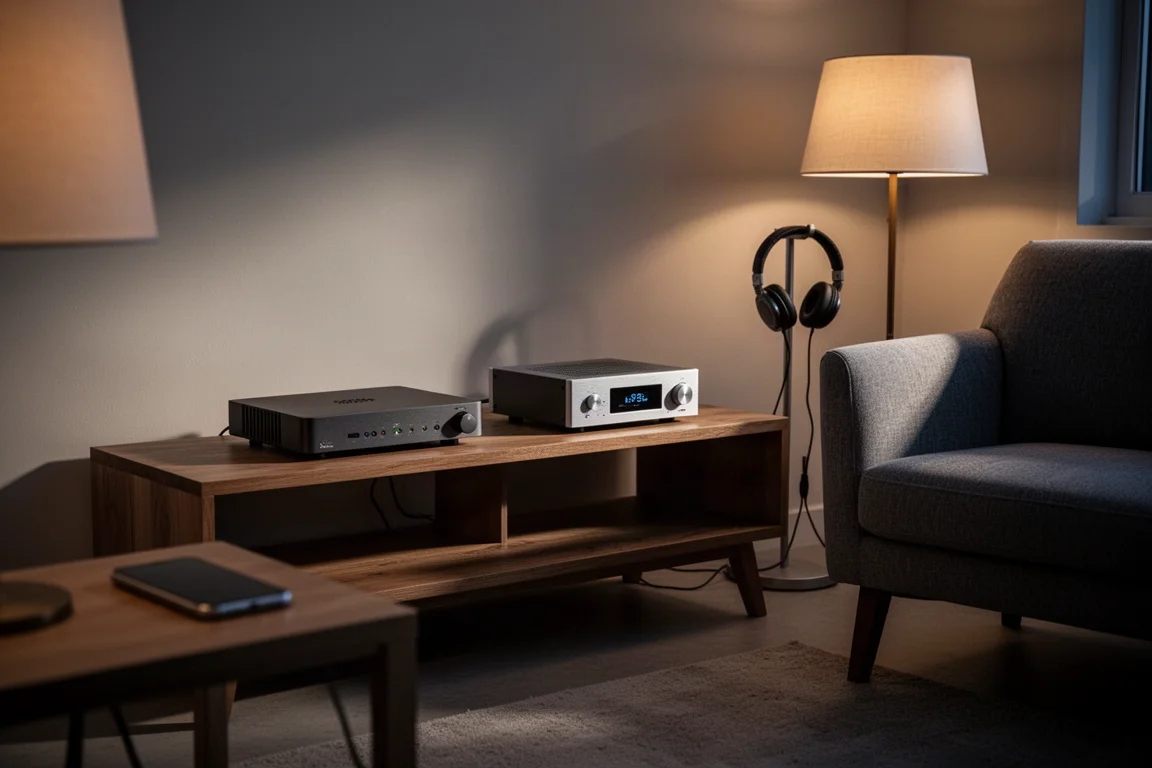
Roon integration is available on both tiers as well, and the Tidal integration inside Roon feeds Roon Radio, which keeps a similar style of music playing once a queue runs out. For listeners who rely on that kind of discovery, it is one of the strongest arguments for keeping a Tidal subscription alongside a Roon library.
Tidal Hi-Fi: The CD-Quality Tier
Tidal Hi-Fi is the entry tier. It includes Tidal Connect, the full library, the video apps, and CD-quality streaming for the vast majority of tracks. In Germany it is priced at around €7.50 per month, which makes it one of the more affordable ways to bring a large lossless catalogue into a proper hi-fi system.
For most systems and most rooms, this tier covers the practical ceiling of what can be heard. A CD-quality stream played through a competent DAC and a pair of decent speakers is already a lossless signal, and the step up from there is subtle rather than transformative.
Tidal Hi-Fi Plus: The Hi-Res Tier
Tidal Hi-Fi Plus adds hi-res audio on top of everything in the lower tier, and that is the only meaningful difference between them. The numbers behind that addition are worth knowing. Release notes from August put the hi-res FLAC library at around 6 million tracks, and even with generous assumptions about new additions since then, the total is likely to sit somewhere around 8 million tracks. Against a library of roughly 100 million songs, that works out to roughly 8% of the catalogue available in hi-res, with the remaining 92% topping out at CD quality.
In Germany, Hi-Fi Plus costs almost €14 per month, so it runs around €6.50 more each month than the standard tier.
Where the Hi-Res Difference Actually Shows Up
The audible benefits of hi-res have little to do with content above the range of human hearing. They come from the placement and slope of the digital filter used during playback, which is why the effect depends so heavily on the equipment in the chain.
On a resolving system, a hi-res stream of the same master tends to sound a little better than the CD-quality version of that same master. The difference is real but modest. It is smaller than the difference between two different masters of the same album, and master choice is where most of the audible variation in streaming actually lives.
That distinction matters because hi-res availability skews towards albums released or remastered in the last two decades. A listener whose library leans on newer releases will find more hi-res material than someone listening mostly to older recordings. It is also worth remembering that a newer remaster does not automatically sound better than the version it replaces, and older masters are often withdrawn from streaming once a remaster arrives.
Overall Buying Advice
Start with the system rather than the tier. If the chain is capable of resolving the gap between a CD-quality stream and a hi-res one, and the listening is attentive enough for that gap to register, Hi-Fi Plus has something to offer. If the setup is a phone with wireless earbuds, a soundbar, or a modest desktop system, the extra resolution is unlikely to reach the ears at all.

For everyone else, Tidal Hi-Fi covers the full library at CD quality for around €7.50 per month in Germany, and that is where the value sits. The monthly difference of roughly €6.50 buys access to a minority of the catalogue at higher resolution, which is a reasonable trade only for listeners with a hi-res-heavy diet and equipment that can show it off.
The strongest reasons to subscribe to Tidal at all are not tied to resolution. Tidal Connect and Roon integration are available on both tiers, and both of those features change how the service fits into a home system more than hi-res audio does.
Conclusion
Choose Tidal Hi-Fi if you want a large lossless catalogue, Tidal Connect, and Roon integration at the lower monthly cost. Choose Tidal Hi-Fi Plus if your system is resolving enough to make hi-res worthwhile and enough of your listening falls into the portion of the catalogue that is available in hi-res. Both tiers share the same library and the same streaming features, so the decision comes down to how much the extra resolution is worth in your own room.
Further reading
Related Reviews
Music Streaming
Apple Music vs Amazon Music Unlimited vs Tidal: Which Music Streaming Service Fits Your Setup
A practical comparison of Apple Music, Amazon Music Unlimited, and Tidal covering plan structures, discovery quality, spatial audio support, and hardware compatibility.
Music Streaming
Best Music Streaming Services 2026: Five Platforms Compared
A practical comparison of Qobuz, Tidal, Spotify, Amazon Music, and Apple Music, covering audio quality, discovery, apps, and value.
Music Streaming
Best Music Streaming Services Compared: Apple Music, Tidal, Qobuz, Spotify and SoundCloud
A practical comparison of five music streaming services across sound quality, network integration, interface and catalogue, so you can pick the one that fits the system you already own.