Everyday Carry Flashlights
ThruNite Defender vs Olight Arkfeld Pro: Flat EDC Lights Compared
The ThruNite Defender takes on the Olight Arkfeld Pro with USB-C charging, a manual lockout, laser, and UV. Here is how the two flat lights stack up.
Introduction
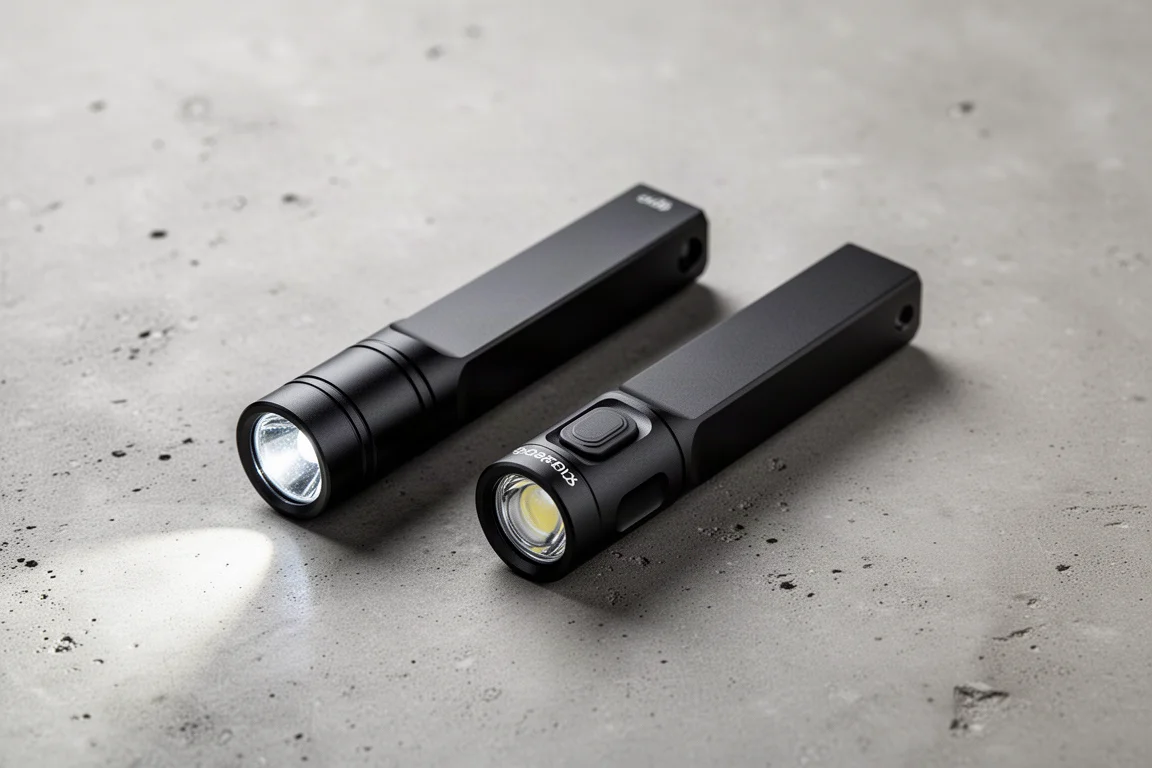
Flat, pocketable bar lights have quickly become one of the most interesting corners of the everyday carry flashlight market, and the ThruNite Defender is the latest serious entry into that space. It arrives facing an obvious benchmark: the Olight Arkfeld Pro, which has effectively become the industry standard for this form factor. What makes the comparison interesting is that the Defender reads like a direct response to the questions people have been asking about the Arkfeld Pro, particularly around lockout and charging.
This comparison walks through what the Defender does well, where it sits on output and runtime, and how the two lights differ in everyday use.
What Makes the ThruNite Defender Different
The headline feature is a full manual lockout. Sliding the switch fully to one side locks the light off completely, so it cannot accidentally turn on in a bag or pocket. On the Arkfeld Pro, the common workaround is to store the light in laser mode as the least damaging mode if it ever switches on in storage. The Defender removes that worry entirely, and it is the single biggest differentiator between the two lights.
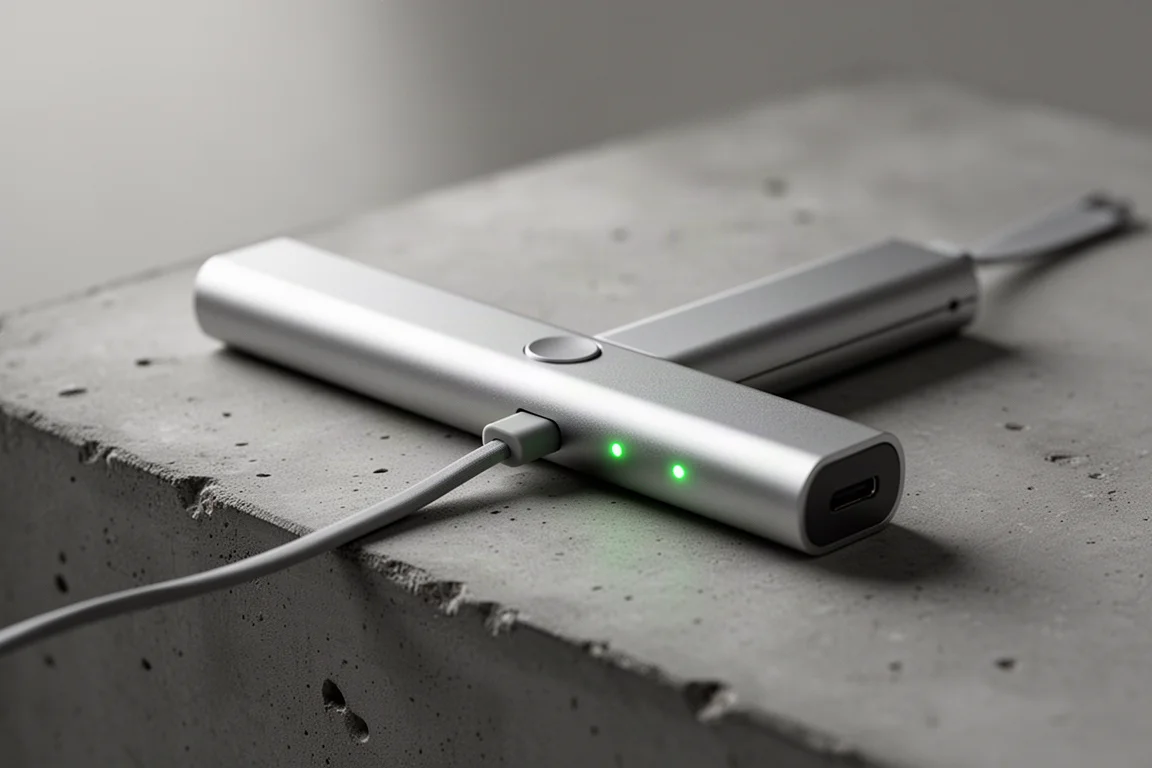
The second big difference is charging. The Defender uses USB-C, so you can top it up with nearly any modern cable and charger rather than relying on a proprietary dock. That matters more than most people expect once you are travelling, because you stop thinking about which charging puck you packed.
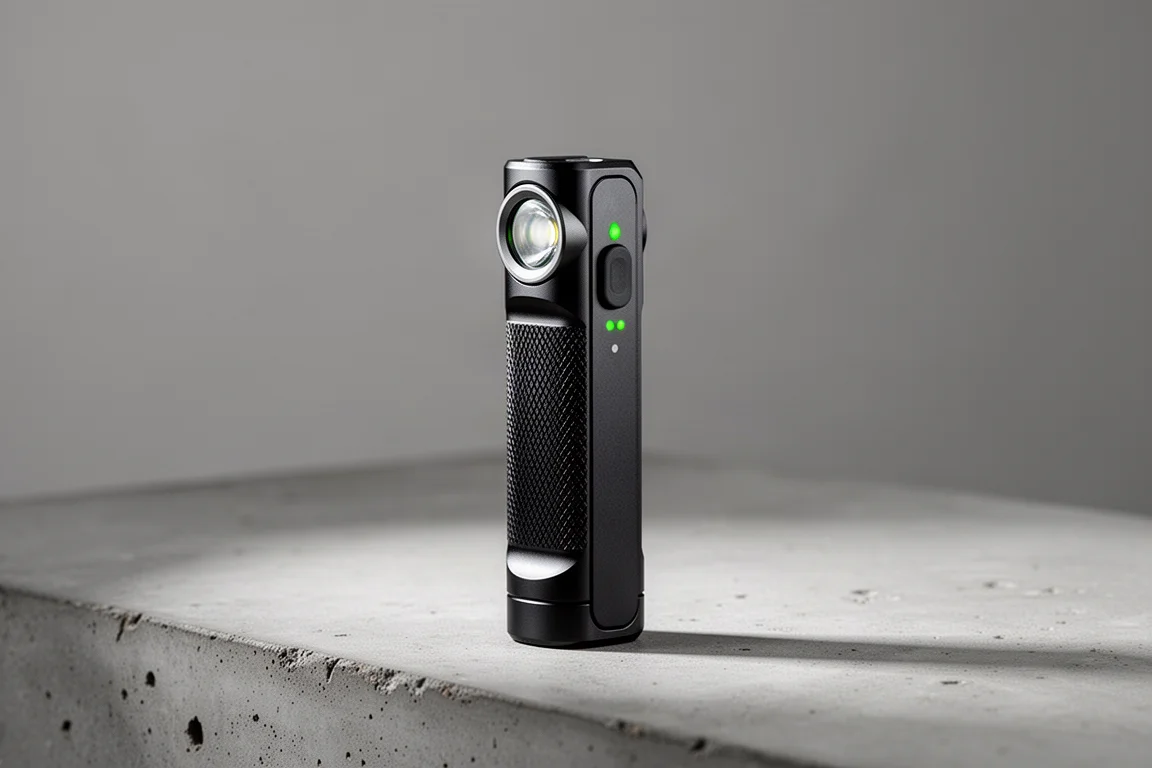
Beyond those two points, the Defender follows the established flat-light formula: a multi-button interface for mode checks with green indicator lights, a laser rated just under 5 mW so it does not require extra paperwork, and a 365 nm UV emitter. The rear of the light also houses a magnet that is strong enough for most hands-free tasks, and the body has subtle texturing that gives it a bit of character without going overboard.
Light Output and Runtime
On the emitter side, the Defender offers a choice between cool white and neutral white output, and an orange peel reflector produces a beautifully uniform beam. It is more of an area light than a distance light, with a claimed throw of 139 meters and roughly 4,800 to 4,900 candela, so it excels at lighting up a workspace evenly rather than punching a hotspot far down a trail.
The output ladder is well thought out:
- Firefly/Moonlight: 1 lumen, with a claimed 17-day runtime
- Low: 20 lumens
- Medium: 95 lumens, a little over 9 hours
- High: 420 lumens, nearly 60 hours claimed
- Max: 1,600 lumens, throttling down to 450 with almost 2 hours of runtime
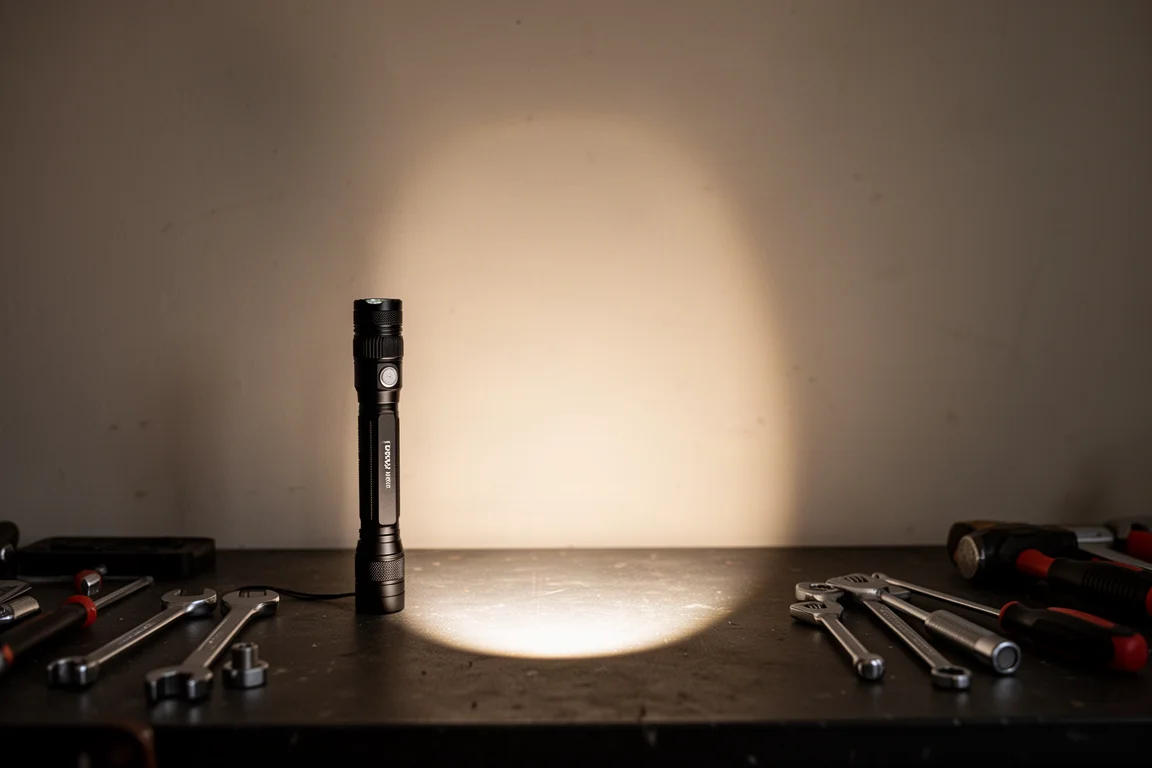
The lower modes are the story here. At 1 lumen you get about a meter of workable light, which is plenty inside a car, a tent, or a dark room where you want to preserve your night vision. At 20 lumens you can comfortably work around the house, 95 lumens is enough to jog or move through a forest at night, and 420 lumens easily reaches out to signal or scan. Even at low you get close to 60 hours, which with modest daily use works out to something like monthly charging. Durability is solid on paper too, with a 1.5-meter impact resistance rating and an IPX7 water rating.
How It Compares to the Olight Arkfeld Pro
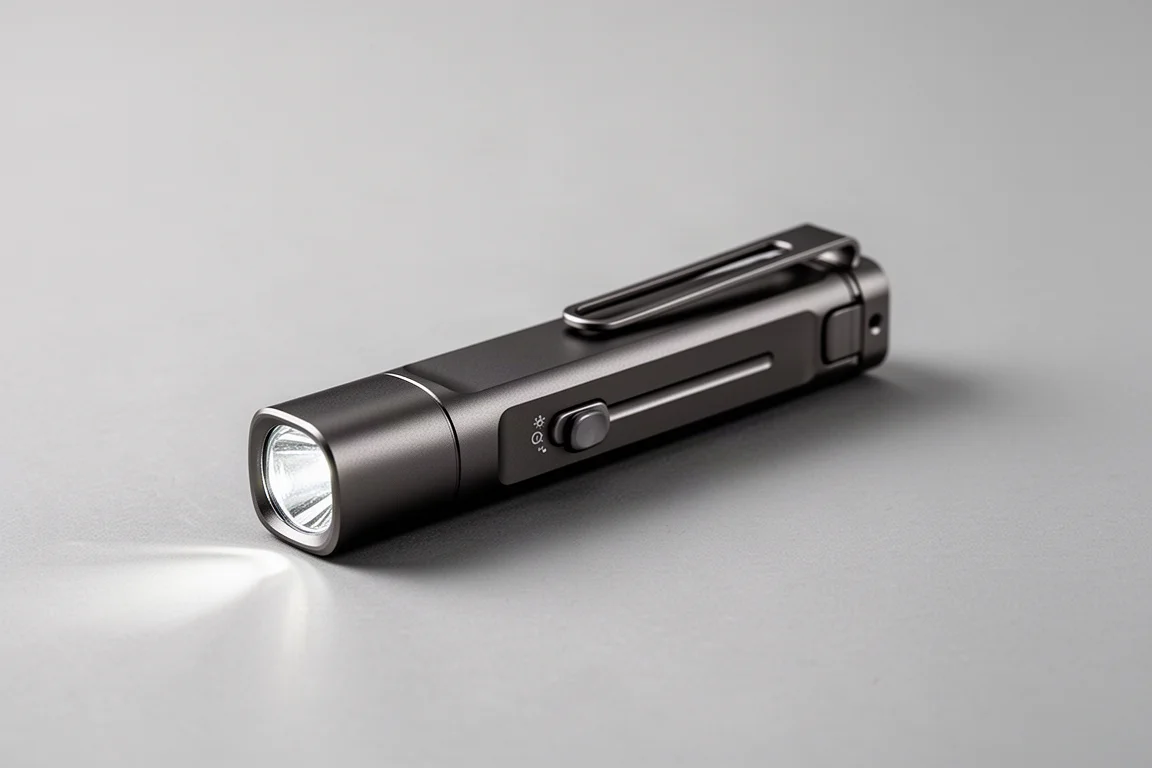
Physically the two lights are very similar in size, weight, and thickness, to the point that carrying either one feels like carrying a thin pocket knife. That is a useful mental model for where this whole category is headed: a slim, flat, pocket-clip-friendly object that disappears in a pocket the way a knife does.
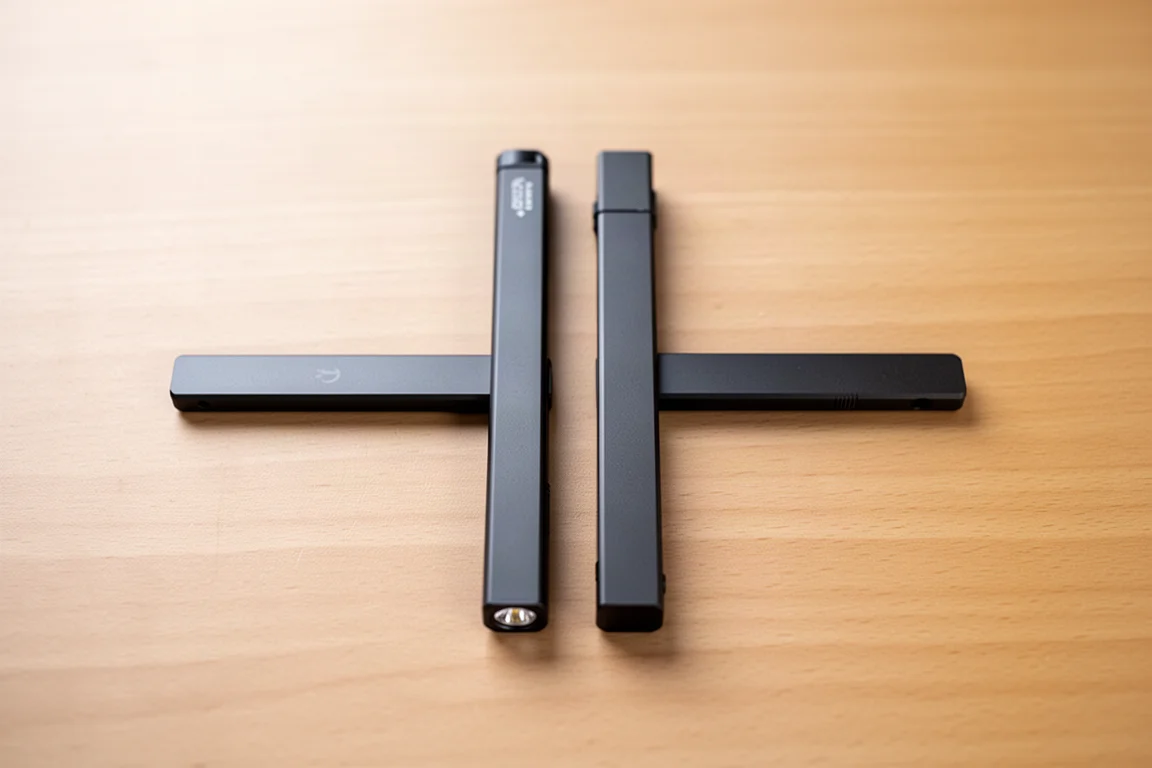
The Arkfeld Pro keeps its dual-emitter front end and its simple slider interface, which remains easy to live with. But it charges through a proprietary system and lacks a full manual off position, two things buyers regularly ask about. The Defender answers both, while keeping a similarly simple interface with no tail switch or tactical pretensions. It is a useful light, not a tactical one, and that focus shows in how practical the mode spacing feels.
Two complaints have surfaced for the Defender in buyer feedback: one report of a UV emitter failing after five minutes, and one report of a light stopping working after getting wet. A sustained UV test well beyond five minutes showed no issue, and IPX7 is rated for rain and immersion, so those reports may be isolated cases rather than a pattern.
Buying Advice
If you already own an Arkfeld Pro and its quirks have never bothered you, there is no urgent reason to switch. But if you have been hesitating because of the proprietary charging or the lack of a true lockout, the Defender directly addresses both while delivering comparable size, a familiar interface, and a genuinely impressive output ladder.
At around $75 on Amazon, the Defender is an easy recommendation for anyone who wants a slim everyday light that charges over USB-C, offers a laser and UV in one body, and can run for weeks on its lowest mode. For general use rather than tactical purposes, it is an outstanding flat light, and it feels like a sign that this category is converging on a mature, well-refined design.
Conclusion
The ThruNite Defender takes the flat-light formula that made the Arkfeld Pro popular and fixes the two things people most often complain about: charging and accidental activation. With a 1,600-lumen ceiling, a usable 1-to-95-lumen low range, USB-C charging, a manual lockout, laser, and UV, it is a strong choice for everyday carry, and a very direct competitor to the current category leader.
Further reading
Related Reviews
Everyday Carry Flashlights
Nitecore EDC27 Review: A Flat, 3,000-Lumen EDC Flashlight That Gets Close to Perfect
A slim stainless steel everyday carry flashlight with a 1,000-lumen output, 3,000-lumen burst, OLED display, and dual-stage tail switches, plus a few trade-offs worth knowing first.

Backpacking Gear
Building a 10 lb Base Weight: An Ultralight Backpacking Gear List
A practical walkthrough of the ultralight pieces behind a 10 lb base weight, from a 765 g pack and a roomy one-person tent to a full camp chair and a dependable water filter.

Road Bikes
10 New Road Bikes Worth Watching: Aero, Titanium, Steel and Endurance Standouts
A practical roundup of 10 new road bikes, from aero flagships chasing single-watt gains to titanium, steel and endurance platforms built for real roads.