Everyday Carry Flashlights
Nitecore EDC27 Review: A Flat, 3,000-Lumen EDC Flashlight That Gets Close to Perfect
A slim stainless steel everyday carry flashlight with a 1,000-lumen output, 3,000-lumen burst, OLED display, and dual-stage tail switches, plus a few trade-offs worth knowing first.
Introduction
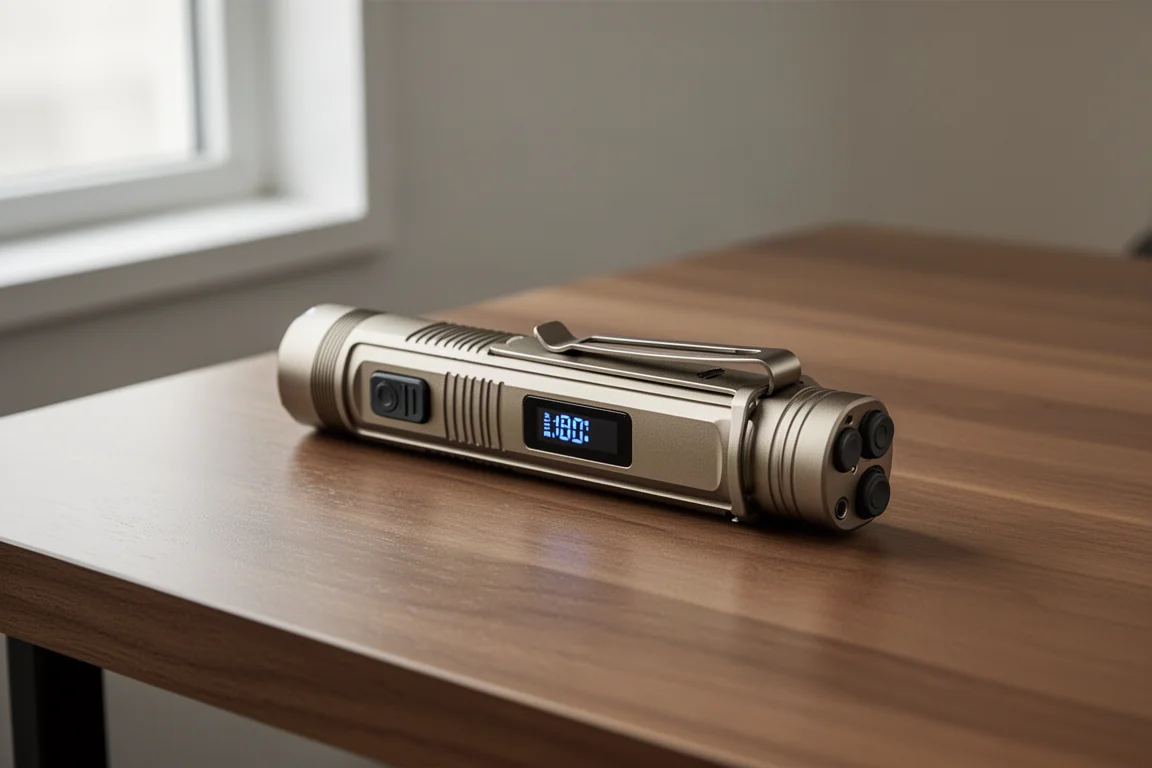
The Nitecore EDC27 is an everyday carry flashlight that wants to be the one you never leave behind. It pairs a slim, flat stainless steel body with serious output: 1,000 lumens on high, a 3,000-lumen turbo burst, and a claimed maximum throw of 220 meters. Add a multifunctional OLED display and a dual-stage dual tail switch interface, and you get one of the more thoughtfully designed pocket lights we have come across. It is not flawless, though, and a few of its compromises are worth understanding before you buy. Here is how it performs in daily use.
Design and Build Quality
The EDC27 measures 5.34 inches long, 1.24 inches wide, and just 0.56 inches thick, weighing in at 4.37 ounces (124 grams). The flat, blade-like shape is the defining design decision: instead of a standard tube, it is a wide but thin slab that sits comfortably and discreetly in a pocket. The extra length is normally a complaint in an EDC light, but the thinness makes up for it here.
The body is stainless steel with a PVD titanium coating in a fine frosted matte finish. It feels genuinely premium in hand, and the coating is both scratch resistant and fingerprint resistant, so everyday pocket carry should not leave visible marks. Molded textured grips sit on each side of the body in exactly the right spot for an overhand hold, keeping the light secure without feeling slippery.
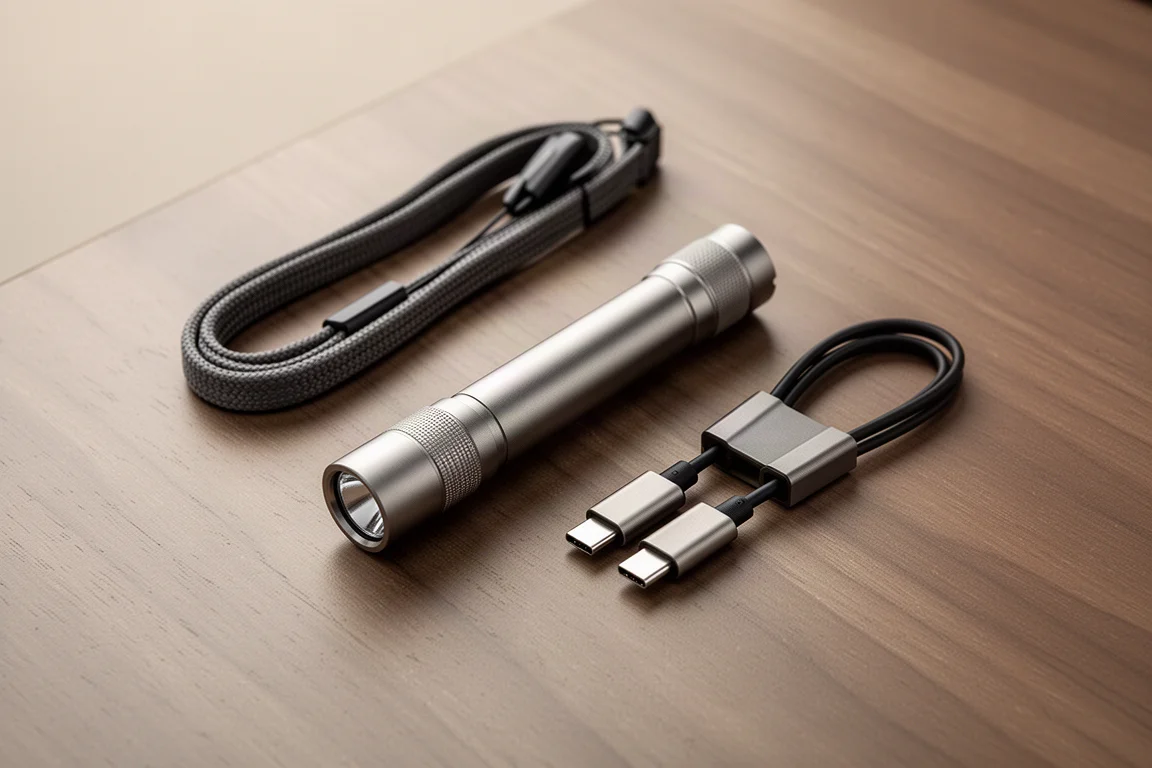
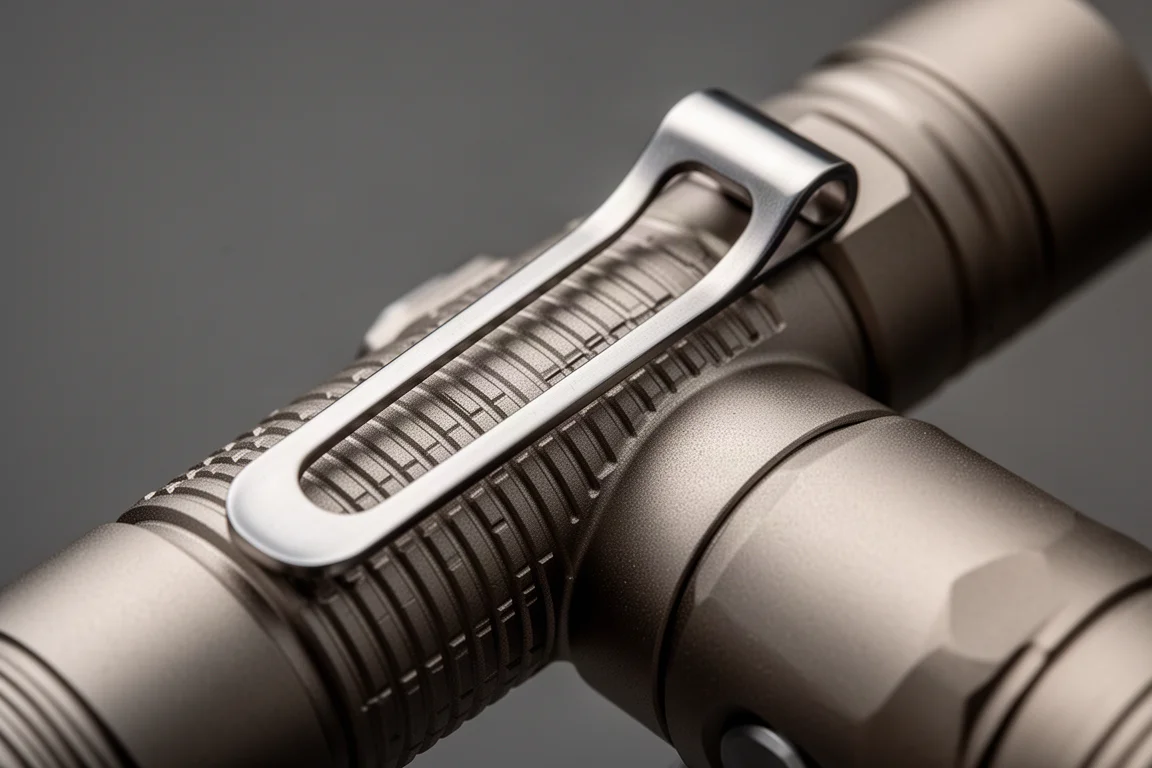
At the rear sits a long stainless steel pocket clip with decent tension. It is attached with two screws, so it can technically be removed, though it is not designed as a quick-swap clip. On the head end, two Luminus SST40 LEDs behind a total reflective optic lens produce a wide flood beam, and the body houses a copper and aluminum heat dissipation module to manage the heat that 3,000 lumens generates.
Interface: Dual-Stage Dual Tail Switches
The EDC27 uses two tail switches: an on/off button and a mode button, both dual stage. The interface is unusual and takes some getting used to. A full press of the on/off button turns the light on, then half presses of that same button cycle through the four modes. The mode button works differently: a half press gives instant access to 3,000-lumen turbo, and a full press triggers 3,000-lumen strobe.
There are also useful shortcuts. A half press and hold from off gives instant access to ultra low no matter which mode you left the light on. The light remembers your last cycling mode, and there are two levels of lockout: a half lockout that disables the on/off button while keeping turbo and strobe available, and a full lockout that disables everything. With buttons sitting on the tail of a pocket light, the lockout is practically a necessity, and it works well.
The trade-off is a genuine learning curve. Muscle memory says turn on, then hit the mode button to cycle. On this light, that mistake instantly fires 3,000-lumen turbo, which will blind anyone nearby. Once the interface clicks, the instant access to turbo, strobe, and ultra low is excellent, but expect a few awkward moments in the first days.
OLED Display and Battery
The multifunctional OLED display on the side reads out your current lighting level, the lumens at that level, and the estimated time remaining on the battery. It is the kind of feature that feels like it belongs on every flashlight, and it removes all guesswork about how much light and runtime you have left.
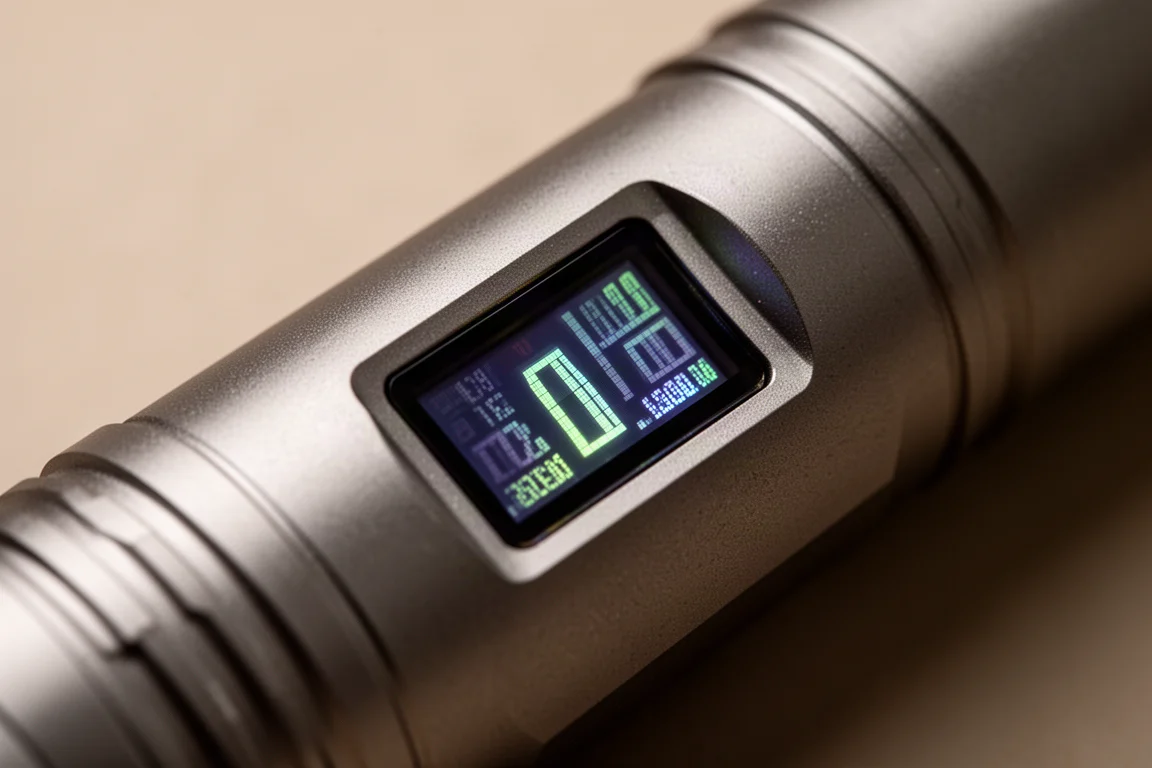
Power comes from a built-in 3.7V 1,700mAh lithium-ion battery, charged via a USB Type-C port. Runtime figures are solid: ultra low (15 lumens) runs up to 37 hours, low (65 lumens) lasts around 11 hours, mid (200 lumens) about 3 hours 45 minutes, and high (1,000 lumens) roughly 1 hour 45 minutes. The built-in battery is the one thing we would change, since a removable cell is always preferable for long-term ownership, but given how thin the body is, there is arguably no practical alternative to the flat battery shape used here.
Beam Quality and Real-World Performance
The beam is wide and flood oriented, which is exactly what most people want in an everyday carry light. It produces an even, diffuse field rather than a pronounced hot spot, making it comfortable for close-range tasks and walking. The tint leans white rather than neutral, which is a minor preference note rather than a dealbreaker.
The 220-meter maximum throw claim feels generous in real conditions. In open field testing, a tree line at 114 meters was barely visible even on high, though the wide flood still covered ground effectively. Treat the throw figure as a controlled-condition number rather than a realistic expectation. On turbo, the 3,000-lumen burst is genuinely dramatic, sweeping across a field with ease before stepping down.

Heat and Turbo Behavior
Turbo is not a sustained mode. The display shows a timer, and when it runs out the light steps back down to high. You can re-enter turbo immediately, and repeated testing shows it will allow it every time, but heat builds fast. In testing, roughly two minutes of repeated turbo re-engagement pushed the head to around 168 degrees Fahrenheit while the body stayed near 90 to 93 degrees, which is comfortable to hold. The practical advice: use turbo as a burst, then drop back to high. The copper and aluminum heat dissipation module in the body is doing real work here.
Things to Consider Before Buying
A few negatives deserve honest attention. The IP54 rating is the biggest concern for an EDC light: the 5 for dust is fine, but the 4 means the light is only splash proof from all directions. For a pocket light that might get caught in the rain, a rating of IPX6 or higher would be more reassuring.
Second, the built-in battery limits flexibility. You cannot swap in a spare cell on a long trip, and eventual battery aging means eventual service or replacement rather than a simple cell swap. That said, the flat body shape leaves little room for anything else.
Third, the half press on the on/off button feels slightly squishy rather than crisp. With a dual-stage button doing double duty for mode switching, a clearly defined half stop matters, and on this unit there is a bit of play before the click. It works, but it could feel more definitive. Finally, the learning curve around the mode button firing turbo by default is real, though it fades with use.
Buying Advice
At around $90, the EDC27 is a strong value for a 1,000-lumen flashlight with a 3,000-lumen burst, a premium stainless steel and titanium-coated build, and an OLED display. Buy it if you want a flat, pocket-friendly EDC light with excellent flood, instant access to a serious burst of light, and clear battery information at a glance. Think twice if you need high waterproofing for outdoor use in heavy rain, want a removable battery, or dislike interfaces that require a short learning period. Most of these issues feel fixable in a future version, and the overall direction is one worth getting behind now.
Conclusion
The Nitecore EDC27 comes remarkably close to being the ideal everyday carry flashlight. The flat shape, premium finish, wide flood beam, dual-stage tail switches, and OLED display combine into something genuinely useful and pleasant to carry. The IP54 rating, built-in battery, slightly soft button feel, and turbo-heavy learning curve keep it short of perfect, but none of them ruin the experience. For anyone who wants a bright, slim, well-built pocket light, the EDC27 is an easy recommendation.
Product link
View more details for Nitecore EDC27
This product is mentioned in the review. Check the specifications, options, and compatibility before buying.
View more details for Nitecore EDC27Further reading
Related Reviews
Electric Skateboards
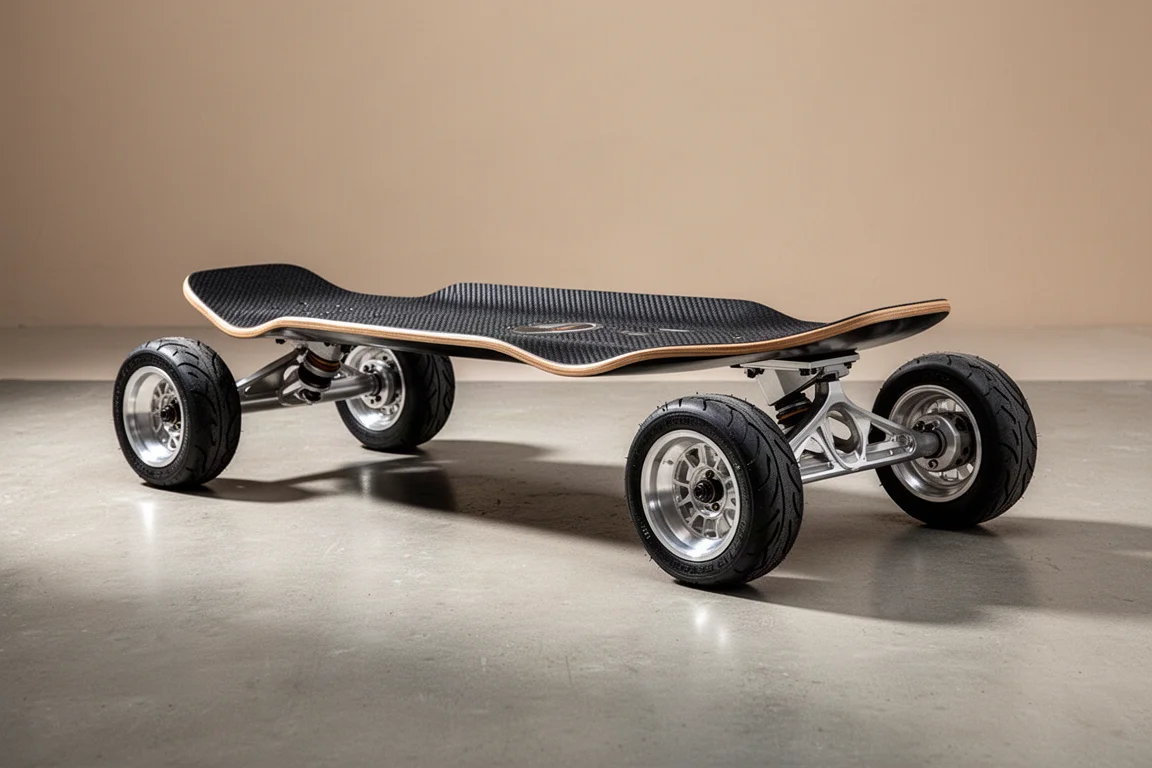
Acedeck Ares X1 Review: A Powerful First Board From a New Name
The Acedeck Ares X1 brings a 14s battery, CNC aluminum trucks, and strong performance to the electric skateboard market. Here is a closer look at what it offers.

Air Purifiers
AirDoctor 3000 Review: A Simple Air Purifier With Impressive Performance
The AirDoctor 3000 delivers strong purification results in a medium-sized room, with a straightforward design that prioritizes ease of use over smart features.

Electric Rideables
Airtrick A1 Pro Electric Roller Skates Review: A Fun Ride With a Learning Curve
The Airtrick A1 Pro electric roller skates offer a portable, motorized ride, but their fixed trucks and learning curve mean they are not for everyone.