Camping Tents
Three-Season vs Four-Season Tents: Choosing Shelter for Winter Camping
A practical comparison of three-season, three-plus season, and four-season tents, and how airflow, pole strength, and snow load decide which one suits your winter trips.
Introduction
Cold-weather camping does not require an expedition shelter, but it does require a shelter that matches the conditions. Three-season, three-plus season, and four-season tents are separated by measurable differences: how much air moves through the inner tent, how strong the poles are, and how the structure behaves once snow starts piling up on the roof.
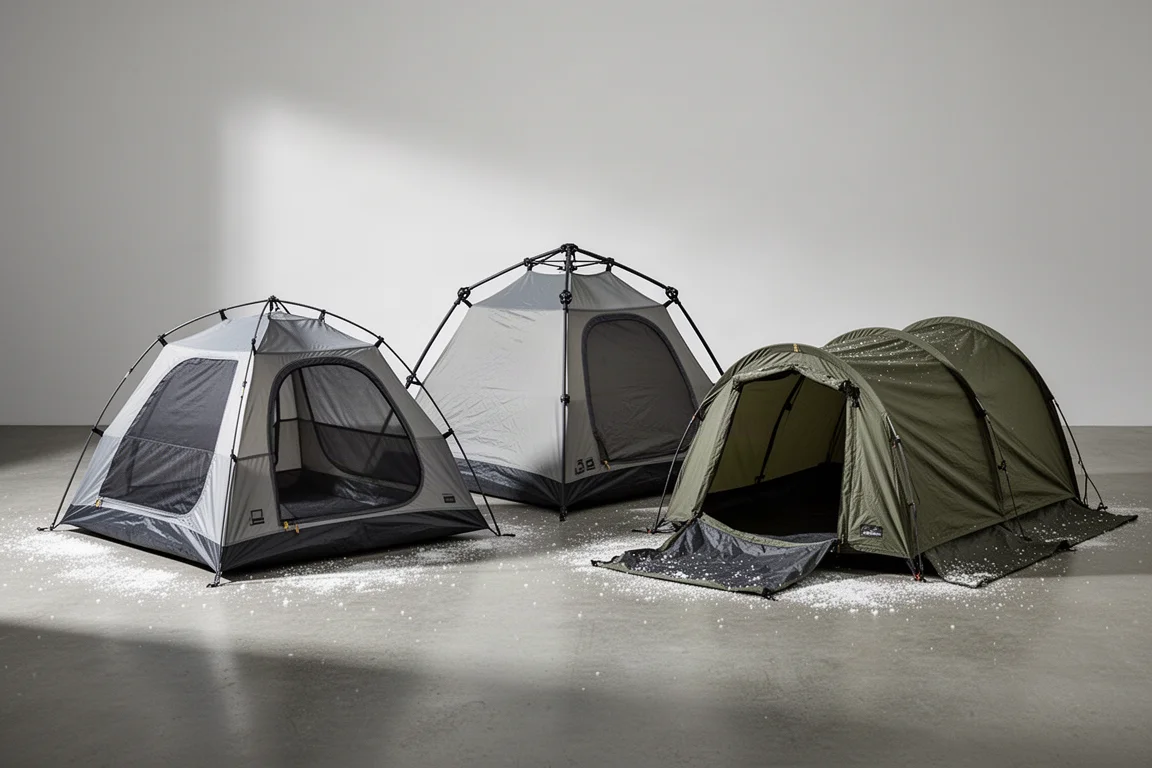
This guide covers three tents that sit at different points on that spectrum: the MSR Hubba Hubba, the Big Agnes Copper Spur Expedition Tent, and the Hilleberg Nallo GT2. Each is a capable design. The useful question is which one fits the trips you actually take.
How Winter Tents Differ: Airflow, Poles, and Snow Load
A three-season tent is built for spring, summer, and fall conditions. Cold temperatures alone are not automatically a problem, and a three-season tent can still work in winter when the weather stays dry and calm. Two things limit it once conditions get serious.
The first is airflow. On most three-season tents the fly stops short of the ground and the inner tent uses a large amount of mesh, both of which encourage air to move through the shelter. Moving air is the enemy of warmth, which is the same reason a fan cools you down. You never want to remove ventilation completely, because some air movement keeps condensation from building up and freezing, but a winter shelter needs to slow it down far more than a summer one does.
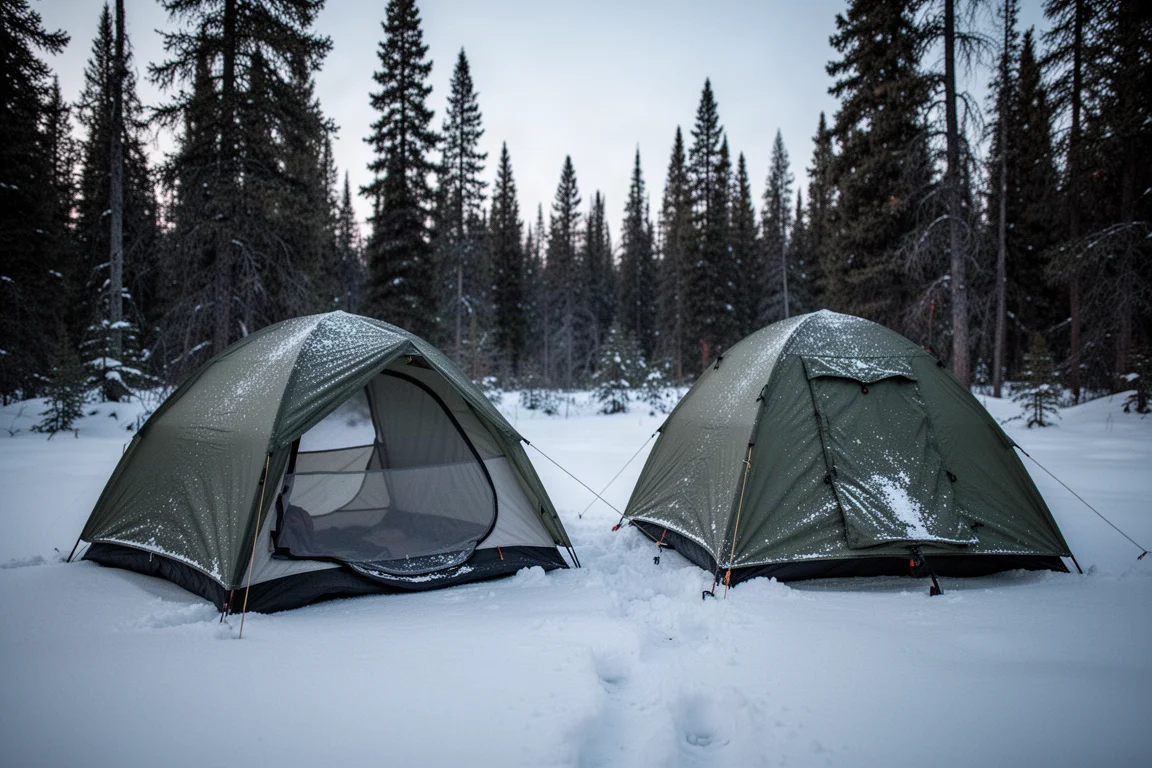
The second is structural. Poles on a typical three-season tent are not built to carry the weight of falling snow, and that load becomes much harder to manage when strong winter winds are pushing against the same structure. Snow on the fly changes the calculation. This is the more important of the two limitations, and it is the reason a light summer tent is not the right tool for a storm.
The three tents below show how manufacturers solve those two problems at different weights and price points.
MSR Hubba Hubba: A Proven Three-Season Backpacking Tent
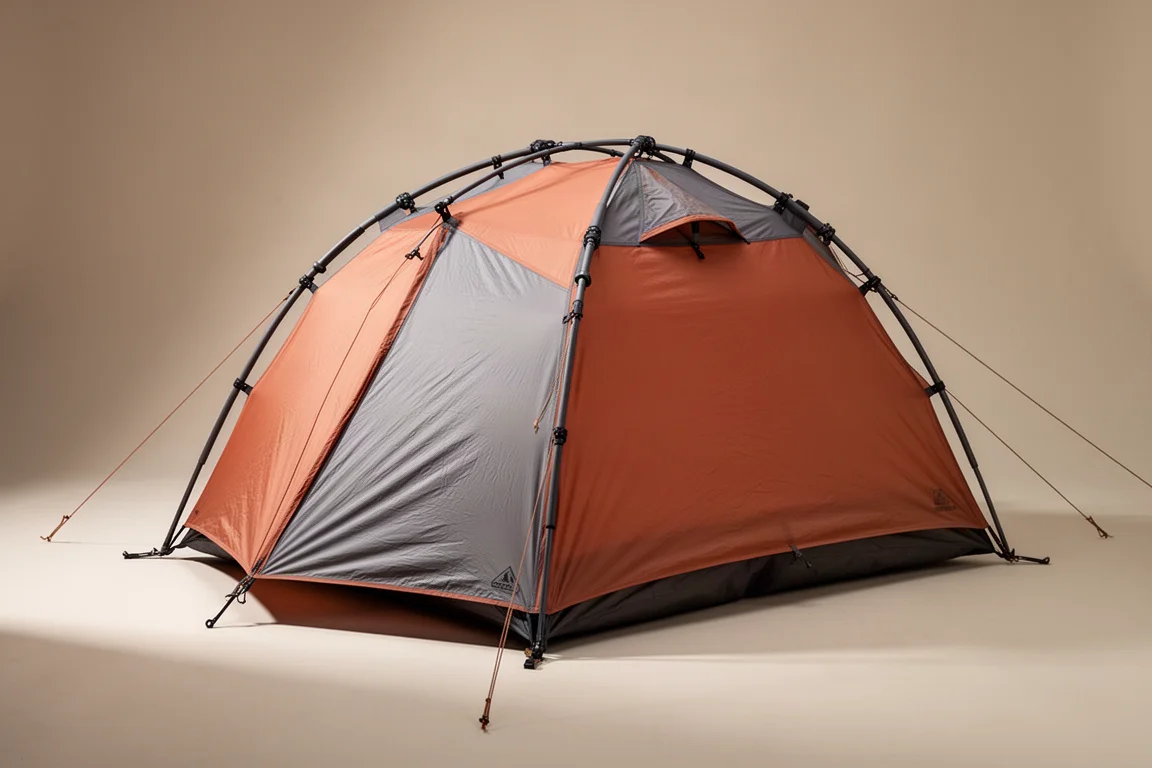
The MSR Hubba Hubba is the reference point for this comparison: a typical three-season backpacking tent intended for spring, summer, and fall. It handles cold weather better than many tents in its class because most of its mesh sits high on the inner tent, which limits how much air moves around at sleeping height. The fly still stops short of the ground, so the shelter remains drafty once temperatures fall.
The bigger consideration is snow. The poles are not strong enough to hold up under the weight of falling snow combined with strong winter winds. The Hubba Hubba has held up to 50 mph winds before collapsing, which says a lot about how it manages wind on its own, but that figure does not account for snow load added to the fly at the same time.
For dry, cold trips with reliable forecasts, that combination is often enough. For anything involving accumulating snow, it is not.
Big Agnes Copper Spur Expedition Tent: Pushing Into Three-Plus Season Territory
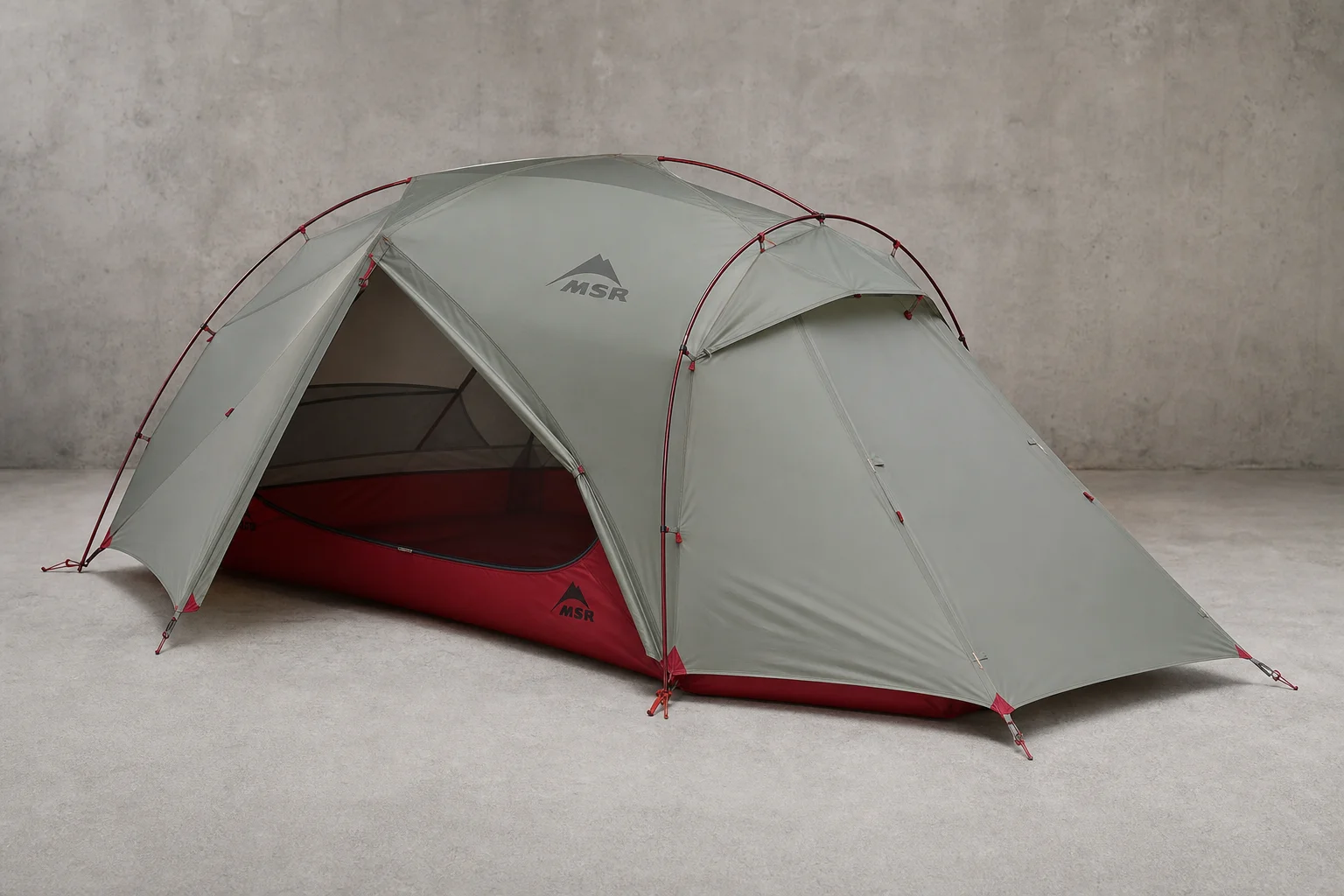
The Big Agnes Copper Spur Expedition Tent carries the expedition name, but it is not a true expedition tent. It is what Big Agnes describes as a three-plus season tent, and the distinction is deliberate.
Inside, there is considerably less mesh than on a standard three-season design, which reduces airflow and helps hold warmth. The poles are the more significant change: they are larger in diameter, use a thicker wall, and run through stronger hubs, so the structure carries snow and wind loads better than typical three-season poles.
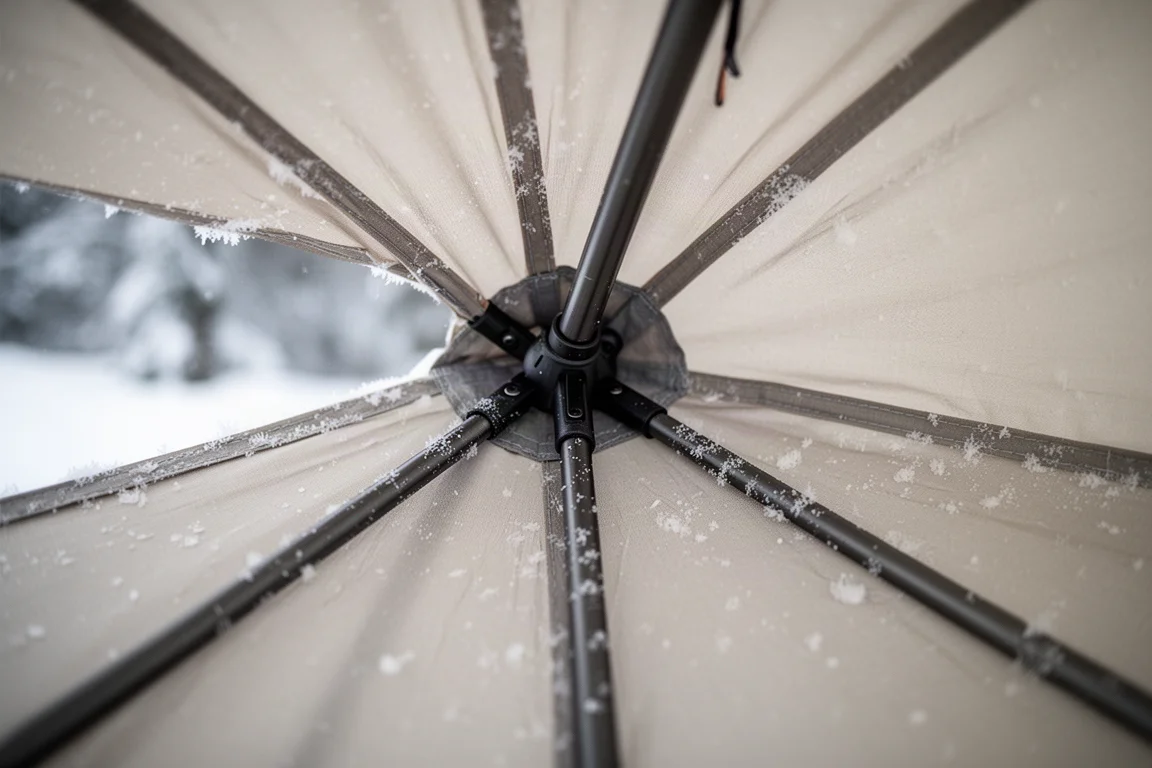
What keeps it out of four-season territory is the unsupported crossbeam. Even with the stronger poles, a significant snow load on top of that crossbeam would be more than it can take. That single structural detail defines the tent’s ceiling, and it is why the Copper Spur Expedition is a good step into colder conditions rather than a shelter for deep winter.
Hilleberg Nallo GT2: A True Four-Season Tunnel Tent
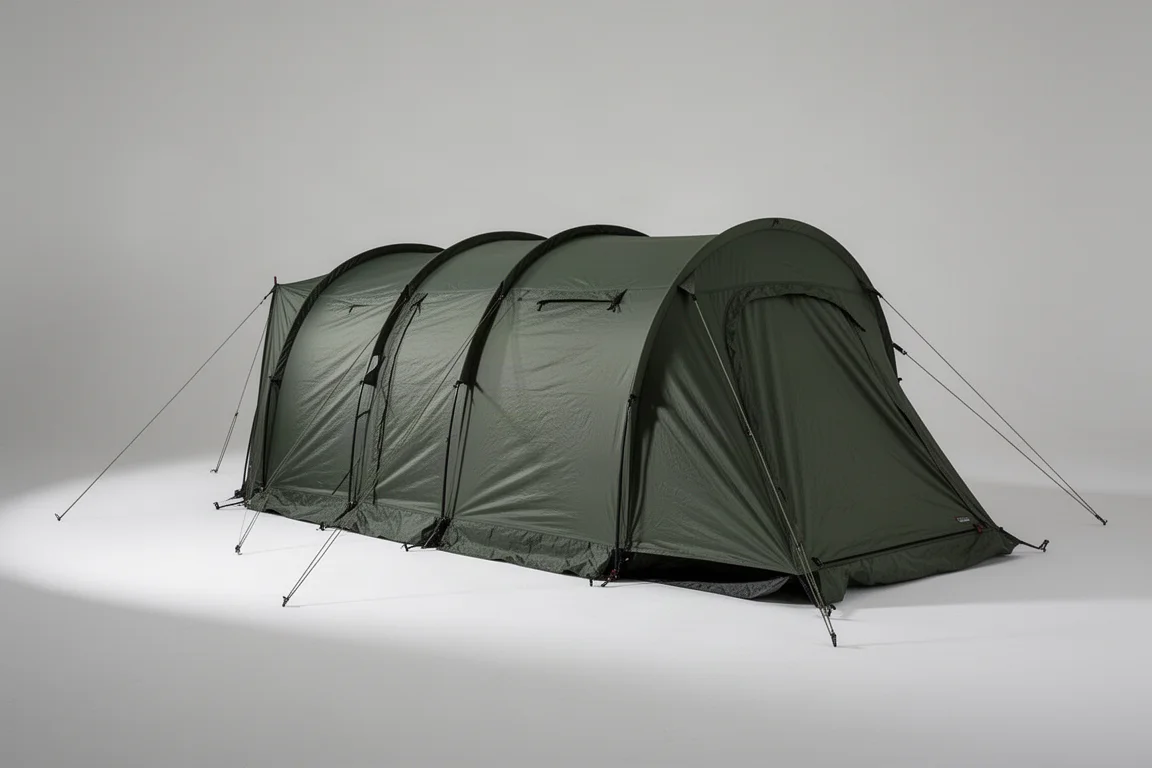
The Hilleberg Nallo GT2 is a true four-season tent, and it uses a tunnel design that has proven itself in wind. It is also an ultralight four-season tent at roughly 7 lb, which matters because the poles are not thicker than standard three-season poles. The strength comes from geometry rather than tube diameter.
Each pole runs through a sleeve that spans the entire length of the tent and then locks onto a peg and tightens to form a circular shape. With the pole held inside that sleeve, weight applied to the top of the tent has nowhere to go: it cannot bow out to the side because of the sleeve, and it cannot move front to back because of the way the tent is staked out. That is what allows a smaller pole to stand up to snow loads and high winds.
The large vestibule is not strictly necessary and it does add weight, but it earns its place as a sheltered space to remove boots and wet clothing before getting inside. It also gives you somewhere to cook out of the wind and snow, with the important caveat that you should never cook inside a fully enclosed vestibule.
Ventilation is deliberately restrained. There is hardly any mesh, a small window at the back, and a small window in the vestibule, and the fly reaches all the way to the ground, so even in heavy wind very little gets in. That balance matters: no air movement at all would encourage condensation to form and freeze, while too much would strip away the heat the shelter is meant to keep.
Tunnel Design and Pole Sleeves: Why Shape Matters
Pole diameter is the intuitive measure of a tent’s strength, and it is not the whole story. A full-length sleeve changes how a pole behaves under load, because the sleeve constrains the pole along its entire length instead of only at a few crossing points.
Combine that with a stakeout pattern that holds the tunnel shape in tension, and the tent becomes a single rigid structure rather than a set of poles that can shift independently. Weight on the roof is transferred into the frame and the ground instead of bending the poles out of shape.
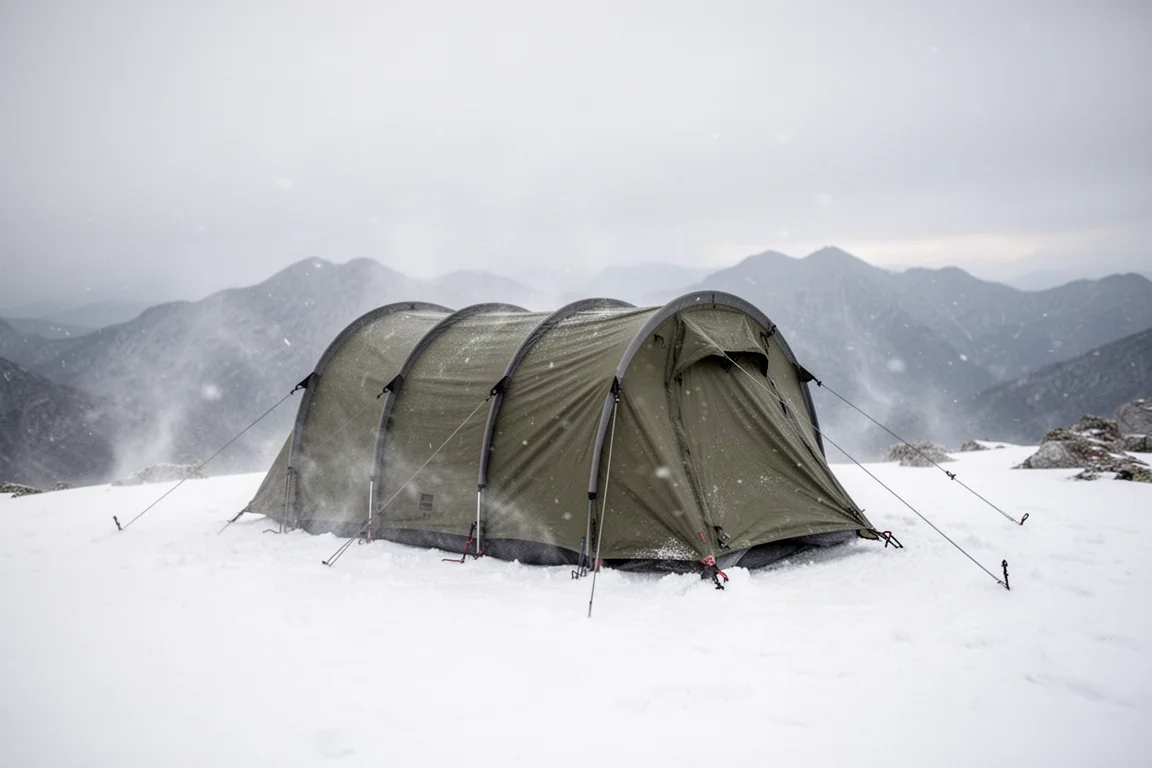
This is why a four-season tent can be light and still handle winter conditions. It is also why comparing pole thickness between two tents tells you very little on its own, and why the shape of the shelter, the way it is guyed out, and how the poles are held in place deserve as much attention as the hardware itself.
Vestibules, Ventilation, and Condensation
A large vestibule is the most visible difference between a winter tent and a summer one, and it is a trade-off rather than a free upgrade. It adds weight, and on some trips that weight is unnecessary. Where it earns its place is at the start and end of the day, when you need to shed wet layers and boots without dragging snow into the sleeping area, or when you want to cook out of the weather with proper airflow around the stove.
Ventilation is the other half of the equation. Winter shelters deliberately limit mesh to keep warmth in, but they do not eliminate it. A small window or vent that can be opened keeps some air moving, which helps manage condensation that would otherwise collect and freeze inside the tent. The goal is a shelter that holds warmth without turning into a sealed box.
Buying Advice: Do You Really Need an Expedition Tent?
For most people, the answer is no. A tent like the Hilleberg Nallo GT2 is overkill for ordinary winter camping. There are plenty of four-season tents that are not nearly as large, heavy, or expensive, and many of them are designed for a single person or skip the vestibule entirely. Almost all of them are built to hold up under strong wind and heavy snow.
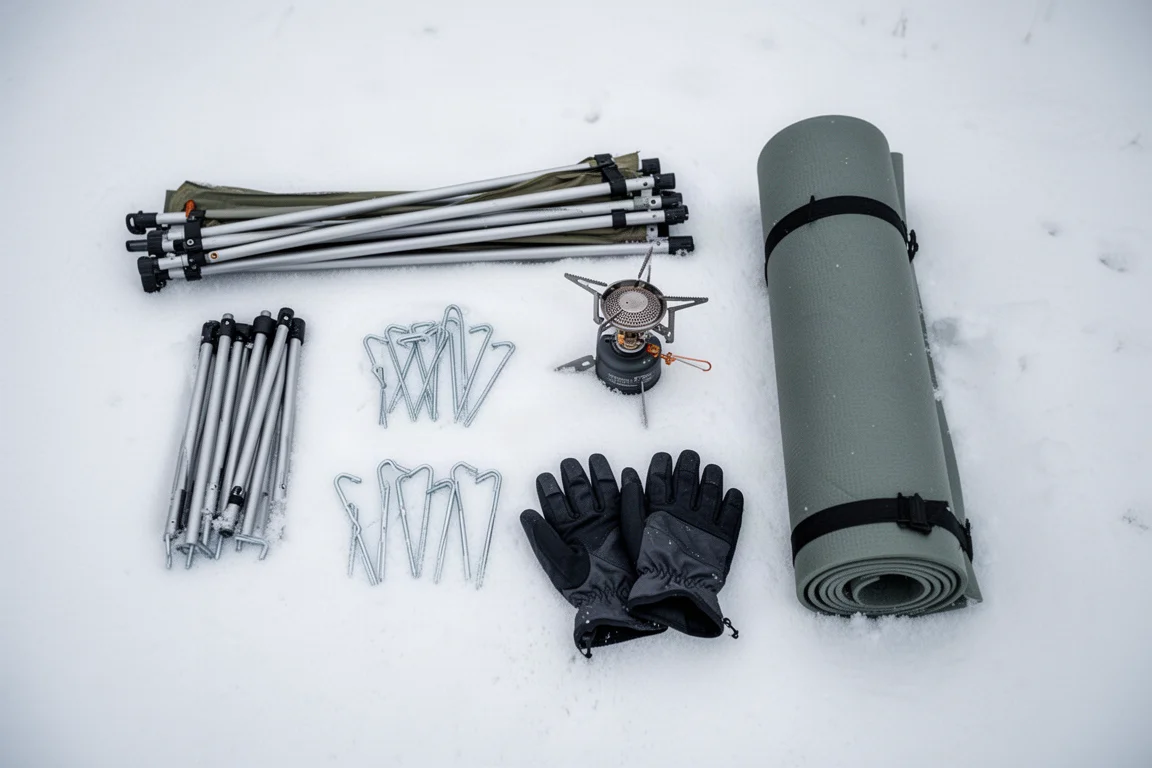
The practical split looks like this. If your trips involve cold but mostly dry conditions, a three-season tent that manages airflow well, such as the MSR Hubba Hubba, is often enough. If you expect some snow and want more margin without the weight and cost of a full expedition shelter, the Big Agnes Copper Spur Expedition Tent is the middle step. If you are heading above the tree line in deep snow and expect to leave the tent up through real winter weather, a true four-season tunnel tent is the right category, and the Hilleberg Nallo GT2 is a light way to get there.
Whichever direction you go, remember that the tent is only one part of staying warm. What you wear, what you sleep on, and how you manage moisture before you ever pitch the shelter all matter as much as the fabric over your head.
Conclusion
Three-season, three-plus season, and four-season tents are not marketing tiers so much as answers to different questions. Airflow, pole strength, and snow load decide how a shelter behaves when the weather turns, and the right choice depends on whether you are camping in the cold or camping in the cold with snow piling up on the roof.
The MSR Hubba Hubba remains an excellent three-season backpacking tent with better airflow management than most of its peers. The Big Agnes Copper Spur Expedition Tent adds stronger poles and less mesh for a useful step further into winter. The Hilleberg Nallo GT2 solves the problem with geometry, using a tunnel shape and full-length pole sleeves to stay strong at a light weight. Match the tent to the conditions you expect, and any of the three will serve you well.
Further reading
Related Reviews
Camping Tents
3F UL Gear Taiji Two-Person Tent Review: Field Waterproofing Results and Buying Advice
The Taiji pairs an attached fly with a removable inner, but sustained rain exposed untaped vent seams that need sealing before this shelter can be trusted.
Camping Tents
3FUL Gear Lanshan 2 Pro 4-Season Review: A Sub-$200 Single-Wall Trekking Pole Tent
An early look at the 3FUL Gear Lanshan 2 Pro 4-Season, covering its straightforward pitch, generous interior space, and the condensation and seam-sealing questions that come with any single-wall shelter.
Camping Tents
Alps Mountaineering Lynx 1-Person Tent Review: Big Value in a Small Budget Tent
A close look at the Alps Mountaineering Lynx 1-Person Tent, covering real interior dimensions, materials, setup time, ventilation limits, and who should buy it.