Backpacking Gear
Three-Day Desert Backpacking Gear Loadout: Six Pieces That Earned Their Place
A 24-pound loadout for a mild-weather off-trail route, with field notes on the pack, shelter, sleep system, camp comfort and layers that worked, plus what would change next time.
Introduction
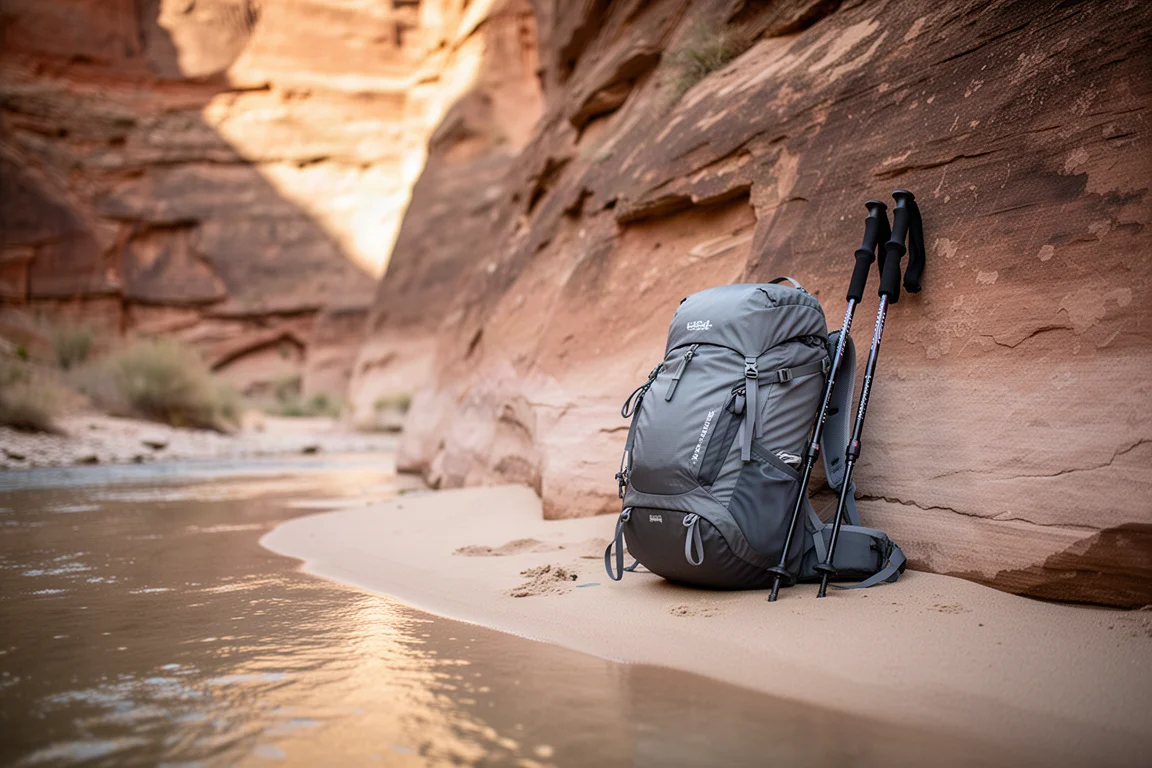
A three-day off-trail route through the Escalante area covered roughly 15 to 18 miles of sand, slickrock and river bottom. Conditions stayed mild throughout: daytime highs in the high 60s under clear blue skies, and overnight lows that settled around 36°F. The starting load, including gear, food and water, came to about 24 pounds.
That combination makes for a genuinely useful test. Mild weather exposes anything heavier or warmer than it needs to be, and a river crossing exposes anything that cannot dry. What follows is the loadout that went out, how each piece performed, and where a different choice would have been smarter.
How This Loadout Was Tested
Mild desert conditions are a strange test bed for cold-weather gear. Canyon bottoms collect cold air, so overnight temperatures can drop further than the forecast suggests, which is why a warmer quilt and a closed-cell foam pad went along. The route also included a river section with water up to knee height, so feet were soaked early and stayed wet into camp.
Camp was reached around 5pm with the sun already down, leaving no drying window. That set the tone for the evening: wet footwear, cooling rock, and a strong argument for the comfort items that usually get left behind. The terrain itself was a mix of sand and lava rock, which made rock-based anchoring easy and meant a fully freestanding pitch was never strictly necessary.
Three questions were asked of every item at the end of the trip: was it used, did it work as expected, and would something lighter or simpler have done the same job. Total weight at the start was about 24 pounds including food and water, and the aim was to finish the route without having carried anything that never left the pack.
The Pack: Hyperlite Mountain Gear Waypoint 35
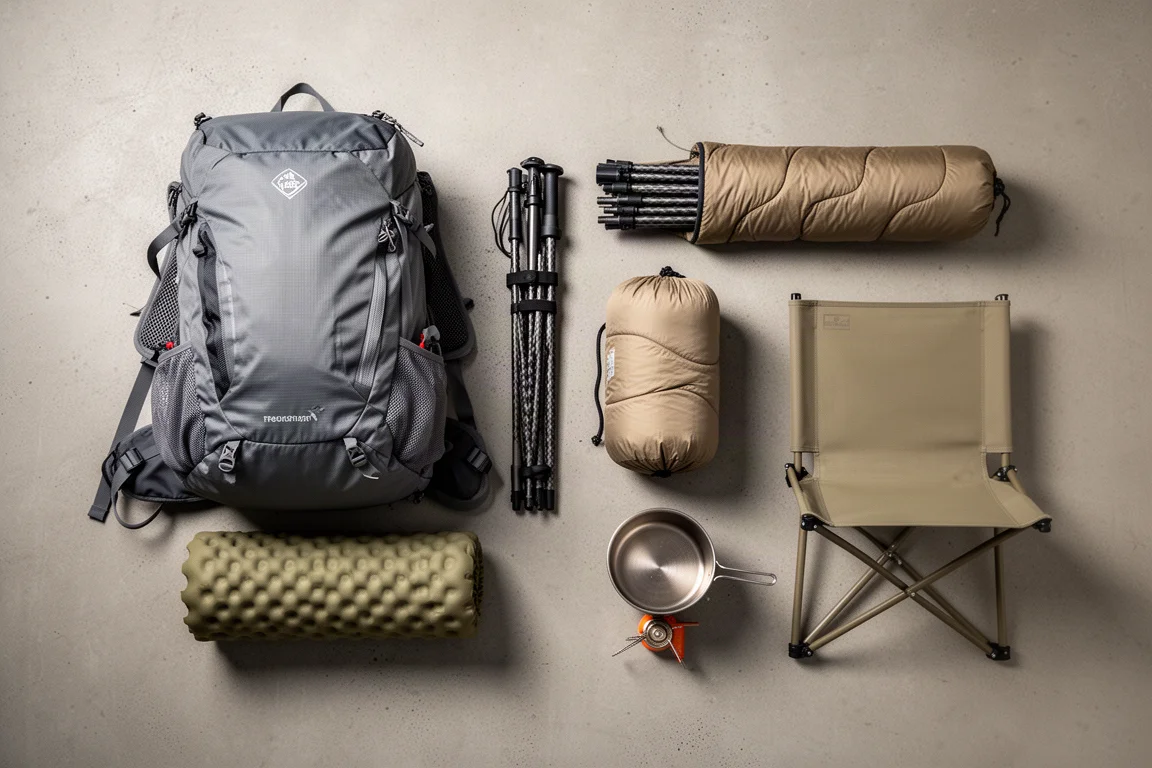
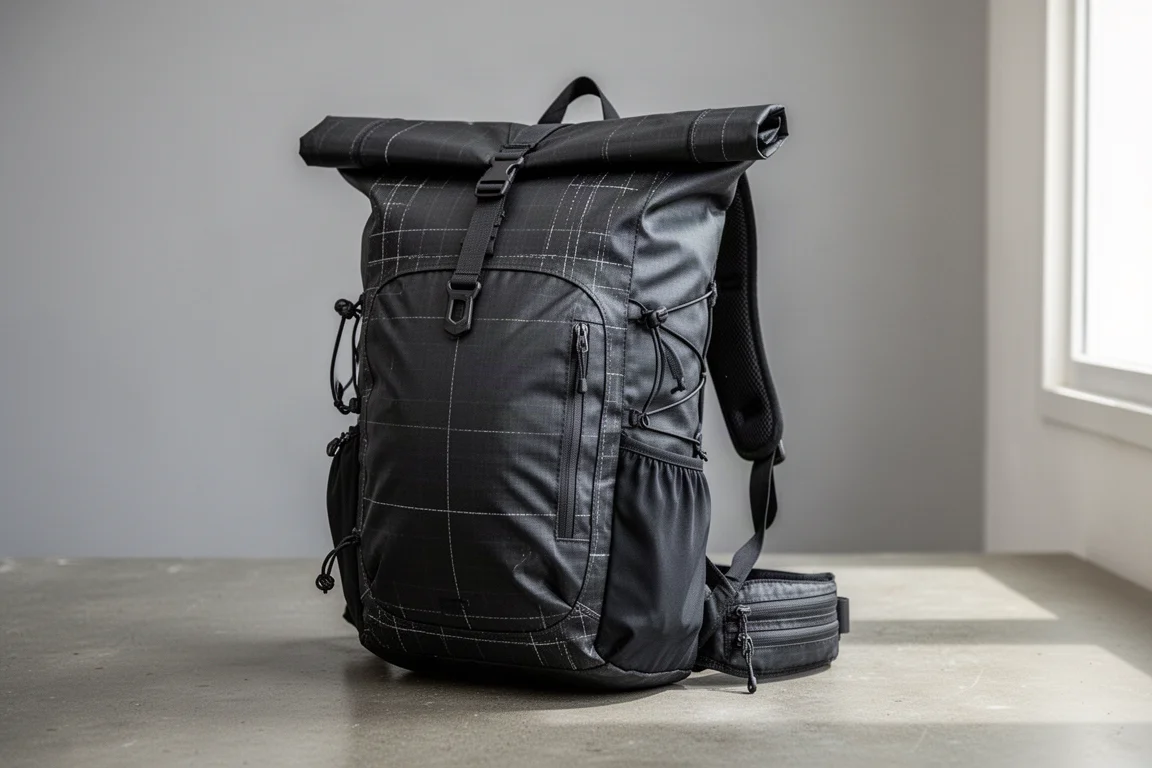
The 35-litre pack swallowed the entire 24-pound load without complaint. Its appeal is its minimalism: no excess straps, pockets or hardware, and a shape that compresses cleanly once food is eaten and the load shrinks. It carries weight close to the back, which matters more than any single feature on a route with this much sand and loose rock.
Two one-litre bottles sat in the side pockets for two litres total, while the shelter poles and a carbon fibre telescoping pole strapped to the outside. The front pocket held the quick-access kit: a water filter, a dirty-water reservoir, a bathroom kit and a first aid kit. Shoulder strap pockets carried a satellite communicator, a battery bank and sunglasses, and the hip belt pockets held snacks, lip balm and a phone.
Shelter: Tarptent Rainbow Lithium
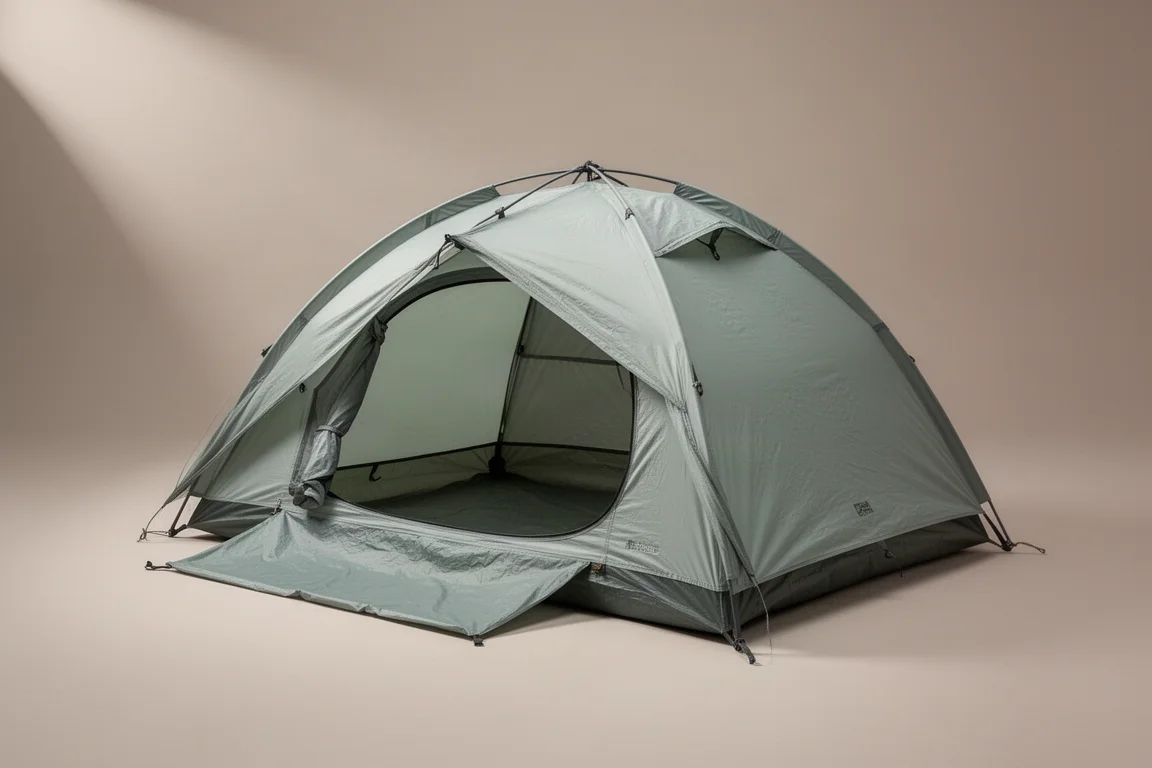
A one-person, single-wall shelter that packs down small enough to disappear into a 35-litre pack. It is semi-freestanding, and a carbon fibre telescoping pole was carried specifically so that one end could be pitched fully freestanding if the ground refused to take stakes.
In practice the terrain made anchoring straightforward. Extra cordage was added to each stakeout point, tied with a clove hitch around a stake and then weighted with a rock, which tensioned the shelter properly on both sand and rock. That flexibility is the reason it went along instead of a heavier freestanding option.
Sleep System: ZenBivy Flex Air Sleeping Pad
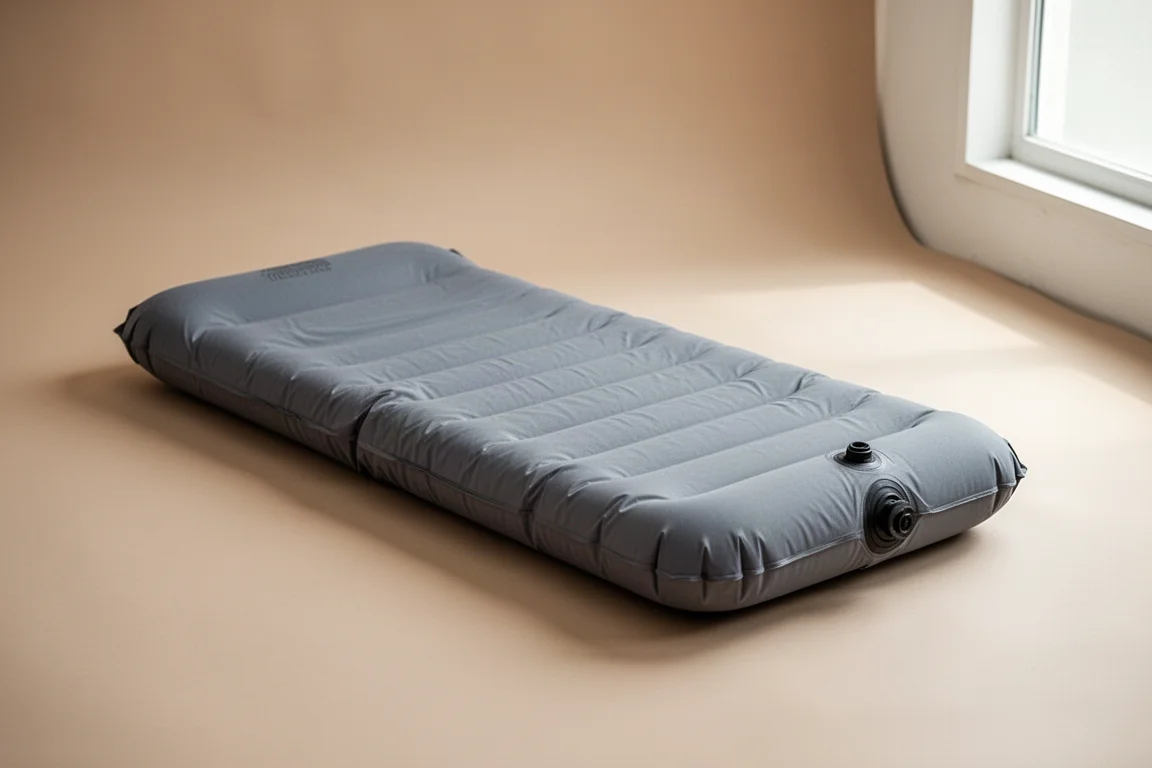
The pad measures 25 by 72 inches and shares its overall construction with the brand’s ultralight model, with the addition of a stretchy top surface. That stretch costs a few ounces and buys a clear step up in comfort, which is the entire point of the design.
Its R-value sits in the 4.8 to 5 range, and it has never been a source of cold, even on snow with a closed-cell foam pad underneath. The trade-off is price: this one runs over $200, around $220, which places it firmly in investment territory.
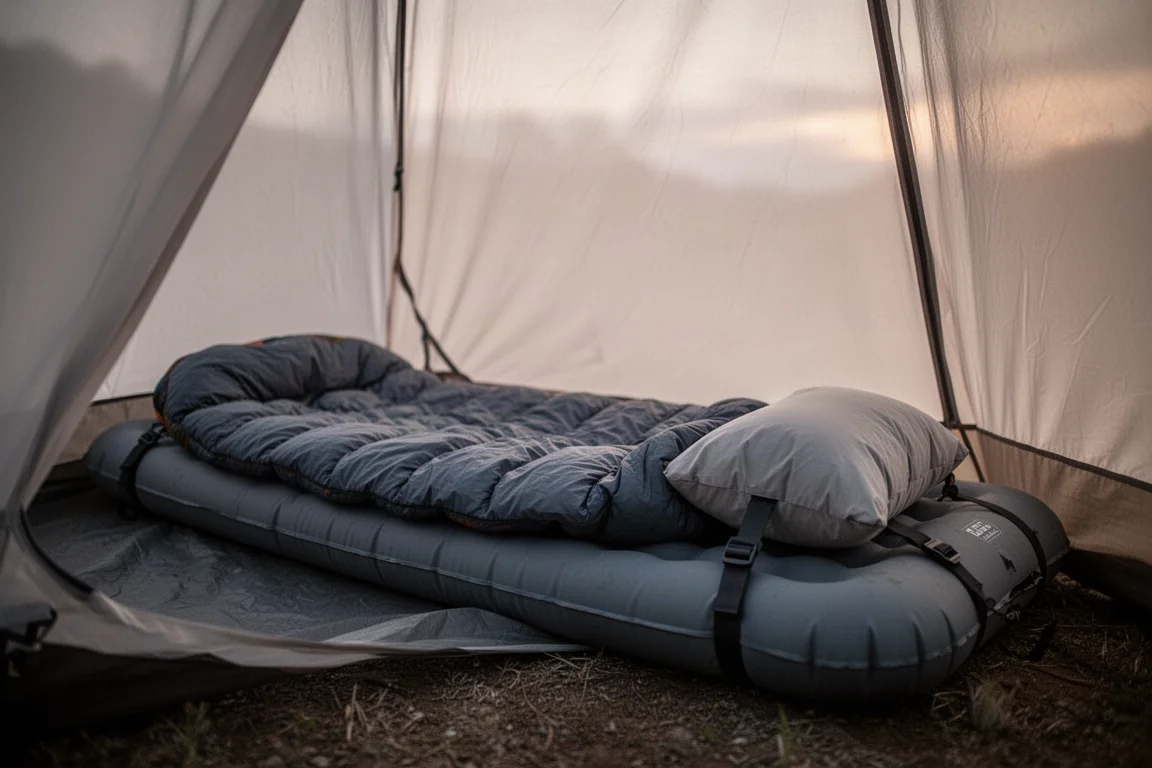
A thin closed-cell foam pad also went along, and it more than earned its place. It went underneath the sleeping pad against cold rock, and it doubled as a sit pad for resting soaked feet after the river crossing.
Sleep System: Katabatic Sawatch 15 Quilt
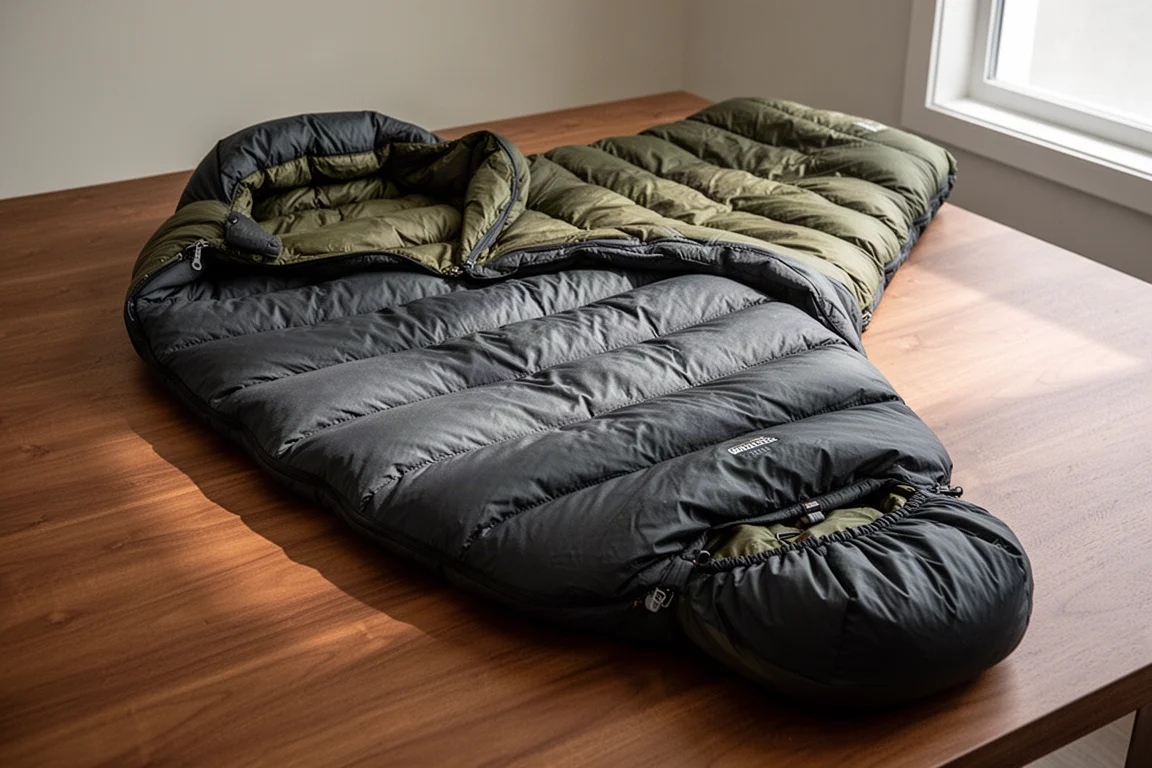
This 15-degree quilt was the single most over-specified item in the loadout. With a low of 36°F and a warm mid layer worn to bed, it was borderline hot. For three-season backpacking, the takeaway from this trip is clear: step down to the 22-degree option in the same line.
That is not a mark against the quilt itself. Build quality, comfort and draft control are all excellent, and the warmth is exactly what the rating promises. It simply belongs to late fall, winter and early spring rather than mild weekends. A 25-degree quilt was considered instead, but the colder rating won out because canyon temperatures were uncertain, and that caution turned out to be unnecessary.
The quilt packed into an 8-litre compression sack, which narrowed it enough to sit right at the bottom of the pack. A pillow built from a quilted case with a down topper and an air bladder strapped around the pad so it stayed in place overnight.
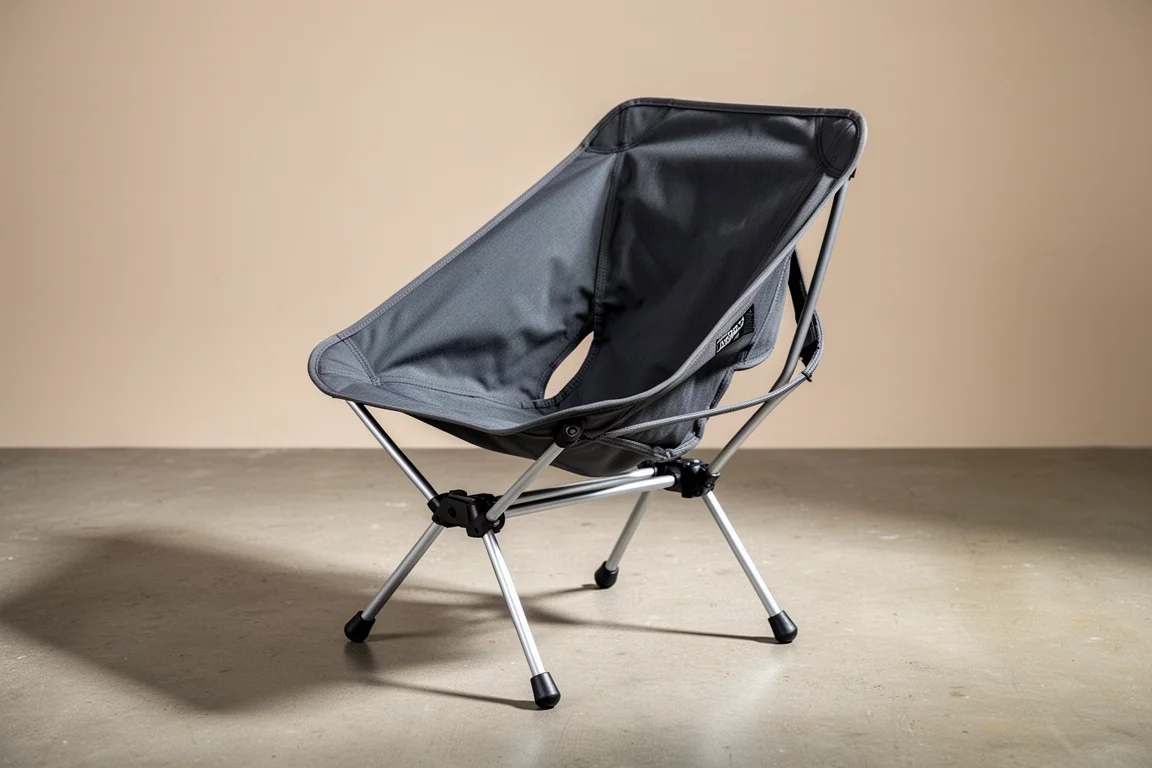
Camp Comfort: Nemo Moonlight Elite Chair
Light for what it is, and small enough in packed form to fit inside a 35-litre pack when the side pockets are already occupied. It has become a fixture on most trips, which says more than any specification sheet can.
After a day of sand and river crossings, having a seat off the ground matters. It pairs naturally with the closed-cell foam pad as a footrest, and it turns a cold rock ledge into a workable camp.
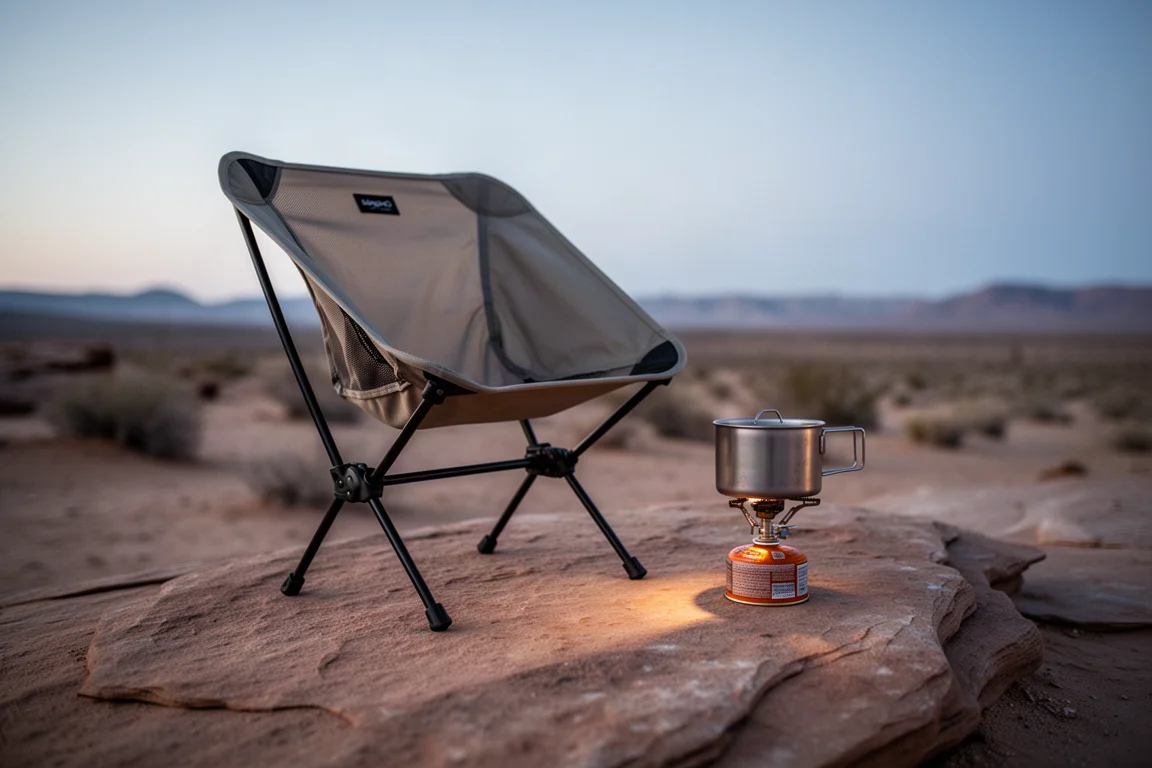
Packed size is the main compromise. Even folded, the chair competes for space inside a small pack, so it is a deliberate trade rather than a free addition to the load.
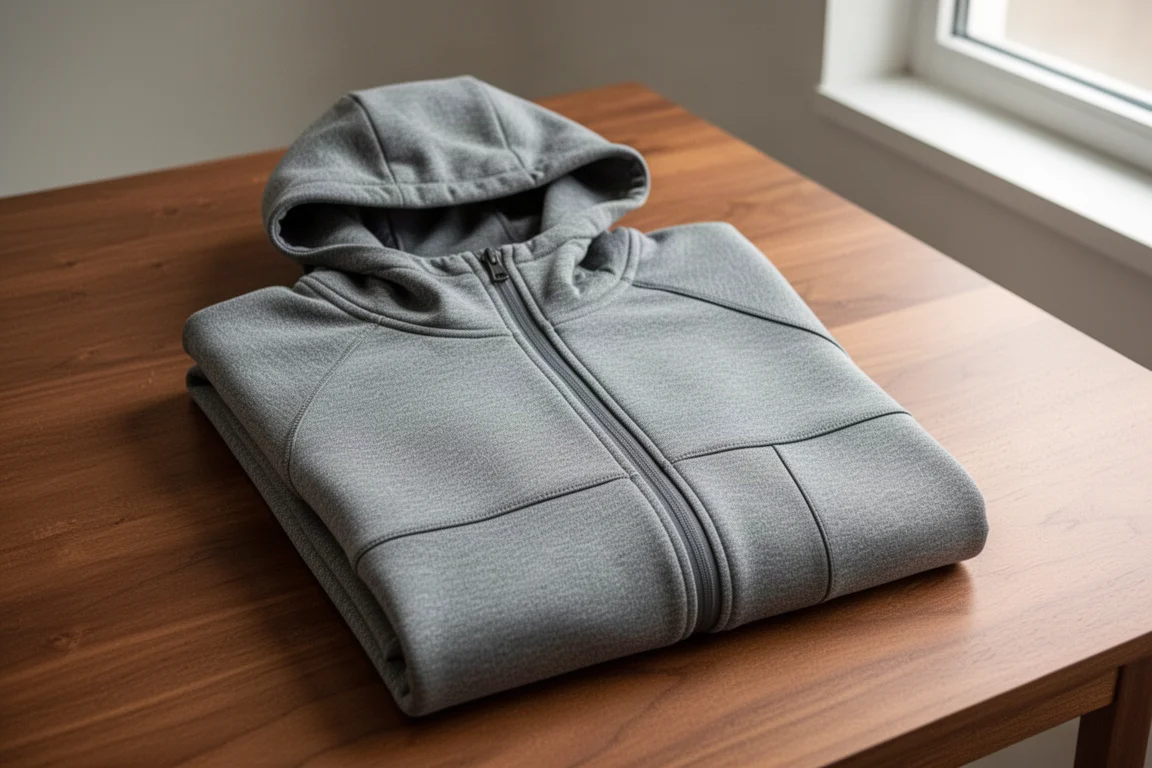
Layering: Outdoor Vitals Pursuit Hybrid Hoodie
This hybrid mid layer has been through more than a year of prototypes, and the production version shows it. It is warm enough to wear as an outer layer in mild conditions and breathable enough to hike in without overheating, which is a genuinely difficult balance to strike.
It also packs down small, so it can sit in the pack until the temperature drops. The honest downside is cost: it is a pricey piece compared with many mid layers, and the detailing and materials are the reason. Whether that is worth it depends on how much use it sees across a season.
Small Essentials That Earned Their Place
Water treatment was a Sawyer Squeeze filter paired with a dirty-water reservoir from a Sawyer collaboration, and it handled silty desert water without drama. The cook kit was a titanium 650 pot, chosen for a slightly smaller pack size while still swallowing a 100-gram canister, plus a small canister stove with a three-prong pot stand, a modest wind lip and no piezo igniter. A long-handled titanium spoon, a lighter and a pack towel completed it. The bathroom kit lived in a black zippered pouch, the right colour for the job, holding a titanium trowel, wet wipes, two rolls of toilet paper and a small bottle of Summit Suds. A compact first aid kit in a small zippered bag covered the standard items.
Electronics ran off two 10,000 mAh battery banks: one with dual USB-C ports and one water-resistant model, plus short adapters that convert USB-C to micro-USB and USB-A instead of carrying separate cables. A compact headlamp, a DJI Osmo Pocket 3 with its accessory plate, and a satellite communicator in a shoulder pocket rounded out the power and communication setup. A pad inflator came along for the first time and did not impress, producing little pressure and filling the pad slowly. Food went into an 8-litre roll-top food bag, with an insulated rehydration pouch inside for meals and a trash bag alongside. Socks were a long-standing favourite that have one recurring flaw, a hole that develops in the heel over time. Lightweight thermal bottoms, a sun hoodie and a pair of minimal camp sandals completed the clothing.
What I Would Change Next Time
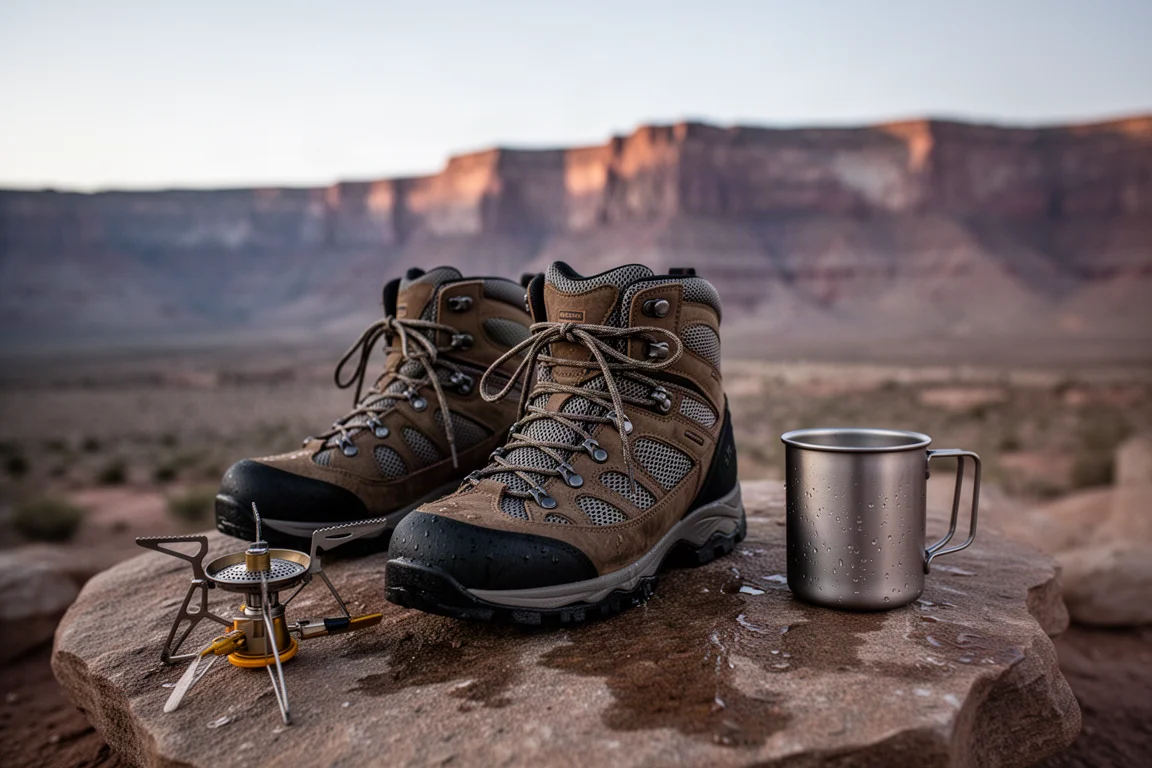
Footwear is the clearest lesson. Waterproof mid-height hiking boots were chosen for warmth, on the assumption that a sealed foot would feel better in cold weather. Then the route put the group into knee-deep river water, and a waterproof membrane works both ways: it keeps water out, and it keeps water in. With camp reached at 5pm and the sun already down, the boots never had a chance to dry. The mesh version of the same boot would have been the better call for a route with river crossings. The quilt is the second change, since a 22-degree option would have been plenty for a 36°F low and would suit far more of the year.
The third change is food. More was carried than was eaten, which is pure wasted weight and volume, and it is the easiest mistake to fix on the next trip. The final note is the pad inflator, which added bulk and time without adding much pressure. None of this was a failure of the loadout so much as a mismatch between the forecast and the terrain: mild temperatures and a river crossing pull in opposite directions, and the fix is to plan for the water rather than the cold.
Conclusion
Every item in this 24-pound loadout had a job, which is the real measure of a three-day kit. The pack carried the weight well, the shelter pitched quickly on difficult ground, the sleep system was comfortable if warmer than needed, and the layers handled mild days and cool nights without fuss. The adjustments are small and specific: mesh boots instead of waterproof ones for a wet route, a 22-degree quilt instead of 15, and less food. Those changes would trim weight without giving up any comfort.
Further reading
Related Reviews

Backpacking Gear
Building a 10 lb Base Weight: An Ultralight Backpacking Gear List
A practical walkthrough of the ultralight pieces behind a 10 lb base weight, from a 765 g pack and a roomy one-person tent to a full camp chair and a dependable water filter.

Backpacking Gear
A 15-Pound Lightweight Backpacking Gear List for Solo Trips
A beginner-friendly 15-pound backpacking setup built from easy-to-find gear, with notes on what each piece does, how it packs, and where to spend your attention.

Backpacking Gear
8 Ultralight Backpacking Gear Upgrades Worth Carrying
Eight small, affordable backpacking upgrades that solve real trail annoyances, from a pillow that stays put to a fuel valve that rescues leftover canister gas.